Top Stories

Europol Oct 14, 09:00

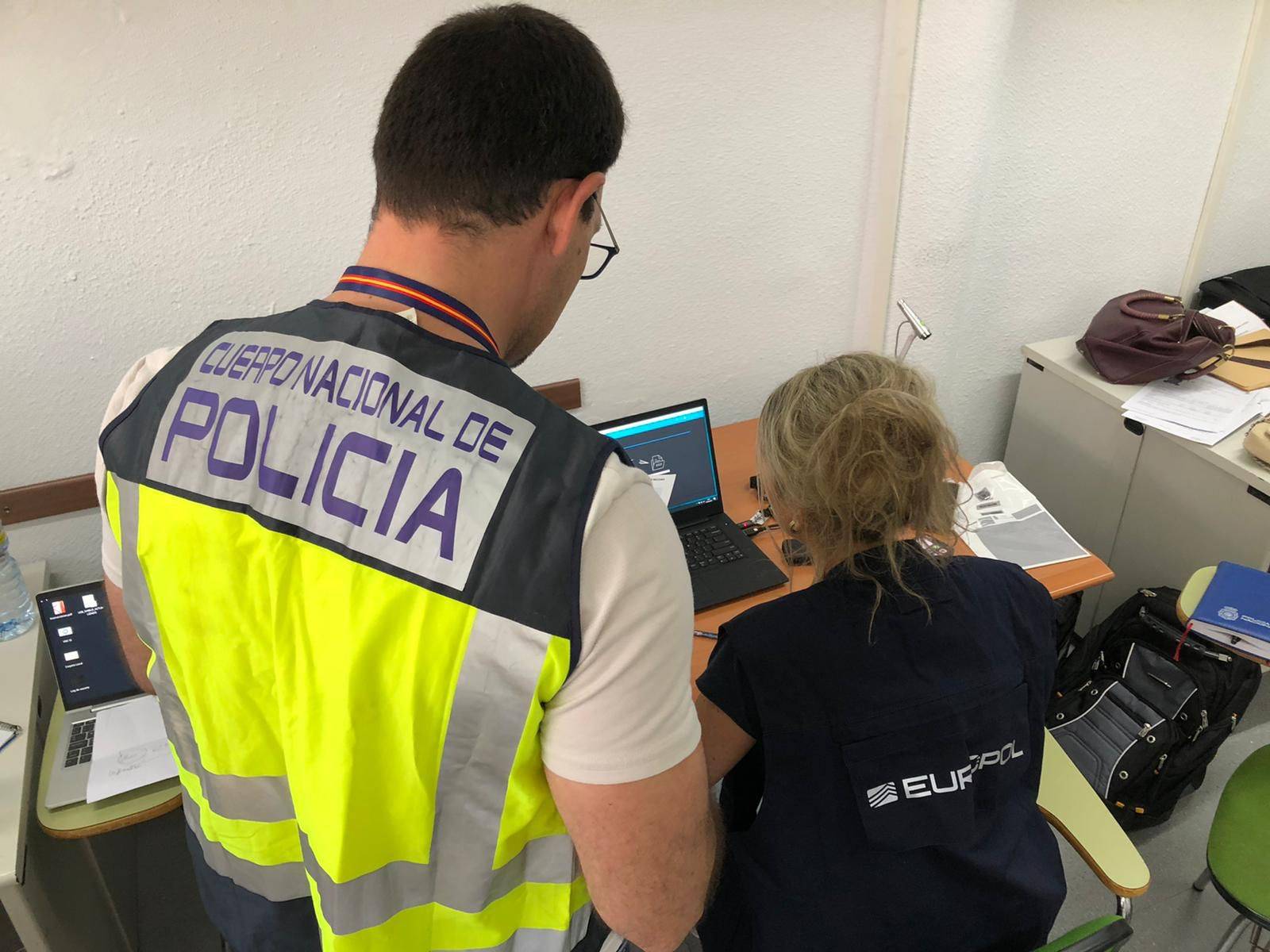
Europol supports Spanish authorities in taking down Europe’s biggest narco bank

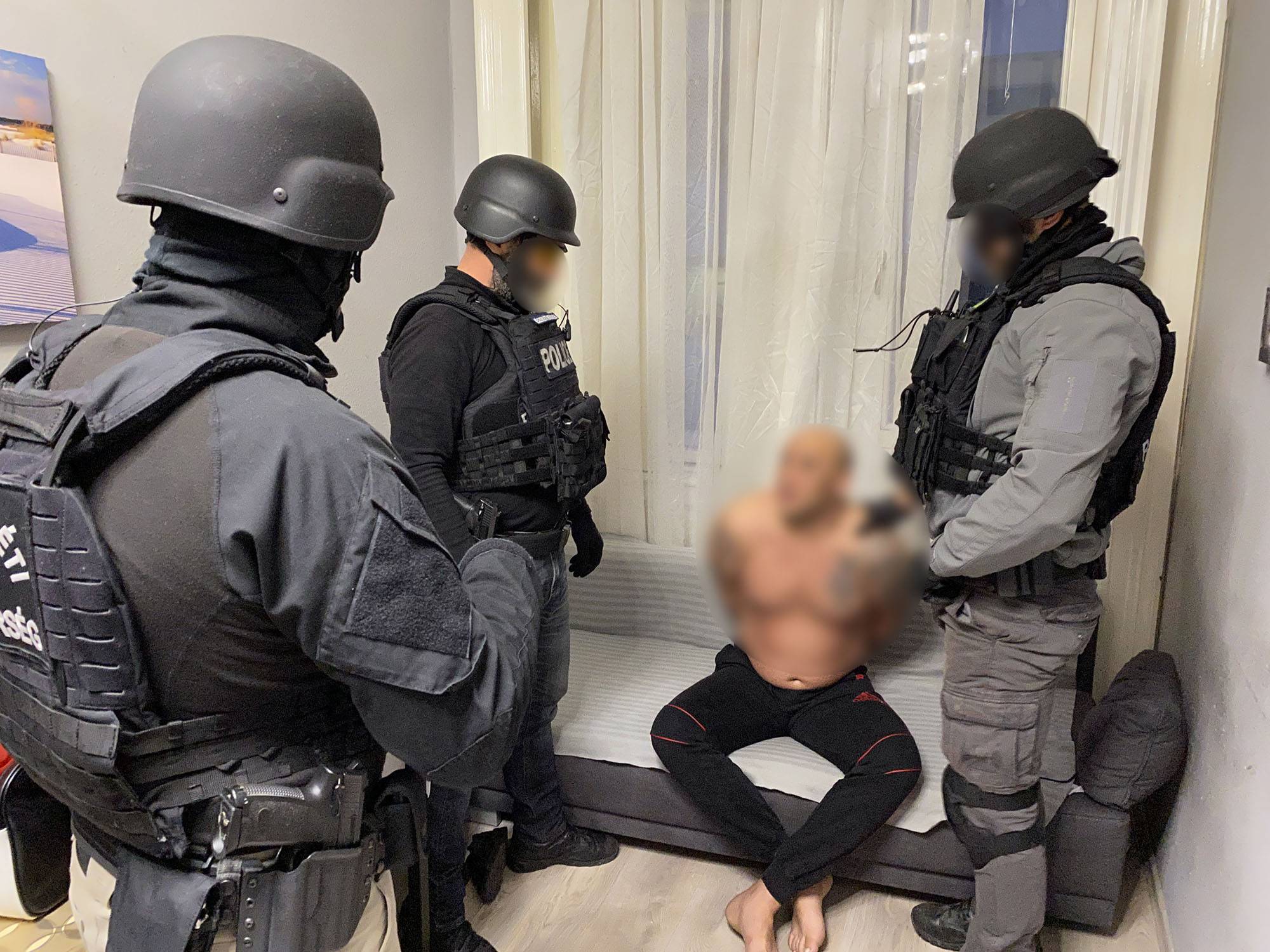
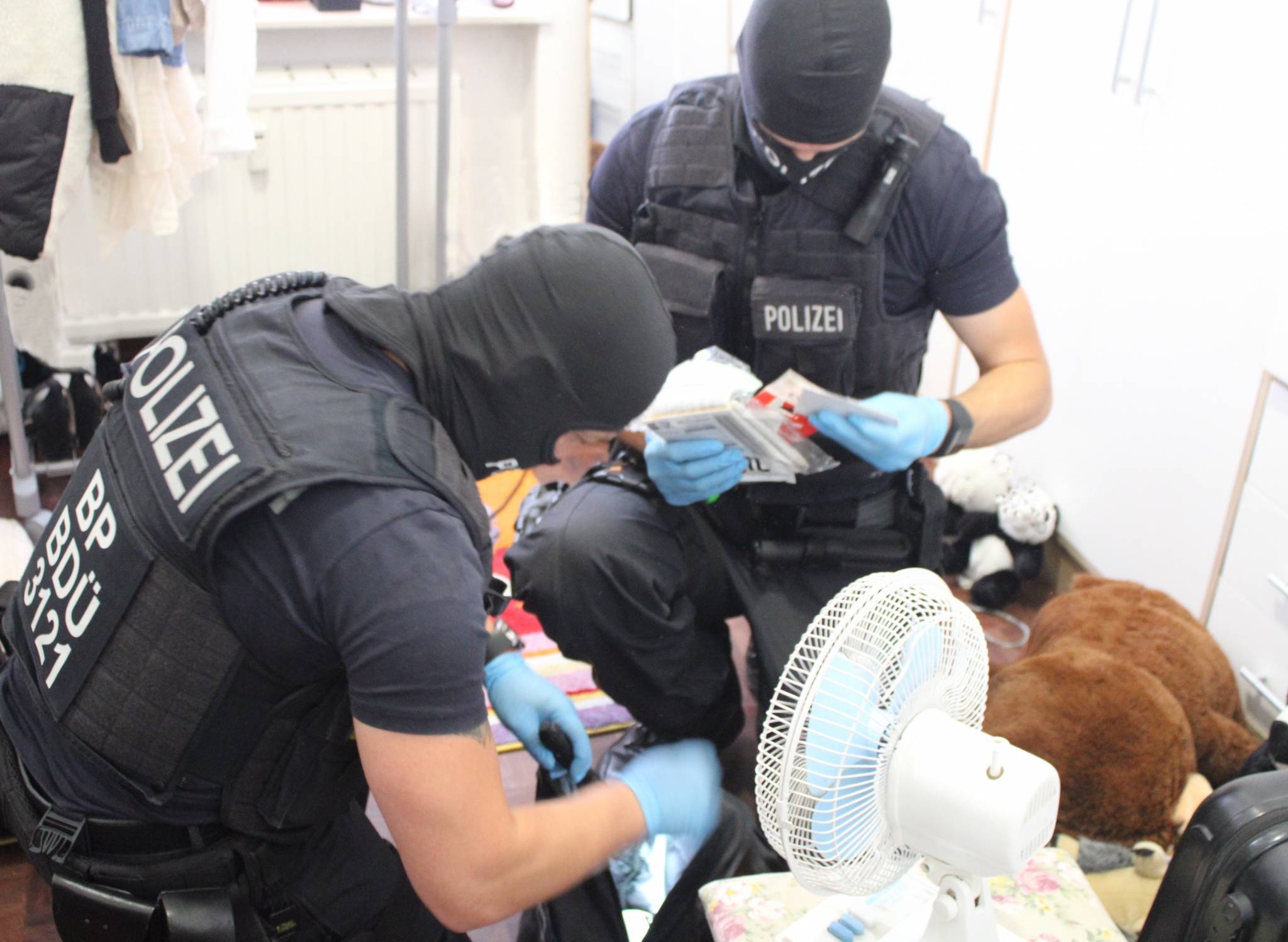
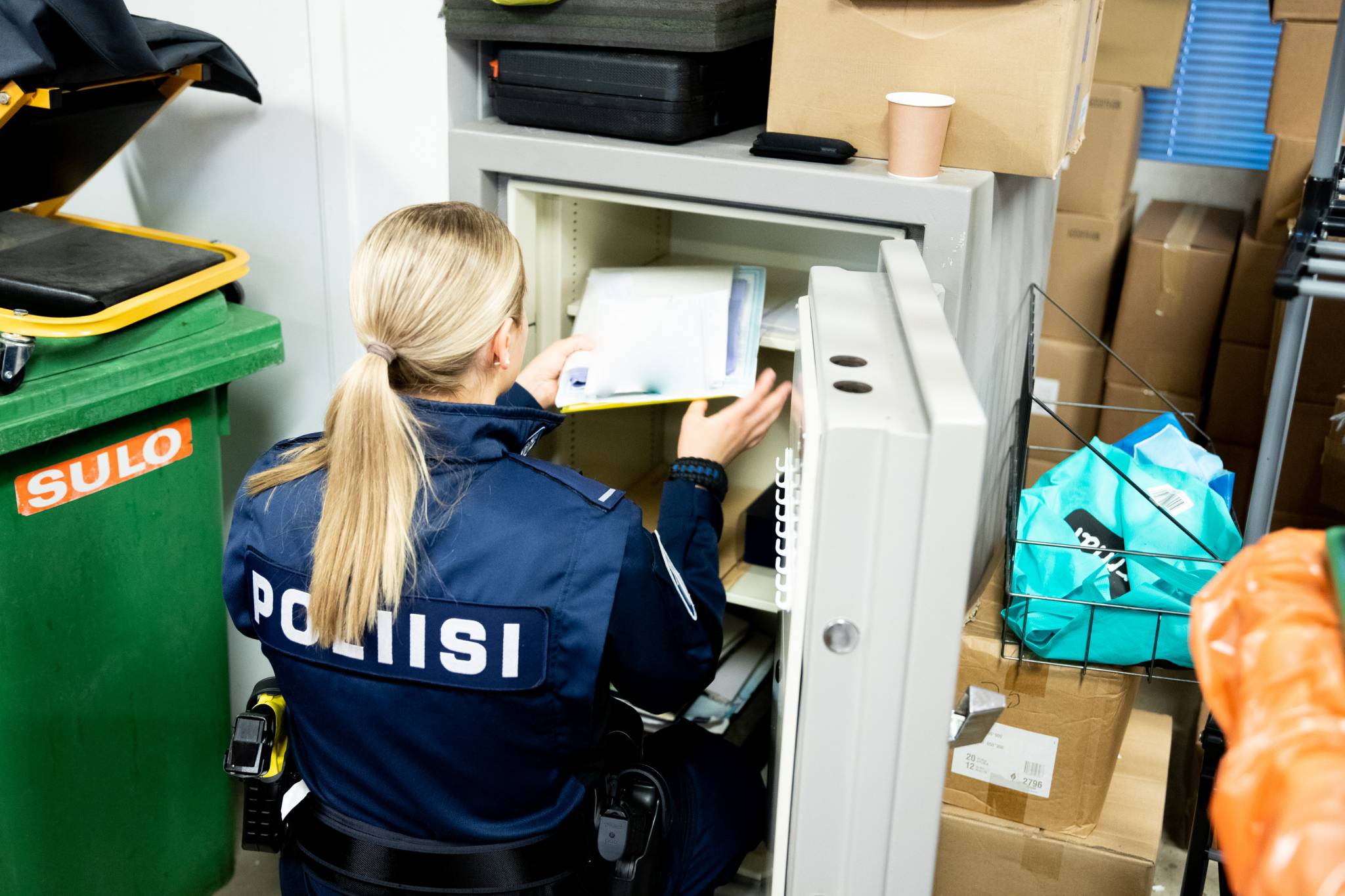
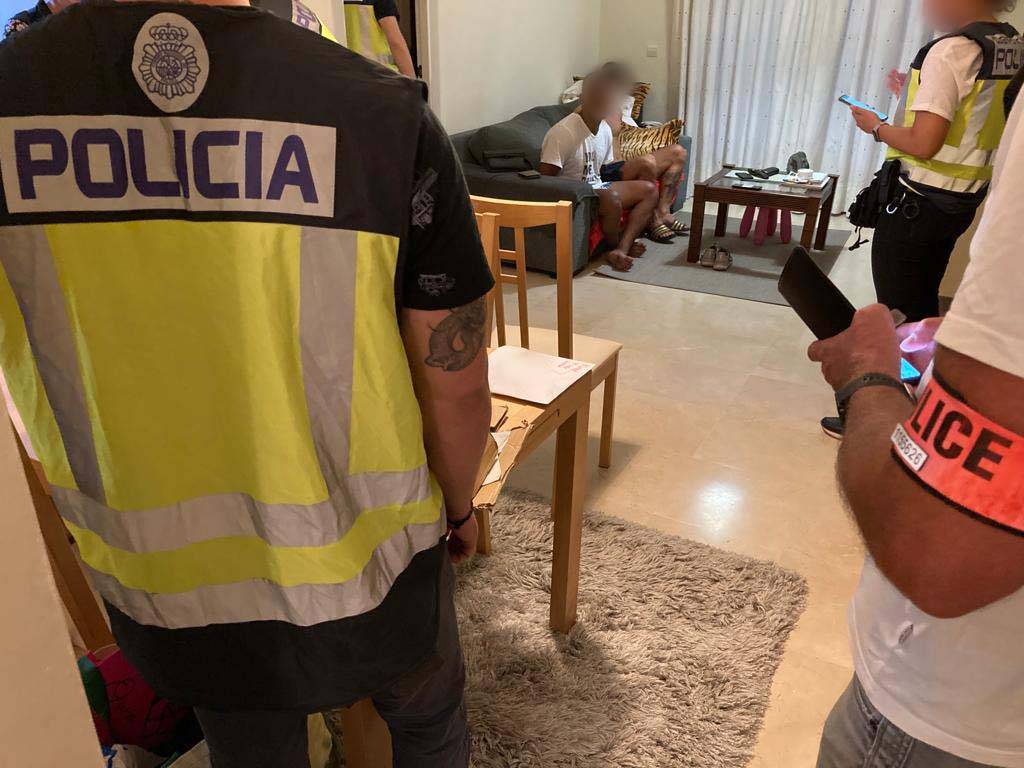
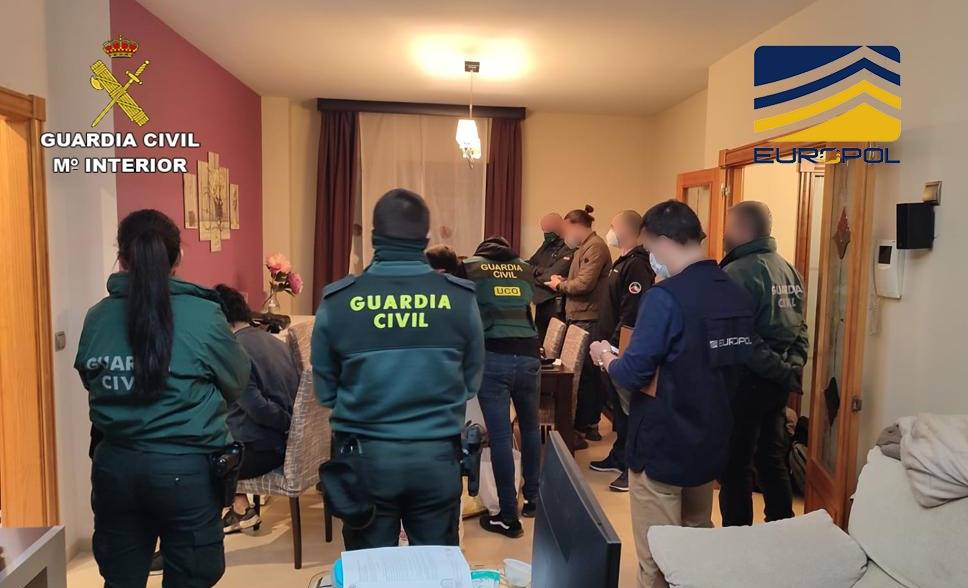
Composed mainly of Syrian nationals, the criminal network running this ‘bank’ provided financial services to criminal organisations linked to drug trafficking in more than twenty countries. Active since 2020, this criminal gang is believed to have laundered over EUR 300 million per year.  On 27 September, over 200 law enforcement officers raided a total of 21 locations in the Spanish provinces of Málaga and Toledo, resulting in 32 arrests and the seizure of almost EUR 3 million of criminal assets. Details of the seizures: EUR 428 205 in cash 19 cryptocurrency accounts worth EUR 1.5 million 11 luxury vehicles 70 kilos of hashish, 1.2 tonnes of marijuana and a plantation with 995 marijuana plants These seizures follow that of EUR 2.9 million in cash made over the course of the investigation.  Organised crime groups could make payments, receive funds and even have their proceeds laundered by this internationally structured financial network.  The Spanish city of Fuenlabrada appeared to be the centre of the underground bank. The criminals ran their money laundering activities from a local restaurant where their customers would come to deposit or collect bulk cash. The hawala informal money transfer system was the main money laundering typology used to avoid law enforcement detection.   Europol’s support was central in the development of the Spanish investigation. Since May 2020, Europol has been providing continuous intelligence development and analysis to map out the international activity of this criminal network. Two experts from its European Financial and Economic Crime Centre were also deployed to Madrid to assist the Spanish investigation with the cross-checking of operational information during the action day.  This investigation was financially supported by the European Multidisciplinary Platform Against Criminal Threats (EMPACT).  *** Headquartered in The Hague, the Netherlands, Europol supports the 27 EU Member States in their fight against terrorism, cybercrime, and other serious and organised crime forms. Europol also works with many non-EU partner states and international organisations. From its various threat assessments to its intelligence-gathering and operational activities, Europol has the tools and resources it needs to do its part in making Europe safer.
Read full story →
Europol Oct 7, 15:00

Suspect arrested in the Netherlands for circumventing EU trade sanctions against Russia

This individual, residing in the east of the Netherlands, is believed to have been supplying Russia with goods which could have been used for military purposes.  The investigation uncovered how the suspect supplied microchips to companies/entities in Russia, among other things. These microchips can be used for the production of weapons. Russia’s arms industry is currently struggling with a serious shortage of such microchips.  The suspect is believed to have deliberately pretended that these goods had a different destination that the actual final one (Russia) in order to circumvent the EU-imposed trade sanctions, prompting the Dutch FIOD to take action. 
Read full story →
Europol Oct 7, 07:59

Innovation a key issue as world police chiefs meet at Europol

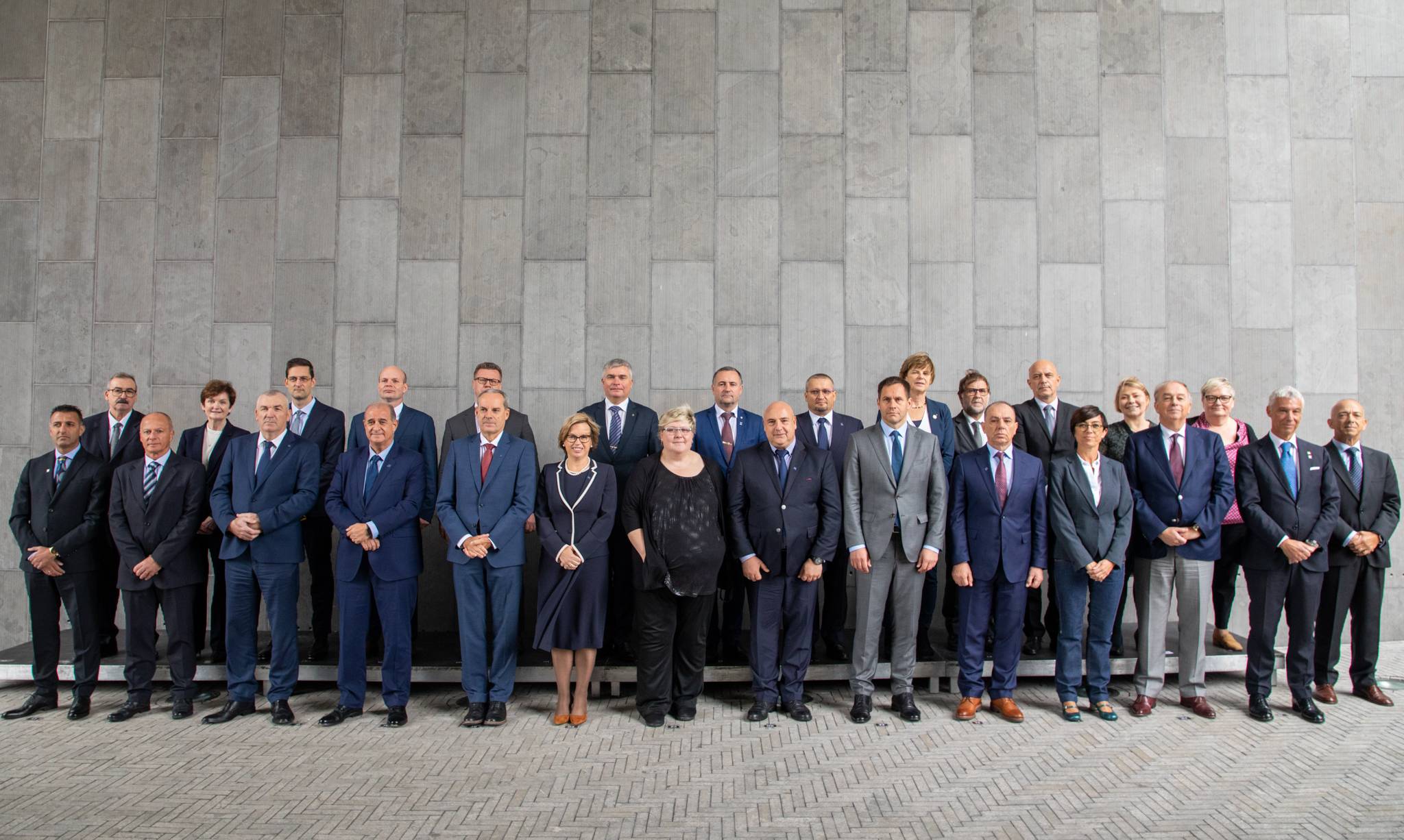
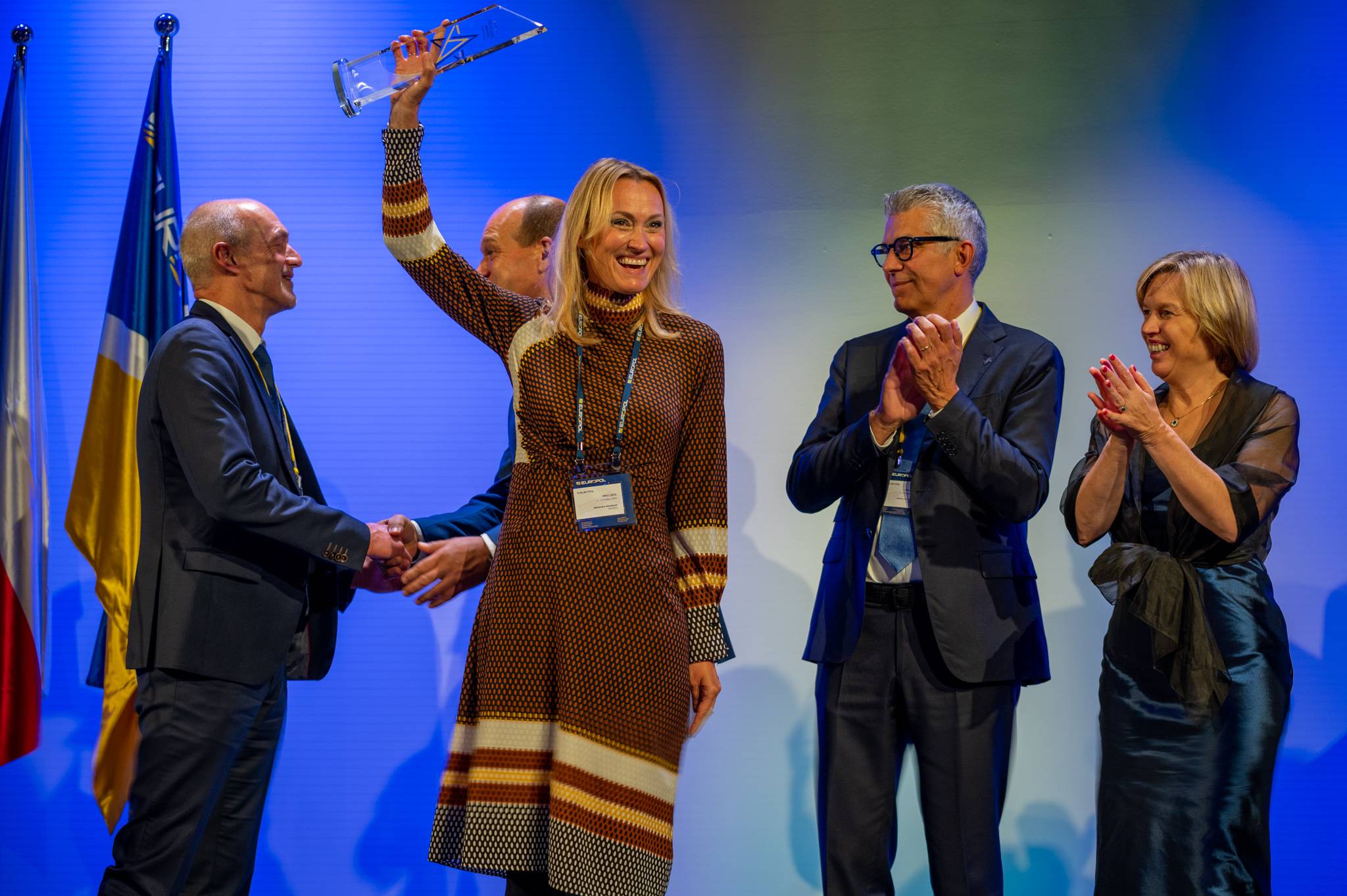
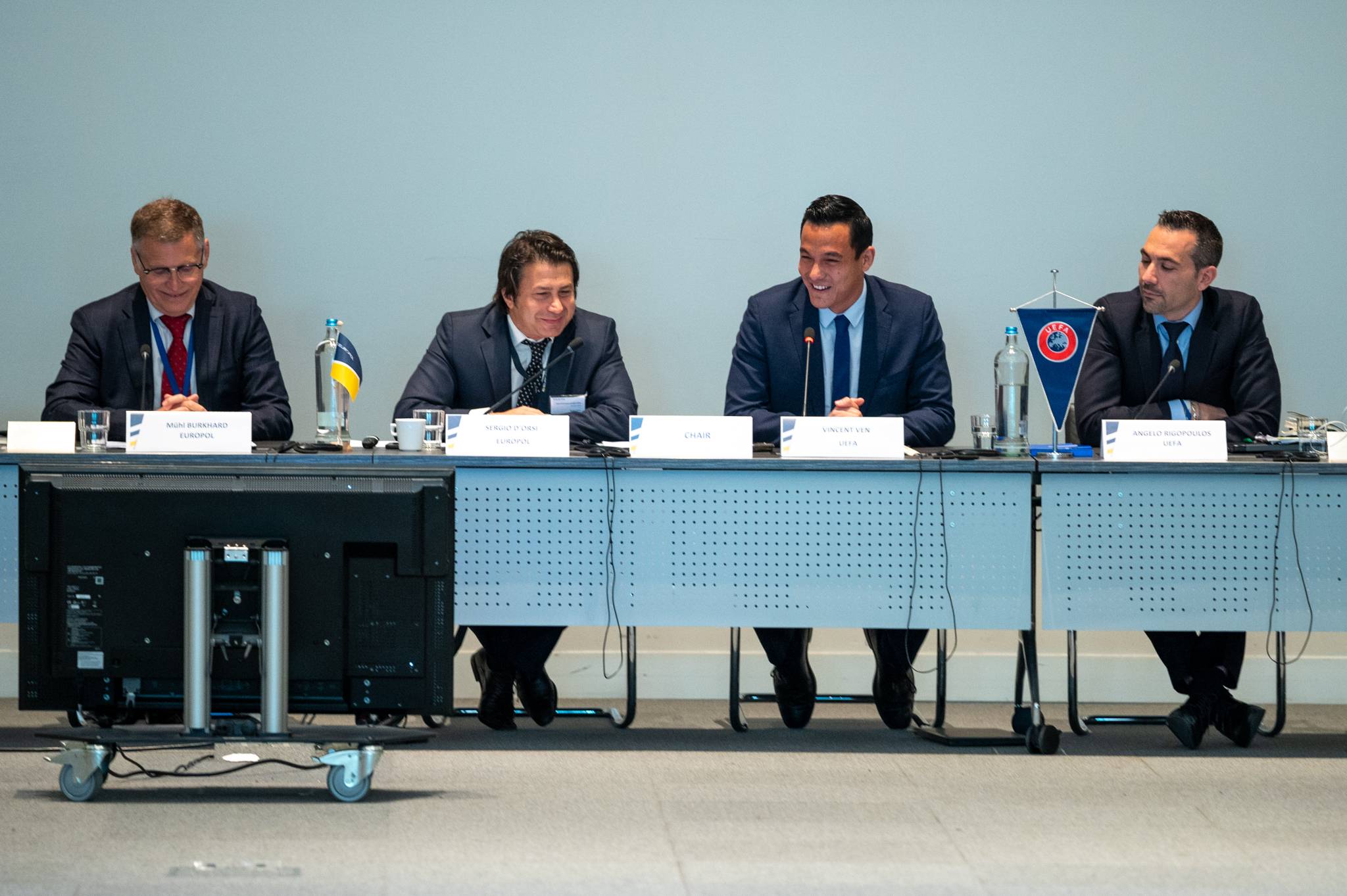
Co-hosted this year by Europol and the Czech Presidency of the Council of the EU, represented by their Police President Martin Vondrášek, on 4-5 October the EPCC brought together over 380 high-level representatives from 49 countries to discuss ways to address today’s security challenges while securing tomorrow’s opportunities.  Keynote speeches were delivered by the Director General of the Spanish National Police Francisco Pardo Piqueras, the Head of the National Police of Ukraine, the New York Police Department (NYPD) Commissioner and the Director of the EU Agency for Fundamental Rights Michael O'Flaherty, among others.  Opening the EPCC, Europol’s Executive Director, Catherine De Bolle, commented: The pandemic, the ensuing economic crisis and the Russian war of aggression against Ukraine have profoundly changed the internal security landscape in Europe. More than ever, law enforcement needs to be resilient in such uncertain times. This resilience is not only built through countering the threats which have materialised, but also preparing for the ones which are still on the horizon. Europol’s EPCC allows for this cooperation to happen on every level while showing the way forward for law enforcement. The topic of Ukraine was high up on this year’s agenda. In a moving address, the Head of the National Police of Ukraine, Ihor Klymenko, explained how Ukrainian law enforcement has had to learn to work in new, difficult conditions. Yet their overarching goal remains the same – to protect people’s lives. Europol’s Executive Director assured him of the full support of the European law enforcement community who has continued to maintain close contact with the Ukrainian authorities through the Ukrainian Liaison Officer posted at Europol’s headquarters. Keynote speakers also underlined the need to innovate, to strengthen resilience of  police forces, and to win back the trust and support of the public communities. In this regard, the NYPD Commissioner Keechant L. Sewell highlighted the importance of inclusivity in law enforcement, pointing out that "the public has to see themselves in the communities we serve, and we must see ourselves in them”. Commissioner Sewell went on to add that “inclusion strengthens the collective and interconnects the stakeholders of public safety. When we diversify, we normalise the unusual.” This was echoed in the keynote address of the Italian Deputy Director-General of Public Security, Vittorio Rizzi, who called for a greater exchange of best practices on the matter. “Law enforcement needs the societal consensus to administer the most precious responsibility entrusted to police forces in every democracy: the safety and security of our communities”, he added.   The European Customs DG meeting also took place alongside the EPCC, with the police-customs cooperation being one of the priorities of the Czech Presidency.  One place to meet all  With high-level delegations from over 49 countries and 10 organisations, the EPCC has become the key annual event for chiefs of police to meet their European and international peers all under one roof.  Bilateral and multilateral meetings took place at Europol’s headquarters, allowing the delegates to discuss operational matters and further strengthen their cooperation.  Working Arrangement with Qatar  On the margins of the EPCC, a Working Arrangement was signed between the Ministry of Interior of the State of Qatar and Europol. This Arrangement introduces a secure system for the exchange of information between Qatar with law enforcement authorities of the EU Member States, as well as with third countries and organisations associated with Europol. This follows a Liaison Officer Agreement signed in September by Europol and the United Arab Emirates, further linking the Middle East with their European counterparts.  Innovation as the main driving force  The need for innovation underpinned all of this year’s EPCC discussions, with law enforcement increasingly having to operate in a digital environment characterised by ever increasing volumes of information.  Artificial intelligence (AI) was one such topic discussed, with the delegates confirming the concerns raised in the Joint Declaration of European Police Chiefs on the AI Act of May 2022. While the Police Chiefs welcome the European’s Commission’s  initiative to regulate AI, they believe it essential that the rules adopted take into account the specificities of the operational work carried out by law enforcement.  A workshop was also dedicated to policing the metaverse. While this virtual environment is still at an early stage, the delegates assessed and anticipated its potential criminal exploitation to develop the right response and skills needed to mitigate such a threat. A number of the key findings can be found in the latest report of the Observatory Function of the Europol Innovation Lab on the topic.  Following the success of last year’s edition, the Europol Excellence Award in Innovation was awarded to the most innovative initiatives and operations in law enforcement. A total of 70 entries were submitted from law enforcement authorities across 14 countries, with the French Gendarmerie winning the Excellence Award for the most innovative project and the German Bundeskriminalamt (BKA) winning the Excellence Award for the most innovative operation.  Where the new meets the old  Two exhibitions were unveiled at Europol’s headquarters on the occasion of the EPCC:  •    The Czech Presidency showcased its new technological advances, such as drones, biometric sets and radiation detection equipment aimed to make law enforcement work more efficient and accurate.  •    The Italian Arma dei Carabinieri presented artefacts rescued in police operations against the trafficking of cultural goods. The archaeological goods on show include a Corinthian helmet, a marble Arturo Dazzi statue stolen from a private chapel and an Etruscan stamnos. This exhibition will be made open to the public on the occasion of the Just Peace Open Day organised on 16 October by the Hague Humanity Hub.   
Read full story →
Europol Oct 6, 12:55

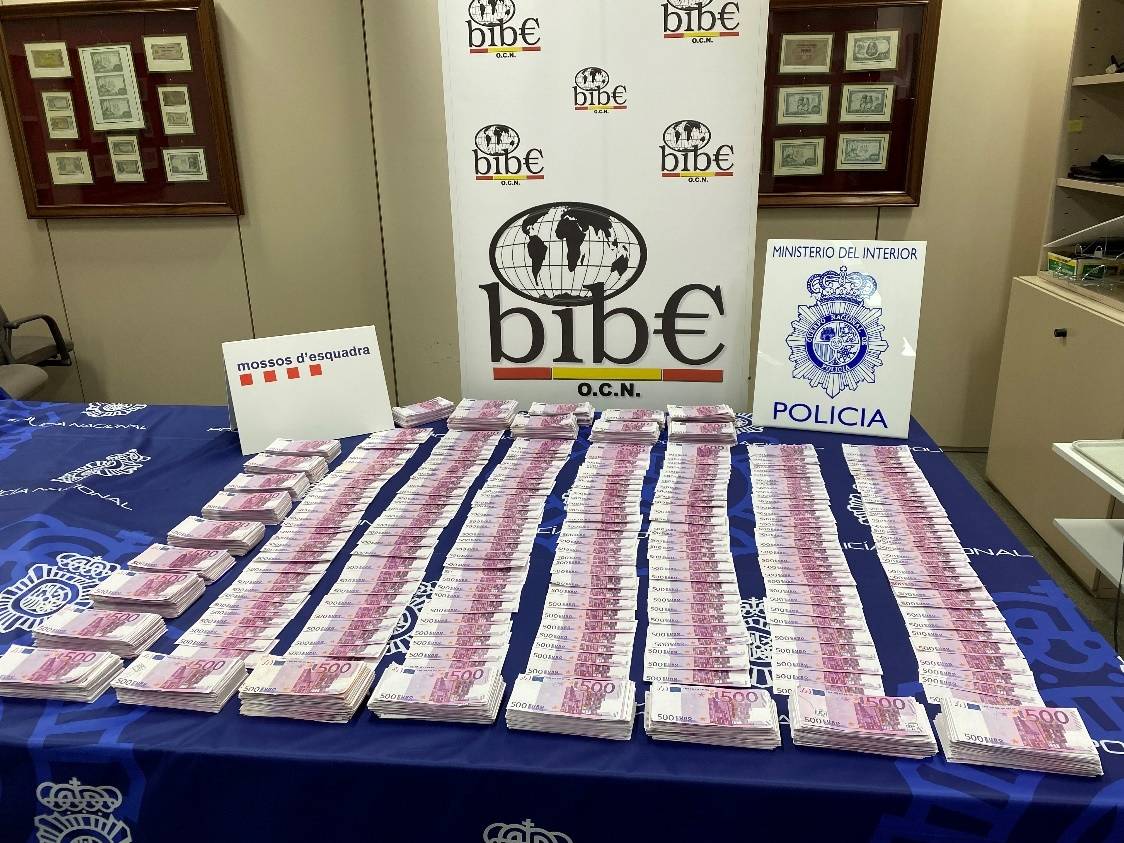
More than EUR 4 million in fake 500 euro bills seized in Spain

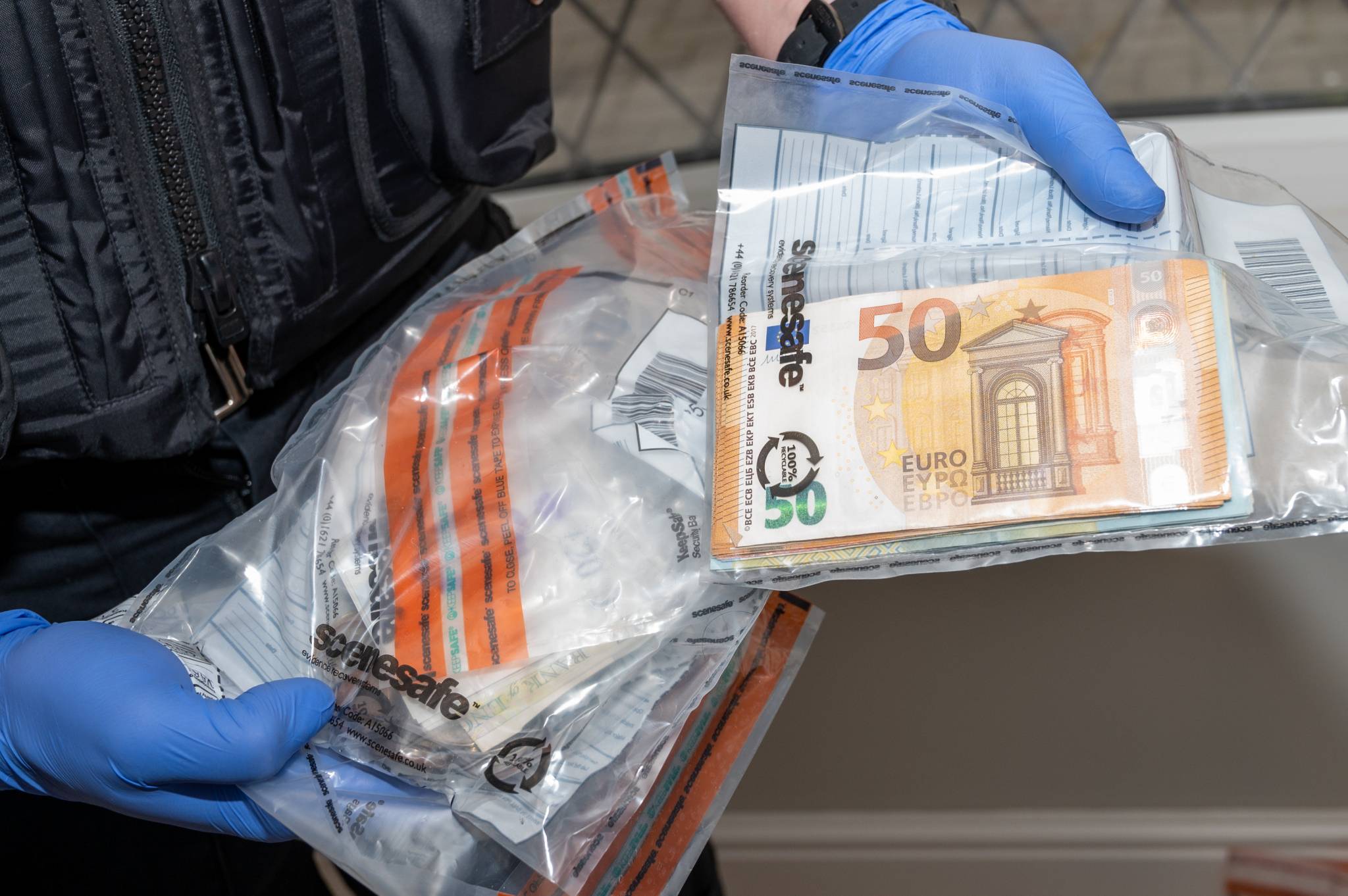
The action day led to: 9 location searches in Alicante, Barcelona, Malaga and Valencia; 12 persons arrested; one clandestine print shop dismantled; the following seizures: EUR 4.3 million in high-quality fake 500 euro banknotes and a large amount of equipment (several printing presses, an exposure unit, a hot stamping machine, a paper guillotine and raw materials). The counterfeiters were using top-end technology to produce counterfeit euro bills, in what are considered to be some of the most sophisticated fakes ever detected in the EU. The advanced technological design and the good condition of the forgeries make these the most dangerous counterfeits produced in the EU in recent years. Investigators from the Bank of Spain's Investigation Brigade identified the main suspect behind the print shop as an individual already known by authorities detained for similar criminal activities in 2009. Although these counterfeit bills were of higher quality, they had similar features to counterfeits produced in 2009. This is what led authorities to link the counterfeits to the same suspect.  In 2021, the Spanish Regional Catalan Police found a bag with about EUR 4 million in fake 500 euro bills. The Analysis Centre of the Bank of Spain confirmed that the fakes were the same as the ones from the most recent batch of counterfeits. The investigators estimate that in as little as three months’ time, the criminal network printed more than EUR 8 million in this clandestine print shop, which was dismantled in September. The members of the criminal network had different functions, from supplying raw materials, mainly from China, to managing the printing equipment. The fake money was used for different criminal activities including drug trafficking.  Europol facilitated the information exchange, and financed and coordinated a number of operational activities. Europol also provided analytical support identifying the country in which the banknotes were distributed. During the action day, Europol deployed an expert to Spain to offer technical support and cross-checked operational information against Europol’s databases and the systems of the European Central Bank.  Headquartered in The Hague, the Netherlands, Europol supports the 27 EU Member States in their fight against terrorism, cybercrime, and other serious and organised crime forms. Europol also works with many non-EU partner states and international organisations. From its various threat assessments to its intelligence-gathering and operational activities, Europol has the tools and resources it needs to do its part in making Europe safer.  
Read full story →
Europol Oct 5, 13:45

Qatar and Europol sign arrangement to combat cross-border serious organised crime

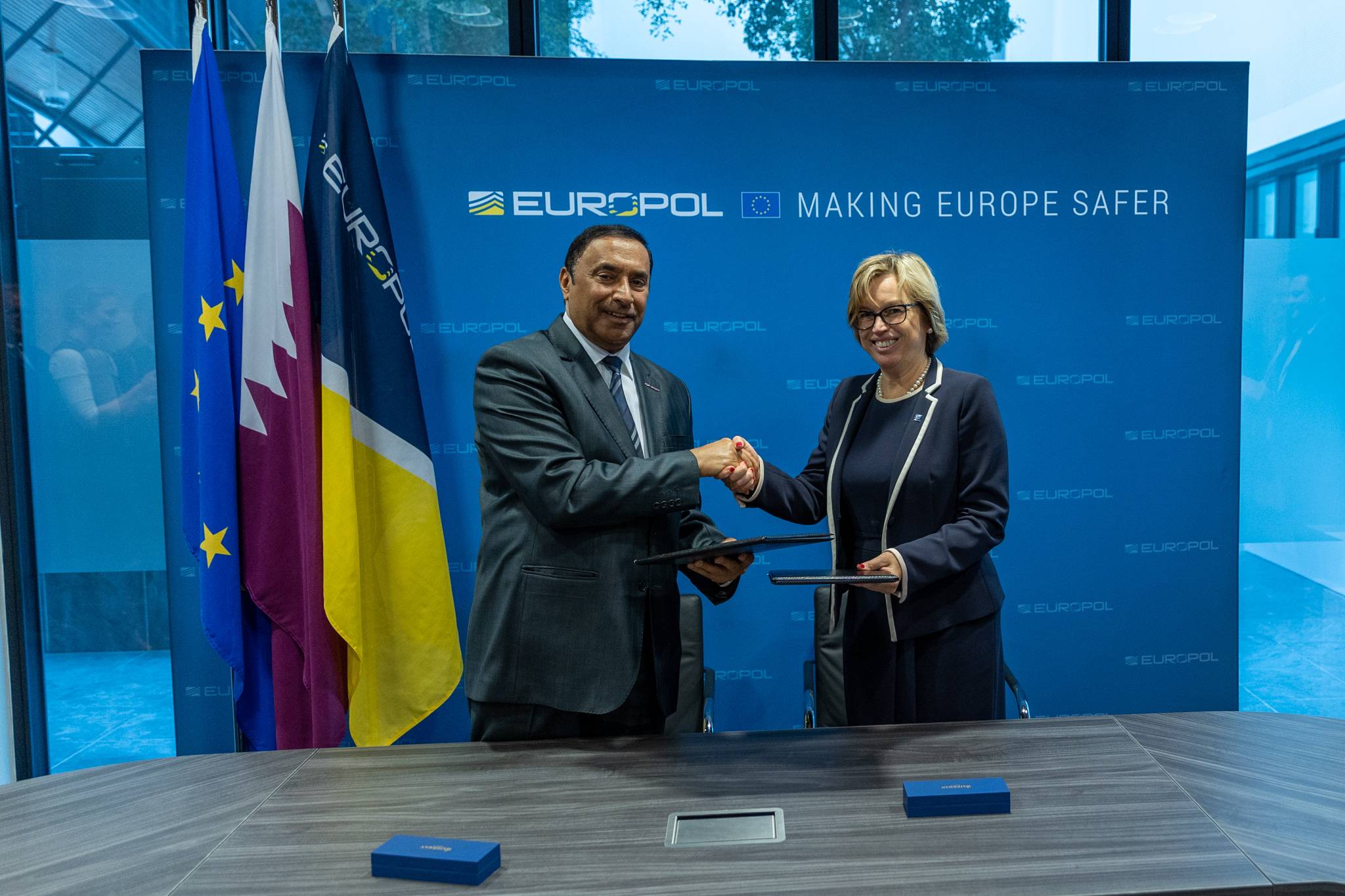
The Working Arrangement introduces a secure system for the exchange of information between the parties, linking Qatar with the law enforcement authorities of the Member States, as well as with third countries and organisations associated with Europol.  The cooperation may, in addition to the exchange of information, include the exchange of specialist knowledge, general situation reports, results of strategic analysis, participation in training activities as well as providing advice and support in individual criminal investigations.  Based on this Working Arrangement, Qatar can deploy a liaison officer to Europol’s headquarters in the Netherlands to join a unique community of liaison bureaux of law enforcement authorities from more than 40 countries from across the world. Europol’s Executive Director Catherine De Bolle said: Today marks the start of a fruitful collaboration between the law enforcement authorities of Qatar and their counterparts in the European Union. Europol is looking forward to hosting a Qatari liaison officer in its headquarters in The Hague, further enabling a trustful flow of information in our collective fight against organised crime and terrorism. Major General Khalifa Nasr Al-Nasr, Director of the Human Resources Department at the Ministry of Interior, Qatar said: In a global framework, no country can operate in a vacuum.  Qatar is committed to identifying and further enhancing areas of cooperation with the world's foremost law enforcement organisation.  Europol's global tools and international law enforcement networks will further support our national and regional security efforts. After entry into force of the Arrangement, this new level of cooperation will be important for tackling priority crime areas affecting both the European Union and Qatar.   
Read full story →
Europol Oct 5, 10:00

Europol Excellence Awards in Innovation 2022

Europol received more than 70 nominations from law enforcement organisations across 14 countries in Europe, of which two have been selected: one award for the most innovative law enforcement project and one award for the most innovative law enforcement operation.  The winners of the two awards were carefully assessed and selected by a dedicated panel, which included the European Commissioner for Home Affairs Ylva Johansson, the Police Chiefs of France, the Czech Republic and Sweden, and Europol’s Executive Director. The Head of the Europol Innovation Lab, Grégory Mounier said: Innovation is at the heart of modern policing, and Europol is striving to ensure that the European law enforcement community benefits from the most innovative technologies and tools to keep European citizens safe. The outstanding quality of the 70 projects and operations nominated this year, is not only a success for the Europol Excellence Awards in Innovation but it is also a testimony of the incredible innovative and creative spirit that drives our law enforcement colleagues around Europe. The Europol Innovation Lab will invite the most promising nominees to take part in follow-up events, with the aim of sharing innovative ideas with the larger European law enforcement community. The Excellence Award for the most innovative project  The award for the most innovative project went this year to the French Gendarmerie for the creation of an Artificial Intelligence Tools Platform. The platform provides a suite of advanced criminal analysis tools specifically developed to enable police officers to benefit from artificial intelligence when processing criminal information. The platform includes fingerprint analysis and a comparison tool, firearms and drug detection function, speech to text transcription, entity extraction and automatic translation tools in more than 100 languages.  The tools were developed in the framework of EU Horizon 2020 projects and under the supervision of the data protection authority of the French Gendarmerie. The platform is currently available to 600 criminal analysts across France and tools are made available to other law enforcement agencies in Europe via the Europol Innovation Lab Tool repository.  The Excellence Award for the most innovative operation The most innovative operation was awarded to the German Bundeskriminalamt (BKA) for Operation HYDRA. In April 2022, the BKA, in partnership with the United States and Europol, took down the largest ever darknet market place in the world with more than 16 million users and an estimated annual turnover of more than EUR 1.23 billion. As a result of the BKA's innovative approach, the entire criminal infrastructure was rendered unusable and led to the seizure of more than 50 servers and 1.9 petabytes of data.   Innovation in international Law Enforcement cooperation The Europol Excellence Awards in Innovation highlight how effective modern day law enforcement requires partnership and collaboration, whether in teams of officers, between forces, in multi-agency operations or through wider public sector involvement. The Awards also recognise that accomplishments arise from a blend of innovative, committed and well-trained personnel, serving, engaging and protecting the public while using technology efficiently and effectively. These awards should inspire the European law enforcement community by providing insights into successful innovation. Europol was mandated by the Justice and Home Affairs ministers from all the EU Member States at the end of 2019 to create an Innovation Lab to support the law enforcement community in innovation. The Lab aims to identify, promote and develop innovative concrete solutions supporting the EU Member States' operational work. These will help investigators and analysts to make the most of the opportunities offered by new technologies to avoid duplication of work, create synergies and pool resources. The activities of the Lab are directly linked to the strategic priorities as laid out in the Europol Strategy 2020+, which states that Europol shall be at the forefront of law enforcement innovation and research.  
Read full story →
Europol Sep 29, 12:00

Medicine traffickers faced with undesirable side effects

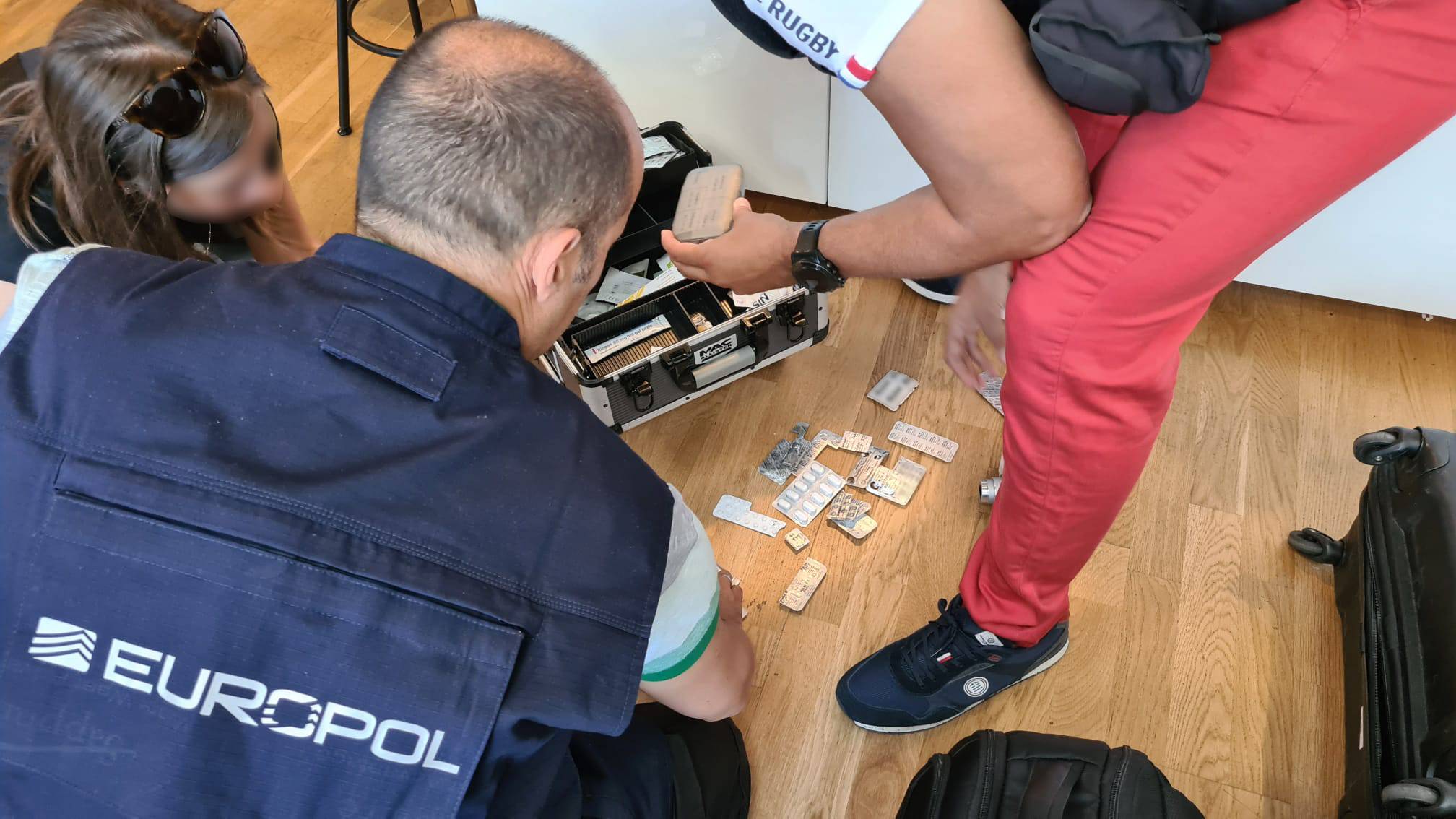
Law enforcement conducted seven house searches and seized fake Belgian identity documents, illegal medicines, fake prescriptions and cash. The operation was led by France and relied on international cooperation by Austria, Belgium, Germany, Italy, Luxembourg, the Netherlands and Switzerland. Europol supported the operation by liaising with the OCLAESP, processing the available data and deploying a mobile office on the spot during the action day in Lyon (Rhône-Alpes region). Fake prescriptions as modus operandi The organised crime group targeted had been supplying the market with illegally acquired drugs since November 2020. By providing fake and stolen doctors’ prescriptions from all over France, the criminal group managed to collect psychotropic drugs from pharmacies in the French Rhone-Alpes region. Law enforcement were alerted by a pharmacist of the suspicion of this illegal activity and started an investigation that culminated in the recent action. Of the 20 people arrested, eight were taken into police custody and five of them eventually incarcerated. Initial interrogations of the leading members of the criminal network revealed that they also regularly travelled to other European countries to obtain the supply of medicines, which in turn were also illegally obtained by a criminal network operating abroad. Apart from the medicines fraudulently gathered in France, the arrested suspects were trading in medicines mainly imported from the Netherlands and Belgium.   Grave public health risk The illegally acquired drugs were sold on the local market, causing a recurrent threat to public health. Illegal trade in either genuine, counterfeited, falsified or misused medicines is a grave public health concern and this has recently seen an increase, especially in the area of antiviral drugs including two oral antivirals currently available to treat CoViD-19.   
Read full story →
Europol Sep 27, 06:00

Kingpins of sexual exploitation gang arrested in Berlin

The investigation uncovered that the criminal network was led by a Hungarian couple (one male and one female). They were arrested in Berlin based on a European Arrest Warrant issued by Hungary. During the action day, officers interviewed one victim of human trafficking in Berlin and two potential victims in Budapest. The action day led to: 2 house searches in Germany 3 arrests (2 in Germany and one in Hungary); 2 witnesses interviewed; Seizures included one vehicle and electronic equipment. Active since 2017, the criminal network recruited young Hungarian women and exploited them. The suspects recruited the females from vulnerable social and economic backgrounds for prostitution in a certain areas of Berlin. The suspects were offering their victims a 'business deal', which they claimed included accommodation, protection and assistance with official documentation upon arrival in exchange for 50 % of the girls’ income. However, the girls were forced to give their entire income to the criminal network. The suspects transported the victims from Hungary to Germany and housed them in flats rented by the criminal network. Once there, the suspects imposed a specific code of conduct, means of communication and working conditions on the victims, and dictated the pricing and location of the prostitution. The victims were sent to specific streets and areas of Berlin, which were controlled by the suspects.  The criminal network imposed a minimum daily income to be earned by the victims. They had to stay on the streets until they earned between EUR 150 and EUR 300. Criminal associates who wanted to manage their own girls in the streets controlled by the main suspect, had to pay him EUR 150 daily per victim exploited in the area. Generally, the suspects took all of the income generated by the victims, who suffered severe mental and physical abuse when they failed to earn the required daily amount, or when they did not follow the code of conduct imposed by the criminal network. The investigation has identified 25 victims so far. One of them suffered severe abuse and was locked in a room where she was forced into prostitution. In an attempt to escape, she jumped out of the window and her injuries led to nine months of hospital treatment.        Europol coordinated the operational activities, facilitated the exchange of information and provided analytical and financial support. Europol deployed one expert to Berlin and one to Budapest to cross-check operational information in real time and support investigators on the ground with technical expertise.   
Read full story →
Europol Sep 23, 12:51

Europol to host United Arab Emirates Liaison Bureau

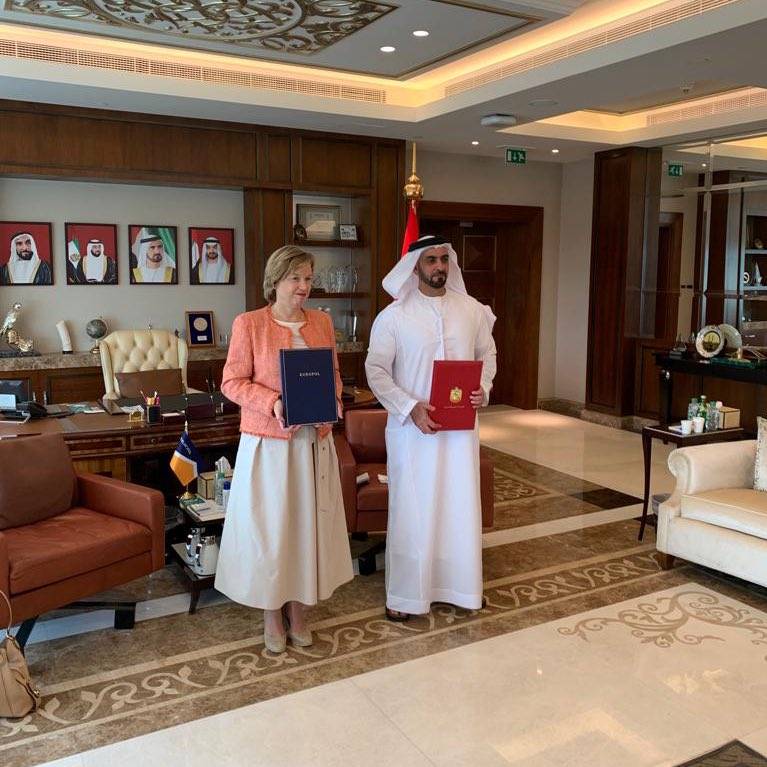
The signature took place on the occasion of the visit of Europol’s Executive Director to Abu Dhabi and Dubai to meet with the Deputy Prime Minister and Minister of Interior Lt. Gen. Saif Bin Zayed al Nahyan and Emirati law enforcement.  This Agreement marks a milestone in international police cooperation. The permanent presence at Europol of UAE liaison officers will considerably promote operational cooperation between the United Arab Emirates and the law enforcement authorities of the Member States of the European Union, as well as third countries and organisations associated with Europol.  This Agreement follows the signing of an Agreement on Strategic Cooperation between the United Arab Emirates and Europol in 2016.  Europol’s Executive Director, Catherine De Bolle, commented: The United Arab Emirates is a key security partner in the fight against the most pressing criminal threats of today, both in the Gulf region and internationally. I welcome this agreement which will mark a new level of cooperation in international policing by connecting Emirati law enforcement with their counterparts in all of Europe’s Member States and partner countries. By doing so, we are sending together a clear signal to criminals. Fostering cooperation internationally The UAE liaison officers will join a network of more than 250 liaison officers from over 50 countries and organisations with a permanent representation at Europol.  This unique approach to international police cooperation has positioned Europol as the place where crucial intelligence emerges with law enforcement from countries across the world working side by side.  Most recently, Europol welcomed liaison officers from Brazil and Japan. An updated list of Europol’s working arrangements with countries from outside the European Union can be found here.   
Read full story →
Europol Sep 21, 08:00

20 countries spin a web to catch human traffickers during a hackathon

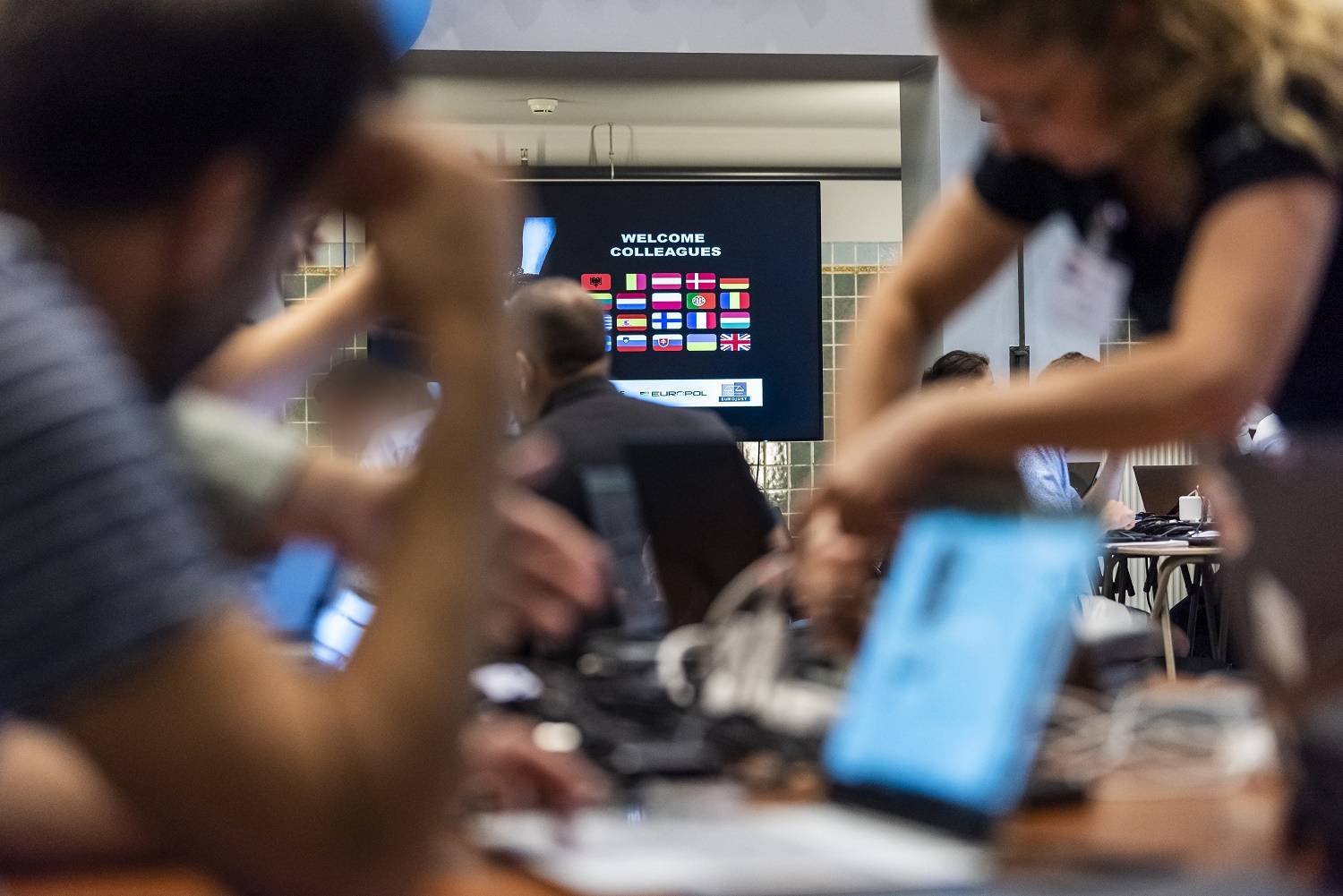
The action day brought together 85 experts from different EU law enforcement authorities at the Dutch Police Academy in Apeldoorn. They focused on combating criminal networks that use social media, the surface web and the dark web to conduct human trafficking. Compared to other crime areas, such as drug trafficking or trafficking of weapons, it is more challenging to identify the indicators of trafficking in human beings in an online environment. This joint action day gathered criminal intelligence to determine these indicators as part of the fight against criminal networks using the online environment to exploit the most vulnerable people. In particular, the investigators targeted human traffickers attempting to lure Ukrainian refugees.  The internet and human trafficking are interlinked. Many social media platforms, dating apps and private groups online are being ‘hijacked’ by individuals involved in human trafficking for sexual or labour exploitation. These individuals are trying to mislead law enforcement and avoid detection. The joint efforts of law enforcement in the monitoring of platforms which may offer sexual services, recruitment, and the harbouring or transportation of victims increases the intelligence picture. The international cooperation, exchange of knowledge, expertise and technology, served the better mapping out of this criminal landscape and served new investigations. Main figures:  114 online platforms monitored in total, of which 30 were related to vulnerable Ukrainian refugees; 53 online platforms suspected of links to human trafficking checked, of which 10 were related to vulnerable Ukrainian refugees; Five online platforms linked to human trafficking checked, of which four were related to child sexual exploitation on the dark web;  11 suspected human traffickers identified, 5 of whom were linked to trafficking of human beings, and specifically to vulnerable Ukrainian citizens; 45 possible victims identified, 25 of whom were of Ukrainian nationality; 20 platforms with possible links to trafficking of human beings identified for further investigation and monitoring; 80 persons/user names checked, out of which 30 were related to possible exploitation of vulnerable Ukrainian citizens. Although the actions focused mainly on trafficking in human beings for sexual exploitation, the officers also looked for leads to identify other forms of exploitation, including labour exploitation. The investigators managed to explore a wide range of websites and other online platforms for trafficking in human beings and other criminal activities. These platforms include social media, dating platforms, advertising and aid platforms, forums and messaging applications. Investigators also checked platforms on the dark web in relation to trafficking in human beings and child sexual exploitation online.   *Participating countries: Austria, Albania, Belgium, Denmark, France, Finland, Germany, Greece, Hungary, Lithuania, Netherlands, Portugal, Poland, Romania, Slovenia, Slovakia, Spain, Sweden, United Kingdom and Ukraine Hackathon: when a group of experts get together and focus on finding ways to solve, or to investigate, the same problem in a limited amount of time. Europol supported the coordination of the operational activities, facilitated the exchange of information and provided analytical support. On the action day, Europol deployed two experts to the coordination centre to facilitate the information exchange in real time and crosscheck operational information against Europol’s databases. This provided further investigative leads to the participating officers from involved national law enforcement authorities.   
Read full story →
Europol Sep 20, 10:00

32 arrests in series of actions against the Italian mafia in Spain

This operation was enabled by the deployment of some 500 law enforcement officers on the ground, including special intervention teams, canine units, helicopters and drones.  This sting follows a complex investigation initiated by the Spanish Civil Guard (Guardia Civil) who worked on this case together with the Italian Carabinieri (Arma dei Carabinieri) and Financial Corps (Guardia di Finanza), with the support of Europol and Eurojust.  This operation has resulted in: 32 arrests; 40 house searches in Ibiza, Barcelona, Malaga and Tenerife; The dismantlement of an indoor cannabis plantation (600 plants); Seizures includes approximately EUR 300 000 in cash, 18 kilos of amphetamine, 4.5 kilos of cocaine, firearms and ammunition.    The investigation uncovered the existence in the Balearic Islands in Spain of an organised crime group linked to the ‘Ndrangheta syndicate. The criminal gang is believed to have played an active role in cocaine and cannabis trafficking in between Spain and Italy, using vehicles equipped with hidden compartments and speedboats to transport the drugs.  The members of this criminal organisation would routinely use violence, including torture, to further their criminal goals. Some of the arrestees are linked to a number of murders in Italy. The investigation also uncovered the illegal possession of firearms by some members of this gang. The criminal profits were reinvested into real estate in Spain to hide their illegal origin, polluting the legal economy. Europol supported this investigation by providing tailored expertise and extensive analysis support and facilitating the exchange of information through its secure channels. The exploitation of the critical intelligence carried out by Europol was crucial for the case development.  During the live phase of the operation, a Europol mobile office was deployed to Spain to facilitate the real-time exchange of information and crosschecks of the data gathered in the course of the action against Europol’s databases. The case was opened at Eurojust by the Italian authorities in April 2022. The Agency hosted two coordination meetings to facilitate judicial cooperation and provided support for the coordinated investigative efforts, including the organisation of an action day in Spain. This investigation was supported by the EU-funded Project ISF4@ON, an Italian-led initiative to tackle mafia-type organised crime groups active in Europe. Headquartered in The Hague, the Netherlands, Europol supports the 27 EU Member States in their fight against terrorism, cybercrime, and other serious and organised crime forms. Europol also works with many non-EU partner states and international organisations. From its various threat assessments to its intelligence-gathering and operational activities, Europol has the tools and resources it needs to do its part in making Europe safer.  
Read full story →
Europol Sep 16, 07:00

Migrant smugglers using private aircraft grounded in Belgium and Italy

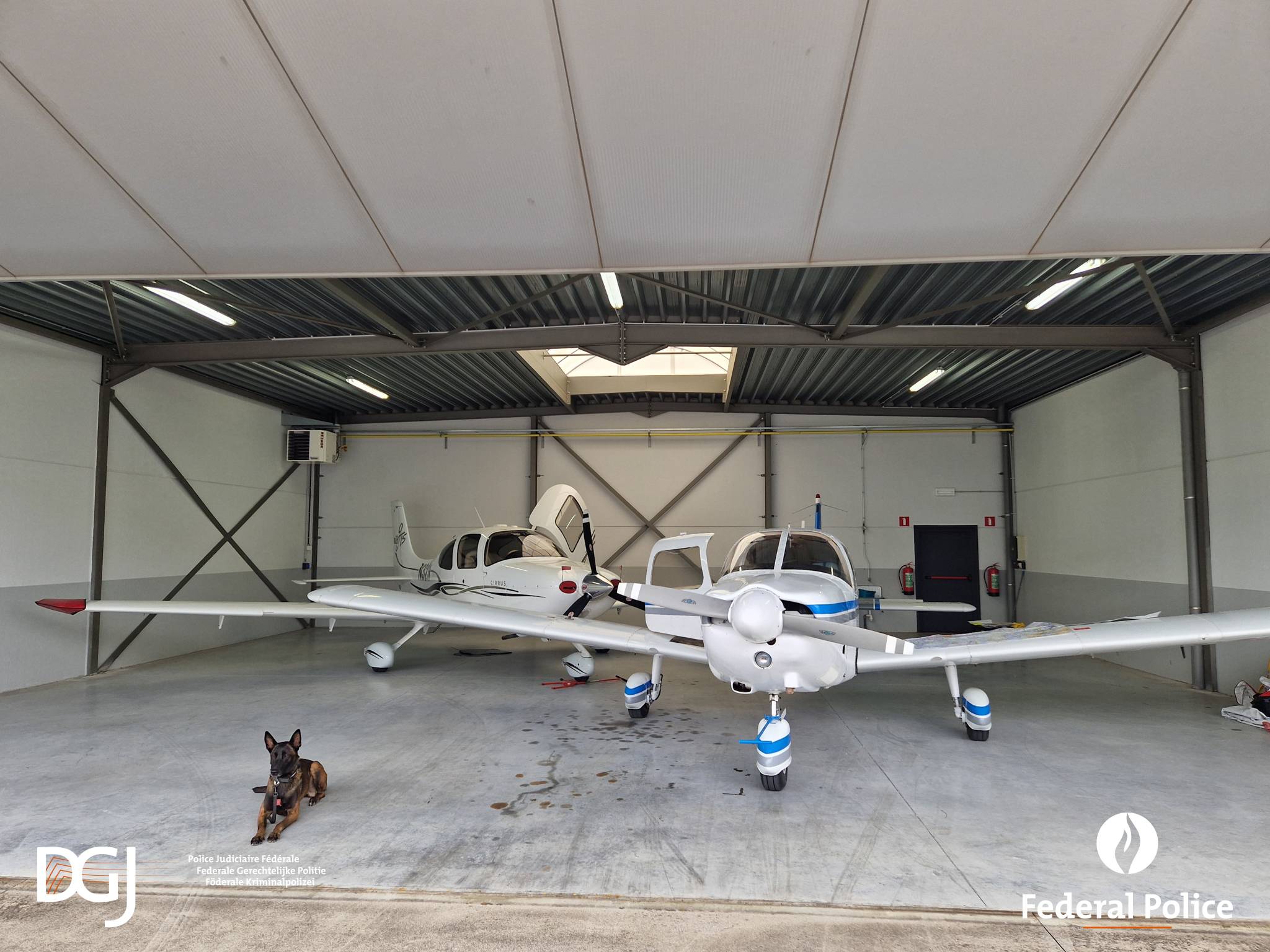
Up to EUR 20 000 for a place in private aircraft The migrants, mainly Iraqi and Iranian of Kurdish origin, boarded private aircrafts in Türkiye carrying false diplomatic passports. However, the official destinations of the trips (usually the Caribbean) were never reached. During the stopovers at different European airports, including in Austria, France and Germany, the migrants left the plane, disposed of their false passports and systematically applied for asylum. The suspects charged up to EUR 20 000 per smuggled person. It is believed that, between October and December 2020, at least five smuggling operations took place in five different European countries. In addition, several plans were made to carry out other smuggling operations. In addition to migrant smuggling and forging identity documents, the organised crime group is also suspected of issuing false checks and scamming airlines in an attempt to build its own fleet. The suspects also allegedly defrauded hotels by not paying the invoices.  The action day on 13 September led to: 5 arrests (2 in Belgium and 3 in Italy) 7 house searches (1 in Belgium and 6 in Italy) Seizures of 2 aircraft, EUR 80 000, 1 high-end car, electronic equipment, and equipment to forge ID documents (such as card printers, stamps, holograms and white plastic cards)    EUR 173 000 frozen in Italy Eurojust supported the authorities involved with the setting up and funding of a joint investigation team (JIT) in June 2021. Eurojust also hosted four coordination meetings to facilitate judicial cooperation and provide support for the coordinated investigative efforts. Europol prioritised the case at an early stage, assigning a dedicated analyst and specialist to support the national investigations to identify the members of the criminal network and to dismantle it. Europol facilitated the operational information exchange and provided analytical and financial support. On the action day, Europol activated a Virtual Command Post to facilitate the information exchange in real-time. Europol also deployed three analysts – one to Belgium and two to Italy – to cross-check operational information against Europol’s databases, thus providing further investigative leads to the participating national law enforcement authorities.   Law enforcement authorities involved:  Austria: Criminal Intelligence Service (Bundeskriminalamt), Provincial CID of Tyrol (Landeskriminalamt Tirol) and Schwechat City Command of the Federal Police (Stadtpolizeikommando Schwechat) Belgium: Belgian Federal Police (Federale Politie, Police Fédérale), Aviation Police Wevelgem France: French Border Police (OCRIEST/Police Aux Frontières) Germany: German Federal Police Munich Airport Italy: National Police (Polizia di Stato: Servizio Centrale Operativo, Squadra Mobile di Bari e Roma, Servizio di Polizia Scientifica and Ufficio di Polizia di Frontiera di Bari)  United States: Homeland Security Investigations, U.S. Customs and Border Protection, Diplomatic Security Service. Judicial authorities involved:  Austria: Public Prosecutor Offices of Korneuburg Belgium: Examining Magistrate Brussels, Federal Prosecutor’s Office France: Examining Magistrate of Tribunal Judiciaire de Créteil Germany: Landshut Public Prosecutor's Office  Italy: Public Prosecutor Offices of Bari and Rome United States: U.S. Department of Justice, the U.S. Attorney’s Office for the District of Columbia   
Read full story →
Europol Sep 12, 08:00

Spanish authorities break into narco bank

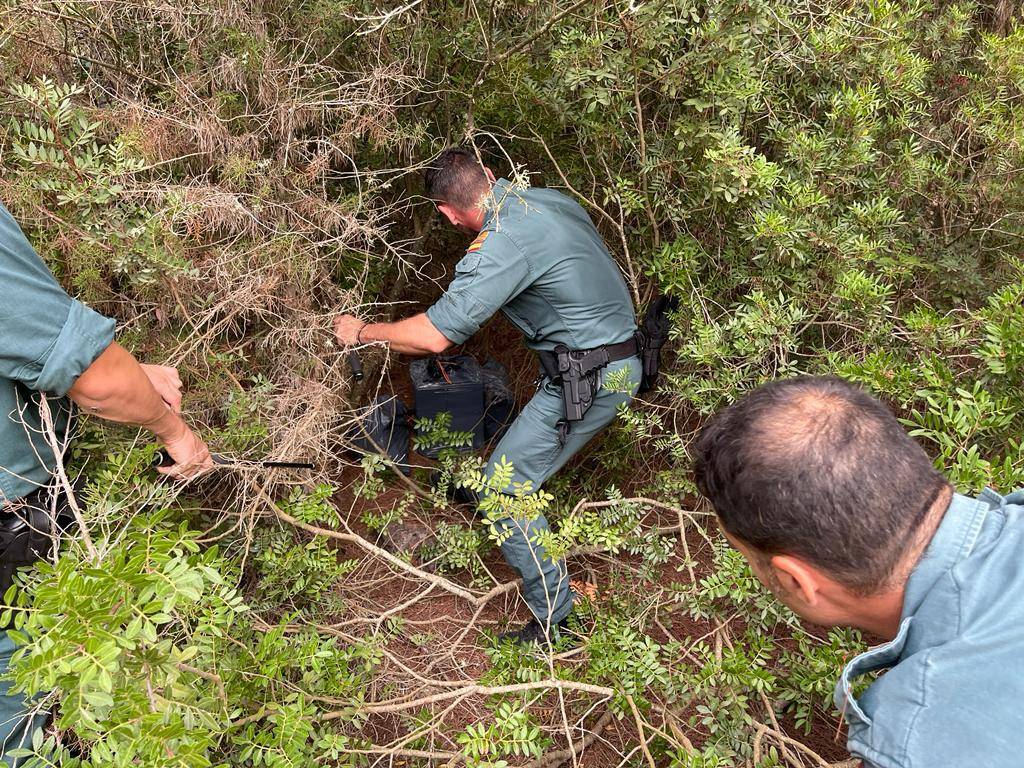
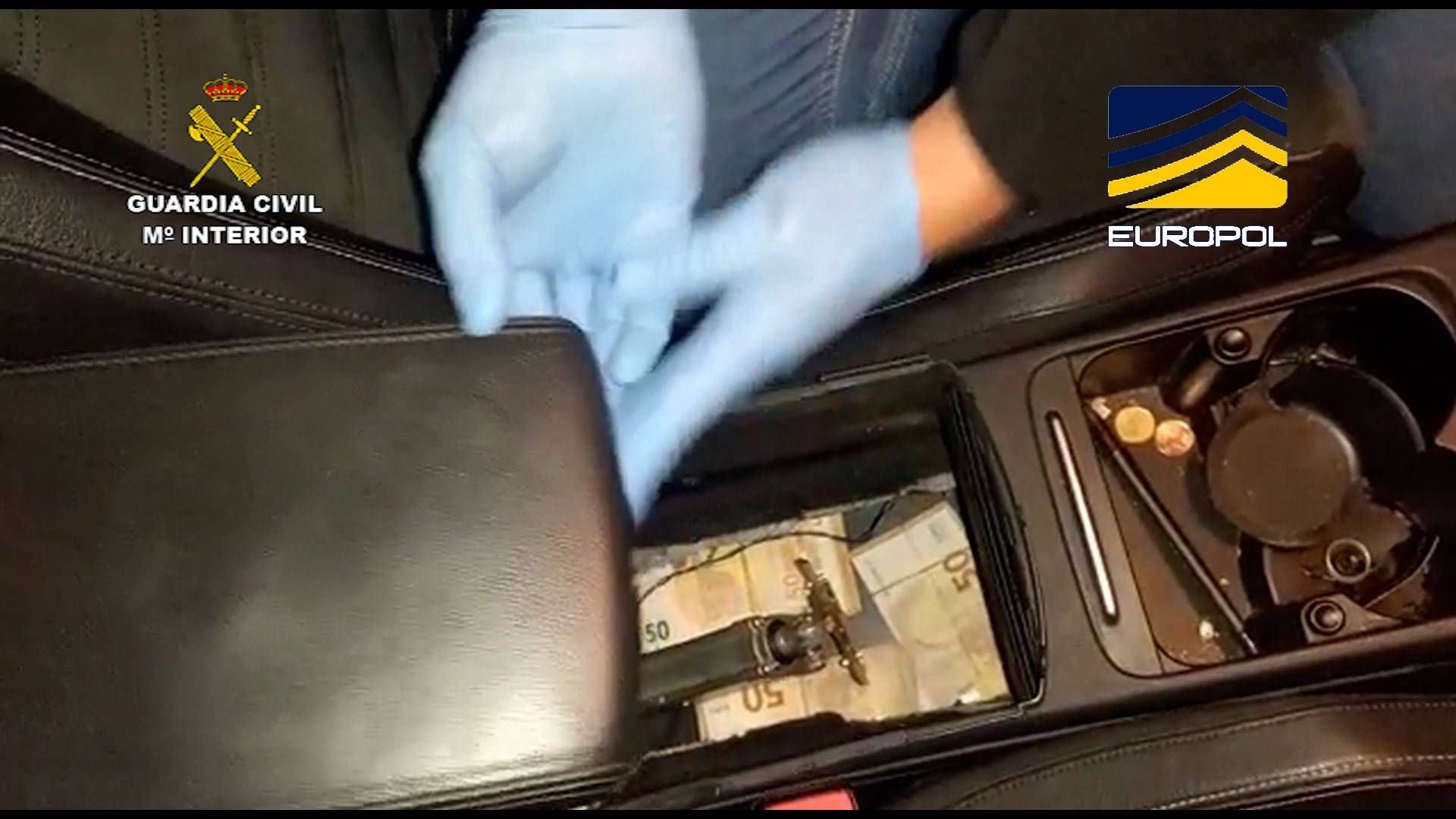
Clandestine banking system with large amounts of cash The modus operandi used by the criminal network consisted in moving large amounts of cash via a sophisticated underground banking system. Organised crime groups could make payments, receive funds and even have their proceeds laundered by this internationally structured financial network.  Individuals involved in the network picked up physical cash directly from criminal organisations. These large amounts of cash were transported in vehicles equipped with hidden compartments and fed into a common cash pool, which was dispersed across various international locations. Other criminal organisations could use these funds to finance their criminal activities or to provide cross-border payments.  Hundreds of kilos of drugs seized The illicit financing system was largely based on money generated in the illegal drug trade, with one part of the organisation sending up to 200 kilos of hashish and cannabis a week from Spain to other parts of Europe. On the action day earlier this year, law enforcement seized 98 kilograms of cannabis – with an additional 123 kilograms seized a few days later – contributing to a total of 650 kilograms connected to this case. Furthermore, 51 kilograms of hashish were confiscated during the action. Europol’s role Europol’s European Financial and Economic Centre has been providing operational expertise, as well as analytical and operational support, to the involved authorities since September 2021. This support contributed to the confirmation of links with other investigations and facilitated international cooperation between the involved law enforcement authorities.  This investigation was carried out within the framework of the European Multidisciplinary Platform Against Criminal Threats (EMPACT). More specifically, it falls under the operational action plan “Criminal Finances, Money Laundering and Asset Recovery” which aims to combat and disrupt criminal networks and criminal individuals who are involved in criminal finances and money laundering.  
Read full story →
Europol Aug 30, 11:45

Tobacco products and cigarette manufacturing equipment seized in international action

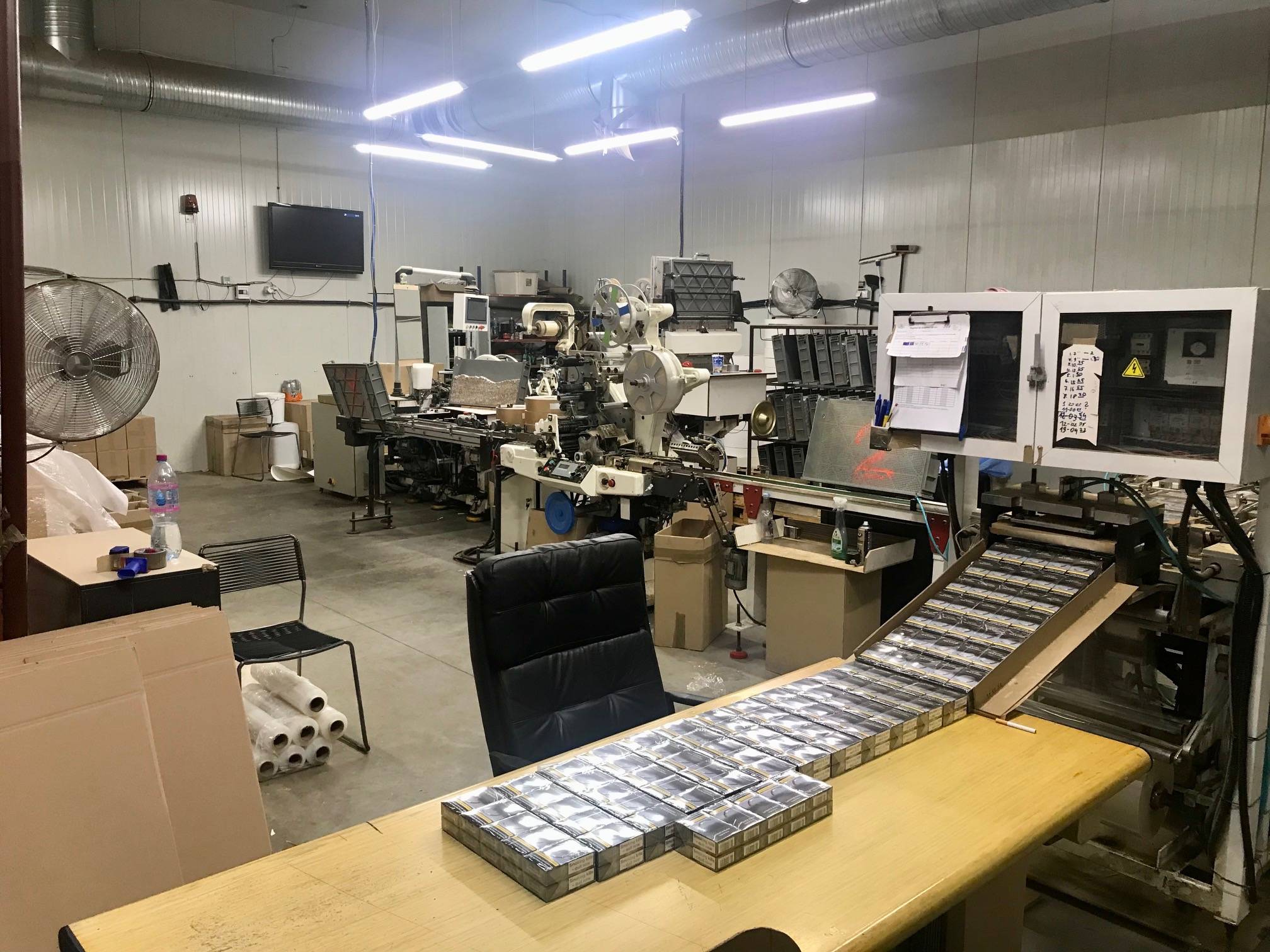
Belgian customs authorities carried out house searches in warehouses and at a private residence in Belgium, some of which were based on intelligence provided by the Lithuanian Criminal Police Bureau on suspicious deliveries to addresses in Belgium. Law enforcement officers discovered two full production lines for cigarettes bearing a variety of well-known name brands. The market value of the seized cigarettes amounts to around EUR 73 million in the United Kingdom, the presumed country of distribution for the majority of the products. Additionally, law enforcement were able to secure a massive number of empty packages, filters, cigarette paper, glue, cardboard and packaging film, as well seven new machines intended for a new production and packaging line.  The searches led to the discovery of a variety of clandestine production sites, as well as warehouses for storage of enormous quantities of tobacco products. In some locations, sleeping quarters for workers were uncovered on the premises. Along with confiscating massive amounts of material used for counterfeit cigarette production, authorities seized various vehicles and arrested several persons of Lithuanian, Polish, Ukrainian and Jordanian nationality. Europol’s role Europol supported the operation by providing its secure communication platform and by facilitating international cooperation between Belgium and other Member States. Furthermore, Europol ran cross-checks and provided analytical support as well as operational expertise. Europol also supported the action day by deploying a mobile office on location in Belgium. The investigation was carried out within the framework of the European Multidisciplinary Platform Against Criminal Threats (EMPACT), more specifically the operational action plan OA 2.1 "Illicit production of tobacco precursors", with Belgian Customs as action leader. Enormous amounts of tobacco products seized The action day contributed to an already impressive record of accomplishment for Belgian authorities’ fight against the illegal production of cigarettes. This year alone, five illegal tobacco production sites and 15 storage warehouses have been uncovered and dismantled in the country. Over the same period, more than 274 million cigarettes, 88 tons of cut tobacco, 65 tons of water pipe tobacco and 40 tons of raw tobacco has been confiscated. The total payables on these seized illicit tobacco products - consisting of the excise duty, special excise duty and value added tax - totals more than EUR 139 million. Factors such as its proximity to the French and British borders, rising excise duty rates in neighbouring countries, and short distances to certain black markets, have together led to Belgium becoming a major hub for illegal tobacco production and trade.   
Read full story →
Europol Aug 29, 14:05

Cigarette smugglers busted in Hungary for causing over EUR 8 million in budgetary losses

In March 2021, the Hungarian Tax and Customs Administration seized nearly 23 million unsealed cigarettes that arrived by plane from Dubai to the Hungarian airport of Debrecen. Produced in the United Arab Emirates, the tobacco products were concealed in car parts being shipped on cargo planes. Hungarian authorities intercepted one shipment as it was leaving the airport in four trucks with Polish licence plates. It is believed that there were two similar deliveries earlier that year, on 29 January and 26 February 2021. The estimated economic damage to the European Union budget caused by this organised crime group’s tax evasion on the tobacco products amounts to over EUR 8 750 000.  In an action day on 16 August 2022, which was precipitated by significant analytical findings by Europol, one suspect was arrested. Law enforcement officers were able to seize EUR 750 000 in various currencies, seven luxury vehicles and 49 luxury watches from the Hungarian citizen who was arrested. The authorities are looking for three further suspects for whom European and international arrest warrants have been issued. Europol facilitated the information exchange, cross-checked operational information against Europol’s databases and provided additional analytical support to help advance the national law enforcement authorities’ investigations. Eurojust actively facilitated cross-border judicial cooperation between the national authorities involved, including the execution of European investigation orders.  
Read full story →
Europol Aug 10, 08:30

Capture 2022: Calling all law enforcement photographers!

Europol is celebrating the hard work and dedication of the various law enforcement authorities across the EU, and we are seeking submissions from talented photographers that illustrate the many ways that police forces protect EU citizens on a daily basis. This year, there are THREE categories in the Europol photo competition to illustrate this hard work. Law enforcement officers from across Europe are invited to submit up to FIVE photos.  Whether you are a passionate professional photographer, or an amateur with nothing but a phone camera, we want to see your photography skills in action! Find out more details about each of the categories below.   Making Europe safer We are looking for images of EU law enforcement officers actively working to make Europe safer. These images could include operational activities in the fight against organised crime, e.g. drugs and weapons trafficking, trafficking in human beings, counterfeiting, etc., as well as images of training exercises and manoeuvres. We also accept both abstract and artistic interpretations of the ‘making Europe safer’ concept. On the road  How does your local law enforcement team patrol your area? We are seeking images of different vehicles from law enforcement authorities that are interesting or unusual, including vehicles from both the past and the present. This could include vintage patrol cars, motorcycles, and any other vehicle that officers use to get to a crime scene. Caring for the community Local police work hard to protect citizens in their communities. Community policing is among the most important responsibilities of many law enforcement authorities and we want to shine a light on this crucial work. We are calling on photographers to send images of police officers assisting members of the community, including their work with elderly people and children.  The winner of each category will win a two-night trip for two people to The Hague or Amsterdam in the Netherlands, with a visit to Europol. Closing date: 15 September 2022.  For full details on how to participate, please visit the competition page. Entries will be used in Europol publications, including calendars, social media and other communication products.   
Read full story →
Europol Aug 5, 08:00

Travelling gang of South American thieves dismantled after robberies in France and Spain

A total of four suspects – two Chileans, one Peruvian and one Argentinean – have been arrested in Spain, aged between 25 and 37.  The investigation began in May 2022 as a result of the cooperation between the Spanish Civil Guard and the French Paris Police Prefecture, facilitated by Europol. The group under investigation, after having carried out several burglaries in France, travelled to Madrid. They then committed a number of burglaries, before moving to Barcelona to try to do the same there. The same gang has been linked to previous robberies in Argentina, Brazil and Germany. Three of them were caught red-handed and arrested on 7 July as they returned from burglaries in the province on Tarragona. The fourth suspect was arrested later on in the month of July. Due to the gravity of the offences the judge imprisoned the OCG. A large quantity of jewellery, watches and computer and electronic material was recovered, believed to come from the robberies under investigation. In addition, tools and material to commit the robberies were seized, as well as the vehicle used to carry out the criminal activities.  European coordination  Europol brought together the national investigators from the Spanish, French and Chilean sides to share expertise on burglaries and establish a joint strategy to dismantle this travelling gang of thieves.  Cooperation with the Chilean Police was central in bringing these perpetrators to justice, as the Chilean investigators helped their European counterparts solve and prevent robberies committed by this highly-mobile gang.  The investigation was carried out with the support from the European Multidisciplinary Platform Against Criminal Threats (EMPACT OPC).  Participating law enforcement authorities Spain: Civil Guard (Guardia Civil) France: Paris Police Prefecture (Préfecture de Police de Paris -Brigade de Répression Du Banditisme)  Chile: Investigations Police of Chile (Policia de Investigaciones de Chile -JENACROF) Europol: European Serious Organised Crime Centre   Headquartered in The Hague, the Netherlands, Europol supports the 27 EU Member States in their fight against terrorism, cybercrime, and other serious and organised crime forms. Europol also works with many non-EU partner states and international organisations. From its various threat assessments to its intelligence-gathering and operational activities, Europol has the tools and resources it needs to do its part in making Europe safe.  
Read full story →
Europol Aug 1, 13:22

Launched today: first episode of The Europol Podcast

Have you ever wanted to go behind the scenes on a real police operation? Europol has launched a brand new podcast and we invite you to join us for fascinating discussions on complex, cross-border operations involving dangerous criminals. Contributors from both Europol and law enforcement around the world talk about some of the most high-profile operations that Europol has been involved in and explain the intricacies of modern police work. These discussions will showcase the variety of international operations that Europol is involved in and the ongoing fight against serious and organised crime. The podcast will focus on a number of crime areas, from cybercrime, to organised crime, to financial crime and more. It will delve into the complexities of destructive malwares like REvil and EMOTET, as well as Europol’s work in dismantling the child abuse forum, Boystown. We look at organised crime and speak to police officers from as far apart as San Diego to Stockholm who collaborated on one of Europol’s most successful operations against encrypted communications, Operation Greenlight. We also look at drugs trafficking from South America to Europe and the ways that Europol helps coordinate cross-border activities between multiple countries. We also examine the notorious Vitae Ponzi scheme and the ways that criminals use call centres to swindle innocent people. Listen to the first episode on the Europol website or on Spotify, Apple or Google podcasts. Subscribe to the podcast now and don’t miss out!  
Read full story →
Europol Jul 28, 13:54

Balkan cartel trafficking cocaine from South America to the EU dismantled

The investigation into this criminal network lasted several years, and involved a number of EU Member States and third party countries from the Western Balkan region. The drug trafficking network was mainly composed of Montenegrin nationals, but also involved citizens from Bosnia and Herzegovina, Croatia, Italy and Serbia. Between 2019 and 2020, law enforcement authorities seized more than six tonnes of cocaine in Aruba (Dutch Antilles), Cote d’Ivoire, Portugal and Spain. The investigations following the seizure in Portugal uncovered possible links between this criminal network and the mafia-style organisation ’Ndrangheta. This same seizure led to the identification of 17 new suspects, 13 of whom were Montenegrin nationals. During the course of the investigation, 29 suspects were prosecuted in Croatia, Italy, Montenegro, the Netherlands, Serbia, Slovenia and Portugal.  On the action day, 27 July 2022, officers across Europe raided 37 locations (1 in Croatia, 2 in Italy, 33 in Montenegro and 1 in Serbia), arrested 12 suspects (1 in Croatia, 1 in Italy, 8 in Montenegro and 2 in Serbia) and seized expensive watches, bank cards, documents, ammunition and weapons, a vehicle and a speedboat and cash. Europol facilitated the exchange of information and provided continuous analytical support to the investigation. Europol also contributed to the overall case coordination among various agencies in the EU and beyond.   Participating law enforcement authorities Italy – National Police (Polizia di Stato) Croatia – National Police (Ravnateljstvo policije, Policijski nacionalni ured za suzbijanje korupcije i organiziranog kriminaliteta) Montenegro – National Police (Uprava policije)  Netherlands – National Police (Politie) Portugal – Judicial Police  (Policia Judiciária)  Serbia – Criminal Investigations Directorate (Uprava kriminalisticke policije) Slovenia – National judicial police (Uprava kriminalisticne policije) Spain – Civil Guard (Guardia Civil) Headquartered in The Hague, the Netherlands, we support the 27 EU Member States in their fight against terrorism, cybercrime and other serious and organised forms of crime. We also work with many non-EU partner states and international organisations. From its various threat assessments to its intelligence-gathering and operational activities, Europol has the tools and resources it needs to do its part in making Europe safer.  
Read full story →
Europol Jul 27, 13:00

Close to a hundred arrested in Hungary over multi-million euro invoice fraud

These two joint actions – referred to as Operation Wine Cellar and Operation Theatre -  were carried out in November of last year, the details of which can only be released now due to operational reasons. The investigators have since been working on the financial information collected during the various house searches to identify new investigative leads.   The Budapest Metropolitan Police has apprehended almost a hundred individuals after unravelling two complex fraud schemes involving invoice fraud.  The clampdown targeted an organised crime group responsible for defrauding 94 legal entities of an estimated EUR 2.8 million. These companies were mostly state and municipality-owned.   The syndicate used a sophisticated money laundering infrastructure to hamper law enforcement’s ability to trace the illegal gains.  The criminals would impersonate a service company to inform their victims that the service company now had a new bank account to which the payments for the provided services should be sent.  Once the payments were made to the bank accounts controlled by the criminals, the funds would be moved around to conceal their illegal origin.  Europol support  Europol’s European Financial and Economic Crime Centre has been supporting the Hungarian investigators with these two cases since 2020, confirming the links with other European countries and identifying new leads to develop the intelligence picture on the activities carried out by these two groups.  Europol teams, composed of money laundering specialists and financial analysts, were deployed to Hungary on both action days to assist the investigators with the house searches and the forensic analysis of the seized devices.  Headquartered in The Hague, the Netherlands, Europol supports the 27 EU Member States in their fight against terrorism, cybercrime, and other serious and organised crime forms. Europol also works with many non-EU partner states and international organisations. From its various threat assessments to its intelligence-gathering and operational activities, Europol has the tools and resources it needs to do its part in making Europe safer.  
Read full story →
Europol Jul 26, 08:12

Production of fake pesticides on the rise in the EU

The seventh edition of Silver Axe, Europol’s annual operation targeting illegal pesticides, identified the new trends emerging on the EU black market for plant protection products. The operational activities of Silver Axe VII focused on ports, airports and other entry points where the import and export of illegal and counterfeit pesticides could be detected. These actions led to ten arrests, the seizure of 1 150 tons of illegal and counterfeit pesticides and the targeting of a factory where pesticides were being counterfeited.  During Silver Axe VII, authorities detected an increase of the trafficking of illegal pesticides in the south of Europe and the Black Sea area. The number of cases of illegal pesticides, sourced in Turkey, has increased sharply during Silver Axe VII. However, China remains the number one source country. There is also an increase in the seizures of smaller shipments (up to 10 litres/kilograms). The trafficking of these smaller consignments has increased over the years. In addition to border checks, authorities have also been monitoring online shops, which provide a physical address for the collection of products purchased online. Although the trafficking of herbicide, insecticide and fungicide containing banned substances remains steady, the operation also revealed that the counterfeiting of commonly used brands for these products is now growing. On the rise: counterfeit products made in the EU  The increase in seizures of production equipment and raw materials shipped to Europe suggests a rise in counterfeiting activities within the EU. Law enforcement agencies in EU Member States are now detecting these counterfeiting operations on EU soil more often. As part of this, they have detected a number of modus operandi. The first is the import of almost finalised products in containers resembling well-known brands. Once imported, they need only to be labelled before going on the black market. The second is the import of illegal ingredients for the production of pesticides. To lower the chances of detection, the chemicals are only used at the final production stage at the locations where the packaging is also being counterfeited. During Operation Silver Axe VII the Bulgarian authorities targeted one such location, in a rare operation targeting a production facility. During the operation, officers seized counterfeit packaging materials and illegal pesticides, which led to the opening of a criminal case.  Another modus operandi is the misuse of the parallel trading system, which eases the approval procedures of pesticides sold within the EU. As part of this system, a plant protection product that is authorised in one Member State (Member State of origin) may, subject to granting a parallel trade permit, be introduced, placed on the market or used in another Member State. Some criminals abuse this system by introducing illegally produced plant protection products to a Member State, fraudulently claiming that they have already been approved in a different Member State and thereby removing the need for further approvals. Catherine De Bolle, Europol’s Executive Director, said: “Despite their low price, unauthorised plant protection products have a very high cost for both the environment and public health, but also the agricultural industry. Fake and illegal pesticides can harm farmers, and their livelihoods, and damage the maintenance of bee colonies. As a result of past Silver Axe operations, law enforcement authorities have been able to seize almost 5 000 tonnes of illegal and counterfeit pesticides. Taking such unregulated and potentially dangerous products off the market contributes to a safer and healthier environment for EU citizens.” Christian Archambeau, EUIPO’s Executive Director, said: “The damage caused by counterfeit products, touching every possible type of goods and sectors, is deeply concerning, and clearly calls for coordinated action, through operations like Silver Axe. Counterfeit and illegal pesticides pose serious risks to the agricultural economy, the environment and our health. In fighting this illicit trade, we are disproving criminals’ perception that it is a profitable activity with light penalties, and ultimately fighting to protect our citizens.” Ville Itälä, OLAF’s Director-General, said: “The smuggling of pesticides poses a threat throughout the food chain, from farmers to consumers, because it allows dangerous products to reach our market and our soils. Ultimately, operations like Silver Axe also lead to a more environmentally friendly Europe. We achieve that by combining OLAF’s and Europol’s expertise and resources – together, we have many years of experience in building enforcement capacity and strengthening operational activities.” Olivier de Matos, Director General CropLife Europe, said: “The presence of counterfeit and illegal pesticides damage Europe’s ability to deliver its sustainable agriculture goals, putting the objectives of Farm to Fork at risk. Silver Axe is an important initiative which we are proud to support. We need to continue to communicate about these products so both farmers and legitimate businesses recognise and reject criminal offerings that jeopardise the sustainable production of food.”  4 921 tonnes - Operation Silver Axe’s total seizures Silver Axe was initially developed to respond in a coordinated way to the dangerous trafficking of illegal pesticides. The efforts of the public and private sector have led to the seizure of a total of 4 921 tonnes of illegal pesticides during the past six Silver Axe operations. Europol coordinated the operation, facilitated the information exchange and provided operational and strategic analytical support.  Participating countries EU Member States: Austria, Belgium, Bulgaria, Croatia, Czechia, Denmark, Estonia, France, Finland, Germany, Greece, Hungary, Ireland, Italy, Latvia, Lithuania, Luxembourg, Malta, the Netherlands, Poland, Portugal, Romania, Slovak Republic, Slovenia, Spain. Third party countries: Brazil, Colombia, Ukraine, the United Kingdom, Norway and the United States.  EU bodies and international organisations: Intellectual Property Office (EUIPO), the European Anti-Fraud Office (OLAF), the European Commission’s DG SANTE, CropLife Europe and CropLife International.  
Read full story →
Europol Jul 26, 06:00

Hit by ransomware? No More Ransom now offers 136 free tools to rescue your files

Six years of public-private partnership Celebrating its sixth anniversary today, No More Ransom provides keys to unlocking encrypted files as well as information on how to avoid getting infected in the first place. Launched by Europol, the Dutch National Police (Politie) and IT security companies, the No More Ransom portal initially offered four tools for unlocking different types of ransomware and was available only in English. Six years later, No More Ransom offers 136 free tools for 165 ransomware variants, including Gandcrab, REvil/Sodinokibi, Maze/Egregor/Sekhmet and more. Over 188 partners from the public and private sector have joined the scheme, regularly providing new decryption tools for the latest strains of malicious software.   To date, the scheme has so far helped over 1.5 million people successfully decrypt their devices without needing to pay the criminals. The portal is available in 37 languages in order to better assist victims of ransomware across the globe. No better cure than prevention The best cure against ransomware remains diligent prevention. You are strongly advised to: Regularly back up data stored on your electronic devices. Watch your clicks – do you know where a link will take you? Do not open attachments in e-mails from unknown senders, even if they look important and credible. Ensure that your security software and operating system are up to date. Use two-factor authentication (2FA) to protect your user accounts. Limit the possibility to export large amounts of corporate data to external file exchange portals. If you become a victim, do not pay! Report the crime and check No More Ransom for decryption tools. Join the fight against ransomware Are you a cybersecurity company willing to join forces with law enforcement and industry leaders in the fight to disrupt ransomware? Do you have an innovative solution for ransomware families not covered yet in the portal to help victims recover their files without giving into the demands of the criminals? Then we want to hear from you! Find more information and prevention tips on www.nomoreransom.org 
Read full story →
Europol Jul 20, 08:00

A Belgian luxury car purveyor arrested in Spain for money laundering

The suspect, a Belgian national, was arrested on 23 June in Marbella, Spain, for allegedly running this criminal operation. A suspected accomplice of his was also brought in for questioning. Four firearms were seized at their homes.  The arrest in Spain was made possible thanks to a series of raids carried out earlier this year (26 January) in the region of Antwerp, Belgium. On this occasion, a large amount of banking and financial information was collected, the analysis of which led to the identification of the culprit.  During the course of this two-year investigation, officers seized criminal assets worth an estimated EUR 2.3 million. The suspect arrested in Spain is now awaiting extradition to Belgium. The vehicle for money laundering  The crime group is believed to have provided drug trafficking networks with money laundering services aimed at disguising the nature, origin, destination and ownership of ill-gotten funds.  The cash from the drug trade would be first collected in Belgium, before being used in another European country to purchase luxury vehicles with a price tag in excess of EUR 100 000. Through the purchase of such expensive vehicles, the criminals were effectively converting the illicit cash into assets which would serve to disguise the origin of the money. These cars were then exported to other countries where they were first rented out, before being sold off. Criminals will often use expensive assets, including cars, boats and luxury planes and jewellery to disguise illegal funds and later convert them into clean cash. Such luxury purchases give criminals the opportunity to legitimise significant amounts of money in a single transaction. When using cash as a means of payment, the funds are deposited into the mainstream financial system, removing footprints of the transaction and complicating the ability to trace the source of wealth at purchase. European coordination  Europol’s European Financial and Economic Crime Centre (EFECC) brought together the national investigators to agree on a joint strategy and prepare for the final phase of the investigation.  Its experts were deployed both to Antwerp and Marbella for the two action days to facilitate the exchange of operational information and assist with the forensic analysis of the seized devices.  This investigation was carried out with the financial support of the European Multidisciplinary Platform Against Criminal Threats (EMPACT). Headquartered in The Hague, the Netherlands, Europol supports the 27 EU Member States in their fight against terrorism, cybercrime, and other serious and organised crime forms. Europol also works with many non-EU partner states and international organisations. From its various threat assessments to its intelligence-gathering and operational activities, Europol has the tools and resources it needs to do its part in making Europe safer.  
Read full story →
Europol Jul 15, 08:16

11 arrests in Germany, Poland and the UK for smuggling migrants from Belarus into the EU

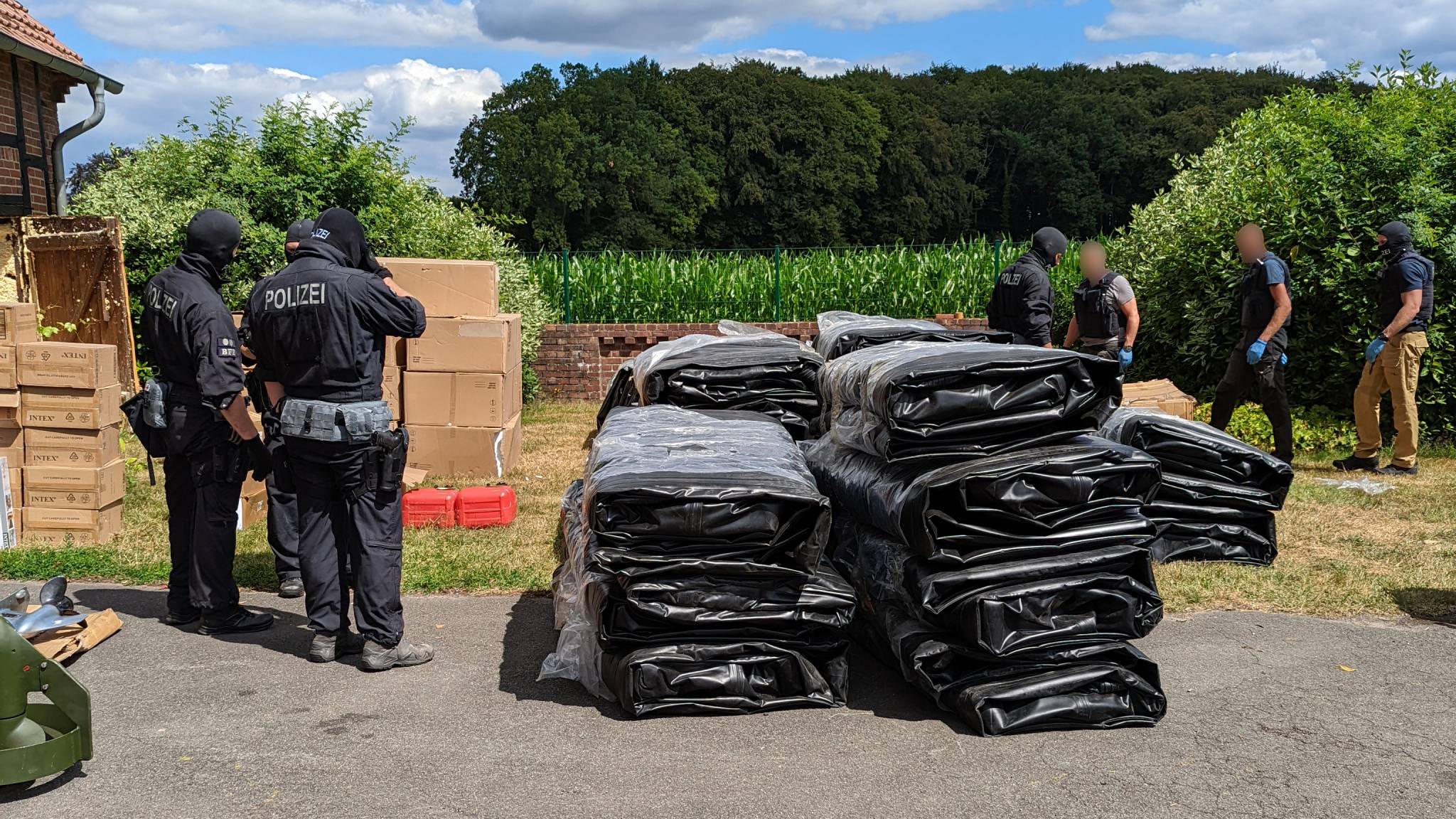
A cross-border operation, coordinated by Europol and involving law enforcement authorities from Estonia, Germany, Lithuania, Poland and the UK, has led to the dismantling of an organised crime network smuggling migrants from Belarus into the EU. In addition to the arrests and house searches carried out during the action day, Estonian and Lithuanian law enforcement authorities carried out checks on vehicles travelling on internal roads and crossing external borders. The operational activities were carried out in the framework of Europol’s Operational Task Force Flow, set up to tackle migrant smuggling networks active along the EU-Belarus border.  The action day on 13 July led to: Operational activities, checks and preventive measure in Estonia, Germany, Lithuania and Poland; 11 arrests (10 in Poland and 1 in the UK based on a German warrant); 1 high-value target arrested in the UK based on a German warrant; 28 locations searched (2 in Germany, 4 in Lithuania and 22 in Poland);   11 transfers detected with 11 facilitators and 60 migrants; 7 in Lithuania with 7 facilitators (nationals of Georgia, Latvia, Lithuania, Syria, Ukraine and Uzbekistan) and 44 migrants, all Iraqi nationals; 4 in Poland with 4 facilitators (nationals of Georgia, Syria and Ukraine) and 16 migrants (2 Afghan, 2 Indian, 8 Iraqi and 4 Syrian nationals); Seizures include electronic equipment, various documents, evidence of money transfers, and cash.   Up to EUR 13 000 to be smuggled from Iraq to the EU via Belarus  The investigation detected 99 incidents of the illegal transportation of migrants and discovered 662 migrants smuggled by the targeted network, part of which was uncovered during the action day on 13 July. The same criminal network had previously taken a hit in January 2022, when Polish authorities arrested 20 suspects and seized more than the equivalent of EUR 500 000 cash in euros and dollars. The criminal group consisted of Syrian and Turkish nationals. They recruited the migrants from Iraq and arranged their transportation from Iraq/Baghdad into the EU.  The members of the criminal network were based in and acting from the countries across the smuggling route. Their tasks were divided hierarchically, with the majority of the individuals acting at different levels not knowing each other personally. The migrants paid between EUR 10 000 and EUR 13 000 for a full smuggling service from their country of origin, via Belarus, to Germany generating an estimated turnover of at least EUR 7 million for the criminal network. These payments were made via the hawala underground financial system. Hawaladars with residence in Berlin (Germany) also executed the payments for the drivers after receiving a proof of completion, such as pictures of migrants after arrival in their final destination.  The criminal network used Turkey as a transit country and logistical hub. Once in Turkey, the migrants legally travelled to Moscow with tourist visas, from where they were then transferred to the Belarusian capital Minsk, or Grodno, a city near the borders with Lithuania and Poland. From there, the migrants were then smuggled to Germany via Poland and Lithuania.  The criminal network used three smuggling routes, each with an EU end destination: From Iraq via Turkey to Belarus, and then towards Poland and Germany; From Iraq via Turkey, then via Russia and Belarus, towards Latvia and Germany, and; From Iraq via Turkey, then via Russia and Belarus towards Lithuania, Poland and Germany. For the final transfer towards the EU, the criminal network recruited drivers, mainly Ukrainian nationals, via web forums and social media platforms. For their services on this last leg of the smuggling route, from Poland to Germany, they charged between EUR 500 and 1 000 per person.  The criminal network often transported the migrants in life-threatening conditions, such as overcrowded vehicles and even closed cars on loading platforms. In October 2021, German authorities found the body of a migrant close to the border. The forensic examination suggested that the smugglers abandoned him in an empty field after suffering bad health conditions, where he then died off a multiple organ failure.  Dedicated Task Force at Europol to support the crisis response In June 2021, Lithuanian law enforcement reported an increase of the illegal migration inflow across the Belarus-Lithuanian border. Authorities in Poland and Latvia reported the same. In response, Lithuania set up a Joint Investigative Cell (JIC) in Vilnius to serve as an operational hub that would facilitate the cooperation between involved national law enforcement authorities.  In addition to this cell, in February 2022, Europol set-up the Operational Taskforce Flow (OTF) Flow, involving Estonia, Finland, Germany, Latvia, Lithuania and Poland. This special set-up was created specifically to support national authorities in combating the increased migrant smuggling activities across the EU-Belarus border. Through OTF Flow, Europol supports the coordination of joint operational activities and facilitates the information exchange between law enforcement authorities. The OTF operates from Vilnius, and is composed of representatives from national law enforcement authorities and Europol experts..   During this week’s action day on 13 July 2022, Europol deployed, in addition to the staff already send to the OTF/JIC, three experts to Lithuania and Poland to cross-check in real time operation information against Europol’s databases, perform digital forensics, and support the investigators in the field with new leads. Law enforcement authorities involved:  Estonia – Estonian Police and Border Guard (Politsei- ja Piirivalveamet) Germany – German Federal Police (Bundespolizei)  Lithuania – State Border Guard Service (Valstybės sienos apsaugos tarnyba) and National Police (Lietuvos policija)  Poland – Border Guard (Polska Straż Graniczna) and National Police (Polska Policja) The United Kingdom – National Crime Agency (NCA) and National Extradition Unit
Read full story →
Europol Jul 14, 08:00

514 employers linked to labour infringements identified across the EU

An EU-wide coordinated action week targeting human trafficking for labour exploitation and related offences took place between 15 and 21 June 2022. The action days, supported by Europol, were led by the Netherlands and co-led by France, Italy, Romania and the United Kingdom and involved 29* countries in total as well as the European Labour Authority and the European Commission. A wide range of law enforcement authorities including police, immigration and border guards, labour inspectorates and tax authorities took part in the coordinated operational activities.  These coordinated actions were implemented as part of the European multidisciplinary platform against criminal threats, known as EMPACT. Established to improve synergies between different institutions fighting serious and organised crime, EMPACT has enabled cooperation between law enforcement and regulatory authorities targeting labour exploitation. The action week mobilised almost 18 500 officers, who searched more than 10 467 locations, 32 525 vehicles and more than 86 000 persons to detect different administrative infringements and criminal offences. These checks led to the detection of a significant number of companies linked to infringements of employment law. About 500 individuals who had been working undeclared were identified during the inspections. This means the employers in question did not ensure that their employees had access to healthcare, insurance in case of accidents, or any other social benefits and rights that they were entitled to according to employment law.          The action week led to: 59 arrests; 487 possible victims of different types of exploitation identified;  About 1 100 workers affected by labour infringements; 514 employers linked to labour infringements; 34 forged documents detected; ~80 new investigations initiated; 715 new inspections/administrative investigations. Restaurants, healthcare and the mining sector under scrutiny  This year’s inspections focused on a number of labour-intensive sectors such as mining, home healthcare services, nail bars, cleaning services, restaurants and food delivery services. Vietnamese nationals are especially vulnerable to labour exploitation, predominantly in nail bars. Home healthcare is also a sector that is susceptible to exploitation. This is especially difficult to detect as it happens behind the closed doors of households. Eastern European nationals often fall victim to domestic servitude with reports of cases in Spain, Italy, the Netherlands and the United Kingdom. Authorities also focused on detecting the possible exploitation of Ukrainian refugees.    *Participating countries EU Member States: Austria, Belgium, Bulgaria, Croatia, Cyprus, Czechia, Denmark, Finland, France, Germany, Greece, Hungary, Ireland, Italy, Latvia, Lithuania, Luxembourg, the Netherlands, Poland, Portugal, Romania, Slovakia, Slovenia, Spain, Sweden. Third party countries: Norway, Switzerland, Ukraine and the United Kingdom. Europol coordinated the action days and facilitated the information exchange between the participating countries. Europol provided analytical and operational support on a 24/7 basis and facilitated the real-time exchange of communication between the participating authorities. Headquartered in The Hague, the Netherlands, Europol supports the 27 EU Member States in their fight against terrorism, cybercrime, and other serious and organized crime forms. Europol also works with many non-EU partner states and international organisations. From its various threat assessments to its intelligence-gathering and operational activities, Europol has the tools and resources it needs to do its part in making Europe safer.
Read full story →
Europol Jul 13, 09:00

Europol report: latest situational analysis on terrorism in the EU

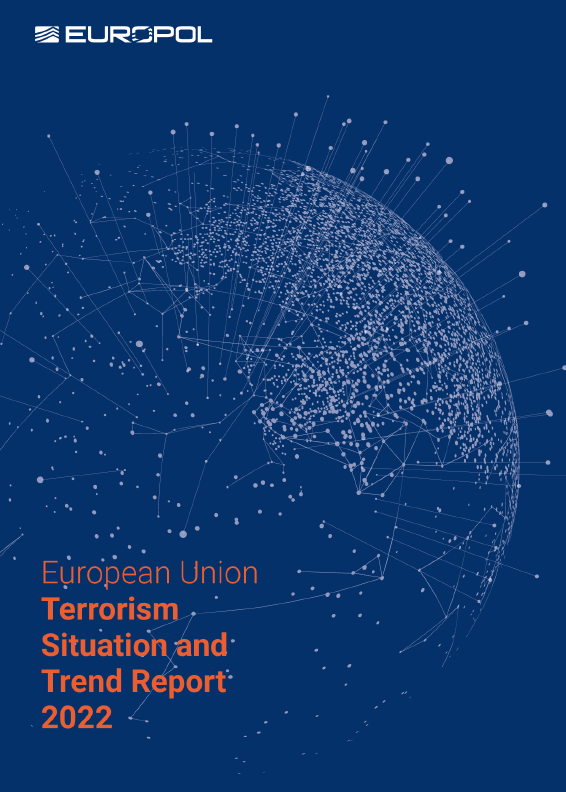
Europol’s flagship TE-SAT 2022 report is based on quantitative data provided to Europol by EU Member States on terrorist attacks, arrests and court decisions issued for terrorist offences. Europol’s partners also provided valuable qualitative information and assessments that enrich the findings of the report.  Europol’s Executive Director, Catherine De Bolle, said: “The findings of the TE-SAT 2022 confirm that terrorism still poses a real and present danger to the EU. While our joint work to disrupt and prevent attacks seems to be having a positive effect, lone actors associated with jihadist and right-wing violent extremism are still a concern for EU Member States and Europol. In a time of geopolitical shifts, the EU needs to continue more than ever its counter-terrorist measures. Europol will continue to work closely with its partners to meet the challenges ahead.” Key findings  15 completed, foiled and failed terrorist attacks were recorded in the EU in 2021. The four completed attacks included three jihadist terrorist attacks and one left-wing terrorist attack. EU law enforcement authorities arrested 388 suspects for terrorism-related offences in 2021. Of these, more than two thirds (260) were carried out following investigations into jihadist terrorism offences in Austria, France and Spain.  Court proceedings concluded in 2021 resulted in 423 convictions for terrorist offences. Lone actors remain the primary perpetrators of terrorist and violent extremist attacks in Europe. However, attack plots involving several actors were also disrupted in 2021. Individuals carrying out attacks alone have been associated mainly with jihadist terrorism and right-wing terrorism and violent extremism.  In 2021, weaponry was used in the completed terrorist attacks that is relatively easy to source and does not require extensive skills for assemblage or use. Weapons used in attacks in the EU in 2021 included bladed weapons, vehicles (in ramming attacks) and improvised incendiary devices.  Terrorist propaganda disseminated online in 2021 has continued to reflect themes related to COVID-19. The increased amount of time spent online due to COVID-19 restrictions, amongst other reasons, constitutes a risk factor in vulnerable individuals’ potential pathway to extremism. Violent anti-COVID-19 and anti-government extremism, which is not affiliated with traditional violent extremist and terrorist activities, emerged in some Member States and non-EU countries. Such forms of violent extremism materialised in open threats, hateful messages spread online and, in some cases, the use of violence. Geopolitical developments in key regions outside of the EU influence terrorist narratives and propaganda spread in Member States.  The current terrorist threat for Member States appears not to have been directly affected by the Taliban’s takeover of power in Afghanistan. However, it increased global attention on religiously motivated insurgencies and, thereby, provided jihadists affiliated with both al-Qaeda and the self-proclaimed Islamic State (IS) terrorist group opportunities to promote their own narratives.  The TE-SAT elaborates in-depth on the following types of terrorism: jihadist terrorism, right-wing terrorism, left-wing and anarchist terrorism, ethno-nationalist and separatist terrorism and other types of terrorism. To learn more, download the report.  
Read full story →
Europol Jul 8, 07:30

9 arrested for smuggling Vietnamese migrants across Europe

Between 20 to 22 June, a series of coordinated raids were carried out in the Czech Republic, Germany, Hungary, Poland and Belgium, with international activity coordinated by Europol and Eurojust. A total of nine individuals believed to belong to this gang were arrested, and nine properties searched. Several motor vehicles and cash amounting to several hundred thousand Czech crowns were seized. The parallel investigations all targeted the same criminal group organising the smuggling of illegal migrants from Vietnam at least since March 2021. The migrants would arrive by plane to Europe under a work visa delivered for one specific country. Once in Europe, the victims were smuggled across Europe to reach their final destination, usually France or the United Kingdom.  The suspects allegedly smuggled their victims in their own vehicles, and in some cases used inflatable motorboats to reach the final stage of the journey, endangering the victims’ life. European coordination  Europol prioritised the case from an early stage and assigned dedicated officers to support the national investigations.  Its European Migrant Smuggling Centre organised three operational meetings to bring together the national investigators to establish a joint strategy, provided actionable intelligence and analytical support and facilitated the exchange of operational information needed to prepare for the final phase of the action.  During the coordinated action day, Europol’s EMSC facilitated the extensive exchange of information between all the parties involved and cross-checked the evidence in real time. Two Europol officers were deployed to Belgium to assist with the forensic data extraction. Eurojust provided financial support and assisted the authorities in setting up a joint investigation team. In addition, the Agency organised three coordination meetings and a coordination centre during the action. The following authorities took part in this investigation: Czech Republic: National Organized Crime Agency, District Public Prosecutor´s Office for Prague 3. Germany: Public Prosecutor´s Office Berlin, Joint investigation group of the Berlin State Criminal Police Office and German Federal Police. Hungary: National Bureau of Investigation, Metropolitan Chief Prosecution Office. Belgium: Federaal Parket, Federale Gerechtelijke Politie.
Read full story →
Europol Jul 6, 09:23

39 arrests in cross-border operation against migrant smuggling in small boats across English Channel

The action day on 5 July led to: 39 arrests (9 in France, 18 in Germany, 6 in the Netherlands and 6 in the UK) Three High Value Targets arrested Over 50 location searches  Seizures include over 1200 lifejackets, about 150 rubber boats, close to 50 engines; about EUR 40 000 in cash, firearms, cars and drugs Criminal network taking half of the market share Actions against this large criminal organisation, often necessitated by the need to safeguard the lives of irregular migrants, have already taken place. The arrests of 15 individuals by French authorities in November 2021 facilitated the identification of members of Iraqi-Kurdish origin within this well-structured criminal network. This criminal group is suspected of smuggling middle-Eastern and East African irregular migrants from France to the UK with the use of small boats. The investigative activities uncovered that the criminal network was active since at least October 2020.  A number of logistical cells operating from Germany and the Netherlands, alongside UK-based hawaladars, served the organisational needs of this criminal structure. The competition for control of the lucrative migrant smuggling business and for launch sites for the boats regularly resulted in acts of serious violence inside the criminal network, including two attempted murders in committed in France and Germany. The migrant smuggling network was highly professional, having set up their own logistical infrastructure with specific branches in charge of sourcing large amounts of nautical equipment from within and outside the EU. French and Belgian investigations focused on the smugglers, while cooperation with UK, Germany and the Netherlands was established to target the supply chain and the financial facilitators.  In May 2022, British authorities arrested a High Value Target on behalf of Belgium. Investigators have since identified more than 70 suspects with different roles in the criminal organisation, including smugglers, recruiters, accommodation providers, and drivers in charge of transporting nautical equipment, as well as the suspects in charge of channelling the illegal money flows.  The suspects charged on average EUR 2 500 to 3 500 per migrant, depending on the nationality, to facilitate their transfer across the English Channel. The criminal network changed tactics regularly to avoid detection, also using larger boats and the cover of the night to smuggle as many migrants as possible across, with no concern for their safety. Leads suggest that at times up to 15 boats were launched almost simultaneously, with half successfully making it across to the UK. The investigators estimate that the network could have smuggled up to 10 000 migrants in the past year and a half, with as much as EUR 15 million in estimated criminal turnover. Sharp increase in migrant smuggling with small boats  The smuggling of migrants via small boats is a highly dangerous modus operandi which gradually increased shortly before the start of the COVID–19 pandemic. In 2021, the use of small boats became the prominent modus operandi of migrant smuggling from the EU to the UK, surpassing smuggling in lorries. By the end of 2021, almost 50 000 irregular migrants attempted to cross the English Channel in small boats, three times more than the year before. In the first 6 months of 2022, over 11 500 irregular migrants reached the UK, generating close to EUR 30 million turnover for the criminal organisations active on that smuggling route. Dedicated Task Force at Europol to connect the dots An Operational Task Force (OTF) involving Belgium, France, Germany, Netherlands and the UK, coordinated by Europol, was established. This OTF supports investigations targeting criminal networks smuggling migrants with small boats – an increasing phenomenon putting the life of migrants at great risk. Authorities focused on a number of high-level smugglers, also known as High Value Targets, whose prosecution offers a means to seriously disrupt or even halt the functioning of the criminal network. Europol appointed dedicated experts to identify the criminal connections between several national investigations. In the aftermath of the tragedy unfolding in the English Channel in November 2021, Europol initiated a permanent deployment to the specialised investigation cell (URO/CIC), set up by France and the UK, to specifically target migrant smuggling with the use of small boats.  OTF Dune investigators benefited extensively from the dedicated financial instrument set up by Europol to facilitate such high profile investigations, with over EUR 250 000 awarded to the participating countries to manage various aspects of their investigative work. During the action day, Europol facilitated the deployment of over 20 investigators to several locations in Germany, Netherlands and UK. Moreover, three Europol experts assisted the authorities in Belgium, France and Germany to cross-check in real time operation information against Europol’s databases, perform digital forensics and support the investigators in the field with new leads. Eurojust set up a coordination centre to enable rapid cooperation between the judicial authorities involved in the action day and hosted coordination meetings to facilitate judicial cooperation and the preparation of the joint action day. Law enforcement authorities involved:  Belgium – Belgium Federal Police (Federale Politie/Police Fédérale)France - French Border Police (OCRIEST-BMR Lille) Germany – German Federal Police (Bundespolizei) and German Regional Police (Landespolizei Osnabrück) The Netherlands - Royal Marechaussee (Koninklijke Marechaussee) The United Kingdom – National Crime Agency Judicial authorities involved:  France: Court of Lille (Tribunal Judiciare de Lille) Germany: Public Prosecution Office Osnabrück (Staatsanwaltschaft Osnabrück) The Netherlands: National Public Prosecution Office (Landelijk Parket); Public Prosecution Office of Oost-Brabant (Parket Oost-Brabant) Belgium: Prosecution Office of West-Flanders and Investigative Judge in Bruges (Parket Brugge); Federal Prosecutors’ Office (Federaal Parket)
Read full story →
Europol Jul 5, 10:00

More than 130 arrests during EU-wide action against child trafficking

More than 130 arrests and identification of over 130 potential victims The action days resulted in over 130 arrests and around 60 additional suspects being identified, as well as more than 100 new investigations being initiated. In total, over 130 possible victims of human trafficking were identified, more than a dozen of them being confirmed as minors. The checks led to over 220 forged documents being detected. During the action days, law enforcement checked approximately: 13 500 locations 193 020 vehicles 970 440 persons 101 790 documents During the action days, law enforcement also checked the identity of over 11 130 minors, who remain the most vulnerable group within persons being trafficked and exploited. Many fall victim to sexual exploitation, forced begging or different types of forced criminality, including petty crimes and drug trafficking. They also become victims of labour exploitation and domestic slavery. Europol’s role Europol supported the coordination of the operational activities, facilitated the exchange of information, and provided analytical support. On the action days, Europol activated a Virtual Command Post to facilitate the information exchange in real time, while dedicated analysts cross-checked operational information against Europol’s databases. This provided further investigative leads to the participating national law enforcement authorities.  Participating countries: Austria, Belgium, Bulgaria, Cyprus, Germany, Greece, Hungary, Ireland, Lithuania, Netherlands, Poland, Portugal, Romania, Spain, Sweden as well as Bosnia and Herzegovina, Liechtenstein, Montenegro, North Macedonia, Serbia, Ukraine, and the United Kingdom.  
Read full story →
Europol Jul 1, 09:50

Doping crackdown in cycling

The investigation was led by the French OCLAESP under the supervision of the French Public Prosecutor’s Office in Marseille to look into possible doping allegations of a cycling team participating in the Tour de France.   Between 27 and 30 June, a total of 14 locations were searched in 6 countries. Three people were interrogated. The investigation is ongoing and the evidence seized is being forensically examined. The properties of several riders and their staff were searched in Belgium, Spain, Croatia, Italy, Poland and Slovenia. An urgent coordination meeting was hosted by Eurojust on 16 June to facilitate judicial cooperation, including the execution of seven European Investigation Orders in the countries involved, and the preparation of the joint action.Europol deployed a dozen officers across the participating countries to facilitate the extensive exchange of information and provide forensic support for the seized electronic devices.  The following authorities are involved in the investigation: •    France: PPO PSPE (Public Health and Environment Division) of Marseille and OCLAESP (Central Office against Environmental and Public Health Crime)•    Belgium: Federal Prosecutor's Office and the Federal Judicial Police of Brussels•    Denmark: Copenhagen Police•    Spain: Investigative Court num. 8 in Alicante; International Cooperation Section of the Prosecutor's Office in Alicante; Judicial Police Unit of Policía Nacional in Alicante•    Croatia: County State Attorney’s Office in Rijeka•    Italy: PPO Brescia and Carabinieri for the Protection of Public Health (NAS) Units of Brescia, Roma and Ragusa•    Poland: The Circuit Prosecutor’s Office and City Police in Łódź•    Slovenia: District Court and Slovenian PoliceEuropol and the fight against dopingThe illegal production and distribution of doping substances brings significant illicit profit to organised crime groups. They often use these profits to fuel other criminal activities, such as producing and trafficking illegal and substandard medicines and synthetic drugs. Doping substances not only corrupt fair competitions they also endanger the health of athletes as criminals often produce illegal doping substances in underground labs with no hygiene requirements while using dangerous and substandard raw materials. These illicit doping substances poison players in all sports: from track athletes, professional cyclists, skiers and weightlifters to amateur bodybuilders.Several investigations supported by Europol have uncovered the use of doping substances to influence the outcome of professional sports. The Europol-coordinated SHIELD II operation ran last year between April and December 2021 in 26 countries led to 544 arrests and €63 million of fake pharmaceutical and illegal doping substances seized.  
Read full story →
Europol Jun 29, 10:00

Thirteen arrested over German cashpoint explosions that netted gang over EUR 1.6 million

These attacks are estimated to have caused over EUR 4 million worth of damage to the targeted premises, demonstrating that the criminals have no insight into the risk of harm, or even possibility of death, to those who lived nearby or who were near the cash machines at the time. Europol support  Europol’s European Serious Organised Crime Centre supported the investigation from the onset by bringing together the national investigators from Germany and the Netherlands to establish a joint strategy and to organise the intensive exchange of evidence needed to prepare for final phase of the investigation.  A Europol expert was also deployed to Amsterdam to assist the national investigators with the action day.  Life-threatening  Law enforcement is increasing concerned about the increasingly heavier explosives that criminals are using to gain access to the cash machines’ content These explosions are putting at risk the lives of local residents and bystanders: the surrounding buildings can collapse, or fragments of the explosion hit passers-by.  In some cases, the perpetrators also escape the crime scene in powerful motorised vehicles at high speed (250 km/h), causing a serious risk to public safety.  The following authorities took part in this investigation: Germany: Police Directorate of Osnabrück, Public Prosecutor’s Office Osnabrück, Public Prosecutor’s Office Mainz, LKA Rhineland-Palatinate, General Public Prosecutor’s Office Frankfurt, LKA Hesse, Police Department of Mittelhessen, Federal Criminal Police Office (Bundeskriminalamt)  The Netherlands: National Police Amsterdam, Public Prosecutor’s Office  Belgium: Federal Judicial Police Eupen  This investigation was carried out with the financial support of the European Multidisciplinary Platform Against Criminal Threats (EMPACT) and the Internal Security Fund SWORD. 
Read full story →
Europol Jun 28, 14:26

Three arrests after police action against religious extremist propaganda in Germany

On 28 June 2022, the German Regional Police (Landeskriminalamt) struck against the so-called 'Caliphate State' religious extremist organisation. During the action day, coordinated by the Landeskriminalamt Rhineland-Palatinate, German law enforcement officers from six German States raided 50 locations in a joint operation and arrested three individuals. The arrested individuals are suspected members of 'Caliphate State', which is a banned organisation in Germany. During the house searches, officers seized three firearms, propaganda material, and more than EUR 270 000. Investigators are currently working on identifying international links.  Germany made membership of this organisation illegal in 2001. The prohibition order states that the ideology of the 'Caliphate State' violates the principle of democracy since it demands the primacy of the Sharia law over democratic institutions. At that time, the so-called 'Caliphate State' organisation had about 4 000 members. The members of this well-structured illegal network, which is widely spread across Germany, focus on radicalisation and collection of funds. One of the prominent figures, son of the founder of the organisation, has been arrested in Germany and extradited to Turkey in 2004, where he was jailed until 2016.  Europol facilitated the information exchange and supported the case with operational analysis. During the action day, Europol provided support by deploying an expert to Germany to crosscheck operational information against Europol’s databases and provide links to investigators in the field.  Headquartered in The Hague, the Netherlands, we support the 27 EU Member States in their fight against terrorism, cybercrime and other serious and organised forms of crime. We also work with many non-EU partner states and international organisations. From its various threat assessments to its intelligence-gathering and operational activities, Europol has the tools and resources it needs to do its part in making Europe safer.  
Read full story →
Europol Jun 28, 13:53

Europol's amended Regulation enters into force

The amendments to the Europol Regulation introduce, in particular, changes in the following areas: Support of a criminal investigation: Subject to conditions laid down in the amendments to the Regulation, Europol will be able to process personal data without the Data Subject Categorisation (DSC), for as long as and whenever necessary for the support of a specific ongoing criminal investigation. This is in particular relevant for dealing with large and complex datasets, for which the DSC can be identified only when the relevant information is extracted and analysed. A transitional regime details the conditions for information that has been processed by Europol prior to the amendments to the Europol Regulation.  Research and innovation: Europol will be able to support the EU Member States to use emerging technologies, explore new approaches, and develop common technological solutions - including in the field of artificial intelligence. One of the main novelties introduced is an explicit legal basis to process personal data for the purposes of research and innovation. However, this possibility is accompanied by strict data protection safeguards which will be applicable to such processing.  Cooperation with private parties: Private parties hold an increasing amount of data that may be relevant for criminal investigations. Under the amended legal framework, Europol will be able to receive data directly from those parties. The Amending Regulation also introduces tailored rules regulating cooperation with private parties in the context of online crisis situations and online dissemination of child sexual abuse material. Schengen Information System (SIS): Europol will support the EU Member States in processing data transmitted by third countries or international organisations and may propose that Member States enter information alerts in the SIS. Own-initiative investigations: Europol’s Executive Director may propose opening a national investigation into a specific crime which concerns only one Member State but affects a common interest covered by a Union policy. It will be up to the national authorities to decide whether or not to comply with this request. Fundamental Rights Officer (FRO): The amendments to the Europol Regulation introduce an independent FRO, in addition to the independent Data Protection Officer (DPO) which already exists at Europol. European Data Protection Supervisor (EDPS): Since 1 May 2017, the EDPS has held the task of supervising the personal data processing by Europol. The amendments to the Europol Regulation will further strengthen the oversight functions of the EDPS.  Europol is the nerve centre of the EU's internal security architecture. With its platforms, databases, and analytical services, Europol is connecting law enforcement authorities across the EU and beyond to tackle serious and organised crime and terrorism. Recent intelligence analyses into the organised crime landscape have shown that crime is more fluid and flexible than previously thought, and the use of violence is increasing, as is the use of corruption and the abuse of legal business structures.  Europol's Executive Director, Catherine De Bolle, said: It is the role of law enforcement to implement and protect the rule of law. I am concerned by the impact of serious and organised crime on the daily lives of Europeans, our economy, and the resilience of our state institutions. I therefore welcome the amended Regulation as it will considerably improve the efficiency of Europol's support to the law enforcement authorities of the European Union in fighting serious and organised crime and terrorism. The Chair of Europol’s Management Board, Jérôme Bonet, said: This Regulation paves the way for new perspectives for Europol through enhanced support to national law enforcement authorities. Quality relationships with private parties, innovative solutions, new operational partnerships, an increased ability to process large and complex datasets and improved public confidence in the European Union Agency for Law Enforcement Cooperation are the key achievements that will be game-changers in the fight against serious and organised crime and terrorism. The European Commissioner for Home Affairs, Ylva Johansson, said: Because fighting organised crime and terrorism depends on police cooperation at European level, Europol is irreplaceable in supporting the law enforcement authorities in their investigations. With its stronger mandate, Europol will be able to step up its expertise and operational capabilities to become the EU information hub on criminal activities and a cornerstone of EU’s internal security architecture. The European’s Parliament Rapporteur on the Europol Regulation, MEP Javier Zarzalejos, said: The European Parliament had repeatedly asked for changes in Europol’s Regulation so the Agency was able to adapt to the evolving and increasingly complex security threats. The entry into force of the new Regulation marks a substantial leap forward in the capabilities of Europol, in its ability to support Member States, in its governance framework and in the enhanced system of safeguards the co-legislators put in place. The French Presidency of the Council of the European Union, represented by Frédéric Veaux, General Director of the French National Police, said: We can be proud of the progress made, all of which has a clear operational purpose and strengthens confidence in Europol. I want to convey my heartfelt thanks for this achievement, which will allow us to offer better protection to EU citizens against terrorist attacks and serious and organised crime. Timeline In accordance with Article 68 of the Europol Regulation of 2017, the European Commission shall ensure that every five years an evaluation assessing in particular the impact, effectiveness and efficiency of Europol and of its working practices is carried out. In December 2020, the European Commission adopted a proposal for a Regulation amending the Europol Regulation, with a view to reinforcing the mandate of Europol. The proposed Regulation aimed at rendering Europol's cooperation with private parties, providing an enhanced legal basis for processing large and complex datasets, including personal data of data subjects unrelated to a crime, and reinforcing Europol's role in research and innovation for law enforcement.  In February 2022, the European Parliament and the Council reached a provisional agreement on the proposal for a regulation.  The European Parliament agreed to the amendments to the Europol Regulation on 4 May 2022. On 24 May 2022, the Council of the European Union adopted the Regulation amending the Europol Regulation.  Today, on 28 June 2022, the amended Europol Regulation enters into force and becomes applicable.   With a stronger mandate of Europol comes stronger oversight In accordance with Article 88 of the Treaty on the Functioning of the European Union, Europol's activities are subject to scrutiny. Therefore, any regulatory amendments will be subject to robust safeguards regarding protecting fundamental rights, including the right to privacy. For this purpose, the amendments to the Europol Regulation introduce an independent Fundamental Rights Officer (FRO), in addition to the independent Data Protection Officer (DPO) which already exists at Europol. In addition, the amended Regulation will further strengthen the European Data Protection Supervisor's (EDPS) oversight function. Since 1 May 2017, the EDPS has held the task of supervising the personal data processing by Europol as of 1 May 2017.  The amendment to the Europol Regulation also strengthens the Joint Parliamentary Security Group, which politically monitors Europol's activities in fulfilling its mission.  
Read full story →
Europol Jun 27, 09:00

What we know about the dirty business of environmental crime in the age of climate change

Yet the tide is turning: crimes against the environment are increasingly drawing attention as climate change has become crucial in the agenda of policy makers.   Europol’s new threat assessment Environmental Crime in the Age of Climate Change offers the most comprehensive intelligence picture to date on this criminal phenomenon in the EU.   For the purpose of this threat assessment, in-depth analysis was performed on strategic and operational intelligence contributed to Europol. This intelligence concerns hundreds of investigations supported by Europol’s Analysis Project EnviCrime, from its establishment in 2017 until the present.  Europol’s Executive Director, Catherine de Bolle, said: Law enforcement investigations across the EU show that there is an organised crime component behind most environmental crime schemes, which are often fronted by legal business ventures. At Europol, we’ve also seen a sharp increase in the number of cross-border cases. For this reason, a coordinated investigative approach is necessary, and Europol is well-positioned to support national authorities in tackling this growing challenge. What is environmental crime?  Environmental crime covers a range of activities that breach environmental legislation and cause significant harm or risk to the environment, human health, or both. These offences can include, but are not limited to the: improper collection, transport, recovery or disposal of waste; illegal operation of a plant in which a dangerous activity is carried out or in which dangerous substances or preparations are stored; killing, destruction, possession or trade of protected wild animal or plant species; production, importation, exportation, marketing or use of ozone-depleting substances. Key findings  The majority of environmental crime actors are opportunistic legal business owners/operators who decide to increase their chances of profit by establishing a criminal venture. These networks are mainly composed of low-level associates who operate under the command of few leaders, and are located far from the criminal activities. For the laundering of the illicit proceeds, criminals mainly use the same legal businesses in which they operate (i.e. waste management businesses, retail stores, fishing companies, etc.). Document fraud, abuse of discrepancies in legislation and widespread corruption are the cornerstones of the environmental crime infrastructure. EU criminal networks are increasingly targeting central and eastern Europe to traffic illicit waste produced in Western Europe. Outside of the EU, European traffickers mainly target South-East Asia as a destination for illicit plastic waste and end-of life vessels, and Africa for waste of electric and electronic equipment.  The EU functions as a hub for global wildlife trafficking. It is the main destination for trafficked wildlife but it is also a point of origin for endemic wildlife trafficked to other continents. The waste related to the production of synthetic drugs and of synthetic drug precursors is one of the principal sources of environmental damage linked to organised crime in the EU. EU fraudsters increasingly offer attractive investments on projects related to the preservation of the environment (green investments), persuading victims to invest in ‘sustainable funds’. Criminal networks also exploit energy certificate systems and emission trading schemes and this fraudulent activity is set to increase. One of the main challenges for law enforcement remains the identification of the criminal networks behind environmental offences. A large part of the environmental crime activities are carried out by legal businesses, making these offences less visible. The businesses are often rapidly opened and dissolved and commercial routes frequently change. This indicates the adaptability of the criminal networks and their tendency to use innovative schemes to conceal their operations Europol’s report goes into depth on the main typologies of environmental crimes investigated in the EU, namely waste and pollution crimes, wildlife trafficking, illegal, unreported and unregulated fishing, forestry crimes and the illegal pet trade. A special focus is paid to climate change, which functions as a push and pull factor for organised crime. The increasing scarcity of natural resources will likely trigger organised crime interests in terms of profit over their future allocation.  
Read full story →
Europol Jun 24, 10:00

10 arrests for sexual exploitation in France, Spain and Portugal

The French Border Police (Police National/Police aux frontières), the Spanish National Police (Policía Nacional), the Portuguese Judicial Police (Polícia Judiciária) and the Brazilian Federal Police (Polícia Federal), supported by Europol and Eurojust, dismantled a criminal network involved in human trafficking for sexual exploitation. The investigation resulted in simultaneous law enforcement actions in France, Portugal and Spain. The actions of 20-23 June led to: 14 location searches (7 in France, 4 in Portugal and 3 in Spain) 10 arrests (9 Brazilian and 1 Spanish nationals) 8 victims interviewed in France (7 Brazilian and 1 Colombian) Seizures include vehicles, electronic equipment, hard drives, more than 40 mobile phones, sim cards, documents, payment cards and about EUR 20 000 in cash.   The French Border Police initiated the investigation in March 2021, although investigators suspect that the network was already active for some time before this. The members of the criminal network, predominantly of Brazilian nationality, mainly exploited Brazilian nationals residing illegally in France, Spain and Portugal. The criminal network is suspected to have exploited more than 100 victims, advertising them on specialised websites and managing their online accounts. The investigators identified that the 13 main suspects were located in Brazil, Portugal and Spain. Two suspects based in France formed a branch, while exploiting the same victims controlled by the main criminal group. They rented apartments and hotel rooms by the week, which were used for the sexual exploitation activities. Investigators identified close to 60 such locations in France. It is estimated that the criminal network earned about EUR 120 000 per month. The suspects used a complex financial scheme to channel the illegal profits from France via Belgian, Spanish and Portuguese banks to Brazil, where the criminal assets could be laundered more easily. Europol facilitated the exchange of information and provided analytical support. Europol deployed three experts (one in Portugal and two in Spain) to cross-check operational information in real time and support investigators on the ground.   Headquartered in The Hague, the Netherlands, Europol supports the 27 EU Member States in their fight against terrorism, cybercrime, and other serious and organised crime forms. Europol also works with many non-EU partner states and international organisations. From its various threat assessments to its intelligence-gathering and operational activities, Europol has the tools and resources it needs to do its part in making Europe safer.  
Read full story →
Europol Jun 24, 08:00

49 individuals across Europe arrested in major blow to eels trafficking

A joint operation by European law enforcement entities has dealt yet another major blow to organised crime groups involved in global glass eel trafficking. Operation Lake VI ran from November 2021 to June 2022, with Europol, EFCA, OLAF, and the EU Commission’s DG SANTE coordinating law enforcement authorities from 24 countries* across Europe and around the globe. In the operation’s current season, 27 701 inspections were carried out all over Europe, which led to the arrest of 49 individuals and the seizure of 1 255 kilograms of glass eels worth about EUR 1.9 million in total.Operation Lake targets the trafficking of the protected European glass eel, one of the most devastating crimes against wildlife worldwide. While the European eel (Anguilla anguilla) population has decreased by 90 % in recent years, persistent law enforcement activities against eel trafficking could be partly responsible for preventing the species from being wiped out entirely.The trafficking of glass eels is one of the most substantial and lucrative illegal trades of protected species worldwide, with illegal profits estimated to be up to EUR 3 billion in peak years. Successful law enforcement efforts in combating this threat to European wildlife have made a big contribution to the significant decrease in illegal activity: estimates show that incidents involving the trafficking of eels have fallen by 50 % since 2016, the year after Operation Lake was launched. Since then, more than 500 individuals have been arrested and 18 tonnes of glass eels have been prevented from being smuggled and returned to their natural habitats. Clandestine transport on commercial flightsThe recent relaxation of Covid-19 travel restrictions allowed for the return of the practice of smuggling glass eels out of EU borders in passengers’ baggage. This had been the main approach to illegally exporting the young eels out of Europe before the pandemic and had shifted to concealing glass eels in shipments with other commodities during the period of travel restrictions. Organised crime groups rely on human mules with suitcases using a sophisticated method to keep the glass eels alive for up to 48 hours. Several criminal networks are responsible for trafficking these fish from Europe to Asia. Within these criminal networks, EU nationals are mainly responsible for the illegal fishing while nationals from the destination countries in Asia arrange logistics and transportation. In certain cases, glass eels are bought from poachers; in others, legally fished glass eels are deviated to illegal markets using cargo declared to customs authorities as other commodities and camouflaged to trick the scanners.Once the eels arrive in Asia, they are grown in fish farms and then distributed to different markets around the globe. The trade in glass eels, regarded as a delicacy in many Asian countries, is one of the most impactful forms of wildlife trafficking worldwide. It is suspected that around 100 tonnes of glass eels may be smuggled annually from the countries of the European Union, with prices reaching staggering numbers of up to several thousand euros per kilo. Europol’s roleEuropol coordinated the operational activities, facilitated the information exchange and provided analytical support to national law enforcement authorities. During the actions days, Europol deployed experts to Spain, France, Portugal and the Netherlands to cross-check operational information against Europol’s databases in real time and provide leads to investigators in the field.Operation Lake targets the trafficking of endangered species in the European Union and aims to dismantle violent organised crime groups involved in associated illegal activities, such as environmental crime, smuggling, money laundering, tax evasion and document counterfeiting.*Albania, Austria, Bosnia and Herzegovina, Bulgaria, Canada, Colombia, Czechia, Denmark, Finland, France, Georgia, Germany, Italy, Latvia, Luxembourg, Moldova, the Netherlands, Portugal, Slovakia, Spain, Sweden, Switzerland, the United Kingdom and the United StatesHeadquartered in The Hague, the Netherlands, Europol supports the 27 EU Member States in their fight against terrorism, cybercrime and other serious and organised forms of crime. We also work with many non-EU partner states and international organisations. From its various threat assessments to its intelligence-gathering and operational activities, Europol has the tools and resources it needs to do its part in making Europe safer. 
Read full story →
Europol Jun 23, 08:32

Human traffickers luring Ukrainian refugees on the web targeted in EU-wide hackathon

On 23 May 2022, an EMPACT coordinated online joint action day targeted criminal networks grooming Ukrainian refugees for sexual and labour exploitation via websites and social media platforms. Law enforcement authorities from 14 EU Member States* took part in this hackathon**, coordinated by the Netherlands. The investigators monitored different online platforms to detect criminal networks attempting to recruit vulnerable Ukrainian refugees.  The online investigations focused on the monitoring of posts offering help to refugees for transportation, accommodation and work. Dating sites and recruitment websites were monitored, as well as platforms offering sexual services. The countries bordering Ukraine focused on recruitment, transportation and accommodation of refugees, while others focused on platforms offering housing and jobs to refugees. During the action day, investigators identified suspicious advertisements targeting Ukrainian refugees, looked into tips received from citizens, reviewed indicators of potential trafficking of human beings for sexual and labour exploitation and updated their situational awareness on existing online platforms linked to trafficking activities. Main figures: 125 online platforms monitored in total; 42 online platforms suspected for links to human trafficking checked; 6 online platforms linked to human trafficking checked; 9 suspected human traffickers identified; 9 possible victims identified; 15 new investigations initiated; 93 officers participated; 351 persons/user names checked.   The monitoring activities led to the identification of new trends, and gathered insights into the threat of sexual and labour exploitation of Ukrainian refugees. Suspicious activities were detected in a wide range of platforms, including in the Russian language. Different platforms were prioritised depending on the specific social media use per country.   Many online marketplaces and websites appear to be taking significant steps to combat the misuse of their platforms for trafficking Ukrainian refugees. However, law enforcement officers found a significant number of suspicious job offers targeting Ukrainian women, some of which described as ‘photo shoots’. Investigators identified attempts to lure victims through offers of a ‘bright future’, which tricked them into sexual exploitation, or accommodation offers specifically targeted at Ukrainian refugees. * Participating countries: Austria, Cyprus, Denmark, Germany, Hungary, Italy, Latvia, Lithuania, Netherlands, Portugal, Romania, Slovenia, Spain, United Kingdom. ** Hackathon: when a group of experts get together, in this case online, and work jointly focusing to find ways to solve, or to investigate the same defined problem in a limited amount of time. Europol supported the coordination of the operational activities, facilitated the exchange of information and provided analytical support. On the action day, Europol activated a virtual command to facilitate the information exchange in real time, while a dedicated analyst cross-checked operational information against Europol’s databases. This provided further investigative leads to the participating officers from involved national law enforcement authorities.   
Read full story →
Europol Jun 21, 16:15

Phishing gang behind several million euros worth of losses busted in Belgium and the Netherlands

The action day on 21 June 2022 led to: 9 arrests in the Netherlands 24 house searches in the Netherlands Seizures including firearms, ammunition, jewellery, electronic devices, cash and cryptocurrency The criminal group contacted victims by email, text message and through mobile messaging applications. These messages were sent by the members of the gang and contained a phishing link leading to a bogus banking website. Thinking they were viewing their own bank accounts through this website, the victims were duped into providing their banking credentials to the suspects. The investigative leads suggest that the criminal network managed to steal several million euros from their victims with this fraudulent activity. They used money mules to transfer these funds from the victim's accounts and to cash out the fraudulently obtained money. Members of the group have also been connected with cases of drugs trafficking and possible firearms trafficking. Europol facilitated the information exchange, the operational coordination and provided analytical support for investigation. During the operation, Europol deployed three experts to the Netherlands to provide real-time analytical support to investigators on the ground, forensics and technical expertise.  Headquartered in The Hague, the Netherlands, Europol supports the 27 EU Member States in their fight against terrorism, cybercrime, and other serious and organised crime forms. Europol also works with many non-EU partner states and international organisations. From its various threat assessments to its intelligence-gathering and operational activities, Europol has the tools and resources it needs to do its part in making Europe safer.
Read full story →
Europol Jun 8, 12:39

Suspect arrested in Slovakia for spreading hate speech and 3D printed weapons manuals

An investigation by the Slovak National Crime Agency (Národná kriminálna agentúra/NAKA), the Slovak Military Intelligence (Vojenské spravodajstvo), the Slovak Police (Príslušníci / PZ SR), supported by the Czech National Organized Crime Agency (Národní centrála proti organizovanému zločinu/NCOZ), the US FBI, Europol and Eurojust, led to the arrest of a dangerous right-wing extremist. The individual, known in the international far-right cyberspace, is suspected of spreading extremist hate speech and terrorist activities. Linked to groups and individuals spreading neo-Nazi, far-right and white supremacist extremist propaganda, he is part of the so-called Siege extremist movement. This online extremist community is connected online, though simultaneously grounded in ‘offline action’. The followers of the Siege movement share a philosophical and political orientation, as well as a spiritual outlook dominated by hatred and anchored in fascist ideology. The suspect allegedly published instructions and diagrams for manufacturing improvised cold weapons, home-produced automatic firearms, explosives and mines, and instructions for sabotage attacks. The instructions include the domestic production of automatic firearms manufactured in combination with 3D-printable parts and home-made metal parts. The suspect is currently under custody, awaiting further proceedings. During the raids on 11 May in Slovakia and 23 May in Czechia, law enforcement authorities uncovered a highly sophisticated 3D printer and electronic devices, which are currently under expert examination. Strong inter-agency cooperation  The Slovak National Crime Agency and the Slovak Military Intelligence Service, both Europol’s partner authorities with competencies to investigate crimes related to right-wing terrorism and violent extremism, cooperated in a unique way to develop the investigation. The Military Intelligence Service detected the suspect through its specialised activities and instigated an intense and successful judicial investigation led by the NAKA. The Czech National Organized Crime Agency strongly supported Slovak colleagues with the operational investigation and evidence gathering.        Europol facilitated the information exchange and provided operational analysis. An Operational Task Force was also established to coordinate the operational activities. Europol’s experts from different units supported the investigations with operational intelligence analysis. On the Action Days, Europol provided support by deploying two experts to Slovakia to cross-check operational information against Europol’s databases and provide links to investigators in the field. Europol also provided technical support for the analysis of the seized electronic devices. Eurojust set up a joint investigation team between Czechia and Slovakia to coordinate the judicial actions.  Headquartered in The Hague, the Netherlands, Europol supports the 27 EU Member States in their fight against terrorism, cybercrime and other serious and organised forms of crime. We also work with many non-EU partner states and international organisations. From its various threat assessments to its intelligence-gathering and operational activities, Europol has the tools and resources it needs to do its part in making Europe safer.
Read full story →
Europol Jun 8, 09:00

Spanish operation takes down police and customs officers helping ship cocaine and hashish into Europe

A total of 61 individuals were arrested for their involvement in this criminal operation, including five officers from the Civil Guard, one from the National Police and one from customs, who were identified thanks to the collaboration with Europol and Eurojust.  These arrests follow an 18-month long investigation into two criminal gangs, known as ‘Clan de Tanger’ and ‘Clan del Sur’, who are believed to have smuggled over 16 tonnes of cocaine and 150 tonnes of hashish via the Strait of Gibraltar into Spain for further distribution across Europe.  The drugs were hidden among shipments of tomatoes, watermelons and melons. The criminal group dismantled is considered to be the most active network operating around the Port of Algeciras.   The corrupt law enforcement and customs officers were paid by the criminal organisation to make sure that the drugs were not intercepted as they were smuggled in the Spanish port of Algeciras. In the frame of the investigation, the Spanish authorities conducted 34  raids which led to: The arrest of 61 individuals, including 7 under European Arrest Warrants issued by other countries; The seizure of 26 properties valued at over EUR 3 million; The seizure of 17 vehicles valued at over EUR 400 000; The seizure in cash of over EUR 1 million; The seizure of over 83 tonnes of hashish and 9 tonnes of cocaine.  Europol’s European Financial and Economic Crime Centre supported the investigation by providing actionable intelligence and analytical support. On 11 May 2022, two Europol teams were deployed to Spain on the action day to facilitate the extensive exchange of information and provide forensic support for the seized electronic devices.  Cases such as this one involving law enforcement and customs officers show how much corruption has infiltrated society. In its 2021 Serious Organised Crime Threat Assessment, Europol highlighted that over 60 % of criminal groups in the EU engage in corruption, making it a key threat to be addressed in the fight against serious organised crime.  Europol’s European Financial and Economic Crime Centre has set up a dedicated team of experts – known as Analysis Project Corruption - to put a stop to it.   
Read full story →
Europol Jun 3, 13:00

Eight arrests for printing fake documents in Greece

The Hellenic Police/Aliens Division of Attica (Ελληνική Αστυνομία), supported by Europol, dismantled a criminal network involved in the production and dissemination of counterfeit documents. The criminal group disseminated forged IDs to other groups involved in migrant smuggling.  The action day on 1 and 2 June led to: 8 suspects arrested (3 South Sudanese, 1 Eritrean, 1 Iraqi, 1 Nigerian, 2 Ivorian) Seizures of 362 forged documents (153 passports, 156 ID cards, 42 residence permits, 11 asylum documents), 118 passport covers, printers and various relevant materials, electronic equipment and EUR 3 995 in cash From Egypt to the EU with fake Schengen visas The investigation, initiated in March 2021, targeted a criminal network involved in document fraud and migrant smuggling and identified 14 suspected members of the group, mainly nationals of African countries. The members of this very well organised criminal group had clearly defined roles and tasks: forgers, smugglers, intermediaries or associates. The investigation into their activities uncovered that the gang had established a print shop in Athens for the forgery of travel documents supplying the black market for migrant smuggling services. The criminal group sold fake documents to other criminal networks, or used them to smuggle migrants from Egypt towards Greece and on to other EU destinations.  The investigation identified two smuggling routes: from Egypt to Greece with the use of falsified Schengen visas on African passports, and from Egypt through countries in the Western Balkans towards the EU. To date, the investigators have identified 195 criminal cases, more than 565 falsified documents and 66 migrants being smuggled with the use of this network’s illegal supplies. The illegal profits are estimated to amount to more than half a million euros at the very least.  Europol facilitated the exchange of information and provided analytical support. On the Action Day, Europol deployed an expert to Greece to cross-check operational information against Europol’s databases in real time, to provide leads to investigators in the field. The operation was carried out under the umbrella of the Greek National Operational Plan signed by Europol and the Hellenic Police in June 2016. The purpose of the plan is to disrupt organised criminal networks involved in migrant smuggling and to reinforce secondary security controls in migration hotspots. Headquartered in The Hague, the Netherlands, Europol supports the 27 EU Member States in their fight against terrorism, cybercrime, and other serious and organised crime forms. Europol also works with many non-EU partner states and international organisations. From its various threat assessments to its intelligence-gathering and operational activities, Europol has the tools and resources it needs to do its part in making Europe safer.  
Read full story →
Europol Jun 3, 08:30

Targeted: migrant smuggling kingpins with links to more than 180 investigations

An Operational Task Force (OTF), led by the German Federal Police and coordinated by Europol targeted some of the most dangerous migrant smugglers across the EU. The dedicated OTF Pathfinder involved law enforcement authorities from Austria, Germany, Hungary, Romania, Serbia and the Netherlands, and led to the opening of 39 new investigations. The latest Action Day on 1 June led to the arrests of two High Value Targets, 12 house searches and seizure of more than EUR 80 000 in Germany and France. The investigations by the Operation Task Force led so far to: 8 High Value Targets arrested and 3 placed under European Arrest Warrant (2 in Austria, 7 in Germany, 1 in Hungary and 1 in Romania) 127 arrests of facilitators (63 in Austria, 19 in Germany, 15 in Hungary, 25 in Romania, 4 in the Netherlands and 1 in Serbia) 916 smuggling incidents detected (600 in Austria, 262 in Germany, 26 in Hungary, 22 in Romania and 6 in the Netherlands) 151 house searches (37 in Austria, 70 in Germany, 17 in Hungary, 25 in Romania and 2 in the Netherlands) Seizures of different assets with a total value of approx. EUR 900 000 Some of the most dangerous smugglers in the EU targeted by Europol’s OTF Pathfinder The OTF Pathfinder, set up at Europol in August 2021 and initiated by Germany, targeted some of the most dangerous migrant smugglers active across the EU. These Europol High Value Targets, mainly Syrian nationals, had global connections in source, transit and destination countries. Europol checked its databases and discovered that these suspects are already linked to 150 investigations. Since the launch of the OTF Pathfinder, national law enforcement authorities have initiated 39 new investigations connected to these 14 individuals. One of these connected investigations led to the arrest of one of the High Value Targets by the Italian Financial Corps, supported by the Albanian Police and the Hellenic Police. Another one resulted in 18 suspects arrested in Romania. The suspects were charging between EUR 4 000 and EUR 10 000, despite smuggling and accommodating migrants in extremely poor and often life-threatening conditions.  The investigative leads revealed that the targets facilitated the smuggling of at least 10 000 migrants, who are mainly of Afghan, Pakistani and Syrian origin, to the EU. Europol facilitated the information exchange and produced a large number of intelligence analysis products, which support the national authorities in connecting these large-scale cross-border criminal activities, identifying perpetrators and detecting ongoing smuggling activities.   Highly organised and dangerously advertised smuggling services The investigations uncovered that these suspects were running a large-scale smuggling business, making use of the same logistics, accommodations and travel arrangements. They used cargo bays of lorries, closed vans and personal cars to smuggle migrants from Turkey through the Western Balkans region, Romania and Hungary towards Austria, Germany and the Netherlands. The payments were mainly made via the so-called hawala underground financial system, while at least one of the 14 targets acted as a hawaladar. The suspects used social media platforms to advertise their illegal business and to convince the migrants’ relatives that the smuggling was safe. Facilitators typically need to build up trust among migrant communities in order to recruit as many migrants as possible. The facilitators in this case used short videos to advertise their services and sell their supposedly safe smuggling services. However, some videos show the facilitators using firearms while escorting migrants through the Hungarian border fence. Further to this, the investigations uncovered that many of the migrants were transported in life-threatening conditions, concealed in vans and private cars. In December 2021, Europol organised the first Referral Action Day to remove illicit advertisements of migrant smugglers’ activities.  Law enforcement authorities involved in OTF Pathfinder  Austria – Central Intelligence Service (Bundeskriminalamt) Germany - Federal Police (Bundespolizei)  Hungary - National Bureau of Investigation (Nemzeti Nomozó Iroda) The Netherlands - Royal Marechaussee (Koninklijke Marechaussee) Romania - National Police (Poliția Română) Serbia - Criminal Investigations Directorate (Uprava Kriminalisticke Policije)    Headquartered in The Hague, the Netherlands, Europol supports the 27 EU Member States in their fight against terrorism, cybercrime, and other serious and organised crime forms. Europol also works with many non-EU partner states and international organisations. From its various threat assessments to its intelligence-gathering and operational activities, Europol has the tools and resources it needs to do its part in making Europe safer.    
Read full story →
Europol Jun 1, 10:00

Takedown of SMS-based FluBot spyware infecting Android phones

This technical achievement follows a complex investigation involving law enforcement authorities of Australia, Belgium, Finland, Hungary, Ireland, Spain, Sweden, Switzerland, the Netherlands and the United States, with the coordination of international activity carried out by Europol’s European Cybercrime Centre (EC3).  The investigation is ongoing to identify the individuals behind this global malware campaign.  Here is how FluBot worked  First spotted in December 2020, FluBot has gained traction in 2021 and compromised a huge number of devices worldwide, including significant incidents in Spain and Finland.  The malware was installed via text messages which asked Android users to click a link and install an application to track to a package delivery or listen to a fake voice mail message. Once installed, the malicious application, which actually was FluBot, would ask for accessibility permissions. The hackers would then use this access to steal banking app credentials or cryptocurrency account details and disable built-in security mechanisms.  This strain of malware was able to spread like wildfire due to its ability to access an infected smartphone’s contacts. Messages containing links to the FluBot malware were then sent to these numbers, helping spread the malware ever further.  This FluBot infrastructure is now under the control of law enforcement, putting a stop to the destructive spiral.  International police cooperation With cases spreading across Europe and Australia, international police cooperation was central in taking down the FluBot criminal infrastructure.  Europol’s European Cybercrime Centre brought together the national investigators in the affected countries to establish a joint strategy, provided digital forensic support and facilitated the exchange of operational information needed to prepare for the final phase of the action. The J-CAT, hosted at Europol, also supported the investigation. A virtual command post was also set up by Europol on the day of the takedown to ensure seamless coordination between all the authorities involved. My device has been infected – what do I do  FluBot malware is disguised as an application, so it can be difficult to spot. There are two ways to tell whether an app may be malware: If you tap an app, and it doesn’t open If you try to uninstall an app, and are instead shown an error message If you think an app may be malware, reset the phone to factory settings.  Find out more on how to protect yourself from mobile malware. The following authorities took part in the investigation: Australia: Australian Federal Police Belgium: Federal Police (Federale Politie / Police Fédérale) Finland: National Bureau of Investigation (Poliisi) Hungary : National Bureau of Investigation (Nemzeti Nyomozó Iroda) Ireland: An Garda Síochána Romania: Romanian Police (Poliția Română) Sweden: Swedish Police Authority (Polisen) Switzerland: Federal Office of Police (fedpol) Spain: National Police (Policia Nacional)  Netherlands: National Police (Politie) United States: United States Secret Service   
Read full story →
Europol May 30, 14:03

Five arrests in Hungary for money laundering across three continents

The action day on 9 May led to: 24 house searches in Budapest, in Pest County and in Szabolcs-Szatmár Bereg County 16 suspects apprehended and interrogated 5 arrests (pre-trial custody)   Seizures of funds in 32 countries across Europe, Australia and South America Seizures including: one high-end vehicle, large quantities of electronic equipment, mobile phones and sim cards, data storage devices, payment cards, weapons and ammunitions, jewellery, pledge ticket for a value of about EUR 740 and the equivalent of more than EUR 120 000 cash in different currencies About EUR 5 million identified as linked to criminal activities  The investigation uncovered that the members of the criminal network established a number of companies with no meaningful economic activities, and purchased others with the use of strawmen. The suspects opened bank accounts in the name of these companies to be used in a chain within a money laundering scheme. The bank accounts received transfers from other accounts based in different countries; these assets usually originated from invoice fraud or cryptocurrency-related swindling. The sums would then be transferred forward to other accounts to conceal the identity of the owners of these funds.  Estimated to be active since September 2020, the criminal network is suspected of laundering million euros of criminal proceeds. More than EUR 44 million has been received on accounts linked to the criminal group, while the criminal origin of a further EUR 5 million has already been identified.  The investigation uncovered 44 individuals involved in these criminal activities, 10 of which organised the activity, while 34 were acting as strawmen. The strawmen, generally coming from a more vulnerable socio-economic environment, provided their personal information in exchange for minimal compensation. In some cases, they also collaborated with the members of the criminal network while withdrawing and transporting assets for their account. Only connected with the scheme via recruiters, the strawmen were mainly involved with the money laundering process as opposed to the frauds committed outside of Hungary.  Europol's support Europol supported the case since 2020 by facilitating the exchange of information. Europol’s financial investigation team also provided specialised analytical support, including financial and cryptocurrency analysis and expertise. On the action day, Europol deployed three experts to Hungary to cross-check operational information against Europol’s databases in real-time and provide leads to investigators in the field.  In 2020, Europol created the European Financial and Economic Crime Centre (EFECC) to increase synergies between economic and financial investigations and to strengthen its ability to support law enforcement authorities in effectively combating this major criminal threat.
Read full story →
Europol May 27, 09:30

Printing insecurity: Tackling the threat of 3D printed guns in Europe

The International Conference on 3D Printed Firearms, organised by Europol and the Dutch National Police (Politie) in the framework of EMPACT Firearms and hosted at the University of Leiden, saw some 120 participants from 20 countries address the latest challenges facing law enforcement in their efforts to tackle this threat.  Over the course of two days (24-25 May 2022), the participants explored the fundamental processes required for developing joint intervention strategies in this field, including tactical and forensic research, software, scientific developments and legislation.  Opening the conference, Chief Constable Gerda van Leeuwen at the Dutch National Police (Politie), said: The development of 3D printing of firearms is a current and future threat. International cooperation therefore is crucial to be able to counter. This conference will focus not only on current state of play, but also on building a strong network of specialists on this topic, creating intervention techniques and sharing best practices. The team leader of Europol’s Analysis Project Weapons and Explosives, Martin van der Meij, added: The threat posed by 3D printed weapons is very much on the radar of Europol, amid the growing number of such firearms being seized in investigations across Europe in recent years. Such a challenge can only be addressed by combining the expertise, resources and insights of law enforcement, the private sector and academia to get such guns off the streets. 3D printed weapons are no longer a matter of fiction Back in 2019, two people were shot dead in Halle, Germany, by a perpetrator using a homemade weapon, based on a blueprint downloaded from the internet to partly manufacture the weapon with a 3D printer. In April 2021, the Spanish National Police (Policía Nacional) raided and dismantled an illegal workshop in the Canary Islands which was producing 3D printed weapons. Two 3D printers were seized, alongside gun parts, a replica assault rifle and several manuals on urban guerrilla warfare and white supremacist literature. The owner of the workshop was arrested and charged with illegal possession of weapons. A month later, two men and one woman were arrested in the town of Keighley in the United Kingdom as part of an investigation into right-wing terrorism. All three were charged with possessing components of 3D printed weapons.  Conclusions of the conference  •    Connection and cooperation between law enforcement and the industry/private sector is needed to identify and monitor the developments around 3D printed firearms; •    An international network of experts on 3D printed firearms will be created, tasked with keeping law enforcement agencies abreast of developments in 3D printed firearms; •    The main policy recommendations of participants and other developments around 3D printed firearms will be put into a factsheet, which will be distributed to partners and policymakers worldwide.  
Read full story →
Europol May 25, 10:47

Nearly 40 tonnes of counterfeit cigarettes seized in France

French Customs (Direction générale des douanes et droits indirects), supported by Europol, arrested two suspected members of a criminal gang smuggling cigarettes from Asia to Europe. The suspects were indicted and currently remain in custody. The investigation, involving several customs services and the assistance of the French network of customs attachés (especially in Dubai), led to the seizure of 40 tonnes of counterfeit cigarettes in the Marseille and Paris regions in March 2022. The criminal activities were conducted by an international criminal organisation operating from Asia. The organisation shipped counterfeit cigarettes by container from the Caribbean, the Middle East and Africa, by impersonating the names of importers.  The commercialisation of these cigarettes in France would have represented a tax loss of around EUR 15 million. The volume of cigarettes confiscated during this operation represents the equivalent of approximately 10 % of the total seizures made by French Customs in 2021. Europol facilitated the information exchange and provided specialised analytical support. On the action day, Europol deployed an expert to France to cross-check operational information against Europol’s databases in real-time and to provide leads to investigators in the field.  In 2020, Europol created the European Financial and Economic Crime Centre (EFECC) to increase synergies between economic and financial investigations and to strengthen its ability to support law enforcement authorities in effectively combating this major criminal threat. Headquartered in The Hague, the Netherlands, Europol supports the 27 EU Member States in their fight against terrorism, cybercrime, and other serious and organised crime forms. Europol also works with many non-EU partner states and international organisations. From its various threat assessments to its intelligence-gathering and operational activities, Europol has the tools and resources it needs to do its part in making Europe safer.  
Read full story →
Europol May 24, 08:01

Moldovan 'Thief in Law' and his associates arrested in European crackdown

What connects counterfeit cigarette factories in Romania, blackmail and extortion cases in Moldova and a string of high-profile burglaries in France? The answer is one of the most powerful criminal groups in Moldova, known as ‘Patron’ after its ringleader, which has been dismantled last week as a result of an Operational Taskforce set up by Europol between the French, Romanian and Moldovan authorities.  A total of 50 searches were carried out in France, Romania and Moldova, as a result of which 14 Moldovan nationals were arrested (12 in France, 1 in Romania and 1 in Moldova).  The ringleader features among those arrested in Romania. He was accorded the rank of ‘thief in law’ within the Russian-speaking mafia rank structure, and is wanted in a number of high-profile cases in Europe.  During the searches, 1 700 cartons of cigarettes, 520 kg of tobacco and over EUR 200 000 in cash were seized This organised crime group was hierarchically structured and was headed by the thief in law, who named ‘supervisors’ in charge of coordinating the criminal activities of the various branches of this gang operating in different countries.  The criminals arrested are believed to be linked to a long list of illicit activities across Europe, such as organised theft and fencing, extortion, money laundering and tobacco smuggling.  European coordination  International police cooperation coordinated by Europol was central in bringing to justice the different members of this gang who were located in different European countries. Under the umbrella of an Operational Taskforce, Europol brought together the French, Romanian and Moldovan investigators who have been working together since April 2021 to establish a joint strategy and to prepare for the final phase of the investigation.   Europol and INTERPOL also deployed their specialists to France on the action day to assist the national authorities with the tactical work on the ground.  This operation was carried out within the framework of the European Multidisciplinary Platform Against Criminal Threats (EMPACT) which provided financial support.  The following law enforcement authorities took part in this investigation: France: National Gendarmerie (Gendarmerie Nationale) Romania: National Police (Poliția Română) Moldova: General Police Inspectorate (Inspectoratului General de Politie) Europol: European Serious Organised Crime Centre, European Financial and Economic Crime Centre    Headquartered in The Hague, the Netherlands, Europol supports the 27 EU Member States in their fight against terrorism, cybercrime, and other serious and organised crime forms. Europol also works with many non-EU partner states and international organisations. From its various threat assessments to its intelligence-gathering and operational activities, Europol has the tools and resources it needs to do its part in making Europe safer.  
Read full story →
Europol May 20, 09:10

13 arrested for tricking elderly with love in Italy

Love trickery targets lonely men aged between 70 and 90  The family-based criminal gang, composed predominantly of Romanian nationals, targeted elderly victims based in the South Italian region of Calabria. The criminal network used young women employed as domestic workers to defraud the elderly. These young women would be tasked with convincing their elderly male customers to lend them large sums. Often, they engaged in a physical relationship with the elderly man while using a different pretext for asking financial help, such as personal health problems or sickness of a family member.  The criminal gang had a specific target in mind, targeting males aged between 70 and 90 years and often living isolated from other members of their family. In some cases, victims would be extorted if they declined paying the requested amounts. In one case, a victim suffered two heart attacks after one young woman secretly administered him with Valium to facilitate the robbery of his house. The victims would transfer large sums to the women; just one of the victims lost almost EUR 20 000 because of this trickery. Other members of the criminal group would collect the money and then wire it to Romania via different money transfer services. The criminal assets were then laundered in Romania through investments in real estate, vehicles and gold. The investigation estimates that the criminal gang managed to gain more than EUR one million though this criminal activity. During the investigation, law enforcement identified 56 members of the criminal gang, with 16 of them being key actors in the scheme. Investigators localised a number of these suspects in Romania, Germany and links to the Netherlands.  The action day on 19 May led to: 23 house searches (13 in Italy, 2 in Germany and 8 in Romania) 13 arrests (4 in Italy, 2 in Germany and 7 in Romania) The seizures so far include electronic equipment and documents Europol supported the case since 2020 by facilitating the exchange of information. Europol’s financial investigation team also provided specialised analytical support, including the analysis of financial flows wired through money transfer services. On the action day, Europol deployed two experts in Italy and Romania to cross-check operational information against Europol’s databases in real-time and provide leads to investigators in the field. 
Read full story →
Europol May 19, 06:00

Three arrested in the Netherlands for ATM explosion spree in Germany

The arrests took place on in the early hours of 17 May in Haarlem and Vianen in the Netherlands. This investigation was carried out under the direction of the German Prosecutor General’s Office Frankfurt am Main (Generalstaatsanwaltschaft Frankfurt am Main). These arrests follow those of 3 other members of the same criminal group on 30 March 2022 in Hessen.The gang is believed to have targeted a total of eight cash machines in Hessen, Baden-Württemberg, Lower Saxony and Rhineland Palatinate in Germany between October and November 2021, stealing over EUR 958 000 in cash. The group would attend at the scene often in stolen vehicles in the early hours of the morning, and used explosives to break into the ATMs so that they could then steal the cash from inside them. They caused close to EUR 1 million worth of damage to the premises they attacked, demonstrating no insight into the risk of harm, or even possibility of death, to those who lived nearby or who were near the machines at the time.Cross border cooperationOperation Pfeil/Pentagon, coordinated by Europol, was the culmination of many months of meticulous planning between the German and Dutch authorities involved. Europol brought together the national investigators who have been working closely together with Europol’s Serious Organised Crime Centre to establish a joint strategy to dismantle this criminal gang. A Europol mobile office was deployed to Haarlem in the Netherlands on the action day to facilitate the extensive exchange of information and evidence and support with the analysis of the seized electronic devices.Police appeal In addition to the 6 members arrested so far, law enforcement is seeking to identify a seventh member of this gang. The German Prosecutor General’s Office Frankfurt am Main are urging members of the public with information to come forward. Anyone who has any knowledge of these fugitives’ whereabouts should get in touch with any information that can help to track down the fugitives.The action day was supported financially by the Internal Security Fund SWORD.Click here for more information on the police appeal. 
Read full story →
Europol May 10, 13:12

Catherine De Bolle appointed to a second term as Executive Director of Europol

The extension is based on a procedure following the decision of the Management Board of Europol as of 1 May 2017, which sets out for the extension of the term of office of the Executive Director of Europol. According to this procedure, Europol’s Management Board had informed the European Parliament that it would propose to the Council of the European Union that Ms. De Bolle’s term of office be extended. Ms. De Bolle was first appointed Executive Director of Europol by a Council Decision of 8 March 2018 and the first term of office of her expired on 1 May 2022. The Executive Director of Europol is appointed for a four-year period, extendable once in accordance with Article 54(4) of Regulation (EU) 2016/794. Ms. De Bolle previously served as Commissioner General of the Belgian Federal Police from 2012 until 2018. Europol is the European Union’s law enforcement agency. Headquartered in The Hague, the Netherlands, Europol supports the 27 EU Member States in their fight against terrorism, cybercrime and other serious and organised forms of crime. 
Read full story →
Europol May 6, 08:30

2022 EU drug markets analyses from Europol and the EMCDDA

Europe’s role in international drug production and trade is changing, according to new analyses released today  by Europol and the EU drugs agency (EMCDDA). In an in-depth look at the cocaine and methamphetamine markets, the agencies point to increased production activities in Europe and how collaboration between criminal groups worldwide is creating new security threats and expanding the market.  The new analyses cover trends along the supply chain from production and trafficking to distribution and use. They describe a large and expanding cocaine market and a currently small, but steadily growing, methamphetamine market in the EU. They also warn of the heightened threat posed by innovation in production processes and chemical precursors, and a growing range of products that may be hazardous to consumers.   Europol’s Executive Director Catherine De Bolle stresses: "The trade in illegal drugs continues to dominate serious and organised crime in the EU, and nearly 40 % of the criminal networks operating at the international level reported to Europol are active in drug trafficking. Fighting this illegal trade is a key priority for Europol and the EU. Today's analysis supports us in understanding the market dynamics and is crucial for formulating effective law enforcement responses". EMCDDA Director Alexis Goosdeel says: "Our new analyses show that we are now facing a growing threat from a more diverse and dynamic drug market, that is driven by closer collaboration between European and international criminal organisations. This has resulted in record levels of drug availability, rising violence and corruption, and greater health problems. In response, we need to be even more sensitive to signals coming from the market and invest in greater coordinated action, not only in Europe, but also with our international partners in producer and transit countries".  Europe is a major synthetic drug producing region, both for domestic and external markets. Increasingly, it is also a key trans-shipment point for drugs originating elsewhere and destined for other world regions. For both cocaine and methamphetamine, there is evidence that Latin American and European criminal groups are partnering in production, trafficking and distribution. Today’s findings draw on data and information from the EMCDDA’s drug monitoring system and on Europol’s operational intelligence on organised crime. Taking a threat assessment approach, the agencies present key areas for action at EU and Member State level. These include: rapidly identifying emerging health and security threats, investing in forensic and toxicological capacity to keep pace with innovation, targeting the illicit drug supply chain and reducing vulnerabilities at external borders.  Cocaine — record seizures and increasing production in Europe  Today’s analysis shows that the European cocaine market is expanding, driven by unprecedented levels of trafficking leading to historically high availability. High levels of cocaine production in South America have resulted in record quantities seized in Europe. Europe is also a destination and transit zone for cocaine bound for the Middle East and Asia. More production is also now taking place inside Europe, indicating changes in the region’s role in the international cocaine trade. A large variety of individuals and criminal networks shape the complex supply of cocaine to, and within, the EU. The potential for new smokable cocaine products to emerge on the market raises concerns about future health risks. Cocaine is the second most commonly consumed illicit drug in the EU after cannabis, with a market retail value in 2020 estimated at EUR 10.5 billion (range EUR 7.7 billion to 12.8 billion). Around 3.5 million Europeans (15–64 years) report having used the drug in the past year, 14 million in their lifetime. While cocaine use remains concentrated in the south and west of Europe, the market appears to be spreading eastward.  For the fourth consecutive year, record amounts of cocaine (214.6 tonnes) were seized in Europe in 2020, a 6 % increase from 2019, suggesting high availability of the drug. Three countries — Belgium (70 t), the Netherlands (49 t) and Spain (37 t) — accounted for around three-quarters of the European total, but large quantities were also seized by Italy (13.4 t), France (13.1 t), Germany (11 t) and Portugal (10 t). Most cocaine seized in Europe arrives in maritime shipping containers. Entry points of cocaine shipments are diversifying, with greater amounts seized in ports in Eastern Europe and Turkey.  Most cocaine manufacturing still takes place in Colombia, Bolivia and Peru. The new analysis describes, however, how cocaine processing is now taking place inside Europe (mainly in Belgium, Spain and the Netherlands). Large quantities of chemical precursors used in cocaine production have been seized from illicit production laboratories and at European borders. Recent data also suggest that large amounts of cocaine powder have been processed in Europe from intermediary products, such as coca paste and cocaine base. Some of these are smuggled from South America in carrier materials (e.g. charcoal, plastics) and then extracted in specialised facilities. Availability in Europe of large amounts of cocaine base and coca paste creates a risk of new smokable cocaine products (e.g. ‘crack’) emerging on European consumer markets, posing considerable health and social risks.  Methamphetamine — a small, but steadily growing, market  Methamphetamine — the most widely consumed synthetic stimulant drug in the world — still plays a relatively small role in Europe’s drug market. Nevertheless, the latest analysis shows the growing threat posed by this drug in the region, as availability increases and use spreads to new areas. Methamphetamine is produced inside the EU to supply both domestic and external markets. Europe is also a destination and transit zone for this drug from other production hubs (e.g. Iran, Nigeria, Mexico) bound for Asia and Oceania. The emerging methamphetamine industry in Afghanistan poses a threat to the EU, given competitive prices and long-established drug trafficking routes to Europe. Today’s analysis shows that long-term trends point to a steady market expansion. Between 2010 and 2020, the number of methamphetamine seizures in the EU 27 more than doubled (from 3 000 to 6 200), while the quantities seized increased by 477 % to 2.2 tonnes in 2020 (EU 27).  In 2020, nine EU Member States reported the dismantling of 215 methamphetamine laboratories.  Historically production in Europe typically occurred in small, but widespread, ‘kitchen’ laboratories in  Czechia and its neighbouring countries. While these still exist, there is now growing concern about production facilities located in Belgium and the Netherlands, where methamphetamine can be produced on a considerably larger scale.  Methamphetamine facilities detected in Belgium and the Netherlands have increased in size, sophistication and output since 2019. Recognising the profitability of methamphetamine, European synthetic drug producers are now seen to be working with Mexican criminal groups to develop production processes and exploit existing infrastructure in Europe. In addition to methamphetamine produced in Europe, multi-tonne quantities of the drug originating in Mexico have been seized in the EU since 2019, also implying collaboration between European and Mexican criminal networks.  An additional development is the production of methamphetamine in Afghanistan, although currently the country does not appear to be a major source of supply to the EU. Nevertheless, given the relatively low wholesale price of Afghan methamphetamine, criminal networks may consider it economically attractive to traffic the drug into the EU along established heroin trafficking routes.  Methamphetamine use in Europe has historically been concentrated in Czechia and Slovakia, but use appears to be spreading elsewhere. Latest wastewater data reveal that the drug is also present in Belgium, Cyprus, the east of Germany, Spain, Turkey and several northern European countries (e.g. Denmark, Latvia, Lithuania, Finland, Norway). Of the 58 cities with data on methamphetamine residues in municipal wastewater for 2020 and 2021, around a half (27) reported an increase. With greater amounts of methamphetamine present on the European market, there is concern around increased demand for the drug, particularly in its smokable form (‘crystal meth’). This could have long-term implications, including a greater burden on health systems and a threat to public safety.  Cross-cutting themes Logistics — an emerging parallel business: While established criminal networks often manage their own activities, others now outsource a range of services along the supply chain. Today’s analyses show how logistical support has become a parallel business, with some criminal groups specialised in providing the chemicals, equipment and expertise needed to set up and operate production facilities. Analysis of encrypted criminal communications, through recent high-profile operations, have shown that trade is often reliant on a web of facilitators and brokers who connect producers, transporters and distributors. European criminal networks are boosting production efficiency drawing on the know-how of their counterparts in Latin American drug-producing regions. Rising violence and corruption: Violence and corruption, long seen in traditional drug-producing countries, are increasingly seen within the EU. The analyses highlight that, in some EU Member States (Belgium, Spain, France, Netherlands), competition between drug suppliers has intensified, resulting in an increase in violent clashes. The expanding EU cocaine market has brought with it a rise in homicides, kidnappings and intimidation, with violence spilling over to those outside the drug market (e.g. lawyers, government officials, journalists). Meanwhile, the growth of large-scale production of methamphetamine in Europe has the potential to ‘drive more corruption along the supply chain, creating a parallel economy’. Corruption has been identified as a key threat in the EU, with almost 60 % of criminal networks estimated to use corruption as a facilitator.  Environmental damage, risks and costs: A prominent cross-cutting theme in today’s findings is the environmental impact of drug production. This includes the dumping of chemical waste, which can result in ecological damage, public safety risks and high clean-up costs. Fatalities have been recorded in synthetic drug production laboratories in Belgium and the Netherlands in recent years, due to fires, explosions or suffocation from carbon monoxide or other toxic fumes.  COVID-19 impact on markets: Despite the unprecedented disruption caused by the COVID-19 pandemic, cocaine and methamphetamine markets in the EU have continued to evolve. Analyses show that COVID-19 restrictions were felt more at retail than wholesale level, where cocaine trafficking via maritime routes continued at pre-pandemic levels. Retail drug markets were disrupted during the early lockdowns, although dealers quickly adapted using new methods (encrypted messaging services, social media apps, online sources and home deliveries). In 2020, methamphetamine was one of the drugs most often seized in postal consignments.   
Read full story →
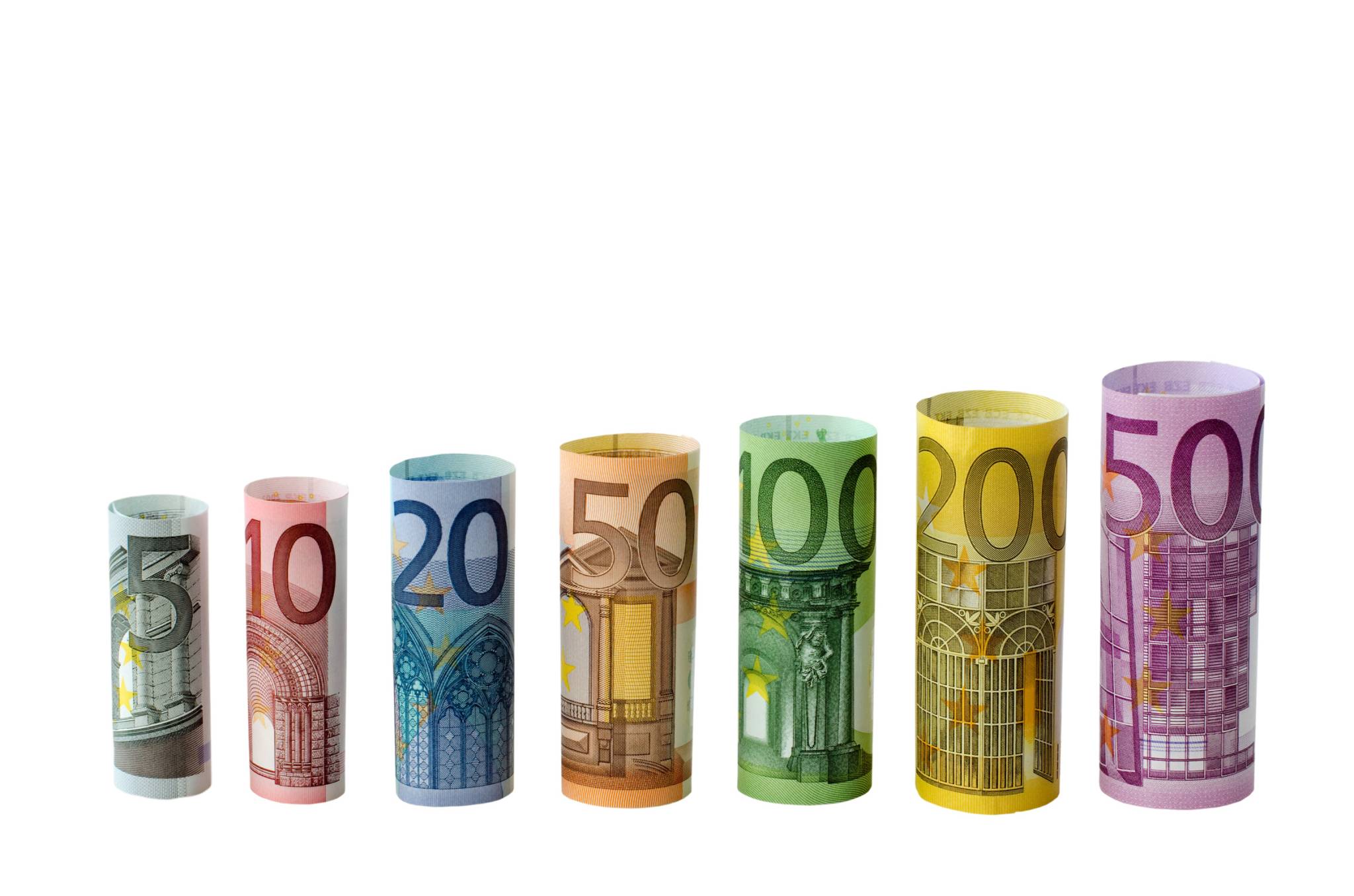
Europol May 6, 07:00

Gun smugglers behind mail order service arrested in Poland and the Netherlands

On 25 April, Europol supported a series of actions carried out simultaneously in the Netherlands and in Poland, as a result of which 82 individuals were arrested (81 in Poland, one in the Netherlands) and 250 firearms seized. Some 300 locations were searched across Poland, alongside two in the Netherlands in Beverwijk and Heemskerk.  Mail order gun service  The members of the gang arrested, all Polish nationals, mostly belonged to one same family. They have been under investigation since August 2020.  The family members residing in the Netherlands, which included the gang’s ringleader, were in charge of acquiring firearms of various types – both legal and illegal - across Europe. These firearms were then stored in the Netherlands, and when needed sent to the family members in Poland for them to convert the deactivated weapons into live-firing ones in illegal workshops.  The firearms were advertised for sale on Polish online marketplaces as ‘antique’ or ‘deactivated’ ones for which the sale is authorised. The illegal, live-firing weapons would then be offered for sale to trusted clients. Once sold, these weapons were sent via parcel delivery companies to strawmen for further distribution in Poland or directly to the clients who purchased the firearms. The organised crime group also supplied ammunition alongside the weapons.  Up to the action day, this gang of gunrunners is suspected to have distributed several hundred illegal firearms using this modus operandi.  European coordination  International police cooperation coordinated by Europol was central in bringing to justice the perpetrators who were located in different European countries. Europol brought together the Dutch and Polish investigators who have since been working closely together with specialists from Europol’s European Serious Organised Crime Centre to uncover the magnitude of the criminal activity and establish a joint strategy.  A Europol mobile office was deployed to Poland on the action to facilitate the extensive exchange of information and evidence and support with the analysis of the seized electronic devices.  The following law enforcement authorities took part in this investigation: Netherlands: National Police (Politie) Poland: Central Criminal Bureau of Investigation (Centralne Biuro Śledecze Policji), regional police forces  Europol: European Serious Organised Crime Centre   
Read full story →
Europol May 5, 08:00

Three German fugitives arrested in Spain for providing shadow banking system to criminals

Three individuals have been arrested as the result of an action day in Malaga, Spain, on 30 March, the details of which can only be released now due to operational reasons. All three suspects have been on the run from the German authorities since 2021. The criminal organisation’s ringleader – a German national of Russian origin – features among those arrested. The suspects are believed to have run a shadow banking system which processed hundreds of millions of euros of criminal transactions isolated from any oversight mechanisms governing the legal financial system.  The criminals moved around large amounts of cash through this parallel system, helping criminals launder their illegal proceeds and fund their activities mainly linked to drug trafficking. The ringleader of this criminal network would negotiate commissions of up to 5 % for every million euros managed, with profits estimated at more than EUR 250 000 per day.  Europol’s EFECC supported the investigation by providing its secure communication platform and facilitating international cooperation between Spain and Germany, running cross-checks and providing analytical support and operational expertise. A Europol mobile office was also deployed to Malaga to assist the Spanish authorities with the action day.  
Read full story →
Europol Apr 29, 11:00

Violent labour exploitation gang busted in Romania and the UK

The Romanian Police (Poliția Română) and the United Kingdom Northamptonshire Police, supported by Europol and Eurojust, have dismantled a criminal network involved in human trafficking, labour exploitation and money laundering. The action day on 27 April led to: 25 house searches (13 in Romania and 12 in Corby, the UK); 5 arrests (2 in Romania and 3 in the UK); Seizures included digital equipment and mobile phones, two high-end cars, luxury goods, weapons, and the equivalent of over EUR 230 000 in cash in different currencies. Victims worked for little or no payment Active since early 2018, the criminal network lured vulnerable people in unstable financial situations by offering them jobs in the UK. The suspects recruited victims directly from the Romanian county of Iasi, but also through intermediaries. So far the investigators have identified 27 victims, both male and female, of Romanian origin. The criminal network transported the victims to the UK where they took their ID documents and phones and forced them to work for little or no wages at all. The victims were forced to work 16 hours a day and seven days a week. The suspects established a wide network for the recruitment, transportation, accommodation and exploitation of victims.  In collaboration with managers from a number of companies in the UK, the members of the criminal gang supplied businesses, such as factories and car wash companies, with low-wage workers. As the suspects were in possession of the victims’ ID documents, they could take out different loans using the victims’ names. The criminal networks also controlled the bankcards of the victims, withdrawing all salary payments made to them by their employers. The gang threatened the victims and their families back home with physical violence. With no means of communication and under strict control by the criminal gang, the victims worked without receiving any payment, and without sufficient food supplies or basic health care. The suspects laundered the criminal proceeds through investments in real estate in Romania and through the purchase of luxury goods. Cross-border coordination Law enforcement authorities initiated investigations into this criminal network in 2020. Europol coordinated the operational activities, facilitated the exchange of information and provided analytical support. Europol deployed an expert to the UK to cross-check operational information in real time and support the investigators on the ground.     In November 2021, Eurojust set up a joint investigation team (JIT) between Romania and the UK to facilitate the judicial cooperation.   
Read full story →
Europol Apr 29, 09:00

New Europol and EMCDDA Analyses of the European Drug Market

To be presented in Brussels on 6 May, the analyses combine data from Europol’s operational intelligence on organised crime with the EMCDDA’s drug monitoring system. These are the first in a series of online modules exploring the EU drug market. Further modules will be published in 2023 to complete the strategic analysis. These will cover amphetamine, cannabis, heroin, MDMA and new psychoactive substances, as well as impacts, drivers and responses. A press release, with the main highlights on cocaine and methamphetamine, will be available on 6 May. Press conference Date: 6 May 2022 Time: 10.30 Central European Time (CEST/Brussels), 09.30 (WEST/Lisbon). Venue: Résidence Palace, 155 Rue de la Loi, B-1040 Brussels (Polak room). Registration: press@europol.europa.eu or press@emcdda.europa.eu Press contacts Europol press office: press@europol.europa.eu — Tel. (31) 703 02 50 01 EMCDDA press office: press@emcdda.europa.eu — Tel. (351) 211 21 02 00 | (351) 935 994 027  The EMCDDA–Europol EU drug markets analysis is released every three years. The last report was published in 2019.
Read full story →
Europol Apr 28, 12:00

Europol report finds deepfake technology could become staple tool for organised crime

Recommendations for tackling criminal uses of deepfakes Much of the deepfake content created today is identifiable through manual methods that rely on human analysts identifying telltale signs in deepfake images and videos. However, this is a labour intensive task that is not actionable at scale. Accordingly, the report argues that law enforcement agencies will need to enhance the skills and technologies at officers’ disposal if they are to keep pace with criminal use of deepfakes. Examples of such new capacities range from the deployment of technical and organisational safeguards against video tampering to the creation of deepfake detection software that uses artificial intelligence.  Click here to access the report. About the Europol Innovation Lab Europol's Innovation Lab aims to identify, promote and develop concrete innovative solutions in support of the EU Member States’ operational work. These will help investigators and analysts to make the most of the opportunities offered by new technologies to avoid duplication of work, create synergies and pool resources. The activities of the Innovation Lab are directly linked to the strategic priorities as laid out in Europol Strategy 2020+, which states that Europol shall be at the forefront of law enforcement innovation and research.
Read full story →
Europol Apr 27, 07:30

Spain arrests two for supplying conflict zones with weapons

The two suspects were arrested at their homes in Barcelona and El Masnou on 20 April. Seven other members of the same criminal organisation had already been arrested in November 2020. The analysis of the evidence gathered then during the house searches led to the identification of the suspects arrested in the province of Barcelona this week. Fuelling conflict zones  The criminal syndicate, operating mostly from Spain, was under investigation since 2018. They illegally transported weapons and explosives across the Mediterranean to conflict zones subject to international embargoes in North Africa and the Middle East. Their illegal cargo included heavy armaments, such as tanks, and explosive precursors used by terrorists to manufacture improvised explosive devices. The criminal proceeds were then injected into the legal economy through different money laundering schemes, before being sent to Spain where the criminals invested in real estate and enjoyed a lavish lifestyle.  The following authorities in Spain were involved in the investigation: National Police (Policía Nacional) Regional Catalan Police (Mossos d’Esquadra) Tax Authority (Agencia Tributaria) Europol’s support  The case was conducted in close cooperation with Europol’s European Serious Organised Crime Centre, which provided continuous intelligence development and analysis to support the Spanish investigators. A Europol Mobile Office was also deployed to Barcelona. The evidence seized during the action day in Barcelona is now being analysed to identify further investigative leads across Europe.
Read full story →
Europol Apr 26, 14:00

Europol and UEFA hold first international conference on match-fixing in football

On 26 April, a total of 109 senior officials from law enforcement, judicial authorities and national football associations from 49 countries attended the joint Europol-UEFA conference at Europol’s headquarters in The Hague, the Netherlands. Over the course of the day, expert panels analysed the most pressing current and future threats to protecting the integrity of football and fighting organised crime groups. They discussed topics such as operational collaboration between law enforcement bodies and football Integrity officers, and the early detection of suspicious betting patterns.   Prevention was also high on the agenda, with discussions focusing on new recently adopted legal frameworks and existing tools designed to prevent match-fixing and facilitate information sharing.  Burkhard Mühl, Head of Europol’s European Financial and Economic Crime Centre (EFECC), commented: Organised crime quickly understood that a lot of football clubs were suffering financially as a consequence of COVID-19. And where there is less money, players, coaches, officials and even club executives are increasingly vulnerable to being corrupted by fixers. What with the huge profits associated with ‘making the unpredictable predictable’, we are seeing more and more cases of match-fixing and suspicious results. Cooperation between law enforcement and sports organisations is vital to not only detect and investigate suspected corruption in football, but also to stop such fraudulent activities before they can even begin Meanwhile UEFA’s Managing Director of Integrity and Regulatory, Angelo Rigopoulos, remarked: This first joint Europol-UEFA international conference is an important step forward in the fight against match-fixing, and sends out a strong signal that both organisations are here to pool their forces and do their utmost to minimise this phenomenon. Vincent Ven, UEFA’s Head of Anti-Match-Fixing, added: Nowadays, more than ever before, European football and the law enforcement sector need to remain united and offer their mutual support in seeking to protect our popular sport from this scourge, by cooperating in joint activities, implementing common projects and exchanging information in the area of match-fixing. Experts at Europol’s European Financial and Economic Crime Centre work with law enforcement authorities across the European Union to identify links between suspicious matches and suspects, and to uncover the organised crime groups who orchestrate these multi-million Euro frauds against sport.  UEFA’s team of anti-match-fixing experts work on education, intelligence, investigation and cooperation with its network of 55 Integrity Officers as well as key stakeholders and partners, with particular emphasis given to preventing any issues related to match-fixing and betting irregularities.  
Read full story →
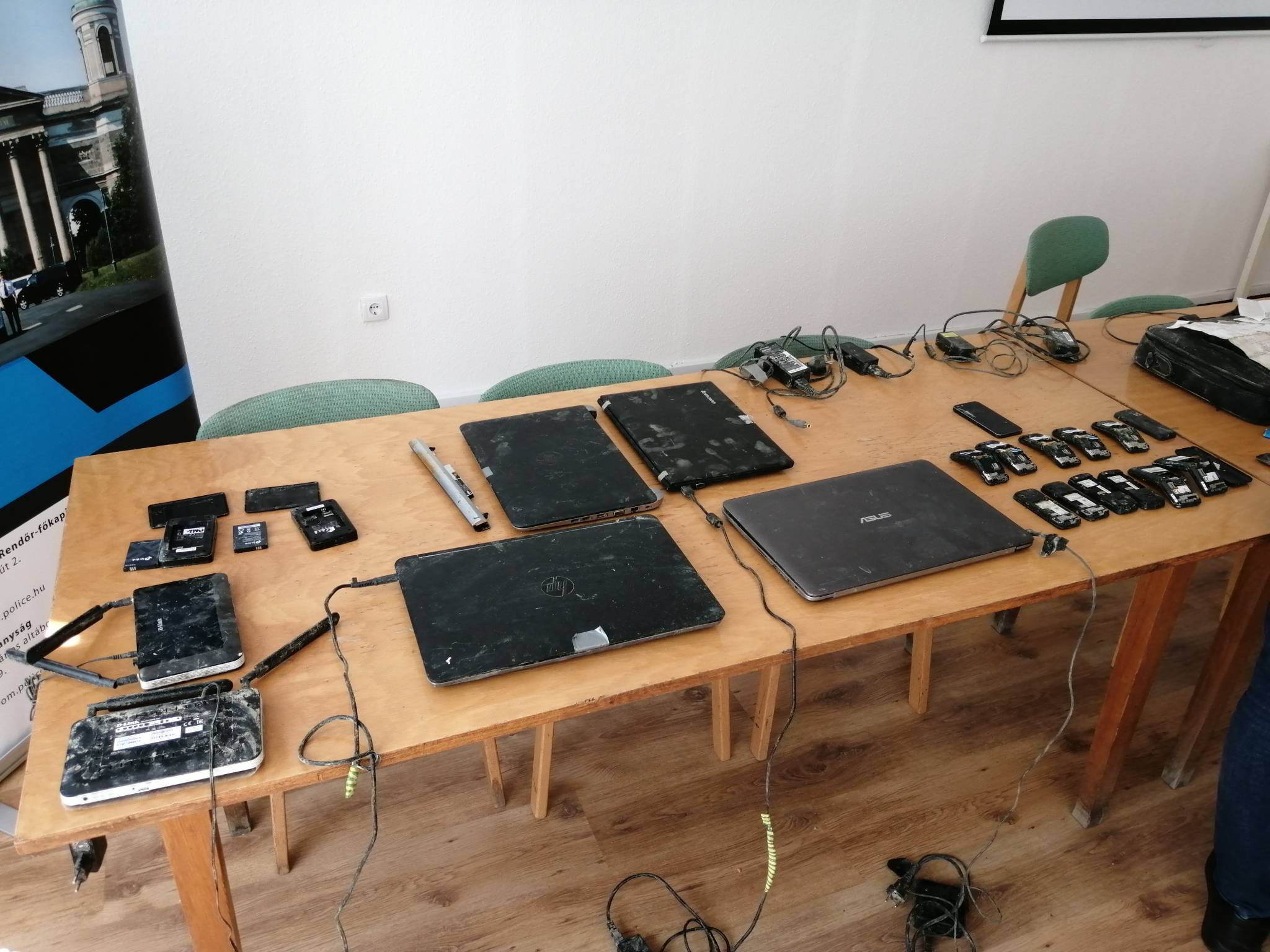
Europol Apr 21, 12:59

Cocaine lords targeted in Belgium, Germany and the Netherlands

This operation targeted the European and South American drugs and money-laundering infrastructure of a large scale trafficking network, which had already taken a massive hit in February 2022. Europol facilitated the exchange of information and produced large amounts of intelligence based on criminal analysis, enabling Europol to unveil a detailed picture of the networks’ operations across countries and continents. The action day on 20 April 2022 led to:Over 35 locations searched 17 arrests (5 in Belgium, 11 in Germany and 3 in The Netherlands)Seizures in Belgium, Germany and Netherlands including electronic equipment, documents, four vehicles, luxury watches, and real estate including four apartments, as well as bank accounts and cash with a total value of EUR 5.5 millionThe missing puzzle piece - European High Value Targets indictedThese operational activities are the culmination of parallel investigation of the Belgian, Dutch and German law enforcement authorities into a criminal network trafficking multi-tonne shipments of cocaine from source countries to Europe. The operation was initiated in February 2021 when law enforcement authorities in the ports of Hamburg and Antwerp seized a total of 34 tonnes of cocaine in 3 shipments linked to this criminal network. During the investigation, the cooperating authorities uncovered that this criminal group had the capacity to ship multiple multi-tonne cocaine consignments towards Europe in just a few months. The traffickers’ command and control centre, and the European High Value Targets behind it, were based in Dubai. From there, they managed the trafficking of cocaine sourced via their own production infrastructure in Bolivia. Logistical and supply lines were also identified in Paraguay. The leaders of the criminal network used encrypted communication to arrange their large shipments. The coordination of this multi-tonne cocaine trafficking was intercepted as a result of the 2021 takedown of the SKY ECC encrypted communications platform. This also revealed a large network of legitimate companies set up to enable the import of drugs from South America and the laundering of the related proceeds. As an example, to enter the EU, the cocaine was concealed in shipments of bananas, coffee and plaster. 
Read full story →
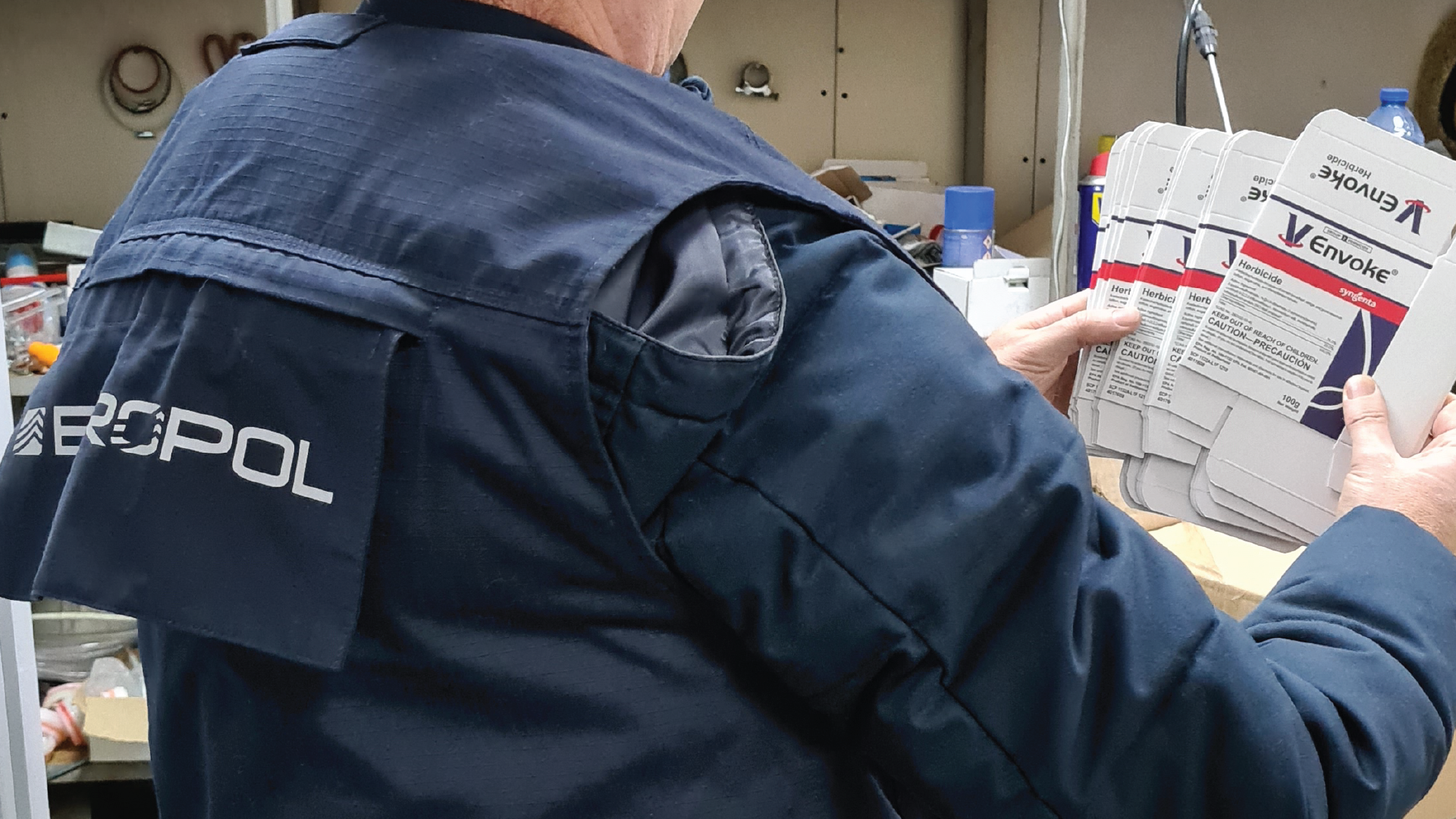
Europol Apr 12, 10:00

Kinahan organised crime group sanctioned by US Department of the Treasury

Today Ireland’s national police force, An Garda Síochána, launched the criminal justice initiative ‘cooperating at an international level in protecting communities from organised and serious crime’ at a press conference at City Hall in Dublin, Ireland. At the press conference, the US Department of the Treasury’s Office of Foreign Assets Control (OFAC) announced sanctions against the Irish organised crime group known as the Kinahan gang. This action results from close collaboration between OFAC, the Drug Enforcement Administration, Ireland’s An Garda Síochána and the United Kingdom’s National Crime Agency, with the support of Europol, the European Union Agency for Law Enforcement Cooperation. Europol provided operational support and coordination, as part of its mandate to investigate large-scale operations involving several countries. Jari Liukku, Head of Europol's European Serious and Organised Crime Centre said: Serious and organised crime affects and undermines all levels of society, from the daily lives of our citizens to the economy, state institutions and the rule of law. The criminal structures we are facing are fluid and flexible. Europol, as the nerve centre of the European Union internal security architecture, offers a genuine platform for operational cooperation and a hub for the sharing of criminal intelligence to tackle the most serious crime gangs. As a result of today’s action, all property and interests in property of the designated individuals or entities that are in the United States, or in the possession or control of US persons, must be blocked and reported to OFAC.  Europol’s Serious and Organised Crime Threat Assessment (SOCTA) The initiative ‘cooperating at an international level in protecting communities from organised and serious crime’ demonstrates the strength of the international law enforcement community. As part of this, authorities from Ireland, the UK, the US and Europol work hand in glove to break the criminal networks involved in drug trafficking and corruption, money laundering and violence. According to Europol’s 2021 Serious and Organised Crime Threat Assessment (SOCTA), serious and organised crime remains a key threat to the EU’s internal security. Criminal structures are more fluid and flexible than previously thought and their operations are far-reaching, international, and very ambitious. 40 % of the criminal groups active in the EU are involved in drug trafficking, and much of the violence associated with serious and organised crime is related to the drug trade. Corruption is a feature of all criminal activities. Almost 60 % of the criminal groups reported to Europol engage in corruption. More than 80 % of the criminal networks are active in the use of legal business structures for their illegal activities. Serious and organised crime in the EU fundamentally relies on the ability to launder vast amounts of criminal profits. For this purpose, professional money launderers have established a parallel underground financial system to process transactions and payments isolated from any oversight mechanisms governing the legal economic system.  
Read full story →