World News

BBC World Dec 10, 08:08

Ukraine 'ready for elections' if partners guarantee security, Zelensky says

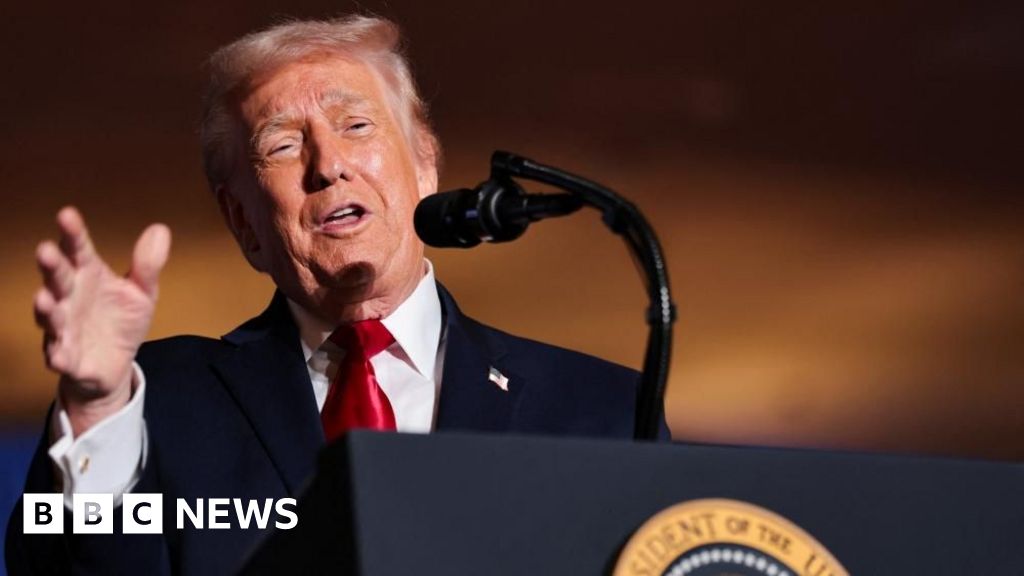
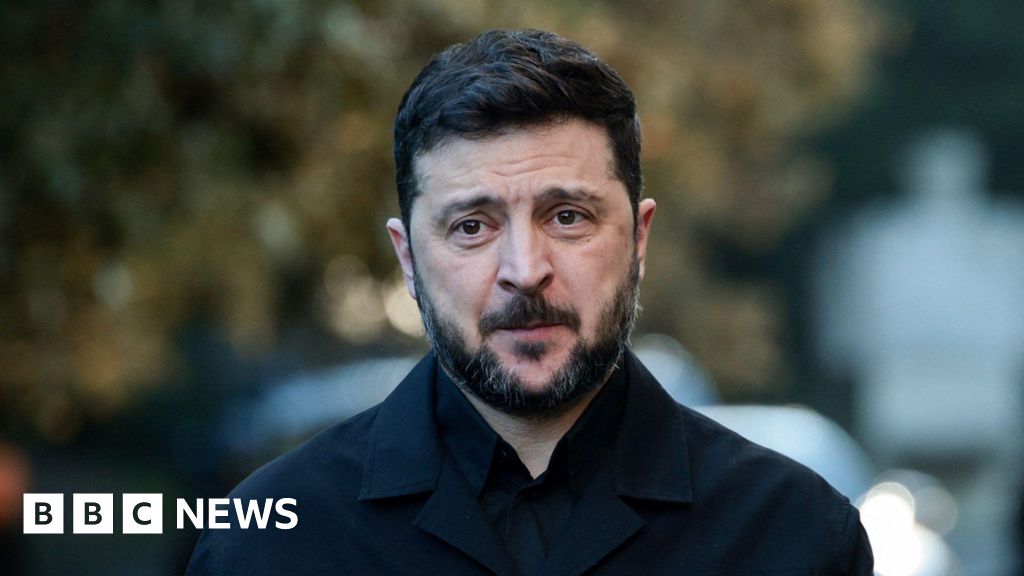
Ukraine 'ready for elections' if partners guarantee security, Zelensky says8 minutes agoShareSaveMattea BubaloShareSaveReutersUkraine is "ready for elections", President Volodymyr Zelensky has said, after US President Donald Trump repeated claims Kyiv was "using war" to avoid holding them. Zelensky's five-year term as president was due to end in May 2024, but elections have been suspended in Ukraine since martial law was declared after Russia's invasion.Speaking to reporters following Trump's comments in a wide-raging Politico interview, Zelensky said he would ask for proposals to be drawn up which could change the law.Elections could be held in the next 60 to 90 days if security for the vote was guaranteed with the help of the US and other allies, he said."I'm asking now, and I'm stating this openly, for the US to help me, perhaps together with our European colleagues, to ensure security for the elections," he told reporters. "The issue of elections in Ukraine, I believe, depends first and foremost on our people, and this is a question for the people of Ukraine, not the people of other countries. With all due respect to our partners," he said."I've heard hints that we're clinging to power, or that I personally am clinging to the presidency" and "that's why the war isn't ending", which he called "frankly, a completely unreasonable narrative".Russia has consistently claimed Zelensky is an illegitimate leader and demanded new elections as a condition of a ceasefire deal – a talking point which has been repeated by Trump."They talk about a democracy, but it gets to a point where it's not a democracy anymore," the US president told Politico. He has suggested without evidence that Zelensky is the main obstacle to peace as US-led efforts to broker a peace deal to end the war in Ukraine continue. Such a vote would only be fair if all Ukrainians could participate, including soldiers fighting on the front line, a Ukrainian opposition MP told the BBC."In order for these elections to be fair all of the People of Ukraine would need to be allowed to vote," Lesia Vasylenko told the BBC World Service's Newsday programme.She said that "elections are never possible in wartime", alluding to the suspension of elections in the UK during World War Two.Discussions around holding elections have made headlines since Russia's full-scale invasion of Ukraine in 2022. They have been routinely dismissed by Ukraine's government, opposition and public alike, arguing unity in the war effort must come first.A poll by the Kyiv International Institute of Sociology (KIIS) in March found about 78% of people opposed holding elections even after a complete settlement of the war."Even a year ago, Zelensky said that he was ready for elections as soon as the conditions allow" in the face of previous pressure, Hanna Shelest, a foreign policy analyst with the think tank Ukrainian Prism, told the BBC. The question was, however, how to create the conditions Zelensky outlined, Shelest told the Newsroom programme on the BBC World Service, given there were around one million soldiers and four million refugees who would be voting - as well as unsecured areas in the country and ongoing strikes."You cannot guarantee the security of the polling stations," she said. Trump criticises 'decaying' European countries and 'weak' leadersElection rumours swirl in Ukraine – could Zelensky be mulling a summer poll?EuropeWar in UkraineVolodymyr ZelenskyRussiaUkraine

BBC World Dec 10, 06:11

US tells Thailand and Cambodia to stop fighting as clashes continue

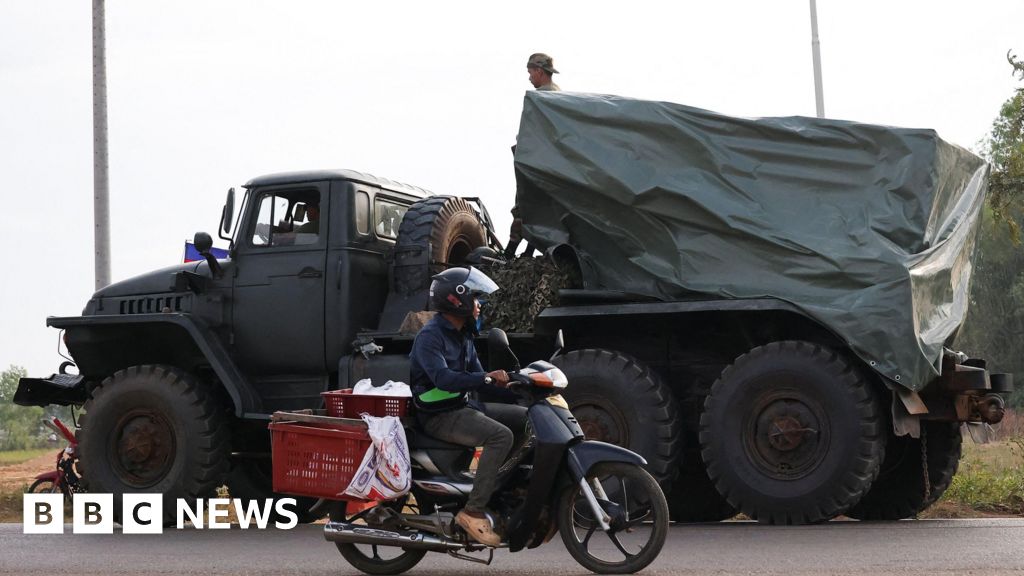
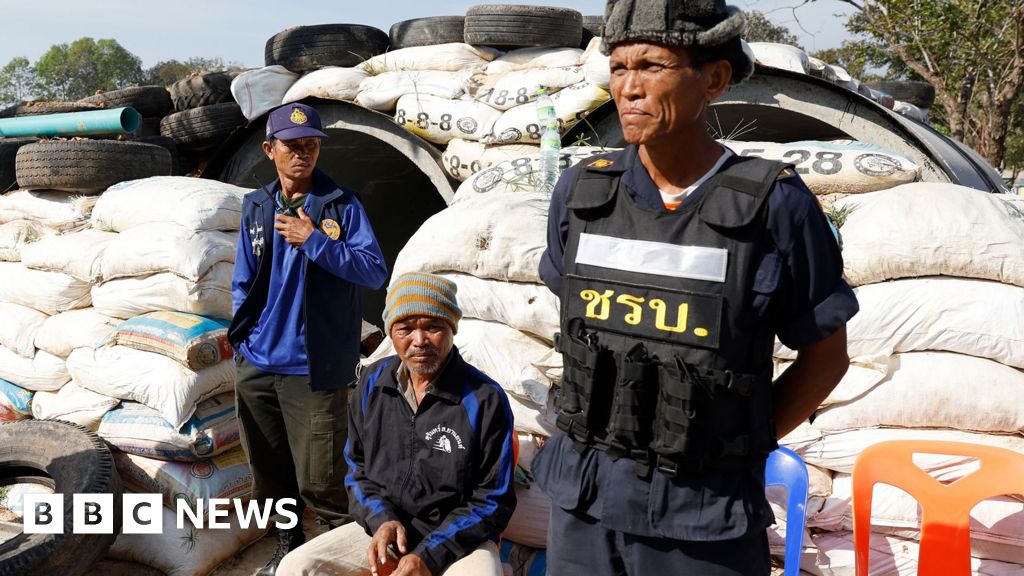
US tells Thailand and Cambodia to stop fighting as clashes continue2 hours agoShareSaveKelly NgShareSaveReutersTrump says he will "make a phone call" to stop the fightingThe US has asked Thailand and Cambodia to "cease hostilities immediately" as border clashes extended for a third day, killing at least 10 people and displacing hundreds of thousands.The two nations must follow de-escalatory measures outlined in a peace accord brokered by US President Donald Trump in October, Secretary of State Marco Rubio said.Trump has also said that he would "make a phone call" to stop the fighting, which is the most serious escalation since clashes in July killed dozens of people.Both countries have blamed each other for re-igniting the fighting, which has seen air strikes and exchanges of artillery fire.The death toll over three days of hostilities stands at 10 - seven from Cambodia and three from Thailand. Thai officials said they evacuated more than 400,000 people, while Phnom Penh said 100,000 on the Cambodian side have been moved to shelters.Thailand's defence ministry said Wednesday military actions were "limited in scope and employed as a last option". "Peace must come with the safety and security of our citizens, full stop," the ministry's spokesman said.Cambodia on the other hand accused Thailand of launching "aggressive military attacks" that targeted civilian institutions and "sacred cultural sites", including historic temples along the disputed border.Also on Wednesday, Cambodia announced it was pulling out from the South East Asian Games that is being hosted in Thailand.The Cambodian National Olympic Committee cited "serious concerns and requests" from the families of its athletes for the withdrawal. It added that the decision was "not made lightly".United Nations' Secretary-General António Guterres urged both sides to "exercise restraint and avoid further escalation", noting how their dispute has led to "significant civilian casualties, damage to civilian infrastructure, and displacement on both sides".The century-old border dispute between the South East Asian neighbours dramatically escalated on 24 July with a Cambodian rocket barrage into Thailand, followed by Thai air strikes.That set off five days of intense fighting, which left dozens of soldiers and civilians dead. Later that month, Bangkok and Phnom Penh agreed to an "immediate and unconditional ceasefire" brokered by Malaysian Prime Minister Anwar Ibrahim and Trump - who at the time threatened to stop tariff negotiations until the hostilities stopped.In October, Trump claimed a historic achievement in ending the border conflict after both sides signed a ceasefire agreement, but tensions have continued to simmer.Violence this week has expanded into at least six provinces in north-eastern Thailand and five provinces in Cambodia's north and north-west.Thailand and Cambodia have been contesting territorial sovereignty along their 800km land border for more than a century, since the borders of the two nations were drawn after the French occupation of Cambodia.This week, several countries, including the UK, US and Japan, have issued warnings against travelling to the border areas citing the renewed fighting.A fierce war of words keeps Thailand and Cambodia on edgeAsiaThailandCambodia
Read full story →
BBC World Dec 10, 05:45

'It's insulting they think we can't handle it': The Australian teens banned from social media

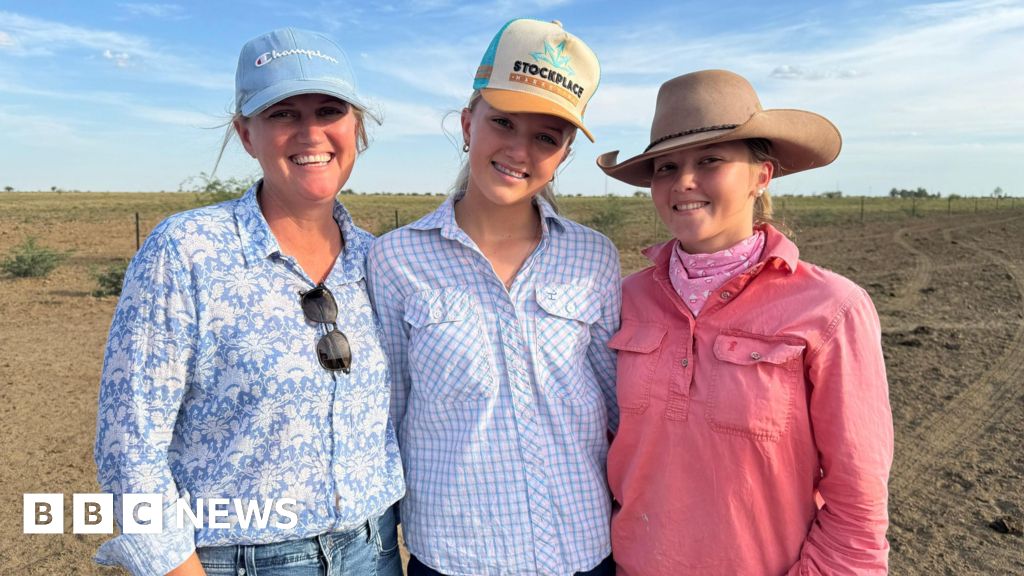
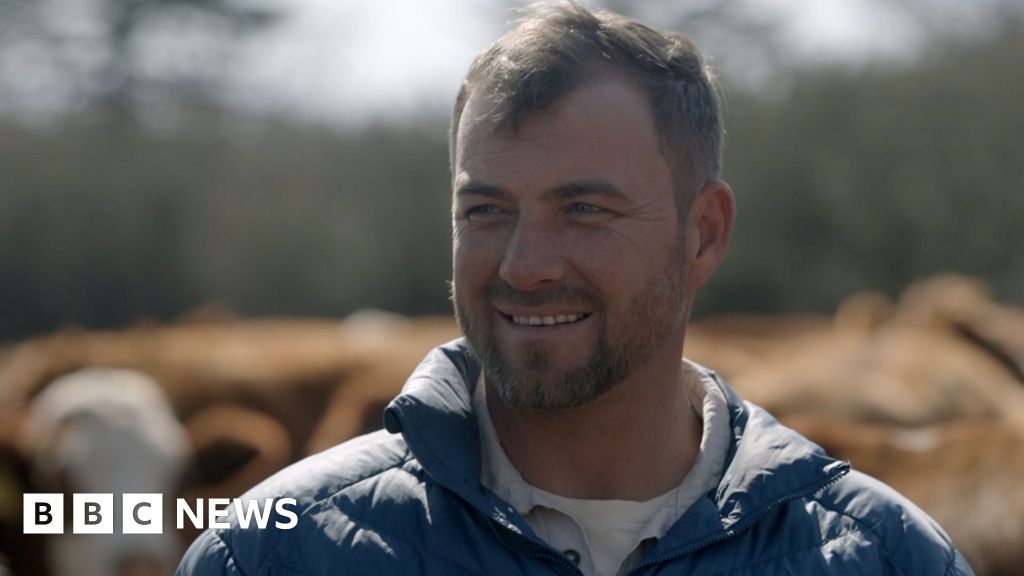
'It's insulting they think we can't handle it': The Australian teens banned from social media3 hours agoShareSaveKaty WatsonMaxwelton, QueenslandShareSaveBreanna Easton, 15, now finds herself cut off from social media because of Australia's ban on under-16sSchool is out for the year, but the summer holidays aren't exactly a break for 15-year-old Breanna Easton - that is when she's hard at work mustering cattle on the family's station."It's the freedom, the space you have to move," Breanna says, listing all the things she loves about her life, 1,600km north-east of Brisbane in Australia's sparsely-populated outback.With grazier parents and grandparents, the industry runs in her blood. The vast hinterland is her own backyard.And yet, like most teenagers, she's also attached to her smartphone.The all-terrain buggy she uses to herd cattle is fitted with an internet extender, enabling her to message friends on Snapchat while working. On days she gets a little bored, she likes to make funny TikTok videos with her siblings.With nearly all her friends living at least 100km away, social media is a lifeline. But not anymore, now that Australia's social media ban for children has taken effect."Taking away our socials is just taking away how we talk to each other," Breanna says. While she can still text her friends, it's not the same as a quick "snap" or a "like" on a photo that allows her to play a part in their lives even when she is far away.How does the Australian social media ban work?Australian teens navigate new world without social media as ban takes effectCan you ban kids from social media? Australia is about to, but some teens are a step aheadThe ban has been in the making for a year now. Throughout, supporters have argued it's for the wellbeing of children who they say are spending too much time online and risk being exposed to uncontrollable pressures, bullying and predators. Opponents say restricting children's access to the internet runs the risk of pushing them to even less regulated corners of it - and they question the effectiveness of the age-verification tech the ban relies on.The debate is far from settled but Australia's experiment has now begun, and Breanna is among millions of children under the age of 16 who are no longer allowed to use social media.And among them are children who are seen as both winning - saved from the potential dangers of social media - and losing out - no longer having the community and connections that may have been harder to forge offline.Megan Easton with her daughters, Breanna and Olivia - Megan worries the government is overstepping with the banFor Breanna's mum Megan Easton, the ban is a mixed blessing. While she agrees kids need to be protected, she remembers her own childhood on a cattle station was far more isolating."We did feel very behind the other children at school because we had a somewhat sheltered life."Breanna, her older sister Olivia and younger brother Jacob all did remote classes for children in the outback who are unable to attend a physical school.For senior grades though, boarding school is the only option for a good education. So from the age of 11 or 12, the siblings have lived six hours away from home during term-time."We might be incredibly geographically isolated but we're not digitally illiterate and we have taken great measures in our family to make sure that we educate our children appropriately for the world ahead of them," Ms Easton says. "I do think that it is a bit of government overstepping."One of her concerns is that delaying access to social media to 16 takes away power from parents to educate their children."Usually around 12 is when they start looking for their peers to be more influential than their parents," she says. "Even though it's young to get them on social media, we've staged their experiences with it and it's a great opportunity for us to let them have a few mistakes and then talk them through the processes of self-correcting."Jacinta Hickey, 14, says she is old enough to know right from wrongMore than 2,000km away, teens in Sydney lead very different, far more connected lives. But they share similar worries."It's a bit insulting that they think we can't handle it," says 14-year-old Jacinta Hickey who attends Rosebank College in Sydney's inner west. "I'm definitely mature enough to distinguish right from wrong and to know what's good and bad for me."Her teachers though couldn't be happier. "I feel really passionate that as long as we can, we should preserve the innocence that comes through childhood," says Iris Nastasi, the principal at Rosebank.When smartphones started becoming popular in the early 2000s, she thought it would be an opportunity to teach children about technology. She embraced the change. Twenty years later, Ms Nastasi thinks very differently."It's two in the morning, he or she does something that they wouldn't normally do and the fallout happens here. Relationships are damaged and we have to look into it."At 12, Lola Farrugia isn't on social media yet - and with the new law, she now won't be for another four years. But that doesn't faze her. She's happy enough with a flip phone."They're my school friends so I see them at school, I see them in sport - they're everywhere," says Lola, who's had coaching from her parents about the ills of social media."My mom explained to me that social media is junk food for the brain," she says. "If you have a pantry and you clear [it], you're not craving anything, you know what I mean?"Lola, 12, is in favour of the banPeter Malinauskas, the Premier of South Australia, is the man credited – or blamed, depending on your age - for clearing out the pantry.After his wife read The Anxious Generation by Jonathan Haidt, an American psychologist who sets out the ills of the smartphone and how it is rewiring childhood, Malinauskas set out to introduce state-level legislation hoping it could win federal support too."She put the book down on her lap and turned to me and said you've really got to do something about this," he told the BBC. "And then I stopped and thought about it and thought maybe we actually can."Not even Malinauskas expected the speed at which it happened though. The Anxious Generation was published in March 2024. By late November, a federal law banning social media for under-16s was passed.There's still a High Court challenge brought by two teens pending, possible battles with tech firms and a warning from US President Donald Trump about targeting American companies."Of course you think through the potential repercussions of any move like this," Malinauskas says. "But when you are talking about protecting young people, all other considerations become secondary."But one of the biggest criticisms of the law is that a blanket restriction could do the opposite for minority groups.According to a survey of nearly 1,000 young people carried out by Minus18, a group that supports under-18 LGBTQ+ communities, 96% of respondents said social media was important to access friends and support, and 82% believed a ban would leave them disconnected.Brisbane schoolgirl Sadie Angus is one of them. She turned 13 just a few weeks ago and opening an Instagram account was a rite of passage for her. But it was a short-lived one - the law means she's now being kicked off it and she's frustrated."I can admit more things on there than I can in real life," says Sadie who often prefers to keep her anonymity online. "I use it as a safe space to share what I've had to go through and since nobody knows who I am, they can't come to me in real life and talk about it and that feels kind of comforting."Sadie's mother Kath felt it was an important step in her daughter - the youngest in their family - growing up and now that has been taken away from her."She's being exposed to some really amazing role models through social media, particularly in the queer community which I think is really healthy for young adolescents," Ms Angus says.Other minority groups have also voiced concern over the ban."I am quite nervous about what this is going to mean for autistic young people," says Sharon Fraser, the CEO of Reframing Autism."We communicate and socialise differently," says Sharon who also has an autistic son. "Online can be a very beneficial place for autistic people and there are ways to connect online that are just not accessible to them in real life."Watch: 'I don't need laws to teach my kids to be responsible', says Kath AngusFor every young person who feels like they're losing out, campaigner Emma Mason thinks there will be far more winners.Nearly four years ago, her daughter Tilly killed herself. She was 15.Emma blames the rise of social media for Tilly's death. Face-to-face bullying started when Tilly was just eight. It moved to messaging and then to platforms including Tiktok, Snapchat and Instagram. But it got worse after a fake image of Tilly was spread by children at her school.Emma recalls how hysterical Tilly was when she found out: "She was subject to something she had no control over, a harm that was instant, a harm that she could not stop. It was one of those moments in her life where she just lost it, she just thought I can't do this anymore, I can't keep fighting the demons."Ms Mason doesn't want this to happen to other children, which is why she's been standing alongside Prime Minister Anthony Albanese to support this law."These are agents of harm that are unregulated and I think our children have been the social experiment," Emma says. "It's a government's job to protect the vulnerable of our society and to provide guardrails for how things need to go."She admits though, for those who are already teenagers, they might not be clear winners."I don't know that we can save the children that have had access to it already," she says. "But those children that are 13 and below that aren't supposed to be on it now, they won't have to grow up in a world where it's acceptable that you just get on social media and you can say what you want, how you want, to whoever you want."Additional reporting by Simon AtkinsonWatch: What do teenagers think about Australia's social media ban?Australia's social media ban for children has left big tech scramblingAsiaAustralia
Read full story →
BBC World Dec 10, 05:06

Sperm from donor with cancer-causing gene was used to conceive almost 200 children

Sperm from donor with cancer-causing gene was used to conceive almost 200 children3 hours agoShareSaveJames Gallagher,Health and science correspondentandNatalie Truswell,Investigations producerShareSaveShutterstockThe donor's sperm was used in clinics across Europe (stock image)A sperm donor who unknowingly harboured a genetic mutation that dramatically raises the risk of cancer has fathered at least 197 children across Europe, a major investigation has revealed.Some children have already died and only a minority who inherit the mutation will escape cancer in their lifetimes.The sperm was not sold to UK clinics, but the BBC can confirm a "very small" number of British families, who have been informed, used the donor's sperm while having fertility treatment in Denmark. Denmark's European Sperm Bank, which sold the sperm, said families affected had their "deepest sympathy" and admitted the sperm was used to make too many babies in some countries.Getty ImagesUp to 20% of the donor's sperm contains the dangerous mutation that increases the risk of cancer (stock image)The investigation has been conducted by 14 public service broadcasters, including the BBC, as part of the European Broadcasting Union's Investigative Journalism Network.The sperm came from an anonymous man who was paid to donate as a student, starting in 2005. His sperm was then used by women for around 17 years.He is healthy and passed the donor screening checks. However, the DNA in some of his cells mutated before he was born.It damaged the TP53 gene – which has the crucial role of preventing the body's cells turning cancerous.Most of the donor's body does not contain the dangerous form of TP53, but up to 20% of his sperm do.However, any children made from affected sperm will have the mutation in every cell of their body.This is known as Li Fraumeni syndrome and comes with an up to 90% chance of developing cancer, particularly during childhood as well as breast cancer later in life."It is a dreadful diagnosis," Prof Clare Turnbull, a cancer geneticist at the Institute of Cancer Research in London, told the BBC. "It's a very challenging diagnosis to land on a family, there is a lifelong burden of living with that risk, it's clearly devastating." MRI scans of the body and the brain are needed every year, as well as abdominal ultrasounds, to try to spot tumours. Women often choose to have their breasts removed to lower their risk of cancer.The European Sperm Bank said the "donor himself and his family members are not ill" and such a mutation is "not detected preventatively by genetic screening". They said they "immediately blocked" the donor once the problem with his sperm was discovered.Children have diedDoctors who were seeing children with cancer linked to sperm donation raised concerns at the European Society of Human Genetics this year. They reported they had found 23 with the variant out of 67 children known at the time. Ten had already been diagnosed with cancer.Through Freedom of Information requests and interviews with doctors and patients we can reveal substantially more children were born to the donor. The figure is at least 197 children, but that may not be the final number as data has not been obtained from all countries. It is also unknown how many of these children inherited the dangerous variant.Dr Kasper has been helping some of the families affectedDr Edwige Kasper, a cancer geneticist at Rouen University Hospital, in France, who presented the initial data, told the investigation: "We have many children that have already developed a cancer."We have some children that have developed already two different cancers and some of them have already died at a very early age."Céline, not her real name, is a single-mother in France whose child was conceived with the donor's sperm 14 years ago and has the mutation.She got a call from the fertility clinic she used in Belgium urging her to get her daughter screened.She says she has "absolutely no hard feelings" towards the donor but says it was unacceptable she was given sperm that "wasn't clean, that wasn't safe, that carried a risk".And she knows cancer will be looming over them for the rest of their lives."We don't know when, we don't know which one, and we don't know how many," she says."I understand that there's a high chance it's going to happen and when it does, we'll fight and if there are several, we'll fight several times."The donor's sperm was used by 67 fertility clinics in 14 countries.The sperm was not sold to UK clinics.However, as a result of this investigation the authorities in Denmark notified the UK's Human Fertilisation and Embryology Authority (HFEA) on Monday that British women had travelled to the country to receive fertility treatment using the donor's sperm.Those women have been informed. Peter Thompson, the chief executive of the HFEA, said a "very small number" of women were affected and "they have been told about the donor by the Danish clinic at which they were treated". We do not know if any British women had treatment in other countries where the donor's sperm was distributed. Concerned parents are advised to contact the clinic they used and the fertility authority in that country. The BBC is choosing not to release the donor's identification number because he donated in good faith and the known cases in the UK have been contacted.There is no law on how many times a donor's sperm can be used worldwide. However, individual countries do set their own limits.The European Sperm Bank accepted these limits had "unfortunately" been breached in some countries and it was "in dialogue with the authorities in Denmark and Belgium".In Belgium, a single sperm donor is only supposed to be used by six families. Instead 38 different women produced 53 children to the donor. The UK limit is 10 families per donor.'You can't screen for everything'Prof Allan Pacey, who used to run the Sheffield Sperm Bank and is now the deputy vice president of the Faculty of Biology Medicine and Health at the University of Manchester, said countries had become dependent on big international sperm banks and half the UK's sperm was now imported.He told the BBC: "We have to import from big international sperm banks who are also selling it to other countries, because that's how they make their money, and that is where the problem begins, because there's no international law about how often you can use the sperm."He said the case was "awful" for everybody involved, but it would be impossible to make sperm completely safe."You can't screen for everything, we only accept 1% or 2% of all men that apply to be a sperm donor in the current screening arrangement so if we make it even tighter, we wouldn't have any sperm donors – that's where the balance lies."Sperm donor who fathered 550 children told to stopIVF births now represent one child in every classroom, data suggests This case, alongside that of a man who was ordered to stop after fathering 550 children through sperm donation, has again raised questions over whether there should be tougher limits. The European Society of Human Reproduction and Embryology has recently suggested a limit of 50 families per donor.However, it said this would not reduce the risk of inheriting rare genetic diseases. Rather, it would be better for the wellbeing of children who discover they are one of hundreds of half-siblings. "More needs to be done to reduce the number of families that are born globally from the same donors," said Sarah Norcross, the director of the Progress Educational Trust, an independent charity for people affected by infertility and genetic conditions."We don't fully understand what the social and psychological implications will be of having these hundreds of half siblings. It can potentially be traumatic," she told BBC News.The European Sperm Bank said: "It is important, especially in light of this case, to remember that thousands of women and couples do not have the opportunity to have a child without the help of donor sperm."It is generally safer to have a child with the help of donor sperm if the sperm donors are screened according to medical guidelines."What if you are considering using a sperm donor?Sarah Norcross said these cases were "vanishingly rare" when you consider the number of children born to a sperm donor.All of the experts we spoke to said using a licensed clinic meant the sperm would be screened for more diseases than most fathers-to-be are.Prof Pacey said he would ask "is this a UK donor or is this a donor from somewhere else?" "If it's a donor from somewhere else I think it's legitimate to ask questions about has that donor been used before? Or how many times will this donor be used?"If you or someone you know has been affected by the issues raised, details of help and support are available at BBC Action Line. FertilityHealthIVFCancer
Read full story →
BBC World Dec 10, 04:38

Watch Australian teens test out social media on first day of ban

Watch Australian teens test out social media on first day of banAustralia has banned social media for everyone under the age of 16. The government says the ban is aimed at protecting young people from harmful content online. As the law came into effect, the BBC spoke to teenagers about what happened when they tried to access their accounts.Video by Kellie Highet4 hours agoSocial mediaTechnologyAustraliaShareSaveWatch: How Australia is trying to protect beachgoers from shark attacksIn the wake of a recent fatal shark attack, the BBC is off the coast in Sydney to learn how authorities are trying to protect people.AustraliaWhat it was like inside court as mushroom murderer was jailed for lifeThe BBC's Katy Watson was in the courtroom as Erin Patterson was sentenced to life.AustraliaWatch: Moment Australian politician raises fist at journalistVeteran MP Bob Katter, 80, said he had previously punched people for mentioning his Lebanese heritage.AustraliaWatch: Solar-powered cars start epic Australian outback raceThirty-four teams from all over the world are competing to win the 2025 Bridgestone World Solar Challenge.AustraliaWatch: Plane makes emergency landing on Australian golf courseVideo shows the aircraft flying over the golf course before crash landing, as the pilot and passenger escaped without major injuries.AustraliaWatch: Meteor burns across Australian night skyAmateur astronomers captured the moment it streaked over Victoria on CCTV and dashboard cameras.Australia'I loved them' - Police interview Australian mushroom murdererFootage of police interviewing convicted triple-murderer Erin Patterson has been released by the Victorian Supreme Court.AustraliaWatch: Australians play in snowy winter wonderlandParts of New South Wales were blanketed with the heaviest snow in 20 years.AustraliaWatch: Huge stick insect discovered in AustraliaA new "supersized" species of stick insect that is roughly as heavy as a golf ball has been discovered in Australia.AustraliaFirst Australian-made rocket crashes shortly after lift-offThe company behind the country's first orbital rocket called the launch a 'giant leap' despite crashing after only 14 seconds.AustraliaCan you un-bleach coral? BBC visits remote reef to find outThe BBC's Katy Watson went to Australia's Ningaloo reef, the site of a mass bleaching event, to find out if the damage can be undone.AustraliaThe mysterious outback murder that shook AustraliaPolice say they will not stop searching for Peter Falconio's remains, after the man convicted of his murder died.AustraliaWatch: CCTV and phone recording shown to court in mushroom trialEvidence shown in the trial of Erin Patterson has been shared by authorities after she was found guilty of murder.AustraliaWatch: Australia's mushroom murder case… in under two minutesErin Patterson has been found guilty of murdering three relatives and attempting to kill one other, after cooking them a toxic lunch.AustraliaWatch: Three things you need to know about the mushroom murder trialAs the jury deliberates Erin Patterson's fate, the BBC looks at what the key takeaways so far.AustraliaMoment man sets himself on fire in botched arson attackNewly released CCTV captures a man's failed attempt to set a restaurant alight in Melbourne, Australia last year.AustraliaElderly woman rescued from flood ravaged Australian homeTaree, a city in New South Wales, Australia has been among the worst impacted by record levels of rainfall.AustraliaMoment Australian politician signs off career with a 'shoey'The MP ended his time in parliament by drinking beer out of his shoe during his farewell speech.AustraliaCattle washed on to beaches in widespread Australia floodsA natural disaster has been declared in New South Wales, as widespread flooding prompts nearly 50,000 people to evacuate.AustraliaWatch: Man tries to scale cruise ship in SydneyA 29-year-old was arrested after he was seen climbing up the mooring lines of the Carnival Adventure cruise ship docked at Sydney Harbour.Australia
Read full story →
BBC World Dec 10, 03:37

Iain Douglas-Hamilton, pioneering elephant conservationist, dies aged 83

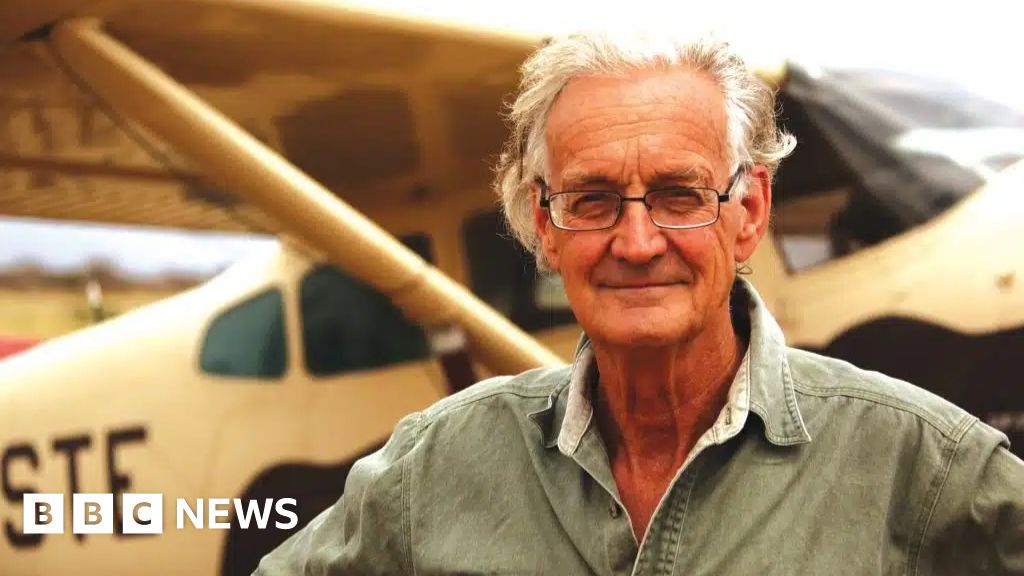
Iain Douglas-Hamilton, pioneering elephant conservationist, dies aged 835 hours agoShareSaveYang TianShareSaveIndianapolis ZooThe Prince of Wales has paid tribute to pioneering elephant conservationist Iain Douglas-Hamilton, who died aged 83 at his home in Nairobi on Monday.Douglas-Hamilton spent his life studying and campaigning to protect African elephants, becoming a world-leading expert on their behaviour in the wild. His groundbreaking research exposed the devastating effects of poaching - often at great risk to his own safety - and was instrumental in the banning of the international ivory trade.Prince William praised the zoologist as "a man who dedicated his life to conservation and whose life's work leaves lasting impact on our appreciation for, and understanding of, elephants"."The memories of spending time in Africa with him will remain with me forever," added Prince William, who is a royal patron for the African wildlife conservation charity, Tusk, of which Douglas-Hamilton was an ambassador. "The world has lost a true conservation legend today, but his extraordinary legacy will continue," the charity's founder Charles Mayhew said in a statement.Oria Douglas-HamiltonBorn in 1942 to an aristocratic British family in Dorset, England, Douglas-Hamilton studied biology and zoology in Scotland and Oxford before moving to Tanzania to research elephant social behaviour.It was there at Lake Manyara National Park that he began documenting every elephant he encountered, eventually becoming so familiar with the herds he could recognise them by the unique shapes of their ears and wrinkles on their skin."The thing about elephants is that they have a lot in common with human beings," he said in a 2024 documentary about his work, A Life Among Elephants.Friend and fellow conservationist Jane Goodall, who died in October, was featured in the documentary, and said he had shown the world that elephants are capable of feeling just like humans."I think his legacy will be one of a man who did so much to help people understand how majestic, how wonderful elephants are, and to learn more about their way of life," Goodall said.Oria Douglas-HamiltonBut that work did not always come easy: he was charged at by elephants, almost killed by a swarm of bees and shot at by poachers. In 2010, a flood destroyed his research facility in Kenya and years of work was lost.Despite the hardships, Douglas-Hamilton remained steadfast in his mission to raise awareness of the plight of African elephants, becoming one of the leading voices to alert the world of the ivory poaching crisis, which he described as "an elephant holocaust".He later campaigned for an international ban on the commercial trade in ivory, and in 1989 the Convention on International Trade in Endangered Species was signed, an international agreement between governments.After the agreement failed to wipe out the trade completely, Douglas-Hamilton turned his attention to China and the US, the two main markets for ivory. Chinese President Xi Jinping and then-US President Barack Obama agreed to a near-total ban on its import and export in 2015.Douglas-Hamilton established Save the Elephants in 1993, a charity dedicated to safeguarding the animals and deepening human understanding of their behaviour.The organisation's CEO Frank Pope, who is also his son-in-law, said: "Iain changed the future not just for elephants, but for huge numbers of people across the globe. His courage, determination and rigour inspired everyone he met."In his own words, Douglas-Hamilton expressed optimism for the future of his life's work."I think my greatest hope for the future is that there will be an ethic developed of human-elephant coexistence," he once said.Iain Douglas-Hamilton is survived by his wife Oria, children Saba and Dudu, and six grandchildren.Rare twin elephants born in Thailand 'miracle'Dame Jane Goodall revolutionised our understanding of our closest primate cousinsElephantsAfricaWildlife conservation
Read full story →
BBC World Dec 10, 03:34

Chaos in Brazil Congress during push to cut Bolsonaro's sentence

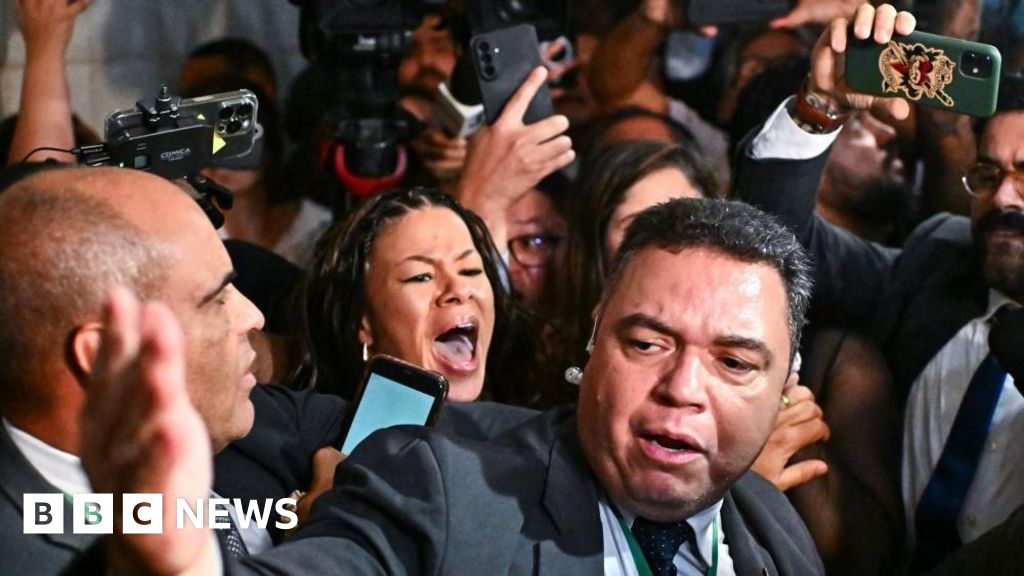
Chaos in Brazil Congress during push to cut Bolsonaro's sentence5 hours agoShareSaveShareSaveEPABrazil's parliament descended into chaos on Tuesday as conservative lawmakers continued to push a law which would reduce the prison sentence of former president Jair Bolsonaro. One left-wing lawmaker was forcibly removed by police after trying to disrupt proceedings, while footage showed scuffles breaking out as security tried to restore order.Bolsonaro began a 27-year jail term in November for attempting to plot a coup following his 2022 election defeat.His conservative allies in Congress have proposed a law which would reduce sentences for coup-related offences, as well as free dozens of Bolsonaro supporters who stormed government buildings shortly after he left office.Meanwhile, court documents showed that Bolsonaro's legal team filed an official request asking a court to grant him permission to leave prison for surgery.The appeal repeats a plea for the ex-president to be allowed to serve his sentence under house arrest on health grounds. Bolsonaro spent time in intensive care earlier this year following intestinal surgery, and was stabbed in the abdomen in 2018 during a rally.The fate of Jair Bolsonaro, a right-wing populist who was narrowly beaten by leftist Luiz Inácio Lula da Silva three years ago, continues to be a divisive issue in Brazil, where his allies have explored several avenues to exonerate him. The latest attempt to cut the 70-year-old's sentence has been to propose a law overhauling punishments for people in elected office, including significantly reducing sentences for the offences that Bolsonaro, and those convicted alongside him, were found guilty of.One of the lawmakers behind the effort told AFP news agency it would see Bolsonaro's sentence cut to two years and four months in prison.During Tuesday's heated debate on the proposal, leftist politician Glauber Braga briefly occupied the Speaker's chair, which he said was a protest against a "coup offensive".The chamber had been due to vote on Braga's expulsion for his role in a previous altercation in Congress, one of a handful of removals proposed as part of a wider package of disciplinary reforms, including the changes to coup-related offences.Police forcibly removed Braga amid a skirmish in the chamber. The TV feed was cut and reporters were removed from the chamber, a move condemned as censorship by a group representing journalists.Braga later said he would not "accept as a done deal an amnesty for a group of coup plotters", AFP reported.As of late Tuesday night, the law cutting Bolsonaro's sentence - which would require ratification by the legislature's second house - had not passed. EPABolsonaro was given a lengthy prison sentence in September after Supreme Court judges found he had proposed a coup to military leaders, and said that he knew of a plot to assassinate his rival Lula.While a military coup did not materialise, his supporters launched a violent assault on government buildings in Brasília in January 2023, after which thousands were detained.Several senior military figures, two former defence ministers and an ex-intelligence chief were also convicted as part of the coup investigation.Bolsonaro and his supporters have long dubbed the investigation a "witch hunt".His Liberal Party remains the largest in Congress, where conservative parties outnumber groupings sympathetic to Lula.Lawmakers loyal to Bolsonaro previously launched an attempt to secure an amnesty, though that floundered in the face of national protests, with a significant cut to sentences now proposed as a compromise.Brazil ex-president Jair Bolsonaro's son charged with coercionHow the coup trial of Jair Bolsonaro has divided BrazilJair BolsonaroBrazil
Read full story →
BBC World Dec 10, 03:09

Trump touts upbeat message on economy as Americans feel the pinch

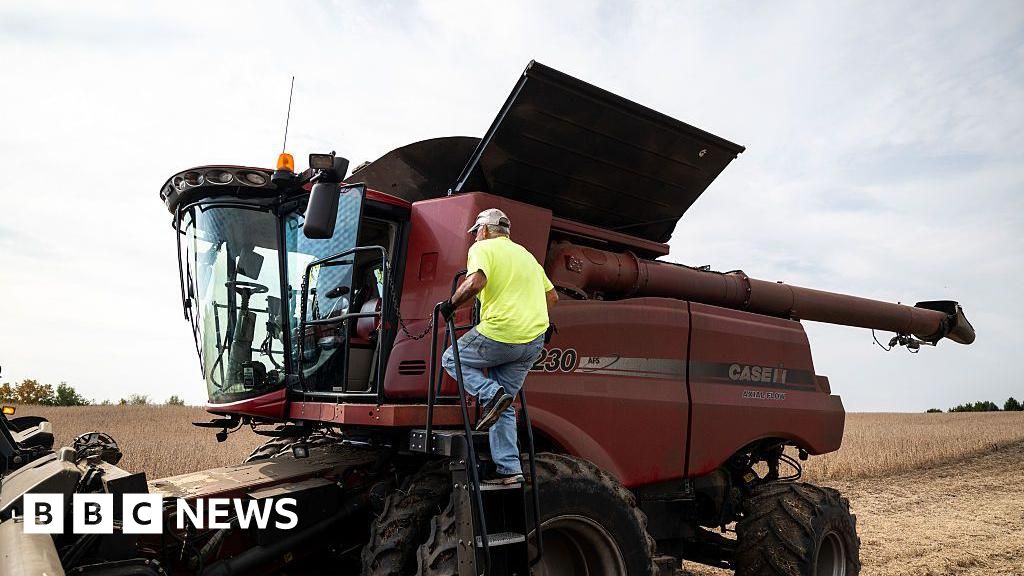
Trump touts upbeat message on economy as Americans feel the pinch5 hours agoShareSaveDanielle KayeandNatalie ShermanShareSaveWatch: Trump claims "prices are coming down" at a rally in PennsylvaniaPresident Donald Trump told a campaign-style rally that consumer prices are falling "tremendously" as he sought to allay voter anxiety about the US cost of living.In a speech at a casino in the battleground state of Pennsylvania, the president told supporters he had "no higher priority than making America affordable again". But while gas and egg prices have fallen, other food is more expensive and Americans remain unhappy about the cost of housing, childcare and healthcare.Democrats have capitalised on Trump's vulnerability on the economy in recent state and city votes, leaving many Republicans uneasy about next year's midterm elections. Tuesday's event in a swing district of Pennsylvania was the first of what the White House says will be a series of campaign-like rallies aimed at bringing its economic message to voters.But at one point in his remarks, the Republican president again portrayed concerns about affordability as a Democratic "hoax".In recent weeks, his administration has removed tariffs from dozens of food products and touted its rollback of fuel efficiency standards and Trump-branded retirement accounts for children as cost-of-living fixes. In an excerpt from an interview with Politico released on Tuesday, Trump was asked what grade he would give the economy."A plus-plus-plus-plus-plus," he said.In a sign the policy pivot might be cutting through, Trump's approval rating rose three points to 41% in a new Reuters/Ipsos poll.Charlie NeuenschwanderAlaina Hunt was laid in off in AprilBut many Americans remain downbeat on the economy.Alaina Hunt, 37, told the BBC she lost her job in April as a designer at a construction company in Oklahoma City, partly because of Trump's tariffs on steel and aluminium.The construction sector "really took a hard hit very early on", she said. Ms Hunt says she has applied for at least 75 jobs to no avail.She says rising grocery bills - about $25 extra per week - have added to the strain."I was able to scrape by a lot easier in years before," said Ms Hunt, who voted for Democrat Kamala Harris in 2024. "I don't think that the federal government is listening at all."Economic data paints a mixed picture. US consumer confidence fell in November to its lowest level since the spring.But the stock market continues to hover near record highs. And forecasters expect the economy to expand by 1.9% this year, slower than last year's 2.8% but still better than expected.Some recent data also indicate the job market may be picking up, after a significant hiring slowdown earlier this year. As of September, inflation stood at 3%, the same rate as in January when the president took office and stubbornly above the Federal Reserve's 2% target.It is still way below a peak of 9.1% under former President Joe Biden when the US faced its worst inflation in four decades.Overall prices have surged 25% over the last five years, generating widespread frustration, despite wage growth over that period.Beth RichardsonBeth Richardson, a 45-year-old from Kansas, said she had been floored by some of the prices at the grocery store near her, recalling a pack of Mentos gum she picked up recently that rang up to almost $5 with tax."I'm like, I'm just going to go die now because this cannot be," she said.Ms Richardson was laid off from her job in sales support at a tech-related company in late 2023, after the firm shifted jobs overseas. She voted for Kamala Harris last year. She said while she knew presidents were often blamed for economic forces over which they had little control, she felt in this case Trump and his policies, like tariffs, were "shooting ourselves in the foot".On Tuesday night, Trump called tariffs his "favourite word", pointing to hundreds of billions of dollars of US revenue from the import taxes.The White House blames Biden and Fed interest rates for the lingering economic pain.The US central bank has twice reduced rates to about 3.9% and may cut them again on Wednesday. Many Trump supporters have said they still support the president, despite feeling the pinch themselves.John Mohring, 60, a widower and construction worker from Kenosha, Wisconsin, has backed Trump since 2016. He said grocery prices started rising before Trump returned to the White House "and it doesn't seem like it's going down". He now typically spends $100 on groceries just for himself, even when avoiding buying meat and sticking with cheaper items.Still, Mr Mohring said he backed the Trump administration's sweeping tariffs on imported goods and his border policies. "I'm giving him the benefit of the doubt," Mr Mohring added. Brad Smith, a corn and soybean farmer in north-western Illinois, was hurt earlier this year when China, previously a major buyer of US soybeans, froze its purchases amid a trade war with Washington. But the market, he said, had been gradually recovering since late October, when the two countries reached a deal and China resumed some purchases.Trump on Monday also announced a $12bn aid package for US farmers.Mr Smith said he still believed in Trump's plans for the economy, despite being getting caught in the crossfire. "There's probably bigger things at play other than just the soybean and corn market," Mr Smith said. "The whole America First idea is good."US economyInflationDonald TrumpUS politicsUnited States
Read full story →
BBC World Dec 10, 03:03

Man who grabbed Ariana Grande kicked out of Lady Gaga concert

Man who grabbed Ariana Grande kicked out of Lady Gaga concert5 hours agoShareSaveJoel GuintoShareSaveEPALady Gaga is in Australia for her Mayhem World TourAn Australian man who was jailed in Singapore and deported for charging at pop star Ariana Grande has been ejected from a Lady Gaga concert in his home country.Johnson Wen said on Instagram that he was "kicked out" of the Suncorp Stadium in Brisbane on Tuesday night before the Lady Gaga show had started.The 26-year-old, who has a history of disrupting concerts and celebrity events, was sentenced to nine days in jail by a Singapore court last month for grabbing Grande during the Asian premiere of Wicked: For Good.Wen, who told the Singaporean judge in mitigation that he would "not do it again", had not disrupted the performance in Brisbane, but was removed because of his history of public nuisance.Videos on social media showed security guards holding Wen by the arm and leading him out of the venue as the crowd both cheered and booed. The BBC has contacted Suncorp Stadium for comment.In a statement to the Sydney Morning Herald, the venue said it was made aware that "a known serial offender may attempt to attend and disrupt" the concert by Lady Gaga, who is around halfway through her Mayhem World Tour."In the interest of the artist's safety, this individual was deemed a person of interest and not to be allowed to attend," it said.Wen has gained notoriety since grabbing Grande at the Wicked: For Good premiere in the South East Asian city state, which is known for its strict laws, including on public behaviour."You seem to be attention-seeking, thinking only of yourself and not the safety of others when committing these acts," Singaporean judge Christopher Goh reportedly told Wen.Wen was also banned from Singapore following the incident.Other videos on Wen's social media accounts show him jumping on stage and disrupting performances by global stars like Katy Perry and The Weeknd.The incident with Grande sparked outrage in Singapore. Fans accused Wen of "re-traumatising" the pop star and actress.Grande has spoken of experiencing post-traumatic stress disorder after a suicide bomb attack at her May 2017 concert in Manchester, killing 22 people and injuring hundreds.Man who grabbed Ariana Grande at premiere banned from SingaporeSingaporeAsiaAriana GrandeLady GagaAustralia
Read full story →
BBC World Dec 10, 00:24

Two teenagers went to seek gold. They were buried alive in a mine collapse

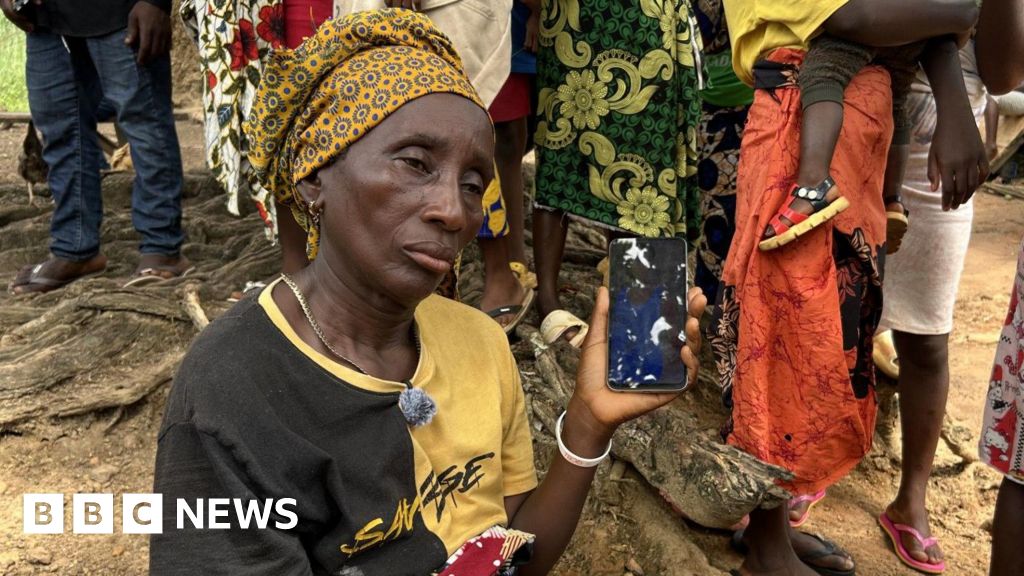
Two teenagers went to seek gold. They were buried alive in a mine collapse8 hours agoShareSaveGodwin AsedibaBBC News Komla Dumor Award winner, Eastern Province, Sierra LeoneShareSaveAndre Lombard / BBCNamina Jenneh is mourning her 17-year-old son who died while mining for goldThere is a sense of disbelief in this Sierra Leonean village as people weep in front of the bodies of two teenage boys wrapped in white cloth.The day before, 16-year-old Mohamed Bangura and 17-year-old Yayah Jenneh left their homes in Nyimbadu, in the country's Eastern Province, hoping to earn a little extra money for their families.They had gone in search of gold but never returned. The makeshift pit they were digging in collapsed on them.This was the third fatal mine accident, leaving a total of at least five children dead, in the last four years in this region.Mohamed and Yayah were part of a phenomenon that has seen a growing number of children missing school in parts of Sierra Leone to mine the precious metal in potentially lethal pits, according to headteachers and community activists.The Eastern Province has historically been known for diamond mining. But in recent years informal - or artisanal - gold mining has expanded as the diamond reserves have been depleted.David Wilkins / BBCPeople dig up the rich earther wherever they think they might be able to find goldMining sites pop up wherever local people find deposits in this land laden with riches - on farmland, in former graveyards and along riverbeds. There are few formal mining companies operating here, but in the areas which are not considered profitable, the landscape is dotted with these unregulated pits that can be as deep as 4m (13 feet).Similar - and equally dangerous - mines can be found in many African countries and there are often reports of deadly collapses. Most families in Nyimbadu rely on small-scale farming and petty trading for a living. Alternative employment is scarce so the opportunity to earn some extra cash is very attractive.But the community in the village gathered at the local funeral home know the work also comes at a price, with the loss of two young lives full of promise.Yayah's mother, Namina Jenneh, is a widow and had been relying on her young son to help provide for her other five children.As someone who worked in the pits herself, she acknowledges that she introduced Yayah to mining but says: "He didn't tell me he was going to that site - if I had known I would have stopped him."When she heard about the collapse, she says she begged someone to "call the excavator driver."When he arrived, he cleared the debris that had buried the children."But it was too late to save them.Namina JennehYayah Jenneh was mining in order to help his mother support his five siblingsMs Jenneh speaks with deep pain. On a mobile phone with a cracked screen, she scrolls through pictures of her son, a boy with bright eyes who supported her.Sahr Ansumana, a local child protection activist, takes me to the collapsed pit."If you ask some parents, they'll tell you there's no other alternative. They are poor, they are widows, they are single parents," he says."They have to take care of the kids. They themselves encourage the kids to go and mine. We are struggling and need help. It's worrying and getting out of hand."But the warning goes unheeded – the loss of Yayah and Mohamed has not emptied the pits.The day after their funerals, miners including children are back at work, their hands sifting sand by the river or inspecting the earth manually excavated in search of the glimmer of gold.David Wilkins / BBCKomba Sesay would like to become a lawyer but is missing school in order to mineAt one site I meet 17-year-old Komba Sesay who wants to be a lawyer, but he spends daylight hours here to support his mother."There is no money," he says. "That is what we are trying to find. I am working so I can register and sit my [high school] exams. I want to return to school. I'm not happy here."Komba's earnings are meagre. In most weeks he earns about $3.50 (£2.65) – less than half the country's minimum wage. But he perseveres in the hope of striking it rich. On some, very rare, good days he has found enough ore to earn him $35.Of course, he knows the work is risky. Komba has friends who have been injured in pit collapses. But he feels that mining is the only way he can earn some money.David Wilkins / BBCThe dangerous work sees people digging with minimal tools in order to find some goldAnd it is not only pupils who are leaving schools.Roosevelt Bundo, the headteacher of Gbogboafeh Aladura Junior Secondary School in Nyimbadu says "teachers also leave classes to go to the mining sites, they mine together with the students".Their government pay cannot compete with what they may be able to earn from gold mining.There are also wider signs of change around the mining hubs. What were once small camps have swelled into towns in the last two years.The government says it is addressing the issue.Information Minister Chernor Bah tells the BBC that the government remains committed to education but adds that the state recognises the many challenges people face."We spend about 8.9% of our GDP, the highest of any other country in this sub-region, on education," he says, adding that funds go to teachers, school-feeding programmes and subsidies intended to keep children in the classroom.But on the ground, reality bites. Immediate survival often wins over policy.Charities and local activists try to remove children from the pits and place them back into school, but without reliable alternatives for income, the pits are too attractive.Back in Nyimbado, the families of the two dead boys appear exhausted and hollowed out.The loss is not just of two young lives. It is the steady erosion of possibility for a generation."We need help," the activist Mr Ansumana says. "Not prayers. Not promises. Help."You may also be interested in:The female prisoners becoming football coachesHunting down those who kill people to sell their body parts for 'magic charms''We are poisoning ourselves': Ghana gold rush sparks environmental disasterTrapped underground with decaying bodies, miners faced a dark realityGetty Images/BBCGo to BBCAfrica.com for more news from the African continent.Follow us on Twitter @BBCAfrica, on Facebook at BBC Africa or on Instagram at bbcafricaBBC Africa podcastsFocus on AfricaThis Is AfricaSierra LeoneMiningAfrica
Read full story →
BBC World Dec 10, 00:14

Indian couple trolled over skin colour after wedding video goes viral

Indian couple trolled over skin colour after wedding video goes viral8 hours agoShareSaveGeeta Pandey,BBC CorrespondentandVishnukant Tiwari,BBC HindiShareSaveRishabh Rajput and Sonali ChoukseyRishabh Rajput and Sonali Chouksey were married last monthRishabh Rajput and Sonali Chouksey met in college 11 years ago, fell in love and married last month.Photos and videos from their colourful wedding showed the happy couple from the central Indian state of Madhya Pradesh performing rituals and posing in their finery.But when they shared their happiest moment on social media, the congratulatory messages came peppered with "jokes and memes" with trolls comparing and criticising the couple over the groom's skin colour.In India, where obsession with fair skin colour is well documented and can sometimes even have tragic consequences, the groom faced intense online shaming and was called names for his "darker skin colour". The trolls did not spare the bride either, with many suggesting she had married him "for his money". "She must have had some compulsion," one wrote. Another suggested she couldn't be happy with a husband like that. Some labelled her a "gold-digger," claiming she married him for wealth or a secure government job with perks. One comment suggested that Mr Rajput's father must be "a government minister".The couple, who married on 23 November, have since gone viral because of the trolling - and their response, as they addressed the criticism head-on. They have been sought out by local media and given scores of interviews in the past two weeks."People were making jokes and memes and it felt very wrong," Mr Rajput told BBC Hindi from his home in Jabalpur."It was our moment and we had waited for it so many years. It was supposed to be a happy moment, but when I saw people's reactions, I was really shocked," he said."In so many years that we have been together, no-one had ever told us that we were a mismatch because I have dark complexion while she is fairer," he added.BBC HindiSonali Chouksey and Rishabh Rajput met in college in 2014 and fell in loveThe nasty comments left the couple - who both work in private companies - reeling.Ms Chouksey admitted that such comments "bothered" her. "You think - is this is how people are perceiving us? When they say nasty things about him or call me a gold-digger, it irritates me."In a post on Instagram, Mr Rajput addressed the trolls: "Sorry to disappoint you. I'm not a government employee, but I work hard for my family and want to give them a good, dignified life."He added that Sonali fell in love with him when he had nothing. "From college till today, she has stood with me through every good and bad moment. People's negative opinions mean nothing to me," he wrote.Mr Rajput also addressed the issue of colourism in the comments, saying he had faced colour discrimination his whole life."I know very well that I have a dark complexion. But in my wife's eyes, I am trying to be the best husband I can be, and that is what matters the most. There is no need to speak wrongly about my family."Mr Rajput said he pushed back when the trolls began commenting on one of the photos that also had his mother and his and his wife's sisters."I did not like the fact that they targeted my family. I want to tell them, you are a nobody. And you have no right to target - or troll - anyone's family," he said.The couple, together since meeting in a 2014 college zoology class, say outsiders shouldn't judge their lives."Our relationship began a year later and we knew from then that one day we would be married. Those who are commenting on our relationship by looking at a 30-second video don't know that it captures 11 years of hard work that we have put into it," says Mr Rajput.Can renaming a fairness cream stop colourism?Death penalty for Indian man who burnt alive wife over skin colourWhat colour are Indian gods and goddesses?"Sonali had always manifested that when we get married, our entire village should witness it. But today, it seems like the whole world is watching it," he says.That attention, the couple agree, feels good in a way. But the comments, Ms Chouksey adds, are hurting their families. "For people, it may be just something they watch on social media, but it's our life. And it can destroy someone's family."The couple have also addressed colourism in several of their interviews."We live in India where people from different regions have different skin colour. And fair skin doesn't necessarily make someone a good person. So, how can we judge someone on the basis of their skin colour?" asks Ms Chouksey.Mr Rajput says "about 70-80% people in India have darker skin tones, but the Indian mentality is that fairer is better. It's time to change that notion".And for those who say the couple are a mismatch, he has a question: "When you look at us, do we look even remotely unhappy to you? We don't. Because we have what most people don't have. I have her and she has me."AsiaWeddingsColourismIndia
Read full story →
BBC World Dec 10, 00:11

How long Britain could really fight for if war broke out tomorrow

How long Britain could really fight for if war broke out tomorrow8 hours agoShareSaveFrank GardnerSecurity correspondentShareSaveBBCRussia's full-scale war on Ukraine will soon enter its fifth year. Mysterious incidents of so-called "hybrid warfare" are mounting in Europe, increasing tensions. And in the UK, military chiefs have warned we must prepare for war if we want to avoid it. But if the unthinkable happened, and war with Russia broke out, could the UK fight for more than just a few weeks?Listen to Frank reading this article"We are not planning to go to war with Europe. But if Europe wants to, and starts, we are ready right now." So said Russian President Vladimir Putin on 2 December, accusing European countries of hindering US efforts to bring peace in Ukraine.To be clear, it is extremely unlikely that the UK would ever find itself in a war with Russia on its own, unsupported by Nato allies. But Putin's words were an uncomfortable reminder that a war between Russia and Nato countries, including the UK, was not as remote as people hoped.How war could look in the tech-age"Well that's odd. I've got no signal on my phone." "Me neither. I'm offline. What's going on?" That scenario, hypothetically, is just one way we could know that a war with Russia had begun, or was about to. (I should add that there can also be other, perfectly benign, reasons for a loss of signal.)That signal interruption could be followed by an inability to make bank payments for essentials like food and fuel. Food distribution would be disrupted, electricity supplies compromised.AFP via Getty Images'We are not planning to go to war with Europe. But if Europe wants to, and starts, we are ready right now,' Putin has saidThere are many ways of fighting a war, and not just the physically destructive wave of drones, bombs and missiles so tragically familiar to the citizens of Ukraine.Our modern, tech-driven society is highly dependent on the network of undersea cables and pipelines that connect the UK to the rest of the world, carrying data, financial transactions and energy. Covert activity by Russian spy vessels, such as the Yantar, is widely believed to have scoped out these cables for potential sabotage in a time of war, which is why the Royal Navy has recently invested in a fleet of underwater drones equipped with integrated sensors.In a war, these hidden, unseen actions, combined with an almost inevitable attempt to "blind" Western satellites in space, would seriously hamper the UK's ability to fight, as well as potentially wreaking havoc on civil society.Getty ImagesIn the UK, military chiefs have warned we must prepare for war if we want to avoid itAt a recent conference in London entitled Fighting the Long War, organised by the Royal United Services Institute (Rusi), a Whitehall think tank, military and political figures came together to discuss whether the UK's current armed forces would be in a position to sustain a protracted conflict before they ran out of everything from troops, to ammunition to spare parts."There remains little evidence that the UK has a plan to fight a war lasting more than a few weeks," argues Rusi's Hamish Mundell. "Medical capacity is limited. Reserve regeneration pipelines are slow… The British plan for mass casualty outcomes appears to be based on not taking casualties." With classic British understatement, he says: "This could be considered an optimistic planning assumption."He adds that to fight a long war you need proper back-up. "It demands a second and even third echelon; personnel, platforms and logistics chains that can absorb losses and continue the fight. Yet this depth is notably absent from current British force design."Russia's 'low quality' army"There are shortfalls in ammunition, artillery, vehicles, air defence, and people, with limited to no ability to regenerate units or casualties," says Justin Crump, CEO of Sibylline, a private intelligence company.Two of the biggest military lessons to come out of the Ukraine war are firstly, that drones are now integral to modern warfare, at every level, and secondly, that "mass", or sheer volume of personnel and military hardware, matters.Getty Images'There are shortfalls in ammunition, artillery, vehicles, air defence, and people, with limited to no ability to regenerate units or casualties,' says Justin CrumpRussia's army is generally of a very low quality. Its soldiers are poorly equipped, poorly led and poorly fed. Their life expectancy in the deadly "drone zone" of eastern Ukraine is short. UK Defence Intelligence estimates that since the start of the full-scale invasion in February 2022 Russia's army has suffered more than 1.1 million casualties – that is killed, wounded, captured or missing. Even conservative estimates put the number of Russians killed at 150,000. Ukraine has also suffered catastrophic casualties but numbers are hard to ascertain.But Russia has been able to draw on such a massive pool of manpower that it has so far been able to replace its estimated 30,000 monthly battlefield casualties with fresh blood. Russia's economy has also been on a war footing for more than three years now: an economist has been placed in charge of the Defence Ministry, while its factories churn out ever more supplies of drones, missiles and artillery shells. According to a recent report by the Kiel Institute for the World Economy, Russia has been producing each month around 150 tanks, 550 infantry fighting vehicles, 120 Lancet drones and more than 50 artillery pieces.The UK, and most of its Western allies, are simply not anywhere near this point. EPA/ShutterstockUkraine has suffered catastrophic casualties but numbers are hard to ascertainAnalysts say it would take years for Western Europe's factories to come close to matching Russia's mass-production of weapons."The land war in Ukraine has shown beyond doubt that mass is absolutely vital for anybody that is going to face Russia on land," says Keir Giles, a Russia expert at Chatham House think tank. "And having deep reserves vastly greater in number than the standing regular armed forces has been shown to be essential."How national service conversations backfiredFrance and Germany have both recently moved to revive a system of voluntary military service for 18-year-olds. The UK's former Head of the Army, Gen Sir Patrick Sanders, suggested in 2024, the year he retired, that the UK should train what he called "a citizen army" to fight a land war in the future. The idea was shot down by No. 10."I think it's a cultural thing within the UK," says Ed Arnold, senior research fellow at Rusi. "So if you look at the states that are now looking towards [military service] - like Sweden, Germany and France - they are states who culturally still have an institutional memory of when they had that system. "We haven't had national service since the 1960s and attempts to have that national conversation around it have pretty much backfired."AFP via Getty ImagesFrance has recently moved to revive a system of voluntary military service for 18-year olds"The reality is, our armed forces cannot survive on a diet of government spin, over-the-horizon spending commitments and hollow rhetoric," Sir Ben Wallace, who was Defence Secretary in the Conservative government from 2019 to 2023, told the BBC.Responding to this, a spokesperson for the current Labour Defence Secretary, John Healey, told me: "This characterisation is baseless. "We increased defence spending by £5bn this year alone, signed 1,000 major contracts since the election and increased MOD spending with British businesses by 6% above inflation in the last year."He points to a new defence agreement with Norway, a £300m new investment in the Royal Navy's laser weapon and a £9bn investment into armed forces housing, adding: "We're a government investing in the transformation of our forces, investing in our British service personnel... to create jobs and growth in Britain's communities."Getty ImagesGermany has also introduced voluntary military service for 18 year-oldsBut this is not about party politics. It's about whether UK defence has been under-funded for so long that it has now reached the point where the country is dangerously vulnerable in several areas, notably air defence.There are also problems of timing and inefficiency. Defence contracts often take years to come to fruition. Billions of pounds have been spent on Ajax, an overdue armoured vehicle project still beset with problems. Meanwhile, Nato officers have been warning Russia could be in a position to launch an attack on a Nato country within three to five years.At the end of the Cold War (between Nato and the Soviet Union) in 1990, when I was a young infantry Captain in the Army Reserves, the UK was spending 4.1% of GDP on defence. The following year it deployed over 45,000 troops to help evict Iraq President Saddam Hussein's invading army from Kuwait in operation Desert Storm. More from InDepthMysterious drones have been spotted at night at airports across Europe. How worried should we be?The real problem facing Britain's shrinking militaryRussia's attacks have ramped up - Ukraine is fighting to hold on through another winterToday, with multiple pressures on the economy, the government is striving to meet a target of 2.5% of GDP by 2027, while Russia spends close to 7%.On paper, the British Army numbers around 74,000 but Rusi's Ed Arnold points out that once you subtract medically non-deployable soldiers, defence attaches around the world and others not part of formed units, then its actual deployable strength is only 54,000. That is less than the average number of casualties Russia takes in two months in Ukraine.In the event of a war, says Justin Crump of Sibylline, on land the (British) Army would most likely be degraded – incapable of fighting effectively - within weeks, once committed, though he adds "much depends on the form of the conflict".Suggestions the UK is already 'at war'Some commentators have suggested that the UK is already "at war" with Russia. They are referring to what is known as "hybrid" or "grey-zone" warfare, which includes events that are often deniable, such as cyber-attacks, disinformation and the alleged launching of drones close to airports and military bases in Nato countries.But worrying as these are, they pale compared to the crisis that would be triggered by a Russian military attack on a Nato country, especially if it involved seizing territory and people being killed.Getty ImagesA Eurofighter TyphoonThere are several potential flashpoints here, where Nato military chiefs fear that Putin, if he were allowed to achieve his aims in Ukraine, could eventually move on to seek new targets for aggression.One potential target is the Suwalki Gap, a 60-mile (100km) stretch of border between Poland and Lithuania, both Nato countries. This is all that separates Russian ally Belarus from the Russian exclave of Kaliningrad on the Baltic coast. Seizing that border and opening up a route along it would, in theory, give Moscow direct access to its strategic base on the Baltic.The Baltic states themselves are other potential flashpoints. Estonia, Latvia and Lithuania were all once part of the Soviet Union and were ruled from Moscow. They all voted for independence and have since joined Nato, but all have Russian-speaking minorities and hence there is a risk that Mr Putin could be tempted to send his troops across the border "to protect them from persecution".The eastern Estonian town of Narva, for example, is an obvious potential target here, as the majority of its population speak Russian and it sits just across the river from the giant Russian fortress of Ivangorod. A UK battle group comprising some 900 British military personnel has been stationed in Estonia, about 80 miles west of Narva, since 2017. AFP via Gettty ImagesThe eastern Estonian town of Narva sits just across the river from the giant Russian fortress of IvangorodIn the event of war, the plan goes, it would be hurriedly reinforced to brigade strength of around 3,000 or more.Another possible flashpoint is the Arctic archipelago of Svalbard, which is administered by Norway but where Moscow already has a toehold in the coal mining town of Barentsburg.Litvinenko, Skripal and hostile acts on UK soilThe UK may well be Putin's enemy number one, having been one of Ukraine's staunchest allies, and having pushed for more powerful weapons to be delivered to help its defence.Hostile acts on UK soil that have been linked to President Putin include the murder with radioactive Polonium-210 of former KGB officer Alexander Litvinenko in London in 2006 - a public inquiry concluded that Putin "probably" approved his assassination - and the attempted murder of former Russian military intelligence officer turned MI6 agent Sergei Skripal in Salisbury in 2018, using the nerve agent, Novichok.Dawn Sturgess, a mother-of-three, later died after she sprayed the Novichok, disguised as perfume, on her wrists. Putin was "morally responsible" for her death, an inquiry concluded last week. Lord Anthony Hughes, the inquiry chair, said: "I have concluded that the operation to assassinate Sergei Skripal must have been authorised at the highest level, by President Putin."Russia, which has always denied involvement in the attacks and suggested more than 20 different possible explanations for Ms Sturgess's death, described the report's findings as "tasteless fairy tales".Sputnik/ AFP via Getty ImagesPutin accused European countries of hindering US efforts to bring peace in UkraineBut the UK is also a core member of the Nato alliance. While questions are certainly raised in private over the reliability of the current US administration in the White House, it is hard to envisage the UK ever having to fight Russia on its own."A pure UK-Russia conflict is not likely and can be disregarded, practically," says Mr Crump. "We would definitely fight with allies, although Russia would most likely only launch a conflict if it felt Nato would break."The wild card here is US President Donald Trump. While the chairman of Nato's Military Committee, Adm Cavo Dragone recently assured me that the US president was absolutely committed to defending the Nato alliance, others are not so sure. Would Trump, for example, go to war to defend the Estonian town of Narva?Getty ImagesIt is extremely unlikely that the UK would ever find itself in a war with Russia on its own, unsupported by Nato allies"There is no one-size-fits-all answer to what the United Kingdom is actually capable of," concludes Keir Giles of Chatham House, "because there are so many different situations under which it could be challenged by Russia."As a society, the UK – unlike Poland, Finland and the Baltic States – is unquestionably not ready for war. Even serious preparations for such an eventuality would be both expensive, unpopular and politically risky.But Mr Giles of Chatham House offers some sobering advice to the British public: "Recognise that the rights and freedoms and prosperity that they take for granted are in fact under threat and that freedom does not come for free.""And understand that lives will have to change. And this is not the fault of the current government or even its predecessors — it's their fault that it is so expensive, but the root cause of the problem is in Moscow."Top image credit: Ministry of Defence /PA Wire/ Getty Images. (Lead image shows soldier in non-combat scenario)BBC InDepth is the home on the website and app for the best analysis, with fresh perspectives that challenge assumptions and deep reporting on the biggest issues of the day. You can now sign up for notifications that will alert you whenever an InDepth story is published - click here to find out how.War in UkraineRoyal NavyVolodymyr ZelenskyUK defence spendingRussiaEstoniaMilitaryVladimir PutinUkraine
Read full story →
BBC World Dec 9, 23:42

Watch: Ozzy the dog sets Guinness World record for longest canine tongue

Watch: Ozzy the dog sets Guinness World record for longest canine tongueA new canine has claimed the title for the world's longest tongue on a living dog. Ozzy, a mastiff mix from Oklahoma City, broke the Guinness World record with his tongue measuring 7.83in (19.89cm), surpassing the previous record holder, Rocky the Boxer, whose tongue measures 5.46in (13.88cm). Ozzy's owners are thrilled with his new title, with one saying, "It makes me really happy knowing that everybody loves my dog."9 hours agoWorld recordsUnited StatesShareSave'We're in a pivotal place' - Tennessee voters on Trump's performanceThe last congressional election of the year is taking place in the state's 7th District, where Trump won by 22% in the 2024 election.US & CanadaWatch: President Trump pardons Waddle and Gobble, the Thanksgiving turkeys The annual televised event dates back years and takes place ahead of the holiday, when roast turkey is typically served at dinner.US & CanadaWatch: Homes damaged as tornado, severe storms rip through HoustonNo injuries were reported after the severe weather outbreak damaged neighborhoods and toppled trees Monday afternoon.US & CanadaWatch: Moment truck collides with sign on Ohio highwayThe vehicle was travelling along Ohio’s I-70, with the dramatic collision occurring in Columbus last Thursday.US & CanadaWatch: First Lady Melania Trump welcomes the White House Christmas treeTwo Clydesdales pulled the green carriage carrying the tree to the Portico of 1600 Pennsylvania Avenue.US & CanadaLava spews out from Hawaii's Kilauea as volcano erupts againAccording to the United States Geological Survey, this is the 37th eruption episode since December 2024.US & CanadaNasa astronaut films Northern Lights from spaceZena Cardman captured the footage of the display from the International Space Station on 17 November.US & CanadaWatch: 'I'll be cheering for him' - Trump praises Mamdani after first meetingThe meeting between the US president and New York mayor-elect had been expected to be a showdown after months of heated rhetoric.US & CanadaWatch: Pope Leo to US students: Don't let AI do your homeworkAppearing from the Vatican via video, the pontiff spoke to youth attending a Catholic conference in the US state of Indiana. US & CanadaWatch: What Trump and Mamdani have said about each otherThe two men are set to meet at the White House Friday for their first face-to-face after months of heated rhetoric. US & CanadaWatch: Chadwick Boseman posthumously honoured with Hollywood starThe late actor, who passed away in 2020 after a private battle with cancer, was celebrated for his role as Marvel’s Black Panther.US & CanadaWatch: Nasa releases new images of interstellar comet 3I/ATLASThe comet, first discovered in July 2025, is only the third ever confirmed object to pass through the solar system.US & CanadaMelania Trump and Usha Vance meet military families in first joint visitThe first and second ladies travelled to Camp Lejeune in North Carolina to visit with troops and children of service members.US & CanadaWatch: Moment a Gustav Klimt painting sells for record amountAt $236.4m (£179m), including fees, the Portrait of Elisabeth Lederer becomes the second most expensive work of art ever sold at auction.US & Canada'Quiet, piggy': Trump responds to reporter after Epstein questionThe president made the comment to a female reporter while speaking to the press on Air Force One on Friday.US & CanadaNew video shows stunning Aurora Borealis over South DakotaOfficials at Nasa say the sun is at the peak of its 11-year cycle, known as "solar maximum", which could lead to more severe geomagnetic storms.US & CanadaWatch: How much do Americans care about the Epstein story?As US lawmakers debate a wider release of the so-called Epstein files, the BBC asked people in Washington DC if the ongoing saga matters to them.US & CanadaWatch: Blue Origin rocket successfully lands booster for first time Jeff Bezos' space company saw its first successful return landing of a reusable booster - a feat that SpaceX pioneered.US & CanadaWatch: Seal jumps aboard US photographer's boat to escape orcasCharvet Drucker was photographing a pod of orcas when a seal boarded her boat to escape the hunt.US & CanadaThe moment the last US penny was mintedAfter more than 230 years, the US ended production of its one-cent coin which today cost nearly four cents each to make.US & Canada
Read full story →
BBC World Dec 9, 22:18

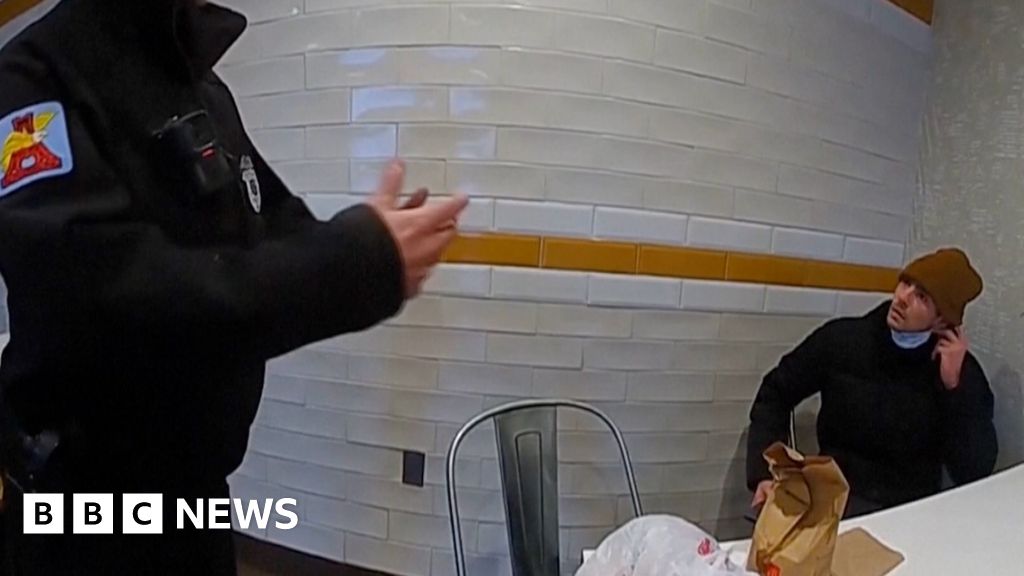
'What's your name?' - Moment police confront Luigi Mangione at McDonald's

'What's your name?' - Moment police confront Luigi Mangione at McDonald'sProsecutors have released bodycam footage showing the initial interaction between Luigi Mangione and police officers. The footage shows Mangione inside a McDonald's restaurant in Altoona, Pennsylvania, where officers approached him and asked for his name. Mangione, 27, was arrested at the McDonald's on 9 December 2024, ending a five-day manhunt following the fatal shooting of UnitedHealthcare CEO Brian Thompson in New York City.Mangione has pleaded not guilty to both state and federal murder charges, which carry the possibility of the death penalty.10 hours agoNew York CityPennsylvaniaUnited StatesShareSave'We're in a pivotal place' - Tennessee voters on Trump's performanceThe last congressional election of the year is taking place in the state's 7th District, where Trump won by 22% in the 2024 election.US & CanadaWatch: President Trump pardons Waddle and Gobble, the Thanksgiving turkeys The annual televised event dates back years and takes place ahead of the holiday, when roast turkey is typically served at dinner.US & CanadaWatch: Homes damaged as tornado, severe storms rip through HoustonNo injuries were reported after the severe weather outbreak damaged neighborhoods and toppled trees Monday afternoon.US & CanadaWatch: Moment truck collides with sign on Ohio highwayThe vehicle was travelling along Ohio’s I-70, with the dramatic collision occurring in Columbus last Thursday.US & CanadaWatch: First Lady Melania Trump welcomes the White House Christmas treeTwo Clydesdales pulled the green carriage carrying the tree to the Portico of 1600 Pennsylvania Avenue.US & CanadaLava spews out from Hawaii's Kilauea as volcano erupts againAccording to the United States Geological Survey, this is the 37th eruption episode since December 2024.US & CanadaNasa astronaut films Northern Lights from spaceZena Cardman captured the footage of the display from the International Space Station on 17 November.US & CanadaWatch: 'I'll be cheering for him' - Trump praises Mamdani after first meetingThe meeting between the US president and New York mayor-elect had been expected to be a showdown after months of heated rhetoric.US & CanadaWatch: Pope Leo to US students: Don't let AI do your homeworkAppearing from the Vatican via video, the pontiff spoke to youth attending a Catholic conference in the US state of Indiana. US & CanadaWatch: What Trump and Mamdani have said about each otherThe two men are set to meet at the White House Friday for their first face-to-face after months of heated rhetoric. US & CanadaWatch: Chadwick Boseman posthumously honoured with Hollywood starThe late actor, who passed away in 2020 after a private battle with cancer, was celebrated for his role as Marvel’s Black Panther.US & CanadaWatch: Nasa releases new images of interstellar comet 3I/ATLASThe comet, first discovered in July 2025, is only the third ever confirmed object to pass through the solar system.US & CanadaMelania Trump and Usha Vance meet military families in first joint visitThe first and second ladies travelled to Camp Lejeune in North Carolina to visit with troops and children of service members.US & CanadaWatch: Moment a Gustav Klimt painting sells for record amountAt $236.4m (£179m), including fees, the Portrait of Elisabeth Lederer becomes the second most expensive work of art ever sold at auction.US & Canada'Quiet, piggy': Trump responds to reporter after Epstein questionThe president made the comment to a female reporter while speaking to the press on Air Force One on Friday.US & CanadaNew video shows stunning Aurora Borealis over South DakotaOfficials at Nasa say the sun is at the peak of its 11-year cycle, known as "solar maximum", which could lead to more severe geomagnetic storms.US & CanadaWatch: How much do Americans care about the Epstein story?As US lawmakers debate a wider release of the so-called Epstein files, the BBC asked people in Washington DC if the ongoing saga matters to them.US & CanadaWatch: Blue Origin rocket successfully lands booster for first time Jeff Bezos' space company saw its first successful return landing of a reusable booster - a feat that SpaceX pioneered.US & CanadaWatch: Seal jumps aboard US photographer's boat to escape orcasCharvet Drucker was photographing a pod of orcas when a seal boarded her boat to escape the hunt.US & CanadaThe moment the last US penny was mintedAfter more than 230 years, the US ended production of its one-cent coin which today cost nearly four cents each to make.US & Canada
Read full story →
BBC World Dec 9, 20:06

French PM wins crucial budget vote

French PM wins crucial budget vote12 hours agoShareSaveHugh SchofieldParisShareSaveReutersFrench Prime Minister Sebastien Lecornu narrowly survived a crucial test on Tuesday as the country's divided parliament voted in favour of a 2026 budget bill.If Lecornu had failed to win a majority in the National Assembly for his social security budget, it would have gravely weakened his hand ahead of the main budget vote, which is due by the end of the year. But in the end, the bill passed by 247 votes to 234. It will now go back to the upper house or Senate before returning for a final reading in the Assembly."It's a good sign that a majority has been found. The immense likelihood now is that the (social security budget) will be adopted definitively," said Assembly speaker Yael Braun-Pivet.Appointed in September by President Emmanuel Macron, Lecornu has devoted himself exclusively to the uphill task of guiding 2026 budget legislation through the two chambers of parliament.Since snap elections called by Macron in June 2024, the more powerful chamber, the National Assembly, has been split into three roughly equal blocs - centre, left, and far-right - none of which is capable of commanding a majority.Lecornu is Macron's fourth prime minister since then – the two previous incumbents Michel Barnier and François Bayrou were both forced to resign after trying to rein in France's burgeoning debt. Barnier stepped down exactly a year ago after failing to push through his 2025 social security budget.In the French system, there are two budgetary laws – one that raises and allocates money in the social security system, including hospitals and pensions; and the principal one that covers everything else, from defence to education. For years both have run on massive deficits.Widely acknowledged for his discretion and diligence, Lecornu had to convince enough deputies from 11 different parliamentary groups that failure to vote for the budgets would plunge the country into even deeper financial gloom.His main target was the Socialist Party (PS) with around 70 MPs, many of whom are uncomfortable in their erstwhile electoral alliance with the far-left France Unbowed party (LFI).In major concessions to the PS, Lecornu promised to suspend Macron's key second-term reform increasing to 64 the statutory age of retirement, and also to refrain from using a government power (known as 49-3) to force through the budget laws without a vote.Socialist leaders Olivier Faure and Boris Vallaud praised Lecornu's sense of compromise and led their MPs in voting for the budget.But by giving ground to the centre-left, Lecornu lost support in his own camp on the centre-right, where important figures such as former prime minister Edouard Philippe said the bill would do little to redress the country's fast deteriorating public accounts.Bruno Retailleau, who leads the conservative Republican party with 40 or so seats, described Tuesday's bill as a "fiscal hold-up" because of the concessions made in it to the left."This is a budget which will allow Macron to stay in power a little longer, but which leads France into a wall," he said after the vote.Mathilde Panot of the far-left LFI accused the Socialists of betraying their principles. "At least they have made a clear choice in voting for the budget. We know now that they're now no longer in opposition."Also voting against the bill was Marine Le Pen's hard-right National Rally, the biggest party in parliament with around 120 seats.Attention now shifts to the main budget vote which must take place before the end of the year. Analysts had given Lecornu little chance of winning it if he first failed to get the social security budget passed, and even now it is far from certain he will succeed.If he fails to get the main budget through, he will be obliged to introduce a special law to allow the state administration to continue functioning from January 1 using 2025 allocations. The same procedure was used at the start of this year.But Tuesday's vote was widely interpreted as a victory for the Lecornu method, consisting of a dogged behind-the-scenes hunt for votes from across the political spectrum.More on this storyFrench PM survives major test but breathing space will not last longWhy France is at risk of becoming the new sick man of EuropeEuropeFrench politicsFranceEmmanuel Macron
Read full story →
BBC World Dec 9, 20:06

Nobel officials unsure when Peace Prize winner will arrive for ceremony

Nobel officials unsure when Peace Prize winner will arrive for ceremony20 minutes agoShareSaveIone WellsSouth America correspondentShareSaveAFP via Getty ImagesA press conference by María Corina Machado - the Nobel Peace Prize laureate, who is currently in-hiding - was cancelled on Tuesday, with the Nobel Institute saying they are "in the dark" about her whereabouts. Machado is Venezuela's opposition leader and has been in hiding since the country's disputed 2024 election, which she and her supporters say was stolen.She was awarded the Nobel Peace Prize for efforts to bring democracy to Venezuela, and was expected to formally collect it in a ceremony on Wednesday. Although Machado regularly gives social media video updates, usually against a neutral white wall, her current whereabouts are unknown.The Nobel Institute said in a statement: "María Corina Machado has herself stated in interviews how challenging the journey to Oslo, Norway will be. We therefore cannot at this point provide any further information about when and how she will arrive for the Nobel peace prize ceremony."The institute had previously said she would attend the ceremony in person. Earlier on Tuesday, a spokesman said "everything suggests" the press conference would be able to take place on Tuesday despite the delay. Venezuela's government has said that if Machado left Venezuela she would be considered a "fugitive" by the authorities. Her family are already in Oslo.Venezuela's attorney general, Tarek William Saab, told AFP last month: "By being outside Venezuela and having numerous criminal investigations, she is considered a fugitive". He said she is accused of "acts of conspiracy, incitement of hatred, terrorism".Machado had earlier told her followers that she would return to Venezuela after collecting the prize.If she attends, it would be her first public appearance since January 2025. She last appeared in public at a protest in Caracas on 9 January against the inauguration of Venezuelan President Nicolás Maduro.After Venezuela's 2024 election, the opposition published tallies after the election suggesting it won, despite Maduro claiming victory, and some nations including the US have recognised its candidate - Edmundo Gonzalez - as the president-elect. Ms Machado was banned from running in the election.More on this story Venezuelan opposition leader María Corina Machado wins Nobel Peace PrizeVenezuela says opposition leader will become fugitive if she collects NobelVenezuela shuts embassy in Norway following opposition leader's Nobel awardNobel PrizeVenezuela
Read full story →
BBC World Dec 9, 19:30

Trump criticises 'decaying' European countries and 'weak' leaders

Trump criticises 'decaying' European countries and 'weak' leaders21 minutes agoShareSaveRachel HaganBBC NewsShareSaveBloomberg via Getty ImagesUS President Donald Trump has criticised European leaders as "weak" and suggested the US could scale back support for Ukraine.In a wide-ranging interview with Politico, he said "decaying" European countries had failed to control migration or take decisive action to end Ukraine's war with Russia, accusing them of letting Kyiv fight "until they drop". European leaders have made attempts to carve out a role in the US-led efforts to end the war, which they fear will undercut the long-term interests of the continent in favour of a quick resolution.In response, the UK's Foreign Secretary Yvette Cooper said all she saw in Europe was "strength", citing investment in defence as well as funding for Kyiv.She added two presidents were "working for peace" - referring to Trump and Ukrainian President Volodymyr Zelensky - and "one president - President Putin - has so far simply sought to escalate the conflict with further drone and missile attacks".Trump continued to increase pressure on Zelensky to agree to a deal to end the conflict, and urged him to "play ball" by ceding territory to Moscow. Russia launched its full-scale invasion of Ukraine in February 2022.Zelensky, writing on X later on Tuesday, said Ukraine and Europe were working actively on "all components of potential steps toward ending the war", that the Ukrainian and European elements of the plan were now more developed and that Kyiv was ready to present them to "our partners in the US".Trump's latest public criticism of Europe comes a day after European leaders came together in London to discuss their continued joint efforts to stop the fighting in Ukraine.Asked whether Europe could help end the war, the US president said: "They talk but they don't produce. And the war just keeps going on and on."US officials have held separate talks with Ukrainian and Russian officials in recent weeks in an attempt to broker an end to the war. So far, no agreement has been reached.Ukraine's president has pressed European and Nato leaders to help deter the US from backing a deal that Kyiv fears would leave it exposed to future attack.On Sunday Trump suggested, without evidence, that Zelensky was the main obstacle to peace. He told reporters that Russia was "fine" with the peace plan outlined to both sides by the US, that contained major concessions for Ukraine and which allies feared would leave it vulnerable to a future invasion.In the Politico interview, he claimed Ukrainian negotiators "loved" the US-backed proposal and alleged Zelensky had not yet read it.Trump also claimed ideological divisions now threatened to fracture Washington's alliances. Asked whether leaders he viewed as weak could still be allies, he replied: "It depends", adding: "I think they're weak, but I also think that they want to be so politically correct. I think they don't know what to do."The president's remarks came after his administration released its new 33-page National Security Strategy, which warned of Europe's potential "civilisational erasure" and questioned whether some nations could remain reliable allies. Russia welcomed that strategy - which did not cast Russia as a threat to the US - as "largely consistent" with Moscow's vision.Trump also warned on Tuesday many countries in Europe "will not be viable countries any longer" if they keep on the way they are going, adding: "What they're doing with immigration is a disaster."He singled out Hungary and Poland as doing a "very good job" on immigration, but said most European nations were "decaying".Responding on Tuesday to the strategy, German chancellor Friedrich Merz said some parts were plausible and some understandable, but other elements were unacceptable from a European point of view. He rejected the idea that the US needed to "save democracy" in Europe, saying Europeans could address such questions themselves.The strategy also followed similar rhetoric to Trump's speech to the UN earlier this year, where he had harsh criticism for western Europe and its approach to migration and clean energy.Ukraine prepares new peace plan as Zelensky rules out giving up land Critical moment to ramp up support for Ukraine, European allies sayEuropeWar in UkraineDonald TrumpUnited StatesUkraine
Read full story →
BBC World Dec 9, 19:00

Czech billionaire becomes PM with promise to cut ties to business empire

Czech billionaire becomes PM with promise to cut ties to business empire13 hours agoShareSaveRob CameronPragueShareSaveReutersAndrej Babis's government will be very different from its strongly pro-Ukrainian predecesssorBillionaire Andrej Babis has been appointed as the Czech Republic's new prime minister, with his full cabinet expected to take office within days.His appointment followed a key demand from President Petr Pavel - a public pledge by Babis to relinquish control over his vast food-processing, agriculture and chemicals conglomerate Agrofert."I promise to be a prime minister who defends the interests of all our citizens, at home and abroad," Babis said after the ceremony at Prague Castle."A prime minister who will work to make the Czech Republic the best place to live on the entire planet."These are lofty ambitions, but Babis, 71, is used to thinking big.Agrofert is so deeply embedded in the Czech commercial ecosystem that there is even an app to help shoppers avoid buying products made by the group's more than than 200 subsidiaries.If a product - say Viennese-style sausages from Kostelecké uzeniny or sliced bread from Penam - belongs to an Agrofert company, a thumbs-down symbol appears.Babis, who was prime minister for four years until 2021, has shifted to the right in recent years and his cabinet will include members of the far-right SPD and the Eurosceptic "Motorists for Themselves" party.Billionaire populist Andrej Babis' party wins Czech parliamentary electionIf he honours his pledge to divest from the company he built from scratch, he will no longer benefit from the sale of any Agrofert product – from frankfurters to fertiliser.As prime minister he will have no knowledge of the conglomerate's financial health, nor any ability to influence its fortunes, he says.Sean Gallup/Getty ImagesGovernment decisions on public tenders or subsidies - Czech or European - will be taken without regard to a company he will no longer own or profit from, he adds.Instead, he says that Agrofert, worth an estimated $4.3bn (£3.3bn), will be placed in a trust managed by an independent administrator, where it will remain until his death. At that point it will pass to his children.This, he said in a Facebook video, went "far beyond" the demands of Czech law.What kind of trust remains unclear - a Czech trust, or one based abroad? The concept of a "blind trust" does not exist in Czech legislation, and an army of lawyers will be required to design an arrangement that works.Critics, including Transparency International, remain unconvinced."A blind trust is not a solution," the head of Transparency International's Czech branch, David Kotora, told news site Seznam Zpravy."There's no separation. [Babis] obviously knows the managers. He knows Agrofert's portfolio. From an executive position, even at a European level, he could theoretically intervene in matters that would affect the sector in which Agrofert operates," Kotora warned.But it's not just food - and it's not just Agrofert.In the eastern suburbs of Prague, a private health clinic towers over the O2 arena. While it is owned by a company called FutureLife a.s, that company is majority-owned by Hartenberg Holding, and Hartenberg Holding is majority-owned by Babis.Hartenberg also runs a network of reproductive clinics, as well as a florist chain, Flamengo, and an underwear retailer, Astratex.The reach of Babis into all corners of Czech life is broad. And as prime minister, for the second time, it is about to get broader.EuropeCzech Republic
Read full story →
BBC World Dec 9, 19:00

These young Australians grew up with social media - what do they think of the ban?

These young Australians grew up with social media - what do they think of the ban?Australia is banning social media for everyone under the age of 16 from December 10. The government says their intention is to help protect children and teenagers from risks online, such as cyberbullying and harmful content. The BBC took to the streets of Sydney to find out what young people aged between 18 to 20 think of the ban.Video by Kellie Highet52 minutes agoSocial mediaAustraliaShareSaveWhat it was like inside court as mushroom murderer was jailed for lifeThe BBC's Katy Watson was in the courtroom as Erin Patterson was sentenced to life.AustraliaWatch: Moment Australian politician raises fist at journalistVeteran MP Bob Katter, 80, said he had previously punched people for mentioning his Lebanese heritage.AustraliaWatch: Solar-powered cars start epic Australian outback raceThirty-four teams from all over the world are competing to win the 2025 Bridgestone World Solar Challenge.AustraliaWatch: Plane makes emergency landing on Australian golf courseVideo shows the aircraft flying over the golf course before crash landing, as the pilot and passenger escaped without major injuries.AustraliaWatch: Meteor burns across Australian night skyAmateur astronomers captured the moment it streaked over Victoria on CCTV and dashboard cameras.Australia'I loved them' - Police interview Australian mushroom murdererFootage of police interviewing convicted triple-murderer Erin Patterson has been released by the Victorian Supreme Court.AustraliaWatch: Australians play in snowy winter wonderlandParts of New South Wales were blanketed with the heaviest snow in 20 years.AustraliaWatch: Huge stick insect discovered in AustraliaA new "supersized" species of stick insect that is roughly as heavy as a golf ball has been discovered in Australia.AustraliaFirst Australian-made rocket crashes shortly after lift-offThe company behind the country's first orbital rocket called the launch a 'giant leap' despite crashing after only 14 seconds.AustraliaCan you un-bleach coral? BBC visits remote reef to find outThe BBC's Katy Watson went to Australia's Ningaloo reef, the site of a mass bleaching event, to find out if the damage can be undone.AustraliaThe mysterious outback murder that shook AustraliaPolice say they will not stop searching for Peter Falconio's remains, after the man convicted of his murder died.AustraliaWatch: CCTV and phone recording shown to court in mushroom trialEvidence shown in the trial of Erin Patterson has been shared by authorities after she was found guilty of murder.AustraliaWatch: Australia's mushroom murder case… in under two minutesErin Patterson has been found guilty of murdering three relatives and attempting to kill one other, after cooking them a toxic lunch.AustraliaWatch: Three things you need to know about the mushroom murder trialAs the jury deliberates Erin Patterson's fate, the BBC looks at what the key takeaways so far.AustraliaMoment man sets himself on fire in botched arson attackNewly released CCTV captures a man's failed attempt to set a restaurant alight in Melbourne, Australia last year.AustraliaElderly woman rescued from flood ravaged Australian homeTaree, a city in New South Wales, Australia has been among the worst impacted by record levels of rainfall.AustraliaMoment Australian politician signs off career with a 'shoey'The MP ended his time in parliament by drinking beer out of his shoe during his farewell speech.AustraliaCattle washed on to beaches in widespread Australia floodsA natural disaster has been declared in New South Wales, as widespread flooding prompts nearly 50,000 people to evacuate.AustraliaWatch: Man tries to scale cruise ship in SydneyA 29-year-old was arrested after he was seen climbing up the mooring lines of the Carnival Adventure cruise ship docked at Sydney Harbour.Australia'Trump was the game-changer': Three things to know about the Australian election resultThe BBC's Australia correspondent Katy Watson breaks down who won and lost the election - and what it means.Australia
Read full story →
BBC World Dec 9, 18:55

Judge rules Ghislaine Maxwell grand jury records can be unsealed

Judge rules Ghislaine Maxwell grand jury records can be unsealed 13 hours agoShareSaveMadeline HalpertShareSaveGetty ImagesMaxwell is serving a 20-year sentence for her role in luring underage girls for Epstein to exploitA federal judge in New York has ruled the US Department of Justice can publicly release grand jury materials from Ghislaine Maxwell's sex trafficking investigation.US District Judge Paul Engelmayer said he was ordering the release of material because of a recent law passed by Congress, which requires the justice department to publish files related to disgraced financier Jeffrey Epstein by the end of next week. In his ruling, he said the court would put in place mechanisms to protect victims from the release of materials that would "identify them or otherwise invade their privacy". Maxwell was convicted in 2021 for her role in luring underage girls for Epstein, her former boyfriend, to exploit. Epstein died in prison in 2019.US judge orders unsealing of court records from abandoned Jeffrey Epstein caseProsecutors argued Maxwell recruited and groomed girls, some as young as 14, between 1994 and 2004, before they were abused by Epstein.Maxwell, who is serving a 20-year prison sentence, was moved from a Florida prison to a new minimum-security facility in Texas in August, after she was interviewed by Deputy US Attorney General Todd Blanche about Epstein. In a letter to Judge Engelmayer, Maxwell's legal team said she did not take a position on the justice department's motion to release the grand jury material.Representative Robert Garcia, the top Democrat on the House Oversight Committee, which has released thousands of files and messages it subpoenaed from Epstein's estate, said the unsealing was a "victory for transparency". "These files are now part of the Epstein files held by the Department of Justice, and must be turned over to the Oversight Committee in response to our subpoena," he said. The order to publish the records followed a similar ruling from a judge in Florida on Friday, which allowed for the unsealing of documents related to the state's investigation against Epstein that began in 2005.Congress passed the Epstein Files Transparency Act, which President Donald Trump signed into law in November after previously rejecting calls to release the files. The law "applies to unclassified records, documents, communications, and investigative materials" that relate to Epstein and Maxwell, a court order said.The justice department has until 19 December to publicly release all the information from federal investigations into Epstein, though the law also allows the department to withhold files that involve active criminal investigations or raise privacy concerns.Florida and New York judges had previously refused to unseal grand jury materials related to Epstein, citing federal rules that require grand jury processes to be kept secret.But after Congress passed the bill to release the Epstein material, the justice department made the same request, arguing the legislation's "clear mandate" should "override" those secrecy rules.New York CityGhislaine MaxwellJeffrey EpsteinSex trafficking
Read full story →
BBC World Dec 9, 17:28

Jakarta office fire kills at least 22, police confirm

Jakarta office fire kills at least 22, police confirm2 hours agoShareSaveDearbail JordanShareSaveWorkers rescued from Jakarta office building fireA fire at an office building in Jakarta has killed at least 22 people as authorities continue to search for casualties.The blaze at the seven-storey site in the Indonesian capital started on Tuesday afternoon, according to city police chief Susatyo Purnomo Condro, who said some workers were having lunch at the time.Police believe the fire began after a battery exploded on the first floor before the flames spread upwards. A company which makes drones is based in the building. Susatyo said most of the victims who perished were women, one of whom was pregnant, and it was likely that they had died of asphyxiation from smoke rather than burns. Thick smoke poured from the upper floors as firefighters deployed 28 engines and about 100 personnel, with dramatic footage showing trapped employees being rescued by aerial ladders.The fire has been extinguished and rescue teams are focusing on the upper levels of the building after conducting a sweep of the lower floors.Susatyo said that access to the sixth floor was "particularly challenging, according to the firefighters on site", the Jakarta Globe newspaper reports."We are still collecting data," he told the Associated Press news agency. "But for now, we are focusing on identifying the victims who have been found."The company provides drone services for industrial clients, from aerial surveying and mapping to inspection and agriculture.Indonesia
Read full story →
BBC World Dec 9, 16:19

Tanzania crackdown on planned protest leaves streets deserted

Tanzania crackdown on planned protest leaves streets deserted4 hours agoShareSaveAlfred LasteckBBC Africa, ArushaShareSaveBBCWith many staying at home the atmosphere is quiet but tenseSecurity was tightened across Tanzania on Tuesday with police and military seen patrolling major cities ahead of anticipated anti-government protests called to coincide with independence day.By sunset, however, no major demonstrations had taken place.Residents in Dar es Salaam, Arusha, Mbeya, Mwanza and several other urban centres reported an unusually slow start to the day, with many people choosing to remain indoors amid uncertainty over whether protests would happen.The demonstrations were called to demand political reforms in the wake of October's post-election unrest which left an unknown number of people dead.The authorities have admitted using force against protesters, claiming that some groups were attempting to overthrow the regime.On Tuesday, BBC reporters observed nearly empty streets in the commercial capital, Dar es Salaam. This was a stark contrast to the city's usual weekday bustle. Although quiet, the atmosphere remained tense. In a statement, police spokesperson David Misime assured the public of their safety and the protection of their property, saying the situation remained calm nationwide. He also urged citizens to dismiss old photos and video clips circulating on social media that falsely suggest protests are taking place.Tanzanian activist blocked from Instagram after mobilising election protestsThe president blamed for shattering Tanzania's aura of stabilityHow Tanzania police crushed election protests with lethal forceSecurity vehicles were seen driving along major roads and intersections, while officers took up positions at strategic locations, including around key public infrastructure.Public transport stopped operating entirely, the AFP news agency reported.On social media, activists and campaigners urged supporters to stay alert, suggesting any demonstrations were unlikely to begin until the afternoon. The messaging echoed previous protest calls in Tanzania, when turnout increased later in the day."We will move out, it is our right to protest... I know police are everywhere in the town and even in the street where I live... we have plans so wait, you will see what will happen," a resident of Arusha told the BBC earlier on Tuesday."I am scared for my children, if these protests happen, it will create a bad atmosphere. Like now my husband is hospitalised, how am I going to attend to him? I feel protesters should call off plans to move to the streets, we need to live in peace," said a resident of Mwanza in northern Tanzania.Motorists who ventured out reported frequent checks at roadblocks, where officers questioned drivers about their destinations.The government has not issued detailed comments on the heightened security measures or on the planned protests.Tanzanian authorities have banned the planned protests and cancelled independence day celebrations, urging citizens to stay indoors.Meanwhile, in neighbouring Kenya several activists were arrested on Tuesday as they were holding a solidarity protest outside the Tanzanian high commission in the capital, Nairobi.More about Tanzania:A coronation not a contest - Tanzania's first female president faces little opposition'A bullet went through my skull': Tanzania abduction survivorWhy Samia's hesitant reforms are fuelling Tanzanian political angerGetty Images/BBCGo to BBCAfrica.com for more news from the African continent.Follow us on Twitter @BBCAfrica, on Facebook at BBC Africa or on Instagram at bbcafricaBBC Africa podcastsFocus on AfricaThis Is AfricaTanzaniaAfrica
Read full story →
BBC World Dec 9, 16:08

Lithuania declares emergency situation over Belarus balloons

Lithuania declares emergency situation over Belarus balloons4 hours agoShareSavePaul KirbyEurope digital editorShareSaveLithuanian state border guard serviceThousands of cigarettes smuggled from Belarus have been intercepted in recent months and Lithuania calls it a "hybrid attack"The Lithuanian government has declared a "nationwide emergency situation" in response to a series of incursions from neighbouring Belarus by weather balloons carrying smuggled cigarettes.Prime Minister Inga Ruginiene condemned the balloon incursions as a "hybrid attack" by Belarus that posed a real risk to national security and civil aviation.This year alone, officials say about 600 balloons linked to smuggling and almost 200 drones have entered Lithuanian airspace, leading to the repeated closure of Vilnius airport.Belarusian leader Alexander Lukashenko denies being behind the incursions, alleging the issue has been "politicised" by Lithuania, which is a member of both the EU and Nato.Lithuania's decision to impose an "emergency situation" is a step below a state of emergency, which was last imposed in 2022 after Russia's full-scale invasion of Ukraine. It grants the armed forces additional powers to respond faster and more effectively.Belarus's long-time leader is a close ally of Russia's Vladimir Putin, and Lithuania's president, Gitanas Nauseda, has said there is a lot of evidence that the balloon threat is a "deliberate action aimed at destabilising the situation in Lithuania".A number of European countries have faced a range of threats from Russia, which the EU has condemned as a "hybrid campaign" that includes sabotage, disruption to critical infrastructure and most recently drone flights near sensitive sites.Last month, the head of Nato's military committee, Adml Giuseppe Cavo Dragone, said the Western military alliance was considering a more "aggressive" or "pro-active" stance to Russia's hybrid warfare.Mysterious drones have been spotted at night at airports across Europe. How worried should we be?Lithuania to shoot down smuggling balloons, PM warnsLithuania has accused Belarus of this kind of provocation before. Four years ago, thousands of irregular migrants mostly from the Middle East crossed the Belarusian border.Responding to the latest threat, Lithuania closed two border checkpoints with Belarus for three weeks from the end of October. Belarus then barred Lithuanian trucks from driving on its roads and hundreds of Lithuanian vehicles are still understood to be stranded there."We are talking about aviation security and international law, and about the fact that such actions could be recognised as terrorism," Ruginiene said last week, in reference to both the balloons and the blocked trucks.The weather balloons can fly to a height of 10km (6 miles) and Lithuania's interior ministry says they have led to Vilnius airport being closed for more than 60 hours since October. Some 30,000 passenger were affected in October alone.Lukashenko told Belarusian TV on Tuesday that what the Lithuanians were accusing Belarus of was impossible: "It is unrealistic. Even if balloons flew into there, even if they did, I have spoken to pilots and they say that they pose no problem.""The question arises why," he added. "Do they want to fight us? We do not need war. I am convinced that the Lithuanian people do not need war either. Neither do Poles, Latvians and Estonians."Although flights into and out of Vilnius airport were disrupted for only a short period on Saturday night, it meant that 1,000 passengers were affected. Authorities said they had intercepted 11 smuggling balloons and seized almost 40,000 packets of cigarettes.On one night last week, the airport had to suspend operations three times and Finnish airline Finnair has cancelled all evening flights to Vilnius until the end of February because of the balloons.EuropeBelarusAviation safetyLithuaniaAlexander LukashenkoAir travel
Read full story →
BBC World Dec 9, 14:55

French feminists outraged by Brigitte Macron's comment about activists

French feminists outraged by Brigitte Macron's comment about activists5 hours agoShareSaveMalu CursinoShareSaveAFP via Getty ImagesThe French president's wife Brigitte Macron in a file photographFrench celebrities and feminists have voiced their outrage at first lady Brigitte Macron's language about activists who had protested at a comedian's show.Activists wearing masks of Ary Abittan interrupted his stand-up show on Saturday shouting "Abittan rapist". Abittan was accused of rape in 2021, but investigators later dropped the case, citing lack of evidence.Mrs Macron met Abittan before his performance on Sunday. In a video, he says he feels "scared", to which Mrs Macron responds "if there are any stupid bitches we'll kick them out", before smiling and laughing.Mrs Macron's team told AFP news agency her words intended to "critique the radical method" of the protest."Brigitte Macron does not approve of this radical method," a member of her team added.The words used by Macron, "sales connes" (which translates to "stupid bitches"), have since been adopted by celebrities and feminists online who denounced the first lady's actions and violence towards women.The demonstration was organised by Nous Toutes, a French organisation that fights against violence towards women.The majority of those using "#salesconnes" on social media are doing so to voice their support for the feminist group.Actor Judith Godrèche - who herself has accused a film director of historical rape, which he denies - added her support."I too am a stupid bitch," she wrote on social media, with Belgian comedian Florence Mendez also saying she was "proud" to be one.Actor and singer Nadège Beausson-Diagne also adopted the term, writing on Instagram: "I too am a stupid bitch in summer, winter, spring and autumn."She went on to voice her support for the "courageous" woman who had accused Abittan of rape and for Nous Toutes, adding that the group will "come back stronger to fight together against sexual violence".Actor Rachida Brakni also thanked the "bitches" and tagged Nous Toutes in her post.Stand-up comedian Marine Leonardi, meanwhile, wrote on Instagram: "Feminists are never stupid bitches".Mrs Macron had attended Abittan's show with her daughter.EuropeFranceEmmanuel Macron
Read full story →
BBC World Dec 9, 14:28

Sacked agents sue FBI, saying they were punished for taking the knee

Sacked agents sue FBI, saying they were punished for taking the knee5 hours agoShareSaveJames FitzGeraldShareSaveGetty ImagesThe plaintiffs said adopting a gesture used by protesters helped to defuse tensions during the Washington DC protestTwelve fired FBI agents are alleging that they were unlawfully sacked because they knelt during a racial justice protest in Washington DC five years ago.In a recently filed lawsuit, the former agents argue that their decision to kneel - adopting a gesture used by demonstrators - helped to deescalate a tense protest situation in the wake of the police killing of George Floyd.The agents believe they were fired on the orders of FBI boss Kash Patel, who is named as a defendant.Their termination letters accused them of "a lack of impartiality" in their duties, they say. The FBI has declined to comment on the case.The dozen sacked agents - nine women and three men - say they had been "confronted by a mob" when deployed in the US capital city on 4 June 2020, and were responding to a "dangerous situation" for which they were ill-prepared. The killing of Floyd, a black man, by a white police officer in Minneapolis had sparked protests across the US and in cities around the world just days earlier.Amid a febrile atmosphere during the protest in the US capital city, the plaintiffs made what was a "considered tactical decision" to take a knee, the group said in their legal filing, which gave their account of events. They said they "avoided triggering violence by assuming a kneeling posture" which had been used to lessen tensions "between law enforcement officers and their communities during this period of national unrest".They say their actions were reviewed at the time by both the FBI and the Department of Justice, of which the FBI is a part. They highlighted that their dismissal letters came more than five years after the incident.The agents are seeking reinstatement in their positions and back pay.In their complaint, the ex-agents said they had been "targeted" because their choice of tactics on that day had led to a "perceived lack of affiliation" with President Donald Trump, who was in office during the protests.During his tenure leading the FBI, Patel has been accused of a wider crackdown on personnel perceived to be disloyal to his ally Trump. He has previously denied accusations that his sackings at the agency have been politically motivated.Amid recent speculation regarding his future at the top of the agency, the White House said Patel was "a critical member of the president's team and he is working tirelessly to restore integrity to the FBI."The civil case from the 12 former agents, which was filed in the District of Columbia, comes after former FBI acting director Brian Driscoll and others filed a lawsuit of their own, alleging that they too had been terminated in an act of political retribution.Fired FBI agents sue Kash Patel over retribution claimsThousands remember George Floyd on fifth anniversary of death FBIBlack Lives MatterDonald TrumpUS politicsUnited States
Read full story →
BBC World Dec 9, 14:20

A coup too far: Why Benin's rebel soldiers failed where others in the region succeeded

A coup too far: Why Benin's rebel soldiers failed where others in the region succeeded6 hours agoShareSavePaul MellyWest Africa analystShareSaveAFP via Getty ImagesPlotters misjudged the national mood and Benin's neighbours learnt from past errorsHad last week's coup attempt in Benin been successful, it would have become the ninth to take hold in the region in the last five years alone.Just a few days after soldiers took power in Guinea-Bissau while a presidential election vote count was still under way, leaders of the West African grouping Ecowas rapidly concluded that Sunday's attempted overthrow of Benin's President Patrice Talon was one destabilising step too far.In support of his government, Nigerian warplanes bombarded mutinous soldiers at the national TV and radio station and a military base near the airport in Cotonou, the largest city. Ecowas also announced the deployment of ground troops from Ghana, Nigeria, Ivory Coast and Sierra Leone to reinforce the defence of constitutional order.This is a region that has been shaken by repeated coups since 2020, and which little more than 10 months ago saw the putschist regimes in Mali, Burkina Faso and Niger completely withdraw their countries from Ecowas - the Economic Community of West African States - of which they had all been founding participants 50 years ago.So, faced with the prospect that yet another civilian government might be overturned by discontented soldiers, the presidents of the remaining Ecowas member states rapidly reached the conclusion that the attempted coup in Cotonou could not be allowed to succeed.Learning from past mistakesHaving fought off early morning putschist attacks on Talon's home and the presidency offices, loyalist forces had already reaffirmed government control across the city, locking down the main central administrative district. But it was proving hard to break down the last-ditch resistance of rebel troops who had shown they were ready to use lethal force without regard for civilians.In response, Nigeria's President Bola Tinubu, Benin's eastern neighbour and much the largest military power in the region, authorised air strikes, while Ecowas leaders decided to despatch ground troops the same day. Among those sending forces is Ghana's President John Mahama, who leads a resilient democracy but has made friendly diplomatic overtures to the Sahelian military regimes.In acting so quickly, Ecowas has perhaps learned a lesson from its misjudged response to the 2023 coup in Niger.On that occasion it was not practically organised to intervene militarily in the hours after the elected head of state, Mohamed Bazoum, had been detained by coup leaders – the only moment, perhaps, when a rapid commando raid to rescue him and secure key buildings might have had any chance of success.By the time the bloc had threatened intervention and begun to plan it, the chance had gone: the new junta had consolidated control over the Nigérien army and mobilised popular opinion in its support. Faced with the prospect of intervention becoming full-scale war, and under strong domestic popular pressure to avoid any such bloodbath, Ecowas leaders backed off - opting to rely on sanctions. And when those also proved counter-productive, they settled for the diplomatic path alone.This time around, in Benin, the situation was quite different: Talon was still in full control, even if some would-be putschists were still resisting. So he, as the internationally recognised president, could legitimately request support from fellow member countries in the regional bloc.And this seems to have had popular support in Cotonou.Many Béninois citizens do have grievances against the current government, notably over the exclusion of Les Démocrates, the main opposition party, from the forthcoming presidential election.But there is a strong culture in Benin of trying to achieve change through political and civil society action, rather than force.Béninois are rightly proud of their country's role as the pioneering instigator of the wave of peaceful mass protest and democratisation that swept across francophone Africa in the early 1990s.BTVMost of the soldiers who appeared on state TV early on Sunday morning are on the runWhile the complaints against Talon aired by the would-be putschists during their brief appearance on national television are widely shared, there has been absolutely no sign of any popular support for their attempt to get rid of the government by force.So Benin represented a particularly favourable context for a forceful Ecowas intervention in defence of constitutional civilian rule.Indeed, if anything, the coup-plotters are likely to become the target of growing public anger as news of casualties circulates. At least one civilian – the wife of Talon's key military adviser – was killed.In recent days two top military officials abducted during Sunday's failed coup attempt in Benin have been rescued, but security forces are still searching for the coup leader Lt Col Pascal Tigri and other plotters.Simmering grievancesThis was just the latest in a string of coup attempts across the region, though most of the others have in fact succeeded.They have all occurred in a context of fragility and pressure across West Africa at a time of Islamist violence across the Sahel, now spreading into the northern regions of many coastal countries. There is disenchantment with traditional political elites. Even where economies are growing well, a desperate shortage of jobs and viable livelihoods, for the region's rapidly growing young population.However, while the regional context is widely shared, the driving factors for the coups are often local - specific to each country.The lack of popular support for the Cotonou putschists stands in stark contrast to the mood on the streets of Conakry, the Guinean capital, in September 2021, when the commander of special forces, Col Mamady Doumbouya led the overthrow of then-President Alpha Condé.Like Talon, Condé had first been democratically elected but later secured re-election in questionable conditions, and presided over a significant erosion of political freedoms. Yet in Guinea, Condé had presided over the violent abuse on a far greater scale than in Benin. In addition, Condé had then strong-armed his way to a third term aged 83. Whereas the 67-year-old Talon has promised to step down next April, albeit having adjusted the electoral rules to almost guarantee an easy victory for his chosen successor, Finance Minister Romuald Wadagni.Another key difference is Condé's deeply disappointing economic track record, whereas Talon has presided over strong growth and improving services.Watch: People in Benin felt 'total fear' at attempted coupFurther north, the wave of coups in the Sahelian countries in recent years were also driven by local conditions.In Mali and Burkina Faso, military commanders had grown frustrated with the weak leadership elected presidents were providing in the campaign against Islamists. In both countries, troops had repeatedly suffered brutal losses while their civilian governments appeared incapable of mobilising the extra weapons or sometimes even food that the troops needed.There was also deep resentment at France's inability to bring the jihadists to heel, despite the high-tech weaponry at the disposal of its forces then deployed across the Sahel. Also in Mali, some nationalist sections of political and military opinion were frustrated with the functioning of a 2015 peace agreement with former Tuareg separatists in the far north, overseen by UN troops. Hardliners even accused French forces of actively preventing Bamako from deploying national army units to the north.In Niger, the circumstances surrounding the 2023 putsch were equally distinctive.Bazoum's political support had been eroded by his very publicly close partnership with France, and particularly his request that Paris provide troops to defend the north-western border from incursions by Mali-based jihadists. However, his vocal support for judges probing a corruption scandal in defence procurement also risked alienating powerful elements of the military.The coup that followed soon afterwards in Gabon, in August 2023, was similarly the product of local frustrations. In this case the opaque management of election results that saw an implausible victory awarded to President Ali Bongo, in frail health after a slow recovery from a stroke.So, circumstances vary widely. And recent events confirm the trend.The region certainly does face a real crisis of security and, in many countries, politics or development too.But national conditions are often the major driver for each upheaval or coup attempt.Many suspect the military takeover in Guinea-Bissau aimed to forestall a possible opposition election victory. Whereas the Benin rebels seem to have been motivated by a mix of army grievances, and broader political and economic complaints.But they strikingly misjudged the popular appetite in Cotonou for any violent or radical system change.You may also be interested in:Three military-run states leave West African bloc - what will change?Was it a coup or was it a 'sham'? Behind Guinea-Bissau's military takeoverThe region with more 'terror deaths' than rest of world combinedGetty Images/BBCGo to BBCAfrica.com for more news from the African continent.Follow us on Twitter @BBCAfrica, on Facebook at BBC Africa or on Instagram at bbcafricaBBC Africa podcastsFocus on AfricaThis Is AfricaBurkina FasoBeninGuineaMaliGabonGuinea-BissauNigerAfrica
Read full story →
BBC World Dec 9, 14:10

CCTV shows suspects make off on foot with stolen artworks

CCTV shows suspects make off on foot with stolen artworksTwo armed men have stolen at least 13 paintings from a library in São Paulo, Brazil, including eight engravings by famed French artist Henri Matisse.Authorities said on Monday that they had found the "escape vehicle" and one of the suspects had been arrested.Local authorities are working with Interpol to recover the works before they are taken out of the country.BBC Brasil's André Biernath explains what we know about the heist and what CCTV footage shows us about how it unfolded.More on this story: Thieves snatch eight Matisse artworks from library in BrazilVideo edited by Marina Costa6 hours agoSao PauloArt galleriesArtBrazilMuseumsShareSave'We did it!': Countries celebrate World Cup qualificationPanama, Haiti, Curacao and Scotland fans partied as their countries secured a spot at the World Cup in 2026. Latin AmericaPolice find suspected cocaine in trick-or-treat bucketAn officer dressed as Spiderman to carry out a Halloween sting operation on a gang in Peru.Latin AmericaHurricane Melissa: Aerial view of 'ground zero' destructionThe BBC's Will Grant witnessed the devastation in the town of Black River, as he joined an aid helicopter flight over the island.Latin AmericaWatch: BBC is on the ground in hard hit Santa Cruz, JamaicaThe BBC's Nada Tawfik reports on how the Jamaican Red Cross plans to aid recovery efforts in the wake of Hurricane Melissa.Latin AmericaJamaica's 'ground zero' - Assessing hurricane damage in Black RiverThe southwest of the island bore the full force Hurricane Melissa's 185 mph (295km/h) winds on Tuesday.Latin America'Everything's gone' - BBC finally able to access one of Jamaica's worst-hit areasBuildings, power lines, and a church once visited by King Charles are down in the tourism hub of Falmouth.Latin AmericaHurricane Melissa drone footage shows destroyed homes and towns under waterVideo shows the destruction in St Elizabeth and Montego Bay, which are among the worst hit places in Jamaica.Latin AmericaHurricane Melissa - what we know about the damage in Jamaica The Jamaican authorities are trying to assess the impact of Hurricane Melissa - footage on social media is revealing the scale of the damage left behindLatin AmericaWatch: Aftermath of Hurricane Melissa as Montego Bay devastatedThe Category Five hurricane has left large parts of Jamaica without power.Latin AmericaFlooded streets, inundated cars and tangled power lines - Jamaicans assess damageHurricane Melissa is the strongest storm to hit the Caribbean nation in modern history. Latin AmericaStrong winds and flying debris as Hurricane Melissa makes landfallStorm surges of 13 feet (3.9m) above ground level and destructive waves are expected as the storm hits Jamaica.Latin AmericaWatch: Storm chasers fly inside the eye of Hurricane MelissaFootage taken by a US Air Force Reserve crew known as the "Hurricane Hunters" shows the category five storm intensifying in the Caribbean.Latin AmericaWatch: Satellite video shows Hurricane Melissa intensifying near JamaicaSwirling cloud formations and a display of lightning illuminate the storm’s eye as it moves towards land.Latin AmericaWatch: Police fire tear gas at protesters in PeruPolice fired tear gas at protesters who could be seen sheltering in doorways. Latin AmericaDrone captures huge fire engulfing homes in PeruAccording to local media, dozens of houses have been damaged and it's suspected the blaze was caused by an illegal pyrotechnics warehouse.Latin AmericaWatch: Soda truck falls into sinkhole in Mexico CityInitial reports suggested the sinkhole was caused by a collapsed drainage system, according to Iztapalapa's mayor.Latin AmericaPunches and slaps: Watch as Mexican Senate debate ends in brawlA fight erupted in the senate involving two senior Mexican politicians.Latin AmericaSandstorm turns skies bright orange in PeruFootage from Ica shows huge dust clouds. Latin AmericaHurricane Erick hits Mexico resort towns killing twoVideo shows communities in the affected areas dealing with flood waters and a messy clean-up.Latin AmericaWatch: Moment people flee church as earthquake interrupts mass in PeruThe 5.6 magnitude earthquake struck near Lima, Peru on Sunday morning, causing panic at the city's cathedral.Latin America
Read full story →
BBC World Dec 9, 13:24

EU investigates Google over AI-generated summaries in search results

EU investigates Google over AI-generated summaries in search results6 hours agoShareSaveLiv McMahonTechnology reporterShareSaveGetty ImagesThe EU has opened an investigation into Google over its artificial intelligence (AI) summaries which appear above search results.The European Commission said it would examine whether the firm used data from websites to provide this service - and if it failed to offer "appropriate compensation" to publishers.It is also investigating how YouTube videos may have been used to improve its broader AI systems, and whether content creators were able to opt-out.A Google spokesperson said the probe "risks stifling innovation in a market that is more competitive than ever"."Europeans deserve to benefit from the latest technologies and we will continue to work closely with the news and creative industries as they transition to the AI era," they said.The EU's investigation will also cover Google's AI Mode, which gives people an answer in a conversational style with some links to other pages.It is in addition to the tech giant's existing search platform - providing an experience similar to its rivals such as ChatGPT.What is AI and how does it work?Google's introduction of its AI Overview summaries was met with concerns it could result in fewer visitors to websites.Without people clicking on web pages, sites generate less money from advertising.The Daily Mail previously claimed the number of people who clicked its links from Google search results fell by around 50% since Google introduced its AI Overview feature.The Commission said it was concerned both web publishers and YouTube video creators were not being compensated or given the opportunity to opt-out of their content being used to train the company's AI models.Ed Newton-Rex from AI fairness campaigners Fairly Trained said it was "career suicide" for people to not publish their work on YouTube or online.He told the BBC Google "essentially makes it a condition" of online publishing that the firm can "use your work to build AI that competes with you"."This investigation could not come at a more critical time for creators around the world," he said.And the move was also welcomed by Rosa Curling, co-executive director of campaign group Foxglove - which had called on the Commission in June to tackle the impact of AI Overviews on independent media organisations.But she said "clear and present" dangers to journalism and democracy remain."We need an urgent opt out for news publishers to stop Google from stealing their reporting today – not when this investigation is finished," she said."Otherwise, there will be little left, by the time the Commission is ready to act."AI trainingThe Commission's investigation comes down to whether Google has used the work of other people published online to build its own AI tools which it can profit from.Its generative AI systems are capable of producing text, images and video in seconds, in response to simple text prompts.Many firms can now do this - and they have used huge volumes of online web content to train their underlying systems.But creatives have voiced concern their work may have formed the basis for big tech's AI products and outputs, at the expense of their own rights or livelihoods."A free and democratic society depends on diverse media, open access to information, and a vibrant creative landscape," said Commission executive vice-president Teresa Ribera.She said AI was ushering in "remarkable innovation" and "many benefits for people and businesses" - but its growth should not come at the cost of the EU's values.But the Commission's recent enforcement of its tough digital rules - which can see tech companies face huge fines if they found to be breaching them - has been met with outrage from US lawmakers.Elon Musk's platform X axed the Commission's account for placing adverts on the site, after the EU brandished a €120m (£105m) fine over its blue verification badges.MrBeast: AI means it's 'scary times' for YouTube creatorsBBC threatens AI firm with legal action over unauthorised content useGlue pizza and eat rocks: Google AI search errors go viralSign up for our Tech Decoded newsletter to follow the world's top tech stories and trends. Outside the UK? Sign up here.GoogleArtificial intelligenceEuropean Commission
Read full story →
BBC World Dec 9, 12:41

Congress ups pressure to release boat strike video with threat to Hegseth's travel budget

Congress ups pressure to release boat strike video with threat to Hegseth's travel budget7 hours agoShareSaveJames FitzGeraldShareSaveStefani Reynolds/Bloomberg via Getty ImagesUS lawmakers are trying to pressure the Trump administration to release video of a controversial "double-tap" military strike by limiting Defence Secretary Pete Hegseth's travel budget. The incident on 2 September, in which the US carried out a second deadly strike on a boat in the Caribbean, has raised fresh questions about the legality of Trump's campaign targeting alleged drug-carrying vessels.A provision buried in a lengthy defence spending policy would restrict travel funds for Hegseth's office until the Pentagon hands over unedited footage. The bill is expected to pass with support from both parties.US President Donald Trump says release of the video is something for Hegseth to decide.Trump denied that he had previously said he would have "no problem" with the footage being made public - despite that comment being made on camera as recently as Wednesday.The threat from Congress to withhold money from Hegseth's travel budget has emerged amid a clamour for information from lawmakers on both sides of the political aisle. It is buried within a 3,000-page draft bill that is focused on approving next year's defence spending. The annual bill authorises nearly $901bn in funding (£687m).The bill's final wording, which was first reported by Politico, states that Hegseth's office may spend no more than three-quarters of the funds made available for travel for the year 2026 until it meets certain requirements.These include an obligation to give the House and Senate armed service committees all "unedited video of strikes conducted against designated terrorist organizations in the area of responsibility of the United States Southern Command".The wording nods to the way Trump has characterised his strikes on boats in the Caribbean and Pacific. He says they are a matter of targeting designated terrorist organisations. Trump calls US reporter's company "fake news" over question about alleged drug boat strike videoBoat strike briefings help Hegseth - but shipwreck video release may hurtWhat legal experts say about second US strike on Venezuela boatIn his comments to reporters on Monday, Trump said each of the alleged drugs boats that had been sunk had saved 25,000 American lives, and claimed that drugs trafficking to the US by sea had all but stopped.His administration has sought to justify its actions by saying it is in a non-international armed conflict with the alleged traffickers. Dozens of people have been killed in the months-long campaign, but the administration has not publicly provided evidence for its assertions of criminality in each case.Experts have raised questions about the legality of the strikes, prompting concern from Republicans and Democrats alike. Regarding the "double-tap" attack on 2 September specifically, the experts point out that the so-called laws of war decree that the parties in an armed conflict are obliged to pick up wounded survivors of a strike rather than attack them again.Nine people died in the first strike on the vessel and two survivors were left clinging to the burning wreckage when it was struck again, killing them, according to the Washington Post.The White House has repeatedly said it is working within the laws of armed conflict.It says the second strike was ordered by a navy admiral, and not by Hegseth, who has become a focal point for scrutiny of both the strike and the White House narrative surrounding it.Senior members of Congress who were shown the video in a briefing last week by that admiral, Frank Bradley, emerged with differing views.Jim Himes of Connecticut, the senior Democrat on the House intelligence committee, said he found the video of the second attack "deeply, deeply troubling".But Republican Senator Tom Cotton of Arkansas disagreed, calling the strikes "entirely lawful and needful".Watch: Lawmakers react to boat strike video showed in classified briefingTrump has previously posted video of the first strike from 2 September, and continues to be asked whether he will release video of the second.Last Wednesday, the president responded to an on-camera question about the video from an ABC News reporter by saying: "I don't know what they have, but whatever they have, we'd certainly release, no problem."Five days later, he responded to a question from the same network by saying: "I didn't say that. That's - you said that, I didn't say that."He went on to clarify: "Whatever Pete Hegseth wants to do is OK with me."In his most recent remarks on the subject, Hegseth was noncommittal on the subject, saying: "We're reviewing the process, and we'll see."Hegseth, along with Secretary of State Marco Rubio and Dan Caine, the chairman of the Join Chiefs of Staff, is due to brief top congressional lawmakers on Tuesday afternoon, two sources told CBS.Watch: What we know about US strikes targeting alleged drug boatsHow the White House account of September boat strike has evolvedWhy is Trump threatening Venezuela's Maduro?Tracking build-up of US military planes and warships near VenezuelaDonald TrumpUnited States
Read full story →
BBC World Dec 9, 12:20

Burkina Faso accuses Nigerian Air Force of violating its airspace

Burkina Faso accuses Nigerian Air Force of violating its airspace8 hours agoShareSaveThomas NaadiandNicolas NégoceShareSaveGetty ImagesThe aircraft was en route to Portugal when it had to land in Burkina Faso, the Nigerian authorities have said (file photo)Eleven Nigerian military officers were briefly detained in Burkina Faso after their aircraft made an emergency landing in the country, Burkinabè security sources told the BBC.The Air Force C-130 aircraft entered Burkina Faso's airspace on Monday without authorisation, according to the country's Territorial Administration Minister Emile Zerbo. In a joint statement, the military governments of Burkina Faso, Mali and Niger said their prompt investigation confirmed the "violation of its airspace and the sovereignty of its member states". But the Nigerian Air Force (NAF) said a technical problem meant the plane, which was en route to Portugal, had to land in accordance with safety procedures. The statement added that the crew was "safe and have received cordial treatment from the host authorities". It did not mention whether they had been detained.The aircraft landed in Bobo-Dioulasso, in the west of Burkina Faso and its second-largest city. The NAF said it was the site of the nearest airfield when the plane had to make an emergency stop.But the Nigerian account of the incident contradicts the position of the trio of Sahel countries, formally known as Alliance of Sahel States (AES), which said that the aircraft entered Burkinabè airspace without prior authorisation and was forced to land."An investigation was immediately opened by the competent Burkinabè services and highlighted the lack of authorisation to fly over Burkinabè territory for this military apparatus," the AES said in a joint statement. It called the landing an "unfriendly act" and said the countries' respective air forces had been put on maximum alert and authorised to "neutralise any aircraft" found to violate the confederation's airspace.On board were two crew members and nine passengers, all military officers, according to the AES. The Burkinabè authorities told BBC that the soldiers were released and given permission to fly back to Nigeria. In its statement, the NAF said that plans were under way to resume the mission to Portugal as scheduled, assuring the public that the air force remained committed to operational aviation procedures and safety standards. Political analysts have linked the incident to the deployment of troops from West Africa's regional bloc, Ecowas, to Benin following an attempted coup on Sunday.Nigeria led the regional mission with the deployment of jets and troops to suppress the mutiny in Benin. Earlier this year, all the three military-led countries - Burkina Faso, Mali and Niger - withdrew from Ecowas, citing a mix of political and security grievances.They had rejected Ecowas' demands for them to restore democratic rule.The three Sahel countries have also distanced themselves from Western countries, notably from former colonial ruler France, while drawing closer to Russia.You may also be interested in:Why West Africa's united front is in tatters'I thought I would die' - freed captive tells BBC of life in West African jihadist baseThree military-run states leave West African bloc - what will change?Getty Images/BBCGo to BBCAfrica.com for more news from the African continent.Follow us on Twitter @BBCAfrica, on Facebook at BBC Africa or on Instagram at bbcafricaBBC Africa podcastsFocus on AfricaThis Is AfricaNigeriaBurkina FasoAfrica
Read full story →
BBC World Dec 9, 12:02

Sudan militia chief sentenced to 20 years for war crimes during Darfur conflict

Sudan militia chief sentenced to 20 years for war crimes during Darfur conflict8 hours agoShareSaveWedaeli ChibelushiandAnna Holligan,The HagueShareSaveANP/AFP/Getty ImagesThe International Criminal Court (ICC) has sentenced a Sudanese militia leader to 20 years in prison for atrocities committed during a civil war more than two decades ago.Ali Muhammad Ali Abd-Al-Rahman had been convicted in October on 27 counts of war crimes and crimes against humanity in the Darfur region.Known as Ali Kushayb, he was one of the leaders of the Janjaweed, a government-backed group that terrorised Darfur, killing hundreds of thousands of people.Kushayb, aged 76, is the first person to be tried by the ICC for atrocities committed during the civil war. He had argued the charges were a case of mistaken identity.Dressed in a light blue suit and tie, Kushayb stood quietly as presiding judge Joanna Korner delivered his sentence on Tuesday."Abdal Raman not only gave the orders which led directly to the crimes but... also personally perpetrated some of them," Judge Korner told the court.The conflict in question lasted from 2003 to 2020 and was one of the world's gravest humanitarian disasters, with allegations of ethnic cleansing and genocide against the region's non-Arabic population.Five years after the end of that crisis, Darfur is a key battleground in another civil war, this time between Sudan's army and the paramilitary Rapid Support Forces (RSF), whose origins lie in the Janjaweed.BBC hears of horror and hunger in rare visit to Darfur massacre townReturn of the feared JanjaweedSudan war: A simple guide to what is happeningDuring Kushayb's trial, survivors described how their villages were burned down, men and boys slaughtered and women forced into sex slavery.Judge Korner said Kushayb had given orders to "wipe out and sweep away" non-Arab tribes and told soldiers "don't leave anyone behind. Bring no one alive."The charges against Kushayb centred on attacks committed between 2003 and 2004.The Darfur war began after the Arab-dominated government at the time armed the Janjaweed, in an attempt to suppress an uprising by rebels from black African ethnic groups. The Janjaweed systematically attacked non-Arab villagers accused of supporting the rebels, leading to accusations of genocide.That same systematic violence is still happening in Darfur as part of Sudan's current civil war.Many of the Janjaweed fighters went on to join the RSF.The UK, US and rights groups have accused the RSF of carrying out ethnic cleansing against non-Arab communities in Darfur since the conflict began in 2023. The RSF has denied the accusations.When passing Kushayb's sentence, Judge Korner said the ICC wanted to ensure both "retribution and deterrence"."Deterrence is particularly apposite in this case given the current state of affairs in Sudan," she said.Throughout the two conflicts, there has been a "long hiring out of militias, suppressing of rebellion, and sexual violence used as a tool of war", Dr Matthew Benson-Strohmayer, Sudan Research Director at the London School of Economics, told the BBC."I think the way that the war is being fought in Darfur in particular is really a war of terror," he told the BBC.At the time of the verdict, Dr Benson-Strohmayer said he hoped the conviction would impact the current conflict, but "sincerely" doubted it will.Most victims of the first Darfur crisis remain displaced, and although the ICC has managed to prosecute Kushayb, there are still outstanding arrest warrants against Sudanese officials, including one accusing former President Omar al-Bashir of genocide, which he denies.Bashir is reportedly in military custody in north Sudan after he was ousted in a coup in 2019.More BBC stories about Sudan:Darfur city under siege: 'My son's whole body is full of shrapnel'The mother and children trapped between two conflictsBarrier being built around besieged Sudan city, satellite images show'Our children are dying': Rare footage shows plight of civilians in besieged Sudan cityGetty Images/BBCGo to BBCAfrica.com for more news from the African continent.Follow us on Twitter @BBCAfrica, on Facebook at BBC Africa or on Instagram at bbcafricaBBC Africa podcastsFocus on AfricaThis Is AfricaInternational Criminal CourtSudanAfrica
Read full story →
BBC World Dec 9, 11:51

Does Japan's megaquake warning mean the 'big one' is coming?

Does Japan's megaquake warning mean the 'big one' is coming?8 hours agoShareSaveShaimaa Khalil,BBC News, TokyoandFlora Drury,BBC News, LondonShareSaveAFP via Getty ImagesAfter a magnitude 7.5 earthquake struck north-eastern Japan on Monday, authorities again warned of the possibility of a future megaquake.It means that thoughts in Japan are turning to the "big one" - a once-in-a-century quake.In September, Japan's earthquake investigation panel said there was a 60-90% chance that a megaquake would occur in the Nankai Trough - an area of seismic activity which stretches along Japan's Pacific coast - within the next 30 years. In April authorities had warned that a megaquake had the potential to trigger a tsunami of more than 20m (66ft) which could hit parts of Tokyo and other prefectures. They predicted that there would be around 300,000 deaths and trillions of dollars in economic damage.So, what is the "big one", can it be predicted - and is it likely to strike any time soon?What did the latest warning say?Officials urged residents in seven prefectures from Hokkaido in the north to Chiba in central Japan to stay on high alert for a potential megaquake.This is a vast area with millions of people.A government official said there was a possibility that "a large-scale earthquake with a magnitude of 8 or higher could occur as a follow-up earthquake" in the region.Authorities also told people to check evacuation routes, secure furniture, and prepare emergency kits, including food, water and portable toilets.However, an evacuation order was not issued. Japan's director for disaster management said at a news conference that global earthquake data suggests there's a possibility, not a prediction, of a larger tremor to come.Officials said the possibility of a larger quake occurring is about one in 100. What is a megaquake?APThe last megaquake occured along the Nankai Trough almost 80 years agoJapan is a country used to earthquakes. It sits on the Ring of Fire and, as a result, experiences about 1,500 earthquakes a year. The vast majority do little damage, but there are some - like the one which struck in 2011 measuring magnitude 9.0, sending a tsunami into the north-east coast and killing more than 18,000 people.But the one that authorities fear may strike in this more densely populated region to the south could - in the absolute worst-case scenario - be even more deadly.Earthquakes along the Nankai Trough have already been responsible for thousands of deaths. In 1707, a rupture along its entire 600km length caused the second-biggest earthquake ever recorded in Japan and was followed by the eruption of Mount Fuji.The Nankai Trough sits between Suruga Bay, in central Japan, and the Hyuganada Sea in Kyushu to the southThese so-called "megathrust" earthquakes tend to strike every hundred years or so, often in pairs: the last ones were in 1944 and 1946.And this long-anticipated event is, according to geologists Kyle Bradley and Judith A Hubbard, "the original definition of the 'Big One'”."The history of great earthquakes at Nankai is convincingly scary" so as to be concerning, the pair acknowledged in their Earthquake Insights newsletter last year.But can earthquakes actually be predicted?Not according to Robert Geller, professor emeritus of seismology at the University of Tokyo.When authorities issued a megaquake warning last year, after a 7.1 quake struck southern Japan, Prof Geller told the BBC that the warning had "almost nothing to do with science".The advisory was "not a useful piece of information", he said.This, he argued, is because while earthquakes are known to be a "clustered phenomenon", it is "not possible to tell in advance whether a quake is a foreshock or an aftershock”.Indeed, only about 5% of earthquakes are "foreshocks", said Bradley and Hubbard.However, the 2011 earthquake was preceded by a 7.2 magnitude foreshock, they note - one which was largely ignored.The warning system was drawn up after 2011 in an attempt to prevent a disaster of this scale again. August 2024 was the first time the Japan Meteorological Agency (JMA) used it.Getty ImagesA massive earthquake in 2011 killed more than 18,000 peopleBut, crucially, while it told people to be prepared, it did not tell anyone to evacuate. Indeed, they were keen to play down any massive imminent risk."The likelihood of a new major earthquake is higher than normal, but this is not an indication that a major earthquake will definitely occur," the JMA said at the time.Additional reporting by Chika Nakayama and Jake LaphamJapanEarthquakes
Read full story →
BBC World Dec 9, 11:02

Nasa astronaut and cosmonauts return to Earth after 245 days in space

Nasa astronaut and cosmonauts return to Earth after 245 days in spaceNasa's Jonny Kim, accompanied by Roscosmos cosmonauts Sergey Ryzhikov and Alexey Zubritsky, have returned to Earth from the International Space Station (ISS).They landed near the city of Dzhezkazgan in Kazakhstan.The crew completed a 245-day mission aboard the ISS, orbiting Earth 3,920 times and travelling nearly 104 million miles, according to Nasa.This mission marks the first spaceflight for Kim and Zubritsky, while Ryzhikov concludes his third journey to space.9 hours agoNasaRussiaAstronautsInternational Space StationSpace explorationUnited StatesShareSaveA baby seal walks into a bar...A bar in Richmond, New Zealand had a surprise visitor when the marine mammal popped in.WorldWatch: Pope struggles to remove cloth covering plaqueIt took several attemps for Pope Leo and church clergy to unveil a plaque covered by a white sheet at an Istanbul cathedral. WorldTrump says Saudi crown prince 'knew nothing' about Jamal Khashoggi's murderThe claim contradicts a 2021 US intelligence report, which said the de facto leader "approved an operation" to "capture or kill" the journalist.WorldThe Egyptian green tech firm looking to cut energy billsSaving System has developed a device that it says can help firms save electricity.WorldMiss Universe contestants stage walkout after organiser berates Miss MexicoMiss Mexico, Fatima Bosch, said Nawat Itsaragrisil was 'not respectful' at a pre-pageant ceremony on TuesdayWorld'No inch here was spared': Hurricane Melissa destroys Jamaica townThe BBC’s Nada Tawfik reports from Black River, where the strongest storm to hit the country in modern history has left scenes of desperation.WorldWatch: US and China's different reports of their trade meetingThe BBC's Laura Bicker explains how the two nation's have reported on the trade negotiations.WorldHandshakes and whispers: Trump and Xi's meeting…in 73 secondsTrump says the meeting with President Xi, which was their first face-to-face interaction since 2019, was a "great success".WorldWatch: Moment Donald Trump and Xi Jinping meet The US and Chinese leaders shook hands when they met face-to-face for the first time since 2019.WorldHurricane Melissa floods and destroys towns across CaribbeanAt least four people in Jamaica are confirmed dead and at least 20 people have died in Haiti flooding.WorldThree things you need to know about the Trump-Xi meetingThe two world leaders are set to hold talks in South Korea, after months of escalating trade tension between the US and China.WorldSlow-motion footage reveals secrets of snake bitesScientists working out of a venom laboratory in Paris studied which snakes strike their prey fastest.WorldPen pals from Canada and Singapore meet for the first time after 43 yearsThe two women began exchanging letters in 1983 through a school project and finally met in Newfoundland this week.WorldTrump to Australian ambassador: 'I don't like you either'In 2020, Kevin Rudd wrote on social media that he believed Trump was the 'most destructive' president in US history. WorldWatch: Brits row from Peru to Australia in tiny boatJess Rowe and Miriam Payne told the BBC how they made the six-month journey unsupported, catching fish and growing their own vegetables.WorldHow would US Tomahawk missiles change the Ukraine-Russia war?The BBC's Jonathan Beale explains what impact the weapons might have if the US decides to send them to Ukraine.WorldPolice fire tear gas at crowds mourning former Kenyan prime ministerThousands of mourners fill the streets of Nairobi from the airport to the Kasarani Stadium to pay their respects.WorldWatch: Security guard saves woman from being hit by tramFootage released by the Turkish city of Kayseri's transport operator shows the last-minute rescue.WorldThe US presidents who claimed Middle East breakthroughs before TrumpAn assassination derailed Bill Clinton's peace plan, while other hopeful moments in history melted away.WorldWatch: Netanyahu responds to Trump remark that he's not 'the easiest' to work withCBS News, the BBC's US partner, conducted an exclusive interview with the Israeli prime minister in a hospital tending to freed hostages.World
Read full story →
BBC World Dec 9, 10:20

Why are Thailand and Cambodia fighting at the border?

Why are Thailand and Cambodia fighting at the border?10 hours agoShareSaveFlora Drury and Gavin ButlerBBC NewsShareSaveEPAVillage security officers stand guard in Phanom Dong Rak district, ThailandSimmering tensions between Thailand and Cambodia have once again exploded along their shared border, derailing a fragile ceasefire backed by US President Donald Trump.At least five Thai soldiers and seven Cambodian civilians have been killed since Monday, with the countries accusing one another of starting the violence.The clashes, which have also seen Thailand launch airstrikes along the border, are the most serious since the ceasefire was agreed in July.What is the border dispute about?This is not a recent dispute. The argument between Thailand and Cambodia dates back more than a century, when the borders of the two nations were drawn after the French occupation of Cambodia.Hostilities escalated in 2008, when Cambodia tried to register an 11th Century temple located in the disputed area as a Unesco World Heritage Site. The move was met with heated protest from Thailand.Over the years there have been sporadic clashes, with soldiers and civilians killed on both sides.The latest tensions ramped up in May, after a Cambodian soldier was killed in a clash. This plunged relations between the countries to their lowest point in more than a decade.In the run up to the first bout of fighting in July, both nations had imposed border restrictions. Cambodia banned imports from Thailand, including fruit and vegetables, power supplies and internet services.Both countries had also strengthened troop presence along the border in recent weeks.AFP via Getty ImagesWhy have border tensions flared up again in December?The two sides have given differing versions of what happened.On Monday 8 December, the Thai army said its troops had responded to Cambodian fire in Thailand's Ubon Ratchathani Province. It said that a Thai soldier had been killed. The Thai army said that it had also launched air strikes on military targets along the disputed border.However, Cambodia's defence ministry said it was Thai forces that had attacked first, in Preah Vihear province. Cambodia also insisted that it did not retaliate. The next day, Thailand's military accused Cambodia of firing rockets and using bomb-dropping drones and kamikaze drones against Thai soldiers, with some rockets reportedly hitting civilian areas.It later confirmed it had carried out more airstrikes. Cambodia has also accused Thailand of firing indiscriminately into civilian areas in its border Pursat Province.AFP via Getty ImagesWhat happened during clashes in July?Both sides exchanged gunfire, with each claiming the other had triggered the conflict. It escalated quickly, with Thailand accusing Cambodia of firing rockets and Bangkok carrying out air strikes on Cambodian military targets.At least 48 people were killed and thousands displaced during five days of fighting.Trump then intervened and, with the help of Malaysia, negotiated a ceasefire.The US president later oversaw the signing of what he dubbed "the Kuala Lumpar peace accord" in October. Thailand refused to call it that - instead referring to it as "Joint Declaration by the prime ministers of Thailand and Cambodia on the outcomes of their meeting in Kuala Lumpur".Both agreed to withdraw their heavy weapons from the disputed region, and to establish an interim observer team to monitor it.The next step was supposed to include the release of 18 Cambodian soldiers held in Thailand.Twelve killed in Thailand-Cambodia military clashes on disputed borderWhat has happened to Trump's 'peace deal'?Thailand paused the agreement in November, with Thai Prime Minister Anutin Charnvirakul saying the security threat "has not actually decreased".At the time, Cambodia said it remained committed to the terms of the deal.After fighting broke out again in December, Thailand's foreign minister Sihasak Phuangketkeow told the BBC the ceasefire was "not working" and that "the ball is in Cambodia's court".However, Cambodia's former prime minister Hun Sen said it had only returned fire late on Monday, in order to "respect the ceasefire".Trump, meanwhile, has called on both sides to respect the agreement, news agency Reuters said.Where this leads next is unclear. While there have been serious exchanges of fire in the past, they de-escalated relatively quickly.Back in July, that was the path our correspondent Jonathan Head thought would be followed again.However, he warned, there's a lack of leadership with the strength and confidence to pull back from this confrontation in both countries at the moment.You can read more of his analysis from earlier in the year here.Is it safe to travel to Thailand and Cambodia?For those travelling to Thailand, the UK Foreign Office currently advises against all but essential travel to areas within 50km of the whole border with Cambodia. For those in Cambodia, it advises against all but essential travel to border areas within 50km of the whole border with Thailand. You can check the latest travel advice on the Foreign Office site.Twelve killed in Thailand-Cambodia military clashes on disputed borderThai prime minister suspended over leaked phone callThailand closes land crossings as border dispute with Cambodia persistsThailandCambodia
Read full story →
BBC World Dec 9, 09:13

Ukrainians raise flag to show BBC the fight goes on in city claimed by Russia

Ukrainians raise flag to show BBC the fight goes on in city claimed by Russia11 hours agoShareSaveJonathan BealeDefence correspondent in PavlohradShareSaveBBC/Matthew GoddardUkrainian soldiers in Pokrovsk show a Ukrainian flag to prove the city has not yet fallenPokrovsk has not fallen yet. That is despite President Vladimir Putin's recent claim that Russian forces have taken the city. There is no doubt Ukraine has been losing ground in this key city in the east. For Russia, Pokrovsk is another stepping stone towards its goal of taking control of all of the Donbas. But Ukraine needs to prove it is still capable of resisting.At a Ukrainian command post, well behind the front line, orders are relayed by radio in rapid and quick succession. Soldiers watch dozens of live drone feeds. They are coordinating strikes on Russian positions inside the city.The commander of the Skala Assault Regiment, Yuri, is keen to prove to us that Ukraine still controls the north of the city - to show that the Kremlin's claim that it has taken Pokrovsk is a lie.Over the radio, they ask two of their soldiers to break cover from a building to display a Ukrainian flag. They move quickly to avoid being spotted. The drone feed shows the moment they briefly wave their yellow and blue flag, before quickly returning to cover.BBC/Matthew GoddardBattalion commanders are adamant they still have a foothold in PokrovskYuri tells me: "You've now seen it with your own eyes.""I think the whole world should know we will not just give up our territory," he says. "If we do not show this, everyone will lose faith and stop helping Ukraine."The battle for Pokrovsk, once a key logistics hub for Ukraine's military, has been grinding on for nearly 18 months. The city is already in ruins. The question now is how much longer can Ukraine hold on. Those tracking the Russian advances suggest Ukrainian forces barely have a hold on the city. Russian forces have slowly been advancing from the south. Ukraine is losing ground, but says it still holds the north, up to the railway line that bisects the city.Sasha, a 25-year-old battalion commander, shows me a map. On top he has placed green plastic soldiers to represent where Ukrainian troops are still defending. Brown plastic soldiers show where their enemy has advanced. The Russians have been using small teams of two to four soldiers to sneak past Ukrainian positions, sometimes dressed as civilians. "It's a good tactic to get behind enemy lines, to gain a foothold," Sasha says. But he adds: "The enemy who gets into our rear is quickly identified – it takes 15 to 20 minutes between detection and destruction."BBC/Matthew GoddardGreen and brown plastic soldiers on Sasha's Ukrainian map show the two armies still fighting in PokrovskRussia has suffered heavy casualties, but still has more troops. A Ukrainian soldier with the call sign Rabbit shows me passports and documents retrieved from their dead. I asked him if he thinks they have killed a lot of Russians. "Not enough," he replies.Rabbit described the situation as "hard, but under control". He shows me a Russian machine gun captured by one of his comrades who spent 70 straight days fighting in Pokrovsk. "All he wanted was cigarettes and ammunition," says Rabbit.Why the fall of this city would matter to Ukraine and RussiaFog helps Russian forces push deeper into key Ukrainian city of Pokrovsk Ukraine prepares new peace plan as Zelensky rules out giving up land The fighting is clearly taking its toll on Ukrainian forces, but there is no sign of them giving up. Nor does Rabbit agree with any suggestion that Ukraine should give up more land for peace. He says too much blood has already been spilt: "We are part of this land. If we give it up Russia will want more."Another soldier - call sign "Ghost" - fighting in another unit in Pokrovsk describes the situation as "tense, but not critical". He dismisses reports of its capture as "Russian propaganda", saying reports that "Pokrovsk is surrounded is fake information", but adds that "everyone is exhausted – both Russia and Ukraine".For Ukraine, holding ground is also proving costly. The Skala Regiment shares recent videos taken by their troops on the front line - often having to take cover in buildings from Russian drones. The buzz of an approaching drone is often accompanied by heavy automatic fire as they try to bring it down."Khotabych", who recently spent a month fighting in the city, says it is scary when the drones spot you: "There are lots and they fly round the clock."The Russians have more drones with thermal imaging cameras, which can see at night. Khotabych said he and his men always hope for "good weather" – by which he means fog, rain and grey sky. In other words, anything that makes it more difficult to fly.BBC/Matthew GoddardThe Skala Regiment's deputy commander, "Godfather", warns that Putin will not stop after UkraineIn Pokrovsk, Ukrainian soldiers are focused on the fighting, not peace talks. Most say they want to avoid "political questions". But a volunteer from Latvia – the Skala Regiment's deputy commander – is more willing to give an opinion. He says Latvians "understand that if Ukraine loses the war, it's going to be our country next". His call sign is "Godfather" and he has a tough message for Europe and the US. He describes President Donald Trump as a "charismatic and strong leader", but he says if Trump's peace envoy Steve Witkoff "stands with Putin, then it makes America and Trump look weak". As for Europe, he says "there's a lot of talking, a lot of bureaucracy and not enough doing".The message from the troops we talked to is that the situation in Pokrovsk is not so bleak. But Ukraine needs proof of its resolve at this critical time.Additional reporting by Mariana Matveichuk and Kyla Herrmannsen.War in UkraineRussiaUkraine
Read full story →
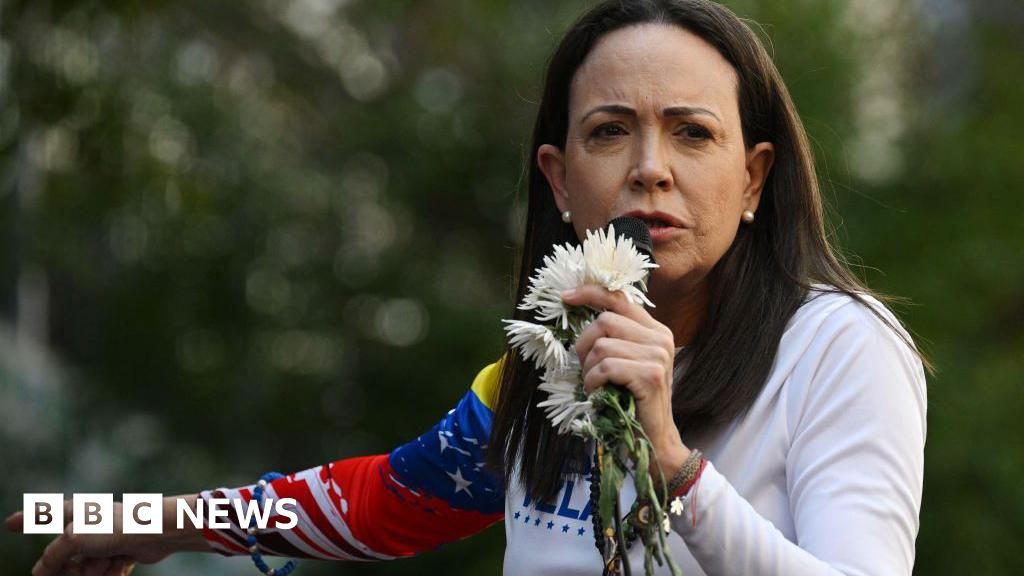
BBC World Dec 9, 09:00

UN environment report 'hijacked' by US and others over fossil fuels, top scientist says

UN environment report 'hijacked' by US and others over fossil fuels, top scientist says11 hours agoShareSaveMatt McGrathEnvironment correspondentShareSaveGetty ImagesA key UN report on the state of the global environment has been "hijacked" by the United States and other countries who were unwilling to go along with the scientific findings, the co-chair has told the BBC.The Global Environment Outlook, the result of six years' work, connects climate change, nature loss and pollution to unsustainable consumption by people living in wealthy and emerging economies.It warns of a "dire future" for millions unless there's a rapid move away from coal, oil and gas and fossil fuel subsidies.But at a meeting with government representatives to agree the findings, the US and allies said they could not go along with a summary of the report's conclusions.As the scientists were unwilling to water down or change their findings, the report has now been published without the summary and without the support of governments, weakening its impact.Researchers say the objections to this new report reflect similar concerns expressed by countries at the recent COP30 talks.The BBC has approached the relevant US government departments for comment.Issued every six or seven years, the Global Environment Outlook is a significant scientific analysis of the major threats to the planet.Developed under the auspices of the UN, the normal practice for studies like this is to have the key conclusions and recommendations agreed word by word with governments and published as a "summary for policymakers".These summaries are seen as critical because they show that governments agree with the science and are prepared to put the findings into action.But this new version of the Global Environment Outlook does not have this type of summary, as the authors and the political representatives of around 70 countries could not agree one at a "stormy" meeting in Nairobi in October.Compiled by nearly 300 scientists worldwide, the report argues that the food we eat, the clothes we wear, and the energy we consume all involve the extraction of resources in a highly unsustainable manner.To solve the connected issues of climate change, pollution, nature and biodiversity loss, the report has many recommendations including a rapid move away from coal, oil and gas and a massive reduction in subsidies for farming and fossil fuels.The authors acknowledge this type of action will drive-up prices for consumers.But that short term pain will bring long term economic benefits for the whole world, the report says.These strong measures, especially on fossil fuels and plastics, were too much for the United States, Saudi Arabia and Russia among others at the approval meeting, which usually work by consensus.Getty ImagesSir Robert Watson is co-chair of the report"A small number of countries basically just hijacked the process, to be quite honest," Prof Sir Robert Watson told BBC News."The US decided not to attend the meeting at all. At the very end they joined by teleconference and basically made a statement that they could not agree with most of the report, which means they didn't agree with anything we said on climate change, biodiversity, fossil fuels, plastics and subsidies."Sir Robert is one of the world's most respected scientific voices. He's a former chief scientist for the UK's department of the environment and has also been chair of the Intergovernmental Panel on Climate Change (IPCC), as well as working for the World Bank and Nasa.However he has had rows with the US in the past, criticising their decision to leave an earlier climate treaty, the Kyoto Protocol, when he was head of the IPCC. He was ousted from that role in 2002 after lobbying by the administration of President George W. Bush.Others present at the meeting agreed that the actions of the US and other countries "derailed" the process."I thought we had gone beyond the point of recognizing that when you burn oil, this big, thick black stuff comes up, and it probably isn't good, especially when you try and breathe it in," said Dr David Broadstock, with the Lantau Group, and one of the report's lead authors."It's kind of pretty obvious, and yet we're still seeing parties wanting to pursue the increasing scale of production of such things," he told BBC News.Since taking office President Trump has sought to boost fossil fuel production and roll back US commitments to fight climate change, calling for the country to be a global energy superpower with cheap and reliable resources. He has also sought to get the US courts to overturn the idea that carbon dioxide is a danger to public health. His government has also followed up with efforts to restrict or limit the efforts of international bodies that set out to tackle warming.This year has seen efforts at international plastics negotiations, at the international maritime organisation and during COP30 to strike out language that states that climate change is a major issue requiring the world to move away rapidly from fossil fuels.The disagreement over the Global Environment Outlook report will raise concerns about future negotiations for the Intergovernmental Panel on Climate Change reports as these studies are seen as the bedrock of global efforts to limit global warming.ClimateEnvironment
Read full story →
BBC World Dec 9, 05:14

Goa nightclub owners fled to Thailand hours after deadly fire, police say

Goa nightclub owners fled to Thailand hours after deadly fire, police say15 hours agoShareSaveShareSaveReutersThe nightclub is located in a busy tourist areaThe owners of a nightclub in Goa, India, where a devastating fire killed 25 people on Sunday, fled the country hours after the tragedy, police have said.Indian authorities confirmed the two brothers, Saurabh and Gaurav Luthra, boarded a flight to Phuket in Thailand shortly after the incident.Investigators believe the fierce blaze was triggered by fireworks being set off inside the venue, Birch By Romeo Lane, which is located in a busy nightlife area of Goa, a coastal state popular with domestic and international tourists.The majority of the victims were staff members, while four were holidaymakers visiting from Delhi. Five people are still being treated in hospital.Police have appealed to Interpol for help to find and arrest the Luthra brothers.Police said they travelled to Delhi to carry out a raid on the mens' home, but discovered they had left the country. "It shows their intent to avoid police investigation," Goa police said in a statement. Saurabh Luthra, whose social media identifies him as the chairman of the company which operates the club, posted a statement on social media expressing "profound grief", but did not reference his whereabouts."In this hour the irreparable sorrow and overwhelming distress, the management stands in unwavering solidarity with the families of the deceased as well as those injured, and conveys its heartfelt condolences with utmost sincerity," Monday's post said.It added that "management" would provide "assistance, support and cooperation to the bereaved".His brother Gaurav Luthra has not commented publicly.At least four people were arrested in the immediate aftermath of the fire, including the venue's manager.Nightclub fire in India's Goa kills 25 staff and touristsNo Christmas homecoming: Families mourn victims of Goa nightclub fireThe Birch nightclub in Arpora, an area with several high-end nightlife businesses, was packed with customers who had come to hear a Bollywood DJ when the fire broke out in the early hours of the morning.Eye witnesses have described scenes of total panic to the BBC, as people tried to flee.The main section of the venue is built on an island in the middle of a lake, which visitors accessed via narrow walkways - a layout which made it difficult for firefighters to tackle the blaze.Part of the venue was entirely destroyed. Police initially said an exploding gas canister was the cause, but now believe it was due to pyrotechnics igniting wooden ceiling beams.Several of the victims were migrant workers who had travelled to Goa to find employment, including four Nepalese nationals.Among those who died were two brothers who were both engaged to be married next year, and four members of the same Delhi family.The police said the bodies of all the victims had been returned to their families. AsiaIndia
Read full story →
BBC World Dec 9, 03:53

Zohran Mamdani confirms he will live in historic Gracie Mansion as New York mayor

Zohran Mamdani will live in historic Gracie Mansion as New York mayor16 hours agoShareSaveKayla EpsteinShareSaveGetty ImagesNew York City Mayor-Elect Zohran MamdaniNew York City Mayor-Elect Zohran Mamdani will live in the Manhattan mansion that his predecessors have called home, leaving behind a rent-stabilised apartment that became the subject of heated debate during his campaign.Gracie Mansion, which dates to 1799, has served as the residence for most New York City mayors since World War Two. But Mamdani, for whom affordable housing is a central issue, did not confirm he would live there immediately following his victory in November."This decision came down to our family's safety and the importance of dedicating all of my focus on enacting the affordability agenda New Yorkers voted for," Mamdani said in a statement on Monday.He has been living in the Astoria neighbourhood in the borough of Queens. The area, home to many middle-class families, is famous for its abundance of immigrant communities and global cuisine."To Astoria: thank you for showing us the best of New York City," Mamdani's statement said."While I may no longer live in Astoria, Astoria will always live inside me and the work I do."During his campaign, Mamdani tied his core platform - freeze the rent – to his own housing situation. But his rivals, mainly former New York Governor Andrew Cuomo, criticised Mamdani for occupying the apartment even though he came from a famous family. His mother is the filmmaker Mira Nair, and his father, Mahmood Mamdani, is a professor at Columbia University.Bloomberg via Getty ImagesGracie Mansion, built in 1799, is the official residence of the New York City mayorNot every mayor has chosen to live at Gracie Mansion.Michael Bloomberg, the billionaire entrepreneur and founder of the eponymous financial and media company, chose to live in his own townhouse on the Upper East Side neighbourhood of Manhattan during his three terms, which ended in 2012.Bloomberg said he believed Gracie Mansion should be a space for public city functions, and he pushed for an extensive renovation of the ageing property.When Mamdani moves in, sometime around his inauguration on 1 January, he will find himself in surroundings very different than his modest Astoria digs.With its butter yellow paint, green shutters, and white railings, Gracie Mansion is a wedding cake of a house overlooking the East River. Inside, the lower floor of the Federal-style mansion is decorated in the spirit of the home's original era.The compound, which reportedly has five bedrooms, also has enhanced security to protect the mayor and their family.Some residents have alleged that Gracie Mansion also has supernatural lodgers. Chirlane McCray, the wife of former mayor Bill De Blasio, told reporters that doors occasionally opened and closed by themselves, and the floorboards creaked eerily.Outgoing Mayor Eric Adams was more certain. "I don't care what anyone says," he declared in 2022. "There are ghosts in there, man."Mamdani's current apartment is rent stabilised, meaning the city sets limits on how much landlords can raise the rent each year. New Yorkers consider these apartments valuable lifelines as the cost of housing outpaces what many can afford.Records showed Mamdani paid about $2,300 (£1,725) each month for his apartment. According to the real estate platform Zillow, the average rent for a one-bedroom apartment in New York City is $3,500 (£2,625) a month.Mamdani seals remarkable victory - but real challenges awaitWhat to know about Zohran Mamdani and what he wants to do as New York City mayorWho is Zohran Mamdani?New York CityUS politicsUnited States
Read full story →
BBC World Dec 9, 03:06

Trump unveils $12bn farm aid package to help farmers who faced 'unjustified trade actions'

Trump unveils $12bn farm aid package to help farmers who faced 'unjustified trade actions'17 hours agoShareSaveBernd Debusmann Jr,at the White HouseandDanielle Kaye,business reporterShareSaveWatch: Trump announces $12bn farm aid to help farmersUS President Donald Trump has unveiled a $12bn (£9bn) farm aid package aimed at helping farmers impacted by low crop prices and the administration's ongoing trade wars.Most of the money – $11bn – is earmarked for one-time payments to farmers for row crops as part of the agriculture department's Farmer Bridge Assistance programme, with another billion reserved for crops not covered by the programme.While farmers have broadly supported Trump, the agriculture sector has been disrupted by trade disputes during his second term, particularly with China. Also on Monday, Trump threatened to hit Mexico with an additional 5% tariff in a row over water supplies to US farmers.The White House says the aid package will help farmers suffering from "years of unjustified trade actions" and accumulated inflation. Trump made the announcement during an event at the White House, alongside Treasury Secretary Scott Bessent and Agriculture Secretary Brooke Rollins. Members of Congress and corn, cotton, sorghum, soybean, rice, cattle, wheat and potato farmers were also in attendance. "Maximising domestic farm production is a big part of how we will make America affordable again and bring down grocery prices," Trump said. Sorghum and soybean farmers have been hit hard by the Trump administration's trade dispute with China, the greatest importer of their crops. Trump's farmer bailout raises fears about trade war winners and losersAccording to a White House official, the payments are intended to help farmers market this year's harvest and plan for next year's crops, as well as act as a bridge until the administration's policies "deliver a better market environment". Rollins said the last $1bn would be held back to help officials understand the state of "specialty crops" and ensure that the government is "making every forward moving position that we need to".When asked if further farm aid packages were planned, Trump said "it depends" on how the market develops."The farmers don't want aid," he said. "They want to have a level playing field."The announcement comes as polls suggest Americans are increasingly concerned about rising costs - an issue which Trump has at times characterised as a "hoax" and a "con job" perpetrated by Democrats.It also followed complaints from US farmers after they lost access to customers in China as a result of Trump's trade policies.For example, China is the world's biggest market for soybeans and has in recent decades been a major buyer from the US.But Beijing effectively shut the door on American soybean imports for months after Trump hit Chinese goods with new levies earlier this year.Later on Monday, Trump threatened to impose a new 5% tariff on Mexico, accusing it of violating an agreement that gives American farmers access to water."It is very unfair to our US Farmers who deserve this much needed water," he posted on social media.Trump was referring to a more than 80-year-old treaty that grants the US water from Rio Grande tributaries.For decades the US has accused Mexico of not meeting the terms of the agreement.Getty ImagesChina is the largest export destination for US soybeans. Mark Legan, a livestock, corn and soybean farmer in Putnam County, Indiana, told the BBC that the government aid would "help our bottom line"As crop prices have fallen and profitability has plummeted, he could use the funds to help replace tractors and other machinery - investments he has put on hold.During his first administration, Trump also provided aid packages to farmers, including $22bn in 2019 and another $46bn in a 2020 package that also included relief from the Covid pandemic. Mr Legan said he believed the new package would be similar to what he received during the first Trump term, in that it would not resolve persistent cost pressures and shrinking export markets, he said."The problem is still that we have high costs of production," Mr Legan said, pointing to record high prices for crop protection chemicals and seeds."While some markets have opened up, we're still not back to exporting as much ag products as we have in the past," he added.Another Illinois farmer, Brad Smith, heard news of the $12bn package while at the Illinois Farm Bureau State Convention in Chicago. "None of us really love it, but we're not in a position where we can be turning it down," he said. "We hope we can reduce the need for anything like this going forward."If he does receive funds from the government, the money will likely be in his hands for three days, he said, before spending it to clear outstanding bills and hopefully buy seeds, chemicals and fertilisers for next year's crop.Mr Smith said that distributing government aid to farmers who need it the most, rather than to larger farms, has been a challenge in the past.Following an October meeting between Trump and Chinese leader Xi Jinping in South Korea, the White House said China had committed to buying at least 12 million metric tonnes of US soybeans by the end of 2025, followed by 25 million metric tonnes annually for the next three years.So far, China has only purchased approximately one-quarter of that amount. Those purchases, however, have accelerated, and Bessent told CBS, the BBC's US partner, that China is likely to meet the goal by the end of February. Asked why a farm aid package was necessary, Bessent said "the Chinese actually used our soybean farmers as pawns in the trade negotiations". "We are going to create this bridge because... agriculture is all about the future," he said. "You've got to start financing for planning next year when things will be very good." On Saturday, he signed an executive order creating food supply chain security "task forces" and assessing "anti-competitive behaviour" in the agricultural sector.Additional reporting by Peter HoskinsTrump's farmer bailout raises fears about trade war winners and losersUS farmers are being squeezed - and it's testing their deep loyalty to TrumpWhat tariffs has Trump announced and why?Trump tariffsAgricultureUS governmentUnited StatesTrade
Read full story →
BBC World Dec 9, 02:40

US deports second group of Iranian nationals, officials say

US deports second group of Iranian nationals, officials say17 hours agoShareSaveKhashayar Joneidi, BBC Persian CorrespondentShareSaveABEDIN TAHERKENAREH/EPA/ShutterstockThe US has deported a second group of Iranian nationals, officials in Tehran said, as the Trump administration continues its immigration enforcement efforts.A chartered plane carrying more than 50 Iranians flew out of Mesa, Arizona, on Sunday, travelling through Cairo and Kuwait before arriving in Iran, according to reports. Tehran's foreign ministry confirmed the Iranian nationals' return to Iran. US immigration officials could not "confirm or deny a flight" for security reasons.The first deportation flight took off from the US in late September, in a rare instance of cooperation between Iran and the US. Many Iranian nationals say they come to the US because they fear persecution at home.Father Joseph Bach, a member of Borderland Companions of Hope, a Franciscan organisation that provides support to migrants, said he has been informed through his contacts inside an Arizona detention facility that Christian converts were among those removed. He also said some detainees had identified as LGBT.Christian converts and members of the LGBT community are groups that face severe legal and social repercussions in Iran.Father Joseph called the deportations "the most unchristian thing to do", adding, "It's scary, it concerns me, it is not OK. I call this a death flight."Iranian authorities have facilitated the repatriation efforts. An Iranian consular official said the deported nationals had "announced their willingness for return following continuation of anti-immigration and discriminative policy against foreign nationals, particularly Iranians, by the United States", the Iran's judiciary-affiliated Mizan News Agency reports.However, one detainee who spoke with the BBC said not all those who were deported were willing to return.One person who was on a list for potential deportation told the BBC he and his partner crossed into the US on foot from Mexico earlier this year. Speaking from an immigration detention centre in Arizona, he said he feared for his life if he returned to Iran.The latest deportations come as already severely strained relations between the two countries further deteriorated in June, after the US bombed Iran's nuclear facilities.The removals highlight the US government's hardline immigration posture under President Donald Trump, who made border security and reducing unauthorised migration central to his political agenda.IranDonald TrumpMigration
Read full story →
BBC World Dec 9, 01:38

Dozens injured after magnitude 7.5 quake strikes northern Japan

Dozens injured after magnitude 7.5 quake strikes northern Japan18 hours agoShareSavePatrick JacksonShareSaveWatch: CCTV shows moment earthquake hits JapanAt least 30 people were injured after a magnitude 7.5 earthquake hit north-eastern Japan on Monday night, forcing thousands of people to evacuate their homes.The quake occurred at 23:15 (14:15 GMT) at a depth of 50km (31mi), about 80km off the coast of the Aomori region, the Japan Meteorological Agency said. It prompted tsunami warnings which have now been lifted, while waves of 70cm (27in) were seen.Some train services have been suspended and thousands of homes have been left without power as a result. Authorities have also warned that a stronger tremor could occur in the coming days - urging the public to remain on high alert for at least a week, according to local media reports.EPAA car is stranded on a collapsed road in Tohoku, Northern JapanAddressing citizens affected by the earthquake, Japanese Prime Minister Sanae Takaichi said: "Reconfirm your daily earthquake preparedness, such as ensuring that you secure furniture, and prepare to evacuate immediately if you feel shaking."Orders were issued for about 90,000 residents to evacuate, according to Reuters news agency.The Aomori prefectural government said around 2,700 homes have been left without power. East Japan Railway has also suspended some services along the north-eastern coast.The Japanese government has set up a response office within the prime minister's crisis management centre and convened an emergency team, chief cabinet secretary Minoru Kihara has said."We are making every effort to assess the damage and implement emergency disaster response measures, including rescue and relief operations," he added.Following the tremors, Japanese electric company Tohoku Electric Power said no irregularities were reported at its Higashidori and Onagawa nuclear power plants as a result of the quake, Tohoku Electric Power said.None were detected either at the disabled Fukushima nuclear power station site, the Japanese authorities told the International Atomic Energy Agency.Fukushima was damaged when a magnitude 9.0 quake struck off the country's eastern coast on 11 March 2011.That quake, the most powerful ever recorded in Japan, triggered a tsunami which swept over the main island of Honshu, killing more than 18,000 people and wiping entire towns off the map.EPAThis home in Aomori prefecture was among those affected by the earthquakeJapan is one of the world's most earthquake-prone countries. It sits on the Ring of Fire and, as a result, experiences about 1,500 earthquakes a year.Earlier this year, Japan's earthquake investigation panel said there was a 60-90% chance that a megaquake would occur in the Nankai Trough within the next 30 years, with worst-case scenarios suggesting it would cause trillions in damage, and potentially kill hundreds of thousands.Earthquakes along the Nankai Trough - an area of seismic activity which stretches along Japan's Pacific coast - have already been responsible for thousands of deaths.Does Japan's megaquake alert mean the 'big one' is coming?AsiaJapanEarthquakes
Read full story →
BBC World Dec 9, 00:29

A wage for housework? India's sweeping experiment in paying women

A wage for housework? India's sweeping experiment in paying women19 hours agoShareSaveSoutik BiswasIndia correspondentShareSaveHindustan Times via Getty ImagesWomen in Maharashtra aged 21-65 receive a monthly cash transfer of 1,500 rupees ($16)In a village in the central Indian state of Madhya Pradesh, a woman receives a small but steady sum each month - not wages, for she has no formal job, but an unconditional cash transfer from the government. Premila Bhalavi says the money covers medicines, vegetables and her son's school fees. The sum, 1,500 rupees ($16: £12), may be small, but its effect - predictable income, a sense of control and a taste of independence - is anything but.Her story is increasingly common. Across India, 118 million adult women in 12 states now receive unconditional cash transfers from their governments, making India the site of one of the world's largest and least-studied social-policy experiments. Long accustomed to subsidising grain, fuel and rural jobs, India has stumbled into something more radical: paying adult women simply because they keep households running, bear the burden of unpaid care and form an electorate too large to ignore. Eligibility filters vary - age thresholds, income caps and exclusions for families with government employees, taxpayers or owners of cars or large plots of land. "The unconditional cash transfers signal a significant expansion of Indian states' welfare regimes in favour of women," Prabha Kotiswaran, a professor of law and social justice at King's College London, told the BBC.How India calculates value of women's houseworkThe transfers range from 1,000-2,500 rupees ($12-$30) a month - meagre sums, worth roughly 5-12% of household income, but regular. With 300 million women now holding bank accounts, transfers have become administratively simple.Women typically spend the money on household and family needs - children's education, groceries, cooking gas, medical and emergency expenses, retiring small debts and occasional personal items like gold or small comforts.What sets India apart from Mexico, Brazil or Indonesia - countries with large conditional cash-transfer schemes - is the absence of conditions: the money arrives whether or not a child attends school or a household falls below the poverty line.AFPBihar transferred 10,000 rupees to women's bank accounts ahead of pollsGoa was the first state to launch an unconditional cash transfer scheme to women in 2013. The phenomenon picked up just before the pandemic in 2020, when north-eastern Assam rolled out a scheme for vulnerable women. Since then these transfers have turned into a political juggernaut.The recent wave of unconditional cash transfers targets adult women, with some states acknowledging their unpaid domestic and care work. Tamil Nadu frames its payments as a "rights grant" while West Bengal's scheme similarly recognises women's unpaid contributions.In other states, the recognition is implicit: policymakers expect women to use the transfers for household and family welfare, say experts.This focus on women's economic role has also shaped politics: in 2021, Tamil actor-turned-politician Kamal Haasan promised "salaries for housewives". (His fledgling party lost.) By 2024, pledges of women-focused cash transfers helped deliver victories to political parties in Maharashtra, Jharkhand, Odisha, Haryana and Andhra Pradesh. In the recent elections in Bihar, the political power of cash transfers was on stark display. In the weeks before polling in the country's poorest state, the government transferred 10,000 rupees ($112; £85) to 7.5 million female bank accounts under a livelihood-generation scheme. Women voted in larger numbers than men, decisively shaping the outcome. Critics called it blatant vote-buying, but the result was clear: women helped the Bharatiya Janata Party (BJP)-led coalition secure a landslide victory. Many believe this cash infusion was a reminder of how financial support can be used as political leverage.Yet Bihar is only one piece of a much larger picture. Across India, unconditional cash transfers are reaching tens of millions of women on a regular basis.Maharashtra alone promises benefits for 25 million women; Odisha's scheme reaches 71% of its female voters.Why are millions of Indian women dropping out of work?In some policy circles, the schemes are derided as vote-buying freebies. They also put pressure on state finances: 12 states are set to spend around $18bn on such payouts this fiscal year. A report by think-tank PRS Legislative Research notes that half of these states face revenue deficits - this happens when a state borrows to pay regular expenses without creating assets.But many argue they also reflect a slow recognition of something India's feminists have argued for decades: the economic value of unpaid domestic and care work.Women in India spent nearly five hours a day on such work in 2024 - more than 7.6 times the time spent by men, according to the latest Time Use Survey. This lopsided burden helps explain India's stubbornly low female labour-force participation. The cash transfers, at least, acknowledge the imbalance, experts say.Do they work?Evidence is still thin but instructive. A 2025 study in Maharashtra found that 30% of eligible women did not register - sometimes because of documentation problems, sometimes out of a sense of self-sufficiency. But among those who did, nearly all controlled their own bank accounts.Swastik PalSoma Das sells clothes using the money, supporting her household in West BengalA 2023 survey in West Bengal found that 90% operated their accounts themselves and 86% decided how to spend the money. Most used it for food, education and medical costs; hardly transformative, but the regularity offered security and a sense of agency.More detailed work by Prof Kotiswaran and colleagues shows mixed outcomes.In Assam, most women spent the money on essentials; many appreciated the dignity it afforded, but few linked it to recognition of unpaid work, and most would still prefer paid jobs.In Tamil Nadu, women getting the money spoke of peace of mind, reduced marital conflict and newfound confidence - a rare social dividend. In Karnataka, beneficiaries reported eating better, gaining more say in household decisions and wanting higher payments.Yet only a sliver understood the scheme as compensation for unpaid care work; messaging had not travelled. Even so, women said the money allowed them to question politicians and manage emergencies. Across studies, the majority of women had full control of the cash.Why female entrepreneurs are key to getting more women to work"The evidence shows that the cash transfers are tremendously useful for women to meet their own immediate needs and those of their households. They also restore dignity to women who are otherwise financially dependent on their husbands for every minor expense," Prof Kotiswaran says.Importantly, none of the surveys finds evidence that the money discourages women from seeking paid work or entrench gender roles - the two big feminist fears, according to a report by Prof Kotiswaran along with Gale Andrew and Madhusree Jana.Nor have they reduced women's unpaid workload, the researchers find. They do, however, strengthen financial autonomy and modestly strengthen bargaining power. They are neither panacea nor poison: they are useful but limited tools, operating in a patriarchal society where cash alone cannot undo structural inequities.Swastik PalWomen welcome the dignity the cash transfers provideWhat next? The emerging research offers clear hints.Eligibility rules should be simplified, especially for women doing heavy unpaid care work. Transfers should remain unconditional and independent of marital status.But messaging should emphasise women's rights and the value of unpaid work, and financial-literacy efforts must deepen, researchers say. And cash transfers cannot substitute for employment opportunities; many women say what they really want is work that pays and respect that endures."If the transfers are coupled with messaging on the recognition of women's unpaid work, they could potentially disrupt the gendered division of labour when paid employment opportunities become available," says Prof Kotiswaran.India's quiet cash transfers revolution is still in its early chapters. But it already shows that small, regular sums - paid directly to women - can shift power in subtle, significant ways. Whether this becomes a path to empowerment or merely a new form of political patronage will depend on what India chooses to build around the money.CashTamil NaduWomen in IndiaWomenMaharashtraIndia
Read full story →
BBC World Dec 9, 00:21

Sudan air force bombing of towns, markets and schools has killed hundreds, report says

Sudan air force bombing of towns, markets and schools has killed hundreds, report says20 hours agoShareSaveBarbara Plett UsherAfrica correspondentShareSaveAFP via Getty ImagesMillions have fled the fighting which began in April 2023Sudan's air force has carried out bombings in which at least 1,700 civilians have died in attacks on residential neighbourhoods, markets, schools and camps for displaced people, according to an investigation into air raids in the country's civil war.The Sudan Witness Project says it has compiled the largest known dataset of military airstrikes in the conflict, which began in April 2023.Its analysis indicates that the air force has used unguided bombs in populated areas.The data focuses on attacks by warplanes, which only the Sudanese Armed Forces (SAF) is capable of operating. Its rival, the paramilitary Rapid Support Forces (RSF) does not have aircraft. It launches drone strikes, but drones were excluded from the research.The RSF has been internationally condemned for allegedly carrying out ethnic massacres in Sudan's western Darfur region, triggering charges of genocide by the United States."The RSF are being held responsible for a lot of damage and violations, and I think rightly so," says Mark Snoeck, who ran the project. "But I think the SAF should also be held accountable for their actions."The military has also faced international criticism, accused of indiscriminate bombings.The SAF did not respond to a BBC request for comment. But it has previously denied allegations of targeting civilians, saying its airstrikes are "directed solely at RSF gatherings, locations and bases recognized as legitimate military targets".Sudan Witness is an initiative by the Center for Information Resilience (CIR), a non-profit group which works to expose human rights violations. It received funding from the British foreign ministry for this project.According to an advance copy of the report obtained by the BBC, Sudan Witness analysed 384 airstrikes conducted between April 2023 and July 2025.A simple guide to what is happening in SudanHow Trump's pledge to tackle Sudan atrocities could play outPodcast: What is Sudan’s war really about?More than 1,700 civilians were reported killed and 1,120 injured in the incidents it documented. The group says these are conservative figures as it takes the lowest reported number.There were 135 cases involving residential areas, with verified destruction to homes and civilian infrastructure.In 35 instances the bombs struck markets and commercial facilities, often when they were crowded with people. And 19 strikes affected vulnerable groups in places like health facilities, sites housing displaced people and educational institutions.Sudan Witness acknowledges that its research is incomplete because the results reflect access to data rather than the total number of strikes. It's hard to get information from conflict zones due to poor telecommunications and the difficulty of identifying credible sources, it says, and strikes on military targets are likely to be underreported.But it says through a rigorous methodology, it has been able to build a wider picture of the military's air campaigns, visualising the information in an interactive map that shows the scale and impact on civilian populations."For us to say that the Sudanese Armed Forces conducted an airstrike on a certain location at a certain time would more or less require that the SAF be caught in the act in footage that can be verified," says Mr Snoeck. "And this would be a very high threshold, because footage like that is very exceptional in Sudan. So what we therefore have done is analysed hundreds of airstrikes claims to paint the bigger picture."The main patterns that emerge are repeated hits on residential neighbourhoods and markets, says Mr Snoeck, as well as a large number of alleged strikes on essential humanitarian and medical facilities."I think these patterns strongly suggest that the SAF isn't doing enough to avoid civilian casualties," he said.Justin Lynch, managing director at Conflict Insights Group which tracks foreign weapons supplies to Sudan, told the BBC that Sudanese civilians were bearing the brunt of the battles between the army and the RSF."Sudan's conflict is really a war against civilians," he told the BBC. "Air power and other heavy weapons disproportionately target civilian, more than military, sites."Sudan Witness calculates the credibility level of a reported airstrike based on publicly available digital information known as open source.It assesses the reliability of the source, ability to analyse the location through videos posted to social media, and available satellite imagery.Some of the incidents examined by Sudan Witness could be based only on reports. Where it was able to find corroborating evidence, it confirmed the attacks with a low-to-medium degree of certainty.But the group highlights cases where munitions, impact craters or shrapnel damage are identified.In one such instance Sudan Witness confirmed multiple videos and images showing a crater with an undetonated air-dropped bomb in the Zamzam camp for displaced people in North Darfur.FacebookA photographer in Zamzam camp captured this image of an unexploded bomb that fell there last yearIt appeared to match the SH-250 unguided munition produced by Military Industry Corporation, a Sudanese arms manufacturer."This is still one of the most troubling findings I've worked on," says Mr Snoeck. "Why drop an unguided bomb on a camp for internally displaced people? This area wasn't even under RSF control at the time, and the logic behind that strike still puzzles me."In another strike, Sudan Witness verified a rare video that captured the moment of impact, with the roar of an aircraft followed by multiple explosions as civilians took cover.At least 30 people were killed and 100 injured in the bombing of the Hamrat al-Sheikh Market in North Kordofan state, according to reports.Many of the air attacks attributed to the SAF have taken place in Darfur, which is controlled by the RSF.They include an August 2024 strike on a hospital in el-Daein, the historic capital of the Rizeigat people to which the majority of RSF forces belong.Sudan Witness verified footage that showed shrapnel damage to the building. The World Health Organisation and UN children's charity Unicef reported 16 civilians were killed, including three children and one healthcare worker.Even a rebel group allied to the army criticised this strike. The Sudan Tribune, an independent online news portal, quoted a spokesman for the Justice and Equality Movement, who said citizens were surprised by the indiscriminate airstrikes targeting hospitals and homes.The city of Nyala in South Darfur state is a frequent target. Its airport is alleged to be the main entry point for RSF weapons, including sophisticated drones, delivered by the United Arab Emirates. Abu Dhabi denies evidence that it is supporting the RSF.The SAF says it is targeting military supplies in the city.But, according to the Sudan War Monitor, a group of researchers who track the conflict, it lacks precision weapons to accurately hit them in such a crowded setting.Sudan Witness analysed a series of air strikes in the city centre carried out in February this year, also documented by Human Rights Watch. They hit residential neighbourhoods and a grocery store near an eye hospital, killing at least 63 people.The group says the strikes on busy marketplaces and commercial hubs not only kill civilians but also disrupt economic stability and aggravate the humanitarian crisis.In October last year at least 65 people were reported killed and 200 injured in a bombing that destroyed the al-Kuma market in North Darfur.AFP via Getty ImagesThe bombs that have fallen on markets have killed civilians as well as disrupted the lives of many othersSudan Witness verified the location of footage of the destroyed market and corroborated it with satellite imagery showing new burn scars over the area.Al-Kuma is located some 80km (50 miles) north-east of el-Fasher, until recently the focus of a fierce battle, and has been caught in the crossfire of SAF air assaults on the RSF."It is impossible for a country's army to bomb people with its air force and claim that it is doing so to protect the country," a local official told Dabanga, an independent Sudanese broadcaster.Another local source said the town had suffered more than 30 air raids since the beginning of the war."This evidence of military airstrikes hitting marketplaces and other civilian areas, shows a clear and unacceptable disregard for the safety of innocent Sudanese civilians," said a British foreign office official. "Whatever side of the conflict they are on, the perpetrators of these heinous crimes must be held accountable."The Sudan Witness Project has continued monitoring air raids beyond July 2025 but says there has been a shift towards drone strikes by both parties in recent months.The devastating cycle of aerial warfare sometimes targets groups seen as supporting the other side, says the Sudan War Monitor, highlighting an alleged SAF drone attack on al-Kuma in October, this time hitting a social gathering at the home of a local religious leader.Al-Kuma is predominantly inhabited by the Ziyadiya, one of the Arab nomadic groups that form the social and ethnic backbone of the RSF.That same weekend the RSF launched drone and artillery attacks on el-Fasher, striking a religious displacement centre and reportedly killing at least 60 civilians.El-Fasher is dominated by non-Arab groups such as the Zaghawa, which RSF fighters associated with Zaghawa armed groups defending the city."Neither side utilises drones and their airpower to primarily target military locations — they are either indiscriminate or designed to terrorise civilian populations under each other's control, which are war crimes," says Mr Lynch from Conflict Insights Group.The SAF says the RSF seeks refuge within residential neighbourhoods and insists it is strictly observing international humanitarian laws and rules of engagement, including protection of civilians and their properties.Both sides in Sudan's war have been accused of war crimes.This week the RSF and its ally the Sudan Liberation Movement-North was accused of drone strikes that hit a kindergarten and a hospital in the South Kordofan town of Kalogi.The WHO said 114 people were killed, including 63 children.Mr Lynch says not only are civilians suffering, neither side is achieving military success in the air war."SAF have used aerial operations to support the takeover of Khartoum, but with that exception their use of airstrikes has resulted in a lot of civilian death and not a lot of military success," he said."Similarly, the RSF use foreign mercenaries backed by the UAE to fly drones, but with a few exceptions it hasn't actually achieved results."You can access the Sudan Witness report here when it is published on 10 December.A simple guide to what is happening in Sudan'I saw them driving over injured people' - the terrifying escape from war in Sudan'There was a state of terror': Sudan hospital worker describes fleeing before alleged massacreHe made his money selling camels and gold. Now this warlord controls half of Sudan'Our job is only killing' - how Sudan's brutal militia carried out a massacreGetty Images/BBCGo to BBCAfrica.com for more news from the African continent.Follow us on Twitter @BBCAfrica, on Facebook at BBC Africa or on Instagram at bbcafricaBBC Africa podcastsFocus on AfricaThis Is AfricaSudanAfrica
Read full story →
BBC World Dec 8, 23:37

Thieves snatch eight Matisse artworks from library in Brazil

Thieves snatch eight Matisse artworks from library in Brazil20 hours agoShareSaveVanessa BuschschlüterShareSaveWatch: CCTV captures Matisse heist suspects making off with artworks on foot in São PauloTwo armed men have stolen eight engravings by French artist Matisse and at least another five by Brazilian painter Cândido Portinari from a library in São Paulo. Brazilian officials say the thieves held up a security guard and an elderly couple who were visiting the library on Sunday, before making off with the artworks on foot.On Monday, authorities said they had found the "escape vehicle", and several hours later one of the suspects had been arrested, authorities said.The heist comes less than two months after the art world was rocked by a brazen break-in at the Louvre museum in Paris, where thieves made off with priceless jewels. The engravings stolen from Biblioteca Mário de Andrade formed part of a joint exhibition with the São Paulo Museum of Modern Art.The thieves targeted the exhibition, entitled From Book to Museum, on its final day.They reportedly entered the library by the main entrance at 10:00 (13:00 GMT) on Sunday, and left by the same route, heading towards the nearest metro station.Bibilioteca Mário de Andrade is the country's second largest library and officials say that its building in the centre of São Paulo has cameras with facial recognition technology. The city itself also has an extensive security camera system. Brazilian news website G1 published a video purporting to show the two men rushing along a road, carrying between them what seems to be a sack with paintings in it.In a statement posted online, the São Paulo government said that the first alleged thief had been arrested following "analysis of security cameras that recorded the criminal act".Officials have not yet released a detailed list of the stolen works, but according to Folha de São Paulo newspaper, a collage Matisse made for the limited-edition art book Jazz is among those taken.Matisse is widely considered to be one of the 20th Century's most influential artists and art critics say the value of the stolen works is "incalculable".The thieves also took at least five engravings by Portinari, created to illustrate a special edition of the novel Menino de engheno (Plantation Boy) by Brazilian writer José Lins do Rego.Portinari, who often painted rural workers and labourers, is one of the most significant Brazilian Modernist artists. Four new arrests made following Louvre jewellery heistLouvre heist carried out by petty criminals, prosecutor saysSao PauloArt
Read full story →
BBC World Dec 8, 22:28

Australia's social media ban for children has left big tech scrambling

Australia's social media ban for children has left big tech scrambling21 hours agoShareSaveLily Jamali,North America Technology Correspondent, San FranciscoandTiffanie Turnbull,SydneyShareSaveWatch: What do teenagers think about Australia's social media ban?When Stephen Scheeler became Facebook's Australia chief in the early 2010s, he was a true believer in the power of the internet, and social media, for public good.It would herald a new era of global connection and democratise learning. It would let users build their own public squares without the traditional gatekeepers."There was that heady optimism phase when I first joined and I think a lot of the world shared that," he told the BBC.But by the time he left the firm in 2017, seeds of doubt about its work had been planted, and they've since bloomed."There's lots of good things about these platforms, but there's just too much bad stuff," he surmises.That's no longer an uncommon view as scrutiny of the largest social media companies has increased around the globe. A lot of it has centred on teenagers, who have emerged as a lucrative market for incredibly wealthy global firms - at the expense of their mental health and wellbeing, according to critics.Various governments, from the state of Utah to the European Union, have been experimenting with limiting children's use of social media. But the most radical step so far is set to unfold in Australia - a ban for under-16s that kicks in on 10 December has left tech companies scrambling.Many of the social media firms affected have spent a year loudly protesting against the new law, which requires them to take "reasonable steps" to keep underage users from having accounts on their platforms. They have claimed this ban actually risks making children less safe, argued it impinges on their rights, and repeatedly pointed to the questions around the tech that will be used to enforce the policy. "Australia is engaged in blanket censorship that will make its youth less informed, less connected, and less equipped to navigate the spaces they will be expected to understand as adults," said Paul Taske from NetChoice, a trade group representing several big tech companies.The worry inside the industry is that Australia's ban - the first of its kind - may inspire other countries."It could become a proof of concept that gains traction around the world," says Nate Fast, a professor at the University of Southern California's Marshall School of Business.Whistleblowers, lawsuits and questionsGetty Images(L-R) Jason Citron, CEO of Discord, Evan Spiegel, CEO of Snap, Shou Zi Chew, CEO of TikTok, Linda Yaccarino, CEO of X, and Mark Zuckerberg, CEO of Meta at a Senate Judiciary Committee Hearing in JanuaryIn recent years, multiple whistleblowers and lawsuits have claimed that social media firms are prioritising profits over user safety.In January, a landmark trial will begin in the US hearing allegations that several – including Meta, TikTok, Snapchat and YouTube – have designed their apps to be addictive and knowingly covered up the harm their platforms cause. All deny this, but Meta founder Mark Zuckerberg and Snap boss Evan Spiegel have both been ordered to testify in person.The case consolidates hundreds of claims from parents and school districts, and is among the first to advance from a flood of similar lawsuits which allege social media contributes to poor mental health and child exploitation.In another ongoing case, state prosecutors alleged that Zuckerberg personally scuttled efforts to improve the wellbeing of teens on the company's platforms, including vetoing a proposal to ditch Instagram face-altering beauty filters which experts say fuel body dysmorphia and eating disorders.Former Meta employees Sarah Wynn-Williams, Frances Haugen and Arturo Béjar have given testimony before the US Congress alleging a range of wrongdoing they observed during their stints at the company.Meta maintains the company has worked diligently to create tools that keep teens safe online.But the broader industry has also recently been taken to task over mis- and disinformation, hate speech and violent content. Graphic footage of the assassination of Charlie Kirk was rapidly spread on various platforms, even confronting people who were not seeking it out. Elon Musk has sued states in the US over laws that require social media firms, including X, to define and disclose how they fight hate speech online. And Meta was heavily criticised earlier this year after announcing it was getting rid of factcheckers who monitor its platforms for misinformation.A rare bipartisan front has emerged among American lawmakers eager to cut tech bosses down to size.During a hearing last year, Zuckerberg was prodded by one to apologise to bereaved families who had come to watch in person. Among those in the audience was Tammy Rodriguez, whose 11-year old daughter Selena took her life after facing sexual exploitation on Instagram and Snapchat."This is why we invest so much and we are going to continue doing industry wide efforts to make sure no one has to go through the things your families have had to suffer," Zuckerberg said.Australia is banning social media for kids under 16. How will it work?Can you ban kids from social media? Australia is about to, but some teens are a step aheadPublic scrutiny and private lobbyingHowever, there's widespread criticism from many experts, lawmakers and parents - even kids - who feel social media companies are hiding from genuine action and accountability on these issues.As Australia's social media ban was considered, then formulated, the firms had little to say publicly."Hiding from the public discourse… it just breeds more suspicion and more distrust," Mr Scheeler says.Privately though, many were seeking to bend the government's ear. Spiegel personally sat down with Australia's Communications Minister Anika Wells. She also claimed YouTube had sent globally renowned children's entertainers The Wiggles to lobby on their behalf.In carefully worded public statements, several of the firms have tried to push responsibility elsewhere. Meta and Snap both said operators of the major app stores – namely Apple and Google – should take on age verification duties.And many argued government is overstepping. Parents know best, they say, and they should decide what makes sense for their teens when it comes to social media use. Along with a higher age limit of 16, Australia is the first jurisdiction to deny an exemption for parental approval in a policy like this - making its laws the world's strictest."While we're committed to meeting our legal obligations, we've consistently raised concerns about this law… There's a better way: legislation that empowers parents to approve app downloads and verify age allows families - not the government - to decide which apps teens can access," a statement from Meta provided to the BBC said.Watch: Anika Wells says big tech won't intimidate her over Australian social media banAsked why her government was unsympathetic to this reasoning - why anything short of a ban was unacceptable - Wells said the tech companies have had plenty of time to improve their practices."They have had 15, 20 years in this space to do that of their own volition now, and… it's not enough."Leaders in other countries feel the same, and have been knocking on her door for help, she says, rattling off the EU, Fiji, Greece, even Malta, as examples.Denmark and Norway have already begun work on similar laws, and Singapore and Brazil are watching closely too."We're pleased to be the first, we're proud to be the first, and we stand ready to help any other jurisdiction who seeks to do these things," Wells said.Too little, too late?As the Australia ban loomed, the mounting pressure prompted the companies to introduce versions of their products marketed as safer for young users, said Pinar Yildirim, a marketing professor at the University of Pennsylvania's Wharton School.Australia, after all, is a major market for social platforms. At parliamentary hearings in October Snapchat said it believed it had about 440,000 account users in the country aged between 13 and 15. TikTok said it had about 200,000 under-16 accounts and Meta said it had about 450,000 between Facebook and Instagram.Experts say they are also eager to ensure they don't lose others in even larger markets around the world.Getty ImagesFormer Meta engineer Arturo Béjar speaks during a rallyIn July, YouTube announced the rollout of AI technology that estimates a user's age in a bid to identify those younger than 18 and better shield them from harmful content.Snapchat has special accounts for children which it says put safety and privacy settings on by default for users between the ages of 13 and 17.And last year, Meta unveiled Instagram Teen accounts which similarly place users younger than 18 into more restricted privacy and content settings that Meta says are designed to limit unwanted contacts and exposure to explicit content. This development was accompanied by a massive marketing blitz in the US."If they create a more protected environment for these users, the thinking is, that may reduce some of the damage," Yildirim said.Yet critics aren't satisfied. Béjar, one of the Meta whistleblowers, led a study published in September that found almost two thirds of the new safety tools on Meta's Instagram Teen accounts were ineffective."The key issue here is that Meta and other social media companies aren't substantively addressing the harm we know teens are experiencing," Béjar told the BBC.Getty ImagesCritics say social media firms haven't done enough to protect childrenForced onto the defensive, the companies have attempted to convey that they are making a good faith effort to comply with Australia's impending ban despite their disagreement with it.But analysts say they'll be hoping the hurdles - which include legal challenges, technology loopholes for kids, and any unintended consequences of the ban - could bolster the case against such moves in other nations.And the companies "have a fair bit of influence in how smoothly things go", Professor Fast points out."[They] have an incentive to walk the very fine line about complying, but making sure that they don't comply so good that all the rest of the other countries go, 'Great, that works. Let's do the same'," Mr Scheeler agrees.SuppliedFormer Facebook Australia chief Stephen Scheeler says social media companies have hidden from public discourse about the banAnd the fines - a maximum of A$49.5m ($33m, £24.5m) for serious breaches - might just be seen as the cost of doing business, according to Carnegie Mellon University marketing professor Ari Lightman. "[They're] a drop in the bucket," he says, especially for larger players eager to secure their next generation of potential users.Despite the concerns around the policy's implementation, Mr Scheeler says he feels like this is a "seatbelt moment" for social media."Some would argue that bad regulation is worse than no regulation, and sometimes that's true, but I think in this instance, even imperfect regulation is better than nothing, or better than what we had before," he says."Maybe it will work, maybe it won't work, but at least we're trying something."Watch: Australia's social media ban explained... in 60 secondsSign up for our Tech Decoded newsletter to follow the world's top tech stories and trends. Outside the UK? Sign up here.Social mediaTikTokYouTubeSnapchatMetaInstagramTwitterFacebookAustralia
Read full story →
BBC World Dec 8, 21:14

Paramount launches rival bid for Warner Bros Discovery

Paramount launches rival bid for Warner Bros Discovery23 hours agoShareSaveNatalie ShermanBusiness reporterShareSaveWarner Brothers DiscoveryWarner Brothers Discovery is owner of HBO, known for shows like Sex and the City Paramount Skydance has made another offer to buy Warner Bros Discovery as it seeks to trump a rival plan from Netflix to buy the company's studio and streaming networks. Paramount, which is backed by the billionaire Ellison family, said it was making a direct offer to shareholders of $30 (£22.50) per share to scoop up the whole of Warner Bros, including its traditional television networks.It said its proposal was a "superior alternative" to Netflix's, delivering more cash upfront to shareholders and greater prospect of approval by regulators. President Donald Trump has said "there could be a problem" with Netflix's purchase, pointing to competition concerns given the size of the companies. A look at the competing bids for Warner Bros DiscoveryParamount is a smaller player than Netflix that is known for brands such as CBS News, Nickelodeon and Mission Impossible. It started submitting offers a few months ago, eventually prompting Warner Bros, owner of HBO and classics from Looney Tunes to Harry Potter, to formally open a bidding process. Wall Street analysts have long said they believe a Paramount-Warner Bros combination makes sense, because it would give the company the scale to compete against rivals such as Netflix and Disney. Paramount was also seen as a strong suitor because the relationship between Trump and the Ellison family, including tech billionaire and Republican megadonor Larry Ellison, was expected to help ease the approval process. But Warner Bros declared Netflix the winner of the auction on Friday, announcing a deal that valued its studio and streaming networks, including HBO, at about $83bn (£62.3bn), including its debt.It said the sale would proceed after a planned spin-off of other parts of Warner Brothers' business, including CNN, into an independent company.Paramount's offer values the entire company at $108.4bn, which it said was a better deal. Trump's son-in-law, Jared Kushner, is among the financial partners Paramount is working with as part of the deal, according to paperwork submitted to the Securities and Exchange Commission. Netflix executives on Monday expressed confidence in their plans, dismissing Paramount's attempt as "entirely expected". Warner Bros said it would review the offer but was not currently changing its recommendation. It said it would respond within 10 business days. Watch: Trump says he will be "involved" in the Warner Brothers merger decisionEither takeover is expected to face scrutiny from competition regulators in the US and Europe.Analysts said Netflix's plan would likely raise concerns about dominance in streaming, while Paramount's proposal would prompt a review of the impact on advertisers and local television distributors, given the power of a combined company over sports and children's networks.Paramount's plans, which would put CBS and CNN under the same parent company, have also been closely watched because of the potential impact on the news business and the Ellisons' ties to Trump.The president said over the weekend he expected to be involved in the approval process. But he has offered little certainty about his views.While noting potential concerns about Netflix's tie-up on Sunday, he also praised the streamer's bosses. Meanwhile on social media on Monday, he took aim at Paramount for a 60 Minutes interview that it aired with former Trump ally Marjorie Taylor Greene, a Republican representative.In an interview with CNBC, Paramount chief executive David Ellison said he had had "great conversations" with Trump about the deal, while noting that he did not want to speak for the president. Netflix is the biggest streaming company in the world, with more than 300 million subscribers. Mr Ellison's plan would build on his purchase earlier this year of Paramount, which he folded into his Skydance film studio. "Paramount ultimately needs this deal more than Netflix," said Ben Barringer, head of technology research at Quilter Cheviot, calling the Warner Bros assets simply "nice to have" for the streamer.Speaking to CNBC on Monday, Mr Ellison talked up the benefits of his plan for the entire media industry, arguing that Netflix's takeover of Warner Brothers Discovery would give one firm too much power over actors and other players in the industry."It's a horrible deal for Hollywood," he said.He also said he thought Warner Bros' plan to spin-off its traditional networks into an independent company would set them up to fail and ultimately prove a mistake for shareholders."I think [its shares are] going to be worth a lot less than people are claiming," he said. But Netflix executives, who spoke at a business conference on Monday, said they were confident their takeover could win approval, noting that their plan does not include plans for major cuts.Shares in Warner Bros rose more than 4% on Monday while Paramount shares jumped 9%.Shares in Netflix, however, dropped more than 3%.CompaniesMediaStreamingNetflix
Read full story →
BBC World Dec 8, 20:53

Israel to review reports that troops killed three-year-old in Gaza

Israel to review reports that troops killed three-year-old in Gaza23 hours agoShareSaveJames CookJerusalemShareSaveEPAA three-year-old girl was killed by Israeli forces in Gaza on Sunday, according to local sources inside the Palestinian territory.Ahed Tareq al-Bayouk was reportedly playing near her family's tent in Mawasi, Rafah, southern Gaza, when she was shot.The Israel Defense Forces said in a statement that it was "not aware of a strike" but would "conduct an additional review" as more information was provided.Since a ceasefire came into effect in October, at least 370 people have been killed in Gaza including 140 children, according to Amnesty International. Ahed al-Bayouk's death appears to have taken place on the Palestinian side of the so-called Yellow Line, behind which Israeli troops agreed to withdraw as part of the first phase of a US plan to end fighting in the region.Phase one also required the return of all 20 living and 28 dead hostages taken in the Hamas-led attack on southern Israel on 7 October 2023.All have been returned except for the remains of an Israeli police officer, Ran Gvili, 24, who is believed to have been shot and killed while trying to repel the attack in which about 1,200 people were killed and 251 taken hostage.Since then, more than 70,000 Palestinians have been killed by Israeli military action, according to Gaza's Hamas-run health ministry.The World Health Organization says at least 16,500 wounded or seriously ill Palestinians are in urgent need of evacuation for lifesaving medical treatment outside Gaza.International media, including the BBC, are prevented by Israel from reporting independently from inside Gaza.On Saturday, Sheikh Mohammed bin Abdulrahman al-Thani, the prime minister of Qatar, said the current situation was more of a "pause" than a ceasefire and his country was working with the US, Turkey and Egypt to push the plan towards phase two.This would involve the establishment of an interim governing authority in Gaza, the deployment of an international security force, the disarmament of Hamas, and Israel's eventual withdrawal from the territory.The plan is to be overseen by a Board of Peace chaired by US President Donald Trump.It also sets out how redevelopment and reform might create "a credible pathway to Palestinian self-determination and statehood".After talks in Jerusalem with the Israeli Prime Minister Benjamin Netanyahu on Sunday, German Chancellor Friedrich Merz said the eventual creation of a Palestinian state could be the best route to "a new Middle East".But standing alongside him, Netanyahu reiterated his opposition to the two-state solution.The "purpose of a Palestinian state," he argued, "is to destroy the one and only Jewish state"."We believe there is a path to advance a broader peace with the Arab states, and a path also to establish a workable peace with our Palestinian neighbours, but we're not going to create a state that will be committed to our destruction," he added.The Israeli and German leaders did agree that the second phase of the American plan should be advanced as soon as Mr Gvili's remains were returned.Netanyahu is expected to discuss the next phase of the plan when he meets Trump in the US on 29 December.Middle EastIsrael-Gaza war
Read full story →
BBC World Dec 8, 20:34

About 100 abducted schoolchildren released in Nigeria

About 100 abducted schoolchildren released in Nigeria23 hours agoShareSaveMadina Maishanu,BBC Africa, AbujaandBasillioh RukangaShareSaveEPAThe parents are desperate for news of their childrenAbout 100 children who were abducted from a Catholic school in central Nigeria last month have been freed.They arrived in the Niger state capital, Minna, in a fleet of minibuses escorted by military vans and armoured vehicles, and were received by Governor Umar Bago.Details about their release remain unclear, including whether it was secured through negotiation or by force, and whether any ransoms were paid.Last month, more than 250 students and 12 staff were kidnapped from St Mary's Catholic school in Papiri, the latest in a wave of mass abductions.The BBC has learned that the rescued students will be transported to the school, located more than 300km (186 miles) from the state capital, on Tuesday where they will be reunited with their families.The governor of neighbouring Nasarawa state, Abdullahi Sule, told local media that the federal government had played a key role in securing their release, adding that the behind-the-scenes efforts could not be disclosed for security reasons.Last week, National Security Adviser Nuhu Ribadu visited Papiri and met a delegation led by Bishop Bulus Dauwa Yohanna, assuring them the children would soon be rescued and reunited with their families.About 153 students and 12 staff members are still with the unknown gunmen.I watched helplessly as gunmen snatched my son, says father after Nigerian school kidnappingNigerian villagers 'too scared to speak' after hundreds of schoolchildren kidnappedThe kidnap gangs, jihadists and separatists wreaking havoc in NigeriaSchools and places of worship have increasingly been targeted in the latest wave of attacks in north and central Nigeria.The attack on St Mary's, on 21 November, was preceded by mass kidnappings just days earlier: on 18 November, two people were killed and 38 abducted in an attack on the Christ Apostolic Church in Kwara state, and a day before that, two were killed and 25 Muslim students abducted from Government Girls' Secondary School in Kebbi state. All those taken in the Kwara and Kebbi attacks have since been freed.Last week gunmen abducted at least 20 people in two separate attacks - at a newly established church in central Kogi state, where a pastor, his wife and some worshipers were taken, and in the mostly Muslim northern Sokoto state, where a bride and her bridesmaids were among those kidnapped.It is not clear who is behind these kidnappings - most analysts believe they are carried out by criminal gangs seeking ransom payments. However, a presidential spokesman earlier told the BBC that the government believes they are the work of jihadist groups.The paying of ransoms has been made illegal in Nigeria in an attempt to cut the supply of funds to the kidnap gangs but it is widely believed that in many cases money is still handed over.Nigeria's security crisis attracted the international spotlight last month after US President Donald Trump threatened to send over troops if the government "continues to allow the killing of Christians".Nigerian officials and analysts say that members of all faiths are victims of the violence and kidnappings and say it is not true that Christians are being targeted.You may also be interested in:'We fear for our souls' - Nigerian farmers need armed guards to protect them from jihadistsNicki Minaj supports contested Trump claim Christians being persecuted in NigeriaAre Christians being persecuted in Nigeria as Trump claims?Getty Images/BBCGo to BBCAfrica.com for more news from the African continent.Follow us on Twitter @BBCAfrica, on Facebook at BBC Africa or on Instagram at bbcafricaBBC Africa podcastsFocus on AfricaThis Is AfricaNigeriaAfrica
Read full story →
BBC World Dec 8, 19:33

US Supreme Court appears poised to expand Trump's power to fire federal officials

US Supreme Court appears poised to expand Trump's power to fire federal officials1 day agoShareSaveMadeline HalpertShareSaveGetty ImagesFTC member Rebecca Slaughter sued Trump after she and another Democratic-appointed member were fired in MarchThe US Supreme Court's conservative majority appeared to side on Monday with the Trump administration in a case that could have major implications for the independence of federal agencies long shielded from the White House. The case, Trump v Slaughter, stems from President Donald Trump's firing in March of Rebecca Slaughter, alongside another Democratic member of the Federal Trade Commission (FTC).The court heard more than two hours of arguments over whether Trump could fire her, since federal law says an commissioner can only be fired for "inefficiency, neglect of duty, or malfeasance in office". The court's decision is not expected to be announced for several months.Ms Slaughter sued Trump after she was ousted earlier this year for being "inconsistent with [the] Administration's priorities". Trump has argued that a president should be able to have full control over government agencies, even those set up by Congress to be shielded from presidential interference.When the FTC was established in 1914 - to protect the public from deceptive business practices and unfair competition - Congress passed a law saying a president could only remove commissioners for cause and that the five-member commission can have no more than three members of the same political party. Trump appointed Ms Slaughter in 2018 to fill a Democratic position on the FTC, and she was later reappointed by former President Joe Biden. Similar firing rules exist for other independent agencies like the National Labor Relations Board. The law was put to the test in 1935, when President Franklin Roosevelt tried to remove a member of the FTC, leading the Supreme Court to uphold the independence of certain federal agencies like the trade commission. In the 90-year-old ruling known as Humphrey's Executor, the court found that, while the president has the ability to remove executive officers without cause, such a power does not apply to agencies like the FTC that are "neither political nor executive, but predominantly quasi-judicial and quasi-legislative".During oral arguments on Monday, the four conservative justices on the court appeared to disagree with Ms Slaughter's lawyers' arguments that this would be an unacceptable expansion of Trump's powers.Arguing for the Trump administration, US Solicitor General John Sauer called the Humphrey's rule an "indefensible outlier" and "decaying husk" of a Supreme Court decision that should be overturned."I think broad delegations to unaccountable independent agencies raise enormous constitutional and real-world problems for individual liberty," said conservative Justice Neil Gorsuch.US Supreme Court ruling lets Trump fire top official on FTCUS Supreme Court agrees to hear case challenging birthright citizenshipThe three liberal justices pressed why the court would overturn a 90-year-old precedent."You're asking us to destroy the structure of government," said Justice Sonia Sotomayor, "and to take away from Congress its ability to protect its idea that the government is better structured with some agencies that are independent."Justice Elena Kagan suggested that allowing Trump to remove Ms Slaughter could have wide-reaching impacts, asking: "The question is, where does this lead?""Employees are wielding executive power all over the place, and yet we've had civil service laws that give them substantial protection from removal for over a century," she said.Lawyer Amit Agarwal, representing Ms Slaughter, said independent auditing groups like the FTC have a long history in US politics."Multi-member commissions with members enjoying some kind of removal protection have been part of our story since 1790. So if petitioners are right, all three branches of government have been wrong from the start," he said.The court has already issued one ruling against Ms Slaughter, which analysts suggested could indicate how it would ultimately rule.A lower court ruled that Ms Slaughter had been illegally removed from the FTC, leading the Trump administration to appeal the ruling to the Supreme Court. In a 6-3 decision, the conservative-majority court in September issued an emergency order maintaining her firing until the case could be heard. The Supreme Court is also set to take up at a later date a separate case on whether Trump had the power to remove Lisa Cook, a member of the Federal Reserve Board of Governors. Donald TrumpUnited States
Read full story →
BBC World Dec 8, 17:01

European leaders walk tightrope between backing Ukraine and keeping US on board

European leaders walk tightrope between backing Ukraine and keeping US on board1 day agoShareSaveKatya AdlerBBC Europe editorShareSaveGetty ImagesOn Monday Zelensky held talks with Prime Minister Sir Keir Starmer, French President Emmanuel Macron and the German Chancellor Friedrich MerzUkraine's President Volodymyr Zelensky has met key European allies as he faces US pressure to reach a swift peace deal with Russia.In London, Zelensky held talks with Prime Minister Sir Keir Starmer, French President Emmanuel Macron and the German Chancellor Friedrich Merz.The meeting came amid US efforts to get Moscow and Kyiv to sign up - quickly - to a plan to end the war in Ukraine.For Kyiv, the crucial, thorny issues are the question of ceding territory to Russia as part of any peace deal and obtaining strong security guarantees to ensure that Moscow respects an eventual agreement.Ahead of the meeting in London, Starmer insisted - as he often has in the past - that Ukraine needed "hard-edged security guarantees". He has also repeatedly said that Kyiv must determine its own future, not have conditions imposed on it.The big names Starmer hosted in London discussed hugely significant issues - not only for Ukraine's future, but for the security of the continent as a whole.There's concern that if Russia is "rewarded" by being given Ukrainian territory as part of a peace deal, it could feel emboldened to attack other European countries in the future.But will Monday's talks in London make any meaningful difference to peace negotiations?The visuals of Europe's arguably most influential nations standing shoulder-to-shoulder with Volodymyr Zelensky in Downing Street tell one story. But when it comes to Washington, European leaders are walking a tightrope.In its National Security Strategy published on Friday, the US pointed the finger of blame at Europeans over Ukraine, accusing them of having "unrealistic expectations" as to how the war might end.Although they have not publicly commented on the document, behind closed doors Europe's leaders fear Donald Trump is keen for a quick fix in Ukraine, so he can turn his attentions elsewhere. But a quick fix, they worry, will not mean a long-lasting peace - only a temporary pause in Russian aggression in Ukraine and possibly further afield in Europe.Recent incidents including unmanned drones causing chaos in civilian airports in Germany, Denmark, Belgium and elsewhere, an act of railway sabotage in Poland that could have cost lives and significant cyber-attacks across the continent have all been laid at Russia's door. They have brought the war in Ukraine closer to Europeans, however far they are from the front line. With that has come a sense that Russia would like to weaken their continent as a whole.But we do not hear those European concerns broadcast loudly in public.For the most part, leaders continue to praise Trump. On Monday, Starmer said the US president had progressed peace negotiations "the furthest we've got in the four years" in just a few weeks. He added that talks were complicated, but progress was being made.German Chancellor Friedrich Merz suggested that he was "sceptical about some of the details which we are seeing in the documents coming from the US side", but added "we have to talk about it".How much have Europe and the US given to Ukraine?Trump administration says Europe faces 'civilisational erasure'Putin says Russia will take Donbas by force or Ukraine's troops will withdrawThe fact is, European leaders don't want to provoke the US president over differences on how to achieve peace.Donald Trump has flip-flopped dramatically in his attitudes towards Kyiv since he returned to the White House. He has a pretty tempestuous relationship with Volodymyr Zelensky, whereas he has often praised Vladimir Putin.Washington has already stopped direct aid to Ukraine - although it still provides much-needed intelligence to its military and allows European countries to purchase US weapons which are then sent on to Kyiv.European nations are not in a position to support Ukraine militarily without the US.After decades of under-investment in their militaries, they are not in a position to take on the security and defence of their own continent alone, either.The US is the biggest and most powerful member of Nato. Europe looks to Washington for intelligence, command and control capabilities, for air force capabilities - such as air-to-air refuelling - and much more.Despite a pledge to Donald Trump at a Nato summit a few months ago to vastly increase defence spending (and Trump is far from the first US president to ask for that), Europe cannot practically become militarily independent overnight.European governments are currently facing considerable budgetary constraints.In the UK, talk of struggling and failing public services is common. In France - which has long been in the throes of a huge budgetary crisis - next year's draft budget only sets €120m (£105m) in civilian and military aid for Ukraine.It is because of these limitations that - in public - the concerns about Washington and a peace plan for Ukraine are so carefully expressed by Europe's leaders. They don't want to risk being left completely alone by the power they still describe as their greatest ally.But the differences in the European and US approaches to Moscow are glaring.While Europeans – particularly in countries bordering Russia - view Moscow as a destabilising threat, in its National Security Strategy the Trump administration talked up the importance of building "strategic stability" with Russia, and questioned Europe's longer-term reliability as an ally.Europe's leaders are trying to avoid further alienating the US president, while fighting for Ukrainian sovereignty and future continental stability. It's a tortuous dance.War in UkraineVolodymyr ZelenskyUkraine
Read full story →
BBC World Dec 8, 15:39

Hunt under way for Benin coup plotters as two hostages reportedly freed

Hunt under way for Benin coup plotters as two hostages reportedly freed1 day agoShareSavePaul Njie,Thomas Naadi,Chiagozie Nwonwu,BBC Africa reporters,Lucy FlemingandMansur AbubakarShareSaveBTVMost of the soldiers who appeared on state TV early on Sunday morning are on the runTwo senior military officials taken hostage during Sunday's attempted coup in Benin have been freed, a government source has told the BBC.It remains unclear how they were released or if other hostages are still being held.Security forces are continuing a manhunt for those involved in the plot, who remain at large.A group of soldiers appeared on state TV early in the morning to announce they had taken over in the West African country, and gunfire was heard near the presidential residence.However, President Patrice Talon later announced that the situation was "totally under control".Regional power Nigeria assisted in thwarting the mutiny, saying its fighter jets had helped "dislodge the coup plotters from the National TV and a military camp" following a request from Benin's government.On Sunday afternoon, huge explosions were heard in Cotonou, Benin's largest city and seat of government. They were thought to have been the result of an air strike.Prior to the explosions, flight-tracking data showed that three aircraft had entered Benin's airspace from neighbouring Nigeria before returning home.The extent of the damage is not clear.Earlier on Sunday, Benin government spokesperson Wilfried Leandre Houngbedji told the Reuters news agency that 14 people had been arrested in connection with the attempted coup.A journalist in Benin also told the BBC that of those reportedly arrested 12 are believed to have stormed the offices of the national TV station - including a soldier who had previously been sacked.The coup plotters said they were led by Lt Col Pascal Tigri, whose whereabouts are unknown.In Sunday evening's national address, the 67-year-old president said that loyalist forces had "cleared the last pockets of resistance held by the mutineers"."This commitment and mobilisation enabled us to defeat these opportunists and avert disaster for our country. This treachery will not go unpunished," he added."I would like to reassure you that the situation is completely under control and therefore invite you to go about your business peacefully."It is not clear if there have been any casualties, but the president expressed his condolences "to the victims of this senseless adventure, as well as to those still being held by fleeing mutineers".The West African regional bloc, Ecowas, has also deployed troops from Nigeria, Ghana, Sierra Leone, and Ivory Coast to secure key installations and prevent any resurgence of the violence.Under intense pressure after a string of successful coups in the region, Ecowas is signalling that it is no longer willing to watch democratically elected governments fall without resistance.Benin, a former French colony, has been regarded as one of Africa's more stable democracies.The nation is one of the continent's largest cotton producers, but ranks among the world's poorest countries.Nigeria, Benin's large neighbour to the east, has described the coup attempt as a "direct assault on democracy".Watch: People in Benin felt 'total fear' at attempted coupThe rebel soldiers justified their actions by criticising Talon's management of the country, complaining first about his handling of the "continuing deterioration of the security situation in northern Benin".Benin's army has suffered losses near its northern border with insurgency-hit Niger and Burkina Faso in recent years, as jihadist militants linked to Islamic State and al-Qaeda spread southwards.The soldiers' statement cited "the ignorance and neglect of the situation of our brothers in arms who have fallen at the front and, above all, that of their families, abandoned to their sad fate by Mr Patrice Talon's policies".The rebels also hit out at cuts in health care, including the cancellation of state-funded kidney dialysis, and taxes rises, as well as curbs on political activities.Talon, who is regarded as a close ally of the West, is due to step down next year after completing his second term in office, with elections scheduled for April.A businessman known as the "king of cotton", he first came to power in 2016. He has endorsed Finance Minister Romuald Wadagni as his successor.Talon has been praised by his supporters for overseeing economic development, but his government has also been criticised for suppressing dissenting voices.In October, Benin's electoral commission barred the main opposition candidate from standing on the grounds that he did not have enough sponsors.Last month, constitutional amendments were passed by MPs, including the creation of a second parliamentary chamber, the Senate.Terms for elected officials were extended from five to seven years, but the presidential two-term limit remained in place.Sunday's attempted coup comes just over a week after Guinea-Bissau's President Umaro Sissoco Embaló was overthrown - though some regional figures have questioned whether this was staged.In recent years, West Africa has also seen coups in Burkina Faso, Guinea, Mali and Niger, prompting concerns about the region's stability.Russia has strengthened its ties with these Sahel countries over recent years - and Burkina Faso, Mali and Niger have left the West African regional bloc Ecowas to form their own group, the Alliance of Sahel States.News of the attempted takeover in Benin was hailed by several pro-Russian social media accounts, according to BBC Monitoring.Ecowas and the African Union (AU) both condemned the coup attempt.You may also be interested in:Three military-run states leave West African bloc - what will change?Was it a coup or was it a 'sham'? Behind Guinea-Bissau's military takeoverThe region with more 'terror deaths' than rest of world combinedGetty Images/BBCGo to BBCAfrica.com for more news from the African continent.Follow us on Twitter @BBCAfrica, on Facebook at BBC Africa or on Instagram at bbcafricaBBC Africa podcastsAfrica DailyFocus on AfricaNigeriaBeninAfrica
Read full story →
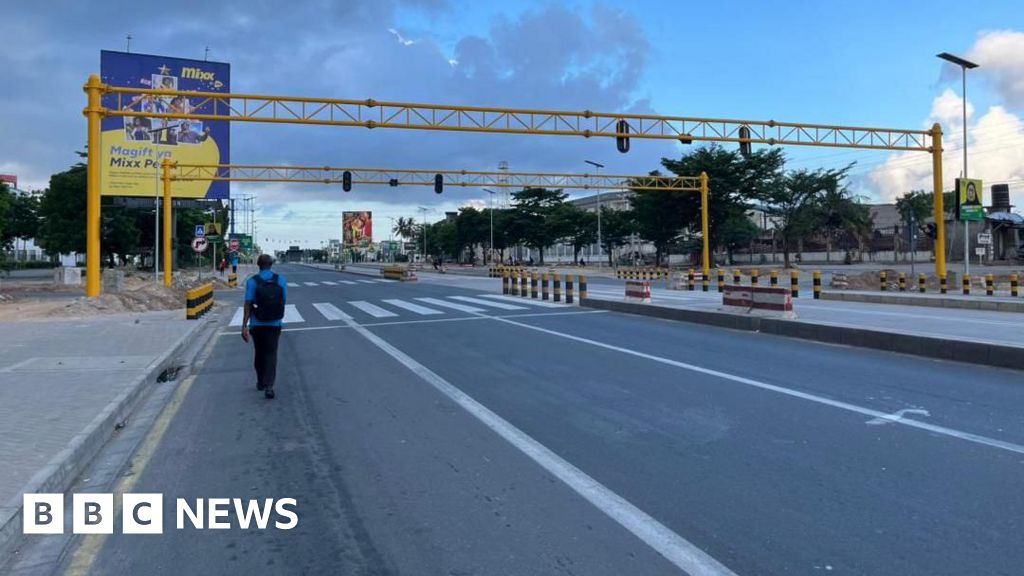
BBC World Dec 8, 12:19

Elon Musk's X bans European Commission from making ads after €120m fine

Elon Musk's X bans European Commission from making ads after €120m fine1 day agoShareSaveLaura CressTechnology reporterShareSaveGetty ImagesX has blocked the European Commission from making adverts on its platform - a move which comes a few days after it fined Elon Musk's site €120m (£105m) over its blue tick badges.Nikita Bier, who has a senior role at the social media site, accused the European Union (EU) regulator of trying to "take advantage" of "an exploit" in its advertising system to promote its post about the fine on Friday."It seems you believe that the rules should not apply to your account," he said. "Your ad account has been terminated."A European Commission spokesperson told BBC News the Commission "always uses all social media platforms in good faith".X's fine, issued on Friday, was the first under the EU's Digital Services Act.The EU regulator said the platform's blue tick system was "deceptive" because the firm was not "meaningfully verifying users"."This deception exposes users to scams, including impersonation frauds, as well as other forms of manipulation by malicious actors," it said.It claimed X was also failing to provide transparency around its adverts, and was not giving researchers access to public data.The social media platform has been given 60 days to respond to the Commission about concerns surrounding its blue checkmarks, or face extra penalties.Following the fine, Elon Musk posted on his platform to say the EU "should be abolished", and retweeted a response from another X user comparing it to fascism.US Secretary of State Marco Rubio and the Federal Communications Commission (FCC) accused the EU regulator of attacking and censoring US firms, adding, "the days of censoring Americans online are over".'Never been abused like this'The dispute originated with Mr Bier, who accused the Commission of activating a rarely-used account "to take advantage of an exploit".He claimed it had posted a link which itself deceived users - tricking them into thinking it was a video "to artificially increase its reach".He said the "exploit", which had "never been abused like this", had now been removed.Ad accounts on X are used by businesses to create and analyse paid advertising campaigns and run "promoted" posts on the site, separate from the users' X profile. In response, a European Commission spokesperson told BBC News that it was "simply using the tools that platforms themselves are making available to our corporate accounts"."⁠We expect these tools to be fully in line with the platforms' own terms and conditions, as well as with our legislative framework," it said.And it is not the first time there has been disagreement between X and global regulators.In 2024, Brazil's Supreme Court lifted a ban on X after it agreed to pay 28 million reais ($5.1m; £3.8m), and blocked accounts accused of spreading misinformation. The previous year, Australia's internet safety watchdog fined it A$610,000 ($386,000; £317,360) for failing to cooperate with a probe into anti-child abuse practices.Sign up for our Tech Decoded newsletter to follow the world's top tech stories and trends. Outside the UK? Sign up here.Social mediaElon MuskTwitter
Read full story →
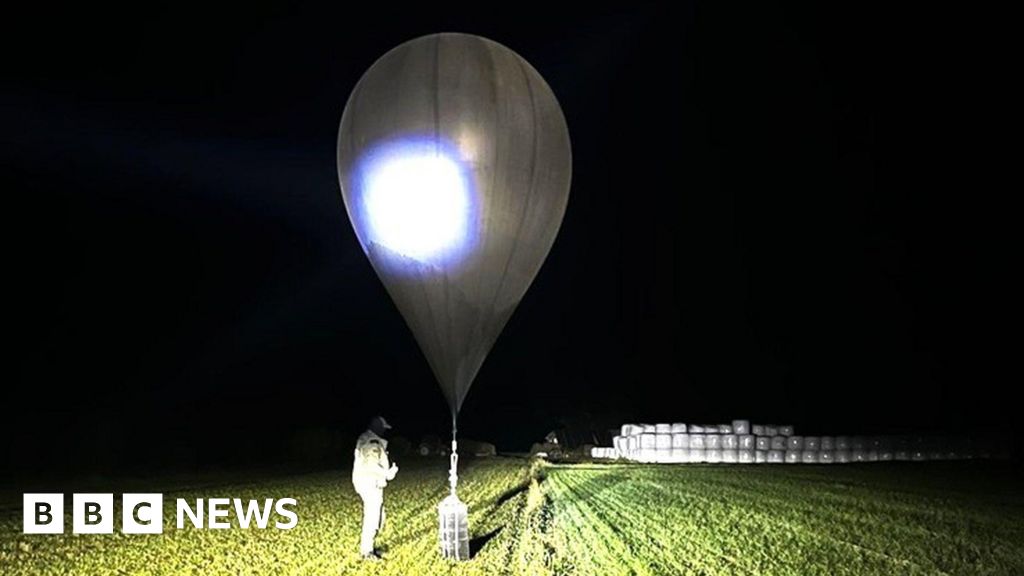
BBC World Dec 8, 08:38

Syrians share their thoughts one year on from the fall of Assad

Watch: Syrians share their thoughts one year on from the fall of AssadOne year ago today, Bashar al-Assad's 24-year rule came to an end, bringing a close to 13 years of brutal civil war.On 8 December 2024, Assad stepped down as Syria's president and fled to Russia, marking one of the most significant political shifts in the Middle East in decades.Twelve months on, the dust has begun to settle but the country is still grappling with the immense social, political and emotional toll left behind.While Syria's interim government has promised to protect all its citizens, not just the majority population of Sunni Muslims, hundreds of people from the country's Alawite and Druze minorities have been killed in sectarian attacks, including by members of the government's forces.The BBC's Middle East correspondent, Hugo Bachega, is in Syria's capital, Damascus, speaking to Syrians about how life has changed since the revolution. 1 day agoMiddle EastDamascusSyrian civil warBashar al-AssadSyriaShareSaveBethlehem Christmas tree illuminated for first time since Gaza war beganHundreds gathered in Manger Square to bask in the festivities that included music, dancing and Santas bearing sweet treats.Middle EastPopemobile becomes a mobile health clinic for Gaza childrenThe vehicle had transported the late Pope Francis on a visit to Bethlehem in 2014.Middle EastGazan babies will die without aid - UN humanitarian chiefAbout 14,000 babies will die in 48 hours if aid does not reach them, a UN humanitarian chief warns.Middle East'We want to raise our children': Life in Gaza after hostages and prisoners releasedThe United Nations Development Programme (UNDP) says over 80% of all buildings in the territory are destroyed or damaged.Middle East'Indescribable happiness' as detainees return to GazaIsrael says it has released 1,968 prisoners and detainees as part of a ceasefire deal with Hamas.Middle East'It will be a golden age for the Middle East' - TrumpThe US president was speaking at the Israeli parliament after the release of all 20 living hostages from Gaza.Middle EastWatch: Palestinian prisoners released in West Bank to rapturous crowdsIsrael is releasing 250 Palestinian prisoners as part of the ceasefire deal with Hamas.Middle EastWatch: Emotional reunions as freed hostages return to IsraelVideo released by the Israeli military shows Mor smiling and embracing two relatives. Middle EastFreed hostages shown in first video from IDFThe footage shows Alon Ohel and Guy Gilboa-Dalal speaking to Israeli soldiers after being freed from Hamas captivity in Gaza.Middle EastWatch: Emotional moment mum video calls hostage son ahead of reunionEinav Zangauker, the mother of a hostage freed from Hamas captivity and brought to Israel, spoke with him via video call for the first time in two years.Middle EastIsraeli crowds cheer at news of first hostages released in GazaLarge numbers of people packed out Hostages Square in Tel Aviv, where screens were erected to welcome home hostages freed from Hamas captivity.Middle EastWhat do people in the West Bank think about the ceasefire deal?Palestinians in the West Bank say they hope the deal could lead to a united Palestinian future. Middle EastBBC correspondents share their memories of 7 OctoberThe BBC's Middle East Correspondent Yolande Knell and Gaza Correspondent Rushdi Abualouf talk about their memories of 7 October.Middle EastHopes and fears in Gaza and Israel over potential ceasefireHopes are growing of an end to the Israel-Gaza war, but it remains to be seen if the two sides can agree a ceasefire.Middle EastWalk-out and loudspeakers near Gaza: See how Netanyahu's UN speech unfoldedDozens of officials and diplomats staged a walk-out as he took to the podium, leaving large parts of the hall empty. Middle East'Order in the hall': Dozens walk out as Netanyahu begins speech at UNDozens of people filed out of the room in protest at the United Nations General Assembly in New York.Middle EastRecognition of statehood 'rewards Palestinian people' says Iraqi presidentThe Iraqi President Abdul Latif Rashid has rejected Washington’s argument that the move is a reward for Hamas.Middle EastWatch: Keir Starmer says UK recognises Palestinian statePrime Minister Starmer says the move will "revive the hope of peace" but Israel says it is "nothing but a reward for jihadist Hamas".Middle EastIsrael demolishes more high-rise towers as Gaza City offensive ramps upBBC Verify's Merlyn Thomas looks at the latest Israeli strikes on buildings in Gaza City city over the weekend.Middle EastFootage shows second claimed attack on Greta Thunberg Gaza flotillaBBC Verify analyses footage of the suspected drone attacks and images of a device found after the incident.Middle East
Read full story →
BBC World Dec 8, 07:08

Man found guilty of Australian beach murder after hiding in India for years

Man found guilty of Australian beach murder after hiding in India for years2 days agoShareSaveTiffanie TurnbullSydneyShareSaveQueensland Police ServiceThe murder of Toyah Cordingley prompted an outpouring of grief across the state of QueenslandA former nurse has been found guilty of the high-profile murder of Toyah Cordingley, whose body was found on a popular tropical beach in Australia seven years ago.Toyah Cordingley was stabbed at least 26 times while out on a Sunday afternoon walk with her dog in October 2018.The 24-year-old's body was discovered by her father, half-buried in sand dunes on Wangetti beach between the popular tourist hotspots of Cairns and Port Douglas.Rajwinder Singh, 41, fled to India the day after Ms Cordingley's body was found and spent four years on the run. After a month-long trial, he was found guilty by a jury on Monday, eliciting cheers and tears from members of the public gathered in court.It is the second trial for Singh, after a trial in March ended in a hung jury.A health store worker and animal shelter volunteer, Ms Cordingley was well known, and well loved, by the local community and her death caused an outpouring of grief across the state of Queensland.Ms Cordingley was "repeatedly" stabbed with a sharp object and put in a shallow sandy grave with "little or no hope of surviving", the Cairns Supreme Court heard.Singh - originally from the Indian state of Punjab - had been living in Innisfail at the time of the killing, a town about two hours south of the crime scene. Detectives had quickly zeroed in on him as a suspect, but he had already flown out of the country, leaving his wife, three children and parents behind, the trial heard.GettyRajwinder Singh fled to India the day after Toyah Cordingley's body was found.Prosecutors alleged this was an indication of his guilt. Though circumstantial, their case would show the evidence pointed to Singh "and eliminated others", the court heard.That evidence included DNA recovered from a stick at the scene which was 3.8 billion times more likely to have come from Singh than a random member of the public. They also said the movements of Ms Cordingley's phone matched the movements of Singh's car in the moments after the attack.Singh will return to court for a sentencing hearing on Tuesday.Will reward help find Toyah Cordingley's killer?Jury in high-profile Australian trial visit beach where murder victim foundAustralia
Read full story →
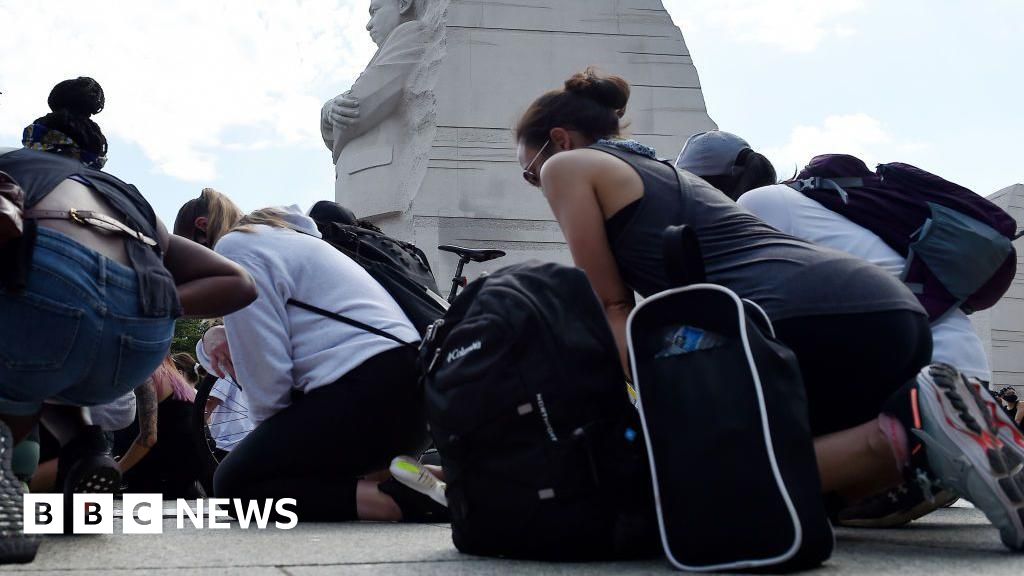
BBC World Dec 8, 06:00

Jeremy Bowen: Syria feels lighter without the Assads' crushing weight - but now there are new problems

Jeremy Bowen: Syria feels lighter without the Assads' crushing weight - but now there are new problems2 days agoShareSaveJeremy BowenInternational EditorShareSaveBBCA year ago, the war that President Bashar al-Assad seemed to have won was turned upside down.A rebel force had broken out of Idlib, a Syrian province on the border with Turkey, and was storming towards Damascus. It was led by a man known as Abu Mohammed al-Jolani, and his militia group, Hayat Tahrir al-Sham (HTS). Jolani was a nom-de-guerre, reflecting his family's roots in the Golan Heights, Syria's southern highlands, annexed by Israel after it was occupied in 1967. His real name is Ahmed al-Sharaa.One year later, he is interim president, and Bashar al-Assad is in a gilded exile in Russia. Syria is still in ruins. In every city and village I have visited this last 10 days, people were living in skeletal buildings gutted by war. But for all the new Syria's problems, it feels much lighter without the crushing, cruel weight of the Assads.Getty ImagesSyria is still in ruins. In cities and villages, many people are living in skeletal buildings gutted by warSharaa has found the going easier abroad than at home. He has won the argument with Saudi Arabia and the West that he is Syria's best chance of a stable future.In May, the Crown Prince of Saudi Arabia arranged a brief meeting between Sharaa and US President Donald Trump. Afterwards, Trump called him a "young attractive tough guy".At home, Syrians know his weaknesses and the problems Syria faces better than foreigners. Sharaa's writ does not run in the north-east, where the Kurds are in control, or parts of the south where Syrian Druze, another minority sect, want a separate state backed by their Israeli allies. On the coast Alawites – Assad's sect – fear a repeat of the massacres they suffered in March.AFP via Getty ImagesTrump called him a 'young attractive tough guy'A year ago, the new masters of Damascus, like most of the armed rebels in Syria, were Sunni Islamists. Sharaa, their leader, had a long history fighting for al-Qaeda in Iraq, where he had been imprisoned by the Americans, and then was a senior commander with the group that became Islamic State.Later, as he built his power base in Syria, he broke with and fought both IS and al-Qaeda. People who had travelled to Idlib to see him said that he had developed a much more pragmatic set of beliefs, better suited to governing Syria, with its spectrum of religious sects. Sunnis are the majority. As well as Kurds and Druze, there are Christians, many of whom find it hard to forget Sharaa's jihadist past.Image of a man who outgrew his jihadist rootsIn the first week of December last year, it was hard to believe that the HTS offensive was moving so fast. It took them three days to capture Aleppo, Syria's northern powerhouse.Compare that with the tortured years between 2012 and 2016, when the regime's army and rebel militias had fought for control of the city: that had ended in victory for Assad after Russia's president Vladimir Putin deployed his air force and artillery to add decisive firepower to the regime's ruthless tactics.When I visited the former rebel strongholds in eastern Aleppo a few weeks after they had fallen to the regime, large areas were devastated by Russian bombing. Some streets were blocked by rubble that went up to first-floor balconies.But by the end of 2024, across the country, government troops had melted away. Both reluctant conscripts and regime loyalists were no longer prepared to fight and die for a corrupt and cruel regime that repaid them with poverty and oppression.AFP via Getty ImagesOne year ago - celebrations marking the dawn of a new era for SyriaA few days after Assad fled with his family to Russia, I interviewed Syria's victorious new leader in the presidential palace.It perches high on a crag overlooking Damascus, designed as an ever-visible reminder for the city's citizens of the all-seeing power of the Assads. By then Jolani had discarded his name, along with his combat fatigues.Sharaa sat down in the chilly halls of the unheated palace wearing a smart jacket, pressed trousers and shiny black shoes. He told me that the country was exhausted by war and was not a threat to its neighbours or to the West, insisting that they would govern for all Syrians. It was a message that many Syrians and foreign governments wanted to hear.Israel dismissed it, however. And jihadist hardliners branded Sharaa as a traitor, selling out his religion and his own history.Watch: BBC speaks to Syrian rebel leader Ahmed al-SharaaI had packed in a hurry to report on a war, never expecting the regime to crumble so fast. My formal attire was back at home in London. After the interview one of his aides complained that I should have worn a suit to interview a national leader.His grumble was about more than my sartorial choices. It was the continuation of a long campaign that had started years earlier as Sharaa built up his power in Idlib. The campaign was designed to present him as a man who had outgrown his jihadist roots to become a worthy leader of all Syria, a leader the rest of the world should take seriously and treat with respect.A weakened IS in SyriaSharaa took power amid huge uncertainty about what he might do, and what might be done to him by his enemies. Among them were dark fears that jihadist extremists of the Islamic State, still existing in sleeper cells, could try to kill him, or cause chaos with mass casualty attacks in Damascus.Jihadists rage on social media about Sharaa's charm offensive in the west. After he agreed to join the US-led coalition against Islamic State, prominent voices online branded him an apostate, a Muslim who had turned on his own religion. Extremists could take that as a licence to kill.The reality is that IS in Syria is weak. Its attacks this year have been mostly against Kurdish-led forces in the north-east.That has changed in the last few weeks, leading up to the anniversary of the fall of the Assad regime.Getty ImagesThe war that President Bashar al-Assad seemed to have won was turned upside down one year agoAs security forces have raided IS cells, the jihadists have killed three soldiers and two former Assad operatives in cities controlled by the government, according to data collected by Charles Lister, a leading commentator on Syria, and published in a newsletter Syria Weekly. IS social media channels monitored by the BBC continue to tell Syrian Sunnis that Sharaa has betrayed them.Without producing any proof, they have posted claims that he has been an agent of the US and UK, working to undermine the jihadist project.Winning over Trump and the westSharaa's overtures to the west have been remarkably successful.Within two weeks of taking power in Syria, he received a delegation of senior American diplomats. Immediately, the Americans scrapped the $10 million bounty the they had put on his arrest.Since then, sanctions imposed on Assad's Syria have been steadily reduced. The most swingeing, the Caesar Act, has been suspended and could be repealed by the US Congress in the new year.A major milestone came in November when Sharaa became the first Syrian president to visit the White House.APTrump sprayed Sharaa with cologne, before presenting him with his own supply to take homeTrump's welcome in the Oval Office was relaxed. He sprayed Sharaa with Trump-branded cologne, before presenting him with his own supply to take home for his wife, jokingly asking him how many he has. "One," Sharaa answered, as he blinked away clouds of fragrance.Away from the larking around for the cameras, Saudi Arabia as well as western governments see Sharaa as the best bet – the only one – to stabilise a country that sits at the heart of the Middle East. If Syria slipped back into civil war, there would be zero chance of reducing the violent turbulence in the region.One senior western diplomat told me that the conditions for civil war still exist. That is because of the lasting scars of half a century of dictatorship and 14 years of a war that started as an uprising against the Assads' oppressive rule and turned into an increasingly sectarian fight.AFP via Getty ImagesMany western governments see Sharaa as the best bet to stabilise Syria. His minister for foreign affairs, Assad al-Shaibani is front rightSharaa is a Sunni Muslim, Syria's largest religious group. His government does not control the whole country. In the last year he has not been able to persuade, or force, Kurds in the north-east and Druze in the south to accept the authority of Damascus. On the coast, the Alawite community is nervous and restive.The Alawites are a sect that originated in Shia Islam, with their heartland on Syria's Mediterranean coast. The Assads are Alawites.The founder of the regime, Bashar's father Hafez al-Assad, built his power on the Alawite minority, around 10% of the population. Just the sound of the Alawite accent, especially coming from a man in uniform – or worse, a leather-jacketed operative from one of the regime's intelligence agencies – used to make other Syrians nervous.Syria will not recover if sectarian killing continues. Stopping more serious outbreaks of violence in the next 12 months is the government's most serious challenge.The slow pace of justiceJust before the anniversary of Assad's fall, the UN human rights office (OHCHR) expressed serious concern about the slow pace of justice. A spokesman said, "While the interim authorities have taken encouraging steps towards addressing past violations, these steps are only the beginning of what needs to be done."Some Syrians have taken matters into their own hands, along, at times, with government forces. The OHCHR said that hundreds have been killed over the past year "by the security forces and affiliated groups, elements associated with the former government, local armed groups and unidentified armed individuals".They added: "Other reported violations and abuses include sexual violence, arbitrary detentions, destruction of homes, forced evictions, and restrictions on freedoms of expression and peaceful assembly."Alawite, Druze, Christian and Bedouin communities were mainly affected by the violence, the OHCHR said, which has been fed by rising hate speech both on- and offline.Anadolu via Getty ImagesA graduation ceremony for general security personnel last monthA big risk for 2026 is a repeat of last March's sectarian violence in Alawite areas.In the security vacuum that followed the fall of the Assad regime, the new government attempted to stamp its authority on the Syrian coast with a series of arrests. An investigation by OCHCR found that "pro-former government fighters responded by capturing, killing, and injuring hundreds of interim government forces".Damascus responded harshly and lost control of militant armed factions that carried a systematic series of deadly attacks on Alawites.The UN found that some 1,400 people, predominantly civilians, were reported killed in the ensuing massacres. The vast majority were adult men, but victims included approximately 100 women, the elderly and the disabled, as well as children.The Sharaa government cooperated with the UN investigation. Some of its forces managed to rescue Alawites and it has put some of the ringleaders of the massacres on trial. ReutersThe UN found that some 1,400 people, predominantly civilians, were reported killed during sectarian violence in Alawite areas in MarchThe UN Syria Commission of Inquiry confirmed it had found no evidence the authorities had ordered the attacks. But the concern then and for the future was that the Damascus government could not control armed Sunni groups that had supposedly joined its security forces.In July in the southern province of Suweida, serious violence between Druze and Bedouin communities shook the Sharaa administration to its roots. The Druze religion developed out of Islam around a thousand years ago, and its followers, who some Muslims believe are heretics, amount to around 3% of Syria's population.When government forces entered Suweida, supposedly to restore order, they ended up fighting Druze militias. Israel, which has its own Druze community that is fiercely loyal to the Jewish state, intervened. Its airstrikes included the near destruction of the ministry of defence in Damascus. It took a rapid American intervention to force a ceasefire that stopped a spiral down into much worse violence. Tens of thousands of people were driven from their homes and remain displaced.Getty ImagesA UN inquiry found no evidence the authorities had ordered the attacks in March. But the concern was that the Damascus government could not control armed Sunni groupsThe Israel questionIt is still not clear whether Sharaa and his interim government are strong enough to survive another crisis as serious as that. Israel remains a looming and dangerous presence to Syrians.After the fall of Assad, the Israelis launched a series of major air strikes to destroy what was left of the old regime's military capacity. The IDF advanced out of the occupied Golan Heights to take control of more Syrian territory, which it still holds.The Israelis were taking advantage of the chaos in Syria to weaken a country it saw as hostile, destroying weapons it said might be turned in its direction.More from InDepthThe battle over Gaza's future: Why no-one can agree on the rebuildRussia's attacks have ramped up - Ukraine is fighting to hold on through another winterMysterious drones have been spotted at night at airports across Europe. How worried should we be?Attempts by the US to broker a security agreement between Israel and Syria have stalled in the last two months or so.Syria wants to return to an agreement originally negotiated by Henry Kissinger when he was US Secretary of State in 1974. Netanyahu wants Israel to stay in the land it seized and has demanded that Syria demilitarises a large area south of Damascus.In the last month Israel has intensified its ground incursions into Syria. Syria Weekly, which collects data on violence, calculates that there were more than twice as many as the monthly average for the rest of the year.We visited the border village of Beit Jinn, which was raided by IDF troops on 28 November. The IDF said they were arresting Sunni militants who were planning attacks. Local men fought back, wounding six Israelis as the raiding party was forced into a hurried retreat, abandoning a military vehicle that they later destroyed with an airstrike. The Israelis killed at least 13 local people and wounded dozens, state media reported.It was a sign of how hard it will be to broker a security deal between Syria and Israel. The Damascus government called it a war crime. Calls for retaliation intensified.Dia Images via Getty ImagesThe border village of Beit Jinn was raided by IDF troops on 28 NovemberIn Washington, Trump was clearly worried by the raid. He posted on his Truth Social platform that he was "very satisfied" with Sharaa's efforts at stabilising Syria.He warned that it was "very important that Israel maintain a strong and true dialogue with Syria, and that nothing takes place that will interfere with Syria's evolution into a prosperous state".In Beit Jinn I met Khalil Abu Daher on his way back from hospital, his arm in plaster after surgery for a bullet wound. He invited me to his home, which is close to where the Israelis were exchanging fire with village men.Khalil told me he was here with his family when the Israelis entered the village at 3:30 am. They tried to find a safe place."I was in my house with my children. We went from one room to another. They shot at my two daughters. One was hit, and the other died instantly. When I picked her up, I was shot in the hand."The dead girl was 17-year-old Hiba Abu Daher, who was shot in the stomach. They sheltered, Khalil said, alongside Hiba's dead body for two hours before they were rescued and taken to hospital.When I visited, Khalil's nine-year-old daughter was lying on a blanket on the sofa, recovering from surgery to take a bullet out of her hip.Khalil's nine-year-old daughter lying on the sofa, recovering from surgery to take a bullet out of her hipThe girls' mother, Umm Mohammad, sat with the women of the family, desperately worried about the future."We want peace of mind," she told me. "We want to live in our homes, and we want a clinic and medical staff because we don't have one."We also want a doctor because there isn't one in Beit Jinn, nor is there a pharmacy. We want security."'We go to sleep and wake up afraid'A year after the end of Assad's rule, Syria's new rulers have scored some important achievements. They are still in power, which was not guaranteed when they took Damascus. President Trump has become Sharaa's most important backer. Sanctions are being lifted. The economy is showing signs of life and business deals are being done, including modernising oil and gas installations and privatising the airports in Damascus and Aleppo.But deals that are in the pipeline have not yet changed the lives of most Syrians. The government has no rebuilding fund. Reconstruction is up to individuals. Sectarian tensions are unresolved and could ignite again. The US-mediated dialogue with Israel has stalled.NurPhoto via Getty ImagesThe government has no rebuilding fund. Reconstruction is up to individualsBenjamin Netanyahu insists that Damascus might demilitarise a large area of southern Syria and shows no signs of ordering the IDF to pull back. Both points amount to a major violation of Syrian sovereignty. The Beit Jinn raid makes it harder for Damascus to offer concessions.Government in Damascus is centred on Sharaa himself, assisted by the foreign minister Asaad al-Shaibani and a few trusted associates. No serious attempt seems to be happening to create an accountable framework of government.Syria without the Assad family is a better place. But Umm Mohammad summed up the feelings of far too many Syrians."The future is difficult. We have nothing, not even schools. Our children are living in hell here. There is no safety for them. How will we live?"We want safety. We go to sleep and wake up afraid."Top picture credits: AFP via Getty Images and Anadolu via Getty ImagesBBC InDepth is the home on the website and app for the best analysis, with fresh perspectives that challenge assumptions and deep reporting on the biggest issues of the day. You can sign up for notifications that will alert you whenever an InDepth story is published - click here to find out howDamascusBashar al-AssadAleppoSyria
Read full story →
BBC World Dec 8, 05:05

White South Africans divided on US refugee offer

White South Africans divided on US refugee offer2 days agoShareSaveClaire MawisaBBC Africa Eye, Free StateShareSaveBBCMarthinus has applied to move to the US fearing for his family's safetyThe 4m-high (13ft) electric steel gates, capped with spikes, creak open as Marthinus, a farmer, drives through in his pick-up truck. Cameras positioned at the entrance track his every move, while reams of barbed wire surround the farm in the rural Free State province in the heart of South Africa."It feels like a prison," he says as the gates clank shut behind him. "If they want to come and kill us they can. At least it will take them time to get to me."The fear of being attacked is very real for the white Afrikaner, who manages a farm with his wife and two young daughters. He did not want us to use his full name.His grandfather and his wife's grandfather were both murdered in farm attacks, and he lives a two-hour drive from where the body of 21-year-old farm manager Brendan Horner was discovered five years ago, tied to a pole, with a rope around his neck.Marthinus says he can't take a chance with his own family and, in February, they applied for refugee status in the US."I'm prepared to do that to get a better life for my wife and children. Because I don't want to be slaughtered and be hanged on a pole," he says."Our Afrikaner people are an endangered species."Not all white South Africans agree that they're being targeted and black farmers are also victims of the country's high crime rate.Marthinus will be leaving his farm behind if he moves to the USIt's estimated that thousands of Afrikaners - who are mostly white descendants of early European settlers - have begun the lengthy process of applying for refugee status in the US since President Donald Trump signed an executive order earlier this year, although the figures haven't been made public.Despite announcing in October that the US would reduce its yearly intake of refugees from 125,000 to 7,500, Trump has made the resettlement of Afrikaners a priority.A presidential document posted to the official daily journal of the US government stated that those accepted would "primarily" be Afrikaner South Africans and "other victims of illegal or unjust discrimination in their respective homelands".For Marthinus it's a way out."I will give my whole life just so that my wife and my kids can be safe. Living in fear, you know? Nobody deserves a life like that."Violent crime in South Africa is endemic.The latest crime figures released in November for the first quarter of 2025 show there was an average of 63 murders every day. While this was a decrease on the same period in 2024, South Africa's homicide rate remains one of the highest in the world. Farmer Thabo Makopo is also worried about being targeted by criminalsBlack farmers are also victims.On the outskirts of Ficksburg, a town at the foot of Free State's Imperani Mountain, Thabo Makopo has a small farm of 237 acres (96 hectares), where he tends sheep and cattle. Like Marthinus, the 45-year-old says farm attacks are his biggest problem."They are young men. They are armed and dangerous. Whether they will lose their life or take yours, they are going to take those livestock," he says.Thabo believes all farmers in the province, regardless of their race, are at risk of attack."It's all of us. I could be attacked today - it could happen to any of us."Police response rates to reports of crime are notoriously low, something the police here acknowledge but have said publicly that they are working on.In the meantime, South Africans are becoming increasingly dependent on private security. According to the official regulatory body for the private security sector in South Africa, there are more than 630,000 active security guards. That is more than the police and army combined.Morgan Barrett rejects the idea that there is a white genocideMany farmers, like Morgan Barrett, who is white, employ their own security guards, if they can afford it. He owns a 2,000-acre farm which has been in his family for six generations.Wrapped up in a thick jacket and hat, he climbs into his car to begin a night patrol. Between Morgan and his neighbours, they are out almost every night. Six of his cattle were stolen the previous week."You can call the police, and they may turn up two or three hours later, by which time the thieves will have run away," he says.Like Thabo, he doesn't believe he is targeted because of the colour of his skin."I don't buy that narrative that in this area the attacks are against whites only.""If they thought that the black guy had 20,000 rand ($1,200; £880) sitting in his safe, they'd attack him just as quickly as they'd attack the white guy with 20,000 [rand] in the safe."Asked about what he thinks of people claiming there is a "white genocide" in South Africa, he says he thinks they "have no real understanding of what a genocide is"."What happened in Rwanda is genocide. What is happening to white farmers is very bad, but I don't think you can call it genocide."Viewers outside the UK can watch the BBC Africa Eye documentary here on YouTube.Viewers in the UK can see more on Global Eye at 19:00 on BBC Two on MondayTrump has repeated the widely disputed claims there is a genocide against white farmers, while South African-born billionaire Elon Musk, has accused South African politicians of "actively promoting" a genocide.The government here has vehemently denied that Afrikaners and other white South Africans are being persecuted.The country does not release crime figures based on race, but in May, in order to debunk these claims, Police Minister Senzo Mchunu gave a breakdown of killings on farms.Mchunu said that between October 2024 and March 2025, there were 18 farm murders across South Africa. Sixteen of the victims were black, while two were white.Despite these statistics, the theory that white people are being persecuted for their race, once an idea confined to far-right groups in South Africa, continues to be propelled into the mainstream.Systematic racial persecution is something black people in South Africa, who make up more than 80% of the population, faced for decades.Under the apartheid system that lasted for 46 years from 1948, the white-minority government legally separated people based on the colour of their skin.It built on already existing discriminatory legislation.The right to vote, buy land and work in skilled jobs was reserved for white people. Millions of black South Africans were removed from their land and forced to live in segregated neighbourhoods where education in schools was restricted to maintain racial hierarchy.The regime was enforced through violence and repression.Even though apartheid ended in 1994, the profound racial inequalities continue to exist more than 30 years later.The post-apartheid government did introduce affirmative action policies to try and redress some of the issues, but these have been criticised by some for not being effective and introducing "race quotas".Nevertheless, 72% of private farmland is still in white hands, according to the government's 2017 Land Audit report. That's despite white people making up just 7.3% of the population.A land reform programme - based on the principle of willing-seller willing-buyer - has hardly moved the dial. A new law this year does give the state the power to expropriate some privately owned land without compensation for owners, but this is only in rare circumstances, according to legal experts who spoke to the BBC.And while white farmers own more private land than any other group in the country, victims of farm attacks span across all races. The political spotlight is on white farmers, yet crime and violence on the ground is indiscriminate.Nthabiseng Nthathakana's husband died when criminals attacked their small shopIn Meqheleng, a township on the outskirts of Ficksburg where black South Africans were forcibly relocated during the apartheid regime, Nthabiseng Nthathakana owns a small general store.On 15 January this year, there was a robbery while her husband, Thembani Ncgango, was closing up. He managed to run to a neighbour's house but his attackers threatened to kill them if they opened the door.Nthabiseng found Thembani's body on the ground outside."He had bullets everywhere and stab wounds. They had stabbed him and hit him with rocks," she says.No-one has been arrested for his murder.Nthabiseng is now the sole provider for her four children."The kids ask questions: 'Mama who killed dad?' And you don't know what to say," she says.Two hour's drive from Ficksburg, Marthinus and his family have just found out their refugee application to the US has been successful.They're busy planning the big move, waiting to hear when their flights will be allocated.He maintains white people are being persecuted in South Africa."A lot of people believe that it's a political thing to get rid of us as white farmers or white people in this country, so they can have this land for themselves and this place for themselves."I'm really grateful to be getting away from this feeling of fear. I'm thankful to almighty God for answering our prayers."Additional reporting by Isa-Lee Jacobson and Tamasin FordMore from BBC Africa Eye:Ahead of the G20, is Johannesburg's city centre in ruins?Hunting down those who kill people to sell their body parts for 'magic charms'BBC reveals horrific exploitation of children in Kenya sex tradeCaught in the crossfire - the victims of Cape Town's gang warfare‘Terrible things happened’ - inside TB Joshua’s church of horrorsGetty Images/BBCGo to BBCAfrica.com for more news from the African continent.Follow us on Twitter @BBCAfrica, on Facebook at BBC Africa or on Instagram at bbcafricaBBC Africa podcastsFocus on AfricaThis Is AfricaSouth AfricaAfrica
Read full story →
BBC World Dec 8, 00:49

Japan is facing a dementia crisis – can technology help?

Japan is facing a dementia crisis – can technology help?2 days agoShareSaveSuranjana TewariAsia Business Correspondent, TokyoShareSaveBBCScientists at Waseda University in Tokyo are developing caregiving robotsLast year, more than 18,000 older people living with dementia left their homes and went missing in Japan. Almost 500 were later found dead.Police say such cases have doubled since 2012. Elderly people aged 65 and over now make up nearly 30% of Japan's population - the second-highest proportion in the world after Monaco, according to the World Bank. The crisis is further compounded by a shrinking workforce and tight limits on foreign workers coming in to provide care.Japan's government has identified dementia as one of its most urgent policy challenges, with the Health Ministry estimating that dementia-related health and social care costs will reach 14 trillion yen ($90bn; £67bn) by 2030 - up from nine trillion yen in 2025. In its most recent strategy, the government has signalled a stronger pivot toward technology to ease the pressure.Across the country, people are adopting GPS-based systems to keep track of those who go missing.Some regions offer wearable GPS tags that can alert authorities the moment a person leaves a designated area.In some towns, convenience-store workers receive real-time notifications – a kind of community safety net that can locate a missing person within hours.Robot caregivers and AIOther technologies aim to detect dementia earlier.Fujitsu and Acer Medical's aiGait uses AI to analyse posture and walking patterns, picking up early signs of dementia – shuffling while walking, slower turns or difficulty standing – generating skeletal outlines clinicians can review during routine check-ups."Early detection of age-related diseases is key," says Hidenori Fujiwara, a Fujitsu spokesperson. "If doctors can use motion-capture data, they can intervene earlier and help people remain active for longer."Meanwhile, researchers at Waseda University are developing AIREC, a 150kg humanoid robot designed to be a "future" caregiver. It can help a person put on socks, scramble eggs and fold laundry. The scientists at Waseda University hope that in the future, AIREC will be able to change adult nappies and prevent bedsores in patients.Toshio Morita (R) works at the Restaurant of Mistaken OrdersSimilar robots are already being used in care homes to play music to residents or guide them in simple stretching exercises.They are also monitoring patients at night - placed under mattresses to track sleep and conditions - and cutting back on the need for humans doing the rounds.Although humanoid robots are being developed for the near future, Assistant Professor Tamon Miyake says the level of precision and intelligence required will take at last five years before they are safely able to interact with humans."It requires full-body sensing and adaptive understanding - how to adjust for each person and situation," he says.Emotional support is also part of the innovation drive.Poketomo, a 12cm tall robot, can be carried around in a bag or can fit into a pocket. It reminds users to take medication, tells you how to prepare in real time for the weather outside and offers conversation for those living alone, which its creators say helps to ease social isolation."We're focusing on social issues... and to use new technology to help solve those problems," Miho Kagei, development manager from Sharp told the BBC.While devices and robots offer new ways to assist, human connection remains irreplaceable."Robots should supplement, not substitute, human caregivers," Mr Miyake, the Waseda University scientist said. "While they may take over some tasks, their main role is to assist both caregivers and patients."At the Restaurant of Mistaken Orders in Sengawa, Tokyo, founded by Akiko Kanna, people stream in to be served by patients suffering from dementia.Inspired by her father's experience with the condition, Ms Kanna wanted a place where people could remain engaged and feel purposeful.Toshio Morita, one of the café's servers, uses flowers to remember which table ordered what.Despite his cognitive decline, Mr Morita enjoys the interaction. For his wife, the café provides respite and helps keep him engaged.Kanna's café illustrates why social interventions and community support remain essential. Technology can provide tools and relief, but meaningful engagement and human connection are what truly sustain people living with dementia."Honestly? I wanted a little pocket money. I like meeting all sorts of people," Mr Morita says. "Everyone's different - that's what makes it fun."Getty ImagesSharp's Poketomo robot has been designed to give companionship to patientsAdditional reporting by Jaltson Akkanath ChummarSign up for our Tech Decoded newsletter to follow the world's top tech stories and trends. Outside the UK? Sign up here.AsiaJapanTechnology
Read full story →

BBC World Dec 7, 00:17

How the solar storms that cause the Northern Lights can wreak havoc on Earth

Image source, BBC Weather Watchers / MoxleyByChris Fawkes Lead Weather PresenterPublishedWitnessing a dazzling display of the Northern Lights with vivid sheets of colour dancing across the night sky is a real treat for those lucky enough to be in the right place at just the right time. But the charged particles hurled into space by our tempestuous Sun - the particles that create the aurora borealis - can also unleash very rare but extremely disruptive events here on Earth. Electricity supplies, satellites and air travel can all be affected by the most violent solar storms.Recently 6,000 planes were grounded by Airbus, requiring a software update after one of their planes experienced a "sudden drop in altitude" in October thought to be caused by interference from intense solar radiation.This kind of disruption is something that scientists and governments are actively researching and planning for.The UK government publishes The National Risk Register, external - a list of serious hazards that could affect the country at some point in the future. It catalogues the sorts of nightmare scenarios that give politicians sleepless nights.Alongside risks such as nuclear incidents, terrorist attacks and outbreaks of disease sits the threat of severe space weather.Image source, Nasa/Goddard/SDO/PA WireImage caption, A photo of a solar flare on the left side of the Sun hurling charged particles into spaceMuch of the planning for a severe space weather is based on the Carrington Event of 1859, the most intense geomagnetic storm in recorded history. This created rapid variations in the Earth's magnetic field that caused electricity to be generated in long wires. Telegraph operators suffered electric shocks, pylons were seen to spark and some conversations between operators could carry on while batteries were disconnected. All this happened a long time ago, but with today's advanced technologies the effects of a similar event would be far more disruptive.Satellites can be badly affected. Strong solar storms can cause the Earth's atmosphere to expand out into space, which creates more drag for satellites. This can cause them to slow down enough for some to deorbit and fall back to Earth. This is not just a theoretical risk - in February 2022 a solar storm led to the loss of 38 satellites, external.Orbital changes of satellites also increase the risk of collision and space weather can also play havoc with sensitive electronics on board, causing malfunctions.Radio communications can be badly impacted with GPS systems lost or disrupted for many days - so your car sat-nav could stop working, creating gridlock in cities. Image caption, A major solar storm could cause chaos for drivers relying on sat-nav to get aroundWithout GPS a plane's ability to operate safely would be compromised – meaning air travel would be big casualty too.Space weather has already been blamed for affecting aviation electronics. On 30 October 2025 a JetBlue Airlines Airbus A320 plane flying between Cancun (Mexico) and Newark (USA) suddenly and unexpectedly lost altitude, resulting in injuries to some passengers. The plane diverted to Florida with 15 passengers taken to hospital for treatment. Airbus investigated this incident and found that space weather had corrupted data in an elevator aileron computer which sends commands to the plane's flaps. In this case it caused the plane to unexpectedly pitch down. An Emergency Airworthiness Directive, external (EAD) was issued, grounding more than 6,000 planes until a software update was installed or computers upgraded. Bad as this incident was, it could have been catastrophic.The EAD states that "in the worst-case scenario an uncommanded elevator movement may result in exceeding the aircraft's structural capability".Image source, Bill Clarke/Getty ImagesImage caption, A JetBlue Airlines Airbus A320 landing in Washington DC.Electricity grids can also fail, causing power cuts. In March 1989 the Canadian province of Quebec was hit by a power cut caused by space weather with millions left without power and heat for nine hours. In July 2012 a Carrington-class event narrowly missed hitting the planet. The sun rotates once every 25 days and by good luck the active area of the sun was not pointing straight at earth - so this dangerous space weather was flung harmlessly beyond Earth and out into space.And it is even possible that we could see something bigger.Researchers have discovered evidence in tree ring data from fossilised wood that suggests we could get events perhaps ten times larger than the Carrington event.Miyake events, named after the scientist who discovered them, could pose a threat to modern society on a scale that is hard to comprehend. With the last one identified around a thousand years ago, you could argue it's just a matter of time.More on this storyWhat are the Northern Lights?PublishedWhy the aurora dazzled in 2024 and what 2025 has in storePublishedSpace weather: The Aurora Borealis and much more. Video, 00:01:52Space weather: The Aurora Borealis and much morePublished1:52
Read full story →
BBC World Dec 6, 15:08

Bethlehem Christmas tree lights up for first time since start of Gaza war

Bethlehem Christmas tree lights up for first time since start of Gaza war3 days agoShareSaveYolande KnellMiddle East correspondent, BethlehemShareSaveWatch: Bethlehem Christmas tree lights up for first time since Gaza warFor two years during the Gaza war, all public celebrations for Christmas were cancelled in Bethlehem in the occupied West Bank – where Christians believe Jesus was born.But after the recent ceasefire, the holy city decided that this year the festivities would return as symbolised by the lighting of its traditional, giant Christmas tree in front of the historic Nativity Church."It's been a bad two years of silence; no Christmas, no jobs, no work," says Bethlehem Mayor Maher Canawati. "We're all living here from tourism and tourism was down to zero."The mayor accepts that the idea of resuming celebrations was not without controversy, as suffering continues in Gaza – including for those in its tiny Christian community, many of whom have relatives in Bethlehem."Some may say it's not appropriate and others say it's appropriate," Mr Canawati tells me. "But deep inside my heart, I felt that this was the right thing to do because Christmas should never be stopped or cancelled. This is the light of hope for us."Locals – both Christians and Muslims - pose for selfies in front of the tree hung with red and gold baubles in Manger Square. They are joined by a handful of foreign tourists.Brightly coloured lights now decorate the streets and there are signs advertising Christmas bazaars and children's parties.Mayor Maher Canawati was keen to resume Christmas celebrations in Bethlehem"We're very happy to have the tree, first thing, and to see foreigners in Bethlehem and to be able to celebrate Christmas in its true spirit," says local jewellery designer Nadya Hazboun."This is where it all started, so this is where we can send the message to the world of what really Christmas should be about. And this year, if Christmas is peaceful, then I hope it will bring a nice message for the whole world."The neighbouring towns of Beit Jala and Beit Sahour are also planning to light Christmas trees in the coming days. Hotels – which have stood largely empty for the past two years – have an influx of bookings from Palestinian citizens of Israel as well as some foreign visitors.Nadya Hazboun is very happy that the tree is back and tourists are returning to BethlehemOne tourist from Russia, Angelica, is on her second pilgrimage to the Holy Land. "I think everyone needs to come at least once in their life," she tells me."I hope a lot of people will soon come back because it's sad without many tourists. The only thing that's good is that you don't have long lines – you can come and see more things. When I came before you had to wait in line for a few hours minimum."For now, the souvenir stores dotted around Bethlehem have little business, and outside the cream-coloured walls of the Nativity Church, which date back to the Fourth Century, tour guides largely stand idle. Prior to the Gaza war, it was often crammed with people.One guide, Hamza, is worried that ongoing news coverage makes people feel the situation is still dangerous. He insists it is safe."This is a tourist city; without tourism there is no life," Hamza laments. "We hope to have people coming back like before: from Europe, the Middle East, America, Latin America and everywhere. We start with the Christmas tree lighting, and we'll wait."In the past two years, unemployment has skyrocketed in Bethlehem. Since the deadly Hamas-led attacks on southern Israel in October 2023 which triggered the war, tens of thousands of Palestinian labourers from the West Bank have been blocked from entering Israel and its settlements for work.Meanwhile, public servants have received only partial salaries by the Palestinian Authority (PA) – which governs parts of the West Bank. The PA relies on tax revenues collected by Israel which it is withholding – to the tune of $1.76 billion, according to the UN's trade and development agency.Israel says it is holding the funds because the PA makes payments to Palestinian prisoners that incentivise attacks on Israelis. The authority – which has been under international pressure to make reforms – says it has recently changed its welfare systemAlaa Salameh, owner of family-run Afteem restaurantThe grim economic outlook means that for many Palestinian Christians, even though there are now public events as well as religious services, it will be an austere Christmas.At the edge of Manger Square, a few customers are waiting to buy sizzling balls of falafel from a row of shops."We're preparing for Christmas after one of our hardest periods as Palestinians and as Christians," says Alaa Salameh, an owner of Afteem, a decades-old family restaurant which has seen its income plummet. He says that recently many families could not even afford falafel – a cheap, traditional snack."Christians will try to celebrate but according to their situation," Mr Salameh anticipates. "Someone who wants to take his kids to a festival or the theatre or whatever, he doesn't have the money to spend for this celebration."In the cave-like grotto at the base of the Nativity Church, a local woman follows a small Indian tour group, stooping down by a silver star which marks the spot where it is said that Jesus was born and lighting a candle nearby.With tensions still high across the region, people in Bethlehem say they are praying for peace – and hoping for tourists to come back to the place where it is believed Christmas began.ChristmasWest Bank
Read full story →
BBC World Dec 6, 00:57

Lured by lucrative job offers and sent to fight for Russia - Kenyans want their sons back

Lured by lucrative job offers and sent to fight for Russia - Kenyans want their sons back4 days agoShareSaveDavid WafulaBBC Newsday, NairobiShareSaveKuloba familyDavid Kuloba, seen here with a Russian fighter, thought he had secured a well-paying job as a security guardDavid Kuloba's mother warned him about going to Russia after he accepted a job as a security guard advertised by a recruitment agency in Kenya.At first the family, who live in the Kenyan capital's crowded informal settlement of Kibera had been excited when he said he had found work abroad - it sounded like a rare break.The 22-year-old had been doing casual labour in Nairobi - from selling groundnuts to construction jobs - and had long hoped to secure work in the Gulf.But when his mother asked which country he was heading to, his reply shocked her."He showed me his phone and said: 'Look, it's Russia,'" Susan Kuloba told the BBC's Newsday programme. "I told him: 'Don't you see what they show on TV about Russia? It's never good," she recalled.But her son insisted the offer was genuine, telling her he had been promised more than $7,000 (£5,250) on arrival - a life-changing sum for a young man with no stable income.Despite her protests, he travelled to Russia in August without telling her the exact date of his departure. She was shocked when he contacted her later, saying he had arrived and sending a photograph of himself in full combat uniform."He told me: 'Mum, the job we were told we came to do has been changed, but even this one is not bad,'" she said.Kuloba familyThis is David Kuloba's military ID. He told his mother his unit was ambushed within days of arriving in Russian-controlled territory Her son explained that he and some other Kenyan men had been given two weeks of combat training - and he was heading to the battle zone in Ukraine, which Russia invaded in 2022.Within days, he told her that he and others had been ambushed in an area controlled by Russian forces. She pleaded with him to come home."I said: 'David, please leave that place.' He told me: 'How can I leave? I signed a contract. Give me at least one year.'"Then I received the message I feared," Mrs Kuloba said.It was 4 October. David had sent her a voice note saying he was about to go into battle and in case he did not survive, he wanted her to have details of his Russian military ID and contract, which was written in Russian.He urged her to take the documents to the Russian embassy if anything happened to him.That was the last time she heard from him. Confused and terrified, she sought help not long after from her son's friend, who told her that he had heard David was dead."I asked his friend: 'How do you know?' He said: 'Let me give you the number of the agent who received us in Russia.'"Mrs Kuloba messaged the number - the replies came in Russian at first. When she identified herself, the person told her in English that David was missing, feared dead."I'm sorry to tell you this about your son," the agent said.Kuloba familyDavid Kuloba, who sent his family this photo of himself in battle gear, last contacted his mother on 4 OctoberShe asked for a picture of his body, or confirmation that David was in a morgue. None came.The contact told her he was "very far away", and suggested that she travel to Russia herself, or send another relative, something she said the family could not afford to do.Later, the same contact told her she was "entitled to compensation" for her son's death but again, without providing any documentation.Mrs Kuloba says she has been unable to obtain official confirmation from the Russian authorities about David. When she visited the Russian embassy in Nairobi, officials there told her they did not "associate with the army".She has no idea what to do next and is beside herself with grief: "How do we start? Because we don't know anything. He was my first-born. I depended on him."The father of another Kenyan man who went to work in Russia told the BBC he was recruited on the understanding that he was going to be driver - nothing to do with armed combat.The young man ended up being wounded in Ukraine and has been too traumatised to speak since returning home two weeks ago. The BBC has agreed not to identify him to protect his wellbeing.His father only discovered that his son had travelled to Russia after receiving word that he had been injured."He had hinted that people were going, and I discouraged him," the father told the BBC. "I was following the war from the beginning. I was not comfortable."Agents had promised around $1,500 a month, he said - "good money" for a qualified driver in Kenya.His son later told him that, like David Kuloba, he had been trained for only two weeks before being sent to the battlefield."He said he was injured in the bush and for five days he could not find treatment. He was using painkillers," the father said.He was eventually taken towards the border where he received first aid and was later transferred to St Petersburg.He had described seeing "scattered bodies of other fighters" and explained that many like him had signed one-year contracts without fully understanding the terms, the father said.Last month, Kenya's foreign minister said some 200 Kenyans were known to be fighting for Russia and acknowledged that recruitment networks were still active.This followed the news in September that a young Kenyan athlete had been captured in Ukraine, saying he had been tricked into joining the Russian army.The government now says several recruitment agencies are under investigation, and some licences have already been suspended."Some agencies lure young people with promises of large payments. The government is tracking those agencies linked to this fraud," Sylvanus Osoro, Kenya's parliamentary majority chief whip, told the BBC.Out of about 130 registered recruitment agencies in Kenya, around five had been flagged, with three already suspended and two others under investigation, he explained.Parliament's Defence and Foreign Relations Committee had taken up the matter and the agencies it summoned were expected to outline how they had recruited young people, what information they had provided and how contracts were presented, Osoro said.But families with relatives unexpectedly fighting for Russian forces have criticised the government for its slow response, saying they feel helpless.Pressed on what was being done to repatriate those who were lured into combat roles, Osoro said the process must follow diplomatic channels."A contract is signed willingly, even if they were not aware," he said. "It can only be handled diplomatically. Those engagements are happening."He said that all known cases had "been mapped" and that officials were verifying the circumstances under which contracts had been signed. But he declined to confirm how many Kenyans might have died."I wouldn't give such a report. That is not for me," he said. "What I can say is that work is in progress."Osoro said new legislation was being drafted to tighten controls on recruitment agencies, including stricter scrutiny before licences were issued and clearer distinctions between categories of work.The issue extends beyond Kenya. The authorities in several African countries have reported cases of young people being approached with offers of lucrative jobs in Russia that later led to military recruitment.Many families are reluctant to speak publicly, fearing stigma or uncertainty about the legal implications for their relatives abroad.In South Africa, it has become a major scandal after it was alleged that a daughter of former President Jacob Zuma was involved in the recruitment process. She denies any wrongdoing.Ukrainian officials have repeatedly warned that anyone fighting for Russia will be treated as an enemy combatant, and that the only safe route out is to surrender and be treated as a prisoner of war.Mrs Kuloba still has no official confirmation of her son's fate. She would like his body to be repatriated if he has died."I just feel heartbroken," she said. "He wanted to help us. He thought he was going for a better job."Additional reporting by BBC Newsday's Maureen Nyukuri in NairobiYou may also be interested in:'I'm Kenyan, don't shoot' - the athlete who says he was duped into the Russian armyEx-president's daughter resigns over allegations she duped South Africans to fight for Russia'My skin was peeling' - the African women tricked into making Russian dronesGetty Images/BBCGo to BBCAfrica.com for more news from the African continent.Follow us on Twitter @BBCAfrica, on Facebook at BBC Africa or on Instagram at bbcafricaBBC Africa podcastsFocus on AfricaThis Is AfricaWar in UkraineKenyaAfrica
Read full story →