World News

BBC World Dec 6, 00:08

What should you do if you dislike your friend's partner?

What should you do if you dislike your friend's partner?4 days agoShareSaveAnnabel RackhamCulture reporterShareSaveNetflixOn the Netflix show Selling Sunset, Chrishell Stause (right) has fallen out with Emma Hernan (left), which has started a debate about friends' partnersIt's supposed to be a TV series about Los Angeles' biggest and most beautiful homes - but the people selling them often steal the show. And the latest episodes of Netflix reality series Selling Sunset, now in its ninth season, have started a debate about how to deal with a friend's "toxic" partner.Two stars of the programme - real estate agents Chrishell Stause and Emma Hernan - have been feuding on and off-camera over Emma's boyfriend Blake Davis, who Chrishell dislikes.It boiled over during an end-of-season reunion and led to online debates about how, or even whether, you can stay friends with someone whose partner you dislike.We've spoken to a woman with first-hand experience of that dilemma and two relationship experts about what to do in this tricky situation.Friends falling outNetflixStause and Hernan became friends by starring on Selling Sunset togetherIn the show, Stause, 44, says she's never approved of Hernan's relationship with property developer Davis. She claims he "love-bombed" Hernan early in the relationship and that there were "huge red flags". Love bombing often involves someone showering a partner with gifts, attention and various promises.Hernan has told Netflix's online publication she "doesn't fault" Stause for trying to protect her but that she would like Stause to "step back and realise" her level of love and support. She has also said: "I have enjoyed my time with him... Everyone can say what they want - or they can either love him or hate him. But ultimately, it's my choice who I end up with."Some of us will have experienced similar situations first-hand. Hannah, who didn't want to give her last name, told BBC News she fell out with her long-time friend, Georgia - not her real name - over a partner.Hannah says Georgia "had a history of dating not very nice people" and moved away from London with a new partner who "proposed to her fairly quickly, I think within about a year".It felt like Georgia was "under his spell" - and then on a night out before the wedding, Hannah says, Georgia's fiancé made sexual comments about Hannah. "He came over to me and started to tell me all the things he wanted to do to me in a very graphic, explicit way."She says the experience was "very uncomfortable" and "came out of nowhere".When Hannah told Georgia about it a few days later, Georgia "tried to minimise it and was saying things like 'he does that with all his female friends' and I was trying to explain to her that he was saying really inappropriate things", Hannah says.What you can do, according to a relationship expertJames RudlandAnna Williamson says it is important to be careful when dealing with friends whose partners we don't likeRelationship expert and counsellor Anna Williamson, who works as a dating expert on Channel 4's Celebs Go Dating, says trying to support a friend if you're concerned about their partner can be difficult.It's important not to judge or tell them what to do, she says. Judging your friend can lead to them behaving defensively, but finding the line between supporting and judging is a "real challenge"."We need to be really careful to compartmentalise our own emotions and not project onto a friend, as they might not recognise they're in a toxic relationship," she tells the BBC. "They might be carrying feelings of shame and masking it."She advises starting a conversation with a friend by telling them something like: "I care about you so much but I want to check in because I've noticed that you seem really stressed lately."Williamson adds it is important to "stick to facts" and only discuss things with them that you have observed. She recommends avoiding phrases such as "I really don't like them", "I think they're toxic" or "I think they're abusive".If you still want to see your friend but don't want to be around their partner, Williamson says it can be handled delicately. "I'd say something like, 'I really care about you, but I need to take some space from your partner because I'm not comfortable with their behaviour, but I really want to spend time with you.'"It's also important to make sure you have support around you, as looking out for someone else all the time can be draining, she says.Yasmin Shaheen-Zaffar, a relationship and trauma counsellor, says that from watching Selling Sunset, some of the tension comes from cast members talking behind each other's backs and then being confronted about it later on."Avoid gossiping and talking about your friend or about their partner to others who could whip up hysteria," Shaheen-Zaffar tells the BBC. She says it's important to "keep yourself safe" because anything you say "could be taken out of context or used against you".'Try to remain civil'What if you disagree with the views or values of a friend's partner?On Selling Sunset, Stause and Hernan argue over Davis's views on politics. Davis was set to appear on the ninth season of Selling Sunset, but had his scenes cut after another storyline involving Hernan was deemed more relevant. It's not known whether any of the scenes featured disagreements between Davis and Stause, but Hernan has denied that Davis expressed "political views" in front of Stause.Shaheen-Zaffar says that ultimately you "have to respect individual people's decisions" and "try to remain civil" if you still want that friend to be part of your life. "I think we have developed a culture where if someone doesn't agree with what we think we don't like them," she says.This is not the advice she says she would give if someone is being openly "bigoted", but more if they just have views you don't agree with. "It takes a lot of self-development and digging deep to understand and accept other people's views," she adds.Whether you can cope with a friend's partner's conflicting views depends on what "aligns with your values", she says.Sometimes, a partner's actions may be too much for you - and it can break friendships entirely.After what happened with Georgia's partner, Hannah came to the conclusion that she could not see her friend again if she chose to stay with him."I told her 'I love you, the door is always open but I can't have him in my life' - he wasn't a good, healthy presence and I was very uncomfortable and frightened," Hannah adds.She says Georgia and her haven't spoken since and the friendship ending "really hurt". She and Georgia had "been friends for a long time and had a lot of fun together" - although she ultimately wouldn't have done anything differently in hindsight, she says.More weekend picksWomen are hiding their boyfriends online and there's more than one reason whyDoes your relationship have a swag gap, and is that always a bad thing?Team Conrad or Team Jeremiah? The TV love triangle that sparked a fan frenzyTelevisionReality TVNetflix
Read full story →
BBC World Dec 6, 00:07

Single women risk rape and exploitation in search for better life in Europe

Single women risk rape and exploitation in search for better life in Europe4 days agoShareSaveSofia BettizaGlobal Health Reporter in Trieste, ItalyShareSaveBBCEsther fled Lagos in 2016Esther was sleeping on the streets of Lagos when a woman approached her with the promise of a route out of Nigeria to a job and a home in Europe.She had dreamt of a new life, especially in the UK. Thrown out of a violent and abusive foster home, she had little to stay for. But when she left Lagos in 2016, crossing the desert to Libya, she had little idea of her traumatic journey ahead, forced into sex work and years of asylum claims in country after country.The majority of irregular migrants and asylum seekers are men - 70% according to the European Agency for Asylum - but the number of women like Esther, who have come to Europe to seek asylum is on the rise."We are seeing an increase in women travelling alone, both on the Mediterranean and the Balkan routes," says Irini Contogiannis from the International Rescue Committee in Italy.Its 2024 report highlighted a 250% annual rise in the number of single adult women arriving in Italy on the Balkan route, while families grew by 52%.Migrant routes are notoriously treacherous. Last year 3,419 migrant deaths or disappearances in Europe were recorded by the International Organization for Migration (IOM) - the deadliest year on record.But for women, there is the added threat of sexual violence and exploitation, which happened to Esther after she was betrayed by the woman who had promised her a better life."She locked me up in a room and brought in a man. He had sex with me, with force. I was still a virgin," Esther says. "That's what they do… travel to different villages in Nigeria to pick young girls, and bring them to Libya to become sex slaves.""Their experiences are different and often riskier," Ugochi Daniels of the IOM told the BBC. "Even women travelling in groups often lack consistent protection, exposing them to abuse by smugglers, traffickers, or other migrants."Many women are aware of the risks but go anyway, packing condoms, or even getting contraceptive devices fitted in case they are raped on the way."All migrants have to pay a smuggler," says Hermine Gbedo of the anti-trafficking network Stella Polare. "But women are often expected to offer sex as part of the payment."Ms Gbedo supports women migrants in Trieste, a port city in north-east Italy which has long been a crossroads of cultures and serves as a major entry point to the European Union for those crossing from the Balkans. From here, they continue to countries like Germany, France, and the UK.Barbara Zanon/Getty ImageMost migrants who arrive in Trieste via the Balkan route are maleAfter four months of being exploited in Libya, Esther escaped and crossed the Mediterranean in a rubber dinghy from which she was rescued by the Italian coast guard and taken to the island of Lampedusa.She claimed asylum three times before she was granted refugee status.Asylum seekers from countries viewed as safe are often rejected. At the time Italy viewed Nigeria as unsafe, but two years ago it changed that assessment as governments across Europe began tightening their rules in response to the big migrant influx into Europe of 2015-16. Voices calling for further restrictions on asylum claims have only grown louder since."It's impossible to sustain mass migration -- there is no way," says Nicola Procaccini, an MP in Giorgia Meloni's right wing government. "We can guarantee a safe life to those women who are really in danger, but not to all of them.""We have to be hard-headed," warns Rakib Ehsan at the right-leaning think tank Policy Exchange. "We need to prioritise women and girls who are at immediate risk within conflict-affected territories, where rape is being used as a weapon of war."Currently this is not happening consistently, he argues, and while he sympathises with the plight of women facing hazardous routes into Europe "the key is controlled compassion".However, many women arriving from countries considered safe claim that the abuse they suffered on account of being a woman has meant that life in their home countries has become impossible.This was the case for Nina, a 28-year-old from Kosovo."People think everything is well in Kosovo, but that's not true," she says. "Things are terrible for women."Nina says she and her sister were sexually abused by their boyfriends who forced them into sex work.A 2019 report by Europe's OSCE security organisation suggested that 54% of women in Kosovo had experienced psychological, physical or sexual violence from an intimate partner since the age of 15.Women who face persecution on the grounds of gender-based violence are entitled to asylum under the Council of Europe's Istanbul Convention, and that was backed up by a landmark ruling by the EU's top court last year. The Convention details gender-based violence as psychological, physical and sexual - and includes female genital mutilation (FGM).However, its terms are not yet applied consistently, according to charity groups."A lot of asylum officials in the field are men who are insufficiently trained to deal with such a delicate issue [as female genital mutilation] - both medically and psychologically," says Marianne Nguena Kana, Director of End FGM European Network.Many women have their asylum claims denied, she says, on the mistaken assumption that, because they have already undergone FGM, they face no further risk."We've had judges saying: 'You've already been mutilated, so it's not dangerous for you to go back to your country, because it's not like they can do it to you again," Nguena Kana says.International Rescue CommitteeThe International Rescue Committee works with migrants and refugees in ItalyWhen it comes to sexual violence, Carenza Arnold from UK charity Women for Refugee Women says it is often harder to prove, as it does not leave the same scars as physical torture - and the taboos and cultural sensitivities for women make the process even harder."Women are frequently rushed through the process and may not disclose the sexual violence they have suffered to an immigration officer they have just met," Arnold explains.Much of the violence faced by women takes place during their journey, the International Organization for Migration has told the BBC."Women usually escape sexual violence from their partners in their country of origin, and then during the journey, they experience the same again," says Ugochi Daniels.This was the case for Nina and her sister on their journey away from their abusive partners in Kosovo to a new life in Italy. Travelling with other women, they trekked through the forests of Eastern Europe trying to avoid the authorities. There, they said they were attacked by male migrants and smugglers."Even though we were up in the mountains, in the dark, you could hear the screams," Nina recalls. "The men would come up to us with a torch, shine it in our faces, pick who they wanted, and take them further into the forest."At night, I could hear my sister crying, begging for help."Nina and her sister told Italian authorities that if they returned home they would be killed by their ex-boyfriends. They were eventually granted asylum.Esther's fight for refugee status took much longer.She first claimed asylum in Italy in 2016, but after a long wait there she moved to France and then Germany, where her asylum claims were rejected as according to the EU's Dublin regulation an asylum seeker is usually expected to apply for asylum in the first EU country they enter.She was finally awarded refugee status in Italy in 2019.Almost a decade on from leaving Nigeria, she wonders if her current existence in Italy was worth the pain she endured to get there: "I don't even know the reason why I came to this place."Inside the camp at the heart of Europe’s migrant surgeWhy do Channel migrants want to come to the UK? Pope saved my children's future by bringing us to Italy, says Syrian migrantEuropeSexual violenceMigration
Read full story →
BBC World Dec 5, 20:26

From leaning glass tower to golden fish sculpture - Frank Gehry's most iconic work

From leaning glass tower to golden fish sculpture - Frank Gehry's most iconic work4 days agoShareSaveShareSaveFrank Gehry, a provocative and creative force in architecture who has died aged 96, was behind some of the world's most intriguing buildings.Tim Graham/Getty ImagesThe unmistakable curves of the Guggenheim Museum, BilbaoInsights/Universal Images Group via Getty ImagesA leaning glass tower at the Dancing House, PragueTim Graham/Getty ImagesStriking purple tones on the Hotel Marques de Riscal Bodega, SpainTim Graham/Getty ImagesTitanium and glass at the Guggenheim in BilbaoMichael Jacobs/Art in All of Us/Corbis via Getty ImagesThe oversized canopy of the Louis Vuitton Foundation in ParisPetr Svarc/UCG/Universal Images Group via Getty ImagesGehry's El Peix d'Or - or golden fish sculpture - is a must-see for visitors in BarcelonaView Pictures/Universal Images Group via Getty ImagesA golden-hour glow drenches the Walt Disney Concert Hall in CaliforniaJOKER/Walter G. Allgöwer/ullstein bild via Getty ImagesAn air of whimsy at Der Neue Zollhof in DüsseldorfView Pictures/Universal Images Group via Getty ImagesThe Walt Disney Concert Hall holds its own beside the imposing skyscrapers of central LAView Pictures/Universal Images Group via Getty ImagesLight floods into the curved form within Bilbao's GuggenheimNatalie Naccache/Bloomberg via Getty ImagesGehry's Guggenheim in Abu Dhabi while under construction in 2023Jay L. Clendenin / Los Angeles Times via Getty ImagesFrank Gehry, seen in 2022, was known for his unpredictable architectural styleLegendary architect Frank Gehry dies aged 96 CultureArchitectureArtArt and design
Read full story →
BBC World Dec 5, 19:02

Shoppers loved the 'fabric queen'. Then, order by order, her story fell apart

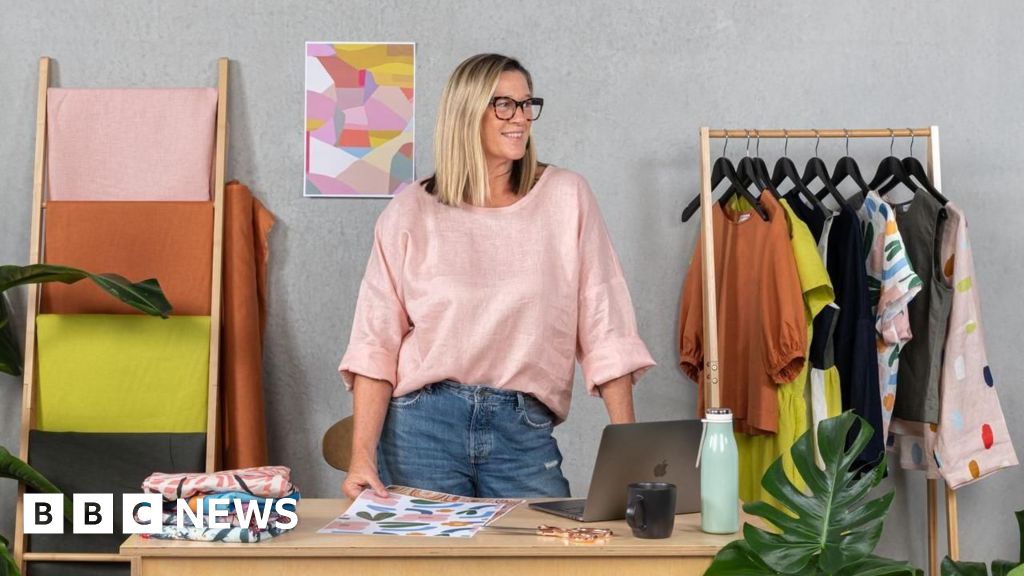
Shoppers loved the 'fabric queen'. Then, order by order, her story fell apart4 days agoShareSaveAlys DaviesShareSaveNerida HansenAt 6ft tall and plus-size, shop-bought clothes had never fitted Maree O'Connor well.Sewing offered her a solution - allowing her to use beautiful fabrics to make garments that fit just right.One day, while on the lookout for colourful prints to make new dresses, she spotted some "amazing" fabrics being sold online.Enticed by a yellow floral pattern and another black-and-white abstract design, she splashed out $600 (£450, A$900) on three orders.Months later, none had arrived.Chris Hopkins/BBCMaree O'Connor wondered if other buyers had also been waiting for their purchasesIt was October 2024, and tired of waiting, the legal studies teacher from Melbourne, Australia, decided to set up a Facebook group to try to find out if anyone else was in the same boat.The group exploded. Within two weeks it had drawn hundreds of members, according to Ms O'Connor.She had unearthed a scandal that would consume the sewing world - from China to Europe, to the US.In the group, other sewing enthusiasts detailed how they too had been waiting months - and in some cases years - for fabrics to arrive, while a supplier alleged it was owed tens of thousands of dollars.Australia's 'formidable' fabric queenAt the centre of the controversy was globally renowned designer, Nerida Hansen.Her company had grown rapidly during the pandemic, when she made a name for herself selling bold, distinctive fashion prints that set her shop apart from other retailers.Popular with sewists - as members of the sewing community call themselves - around the world, her fabrics often appeared in influencers' Instagram posts. Some newspapers had even dubbed her Australia's queen of fabrics."People liked what she was doing and producing," said UK-based artist Gabriela Larios, who has worked with Ms Hansen."My impression of her was that she was doing something different and new in Australia," added Sarah Rowe, another artist who worked with Ms Hansen. "I was impressed by her, she was formidable."The orders that never arrivedMeagan ShuptarBergen Anderson had also placed orders that never arrivedThat's exactly what excited Bergen Anderson, who ordered more than $3,300 (£2,500; A$5,000) of Ms Hansen's fabrics in 2024.She planned to use them to make clothes which she would sell through her US-based children's clothing business.But, as in Ms O'Connor's experience, none of Ms Anderson's goods arrived within the eight-week window that was promised.Instead, she received a number of what she described as "generic" emails, saying her orders were soon to be printed and shipped.She also received a number of emails from Ms Hansen saying suppliers were delayed sending goods because of events like national holidays."It was every excuse under the sun," Ms Anderson said.Frustrated and in search of answers, she too stumbled upon Ms O'Connor's Facebook group.In it, she found customers wondering where their money had gone - and why the company was still accepting orders even though so many people were saying their fabrics hadn't been printed or shipped.Suspicious of Ms Hansen's business practices, Ms O'Connor encouraged customers to request refunds and dispute transactions with their banks.Ms Anderson only managed to get two out of three payments reversed through her bank, meaning she was still $808 (£606; A$1,224) out of pocket.Meanwhile, Ms Hansen had become aware of the Facebook group and contacted Ms O'Connor asking for it to be taken down, claiming that content posted in the group was defamatory - a claim Ms O'Connor rejected.Ms O'Connor said Ms Hansen also offered her an immediate refund if she no longer wished to wait for her goods."I got my refund pretty much straight away, because she wanted to shut me up."But she decided not to shut up - or delete the group."She was just going to continue to do what she was doing, and take money from people because people were siloed right, they didn't know what was going on."In the group people were sounding alarm bells about announcements from Ms Hansen saying she was rebranding, worried about what that would mean for their undelivered orders.Ms Hansen went on to trade under a number of different business names online.'We trusted her too much'By then the group had grown beyond disgruntled customers to also include Nerida Hansen's suppliers.William Shan worked for a supplier in China that sold material to Ms Hansen's company - until, he said, the payments stopped.He was "helpless" when he "accidentally discovered" the Facebook group, he said.Mr Shan alleged Ms Hansen's firm failed to pay for two fabric shipments worth $52,000 (£39,000; A$78,700) in 2022.He said he initially felt sympathy for Ms Hansen, who he thought "may have encountered difficulties".Nerida HansenNerida Hansen made a name for herself selling bold, distinctive fashion printsHe continued supplying her in the hope it would "help her recover as soon as possible and collect her [company's] debts".But he says later orders - worth thousands of dollars - also went unpaid."We [trusted Nerida] too much. From 2020 to the end of 2021, Nerida's credit [had] been consistently good. So we did this stupid thing of continuing to supply her," Mr Shan said.Mr Shan's company said it had hired numerous lawyers to try to recover the money owed by Ms Hansen's companies, but she and her business associates stopped communicating.'A real deception'The BBC also spoke to 11 artists and illustrators who said they had not been paid for their work with Ms Hansen's brand.Clémence Albertus, based in France, said she had been approached by Ms Hansen at an art fair in Paris about collaborating on fabric prints.Given Ms Hansen was "really known for her fabrics", Ms Albertus said she chose to trust her.According to Ms Albertus, Ms Hansen wanted to license one of her designs to be sold in collaboration with a large European fabric retailer called Verhees - an opportunity Ms Albertus didn't want to miss out on.But after sending over her design, a delicate floral print, she heard nothing from Ms Hansen for months."I thought Verhees changed their mind, or that the collaboration Nerida x Verhees failed," Ms Albertus said.That was until one day in August last year, when she discovered her pattern "by chance" for sale on the Verhees website. She said it had been edited in different colourways without her consultation.VerheesMs Albertus says her pattern design was featured in the Nerida Hansen x Verhees collectionMs Albertus contacted Ms Hansen numerous times asking about royalty statements and payment details but is yet to receive any money."It has been a real deception," she said, adding that she estimates she is owed €2,000-€4,000 (£1750-3500; A$3,500-7,000).Verhees told the BBC it was not responsible for royalty payments owed to designers featured in its collection, and that Ms Hansen was solely responsible for paying these.It added it had now suspended the Nerida Hansen x Verhees collaboration.Not all the artists who spoke to the BBC felt Ms Hansen was totally to blame for the lack of payments from her businesses.Bron Alexander, based in New Zealand, said while she was owed payments for previous projects with Ms Hansen, it was her own fault she hadn't been paid for her Verhees collection work as she'd failed to provide invoices when asked by Ms Hansen's team.Ms Alexander added that she believed Ms Hansen was a "visionary" and said she had "much empathy" for her financial situation. "She only ever wanted us [artists] to be successful."Others insisted business simply wasn't Ms Hansen's forte."I truly believe she wanted the best for everybody, I truly believe she wanted to be able to deliver, I truly believe she wanted to be able to pay everybody," said Sarah Rowe, an artist who used to collaborate with Ms Hansen and is not owed any money. "I really believe she had good intentions to do all those things, and I also believe business is not her jam."Ms O'Connor felt differently."I think she's quite intentional in what she's doing," she said. "If she was a disorganised businesswoman she would have quit a while ago."Gabriela LariosGabriela Larios - whose fabric was sold in the Nerida Hansen x Verhees collection - also said she was waiting to be paid for her workAn official warningIn September 2025, nearly a year after Ms O'Connor started the Facebook group, a public warning against Ms Hansen and her businesses was issued by the Victoria state consumer rights agency.It was the result of multiple complaints - Ms O'Connor had advised fellow customers on the group to report their experiences to Australian authorities."I urge consumers to be wary about purchasing goods from Hansen's online platforms or engaging further with Hansen," Consumer Affairs Victoria (CAV) director Nicole Rich said.Chris Hopkins/BBCMs O'Connor advised fellow customers to request refunds and report Ms Hansen's businesses to authoritiesThe warning said that over the course of one year, the agency had been contacted more than 120 times by customers claiming to have lost more than $19,800 (£14,900; A$30,000) in purchases.It also said Ms Hansen had operated online under a range of business names, including Indigo Palm, The Kind Merch Co, Nerida Hansen Fabrics, Rebel Quilts, Australian Surface Art Collective, Fabric and Design and Nerida Hansen Print and Textiles. Ms Hansen said this was untrue, denying she used all of these to trade.After the warning was issued, Ms Hansen announced she would be shutting down her businesses by the end of the month to start a new career.But she continued promoting fabric sales on the website domain names Global De-stash and neridahansen.com into November.Hansen admits she failed customersIn a statement to the BBC, Ms Hansen admitted she had made some "very poor" decisions relating to her businesses, adding her actions had caused her "great shame and embarrassment".She said she had experienced financial difficulties that led to her liquidating her company in late 2022 - before opening a new one in a new name.Following that, she said she fell further behind with orders in 2024, citing supplier issues and business mismanagement, but insisted she was still in control of the situation."Even though I mismanaged orders terribly I was steering my own business wheel," she said.She had intended to have all orders completed by the end of January 2025, she said, but the creation of the Facebook group had led to a wave of refund requests and bank chargebacks being submitted all at the same time.This left the business overwhelmed, Ms Hansen said, and caused her trading account to be frozen.She still intended to fulfil every order and refund owed to her customers, she stated, but did not currently have the means to do so.She alleged the attention brought to her businesses online by Ms O'Connor's Facebook group had amounted to "horrific social media harassment" and defamation.She claimed Ms O'Connor went beyond advocating for justice online. She accused her of encouraging others in the Facebook group to engage in what she describes as amounting to "digital stalking" and "physical stalking", and that Ms O'Connor "publicly made deliberate attempts to sabotage [her] livelihood".Ms O'Connor disputed these allegations saying they were "outrageous"."Customers being persistent and demanding in terms of seeking a refund or product that the vendor had happily taken money for is not harassment," she said.Despite everything that has happened, Ms O'Connor is determined to continue sewing - though she insists she will never wear any of Nerida Hansen's designs again.She will continue to fight until Ms Hansen's businesses are shut down, she says."Some people are still awaiting justice and we hope that can be achieved."More weekend picksWe searched for a true Christmas market - and may have found oneA preacher asked me out. When I turned her down, the stalking beganFarewell regular flat white. 'Functional' coffees are hitting the high streetAustralia
Read full story →