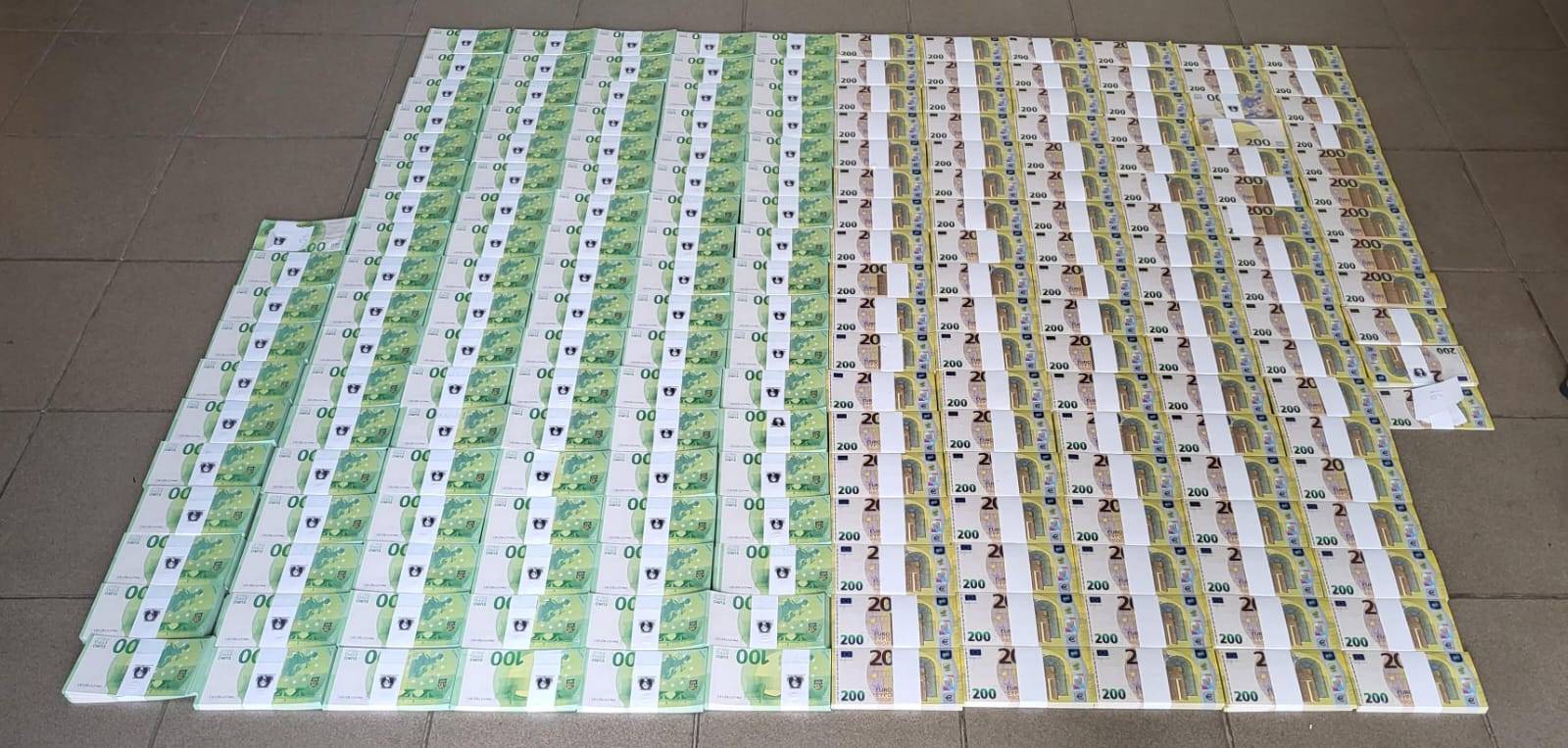
During the operational phase, 174 parcels containing counterfeit currency were seized, triggering 144 new police investigations into the criminal networks responsible. A total of 148 130 counterfeit items were intercepted, including 134 949 euro banknotes and coins, 9 186 British pounds, and 3 595 US dollars.The vast majority of the seized items were altered-design banknotes, often referred to as ‘movie money’. These reproductions have a similar shape and colour to real banknotes, but include a small disclaimer indicating they are fakes. However, these disclaimers are often overlooked, allowing criminals to pass them off as genuine currency.The most frequently seized denominations were the EUR 50 banknote, followed by the EUR 20 one.The success of Operation DECOY was built on close cooperation between customs and police agencies. Criminal organisations frequently exploit the differences between enforcement authorities, particularly when using postal services to distribute counterfeit currency. Customs officers were pivotal in detecting counterfeit banknotes and coins, while police forces conducted the necessary investigations to track down the perpetrators.This collaborative approach ensured that counterfeit currency was intercepted at key points of entry, and extensive investigations were launched to pursue the organised crime groups operating behind the scenes.The operation saw participation from Austria, Bulgaria, Croatia, the Czech Republic, France, Germany, Greece, Ireland, Italy, the Netherlands, Poland, Portugal, Romania, Serbia, Spain, Türkiye, the United Kingdom, and the United States.Europol and OLAF supported the operation by facilitating intelligence-sharing, helping to detect suspect parcels, and refining risk indicators for future efforts to combat counterfeit currency distribution.
Over EUR 14 million in counterfeit currency seized in operation targeting postal shipments