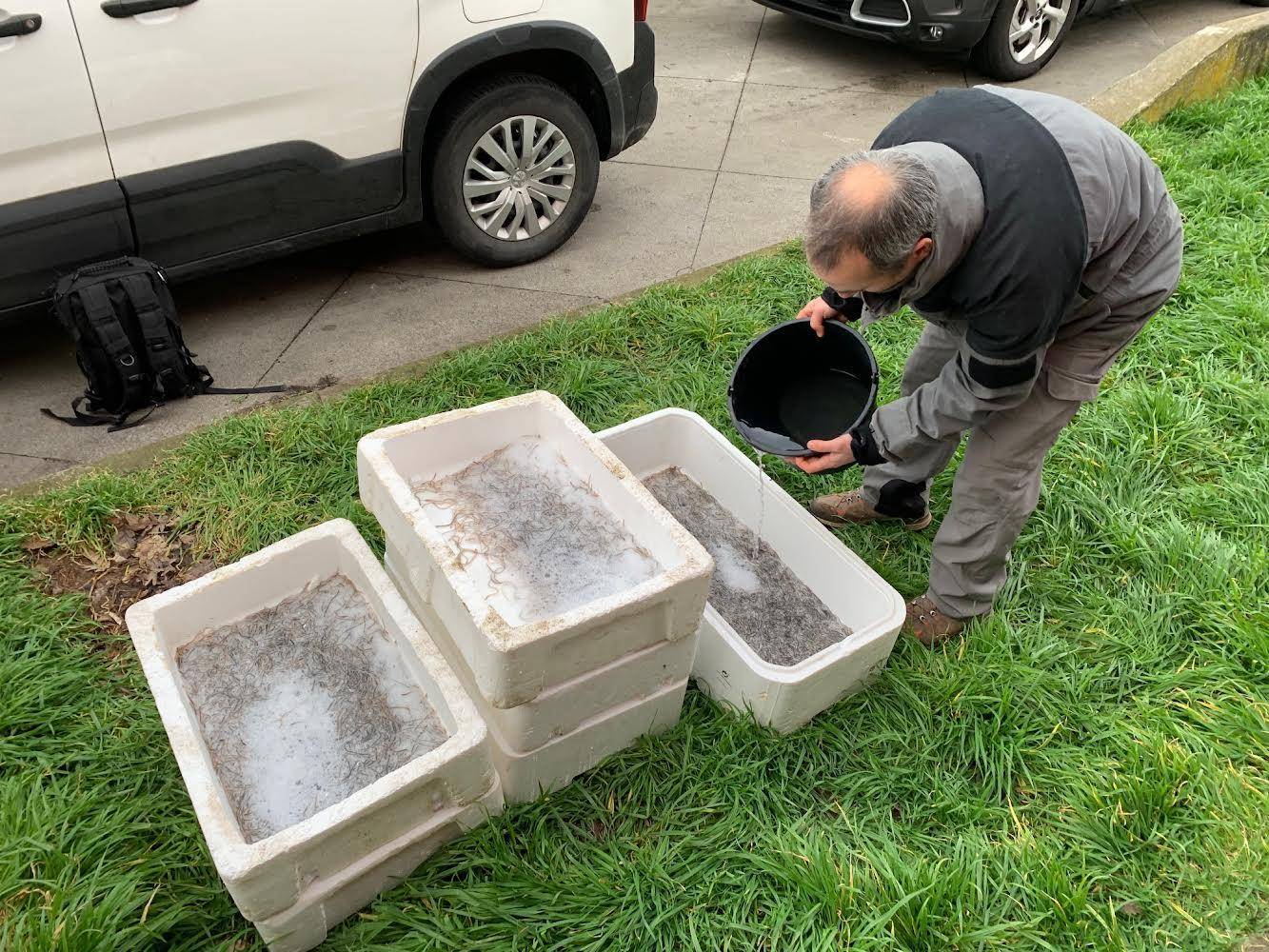
Up until now, glass eels were illegally fished in Europe, mainly in France, Spain and Portugal, and then shipped to Asia. In some cases, criminal groups even used mules to transport the eels. Smugglers are still using these routes. However, pressure from law enforcement has forced criminals to look for alternative routes and use Mauritania and Senegal as new countries of transit. Despite the criminals’ adaptability, police authorities managed to seize five tonnes of trafficked eels in the past few months only. Cooperation with the new transit countries on the newly identified smuggling routes is essential to combat organised criminal groups engaged in glass eel trafficking.Europol coordinates this global operation against criminal groups engaged in international glass eel trafficking every year. This year’s operational results led to a milestone in the fight against wildlife trafficking: there have now been 850 arrests and more than 87 tonnes of glass eels and elvers seized since these annual operations began.Protecting wildlife since 2016The trafficking of glass eels is a multifaceted crime, as it involves environmental crime, human health crime, trade in endangered species, document fraud, tax evasion, and also money laundering.Europol has provided support to investigations into glass eel smuggling since 2016. In its commitment to fight environmental crime, Europol created a specialised team in 2017, which has strengthened Europol’s capacity to support the fight against wildlife trafficking. From 2023-2024, Europol coordinated the operational activities of the investigation, hosted virtual command posts and facilitated the information exchange between the national law enforcement authorities involved. Europol’s investigators also provided analytical and forensic support.During the action days, Europol deployed experts to the hot spots to cross-check operational information in real time and provide leads to authorities in the field.More than 40 partners involvedSince its establishment, Europol has developed into a strong enabler that brings the relevant partners together. One of the Agency’s priorities for the upcoming years is to intensify the cooperation with the Schengen Associated Countries and other international organisations.On this occasion, Europol brought together more than 40 partners, including law enforcement from EU Member States and third countries, EU institutions and international organisations:EU Member States: Austria, Belgium, Bulgaria, Croatia, Cyprus, Czech Republic, Denmark, Estonia, Finland, France, Germany, Greece, Hungary, Ireland, Italy, Latvia, Malta, Netherlands, Poland, Portugal, Romania, Slovakia, Spain, Sweden.Third countries: Brazil, Colombia, Moldova, New Zealand, North Macedonia, Norway, Switzerland, Türkiye, Ukraine, US.EU Institutions: Directorate-General for Environment, Directorate-General for Health and Food Safety, Eurojust, European Anti-Fraud Office, European Fisheries Control Agency.International organisations: IFAW, Interpol, TRAFFIC.On 24 and 25 September, Europol already participated in a coordination meeting with the main stakeholders involved in the operation to kick off the period 2024-2025 and keep up with the fight against glass eel smuggling.
5 tonnes of trafficked glass eels seized and new smuggling routes identified in global operation