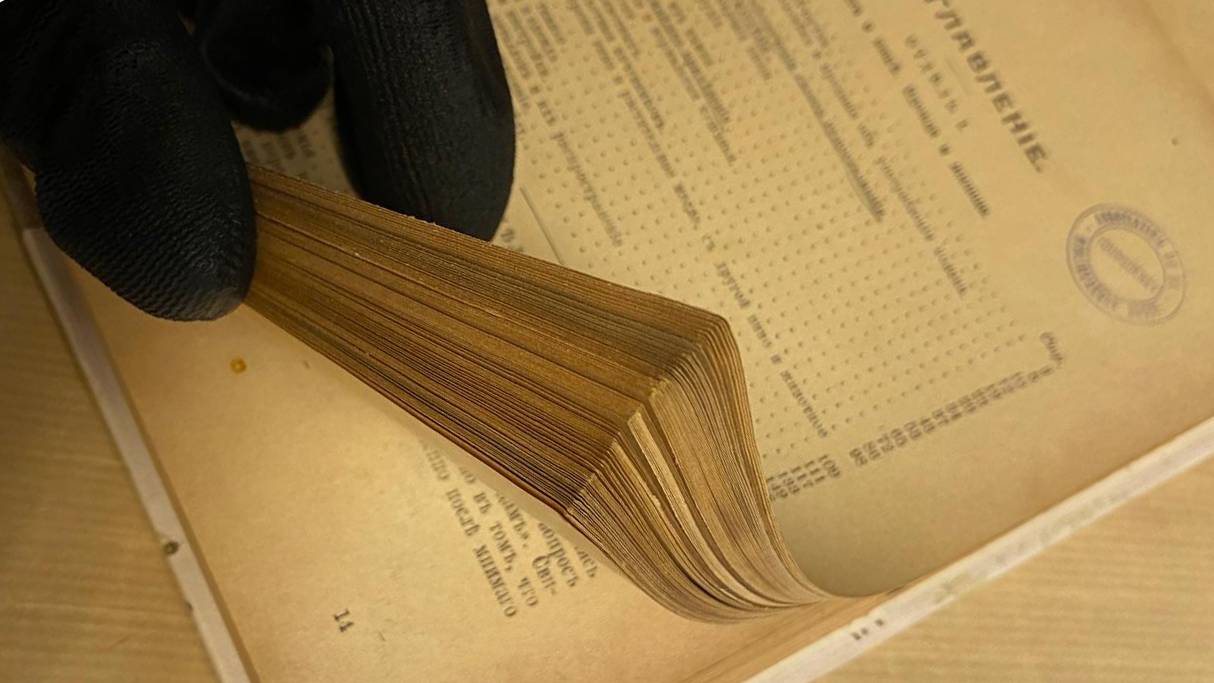
Straightforward yet sophisticated modus operandiIn 2022 and 2023, the criminal group managed to steal rare books from national and historical libraries in Czechia, Estonia, Finland, France, Germany, Latvia, Lithuania, Poland and Switzerland. The thieves would target rare books by mainly Russian writers, such as first editions authored by the likes of Alexander Pushkin or Nikolai Gogol.When visiting libraries, the thieves would request to check the antique books in person, feigning a specific such as academic interest. On this occasion, they would meticulously measure the books and take photographs before handing them back. Several days, weeks, or months later, the perpetrators would return and ask to access the same books, this time returning counterfeit versions. Experts have established that the copies were of outstanding quality.In other cases, the perpetrators relied on a more crude approach and simply broke into libraries. In preparation of the thefts, they would typically visit libraries and research the books they later stole.International effort to tackle cultural goods theftThe international investigation came to life after France sent a SIENA message to Europol, which prompted further partners to confirm they had identified similar modi operandi in their territories. With reports of rare and historical books being stolen across Europe, Europol facilitated the information exchange between the affected countries and helped to identify the main suspects, three of which were swiftly apprehended. Europol’s analysis on this case helped to create links, identify leads and even uncover a theft that had not yet been discovered. Developing this investigation from the very beginning, Europol’s experts reached out to law enforcement in the affected countries to register the stolen antiques in the relevant databases. Leading up to the action day, two operational meetings were held in the Europol headquarters in The Hague, Netherlands.In Georgia, authorities opened an investigation to identify and locate several members of the organised crime group. Supported and funded by Eurojust, a joint investigative team involving France, Georgia, Lithuania, Poland, Switzerland as well as Europol was formed. A coordination centre was established at Eurojust on the action day.Joint investigation team:France, Georgia, Lithuania, Poland, SwitzerlandParticipating countries:Czechia, Estonia, Finland, Germany, LatviaParticipating agencies:Europol, Eurojust
9 Georgian nationals arrested for stealing antique books