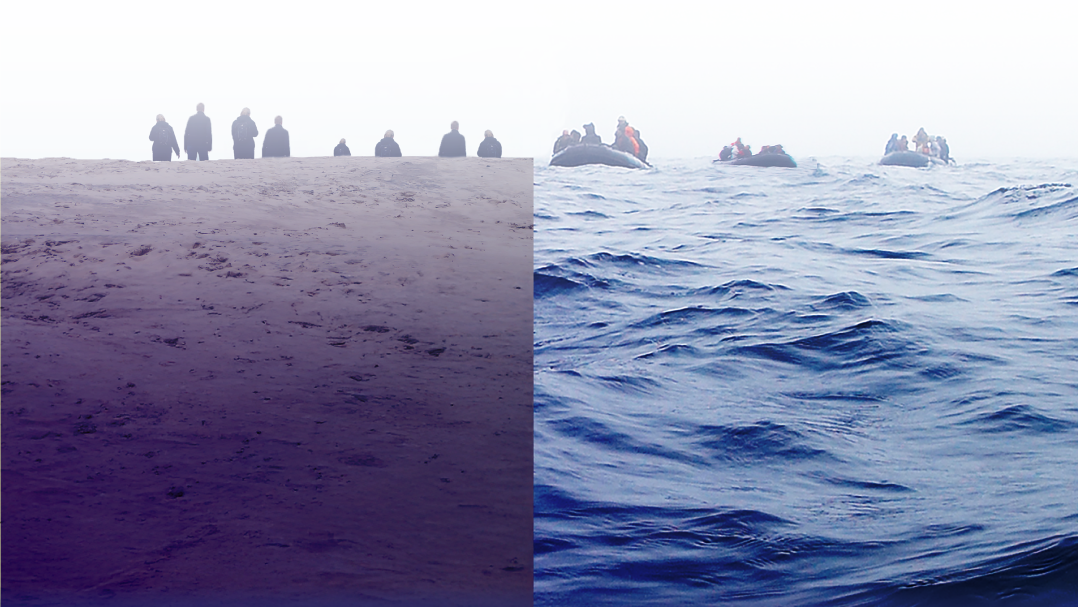
Migrant smugglers and human traffickers are exploiting today’s geopolitical instability and economic pressures with unprecedented agility. Their business models continue to evolve at high speed, allowing criminals to recruit, transport and exploit vulnerable individuals while maximising profits. As a result, the EU faces a constantly shifting and increasingly digital criminal landscape. Both crime areas have undergone significant transformation in recent years, fuelled in particular by the rapid expansion of online tools for recruitment, advertising and exploitation. These and other latest trends are outlined in the 2025 Europol’s European Migrant Smuggling Centre yearly activity overview, published today.Catherine De BolleEuropol Executive DirectorMigrant smugglers and human traffickers evolve constantly, and so must we. To succeed in our fight against these criminals, we must target the entire chain from recruitment, through transit, to exploitation and the financial flows behind it. Europol stands ready as a true operational partner: supporting investigations, facilitating intelligence sharing, and coordinating joint operations.Migrant smuggling remains driven by conflict, persecution, economic hardship and environmental changes, which motivate movements across border. These pressures make migrants highly vulnerable to criminal networks that offer “facilitation packages” including transport, guidance, accommodation in transit hubs and forged or fraudulently obtained travel documents. Human trafficking networks similarly prey on vulnerable individuals, deceiving or coercing victims with false job opportunities or safe-passage promises before subjecting them to exploitation. Victims are forced into sexual services, labour exploitation, forced criminality or other abuses for the sole profit of organised crime networks.Criminals expand online: from recruitment to controlThe digital domain is now deeply embedded across all phases of migrant smuggling and human trafficking. A rather new example is the proliferation of AI-generated advertisements and multilingual recruitment campaigns on social media. Criminal networks use encrypted communication channels for coordination and real-time logistics, while other tools enable digital surveillance to monitor and control trafficking victims. Criminal networks also make use of crypto-enabled payment systems, often integrated with hawala or informal banking structures to manage the financial flows. Criminals also increasingly mimic influencer strategies and “content-creator academies” to teach others how to lure and manipulate victims online.Violence as a business model, life threatening conditions as a realityMigrant smuggling networks increasingly make use of violence including threats, kidnappings, sexual assault and torture aimed at extorting migrants or forcing families to pay a ransom. Violence is also used to protect territorial control against rival networks and in some cases, to intimidate law enforcement. If the increase of violence is a rather new development, a component that has always been part of migrant smuggling operations is the dangerous and life-threatening conditions of transportation. Some routes are particularly dangerous.As an example, Europol supported a recent operation in Spain targeting a criminal network smuggling migrants from Senegal and Gambia to the Canary Islands. Back in October 2025, officers from the Spanish Guardia Civil arrested three suspects for arranging the extremely dangerous sea-crossing of migrants with cayucos. These small wooden boats are designed for coastal fishing and are not adapted for long-distance sea crossings. The journey from the African coasts to the Canary Islands can last up to 15 days and is notoriously perilous. In some instances, cayucos have drifted off course and been found weeks or even months later in the open Atlantic Ocean or as far away as Central America. Identifying the deceased has often proven impossible, with only documents and other papers found on board providing clues about the point of departure. This case is connected to an incident where eight people including a 14-month-old child died as a result of violence from the smugglers. In this event, 224 people were rescued by authorities from the boat that had left seven days before from Senegal.Combating migrant smuggling in 2024266cross-border operations supported.8operational taskforces supported, composed of a group of experts and resources formed to execute planned missions.48action days organised with law enforcement and judicial authorities to tackle high-risk criminal networks.over 14KSIENA messages received by Europol and accepted for further processing.791analytical and intelligence operational reports.Globalised, modular and resilient networksCriminal networks involved in human trafficking increasingly operate through dual-cell structures, with one cell responsible for recruitment and transit and another dedicated to exploitation. Many groups are also shifting towards poly-criminality, combining human trafficking with document fraud, money laundering and related offences. In some cases, the entire trafficking chain is outsourced to separate actors who provide specialised services on demand. At the same time, the spectrum of exploitation is widening, with victims being forced into sexual services, labour exploitation and various forms of street-level crime. Criminal networks are now more agile and interconnected than ever, exploiting both vulnerable individuals and structural weaknesses. Recent operations clearly illustrate how human trafficking in the EU swiftly adapts to changing conditions, responding to instability, shifting migration flows and growing digital connectivity.Combating trafficking in human beings in 2024188cross-border operations supported.3operational taskforces supported, composed of a group of experts and resources formed to execute planned missions.25action days organised with law enforcement and judicial authorities to tackle high-risk criminal networks.over 2.9KSIENA messages received by Europol and accepted for further processing.253analytical and intelligence operational reports.An activity increased by over 40%The activity overview, published today, highlights the main figures of Europol’s support to EU Member States’ investigations into migrant smuggling and human trafficking networks. One of these figures is the number of messages contributed to Europol’s databases – above 17 000, over 40% more than the information provided in 2016 (nearly 12 000 messages reported that year), outlining the increased information exchange through Europol and operational support provided by the Agency.As a response to this evolving threat landscape, the European Commission proposed in November 2023 a new regulation to reinforce Europol’s support to EU Member States’ law enforcement authorities in their fight against migrant smuggling and human trafficking. The proposal foresees strengthening the European Centre Against Migrant Smuggling, enhancing information exchange between Europol and EU Member States, reinforcing Europol’s biometric data processing capabilities and providing additional resources to help meet the growing demand for support in migrant smuggling and human trafficking investigations.Editor's note: this press release has been updated on two occasions to correct errors and reflect new figures:5 December, 16.22 CET: the month of the European Commission proposal was corrected from November 2025 to November 2023.8 December, 16:01 CET: two figures were corrected:The number of SIENA messages on trafficking in human beings was corrected from 29K to 2.9K.The total number of messages contributed to Europol’s databases was corrected from 43K to 17K.
A rapidly evolving criminal ecosystem: the escalating exploitation of vulnerable individuals