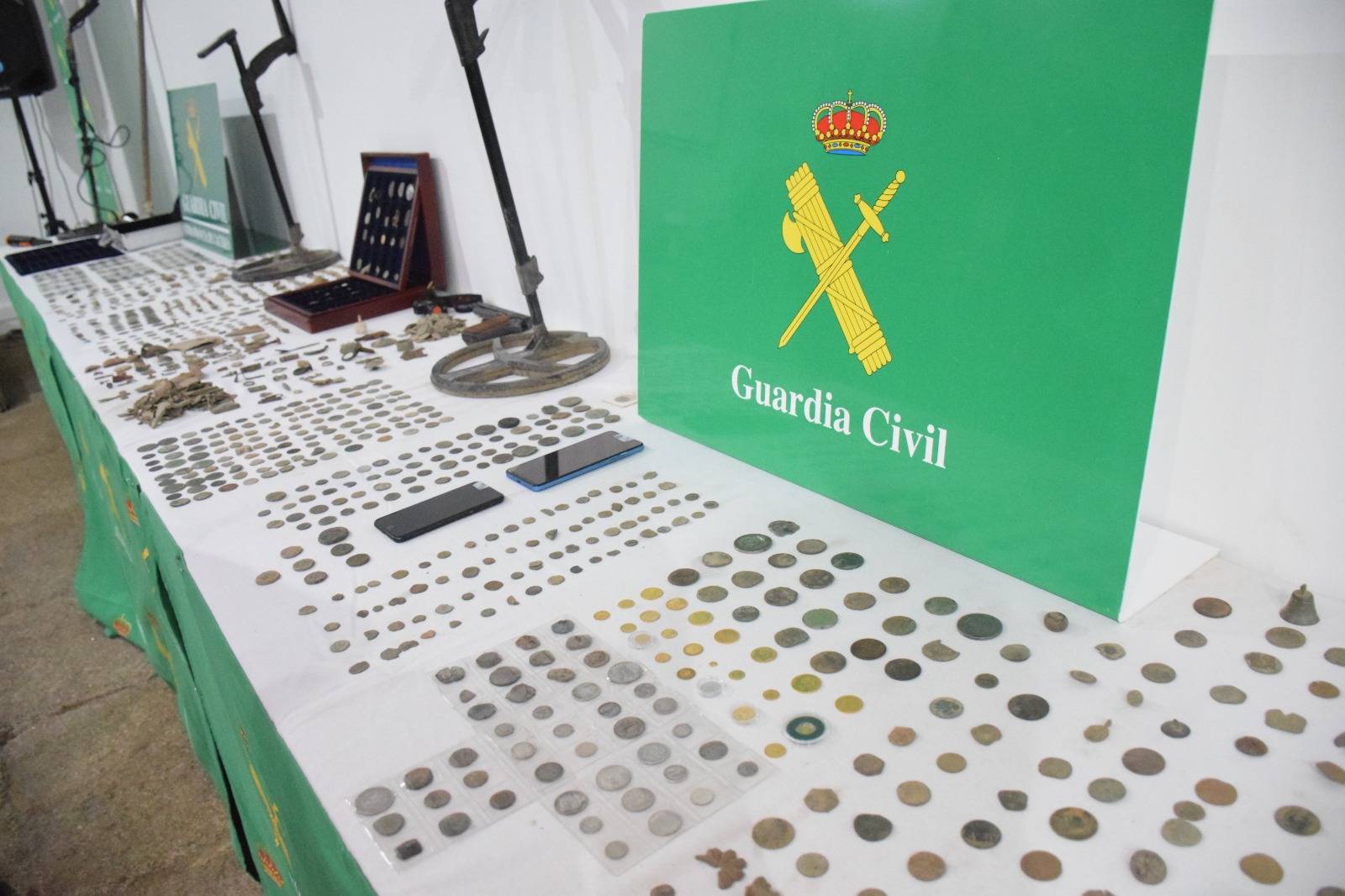
Operational highlightsThe Italian Carabinieri Command for the Protection of Cultural Heritage (TPC) in coordination with the Italian Customs and Monopolies agency (ADM) seized a painting attributed to renowned artist Jannis Kounellis during a joint border operation. Upon inspection, it was determined to be inauthentic. Had it been genuine, its estimated value would have been around EUR 100 000. In a separate investigation, the Carabinieri TPC seized more than 300 items, including coins, metal and ceramic fragments such as arrowheads and spearheads dating back to the Roman and Punic periods. These artifacts were being offered for sale on e-commerce platforms and were discovered in a private apartment.The Spanish Guardia Civil dismantled a criminal group involved in archaeological looting in the province of Cáceres. Six individuals were arrested, and three others are under investigation. During the operation authorities recovered 2 500 archaeological, primarily Roman coins minted in the Celtiberian city of Tamusia. These artifacts had been looted from protected archaeological sites in the province of Caceres using metal detectors and were being sold illegally through social media platforms.Also in Spain, the Guardia Civil intercepted a passenger attempting to fly from Palma de Mallorca to Germany carrying 55 ancient coins and a ring. A subsequent investigation led to an indictment for crimes against cultural heritage and plundering underwater wrecks and archaeological sites. In total, 64 objects of historical value and 1,576 ancient coins were confiscated.In Greece, the Department of Cultural Heritage and Antiquities of Athens recovered five Byzantine icons. Acting on intelligence and using special investigative techniques, including an undercover officer, three individuals were arrested while attempting to sell the icons for EUR 70 000.Ukrainian customs authorities seized 87 cultural goods that were being illegally transported out of the country to Poland, Moldova and Romania.Cyber patrols uncover additional casesIn addition to on-the-ground actions, dedicated cyber patrols were carried out during the operation to identify potential illicit online sales of cultural property. These virtual investigations led to the opening of new cases, demonstrating how digital platforms are quickly becoming a channel of choice by traffickers to market and sell looted artefacts. A total of 4 298 cultural goods were seized as a result of the cyber patrols.Built on international cooperationOperation Pandora IX was carried out in the framework of the European Multidisciplinary Platform Against Criminal Threats (EMPACT). Europol facilitated the exchange of information and provided analytical and operational support to the national investigations. Furthermore, one cyber patrol week was hosted by Europol.INTERPOL coordinated cross-border actions and offered tools such as its Stolen Works of Art database and on the ground ID-Art mobile application.The WCO’s secure communication tool, CENcomm, was made available to all participants while its Regional Intelligence Liaison Office for Eastern and Central Europe compiled, refined and shared information provided by Customs administrations.Since its launch in 2016, Operation Pandora has become a key global initiative to protect cultural heritage from illicit trafficking.Participating agencies:Europol, INTERPOL, World Customs Organization
80 arrests and more than 37 700 cultural goods seized in major art trafficking bust