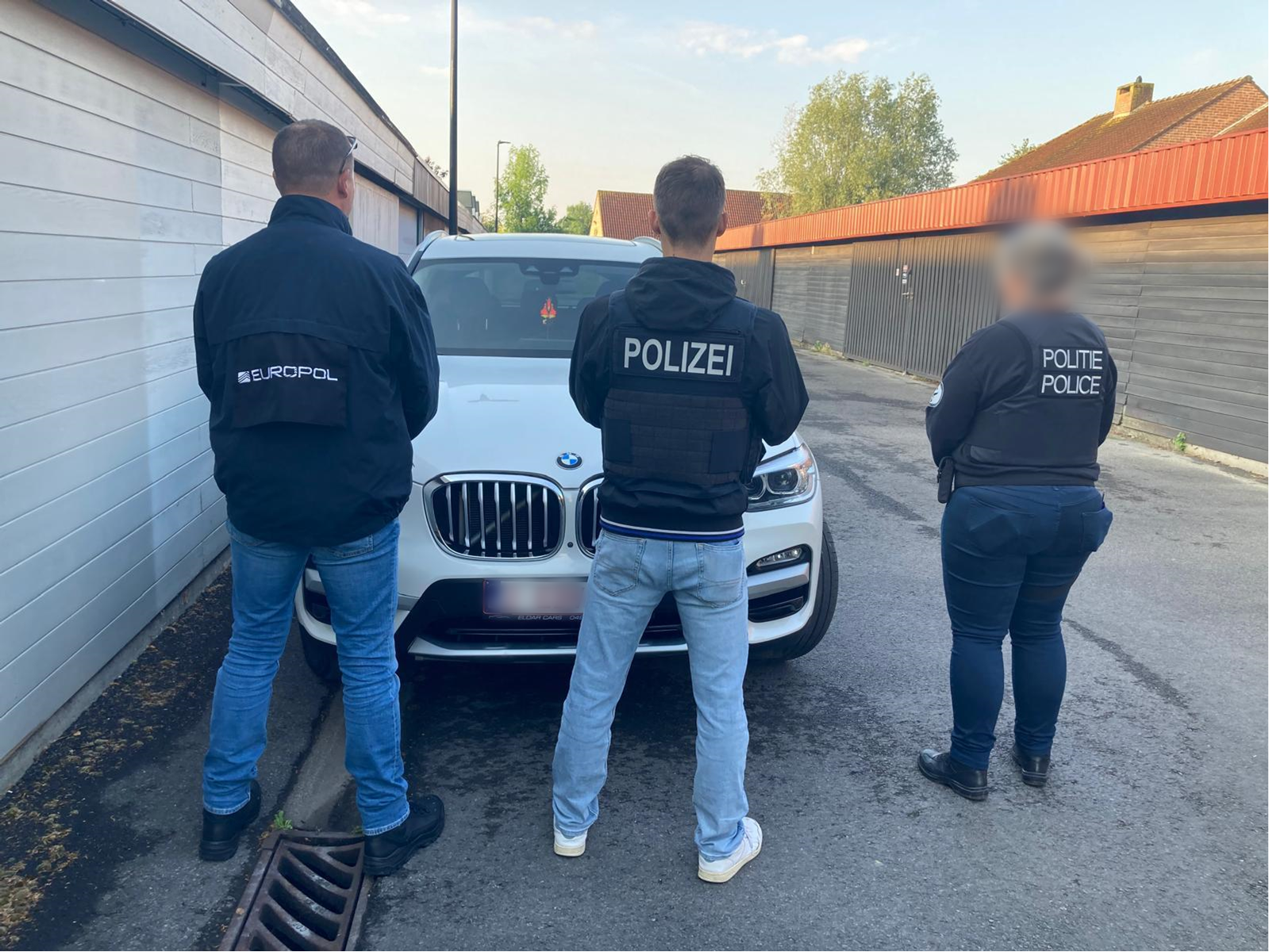
The German investigation began with a routine immigration check in September 2024. Due to irregularities in a driver's documentation, he was suspected of attempted illegal entry and taken in for questioning. Investigators then found evidence that the driver may have already smuggled and dropped off three non-EU nationals on the same day.Subsequent investigations gave reason to believe the person was part of an internationally operating migrant smuggling network. There are indications that the network might be responsible for facilitating the illegal entry to Germany and other EU Member States of up to 300 non-EU nationals between 2022 and 2024.Investigators found most of the suspected gang members to be residing in Belgium. These individuals seemed to be the link between the suspects based in Germany and Poland, mostly recruiting drivers and overseeing financial aspects of the criminal network.In Poland, the actions had focused on a related organised criminal network also involved in the smuggling of migrants from Middle Eastern countries to the EU. The Polish members of this network, which is also engaged in the production and trafficking of drugs (amphetamines, cocaine and marijuana), has connections to the Polish football hooligan scene.Members of this network would organise the smuggling of up to a dozen people at a time along the Balkan route, sometimes relying on a legally operating Polish transport company to mask their activities. Three action days spread out over several months saw the arrests of eight suspects and seizures of criminal assets.Europol’s roleEuropol and Eurojust supported this multi-stage operation from its planning stage to yesterday’s action day.Europol oversaw the coordination of the national investigations and organised multiple operational meetings. On the action days, Europol facilitated the deployment of investigators between the countries. Additionally, Europol experts were sent into the field to help national authorities cross check operational information in real time against Europol’s databases.Eurojust facilitated cross-border judicial cooperation by enabling information exchange and aligning investigative efforts.Participating countries:Austria: Federal Criminal Intelligence Service (Bundeskriminalamt), Provincial Criminal Intelligence Service of Styria (Landeskriminalamt Steiermark)Belgium: Federal Judicial Police West-Flanders Belgium (Federale Gerechtelijke Politie Provincie West-Vlaanderen)Germany: Freilassing Federal Police Inspectorate (Bundespolizeiinspektion Freilassing); Traunstein Public Prosecutor's Office (Staatsanwaltschaft Traunstein)Poland: Polish prosecutor’s office - Silesian Branch of the Department for Organised Crime and Corruption in Katowice (Prokuratura Krajowa - Śląski Wydział Zamiejscowy Departamentu do Spraw Przestępczości Zorganizowanej i Korupcji w Katowicach); Polish Police – Regional Police Headquarters in Katowice, Department for Combating Crime of Hooligans (Policja, Komenda Wojewódzka Policji w Katowicach, Wydzial Zwalczania Przestepczosci Pseudokibicow); Polish Border Guard – Karpacki Border Guard Regional Unit (Straż Graniczna, Karpacki Oddzial Straży Granicznej w Nowym Sączu)Participating agencies:Europol, Eurojust
15 migrant smugglers arrested in multi-stage operation