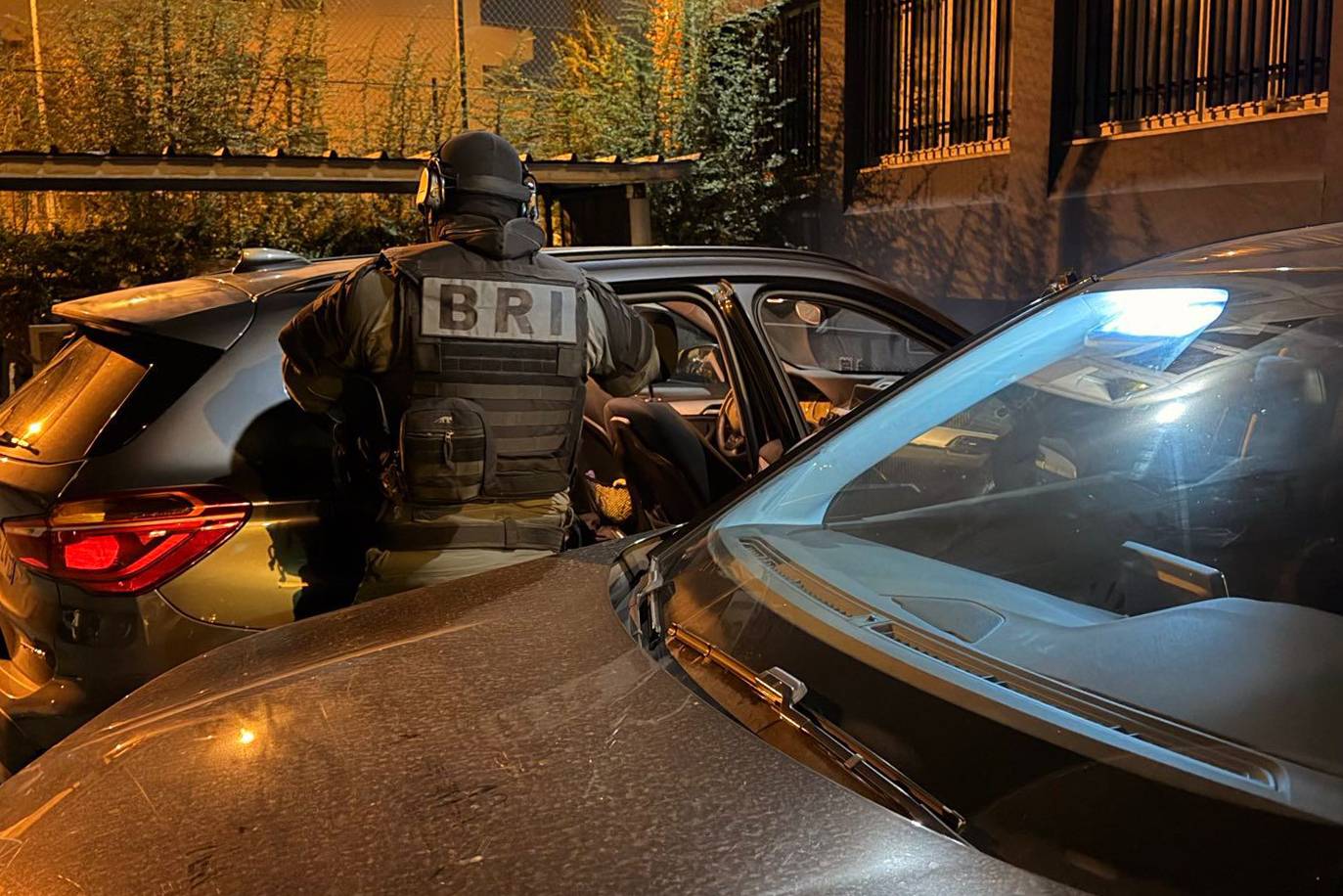
France and Spain: disrupting a Chinese human trafficking networkConducted jointly by France and Spain, this operation targeted a Chinese organised crime group involved in trafficking human beings for sexual exploitation. The network, active for several years, coordinated sexual exploitation rings across France and multiple EU Member States. Members of the network rented apartments online for short terms, a modus operandi also known as ‘sex tours’ or ‘carousels’.Action day results (4 November):15 house searches conducted (9 in Spain, 6 in France);37 victims discovered: 34 victims identified and interviewed in France across 23 locations, of whom 8 accepted social support and 5 filed a complaint; 3 victims released in Spain; 10 suspects arrested (2 in Spain, 8 in France), of whom 7 were placed in pre-trial detention;EUR in 47 000 in cash and EUR 160 000 in bank accounts seized;Seizure of 126 mobile phones, including around 50 found at sexual exploitation locations, 1 car, 40 luxury items, 5 computers, and 3 tablets.This organised criminal group used multiple recruitment methods, targeting primarily Chinese women through call centres based in China, Spain, and France. Some victims were recruited in China and aware they would engage in prostitution but were misled about the exploitative conditions awaiting them. Others believed they were travelling to the EU for legitimate work before being coerced into sexual exploitation. Additionally, the criminal network also targeted vulnerable Chinese women who already were in the EU. Many of the hundreds of victims either had legally obtained tourist or labour visas, others were smuggled into the EU. Europol supported the operation by facilitating information exchange, providing analytical support, and coordinating cross-border cooperation.Italy and Romania: disrupting a Romanian human trafficking networkConducted jointly by Italy and Romania, this operation targeted a family clan of Romanian nationals based in Iasi, Romania. The organised crime group, operating for over 20 years, exploited young girls through coercion, violence, and psychological manipulation, and had strong ties to Albanian nationals involved in sexual exploitation in Rome, Italy.Action day results (18 November):25 house searches conducted (20 in Romania, 5 in Italy);EUR 20 000 in cash seized;19 Romanian suspects arrested; two persons put under judicial control;99 bank accounts allegedly used for laundering the criminal proceeds identified;7 swords, 1 axe, and 4 guns seized;10 real estate properties, 8 luxury cars, jewellery, 45 documents, 32 mobile phones, and 3 computers seized in Romania.The criminal network used the "lover boy" technique to recruit and groom victims, often starting at a young age, and forced them into prostitution in Rome. In the investigation timeframe alone, the criminal network is suspected of having generated an estimated profit of EUR 1.7 million.Europol supported this operation by facilitating information exchange, providing analytical support, and coordinating cross-border cooperation. Eurojust coordinated the international investigation by setting up a joint investigation team and organising several meetings at the Eurojust premises in The Hague.This investigation and the action day itself have been supported by the @ON Network funded by the EU Commission, led by the Italian Antimafia Investigation Directorate (DIA), who financially supported the operational meetings and the mutual deployment of investigators.Both operations underscore the persistent threat posed by criminal networks involved in human trafficking and the importance of international cooperation in combating these crimes. Human trafficking is a serious crime that abuses people’s fundamental rights and dignity. It involves the criminal exploitation of vulnerable people for the sole purpose of economic gain. Human trafficking is a modern form of slavery. It is often international in character and its victims are of both genders, all ages, and backgrounds. That is why it is so important to look beyond the stereotypes, enabling us to identify those who may be at risk and recognise the warning signs.Participating countries and agencies:France: Office central pour la répression de la traite des êtres humains (OCRTEH); Judicial Police - Montpellier Territorial Directorate (Direction Territoriale de Police Judiciaire de Montpellier)Spain: National Police - Central Unit for Immigration Networks and Document Fraud (Policía Nacional - Unidad Central de Redes de Inmigración y Falsedades Documentales (UCRIF))Italy: Italian State Police – Mobile Squad of Rome and the Central Operational Service (Polizia di Stato – Squadra Mobile di Roma e Servizio Centrale Operativo); Public Prosecutor’s Office Rome (Procura Distrettuale di Roma)Romania: Romanian Police - Brigade for Combating Organized Crime Ia?i (Poli?iei Român? - Brigada de Combaterea Criminalit??ii Organizate Ia?i)Eurojust
29 suspects arrested in two blows against human trafficking networks