Crime News

Europol Nov 22, 14:17

17 arrested in Poland for migrant smuggling and using fake documents

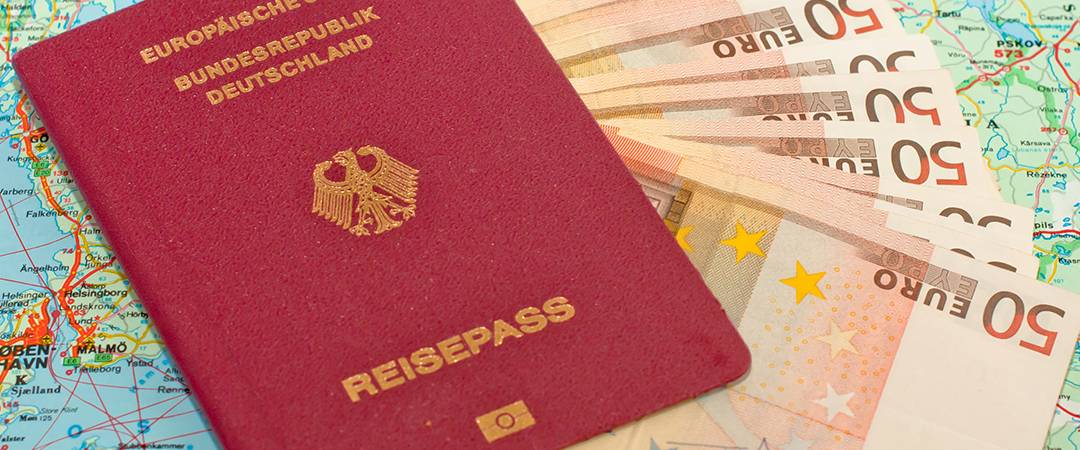
On 18 November 2019, the Polish Border Guard (Straż Graniczna) under the supervision of the regional prosecutor’ s office and supported by Europol, dismantled an organised crime group involved in migrant smuggling and facilitation of irregular migration.  On the action day, Polish law enforcement officers arrested 17 suspected members of the criminal network, four of which believed to be the main organisers are being held in custody. During the operation, electronic devices (mobile phones, computers), paper versions of documents of the registered companies used to facilitate the illegal immigration, were seized. Active since 2012, the organised crime group facilitated the illegal border crossing of citizens from eastern Europe, Asia and Africa mainly to Poland, to other EU countries and the United States.  The criminal network collaborated with criminals from different countries, primarily Russia, Turkey and Ukraine, to facilitate the entry of the non-EU nationals to Poland with visas based on fake employment documentation. Once in the EU, they were able to move freely and work illegally in other EU countries, mainly Germany, the Netherlands and Sweden.  The criminal group facilitated the illegal border crossing of at least 13 019 non-EU citizens and earned more than €2.3 million from their illegal activity.  Europol supported the investigation with analytical, operational and coordination support. During the operation, Europol deployed an expert on-the-spot to cross-check operational information in real-time against its databases and provided technical expertise for the analysis of the seized devices.   
Read full story →
Europol Nov 22, 13:02

Referral Action Day against Islamic State online terrorist propaganda

Between 21-22 November 2019, the 16th Referral Action Day coordinated by the European Union Internet Referral Unit took place at Europol’s headquarters in The Hague. This action was joined by a total of 9 online service providers, including Telegram, Google, Files.fm, Twitter and Instagram.   This process is based on the referral by Europol of branded terrorist propaganda to online service platforms who are responsible for evaluating it to establish any potential breach of their terms of service. Among the items referred were propaganda videos, publications, and social media accounts supporting terrorism and violent extremism.    Whilst Google and Instagram deployed resilience mechanisms across their services, Telegram was the online service provider receiving most of the referral requests during this Action Day. As a result, a significant portion of key actors within the IS network on Telegram was pushed away from the platform.    In the past year and a half, Telegram has also put forth considerable effort to root out the abusers of the platform by both bolstering its technical capacity in countering malicious content and by establishing a close partnership with Europol.    Additionally, representatives from Google and YouTube came to Europol’s headquarters for an expert exchange, continuing the companies' ongoing cooperation in tackling terrorism online since the creation of the EU IRU.   
Read full story →
Europol Nov 22, 11:00

Coming soon: 2019 EU Drug Markets Report from Europol and the EMCDDA

Drug trafficking is a highly profitable commercial activity and remains a core business for organised crime groups across Europe today. Understanding the reality of the European drug market requires a holistic approach, following the supply chain from production and trafficking to distribution and sales. Taking such an approach, two EU agencies — the European Monitoring Centre for Drugs and Drug Addiction (EMCDDA) and Europol — have joined forces to provide their third in-depth overview of the European illicit drug market in the 2019 EU Drug Markets Report. To be launched in Brussels on 26 November, this strategic and action-oriented analysis combines data from the EMCDDA’s drug monitoring system with Europol’s operational intelligence on organised crime. Press conference will be held on 26 November 2019 in Brussels RSVP and embargoed copies: press@emcdda.europa.eu The EU Drug Markets Report is published every three years.  
Read full story →
Europol Nov 21, 10:55

Capacity building to tackle audiovisual piracy

During a two-day seminar at Eurojust in The Hague, over 70 law enforcement officers and prosecutors from EU Member States and officers from Europol and Eurojust joined forces to improve the sharing of expertise and information to tackle audiovisual piracy. The experts discussed how to identify a pirate service, the challenges faced in investigating piracy, the importance of knowledge sharing and the collaboration with private sector, as well as the link of audiovisual piracy to organised crime.  In June 2019, police officers from the Bulgarian Ministry of Interior, under the supervision of the Bulgarian Supreme Prosecutor’s Office of Cassation, with the collaboration of Europol and the Audiovisual Anti-Piracy Alliance (AAPA) carried out a joint action against five cable operators in Bulgaria. They were illegally intercepting and distributing premium TV channels (both foreign and Bulgarian), the entire illegal hardware infrastructure used for the criminal activity was seized during the house searches.  
Read full story →
Europol Nov 21, 10:36

354 arrests in cross-border bust of Russian-speaking crime gangs

From 1 January 2017 to 30 September 2019, the German State Criminal Police Office (Landeskriminalamt, LKA) of Berlin in cooperation with LKA Brandenburg managed project LIMES, an EU-funded project from the Internal Security Fund. The international operation targeted international motor vehicle thefts and Russian-speaking organised crime groups. The LKA offices of Saxony-Anhalt and Saxony, and Estonia, Latvia, Lithuania, Sweden and Europol all contributed to the project. Thanks to this cooperation, it was possible to build and strengthen a network of experts, and exchange experience and information. They focused on supporting the international investigations both financially and technically and identifying criminal groups, structures and new phenomena.  Europol supported the planning and drafting of the project plan (Analysis Projects FURTUM and EEOC), networking with potential partners and taking the advisory role on specific matters. Europol also carried out tailored analysis, hosted several operational meetings, took part in several action days and deployed a mobile office on-the-spot. The results: 94 cross-border investigations;  354 arrests; 47 convictions with sentences up to 8 years imprisonment; 94 people from organised crime groups in custody; €59 759 800 euros in damage, €4 227 839 euros in seized assets; 685 vehicles and lorries worth a total of €15 million secured;  10 weapons and tens of kilos of narcotics confiscated.  
Read full story →
Europol Nov 20, 12:00

Nine arrested and three detained in Romania and the UK in sexual exploitation network bust

On 19 November, the United Kingdom’s South Yorkshire Police and the Romanian National Police (Poliția Română), supported by Europol and Eurojust, dismantled an organised crime group involved in human trafficking for sexual exploitation. On the action day, law enforcement officers from Romania and the UK carried out 11 house searched (5 in Romania and 6 in the UK). The operation led to the arrests of nine suspected members of the organised crime group in the UK and the detention of three individuals in Romania. Police further identified eight potential victims of human trafficking, all women aged between 18 and 30 years old.   The criminal group, which had been active since 2017, recruited its victims from economically vulnerable regions in Romania. The victims were promised considerable material gains. The most frequent recruitment method was the “loverboy” method – a way to ensure the emotional dependence of the young women on the members of the criminal group. Many members of the group were actually in a relationship with the sexually exploited victims.  Europol provided operational and analytical support and facilitated the information exchange from the beginning of the investigation. On the action day, Europol deployed an expert to cross-check real-time operational information against Europol’s databases and to facilitate the coordination of the operational activities through the Europol’s Virtual Command Post application. Watch operation video.  
Read full story →
Europol Nov 20, 11:00

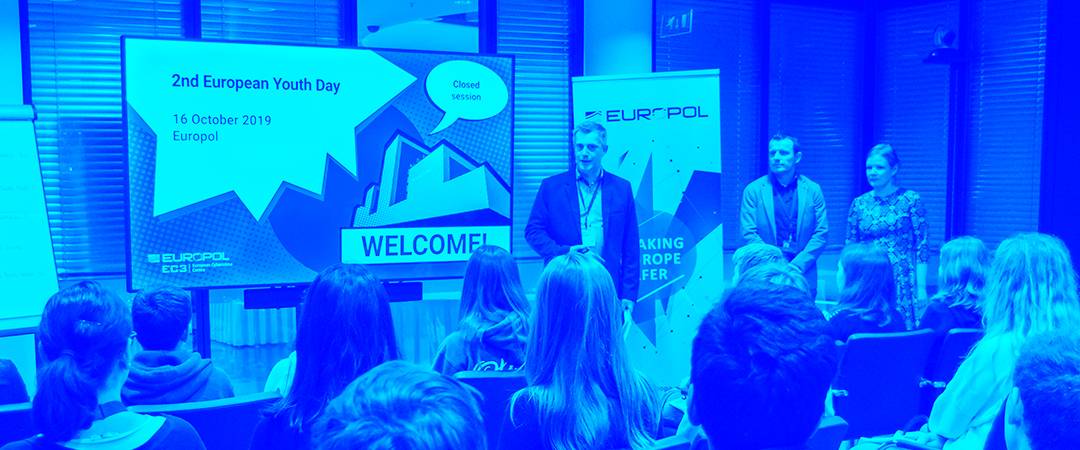
Europol hosts second European Youth Day at its headquarters

Europol’s European Cybercrime Centre (EC3) joined the celebrations this year by organising earlier in October the second European Youth Day, the theme of which was “Say No! It’s your life!”.  Building up on the work initiated last year, this event brought together at Europol’s headquarters for a half-day 19 students aged 13 to 15 from the European School  The Hague (ESH) and the International School of The Hague (ISH). This event offered a unique platform for youngsters to make their voices heard on online and offline safety issues. The students were divided in small groups, allowing for an interactive exchange with Europol’s experts on the following two topics: The production of self-generated material (nude pictures and videos) Online safety and respectful behaviour The group was also briefed on the law enforcement reaction to their 2019 Call for action, a document distributed to all EU Member States and partner organisations, in order to amplify the voices of the youth. Read the law enforcement feedback. Background  The number of young people accessing the internet has grown significantly in the past years. As stated by the Internet organised Crime Threat Assessment (IOCTA) 2019, the online solicitation of children for sexual purposes remains a serious threat. As offenders become more aware of anonymisation techniques, law enforcement authorities and industry partners fighting these disturbing crimes continue to face considerable challenges. The European law enforcement community launched back in 2017 a campaign, #SayNO to online sexual coercion and extortion, coordinated by Europol, to give advice to youngsters who have been, or are likely to be targeted, and to strengthen reporting and support mechanisms. The campaign includes a short film, available in all EU languages, which helps people to recognise a potential sextortion approach, provides online advice and highlights the importance of reporting the crime to the competent national authorities. This awareness-raising campaign has been a resounding success throughout Europe. Earlier this month, the #SayNO video in Czech language hit over 400 000 views on Youtube. As a result, the National Organised Crime Agency of the Czech Police was awarded an award by the Ministry of Interior of the Czech Republic for the successful implementation at the national level of this campaign.  Read more about the #SayNO campaign.
Read full story →
Europol Nov 18, 13:00

23 arrests and around 10 000 cultural items seized in an operation targeting Italian archaeological trafficking

On 18 November 2019, an international police operation involving over 350 police officers, supported by Europol (within the framework of EMPACT) and Eurojust, dismantled an international organised crime group involved in large-scale trafficking of looted archaeological items resulting in the arrest of 23 individuals, 80 house searches, and the seizure of around 10 000 cultural items. Operation Achei, was led by the Italian Carabinieri Department for the Protection of Cultural Heritage (Carabinieri) supported by Europol and Eurojust, the French OCBC (Office central de lutte contre le trafic de biens culturels), the German Bavarian LKA (Bayerisches Landeskriminalamt), the Serbian Criminal Investigations Directorate and the British Metropolitan Police Service – London. The investigation began in 2017 to fight the looting of archaeological sites in Calabria, southern Italy where the cultural heritage includes important traces from the Greek and Roman period.  Significant damage to Italian heritage The investigations revealed that the illegal excavations were managed by a well-structured organised crime group able to carry out all phases of the trafficking. The different rings of the network, led by two Calabrians living in the province of Crotone, included looters, fences, intermediaries and mules operating from different Italian regions. The key facilitators were also acting from Djion, Munich, London and Vršac coordinating the supply chain. The damage caused to the Italian cultural heritage by this criminal group is very significant as it the criminals were looting archaeological sites for many years. Europol Analysis Project FURTUM supported the investigation by coordinating the information exchange, holding several operational meetings, preparing the action day and providing on-the-spot analytical support in Italy to cross-check operational information against Europol’s databases. Eurojust supported the execution of the European Investigation Orders and arranged a coordination centre to follow the action in real-time.    In 2010 the European Union set up a four-year Policy Cycle to ensure greater continuity in the fight against serious international and organised crime. In March 2017 the Council of the EU decided to continue the EU Policy Cycle for organised and serious international crime for the 2018 - 2021 period. This multiannual Policy Cycle aims to tackle the most significant threats posed by organised and serious international crime to the EU in a coherent and methodological manner. This is achieved by improving and strengthening cooperation between the relevant services of EU Member States, institutions and agencies, as well as non-EU countries and organisations, including the private sector where relevant. Organised property crime is one of the priorities for the Policy Cycle.
Read full story →
Europol Nov 18, 11:09

10 individuals who robbed moving lorries in France arrested with help of Europol

On 6 November 2019, an international police operation, known as Operation Diligence, supported by Europol, led to the arrest of 10 suspects believed to be behind a number of cargo thefts from moving lorries in France. The operation led by the French Gendarmerie (Office central de lutte contre la délinquance itinérante) in close cooperation with Romania and Europol started earlier this year. At least 21 instances of cargo thefts from moving lorries have been linked to this organised group, comprised of Romania nationals, amounting to a total damage of over €3,5 million. The criminal group was stealing electronics, cosmetics, perfumes, expensive clothes and bags from delivery lorries. The 10 suspects were arrested red handed during the action day in Saran, France, thanks to the excellent cooperation and information exchange of the involved countries and Europol.  Europol’s Analysis Project FURTUM was involved and supported the operation with: Extensive information exchange  Analytical support  Supporting operational meetings   
Read full story →
Europol Nov 15, 11:00

1 176 kg of cocaine hidden in bananas seized in Italy

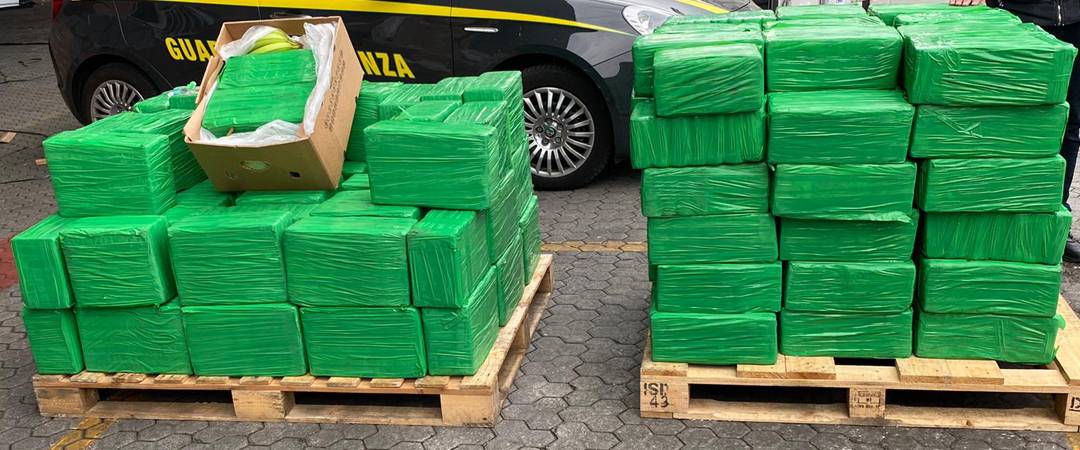
On Monday 11 November 2019, the Italian Carabinieri (Carabinieri) and the Italian Finance Corps (Guardia di Finanza), supported by Italian Customs, Europol and Frontex, seized 1 176 kg of cocaine worth €250 million in the Port of Gioia Tauro, southwest Italy. The shipping documents show that the container was destined for Germany.  The seized cocaine was hidden in 144 packages within a case of bananas stored in a refrigerated container. The drugs were detected after the Italian Finance Corps and Customs authorities performed an extensive risk analysis to several vessels and containers arriving at the port of Gioia Tauro. The case was then referred to the Antimafia District Prosecution Office. This seizure confirms the port of Gioia Tauro as a major hub for the transit of cocaine trafficked to western Europe. This is also shown in other recent Italian investigations against ‘Ndrangheta criminal structures active in the transnational cocaine trafficking. In the past 12 months alone, the Italian Finance Corps and the Customs Agency have seized over 2.5 tonnes of cocaine passing through this port. Europol and Frontex provided technical and operational assistance. The early deployment on-the-spot of Europol experts facilitated the immediate exchange of information with other potentially affected EU Member States.  
Read full story →
Europol Nov 14, 12:00

Large network smuggling migrants in lorries dismantled in Germany and Romania

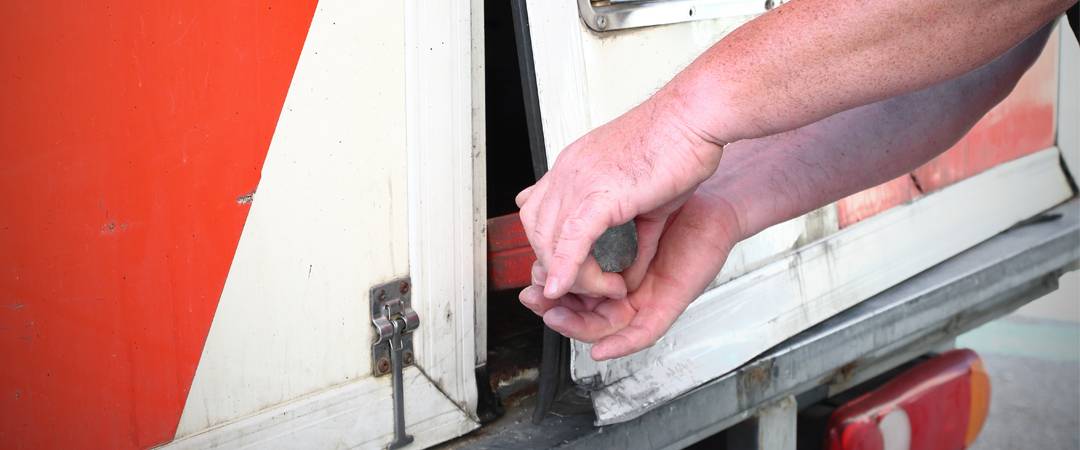
On 13 November 2019, the German Federal Police (Bundespolizei) and the Romanian Police (Poliția Română) supported by Europol, concluded their operation into a large criminal network smuggling migrants to western Europe in lorries. Austria, Hungary, the United Kingdom and Eurojust also took part in this two-year, Europe-wide operation.  During this last phase of the operation, the Romanian Police carried out eight searches and arrested four suspected members of the organised crime group. The German Federal Police carried out five searches. Nearly 580 migrants travelled in lorries towards Western Europe  The operation was initiated in Germany in 2018 when authorities detected migrants from Iran, Iraq and Syria entering Germany in lorries via Czechia and Hungary. The investigation uncovered a massive network smuggling people from their countries of origin to Timișoara, Romania then to Germany. During the final leg of the journey to western Europe, the migrants were forced to travel in lorries. Criminals use container smuggling to move people over borders thereby putting them in life-threatening situations. Loaded into cargo vehicles, migrants can suffer from lack of oxygen and dehydration, risking their lives before reaching their final destination.   The investigation into this organised crime group uncovered a network composed of at least 36 members who earned more than €2 million from nearly 580 smuggled migrants.  The final operational results of the two-year investigation include: 580 smuggled migrants identified; Three individuals suspected to be the organisers (high-value targets) arrested in Germany, Greece and the United Kingdom;  36 suspects identified with at least ten individuals arrested (truck drivers and facilitators); Four truck drivers arrested in Czechia and sentenced in Germany ranging from 20 months to over 5 years and another one arrested and awaiting sentencing in Hungary. Europol facilitated the information exchange between the participating countries and analysed operational information against Europol’s databases to provide leads to investigators. Europol also provided on-the-spot operational support by deploying one analyst to Timișoara to provide real-time analytical support. For the needs of the whole operation, a Joint Investigation Team (JIT) and an Operational Task Force were formed in 2018 to tackle the criminal group. Europol organised regular operational meetings for the investigators to identify three high-value targets (leaders of the criminal network); all of them were arrested during the operation leading to the complete dismantling of the criminal group. This operation falls under the EMPACT Operational Action ‘Risk’. This action targets organised crime groups smuggling irregular migrants in concealments mainly through the Balkan route. Frequent detection in central and western Europe or directly in the Balkan region show that migrants are smuggled in these extremely dangerous conditions by organised criminal groups operating from various hubs.    In 2010 the European Union set up a four-year Policy Cycle to ensure greater continuity in the fight against serious international and organised crime. In 2017 the Council of the EU decided to continue the EU Policy Cycle for the 2018 - 2021 period. It aims to tackle the most significant threats posed by organised and serious international crime to the EU. This is achieved by improving and strengthening cooperation between the relevant services of EU Member States, institutions and agencies, as well as non-EU countries and organisations, including the private sector where relevant. Facilitation of illegal immigration, is one of the priorities for the Policy Cycle.
Read full story →
Europol Nov 13, 14:45

15 arrested in a hit against human trafficking gang in Lithuania and Spain

On 12 November 2019, the Lithuanian Police (Lietuvos Policija) and the Spanish National Police (Policía National) supported by Europol and Eurojust, have dismantled a large organised crime group involved in human trafficking for sexual exploitation. The operation led to: two leaders of the criminal network arrested in Spain;  13 suspected members arrested in Lithuania;  50 searches in both in Lithuania and Spain;  118 victims originating from Belarus, Ukraine and other countries identified  seizures of large amounts of cash, drugs, counterfeit documents and fake banknotes, credit cards and SIM cards, weapons and ammunition, masks, and a car with police lights. ​The criminal group, operating in both Lithuania and Spain, was particularly violent. The arrested individuals were previously known by the authorities for crimes such as robbery, trafficking of human beings and sexual exploitation. The individuals have been detained and are awaiting trial. Their assets have been temporarily frozen. Europol supported the investigation by providing coordination and analytical support since the early stages of the joint investigation in 2018. Europol supported the action day by providing on-the-spot technical and analytical support in Lithuania and Spain, and by activating the virtual command post to speed up operational information exchange. Europol also deployed experts to Lithuania to cross-check operational information in real-time against Europol’s databases.  Eurojust strengthened the coordination and cooperation between the Lithuanian and Spanish national judicial authorities and coordinated and facilitated the execution of European Investigation Orders and European Arrest Warrants. Watch video   In 2010 the European Union set up a four-year Policy Cycle to ensure greater continuity in the fight against serious international and organised crime. In 2017 the Council of the EU decided to continue the EU Policy Cycle for the 2018 - 2021 period. It aims to tackle the most significant threats posed by organised and serious international crime to the EU. This is achieved by improving and strengthening cooperation between the relevant services of EU Member States, institutions and agencies, as well as non-EU countries and organisations, including the private sector where relevant. Human trafficking is one of the priorities for the Policy Cycle.
Read full story →
Europol Nov 12, 13:00

Illegal tobacco factory dismantled in Hungary

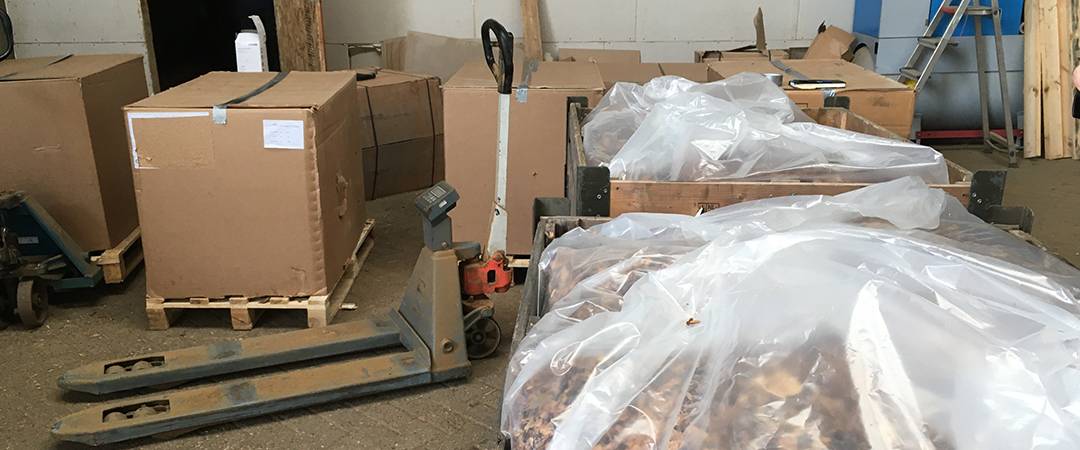
Six million cigarettes and enough tobacco to produce 21 million cigarettes found in an illegal factory in Budapest.    Hungarian customs officers arrested 20 factory employees and the ringleaders behind the operation. The Hungarian National Tax and Customs Administration (NTCA, Nemzeti Adó- és Vámhivatal) have uncovered an illegal tobacco factory and identified the members of the criminal group behind the operation. The cigarette factory operated in a large rented warehouse in Budapest, which had been completely rebuilt to cater to the network’s illegal activities. Renovations were extensive, with separate tobacco-cutting, fermenting, filling, and packing places constructed with walls made of fibreboard and brick. The factory employees were forced to live and work in the factory, unable to leave the building as the soundproof, purpose-built rooms were locked by the ringleaders from outside.  Following an alert from the European Anti-Fraud Office (OLAF), authorities established that the criminal group – primarily Romanian and Moldavian citizens – sourced their materials from abroad, such as machines, tobacco, filters, cigarette papers and cigarette packs. Some of the material was stored in Hungary and used in the dismantled factory; the rest was sent abroad. Given the international scope of the illicit activity, Europol provided the Hungarian authorities with the necessary analytical support to detect the relevant international links and organised an operational meeting to set out the investigation’s strategy. Rented warehouse purpose-built for illegal venture During the investigation at the premises, officers found one assembly line in operation and another under construction. They also discovered apparatus for tobacco cutting, fermentation and cigarette packing. In total, investigators found six million cigarettes and 35 tonnes of fine-cut smoking tobacco – enough for another 21 million cigarettes – in the factory. A further 300kg of tobacco powder was also found during the operation (1kg of tobacco powder can make around 3 million cigarettes). Investigators were able to uncover 139 pallets of cardboard used for packs of cigarettes, 76 pallets of filters, 169 pallets of cigarette papers, 43 pallets of foil, 600 litres of liquid glue, 30 pallets of foil paper rolls, and accessories, production equipment and a cigarette rolling machine.    
Read full story →
Europol Nov 12, 10:00

Criminal group producing and circulating fake euro banknotes in Spain and Portugal busted

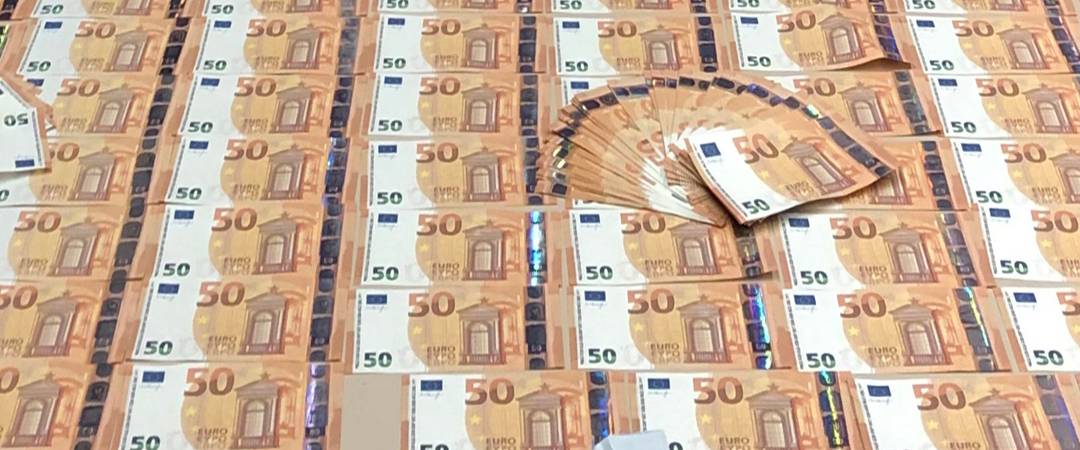
Officers arrested six individuals for producing fake euro banknotes and introducing them into circulation through shops and bars in Spain and Portugal. On the day of the operation, investigators found a clandestine print shop in one of the two facilities searched by the police. They were also able to confiscate €8 230 in counterfeit banknotes (in 10, 20 and 50 denominations), together with raw material with the potential to produce another €250 000 in fake banknotes, two firearms, three printers, three computers and hologram imitations, to make them look similar to genuine euro banknotes and improve the overall quality of the counterfeits. Europol provided tailored financial and analytical support to the investigation. A mobile office was deployed for on-the-spot support during the action day in Huelva, Spain, which allowed for real-time crosschecking of information against the Europol’s databases. Europol, as the EU’s central office for combating euro counterfeiting, facilitates the exchange of information and provides expertise, criminal and forensic analysis, training, financial and technical support to law enforcement agencies inside and outside the European Union. Watch video
Read full story →
Europol Nov 8, 15:00

2019 Virtual Global Taskforce Releases Environmental Scan

The Internet has transformed the threat of child sexual abuse into a global issue. Despite the improved cooperation amongst countries, there are still many barriers to providing a streamlined global response.  The Virtual Global Taskforce (VGT) has released its 2019 Environmental Scan, which examines the current global landscape of online child sexual exploitation threats, trends and challenges and will inform the strategic direction of the VGT. The Virtual Global Taskforce (VGT) is an international alliance comprised of law enforcement, industry and non-government partners dedicated to the protection of children from online sexual exploitation and abuse.  The Environmental Scan reinforces the global and continuous increase in reports of child sexual exploitation, as well as the complexity of investigations in this field. The Scan found that the largest international threats in the areas of online child sexual exploitation include the increased support for personal privacy, increased production and consumption of child sexual exploitation material, and identifying the location of victims and offenders (i.e. determining where the crime is taking place and who is involved). Despite the concurrent social benefits, increased accessibility to the Internet has also further enabled these threats. The most significant emerging trends observed globally over the last three years included increases in self-generated sexually explicit material, anonymization technologies, the use of social media applications, and the live-streaming of child sexual abuse.  As the Chair of the VGT, RCMP Chief Superintendent Arsenault noted, “the need for collaborative efforts in developing innovative technological strategies is reinforced through the Environmental Scan. Our partnership with Industry is critical. Together, we have the opportunity to act upon these identified threats and make a positive difference in child protection.” Download a copy of the 2019 VGT Environmental Scan. 
Read full story →
Europol Nov 7, 15:00

Strengthening co-operation in the fight against IP crime

The EU’s Agency for Law Enforcement Cooperation Europol and the European Union Intellectual Property Office (EUIPO) have today formally signed an agreement to further increase cooperation in fighting infringements of intellectual property rights, both online and offline. Europol and the EUIPO have been collaborating since 2013 on a range of issues. In 2016, they stepped up their cooperation to create the Intellectual Property Crime Coordinated Coalition (IPC3), a specialist unit within Europol funded by the EUIPO. Since its inception, the IPC3 unit has coordinated and supported cross-border operations aimed at tackling IP crime across the EU. The unit’s operations have spanned sectors like pharmaceuticals, food and drinks, pesticides, counterfeit luxury goods, clothing, electronics, car parts, toys and illegal streaming. In total, counterfeit goods valued over EUR 980 million have been seized. In addition, over a hundred organised crime groups have been identified and/or dismantled as a result of the unit’s work. The investigations coordinated by the IPC3 have also linked IP crime to the health and safety of consumers, drug trafficking, tax evasion, fraud and terror financing.  
Read full story →
Europol Nov 7, 12:25

9 suspects arrested in Poland for luxury car theft

Polish Border Guard and the Swedish police, supported by Europol, have dismantled an organised crime group involved in the theft of luxury cars across Europe. Back in January 2019, the Polish border guards found a car stolen from Sweden, transported by ferry into the country. This discovery initiated a cross-border investigation into an organised crime group specialised in the large-scale theft of luxury cars. The stolen vehicles from Sweden were transported by ferry to Poland to have their identity marks changed or to be dismantled and sold as spare parts. It is estimated that the network gained approximately €280 000  from the theft of several dozens of luxury cars although this amount is likely to increase significantly as the investigation progresses.During the operation, the Polish and Swedish law enforcement authorities arrested 9 individuals, two of which had a European Arrest Warrant issued against them. The seizures included five stolen cars, false VIN (vehicle identification number) stickers, Swedish registration plates, electronic devices for the interception of signals emitted by car keys, GSM jammer, tools for forging identity marks and various spare parts.Europol supported the investigation by hosting two operational meeting at its headquarters and provided analytical support and expertise. During the action day, an expert was deployed on the spot to cross-check operational information in real time against Europol’s databases. The operation was financially supported by the EU-funded German Internal Security Project Limes on Motor Vehicle Crime and Russian speaking organised Crime.
Read full story →
Europol Nov 7, 09:47

17 tonnes of food infected with listeria seized in Spain

 Listeria outbreak in Spain could be linked to case involving eight individuals The group knew the food products contained the harmful bacteria but failed to inform the authorities An operation linked to a harmful bacteria outbreak by the Spanish Civil Guard (Guardia Civil) and with Europol’s support has led to the arrest of six individuals, with a further two detained. Although those responsible had been aware that a number of food products contained listeria since late last year, they did not inform the authorities and continued to sell them. Out of the eight individuals investigated, six have been arrested and two have been detained. The products are due to be incinerated in Cadiz, Spain. Investigations revealed that at least three of the people responsible for the products knew that a batch labelled in December 2018 was infected with listeria but failed to inform the authorities. This batch could be the reason for several cases of a listeria outbreak in Spain.  Up to 193 persons poisoned The officers confirmed that the meat products from a company they were investigating were the reason for the first outbreaks detected in Sevilla last August. It is believed that the number of poisoning instances linked to the case has gone up to 193 since. Although the activities of the company were mainly focused in Spain, there have been several cases detected in Europe: four members from a German family, alongside a British citizen who was in France, are believed to have been poisoned by this bacteria. Europol supported the Spanish Civil Guard (Guardia Civil) in this operation by deploying three experts on-the-spot during two different action days.   Watch video    
Read full story →
Europol Nov 6, 10:00

Over 5 tonnes of smuggled glass eels seized in Europe this year

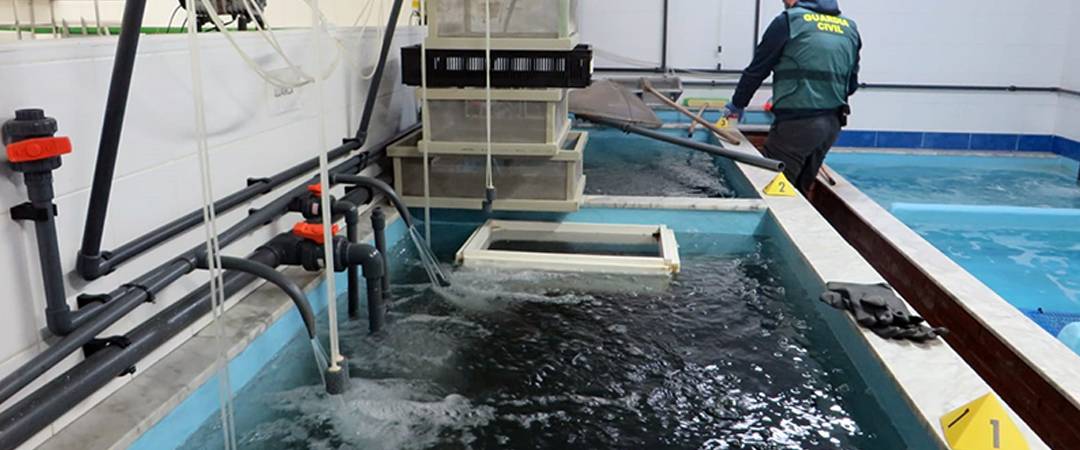
During the most recent fishing season (2018-19), European law enforcement was able to seize 5 789 kg of smuggled glass eels with an estimated value of € 2 000 per kilo. In total 154 suspected smugglers were arrested and all seized eels were reintroduced into their natural habitat, which is crucial for the survival of the species. This year’s Operation Lake, initiated by Europol and together with Eurojust, INTERPOL and the EU Wildlife / CITES Enforcement Group has seen the involvement of 10 countries in the 448 operations across Europe: Albania, Bulgaria, Hungary, Czechia, France, Germany, North Macedonia, Portugal, Spain and Switzerland.From October 2018 until April 2019 and under the umbrella of the European Union Action Plan against wildlife trafficking, a wide range of activities have been carried out in order uncover every possible illicit practice linked to the fishing of glass eels, such as checking luggage and cargo at ports and airports with international destinations. Law enforcement also conducted cross-border investigations into European-based Asian criminal networks. Operation Lake aims to combat trafficking of endangered species in the EU and to dismantle violent organised crime groups involved in associated illegal activities, such as environmental crime, smuggling, money laundering, tax evasion and document counterfeiting. 38 arrests and more than 700 kg of glass eels saved in Operation FameOperation Fame was 2019’s flagship environmental operation. In early 2019, three operational meetings were held (one in Spain and two at Europol’s headquarters) to coordinate details for different actions in Czechia, France, Germany, Portugal, Spain and Switzerland which resulted in the arrest of 43 individuals alongside the seizure of 737 kg of glass eels. The fish were put in plastic bags and suitcases and sent to Asia by plane. The criminals also camouflaged the glass eels among other cargo commodities (usually fresh products such as fish and meat):Czech customs officials arrested two people and seized 40 kg of glass eels. German customs officials arrested three individuals and seized 176 kg of glass eels. French customs and the French Central Office against Environmental and Public Health Crime arrested ten people involved in the smuggling of this species and seized 716 kg of glass eels. The Portuguese Food Safety and Economic Authority, the Portuguese National Republican Guard and the Portuguese Maritime Police carried out five arrests. The Spanish Civil Guard (Guardia Civil) under the Europol’s coordination arrested 16 individuals from four different organised crime groups. One of the rings, based in the north of Spain, brought glass eels from France to Spain and then sent them by taxi to Portugal. Once in Portugal, the criminals put the eels into suitcases, ready to export them by plane. Another crime organisation, based in Madrid, shipped higher quantities of glass eels declaring them as other types of fish, seafood and sending them later by air cargo. The seized species would be worth €600 000. Spanish authorities estimate that the four criminal organisations under investigation may have made more than €6 million a year from the illegal operation. Swiss authorities arrested seven suspects and seized 78 kg of glass eels. Watch video
Read full story →
Europol Nov 5, 08:30

Four arrested for migrant smuggling and document forgery

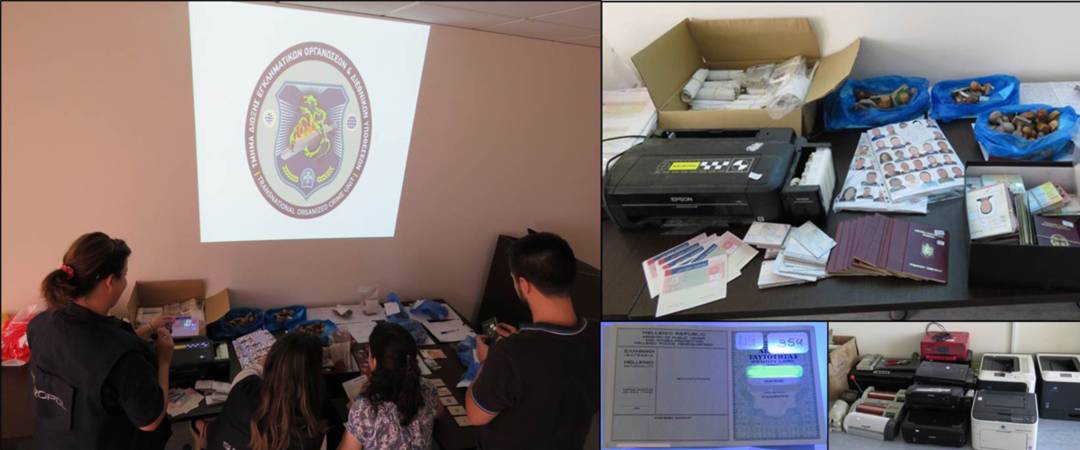
On 29 October, the Hellenic Police (Ελληνική Αστυνομία) made four arrests in an operation targeting an organised crime group involved in facilitation of irregular migration. The network provided the migrants with fraudulent travel documents to facilitate their journey across borders.  Active since 2017, the criminal group earnt up to €13 000 for each migrant they smuggled across Europe. The leader of the network was also arrested during the operation. He coordinated the operations from a coffee shop in Athens, providing instructions to the migrants and organising their journey.    In addition to the four arrests, a suspected accomplice was identified. The Hellenic Police confiscated counterfeit ID documents and driving licences, equipment to forge documents, digital equipment, vehicles and cash. Europol specialists deployed to the EU Regional Task Force (EURTF) in Greece supported the operation offering expertise, coordinating operational meetings with investigators from other EU Member States, and providing tailored analytical support and real-time cross-checks against Europol’s databases. The operation was carried out under the umbrella of the Greek National Operational Plan, signed by Europol and the Hellenic Police in 2016, to disrupt organised criminal networks involved in migrant smuggling and to reinforce secondary security checks in migration hotspots.    
Read full story →
Europol Nov 4, 09:13

Europol Publishes Law Enforcement and Industry Report on Spear Phishing

Today, 4 November 2019, Europol’s European Cybercrime Centre (EC3) published a strategic report on spear phishing, reflecting the views of both law enforcement and private industry on one of the most prevalent cyber threats currently affecting organisations across the EU.  Spear phishing describes the practice of targeting specific individuals within an organisation or business for the purposes of distributing malware or extracting sensitive information. As reflected in this year’s Internet Organised Crime Threat Assessment (IOCTA), spear phishing is the number one attack vector and enabler for the vast majority of cybercrimes.  The report is the result of a two-day meeting with the European Cybercrime Centre’s 70 key industry partners from internet security, telecommunications and financial services. The Joint Advisory Group Meeting, which took place on 26 - 27 March 2019, gathered representatives from industry and law enforcement at Europol’s headquarters in The Hague to discuss what can be done to help mitigate this type of crime. The report highlights the role of spear phishing as the main attack vector for cybercriminals and  contains the definition of the main modi operandi that criminals use to deceive the target (among others, emails coming from trusted accounts, malicious attachments or links to fraudulent websites). Moreover, the document collects conclusions and recommendations for organisations on how to effectively combat this threat on a technical, educational, as well as operational level –enforcing security policies, implementing artificial intelligence and a raising public awareness on the topic. At the same time, the report highlights some of the challenges related to information-sharing and the investigation of spear phishing attacks. A collaboration effort with law enforcement and the private sector should be done collectively. Steven Wilson, Head of Europol’s European Cybercrime Centre said: “Spear phishing is a major enabler of some of the most serious forms of cybercrime, especially ransomware, and can cause real harm to European citizens and organisations. We can only tackle a threat of this scale effectively by working closely with key partners from across industry. The EC3 Advisory Groups and this report are a reflection of our ongoing cooperation to tackle the threat from cybercrime.” Europol set up the European Cybercrime Centre (EC3) in 2013 to strengthen the law enforcement response to cybercrime in the EU and thus to help protect European citizens, businesses and governments from online crime. EC3’s Advisory Groups on Financial Services, Internet Security and Communication Providers aim at fostering trust and cooperation between key private sector industries and law enforcement in their joint fight against cybercrime. They meet separately two times a year, as well as once all together, at Europol’s headquarters in The Hague to share strategic information related to cybercrime threats and trends in their respective business areas, as well as to agree on joint initiatives alongside law enforcement. A current list of members can be found here. Download the report here
Read full story →
Europol Oct 31, 13:00

CyLEEx19: Inside a simulated cross-border cyber-attack on critical infrastructure

“Hola bankers. Your time is running out! You have only 5 hours left to pay up the ransom before Armageddon, otherwise we will bring down your e-banking services and exfiltrate your precious data.” This was one of the tasks set for CyLEEx19, the first cyber law enforcement exercise of its kind, which saw 20 cybercrime investigators and cybersecurity experts from the public and private sector come together at Europol’s headquarters on 31 October to test the EU Law Enforcement Emergency Response Protocol in a simulated environment. Exercise CyLEEx19, organised by Europol’s European Cybercrime Centre (EC3) and the European Union Agency for Cybersecurity (ENISA), painted a dark scenario, inspired by malicious cyber activities affecting the public and private sector across Europe and beyond. Participants were called upon to react collectively to the simulated large-scale cyber-attacks related to incidents such as misuse of IT resources, unauthorised access to systems, vulnerability exploitations, Distributed Denial of Service (DDoS), and malware infections.  Participants were asked to respond to these cyber incidents and decide on the optimal response measures, including if such threats warrant the triggering of the emergency response procedure. By performing the majority of the processes documented in the Protocol, the participants increased their preparedness in case of a real-life international cyber-attack and identified possibilities for improvement of the process.  Cybercrime investigators from the Joint Cybercrime Action Taskforce (J-CAT), namely France (Police Nationale), the Netherlands (Politie), Spain (Policia Nacional) and Norway (Politiet) took part in this exercise, alongside representatives from EC3’s Advisory Groups on financial services (Banco Santander and Citi) and the internet security industry (Palo Alto Networks), together with experts from Europol, ENISA and Eurojust. The EU Law Enforcement Emergency Response Protocol  In the wake of the 2017 WannaCry and NotPetya attacks, the Council of the European Union adopted the new EU Law Enforcement Emergency Response Protocol to address the growing problem of planning and coordinating between governments, agencies, and companies when cyber-attacks occur across international boundaries. The Protocol is part of the EU Blueprint for Coordinated Response to Large-Scale Cross-Border Cybersecurity Incidents and Crises1. The EU Law Enforcement Emergency Response Protocol determines the procedures, roles and responsibilities of key players both within the EU and beyond; secure communication channels and 24/7 contact points for the exchange of critical information; as well as the overall coordination and de-confliction mechanism. This cyber simulation exercise was developed within the EMPACT 2019 Operational Action Plan Cyber Attacks against Information Systems (CAIS) under the leadership of France as action leader. The exercise is also part of the cooperation framework set up under the Memorandum of Understanding signed by European Union Agency for Cybersecurity (ENISA), the European Defence Agency (EDA), the European Cybercrime Centre (EC3) and the Computer Emergency Response Team for the EU Institutions, Agencies and Bodies (CERT-EU). The outcomes of the exercise and the feedback provided by the participants in the evaluation stage will be analysed by Europol’s European Cybercrime Centre and ENISA. Detailed lessons learned will be set forth in order to establish a list of actions to improve cyber resilience and the emergency response to large-scale cyber-attacks in Europe and beyond.  1  Commission Recommendation (EU) 2017/1584 of 13 September 2017 on coordinated response to large-scale cybersecurity incidents and crises C/2017/6100  
Read full story →
Europol Oct 31, 12:57

Two victims identified during a training course on combating child sexual abuse online

Between the 16 and 25 October, the 20th edition of the Europol Combating Online Sexual Exploitation of Children (COSEC) course gathered 64 investigators from 55 agencies and 35 countries*.  The diverse team of 14 trainers from different countries and organisations** focused on the new and emerging technologies. The training course was organised and funded by Europol and hosted at the LAFP North Rhine-Westphalia police training college in Germany.   The training course also led to real results including cooperation on an international live distant child abuse investigation, the tentative identification of two victims and 170 leads sent to the Victims Identification Task Force 7. Since the year 2000, over 1 000 investigators have been trained at this annual course. Europol’s Deputy Executive Director Will van Gemert said: “It is essential to provide training for police investigators working on combating child sexual abuse online. Investigators dedicate themselves to identifying victims of child sexual abuse and stop those that victimise them even more each and every time an abuse picture is shared online. Europol is committed to giving these investigators the tools and knowledge to effectively combat child abuse online, safeguard the victims and help protect the innocence of other vulnerable children.”    *27 EU Member States (Austria, Belgium, Bulgaria, Croatia, Cyprus, Czechia, Denmark, Estonia, Finland, France, Germany, Greece, Hungary, Ireland, Italy, Lithuania, Luxembourg, Malta, Netherlands, Poland, Portugal, Romania, Slovakia, Slovenia, Spain, Sweden, UK) and 9 third-party countries (Australia, Brazil, Colombia, Iceland, New Zealand, Norway, Serbia, Singapore, Switzerland). **Belgian Federal Police, Croatian Police, Europol, Faroe Island Police, French National Gendarmerie, Geneva Cantonal Police, INHOPE, INTERPOL, Italian Postal Police, Lucy Faithfull Foundation, Portuguese Judicial Police, Spanish Guardia Civil and Spanish National Police.  
Read full story →
Europol Oct 31, 09:00

Europol is happy to announce 2019 law enforcement photos of the year!

Thank you for taking part in the biggest international law enforcement photo competition! Many talented photographers participated in the 11th annual Europol photo competition, sharing their special vision of law enforcement all over the world.  We received diverse entries picturing the core of the challenging but also exiting work of law enforcement. Police officers, rescue teams, customs and border guards featured moments of their working life: from difficult moments, during police operations and training exercises, to touching moments during everyday community work. The images show two sides of the coin: dramatic and critical, as well as human and warm.  This year the three categories were: cybercrime, diversity and inclusion, and making Europe safer. The competition is open to law enforcement photographers from the European Union and from countries with Europol cooperation agreements. The images received will be published in Europol’s flagship reports and publications as well as online to illustrate the tireless and diverse work of law enforcement. Through its powerful and simple format, Europol’s photo competition aims to raise awareness of the work carried out by the law enforcement network across Europe. Europol is pleased to announce the winners of the 2019 law enforcement photo competition: Giovanni D' Amico from Italy for the diversity and inclusion category. This warm shot taken in Turin, Italy, shows how inclusion is taking the time to get to know each other.   David Mendiboure from France for the category making Europe safer. This dog from the French National Police is trained to detect explosives. He is pictured here with his handler securing a site.    Peter Monteny from the Netherlands for the category making Europe safer. In this picture, Dutch police officers are keeping an eye on the crowd at Utrecht Central Station. Making people, including children, feel safe. The three winners win a trip for two to the Netherlands, including a visit to Europol. Their pictures will feature in our 2020 calendar and other Europol publications. Didn’t make it this year? There will be more chances for you to win soon as next year’s edition will be open for entries from May to July 2020. Don’t miss the chance to take part, keep an eye on our website and social media!    
Read full story →
Europol Oct 30, 10:00

60 e-commerce fraudsters busted during international operation

A joint law enforcement operation supported by 19 countriesi  led to the arrest of 60 people suspected of fraud. The main aim of the 2019 e-Commerce Action (eComm 2019) is to target criminal networks suspected of online fraud through coordinated law enforcement action within the European Union, followed by an awareness-raising campaign. The operation, carried out nationally, was coordinated by Europol’s European Cybercrime Centre (EC3) and received direct assistance from national law enforcement authorities and the private sector.  E-commerce fraud (electronic commerce fraud) includes illegal or false transactions made on online platforms, apps and services or over the internet: fraudsters simply use stolen card information to purchase goods on webshops.  The suspects arrested during the operation – which ran from 23 September to 4 October 2019 – were responsible for almost 6 500 fraudulent transactions with compromised credit cards, with an estimated value exceeding €5 million.  Europol supported national competent authorities during the operations in their respective countries with analytical support and information exchange. In order to protect customers from fraudulent payments and assure a safe online environment, Europol also collaborated with banks, payment card schemes European retailers and logistics companies. The private sector supported the action cooperating with national law enforcement authorities, by reporting fraudulent activity. This collaboration between law enforcement and the private sector has proven beneficial and led to the development of best practices.    eComm 2019 led to: more than 40 house searched; around 6 500 fraudulent transactions discovered; €5 million in losses reported;  €93 000 in losses prevented; a number of surveillance teams deployed; electronic devices, card data and cash confiscated. Investigations leading to real results ​ The investigative measures revealed that individual fraudsters are connected to organised crime groups and have been involved in other forms of crime, such as phishing, malware attacks, using stolen passports, money laundering, creating fake websites and using social media platforms to carry out fraud.  This year, an increase was reported in the number of fraudulent purchases of services online instead of physical goods: this makes it very complex to investigate due to the virtual dimension of this crime. Fraudulent purchases of entrance or concert tickets, subscriptions and rentals are all done online, including through apps (i.e. non-card purchase, non-physical). Some investigations showed fraudulently booked railway tickets (with compromised credit card data) are sold onwards to third parties who might then use them to commit other crimes and offences. In this case, more than 1 000 fraudulent bookings were noted, with a financial loss of around €70 000. Another modus operandi is to buy vouchers with compromised credit cards and get them reimbursed with a different payment method afterwards. Many cross-border cases followed the ‘advance fee fraud’ modus operandi: often when a fraudulent purchase is made, bank accounts receiving the funds are located in different EU countries or overseas. Where banks were located outside the EU, international card schemes supported the investigations. Many websites and social media accounts were used to create online shops fraudulently or purchase electronic goods. The turnover for the suspects can be up to billions of euros worldwide every year. The fraudsters use stolen credit card data, obtained on the darknet or through malware or phishing attacks, to buy products. Consumers sometimes do not realise that their card data is also being stolen or compromised when they make purchases. Industries, banks and the merchants are the ones to be penalised and the ones that registered the higher losses. To protect consumers and provide them with more information, the Payment Service Directive 2 (PSD 2) came into effect in September 2019. One important aspect of the PSD 2 is described as Secure Customer Authentication (SCA), a secure process for customers when paying online.  Prevention It is always better to prevent a crime, rather than solve a crime. This operational action has been followed by a prevention and awareness-raising campaign, #BuySafePaySafe. There are a number of guidance measures you can follow to avoid becoming a victim of fraud: make sure the device you are using to make online purchases is properly configured and the internet connection is safe; using a card is a safe method of payment online as long as you exercise the same care as in other shopping; there are simple warning signs that can help you identify scams. If you are a victim of online fraud, report it to the police. If you bought the product with a credit or debit card, report it to your bank as well; check your online banking service regularly. Notify your bank immediately if you see payments or withdrawals that you have not made yourself.​ Read more about safe online shopping on e-Commerce: tips and advice to avoid becoming a fraud victim. eComm 2019 is an operation created as a part of EMPACT Payment Card Fraud led by Austria. This operation is a practical continuation of the work of the e-Commerce working group, a public-private partnership established in 2014 with key stakeholders, including the Merchant Risk Council, a network of 535 e-merchants worldwide. iAustria (in the lead), Belgium, Colombia, Croatia, Denmark, France, Germany, Greece, Hungary, Italy, Latvia, Lithuania, Poland, Portugal, Romania, Spain, Sweden, Switzerland, and the United Kingdom. Watch video In 2010 the European Union set up a four-year Policy Cycle to ensure greater continuity in the fight against serious international and organised crime. In 2017 the Council of the EU decided to continue the EU Policy Cycle for the 2018 - 2021 period. It aims to tackle the most significant threats posed by organised and serious international crime to the EU. This is achieved by improving and strengthening cooperation between the relevant services of EU Member States, institutions and agencies, as well as non-EU countries and organisations, including the private sector where relevant.  Cyber crime is one of the priorities for the Policy Cycle.
Read full story →
Europol Oct 29, 11:00

French jeweller held in Germany in international gold trafficking investigation

A gold trafficking case between France and Germany thought to be worth at least €1 million has led to the arrest on 21 October of a French jeweller and nine of his accomplices, as well as the seizure of nearly €3 million of criminal assets.  The 56-year old jeweller was arrested on a train at the border between France and Germany with €37 000 in cash on him. Two accomplices were arrested in Germany, and one in Austria. The investigation, initiated over a year ago by the French Gendarmerie, identified a jeweller in Nantes, France, who is believed to be the mastermind behind a large-scale gold trafficking scheme. The suspect would be provided with large amounts of gold jewellery – most of it thought to be stolen, which he would proceed to melt. The French jeweller would then travel to Frankfurt, Germany, where he would sell the melted jewels with the help of an accomplice who managed a shop selling gold. The jeweller is believed to have travelled to Frankfurt over 28 times this past year for such illegal activities which are thought to have generated at least €1 million in criminal profits.  To date, this operation has allowed for the seizure in France of more than a thousand objects, mainly vintage watches and jewels thought to have been acquired illegally, as well as real estate and bank accounts. In Germany and Austria, several properties were seized, alongside jewellery, diamonds and gold ingots.  To prepare for the joint action days, Eurojust facilitated and coordinated the investigative measures by forwarding European Investigation Orders and other information. Europol deployed a mobile office on the ground to Germany to facilitate the real time of exchange of information between all involved authorities.    In 2010 the European Union set up a four-year Policy Cycle to ensure greater continuity in the fight against serious international and organised crime. In 2017 the Council of the EU decided to continue the EU Policy Cycle for the 2018 - 2021 period. It aims to tackle the most significant threats posed by organised and serious international crime to the EU. This is achieved by improving and strengthening cooperation between the relevant services of EU Member States, institutions and agencies, as well as non-EU countries and organisations, including the private sector where relevant.  Property crime is one of the priorities for the Policy Cycle.
Read full story →
Europol Oct 29, 09:27

Integrity in sports: Europol and the International Olympic Committee join forces against match fixing

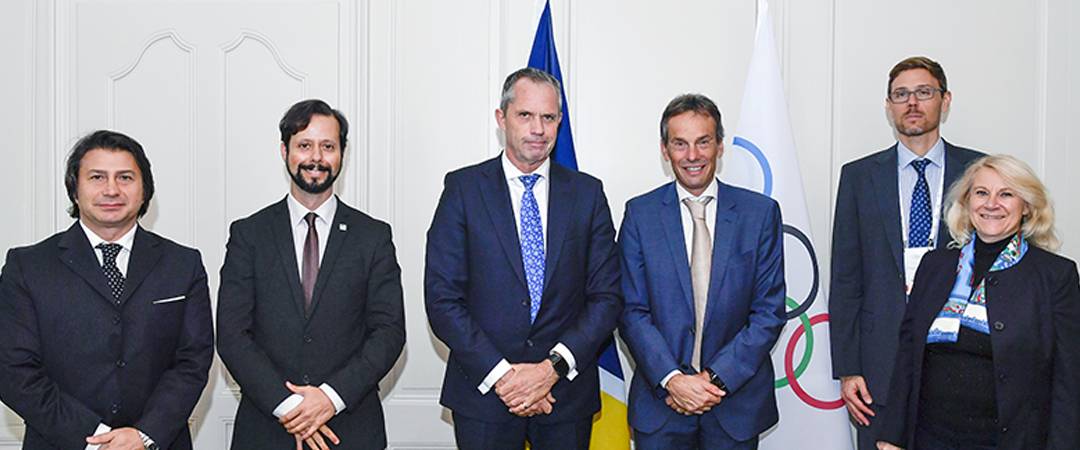
Today, 28 October, Europol and the International Olympic Committee (IOC) have signed a Memorandum of Understanding (MoU) to reinforce cooperation in the fight against corruption in sports. The agreements was signed during the annual International Forum for Sports Integrity, organised by the IOC in Lausanne, Switzerland.   Enhancing intelligence to counter match fixing Corruption in sports degrades the efforts of athletes and the support of the public. It also brings important profits to organised crime groups which they then use to grow their other criminal activities such as drug trafficking, document fraud, money laundering and economic and financial crimes.  To strengthen the global coalition against corruption in sports, in particular the manipulation of sport competitions, Europol reinforces its cooperation with the International Olympic Committee, one of the leading actors in the sport world. Europol and the IOC have already intensified their cooperation in the past three years. The IOC plays a significant role in protecting integrity in sport across all Olympic disciplines. The new agreement will focus on the exchange of knowledge and expertise, capacity building and further collaboration between Europol and the IOC. Cooperation between public and private sector is a key element in the effective fight against these organised crime groups causing an important damage to the integrity of sports and to its core values.  On the signing of the Memorandum of Understanding, Europol’s Deputy Executive Director Will van Gemert said: “Corruption in sports is a global criminal phenomenon perpetrated by organised crime groups operating cross-border and often involved in other crimes. Working closely together in coalition with key partners like the IOC, is crucial in the fight against corruption in sports. Combating sports corruption means not only defending the integrity of sports, but also protecting the public from criminals who cause significant damage to the safety, security and wellbeing of the EU citizens.” Thomas Bach, President of the IOC commented: “Signing an MOU with Europol today is another example of our deepening cooperation with law enforcement agencies and one more important milestone in the fight against manipulation of competition”. About the IOC: The International Olympic Committee is a not-for-profit independent international organisation made up of volunteers, which is committed to building a better world through sport. It redistributes more than 90 per cent of its income to the wider sporting movement, which means that every day the equivalent of €3 million goes to help athletes and sports organisations at all levels around the world. About Europol: Europol is the European Union’s law enforcement agency. Headquartered in The Hague, the Netherlands, Europol supports the 28 EU Member States in their fight against terrorism, cybercrime and other serious and organised forms of crime. With over 1 300 staff members, Europol uses state-of-the-art tools to support some 40 000 international investigations each year, serving as a centre for law enforcement cooperation, analytical expertise and criminal intelligence.
Read full story →
Europol Oct 28, 16:38

Illegal tobacco trade halted after international operation

Authorities from seven countries, with the active support of Eurojust, Europol and the European anti-fraud office OLAF, have dismantled an international organised crime group (OCG) which was involved in the large scale illegal trade of tobacco. During an action day, coordinated at Eurojust, 18 persons from different nationalities have been arrested, who are suspected of money laundering and the illegal trade and storage of around 670.000 kilos of tobacco. Three suspects from Italy will be heard. The illegal trade has led to a loss of customs and excise duties for the Dutch fiscal authorities of approximately 70 million Euro. A total  of  29 searches have taken place in Italy, Poland, Belgium, the United Kingdom and the Netherlands, mainly in the south eastern province of Limburg.  Authorities from Romania and Cyprus have contributed actively to the operation. The criminal organisation allegedly bought tobacco in Italy, which was then processed and sold to traders for the use in illegal cigarette factories. The criminals played a role as well in the brokerage of illegally produced cigarettes and bought, sold and repaired machinery for cigarette production.  As a result of international cooperation, since last year already illegal cigarette factories have been dismantled in Poland, the Czech Republic and the Netherlands, whose operators had close links to the criminals who have now been arrested. Eurojust held a coordination meeting and set up a coordination centre during the action day and provided assistance with the issuing of European Investigation Orders (EIOs) and European Arrest Warrants (EAWs).  The operation was based on an analysis of a special operational taskforce set up in February 2018 between Europol, the UK’s HM Revenue & Customs (HRMC) and FIOD and on an investigation conducted by OLAF in other EU Member States where the same criminal organisation was involved . The operation was one of the first cases which forms a vital part of the ongoing intelligence picture. Regular meetings at Europol between the taskforce members helped identify numerous High Value Targets against which actions were taken in the framework of this operation. Over 250 officers of police, fiscal police and customs have been deployed during the action day in the Netherlands, Italy, the United Kingdom, Poland and Belgium.   
Read full story →
Europol Oct 25, 12:00

TRUSTWORTHY AI REQUIRES SOLID CYBERSECURITY

ENISA, the European Union Agency for Cybersecurity and Europol, the EU Agency for Law Enforcement Cooperation, co-organised successfully their third annual IoT Security Conference on the 24th and 25th of October in Athens looking at the evolution of IoT security and how to implement adequate security measures. Beyond technical aspects, the adoption of IoT and emergence of AI has raised many new legal, policy and regulatory challenges, broad and complex in scope. In order to address these challenges, cooperation across different sectors and among different stakeholders is essential.  It is for these reasons that Europol and ENISA are jointly organising such an event, to facilitate a discussion among all interested parties on ways to address the security challenges of IoT and AI and to combat the criminal abuse of such technologies, ultimately making cyberspace a safer place for all. ENISA’s Head of Core Operations, Steve Purser, stated:  “The annual IoT Security Conference keeps up with the trends of new opportunities and challenges of emerging technologies. This 3rd edition focuses on the impact of IoT and AI technologies. As these technologies are being deployed across various sectors, cybersecurity is a primary condition for trustworthy IoT and AI. ENISA is prepared to support technical aspects as well as policy with regards to ethics and a coordinated strategy on AI and liability. I welcome the collaboration with Europol and I am confident that such joint efforts contribute significantly to ensuring a safer and secure connected future for all.” Steven Wilson, Head of Europol's European Cybercrime Centre, said: "The importance of the Internet of Things and Artificial Intelligence has become undeniable, as these technologies have the potential to help us respond to societal challenges while making our lives more efficient. Both the public and private sector are devoting significant efforts to maximise the opportunities of these developments. Europol focuses on how IoT and AI can enhance law enforcement capability with respect to fighting and investigating crimes, while reflecting and identifying how criminals can and will abuse their potential. Through our joint work with ENISA at the IoT Security Conference, we can proactively respond and ensure that we anticipate the next criminal move while simultaneously protecting citizens across the EU, and ensuring that the benefits of these technologies prevail."   IoT Security Attacks Over the last few years, prominent examples of IoT attacks have made media headlines such as the hacking of pacemakers and smart toys for kids. Even artificial intelligence algorithms have been manipulated, leading to erroneous decision-making such as spoofing of traffic lights and false image recognition. With IoT technologies, the digital and the physical worlds are no longer kept apart from one another. Cars, medical devices, factories and energy plants are all becoming increasingly interconnected, creating new types of threats against critical infrastructure.   Europol's and ENISA's efforts on IoT security ENISA has a strong record in IoT security, publishing many reports on the subject, identifying security threats and risks and providing recommendations to strengthen its security, such as the Baseline Security Recommendations for IoT. On the other hand, Europol has been researching the many advantages of the Internet of Things for law enforcement as a tool to fight crime. Data from connected devices at a crime scene can provide crucial evidence to an investigation but such data require the same safeguards and security standards to ensure the privacy and safety of citizens. It has also successfully supported operations targeting the criminal abuse of IoT devices such as ‘Operation PowerOff’.   Working towards a more secure and safe future of AI The conference pointed out that one of the biggest challenges brought about by AI is the question of trust. Future AI deployments need to be secured appropriately, for instance by establishing a platform to promote collaboration on the cybersecurity aspects of AI in the EU.  ENISA can help build understanding on AI building blocks and their interplay, engage stakeholders in dialogues for AI cybersecurity and encourage collaboration and establish synergies, as well as raise awareness on AI cybersecurity. Equally law enforcement needs to be in a position to address the criminal abuse of AI as well as adversarial AI for instance in the form of data poisoning or the manipulation of algorithms.  There is a close relationship between AI and data governance. For machine learning algorithms to be effective, it is essential to have relevant training data and to control this learning process to avoid any bias.   Conclusions and actionable suggestions Security should not be an afterthought when designing systems and products, IoT and Artificial Intelligence are no exception;   The inclusion of law enforcement enables a response beyond defence and incident response by being able to investigate and prosecute the criminals abusing connected devices;   Building on the cooperation in IoT security, law enforcement and the cybersecurity community need to work closely together to address the criminal abuse and security of AI;   There is a need to discuss digital forensics in regard to Artificial Intelligence and IoT and the importance of data and privacy protection, considering the amount and different categories of data collected by these algorithms and the possibility to manipulate them;   whereas horizontal guidelines to ensure IoT and AI security are much needed, it is also important to look into sectorial implementations such as autonomous cars, industrial automation, automation of cybersecurity operations, to name a few. ENISA will be soon publishing guidelines on securing the software development process for IoT, as well as on cybersecurity of autonomous vehicles.   IoT and AI are part of a wider interlinked emerging technologies ecosystem that also comprises 5G and Cloud computing; the interplay between all these elements needs to be considered when addressing cybersecurity. Further information: For further queries or interviews, please contact press@enisa.europe.eu or press@europol.europa.eu  
Read full story →
Europol Oct 25, 10:00

Addressing access to cross-border electronic evidence in the EU at the third annual SIRIUS conference

The third annual SIRIUS conference took place on 23 and 24 October 2019, at Europol’s Headquarters in The Hague. This two-day event, organized in collaboration with Eurojust, gathered over 300 law enforcement officers and members of judicial authorities from 40 countries, as well as representatives from Google, Microsoft, Ebay, Cloudflare and Twitter, to address issues and challenges when conducting Internet-based investigations.  It is crucial for law enforcement and judicial authorities to know the data they can request Lawful access to electronic evidence can be very challenging, as both the types of data Online Service Providers (OSP) collect and the legal systems in which they are based vary greatly. It is therefore crucial for law enforcement and judicial authorities to know which type of data they can request and how to request it. The third annual SIRIUS conference was the perfect opportunity to build capacity among those stakeholders both at an EU and a US level, and to share knowledge and best practices. The conference followed a rich programme, which included sessions by the FBI MLAT unit, the UNCTED who presented a new Global Initiative with the UNODC and IAP, and the Irish Department of Justice and Equality who discussed data request processes for US companies also based in Ireland. The SIRIUS team presented key takeaways from ground breaking research undertaken in 2019 related to the EU situation of access to e-evidence. The European Judicial Network gave an overview of the e-evidence legal framework in EU Member States and Eurojust presented a broader judicial perspective on this issue. This year, the SIRIUS conference also presented a selection of the most successful EU-funded Research and Innovation projects, who were able to present their results and experiences in e-evidence extraction and analysis. SIRIUS platform: an innovate platform to investigate and prosecute crime and terrorism Europol’s EU Internet Referral Unit and the European Cybercrime Centre officially launched the SIRIUS platform during a kick-off meeting in The Hague in October 2017. SIRIUS is an innovative project which includes an interactive knowledge-sharing platform accessible to law enforcement authorities and members of the judiciary, and aims to produce and disseminate trainings and digests to improve EU-US cooperation on cross-border access to electronic evidence. The project is of operational added value in the investigation and prosecution of crime and terrorism. Mr Manuel Navarrete, Head of the European Counter Terrorism Centre, said: “SIRIUS is a flagship Europol project, and through an unprecedented collaboration with Eurojust, Europol is rapidly evolving and adapting to the world of big data. With SIRIUS, our aim is to support EU Member States in lawfully accessing electronic evidence.” Eurojust Vice President Mr Klaus Meyer-Cabri stated; “The internet has led to many positive developments. It has however the side effects of cybercrime and online abuse. In view of this, electronic evidence is key to investigations. If we want this to work well, cooperation between judicial authorities and with law enforcement and private actors is of prime importance, as is the introduction of a good system of digital justice.” The SIRIUS project is funded by the European Commission’s Service for Foreign Policy Instruments (FPI) under grant agreement No PI/2017/391-896.
Read full story →
Europol Oct 25, 09:00

International collaboration via Europol leads to tentative identification of 4 victims of child abuse

Over the past two weeks, Europol’s European Cybercrime Centre (EC3) has successfully supported efforts to identify victims of child sexual abuse through its seventh Victim Identification Taskforce (VIDTF), hosted at its headquarters from 14 to 25 October 2019. These efforts have led to 4 victims being tentatively identified.  VIDTF 7 saw 30 law enforcement experts from 21 countries and INTERPOL coming together to go through millions of images and video files of victims, some as young as a few days old. They were supported by Europol staff, all specialists and intelligence analysts in this crime field.  The participating specialists came from Australia, Belgium, Canada, Croatia, Denmark, France, Germany, Greece, Hungary, Italy, Latvia, Lithuania, Malta, the Netherlands, Norway, Romania, Slovenia, Spain, Sweden, Switzerland, the United States, Europol and INTERPOL.  By analysing the digital, visual and audio content of such images and videos, these victim identification experts retrieved vital clues, identified any overlap in cases and combined their efforts to locate the victims. More than 48 million (binary unique) images and video files were available in Europol’s database for this operation. In preparation for this taskforce, Europol experts triaged 1 000 series of related images that would be the object of analysis for the VIDTF 7 participants. As a direct result of this collaboration, the experts managed to analyse a total of 925 series. For 173 of these series, the country of production has likely been identified, and the countries informed so that they can start their own national investigation.  Europol’s European Cybercrime Centre is now providing support to the EU Member States involved to help safeguard the children concerned.  All the series have been uploaded to the INTERPOL International Child Sexual Exploitation (ICSE) database. This will allow investigators with access to the database to continue working on the datasets, therefore increasing the chances for the victims to be identified and safeguarded. How you can help stop child abuse In June 2017, Europol launched its crowdsourcing ‘Stop Child Abuse - Trace An Object’ initiative as a spin-off of the law enforcement focused VIDTF. This initiative invites the general public to identify objects and places in the hope it can lead to the identification of victims down the line.  Since then, 24 000 tips have been sent to Europol, which have already led to the identification of 9 children and to the prosecution of 2 offenders.   Europol is releasing today a new set of images in the hope that these can be identified by the general public. These new images can be viewed here. Watch video
Read full story →
Europol Oct 23, 12:00

Europol and Palo Alto Networks expand their cooperation in tackling cybercrime

Today, Europol and Palo Alto Networks have signed a Memorandum of Understanding (MoU) to expand their collaborative efforts in combating cybercrime and working together to make cyberspace safer for citizens, businesses and governments.  Enhancing cyber intelligence  The agreement builds on the already established cooperation between Europol’s European Cybercrime Centre (EC3) and Palo Alto Networks, a member of EC3's Internet Security Industry Advisory Group since early 2017. It will include the exchange of threat intelligence data and details of cybercrime trends, as well as technical expertise and best practices. The already on-going cooperation will be reinforced with the dynamic exchange of cyber threat intelligence. An important focus of this intelligence exchange is extending the knowledge on new adversary behaviours, malware families and attack campaigns around the world. Building up expertise on these cyber threats is crucial to combatting them in the most effective way. On the signing of the Memorandum of Understanding, the Head of Europol's European Cybercrime Centre, Steven Wilson, said: “The close collaboration between law enforcement and the global industry is crucial for countering effectively the increasing threat that criminals pose to the safety of the cyberspace. We are confident that working together with the leading companies in the cyber world will significantly enrich the toolbox of the global coalition against cybercrime. This kind of cooperation is the most effective way to protect citizens’ and businesses’ digital lives.”      Greg Day, vice president and chief security officer, EMEA, Palo Alto Networks, commented: “Cyber threats aren’t bound by borders, so we can’t afford to be siloed when it comes to tackling them either. International cooperation like this is important because we can have far more impact by working together. We are striving to build a world where each day is safer and more secure than the one before, so we look forward to working even more closely with Europol over the coming years to aid investigations and enforcement efforts to achieve this goal.”    About Palo Alto Networks: Palo Alto Networks, the global cybersecurity leader, is shaping the cloud-centric future with technology that is transforming the way people and organizations operate. Our mission is to be the cybersecurity partner of choice, protecting our digital way of life. For more information, visit Palo Alto Networks website. About Europol: Europol is the European Union’s law enforcement agency. Headquartered in The Hague, the Netherlands, Europol supports the 28 EU Member States in their fight against terrorism, cybercrime and other serious and organised forms of crime. With over 1 400 staff members, Europol uses state-of-the-art tools to support some 40 000 international investigations each year, serving as a centre for law enforcement cooperation, analytical expertise and criminal intelligence.  
Read full story →
Europol Oct 22, 14:00

Human smuggling network busted: Europol supports action days in Croatia, Slovenia and Bosnia and Herzegovina

Coordinated action days held between July and October have resulted in the arrest of 10 members of an organised crime group and identification of at least 150 irregular migrants who were smuggled by the criminals. The Western-Balkan migration route: the hottest in Europe At least half of the migrant smuggling cases reported to Europol are from the Western-Balkan region and the most affected countries are Bosnia and Herzegovina, Croatia and Slovenia. During this year, Europol’s European Migrant Smuggling Centre (EMSC) has intensified the cooperation with the countries along the Balkans route. Hundreds of pieces of strategic and operational information were exchanged, and numerous investigations  were initiated Europol supported the investigations of the authorities in these three countries during Operation Hugo/River/Mordana by providing continuous analytical support which allowed the investigators to intensify their common efforts.  Europol also organised two operational meetings for all the involved law enforcement authorities. As a result, two action days were organised with the active participation of Europol’s migrant smuggling experts who supported the cases on-the-spot by providing expertise, continuous operational assistance, and tailored analytical support and cross-checking of operational information against Europol’s databases. Bosnia and Herzegovina has been under huge migratory pressure the last several months. Many irregular migrants enter in Bosnia and Herzegovina without the help from smuggling organisations, but use migrant smuggling services to continue their journey towards western Europe. 
Read full story →
Europol Oct 22, 09:00

The carousel of VAT abuse: Dozens arrested in connection with multi-million tax evasion schemes

OPERATION CHEMIST  Last week, the Hungarian National Tax and Customs Administration seized almost €2.3 million after unravelling a sophisticated VAT fraud scheme involving fake invoicing. A total of 7 individuals were arrested for their involvement in this tax evasion scheme. As part of these actions, European Investigation Orders were carried out simultaneously in Poland, Slovakia and the United Kingdom. The ringleader was arrested in the United States in a speedy procedure on the request of the Hungarian authorities.  The clampdown targeted a Hungarian-led organised crime group responsible for defrauding the European Union of approximately €3 million. In total, police searched 193 premises, and seized more than €2.3 million in cash and goods, including real estate and luxury vehicles.  The syndicate used a sophisticated infrastructure to facilitate such tax evasion spread over various countries. Fake companies were set up that provided fictitious invoices to other enterprises, without in reality delivering the goods and services. The enterprises which received the bills then deducted these from their VAT payments in Hungary, leading to a net fiscal loss. To conceal the gains from the tax authorities, this gang is alleged to have set up different companies managed by foreign nationals.  A coordination centre was set up at Eurojust to support the action days, and Europol deployed to Hungary experts equipped with Universal Forensic Extraction Devices (UFED) to support the investigation on-the-spot. OPERATION APPLE Earlier this month, 6 people were arrested in a separate fraud investigation led by the Hungarian National Tax and Customs Administration of Hungary for their involvement in a tax evasion scheme which defrauded EU citizens of over €12 million in tax revenues via companies selling mobile phones.  The ring imported mobile phones VAT-free from Austria, sold these phones in Hungary including a VAT charge and then went missing without paying the VAT owed to the Hungarian authorities.  In total, police searched over 37 premises, and froze over €6 million worth in assets. Europol also deployed its experts on-the-spot, equipped with mobiles offices and Universal Forensic Extraction Devices to facilitate the smooth exchange of information. VAT FRAUD VAT fraud might seem like a ‘white collar’ crime affecting only governments, but its consequences are far from victimless. The billions of euros that organised crime gangs have defrauded from taxpayers through this scam can find their way into dangerous hands, and are ultimately robbing citizens of the means for governments to fund vital public services.   This is why VAT fraud was identified as a priority for the European Union for the period 2018-2021 in its fight against organised crime. Read more about this crime.  
Read full story →
Europol Oct 18, 11:31

476 potential victims of human trafficking identified during the Large-Scale Joint Action Days 2019

Between 16-25 September, Europol coordinated the EMPACT Large-Scale Joint Action Days (LS-JAD) 2019. The actions targeted synthetic drugs and new psychoactive substances and, human trafficking, migrant smuggling, document fraud and environmental crime and involved law enforcement authorities from EU Member States, third-party countries and EU bodies *. 476 potential victims of human trafficking identified   Joint efforts of 23 countries**, led by Austria and Spain, have targeted networks involved in trafficking of human beings for sexual exploitation and forced begging active across Europe.  More than 124 000 individuals were checked, alongside more than 29 000 vehicles and 3 500 locations suspected of facilitating the exploitation. Nightclubs, brothels, private flats, massage parlours, hot spots known for begging and pickpocketing were among the locations checked together with train stations, airports, land and sea border crossing points. The main results of the hit on human trafficking networks include: 476 victims identified (16 of which minors); 162 suspects arrested (41 for human trafficking); 111 new investigations opened; 20 counterfeit documents seized.  The overall results*** from all actions within the LS-JAD targeting drug and human trafficking, migrant smuggling and environmental crime include: 561 suspects arrested; 85 million euros worth of seizures in drugs  €1.1 million cigarettes and 1 223kg of tobacco seized; 129 forged/counterfeit/misused documents seized; 116 protected species seized; 2 471 illegal fisheries seized; 451 new investigations initiated; ~50 000 law enforcement officers participating; 718 000+ checks of people, means of transportation, postal packages, houses and warehouses; 376 000+ persons checked. *Overall participation confirmed: 25 Member States (Austria, Belgium, Bulgaria, Czechia, Croatia, Cyprus, Denmark, Finland, France, Germany, Greece, Hungary, Ireland, Italy, Latvia, Lithuania, Netherlands, Poland, Portugal, Romania, Slovenia, Slovakia, Spain, Sweden, United Kingdom) and Switzerland, Europol, Eurojust, Frontex and EFCA. **Participation in the action against human trafficking for sexual exploitation and forced begging: 22 Member States (Austria, Bulgaria, Czechia, Croatia, Cyprus, Denmark, Finland, France, Germany, Hungary, Ireland, Latvia, Lithuania, Netherlands, Poland, Portugal, Romania, Slovenia, Slovakia, Spain, Sweden, United Kingdom) and Switzerland  ***Preliminary results. Final confirmed results will follow.  As the European hub for law enforcement cooperation, Europol supported the 2019 large-scale Joint Action Days with operational coordination, secure information exchange, cross-checking of data against Europol’s databases and operational analysis, as well as on-the-spot operational support. The EMPACT Joint Action Days 2019 are part of the operational activities planned in the framework of the EU Policy Cycle. Six other EMPACT Joint Action Days have taken place so far in 2019.  Two of the latest joint action days -JAD Danube 4 and JAD Western Balkans, resulted in 301 arrests and multiple seizures, including 163 forged or falsified documents, 57 weapons and firearms and more than 900 pieces of ammunition.  The previous Policy Cycle was marked by the successful operations 2017 Dragon (2017), Ciconia Alba (2016), Blue Amber (2015), and Archimedes (2014).   In 2010 the European Union set up a four-year Policy Cycle to ensure greater continuity in the fight against serious international and organised crime. In 2017 the Council of the EU decided to continue the EU Policy Cycle for the 2018 - 2021 period. It aims to tackle the most significant threats posed by organised and serious international crime to the EU. This is achieved by improving and strengthening cooperation between the relevant services of EU Member States, institutions and agencies, as well as non-EU countries and organisations, including the private sector where relevant.  Drug trafficking, facilitation of illegal immigration, trafficking in human beings and environmental crime are one of the priorities for the Policy Cycle.
Read full story →
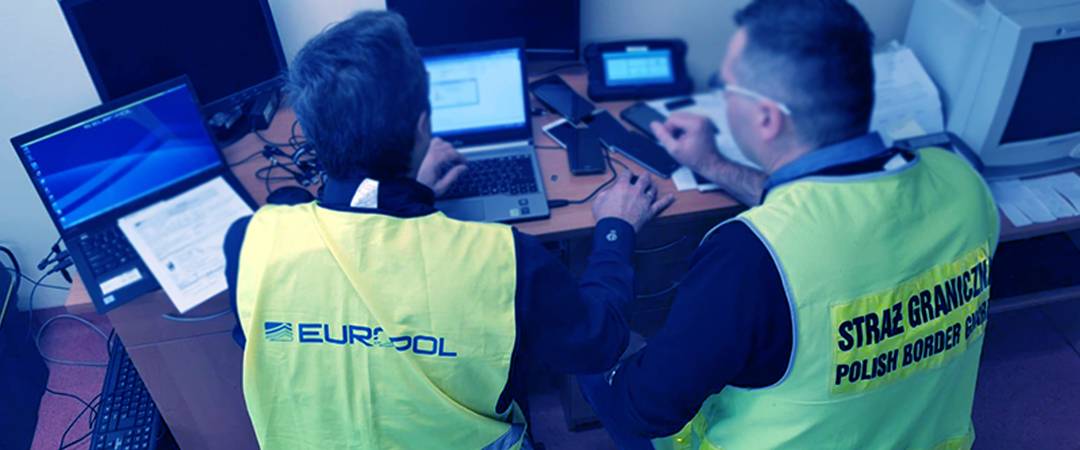
Europol Oct 15, 16:00

Euro counterfeiting ring successfully dismantled in Spain

Under the direction of the Spanish authorities, and with the support of Europol, 8 arrests by the National Police (Policía Nacional) took place last week in the Lavapies neighbourhood of Madrid. The suspects, the majority of them Senegalese nationals, are believed to have distributed counterfeit €50 banknotes throughout Spain. The Spanish National Police request the assistance of Europol in this euro counterfeiting case, after the investigation that the individuals under surveillance regularly travelled to Italy. Earlier on, the Spanish National Police had also intercepted a package addressed to the ringleader containing €15 000 worth in counterfeit €50 banknotes. The content of this package, coming from Italy, was intended to be distributed in the cities of Barcelona and Madrid.  Over 60 police officers were involved in the action day. Europol deployed a mobile office to Madrid, allowing for the real-time crosschecking of the information against the Agency’s databases.  
Read full story →
Europol Oct 15, 10:00

302 potential victims of labour exploitation in the agricultural sector identified in pan-European action

Between 16 and 20 September 2019, Europol supported the first Europe-wide Joint Action Days against human trafficking for labour exploitation focusing specifically on the agricultural sector. The operation, led by France, also involved law enforcement authorities from Belgium, Bulgaria, Cyprus, Portugal, Spain and the Netherlands.  44 suspects and 302 potential victims identified  Over 400 officers from seven Member States took part in the five-day operation. As a result, 478 agricultural sites, 7 372 individuals and 179 vehicles were checked. The joint efforts led to the identification of 44 suspects of human trafficking for labour exploitation, seven of which were arrested during the operation. 302 potential victims mostly EU citizens, were identified and 39 possible new cases of labour exploitation initiated. Short contracts and low wages The agricultural sector is particularly vulnerable to labour exploitation. Most of the vulnerabilities related to the seasonal aspect of the contracts offered, the low wages and therefore the use of relatively low-skilled workforce coming usually from modest backgrounds in poorer regions.  During the operation, some already identified vulnerable sub-sectors were checked. In France, for example, most controls were performed in the vineyards. Checks were done in coordination between law enforcement,  labour inspectors and Agricultural Social Mutual Fund. Most of the workers were from Bulgarian, Polish, Romanian and Moroccan origin. In most of the cases, workers are recruited for the harvest period from their own countries. The companies which were recruiting the seasonal workers were promising them good wages, transport and accommodation. Usually, the reality turns out to be very different; with low to  no wages at all, inhumane living conditions, extremely long working hour, etc.  Europol facilitated the information exchange between the participating countries and analysed operational information against Europol’s databases to provide leads to investigators. Europol also supported the targeting and prioritization of vulnerable agricultural sectors through intelligence analysis.     In 2010 the European Union set up a four-year Policy Cycle to ensure greater continuity in the fight against serious international and organised crime. In 2017 the Council of the EU decided to continue the EU Policy Cycle for the 2018 - 2021 period. It aims to tackle the most significant threats posed by organised and serious international crime to the EU. This is achieved by improving and strengthening cooperation between the relevant services of EU Member States, institutions and agencies, as well as non-EU countries and organisations, including the private sector where relevant. Trafficking of human beings for labour exploitation is one of the priorities for the Policy Cycle.
Read full story →
Europol Oct 11, 14:09

Fighting Cybercrime in a Connected Future

More than 400 experts from law enforcement, the private sector, and academia have gathered this week at Europol’s headquarters in The Hague for what is one of the world’s biggest platforms of exchange on cybercrime.  Under the theme of ‘Law enforcement in a connected future’, the 7th Europol-INTERPOL Cybercrime Conference looked at ways how to effectively combine the expertise, resources and insights of law enforcement, the private sector and academia to make the internet a more secure environment, especially in a society, which is becoming increasingly dependent on digital capabilities.  Over the course of three days (9-11 October), 50 experts elaborated on the most pressing cyber threats of today and tomorrow. Key themes included the benefits and challenges of Artificial Intelligence for police; the potential impacts of 5G technology; cross-border access to electronic evidence; obstacles to international cooperation on cybercrime investigations; the importance of cyber capacity building; cryptocurrency trends and challenges; the use of open-source intelligence and privacy considerations.  This year, speakers included the Executive Assistant Director of the FBI’s Criminal, Cyber, Response and Services Branch, Ms. Amy S. HESS and the General Manager of Microsoft’s Digital Crimes Unit, Ms. Amy HOGAN-BURNEY, both of whom delivered keynote speeches on the threats perceived by their respective communities. Another international speaker was Mr Cyrus Roberts VANCE Jr., the incumbent District Attorney of New York County, who spoke on the impact of encryption on criminal investigations.  As highlighted in Europol’s 2019 Internet Organised Crime Threat Assessment (IOCTA) presented at this conference, cybercriminals continue to become more audacious, shifting their approach away from scattered to more focused, carefully crafted attacks against larger, more profitable targets with the potential for ominously greater damage and major disruptions.  This year’s conference saw the participation of over 100 organisations and more than 70 different law enforcement agencies engaging in fruitful and solution-oriented discussions on how to tackle the challenges at hand head-on in a collective manner.   Conclusions emphasised a need for an even closer cooperation in the areas of: Business Email Compromise (BEC): while BEC is not new, it is evolving, causing increasing economic damage. BEC exploits the way corporations do business, taking advantage of segregated corporate structures, and internal gaps in payment verification processes.   Dark web: as the dark web evolves, it has become a threat in its own right, and not only as a medium for the sale of illicit commodities such as drugs, firearms or compromised data. The impact of law enforcement action in this arena is palpable as the environment remains in a state of flux.   Research & Development: Technology develops at an ever increasing pace, creating new challenges and opportunities for law enforcement. Adding to this the data volume challenge, legal challenges and a constantly expanding threat surface, there is a need for research and development to develop solutions addressing the needs of law enforcement in an efficient and agile way.    Innovation: The incorporation of innovation, as part of an effective crime response, is not exclusively a private sector affair. Europol and INTERPOL already cooperate with industry partners and academia to identify challenges and opportunities for law enforcement arising from new and emerging technologies, such as 5G. Mr Steven WILSON, Head of Europol’s European Cybercrime Centre (EC3), said: “Three days of conference with partners from law enforcement, industry and academia have shown what we can achieve when we work closely together to tackle the global issue of cybercrime. We must make progress in prevention, legislation, enforcement, and prosecution. All of these elements are necessary in order to disrupt organised crime activity and reduce the online threat to businesses, governments, and, above all, EU citizens. I look forward to building on our trusted relationships to deliver an improved international response to this ever-increasing challenge.” With cybercriminals constantly evolving and transforming their tactics, INTERPOL’s Director of Cybercrime Craig JONES said the traditional model of policing is ‘being challenged like never before’. “The cybercriminal world is agile and adapting, connecting and cooperating in ways we never imagined even just a few years ago,” said Mr JONES. “Law enforcement must adapt to this ever-changing criminal environment in order to effectively protect our communities in the cyber domain,” he concluded. On the occasion of this conference, Europol also launched CRYPTOPOL, Europol’s first-ever cryptocurrency-tracing training game, developed and co-created in close cooperation with CENTRIC (Centre of Excellence in Terrorism, Resilience, Intelligence and Organised Crime Research). CRYPTOPOL is a simulator of a cryptocurrency investigation with an emphasis on hands-on practice using real-life situations. CRYPTOPOL is accessible to all law enforcement cryptocurrency investigators around the world who can contact Europol to request access to the game. As the game contains information about tracing techniques used by law enforcement there is no intention of making it publicly available. The Europol-INTERPOL Cybercrime Conference is a joint initiative launched in 2013. Held annually, it is hosted in alternate years by Europol and INTERPOL.  
Read full story →
Europol Oct 11, 09:00

Boat raided from Brazil to Europe hiding over half a tonne of cocaine and narcotic substances

Operation 26Kearney, led by the Spanish authorities, National Police (Policía Nacional), Civil Guard (Guardia Civil), and the Spanish Tax Agency (Agencia Tributaria) has seen the arrest of five individuals and the seizure of 500kg of cocaine transported in hidden cabins on a boat in the Azores, Portugal. The operation was coordinated by Europol’s Drugs Unit, the Center for Maritime Analysis and Operations (MAOC-N), and supported by authorities from Estonia (Estonian Police, Politsei), the Netherlands (Dutch National Police - Central Criminal Investigation Division, Infrastructure South West) and Portugal (Polícia Judiciária). Over the course of 2018, investigators identified the members of this international crime gang in different illegal activities in Spain. The investigation revealed the connection with other countries such as Brazil, Estonia, the Netherlands, Portugal and the United Kingdom. The members of the dismantled organised crime group coordinated their illegal activities from the Netherlands and organised the transport activities from Spain, using the country as a gateway to traffic narcotic substances into Europe. Five arrests and seven searches The intervened vessel sailed from Valencia (Spain) to Brazil and from here to the Azores (Portugal). Once the ship had docked, the Portuguese Judicial Police raided the ship with Spanish and Dutch authorities in July 2019. The raid was followed by the arrest of five individuals, seven house searches and the seizure of the boat, half a tonne of cocaine, 520g of crystal meth, along with a firearm with its serial number erased, cash and nautical material (documents, nautical charts, GPS and satellite phones). Europol supported this case from the beginning by providing analytical and operational support. Different operational meetings were held at Europol’s headquarters to exchange information and coordinate joint operational actions.  
Read full story →
Europol Oct 11, 08:47

Wildlife trafficking and environmental crime on the agenda in Latin America

On 3 and 4 October 2019, Heads of State and Government and Ministers of Environment from several countries met at the first high-level conference of Americas on wildlife trafficking (Primera conferencia de alto nivel de las américas sobre comercio ilícito de vida silvestre) in Lima, Peru to share initiatives and propose common strategies to fight environmental crime. On this occasion, Europol’s Analysis Project (AP) EnviCrime presented intelligence-led investigations and information-sharing via SIENA, Europol’s Secure Information Exchange Network Application, as an example of good international cooperation.   The conference was followed by a regional seminar on environmental crime in Latin America, organised by El PacCTO. The main objectives of this seminar was to foster international police and judicial cooperation of the Jaguar Network/Red Yaguareté and discuss ongoing operations against wildlife trafficking.  A special focus was given to the illegal trafficking of mercury which is a dangerous contaminant used in illegal mining in the Amazon rainforest.  
Read full story →
Europol Oct 11, 07:00

Record seizures hit synthetic drugs during the large-scale Joint Action Days 2019

Between 16 and 20 September and on the 25 September, Europol coordinated the EMPACT large-scale Joint Action Days 2019. The actions targeted synthetic drugs and new psychoactive substances and, human trafficking, migrant smuggling, document fraud and environmental crime and involved law enforcement authorities from EU Member States, third-party countries and EU bodies *. A huge hit to the European drug market with the first results  Joint efforts of 16 Member States**, led by the Polish Central Bureau of Investigation have targeted drug traffickers across Europe. These activities brought in an important hit on drug trafficking networks pulling drugs worth more than €85 million out of the illegal market. As an example, 11.3 tonnes of MAPA pre-precursor were seized, disrupting the consequent production of amphetamines. Depending on production methods, this quantity of pre-precursors would have been enough to produce 6.3 tonnes of amphetamine worth nearly €63 million on the European market. This, added to the drugs worth €85 million seized, represents a serious hit against the European drug market.   Other major seizures of narcotics within the drug trafficking hit include: 1 300 kg of cocaine; 22 kg and 1 107 cannabis plants;  19 601 ecstasy pills;  10.63 kg of amphetamine;  6 kg of MDMA The overall results*** from all actions targeting drug and human trafficking, migrant smuggling and environmental crime include: 411 arrests; 54 potential victims of human trafficking identified;  1.1 million cigarettes and 1 223 kg of tobacco seized;   374 new investigations initiated;  37 000+ law enforcement officers participating; 475 000+ checks of persons (250 000+), means of transportation, postal packages, houses and warehouses; 166 wildlife species seized; 2 471 kg of illegal fisheries. *Overall participation reported so far: 28 Member States, Switzerland, EFCA, Eurojust, Europol and Frontex  **Participation to this action: 16 Member States (Belgium, Bulgaria, Czech Republic, Finland, Germany, Greece, Hungary, Ireland, Iceland, Italy, Latvia, Lithuania, Netherlands, Poland, Portugal and Slovakia) ***Preliminary results. Final results will follow.  As the European hub for law enforcement cooperation, Europol coordinated the 2019 large-scale Joint Action Days and supported the operational activities with secure information exchange, cross-checking of data against Europol’s databases and operational analysis, as well as on-the-spot operational support. The EMPACT Joint Action Days 2019 are part of the operational activities planned in the framework of the EU Policy Cycle. Five other EMPACT Joint Action Days have taken place so far in 2019.  The latest action days, JAD Danube 4 and JAD Western Balkans together resulted in 301 arrests and multiple seizures, including 163 forged or falsified documents, 57 weapons and firearms and more than 900 pieces of ammunition.  The previous Policy Cycle was marked by the successful operations 2017 Dragon (2017), Ciconia Alba (2016), Blue Amber (2015), and Archimedes (2014).   In 2010 the European Union set up a four-year Policy Cycle to ensure greater continuity in the fight against serious international and organised crime. In 2017 the Council of the EU decided to continue the EU Policy Cycle, for the 2018 - 2021 period. It aims to tackle the most significant threats posed by organised and serious international crime to the EU. This is achieved by improving and strengthening cooperation between the relevant services of EU Member States, institutions and agencies, as well as non-EU countries and organisations, including the private sector where relevant. Drug trafficking, facilitation of illegal immigration, trafficking in human beings and environmental crime are one of the priorities for the Policy Cycle.
Read full story →

Europol Oct 10, 12:06

Europol helps partners seize millions of counterfeit goods in OLAF - coordinated operation

Approximatively 200 000 pieces of counterfeit perfumes, toothpastes, cosmetics, 120 tons counterfeit detergents, shampoos, diapers as well as more than 4.2 million of other counterfeit goods (battery cells, footwear, toys, tennis balls, shavers, electronic devices, etc.), 77 million cigarettes and 44 tons of counterfeit water pipe tobacco have been seized by the Asian and EU customs authorities an operation coordinated by the European Anti-Fraud Office (OLAF) with the support of Europol. Targeting counterfeit goods used in the daily lives of citizens, the Joint Customs Operation HYGIEA saw the participation of all EU Member States, Australia, Bangladesh, Brunei Darussalam, Cambodia, China, India, Indonesia, Japan, Kazakhstan, Rep. Korea, Laos, Malaysia, Mongolia, Myanmar, New Zealand, Norway, Pakistan, Philippines, Russia, Singapore, Switzerland, Thailand, and Vietnam. During this operation, the customs authorities carried out targeted physical or X-ray controls on several hundred selected shipments transported by sea containers. These checks uncovered a wide array of counterfeit goods including counterfeit cosmetics, perfumes, soaps, shampoos, detergents, battery cells, footwear, toys, tennis balls, shavers, electronic devices, toys. The results include: A total of 194 498 pieces of counterfeit perfumes, toothpaste, cosmetics as well as 120 833 kg of counterfeit detergent, shampoo, diapers seized;   Several shipments of tobacco products – either found to be counterfeit or intended smuggled - containing 44 062 kg of water pipe tobacco and 77 811 800 cigarettes in total were detained;   4 202 592 pieces of other counterfeit items (battery cells, footwear, toys, tennis balls, shavers, electronic devices, etc.), including non-compliant with the safety rules or smuggled seized. During the operational phase of HYGIEA, OLAF facilitated the cooperation between the participant countries with the support of a team of ten liaison officers from Bangladesh, China, Japan, Malaysia, Vietnam, Lithuania, Malta, Portugal, Spain and EUROPOL, all working together in Brussels. A Virtual Operational Coordination Unit (VOCU) - a secure communication channel for such joint customs operations was used to channel the flow of incoming information. This exchange of information in real time allowed all the experts involved to identify the suspect flows of counterfeit goods out of ordinary commercial transactions. The Joint Customs Operation HYGIEA within the Asia-Europe Meeting (ASEM) framework as part of joint efforts of the participating countries in the fight against counterfeit goods.  
Read full story →
Europol Oct 9, 12:15

Cybercrime is becoming bolder with data at the centre of the crime scene

Europol’s 2019 cybercrime report provides insights into emerging threats and key developments. Cybercrime is continuing to mature and becoming more and more bold, shifting its focus to larger and more profitable targets as well as new technologies. Data is the key element in cybercrime, both from a crime and an investigate perspective.  These key threats demonstrate the complexity of countering cybercrime and highlight that criminals only innovate their criminal behaviour when existing modi operandi have become unsuccessful or more profitable opportunities emerge. In essence, new threats do not only arise from new technologies but often come from known vulnerabilities in existing technologies that remain unpatched for extended periods of time. Law enforcement must therefore not only focus on the potential impact of future technological developments in cybercrime, such as artificial intelligence but also approach cybercrime in a holistic sense, including prevention, awareness and increasing cyber education and resilience.  Europol’s 6th annual Internet Organised Crime Threat Assessment (IOCTA), presented today at the Europol-INTERPOL Cybercrime Conference at Europol’s headquarters, offers a unique law enforcement view of the emerging threats and key developments in the field of cybercrime over the last year.  In addition to the main trends of 2019, the IOCTA also recommends focusing on two cross-cutting phenomena that enhance all types of cybercrime. The full IOCTA 2019 report can be found on Europol’s website. Cross-cutting cybercrime phenomena Data is at the centre of crime scenes. Cybercriminals target data for their crimes, so data security and consumer awareness are paramount for organisations. Data security has once again taken centre stage following the implementation of the General Data Protection Regulation (GDPR). Cybercrime is maturing and becoming bolder, shifting its focus to larger and more profitable targets. 2019 IOCTA main trends Ransomware remains the top cybercrime threat in 2019. Even though law enforcement has witnessed a decline in the overall volume of ransomware attacks, those that do take place are more targeted, more profitable and cause greater economic damage. As long as ransomware provides relatively easy income for cybercriminals and continues to cause significant damage and financial losses, it is likely to remain the top cybercrime threat.   DDoS attacks: while using ransomware to deny an organisation access to its own data may be the primary threat in this year’s IOCTA, denying others access to that organisation’s data or services is another significant threat. Distributed Denial of Service (DDoS) was one of the most prominent threats reported to Europol. Many banks report that DDoS attacks remain a significant problem, resulting in the interruption of online bank services, creating more of a public impact rather than direct financial damage.   Data overload in fighting child sexual exploitation material: the amount of material detected online by law enforcement and the private sector continues to increase. This increase puts considerable strain on law enforcement resources. One development that could be of concern for online child sexual exploitation is the ongoing improvements of deepfakes. Deepfake technology is an AI-based technique that places images or videos over another video.   Self-generated explicit material is more and more common, driven by a growing number of minors with access to high-quality smartphones. A lack of awareness about the risks on the side of minors exacerbates the problem.   Smart cities: the most visible ransomware attacks in 2019 were those against local governments, specifically in the United States. Whether this trend will also become a threat to EU Member States is something to be seen, but experiences in the US are a warning.   Law enforcement is increasingly responding to attacks on critical infrastructure. Law enforcement appears to have become involved in a much wider variety of investigations into attacks on critical infrastructures, including attacks on the energy, transport, water supply, and health sectors. Attacks on these infrastructures by financially motivated criminals remain unlikely, as such attacks draw the attention of multiple authorities and as such pose a disproportionate risk.    The Darknet is becoming more fragmented: there are increases in single-vendor shops and smaller fragmented markets on Tor, including those catering for specific languages. Some organised crime groups are also fragmenting their business over a range of online monikers and marketplaces, therefore presenting further challenges for law enforcement.   Blockchain marketplaces: in addition to circumventing law enforcement, criminal developers are also motivated by the need to increase trust with their customer base on Tor, both in terms of anonymity but also by reducing the risk of exit scams. An example of such a market is Black Dog, scheduled for launch in August 2019. It claims to be the ‘first-ever truly decentralised crypto market’ and depends on the Ethereum blockchain to facilitate transactions.   Business email compromise: data returns to the discussion of business email compromise, which is a crucial priority reported by both Member States and the private industry. While this crime is not new, it is evolving. This scam exploits the way corporations do business, taking advantage of segregated corporate structures, and internal gaps in payment verification processes.   EU law enforcement emergency response protocol: the coordinated response to large-scale cyber-attacks remains a key challenge to effective international cooperation in the cybersecurity ecosystem. The development of the EU law enforcement emergency response protocol has significantly improved the cyber preparedness by shifting away from incongruent incident-driven and reactive response measures and acting as critical enablers for rapid response capabilities that support cyber resilience. Catherine De Bolle, Europol’s Executive Director commented: “This year’s IOCTA demonstrates that while we must look ahead to anticipate what challenges new technologies, legislation, and criminal innovation may bring, we must not forget to look behind us. ‘New’ threats continue to emerge from vulnera¬bilities in established processes and technologies. Moreover, the longevity of cyber threats is clear, as many long-standing and established modi operandi persist, despite our best efforts. Some threats of yesterday remain relevant today and will continue to challenge us tomorrow. Also, the global impact of huge cybersecurity events has taken the threat from cybercrime to another level. At Europol, we see that key tools must be developed to keep cybercriminals at bay. This is all the more important, considering that other crime areas are becoming increasingly cyber-facilitated.” European Commissioner for Migration, Home Affairs and Citizenship, Dimitris Avramopoulos, said: “Cybercriminals are becoming bolder than ever and so should we in our common European response. I am glad to see that Europe’s efforts to tackle large-scale cyber-attacks across borders are bringing results. But I am distraught by the fact that child sexual abuse material continues to thrive online. We all need to step up our efforts at all levels, because cybersecurity isn’t just the task of national law enforcement. It is a responsibility for all of us towards our citizens.” European Commissioner for the Security Union, Julian King, said: “Cybercrime is a rapidly evolving threat both in its own right but also as a tool of serious and organised crime. I fully support the excellent work done by EC3 @Europol to help Member States in the fight against this growing menace.”        
Read full story →
Europol Oct 9, 08:04

Digital smuggling and labour exploitation, latest trends reported in EPMT 400

Since 2015, the Europol Monitoring Team (EPMT) reports provide a regular update on migratory movements, trends and modi operandi in the migrant smuggling and human trafficking crime areas. In 2019, Europol’s European Migrant Smuggling Centre (EMSC) witnessed a continued – and in some areas increased – demand for facilitation services, yet  overall migration flow towards the European Union (EU) continued to decrease.  Recent developments  Focus on labour exploitation in the agricultural sector – the particular vulnerability of the sector is related to the large number of workers employed on a non-regular or seasonal basis.  Development of digital migrant smuggling: detection of the so-called ‘convoy of hope’ and smuggling services organised via internet. Life-endangering methods still prevalent Migrant smugglers and human traffickers have little regard to human life, constantly putting their victims in danger. Migrant smugglers transport irregular migrants in overloaded cars, vans and lorries while trying to hide the highest possible number of them and maximise their profits. Concealed in trunks, hidden, built-in or even engine compartments, irregular migrants are transported for several hours without stopping to avoid apprehension.  In the last two weeks of August 2019 alone, eight irregular migrants died and 33 were injured in three incidents in Croatia, Greece and North Macedonia. Explicitly violent behaviour, as occurred in stabbings among criminal groups and in robberies of migrants, led to additional injuries and fatalities. “Increased violence, use of fraudulent documents and new innovative ways of migrant smuggling – what we came to call ‘digital smuggling’ – are an unprecedented challenge for EU law enforcement agencies,” said Robert Crepinko, Head of EMSC. EMSC enhances the level of specialist support helping law enforcement across the EU to fight this illegal activity more effectively. The newly established Joint Liaison Task Force (JLT) on Migrant Smuggling and Trafficking in Human Beings strengthens the network of participating liaison officers and triggers targeted operational activities. The EMSC has also dedicated a team as a response to the increase of the number of fraudulent document detections on secondary movements inside the EU-Schengen area. Download EPMT No. 400 / Special Edition
Read full story →
Europol Oct 4, 07:00

New online platform for intelligence analysis

On 3 October 2019, Europol’s Executive Director, Catherine De Bolle launched CONAN (Connecting Analysts), the new platform for intelligence analysis. The platform was launched in the margins of the European Police Chiefs Convention, the most significant law enforcement convention in the EU. Through the secure, web-based CONAN platform, criminal analysts from EU Member States, third partner countries and relevant partner agencies will be able to elaborate and share guidelines, methodologies, training materials, analytical tools and additional resources. CONAN will feature two sections on operational and strategic analysis where law enforcement experts from Member States and beyond can exchange their expertise, interact with each other and work towards improving intelligence analysis. A dedicated sub-platform will be devoted to facilitating knowledge-sharing solely among EU law enforcement professionals. In the near future, a sub-platform will also allow EU Member State law enforcement analysts to develop and co-create analytical tools.
Read full story →
Europol Sep 26, 09:53

Alexa, are you ready to support police investigations?

The third edition of the EDEN Conference on Data Protection in Law Enforcement kicked off on 19 September in Copenhagen. The two-day event, Paradise lost? Policing in the age of data protection was organised by the Danish National Police (Dansk Politi), the Europol Data Protection Experts Network (EDEN) and the Academy of European Law (ERA). This year’s EDEN conference brought together more than 140 attendees and 25 speakers. The conference explored the practical implementation of EU data protection rules within the law enforcement sector and highlighted the challenges that data protection experts face in developments in policing, society as a whole and a rapidly changing criminal environment.  Participants included Europol, the European Commission, the Danish National Police and internationally renowned practitioners from law enforcement and security authorities with privacy experts, academics and representatives from private industry and civil society. The conference covered topics, which are of exceptional relevance to data protection and law enforcement. Predictive policing Prediction is a core part of policing. Where should law enforcement resources be deployed to deter future crime? Who are the potential victims? The panel elaborated the shades of prediction in policing and the policy and technical methods that can help to respect fundamental rights. Data retention in the hands of the EU Reflecting on the state of play, the way forward and how criminal investigations in Germany have been affected when access to communications data by the police has been severely restricted. The panel ended with a fruitful discussion from creating a patchwork of different national practices, hindering the transnational prevention and investigations of serious crime and terrorism, to a state of play where EU citizens cannot rely on their fundamental rights being equally protected in all EU member states. Your email address on the dark web The panel debated on real-life examples of the use of open sources in digital investigations, the definition of public information and the application of different data protection legislation. One panellist emphasised the technical obstacles of using open source information and working with large data sets in the law enforcement sphere. Data protection by design Is PNR building a mass surveillance system? Opponents claim that it is a mass surveillance of mostly innocent citizens violates the fundamental right to privacy. This panel evaluated EU data protection principles, i.e. data protection by design and default to avoid designing a mass surveillance system. Globalisation of criminal evidence The panel explored the impact of 5G technology for law enforcement in fighting serious crime and terrorism and its impact on fundamental rights. The panellists discussed which authorities should be authorised to access data on smart devices and potential types of crimes related to smart devices. The third edition of the EDEN Conference was a great success and represented speakers from different sectors all over the world. Europol’s Data Protection Function launched the new EDEN DPO (Data Protection Officer) Group and hosted a workshop on the practical implementation of the law enforcement directive to enhance the network of law enforcement DPOs of European Member States.  
Read full story →
Europol Sep 26, 08:13

66 suspected of arranging illegal adoptions and surrogacies, and human egg trafficking in Greece

On 23 September 2019, Greek law enforcement authorities, supported by Europol, dismantled an organised crime group involved in the trafficking of human beings (selling ova), illegal adoption and money laundering.  €25 000 to €28 000 per illegal adoption Active since 2016, the criminal network recruited vulnerable pregnant women from Bulgaria. The group transported them to Thessaloniki, Greece where they were placed under medical observation and sent to private hospitals to deliver their children. The newborns were then illegally adopted for between €25 000 and €28 000 each. The fees included paying the biological mother, all legal expenses, hospitalisation, delivery itself and the members of the criminal group. Some of the mothers brought to Greece were also used as surrogates.     The same criminal group was also involved in ovum trafficking. The criminals recruited donors in Greece, mainly from Bulgaria, Georgia and Russia. The women were then transferred to Thessaloniki to undergo a series of fertility treatments to increase the number of ova. At least half a million euros in profit During the action day, officers from the Hellenic Police (Ελληνική Αστυνομία) conducted 12 house searches and arrested 12 individuals suspected of belonging to a criminal group. The investigation led to the identification of 10 more members of the criminal organisation. In total, the case involved 66 individuals, including a lawyer, an obstetrician-gynaecologist and employees of private clinics. Officers seized €13 000 in cash, three cars, mobile phones and electronic devices, various documents related to adoption and surrogate procedures, birth certificates and bank statements.  It is estimated that the criminal activity generated at least €500 000. The money was laundered through financial institutions, luxury goods and properties. Europol conducted operational and financial analysis, which confirmed the involvement of individuals and corroborated other evidence collected in the investigation. Europol supported the investigation since the early stages by facilitating secure information exchange, providing operational and analytical support, and intelligence and financing one operational meeting. One Europol expert was also deployed in Greece on the action day to perform live cross-checks of operational data against Europol’s databases. 
Read full story →
Europol Sep 23, 15:00

Europol and the Spanish National Police arrest serious supporter of the so-called Islamic State

Europol supported the Spanish National Police (Policía Nacional) in arresting a man in Cádiz, Spain suspected of using social media platforms to indoctrinate users; glorify IS attacks; and promote and disseminate jihadist terrorist propaganda in message groups in favour of IS. The individual’s constant activity on social media included downloading videos and tutorials on how to carry out terrorist attacks using bladed weapons, cars and how to make homemade explosives. Being active on different social media platforms and over 20 messaging groups, the individual showed his affinity for the terrorist organisation by using a photo of the IS leader as his profile picture across his accounts. After being arrested at his home, the officers seized audio-visual material from his computer for further analysis. They collected evidence that the individual had taken the oath of obedience to the leader of IS, known as the caliph, Abu Bakr Al-Baghdadi and by extension to IS. This act of allegiance shows the potential danger of the individual. Several European-based members of the terrorist organisation have previously pledged this level of commitment before carrying out terrorist attacks.   Watch video  
Read full story →
Europol Sep 23, 13:59

Bad harvest for Bulgarian-French network exploiting vineyard workers

On 17 September 2019, Bulgarian and French law enforcement authorities, supported by Europol and Eurojust, dismantled an organised crime group involved in trafficking human beings for labour exploitation and money laundering. More than 80 investigators from Bulgaria and France were involved in the action day.  The criminal group recruited workers in Bulgaria for the harvesting season in France. The investigations led to the identification of 167 potential victims, employed by four different winegrowing companies near the French city of Lyon. The French law enforcement authorities arrested four members of the group, three from Bulgaria and one from France. The Bulgarian members of the group were responsible for recruitment in Bulgaria while the French member arranged logistics, including organising accommodation for the workers. Recruitment agency behind the labour exploitation The organised crime group operated behind a legal business, an employment agency based in Bulgaria. The company recruited Bulgarian nationals from disadvantaged regions as seasonal workers for the French agricultural sector. The workers signed employment contracts in a foreign language while being told they would receive €60 a day. In addition to the wage, the workers were also promised housing and transport.  In reality, they were sent to France in unlicensed transport and then put up on a campsite with money taken out of their wages for meals. When their contracts came to an end, the agency also withheld transport costs and other various charges from the final payroll. The workers’ final salaries were often not enough to even cover their trip back to Bulgaria. The network used this money and laundered it through properties in France. Europol supported the investigation by facilitating secure information exchange, providing operational, analytical and intelligence support and deploying one analyst to support the operational actions in France. Europol funded several operational meetings and provided financial support for the exchange of experts for the on-the-spot investigations.    In 2010 the European Union set up a four-year Policy Cycle to ensure greater continuity in the fight against serious international and organised crime. In 2017 the Council of the EU decided to continue the EU Policy Cycle for the 2018 - 2021 period. It aims to tackle the most significant threats posed by organised and serious international crime to the EU. This is achieved by improving and strengthening cooperation between the relevant services of EU Member States, institutions and agencies, as well as non-EU countries and organisations, including the private sector where relevant. Trafficking of human beings is one of the priorities for the Policy Cycle.
Read full story →

Europol Sep 23, 12:42

Law Enforcement explained in 120 Seconds

There are many things one can do in 120 seconds, say a prayer, have an espresso or check your Instagram account. You could also watch Europol’s new video series Law enforcement explained in 120 seconds. The five-clip series shows how serious and organised crime produces, traffics and distributes drugs; explains the negative consequences for our society; and sheds light on criminal activities in cocaine, heroin, synthetic drug and fentanyl trafficking. Drugs make up the largest criminal market in the EU. More than one-third of the 5 000 criminal groups active in the EU are involved in the production, trafficking or distribution of various types of drugs. The drugs trade generates multi-billion-euro profits for the groups involved in this criminal activity.  The EU retail drug market is estimated to be worth at least €24 billion a year. The immense profits generated from the drugs trade fund various other criminal activities allowing organised crime groups to thrive and develop their criminal enterprises at the expense of the health, prosperity and security of EU citizens. Europol supports Member States in the fight against illegal drugs with a team of experienced specialists and analysts based in Europol’s European Serious and Organised Crime Centre. They provide operational, analytical and coordinative support to investigating officers in the Member States. A large share of the information being sent to Europol from EU law enforcement authorities concerns drug-related investigations and operations. In December this year, Europol will host the annual conference Drugs in Europe: a bold law enforcement response, where delegates will discuss the latest trends in illicit drug trafficking and will agree on bold law enforcement responses to protect the public from the threats posed by illicit drugs. Europol and the European Monitoring Centre for Drugs and Drug Addiction (EMCDDA) will also publish this year their joint EU Drug Markets Report 2019, which illustrates the widespread impact of drug markets, how they are related to other criminal activities and how they have a serious impact on legitimate business and the wider economy. Europol’s video series Law enforcement explained in 120 seconds is out now. Watch Europol’s experts and understand in two minutes how organised crimes groups work, how they try to destroy our society and how international law enforcement is teaming-up to dismantle drug cartels.        Watch video
Read full story →
Europol Sep 20, 13:17

11 arrested in child abuse network crackdown in Georgia

Law enforcement and judicial authorities from Australia, Georgia and the USA, supported by Europol, dismantled an organised criminal network involved in the production and distribution of child sexual exploitation material.  Over the course of the past month, the Georgian Police arrested 11 alleged members of the group including the owners and employees of the photographic studio producing the child sexual exploitation material. American and Australian citizens were also among the arrested suspects. Assisted by Georgian accomplices, they arranged the production of sexual exploitation images of children in rented apartments located in Tbilisi, Georgia. The produced child abuse material was further disseminated by the same criminal group. The Central Criminal Police Department of Georgian Ministry of Internal Affairs identified up to 10 girls aged from 8 to 14 years old who were victims of the network. Some of the girls were victimised with the consent of their parents in exchange for payments between 500 and 3 000 GEL (approximately €150 to €900).  The Georgian police, supported by Europol, carried out searches in the illegal photo salons and seized computer hardware, disks and memory cards containing child sexual abuse images and videos. Expensive cameras, lighting and computer equipment were also seized.  Europol supported the investigation by facilitating the secure information exchange, providing operational analytical and intelligence support and deploying two experts to support the operational actions on the spot.   Watch video
Read full story →
Europol Sep 19, 08:35

FS-ISAC and Europol Partner to Combat Cross-Border Cybercrime

The Financial Services Information Sharing and Analysis Center (FS-ISAC) and Europol’s European Cybercrime Centre (EC3) today announced a partnership to combat cybercrime within the European financial services sector. The purpose of the MOU will be to facilitate and enhance the law enforcement response to financially motivated cybercriminals targeting banks and other financial institutions through a symbiotic intelligence-sharing network. The important partnership is a response to the acceleration of sophisticated cyber-attacks in recent years affecting numerous countries and jurisdictions at once. The MOU will help foster a pan-European approach to intelligence sharing, ensuring the cross-border cooperation necessary for the detection, prevention and reduction of cybercrime. In addition to facilitating information sharing, the agreement will also enable education and resilience through training exercises and informational summits. “Cybercriminals are increasingly targeting financial services and institutions to the cost of citizens and businesses across the EU,” said Steven Wilson, Head of EC3. “It is crucial to bring key stakeholders around the table to improve the coordinated response; this MOU with FS-ISAC builds a platform to allow us to do exactly that.” FS-ISAC is a close partner of EC3 and an active member of the Advisory Group on Financial Services, a public-private partnership initiative, which provides a platform for financial services organisations and law enforcement to share information as well as to agree on joint operations and awareness campaigns.  “Accelerated global digitalisation combined with the growing sophistication of cybercriminals demands a more concerted approach from both the public and private sector,” said Ray Irving, Managing Director of FS-ISAC. “Through a collaborative peer-to-peer network, FS-ISAC and EC3 are enabling intelligence sharing to better safeguard the global financial system.” About The European Cybercrime Centre (EC3) The European Cybercrime Centre (EC3), set up in 2013, is the response in the EU to protect European citizens, business and governments from online crime. With more than 60 experts working on a daily basis, EC3 is involved in hundreds of high-level online operations providing with data analysis and on-the-spot support to the Member States. Each year, the European Cybercrime Centre publishes the Internet Organised Crime Threat Assessment (IOCTA), its flagship strategic report on key findings and emerging threats and developments in cybercrime. About FS-ISAC The Financial Services Information Sharing and Analysis Center (FS-ISAC) is an industry consortium dedicated to reducing cyber-risk in the global financial system. Serving financial institutions and in turn their customers, the organisation leverages its intelligence platform, resiliency resources, and a trusted peer-to-peer network of experts to anticipate, mitigate and respond to cyber threats. FS-ISAC has nearly 7,000-member firms with users in more than 70 countries. Headquartered in the United States, the organisation has offices in the United Kingdom and Singapore. 
Read full story →
Europol Sep 18, 14:14

Trash worth millions of euros

It's well known there's always two sides of a story, if not more, but we all agree that waste management is an important issue as waste has a huge negative impact on the natural environment. On the top of that, as a business worth billions of euros, waste management has given criminal networks the opportunity to diversify their activities and infiltrate the economy. The large quantity of waste left over from industry production processes in Europe is feeding a growing demand for waste disposal services. Stricter regulations and price increases to legally dispose of waste are tempting industries to opt for alternative waste management suppliers.  That’s where the criminals come in: exploiting businesses as they attempt to balance maximising profits while minimising costs. Criminals legally register companies and present themselves as ‘facilitators’ for waste management and disposal services asking much lower prices than other companies on the legal market. The plastic waste they pretend to recycle on paper then ends up on illegal dumping sites. The plastic can also be reintroduced onto the market as, for example, a new, potentially toxic, plastic water bottle. Recycled plastic can be a threat to human health if it has not gone through the proper recycling process.     A growing trend in the grey economy Along with striving to reduce expenses, economic crises and structural challenges in different industrial sectors encourage the proliferation of illegal waste disposal services. This demand causes organised crimes groups (OCGs) to specialise in waste management. Legal business structures are an integral aspect of this crime phenomenon. However, the companies involved in such activities engage in a number of crimes for which they are usually prosecuted.  OCGs traffic waste both inside and outside the EU. Plastic waste is typically transferred from one Member State to another to avoid disposal fees or other costs associated with the proper disposal of waste products in accordance with EU regulations.  Operation Green Tuscany The Italian State Forestry Corps (Carabinieri Forestale) dismantled a large OGC with this modus operandi in operation Green Tuscany, which was supported by Europol and involved law enforcement authorities from Italy and Slovenia. The criminal group trafficked plastic waste from Italy to China through Slovenia. The investigation is linked to an Italian anti-mafia investigation into illicit trafficking of textile waste to Africa from the Italian ports of Genoa, Livorno and Trieste. The companies involved in this illegal activity were also operating as brokers and carriers in a parallel plastic waste trafficking scheme. The law enforcement success in uncovering the set-up brought the network to alter its strategy and opt for different routes choosing Slovenia as a transit country towards China.  The Slovenian companies provided Italian companies with forged documents attesting that the material had been recycled. The shipments were then sent to China. Occasionally the transporters received the false documents while the shipments were still en route to Slovenia.  During the operation, approximately 560 illegal shipments were monitored. The monetary value of one shipment was estimated to be between €10 000 and €15 000. This estimation makes the value the monitored cargos alone around €8 million.  Two members of the Camorra among the prosecuted   By mid-May 2019, 96 individuals (74 Italians and 22 Chinese) faced charges in Italy following operation Green Tuscany. The first trial opened on 20 May this year. The collaboration between the Italian and Slovenian law enforcement authorities, Europol and Eurojustt revealed the international dimension of the investigation and led to the prosecution of 96 members of the organised crime group.  The members of the network were of both Italian and Chinese origin. Among them, there were also two representatives affiliated with the Camorra, active both in Campania and in Tuscany, and operating in the textile waste sector. They were arrested for usury and extortion. Operation Green Tuscany revealed that Chinese suspects based in Italy maintained strong ties to criminal individuals in the destination country (i.e. China) and cooperated with Italian and Slovenian criminals. The organisation was not pyramidal and each member was responsible for a specific step of the process. Some criminals were responsible for the pickup of plastic waste with lorries, some were in charge of transport via sea vessels to Slovenia.  International cooperation Operation Green Tuscany was coordinated by Eurojust and its close partnership with Europol was crucial to the success of the operation. A range of cooperative enforcement actions was provided, including pre-operational intelligence exchange, operational meeting and analysis services to Italian and Slovenian law enforcement authorities. The trafficking of illicit waste has a significant negative impact on the environment. Although it is difficult to estimate the exact financial impact of illicit waste trafficking, significant costs are related to the clean-up of illegal dumping sites. The products fabricated from improperly recycled plastic, which vary from plastic bottles to toys, can be very dangerous for human health.
Read full story →
Europol Sep 17, 08:15

29 arrests in France and Spain in a migrant smuggling case

The Spanish National Police (Policía Nacional) and the French National Police (Police Nationale), supported by Europol, dismantled a large poly-criminal network involved in migrant smuggling, trafficking of human beings and drug trafficking.  The organised criminal group targeted also unaccompanied minors in protection centres in Spain. They incited the minors to escape the centres and embark on dangerous journeys towards western Europe. The criminal group used recruiters from different countries to target migrants from their own national group (Algerian, Malian, Moroccan and Syrian). The irregular migrants were transported from the Spanish port of Almería to France on buses owned by companies located in France, Morocco and Spain. The criminal group also used the buses to smuggle hashish, tobacco and hunting species. The goods and animals were hidden in holes in the vehicles, which had been specifically created to conceal their smuggling efforts.   The investigation began with the arrest of a Spanish national in France who was driving a bus with 22 irregular migrants on board, six of whom were minors. The information triggered a large-scale investigation in Spain, which uncovered a criminal network allegedly headed by the main administrator of the company owning the buses, a Moroccan citizen. The operation resulted in the arrest of 26 suspects in Spain and 3 in France, 14 house searches and the seizure of €33 000, various documents, computer equipment, more than 200kg of hashish, a vehicle and a trailer.   Europol supported the operation with coordination, analysis and information exchange. Europol financed the organisation of an operational meeting and provided on-the-sport operational support during the action day with the deployment of two analysts in Spain and one in France to support the action in the field.   Watch Video In 2010 the European Union set up a four-year Policy Cycle to ensure greater continuity in the fight against serious international and organised crime. In 2017 the Council of the EU decided to continue the EU Policy Cycle for the 2018 - 2021 period. It aims to tackle the most significant threats posed by organised and serious international crime to the EU. This is achieved by improving and strengthening cooperation between the relevant services of EU Member States, institutions and agencies, as well as non-EU countries and organisations, including the private sector where relevant. Facilitation of illegal immigration is one of the priorities for the Policy Cycle.
Read full story →
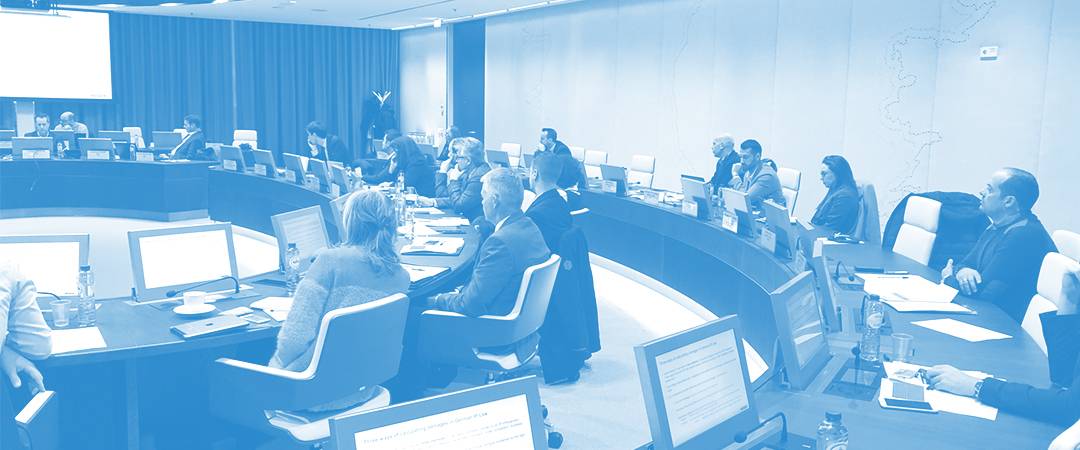
Europol Sep 16, 08:27

Tabletop Exercise at Europol on Terrorist Content Dissemination Online

On 11 September, the EU Internet Referral Unit (EU IRU) organised a tabletop exercise with EU Member States’ law enforcement authorities, third countries and online service providers (OSPs) at Europol’s headquarters, in The Hague, under the umbrella of the European Commission-led EU Internet Forum.  The aim of the exercise was to inform and work on the development of an EU-led voluntary mechanism to enable a coordinated response to a cross-border massive abuse of the internet in the context of terrorism or violent extremism. The exercise was attended by a number of EU Member States (Belgium, Cyprus, Denmark, Germany, Finland, France, Italy, Portugal, the Netherlands, Slovenia, Spain, Sweden, the United Kingdom), third countries (Australia, Canada, Jordan and New Zealand), OSPs (Facebook, Files.fm, Google, Justpaste.it, YouTube, Microsoft, Telegram and Twitter), Tech Against Terrorism (an initiative working with the global tech industry to tackle terrorist use of the internet), and the European Strategic Communications Network. In the aftermath of the terror attack in Christchurch, New Zealand, in March 2019, the EU Internet Forum committed itself to supporting the Christchurch Call to Action, which aims to eliminate terrorist and violent extremist content online. The Christchurch attack highlighted the need for a coordinated cross-border response across OSPs and EU law enforcement in relation to terrorist or violent extremist incidents that include a significant online component. It also demonstrated how an offline event in one country can have an immediate impact across the globe: the attack was livestreamed online and the video was immediately reproduced and shared at an unprecedented rate by both supporters of the attack and a variety of user communities, and mainstream media. The speed and volume of internet abuse during and in the immediate aftermath of the attack, and the vast number of OSPs’ platforms and services that were misused and exploited highlighted the limitations of existing processes to address similar threats.  Since the creation of the EU IRU, Europol has enjoyed good cooperation with OSPs in tackling terrorist content online. The tabletop exercise, the first of its kind since the launch of the Christchurch Call to Action, marks a milestone towards closer cooperation between all parties involved in further improving the fight against terrorism online.  
Read full story →
Europol Sep 9, 14:19

Operational Centre at Europol: 30 countries team up to combat crime in the Western Balkans

The Joint Action Day (JAD) Western Balkans 2019 is an international operation, involving 6 758 law enforcement officers: 6 708 officers on the ground and 50 officers in the Operational Centre at Europol’s headquarters. Law enforcement officers from 30 countries, as well as 8 agencies and international organisations teamed up to tackle the 4 EMPACT (European Multidisciplinary Platform against Criminal Threats) priorities: firearms trafficking, illegal immigration, document fraud and drugs trafficking.  EU Member States: Austria, Belgium, Bulgaria, Croatia, Czechia, Denmark, Estonia, Germany, Greece, Cyprus, Hungary, Italy, the Netherlands, Poland, Portugal, Romania, Slovenia, Slovakia, Spain, Sweden,  the United Kingdom. Non - EU Member States: Albania, Bosnia and Herzegovina, North Macedonia, Serbia, Montenegro, Kosovo*, Switzerland, Moldova, USA (ATF, DEA, HSI, CBP). EU Agencies: Europol, Frontex Institutional partners: INTERPOL, UNODC, SEESAC, IPA/2017 Countering Serious Crime in the Western Balkans, PCC-SEE, SELEC. Operational centre at Europol The preparatory phase began in early 2019 with several operational meetings and intelligence-gathering activities organised by all the participants, as well as controls at selected border control points. The EMPACT Firearms working group - led by Spain, coordinated the operation. Europol coordinated the deployment of mobile offices in on the request of countries to analyse information on-the-spot.  From 5 to 8 September 2019, a coordination centre was set up at Europol’s headquarters in The Hague to support the exchange of intelligence among the participants. During these days, 50 officers from almost all the EU Member States and Western Balkan countries, Europol, Frontex, INTERPOL and IPA/2017 Countering Serious Crime in the Western Balkans Project intensified checks in areas identified as high-risk based on information collected and analysed in the coordination centre.   Frontex tackled cross-border crime at the EU external borders and contributed to the operation by performing intensified controls at selected border crossing points and border surveillance activities as part of its ongoing field activities in the region.   Results from the JAD In total, 214 147 persons, vehicles, and premises were checked during last week’s JAD in the fight against crime originating from the Western Balkans. 175 individuals were arrested (26 arrests in the intelligence phase and 149 in the operational phase) Most relevant results:   329 refusal of entry 164 clandestine entries 111 overstay 14 visa fraud or misuse 71 forged or falsified documents 51 firearms (aside from the 49 from the investigations identified in the intelligence phase) 3 other weapons 895 pieces of ammunition   * This designation is without prejudice to positions on status, and is in line with UNSCR 1244/99 and the ICJ Opinion on the Kosovo declaration of independence. The operation was coordinated under the umbrella of the European Multidisciplinary Platform against Criminal Threats (EMPACT) as part of the EU Policy Cycle, a four-year plan for the fight against serious and organised crime. It brings together police and law enforcement authorities of EU Member States, European agencies and international organisations to jointly strengthen Europe’s borders and internal security. The results and intelligence gathered will help in ongoing and future investigations.
Read full story →
Europol Aug 28, 14:34

Centenary of the Polish State Police: Europol presents exhibition with items from the past 100 years of Polish policing.

On 27 August, Catherine De Bolle, Executive Director of Europol and Paulina Filipowiak, Director of the International Police Cooperation Bureau of the Polish State Police opened an exhibition to mark the centenary of the Polish State Police. Europol has enjoyed long and close cooperation with Poland. Ms De Bolle was pleased to speak at the opening of the exhibition, which features items from the past 100 years of Polish policing.  The exhibition, presented at Europol’s headquarters not only demonstrates the establishment of the Polish State Police 100 years ago but also shows the evolution of their investigative work, capturing police service in the first two decades of the 20th century. A special focus is given to women in the Polish police service. In the 1920s the Polish State Police was a pioneer in establishing the Women’s Police Section which dealt with trafficking of human beings, prostitution and offences by minors. Stanislawa Paleolog was the first female section head and gained worldwide recognition. A meeting room at Europol’s headquarters is named in her honour. The exhibition, which is under the honorary patronage of the Commissioner General of the Polish National Police, Jarosław Szymczyk, is a tribute to all police servants who ensure our safety and security.
Read full story →
Europol Aug 9, 10:00

70 arrests in pan-European action against child trafficking

Europol supported a pan-European operation against trafficking of minors for sexual exploitation, forced begging and labour exploitation. The operation, led by the United Kingdom, involved law enforcement authorities from 15 EU member states, Iceland and Switzerland*. Between 17 and 23 June 2019, over 127 000 individuals, 63 800 vehicles and 1 100 locations were checked. Law enforcement authorities searched private properties, commercial establishments, hotels, buses and train stations, ferry ports, airports and border crossings. Prevention campaigns in schools to inform minors of the risks of human trafficking were also part of the operational activities. The overall results include 34 arrests for trafficking of human beings and 36 arrests for other offences such as robbery, dissemination of child sexual exploitation material and facilitation of illegal immigration. During the action days, 206 potential victims were identified, 53 of which were confirmed to be minors. These activities enabled the initiation of 31 new cases of human trafficking across the different participating countries.  During the operation, experts in trafficking of human beings from law enforcement agencies, child protection officers, social workers, representatives of municipalities and non-governmental organisations joined efforts to identify potential victims and investigate cases of child trafficking.  Europol facilitated the information exchange between the participating countries and analysed operational information against Europol’s databases to provide leads to investigators.  *The following countries participated to the Joint Action Days: Austria, Bulgaria, Croatia, Germany, Hungary, Iceland, Latvia, Lithuania, the Netherlands, Portugal, Romania, Slovakia, Slovenia, Spain, Sweden, Switzerland and the United Kingdom. In 2010 the European Union set up a four-year Policy Cycle to ensure greater continuity in the fight against serious international and organised crime. In 2017 the Council of the EU decided to continue the EU Policy Cycle for the 2018 - 2021 period. It aims to tackle the most significant threats posed by organised and serious international crime to the EU. This is achieved by improving and strengthening cooperation between the relevant services of EU Member States, institutions and agencies, as well as non-EU countries and organisations, including the private sector where relevant. Trafficking in human beings is one of the priorities for the Policy Cycle.
Read full story →
Europol Aug 8, 12:00

40 arrested in Spain and France for international vehicle theft and trafficking

Europol has supported the Spanish Guardia Civil and the French Gendarmerie Nationale to dismantle an organised crime group involved in the stealing of vehicles. 40 individuals were arrested in connection to this case (32 in Spain, 8 in France) and 118 stolen vehicles were recovered, the sale of which would have brought over € 4 500 000 to this criminal organisation. Several house searches were carried out in the region of Madrid (Spain). Chemical substances and professional tools used to manipulate license plates, chassis numbers and false documents, as well stolen cars ready to be exported abroad were discovered and seized. Initiated in January 2018 by the Spanish authorities, the investigation uncovered that this crime group had been stealing original vehicle documents and vehicles of the same brand as the ones mentioned in the documents. Afterwards, they falsified the vehicles’ identification numbers, produced fake license plates containing valid information and sold these vehicles to Spanish and French car dealers as well as online. The asking price for the stolen vehicles was always slightly below the market price in order to secure a quick sale. Throughout the investigation, Europol facilitated the exchange of intelligence, hosted and participated in a number of operational meetings and provided analytical support to the investigators. A Europol property crime expert was deployed to France for the action day earlier in June to provide on-the-spot intelligence analysis and forensic support. The evidence which was gathered during the action days in France and Spain is now being analyse to recover additional vehicles stolen by this organised crime gang. In 2010 the European Union set up a four-year Policy Cycle to ensure greater continuity in the fight against serious international and organised crime. In 2017 the Council of the EU decided to continue the EU Policy Cycle for the 2018 - 2021 period. It aims to tackle the most significant threats posed by organised and serious international crime to the EU. This is achieved by improving and strengthening cooperation between the relevant services of EU Member States, institutions and agencies, as well as non-EU countries and organisations, including the private sector where relevant. Organised Property Crime is one of the priorities for the Policy Cycle.
Read full story →

Europol Aug 7, 12:20

Suspect arrested in Greece for large-scale document forgery

With the support of Europol, a 50-year old individual was arrested in Greece for large-scale forgery of documents and facilitating illegal immigration.  During the action day on 11 July, the Greek law enforcement authorities raided the printshop in Ilioupoli and seized over 3 200 pages of altered or falsified passports, 198 passports, 172 ID cards, 90 driving licences and a number of residence permits, alongside all the equipment necessary for the document forgery (paper laminating and cutting devices, ink, etc.) The forger was active in the city centre of Athens and selling and buying several documents originated not only from Greece but also from other countries. The illicit documents were then provided to irregular migrants to enable their onward travels and further residence in the EU. On the action day, Europol deployed to Greece experts from its European Migrant Smuggling Centre (EMSC) and European Cybercrime Centre (EC3 – Document Forensic Laboratory) to provide on-the-spot intelligence analysis and forensic support. Throughout the investigation, Europol facilitated the exchange of intelligence and provided tailored analytical  and forensic support to the investigators. This operation was led by the Department of Combating Organized Crime and Anti- Trafficking Subdivision of Athens and supported also by experts from the Greek Forensic Science Division/False Document and Counterfeit Currency Laboratory. The evidence which was already known and  gathered during the action day is now being analysed to identify possible links with investigations in other EU Member States. 
Read full story →