Sports News

BBC Sport Dec 6, 06:09

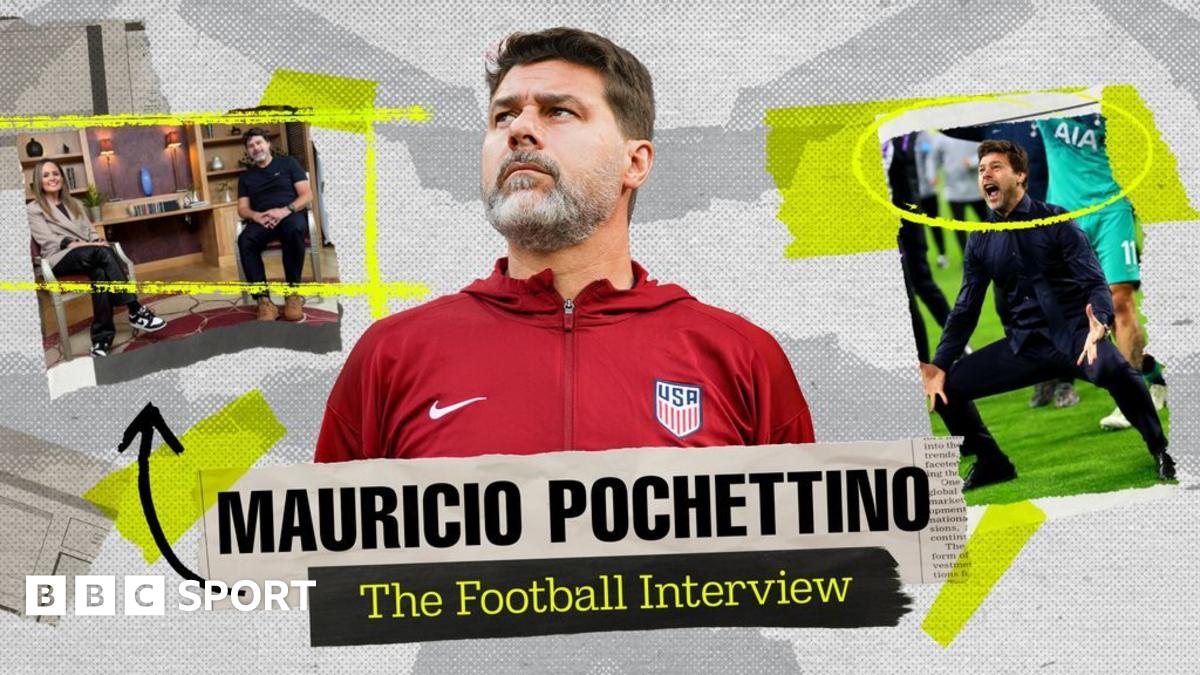
I want to come back to Premier League and win it this time - Pochettino

The Football Interview is a new series in which the biggest names in sport and entertainment join host Kelly Somers for bold and in-depth conversations about the nation's favourite sport.We'll explore mindset and motivation, and talk about defining moments, career highs and personal reflections. The Football Interview brings you the person behind the player.Interviews will drop on Saturdays across BBC iPlayer, BBC Sounds and the BBC Sport website. This week it will be shown on BBC One at 23:45 GMT (and after Sportscene in Scotland).———————————————————When Mauricio Pochettino first came to the Premier League as Southampton manager in 2013, he was not widely known.But now, after spells with Tottenham, Paris St-Germain and Chelsea, he is one of the most recognisable names in the game.Pochettino, 53, is preparing to coach at the World Cup for the first time, as manager of 2026 co-hosts United States.The former Argentina defender sat down with Kelly Somers to talk about growing up on a farm, hosting barbecues for his players, and his desire to return to English football.Mauricio Pochettino led Spurs to the 2019 Champions League final, which they lost 2-0 to LiverpoolKelly Somers: Why did you want to be involved in football?Mauricio Pochettino: When I was a child, it was a thing which began to grow in my body, my brain, my blood. Maybe because my dad, my family, always felt passion for football. But when I try to remember, I go back to my grandad's farm when I was very little. I would have a ball in my hand and I would play.Kelly: So you used to play football on a farm?Mauricio: Yes, on my grandad's farm. I started to play with my brother, my dad. That's when I started to feel a passion for the game.Kelly: Can you remember the first team you played for?Mauricio: In my hometown of Murphy. I played there. But because my dad was a Racing Club fan, I grew up supporting them. Then I moved to Newell's Young Boys, and grew my career there in the academy and first team.Kelly: Can you remember a time in your young career that you thought, 'I've got a chance of making it here... it could be my life'?Mauricio: It was never in my head that I was going to make a living playing football. When I was 13, 14, when Newell's Old Boys signed me, that's when I realised, 'I am not only playing, this might be a way to build my career and be a professional'. That's when I realised I was not only playing for fun, but to survive in life and earn money.Pochettino became US manager - his first job in international football - in 2024Kelly: Can you remember a time when you thought, 'I want to be a manager'?Mauricio: It started to grow little by little in my mind, when I was 27, 28. I moved from Espanyol to Paris St-Germain. I started to notice how the coaches dealt with situations. I started to challenge my coaches, to notice why they dealt with things. Then it is up to you - your character, your capacity to understand and make decisions. If you get asked to make a decision, and you say, 'wait'... like people say now, 'I'll ask ChatGPT' ... no, you need to make decisions very quickly, store knowledge from different people, and believe in yourself.Kelly: If you could relive one match from your career, what would it be?Mauricio: Player or coach? Changing the result or reliving the experience?Kelly: Whichever way you want to go with it.Mauricio: One game I want to go back to and relive, as a coach, is the Champions League semi-final with Ajax [as Tottenham manager in 2019]. That was one of the best moments in my career, my life. The feeling was amazing. The emotion... it was one of the greatest moments. And the final in Madrid [which Spurs lost 2-0 to Liverpool], I will try to play again this game, for sure. I have no regrets, but if you gave me the opportunity, I would not like it to finish the same way.Kelly: Describe to me a young Mauricio Pochettino. What were you like growing up?Mauricio: I don't know if you can be more happy than when you were a child. My first memories are very happy.Kelly: Describe to me the home set-up... what it was like being in your household.Mauricio: My parents, my brothers on the farm... I grew up on a farm until I was six years old. It was amazing, with my dogs, horses, but it was a place of work. My dad was a farmer. He had only one pair of shoes - for Sundays. What I learned as I evolved as a man was to respect life, respect people. That's because if you grow in a place with animals, they don't judge you. They show love and you share all these things in life. It is a massive lesson and a nice environment for a child to grow in. I love the city, but when you are a child growing up in a natural environment, you can learn a lot.Pochettino was part of the Argentina team that exited in the group stage of the 2002 World CupKelly: We will all be watching the World Cup next summer. What can we expect out there?Mauricio: It is going to be amazing. The USA is an amazing country, with amazing people and fans. I invite people to go and visit America, and share the excitement. It is a massive opportunity for the USA to show how football, soccer...Kelly: Still football? Or are you trying to call it soccer?Mauricio: No, it's soccer! They push me to say soccer!Kelly: It must be exciting to be spearheading that, and be part of that - coming from a football culture and instilling what you have learned in your career to them?Mauricio: The motivation is massive. Sometimes you feel people don't understand the culture of football... soccer. Sometimes you need to live with people who can help you. There are coaches out there who say you need to understand the culture of American players. I say, 'no, the most important thing is the culture of soccer'. They need to know, and we need to translate that to the American players. After one year, we are making great progress, and building with people who are starting to realise the language of soccer is only one - it doesn't matter if you are American, Brazilian, English... there is only one language of football. We are excited to build a team which is competitive to win in our own country, to try and get the result.Kelly: Is there a part of you which misses the Premier League? Do you still watch it a lot?Mauricio: Yeah, I watch a lot. The Premier League is the best in the world. Of course I miss it. I am so happy in the USA, but I am always thinking about returning one day. It is the most competitive league, and of course I would love to come back again.Kelly: Tell me one thing about you, Mauricio, which would surprise me.Mauricio: I am a very good chef, particularly barbecues.Kelly: Then why do you live in England!Mauricio: It is possible to do with umbrellas when it is raining! I barbecue steak, veggies, fish, chicken. I am very good, very confident. When I was a player, I did it with my team-mates, and as a coach.Kelly: You've done barbecues for your players?Mauricio: At Tottenham, every 10 days or two weeks, we prepared a barbecue. We had chefs and I would help.Kelly: [Former chairman] Daniel Levy has left Tottenham now. You had a relationship with him when you were at the club. What did you make of the news of him leaving and the legacy he's left?Mauricio: I was very surprised. We still keep in touch. Our relationship was always good. His legacy is there. It's amazing what he did for the club. We're in contact and one day I'd like to share a coffee with him. He made it a possibility for me to manage a club like Tottenham - one of the best clubs in the world with an amazing fanbase. I'm very grateful to him and proud to be part of the family of Tottenham.Kelly: If you could achieve only one more thing in your career, what would it be?Mauricio: Talking about the Premier League, and we are in London... to win the Premier League and the Champions League. We were so close in Tottenham. I want to achieve this. I am still young, I have the energy, experience and motivation to try in the future. Outside, to make my family feel proud - my sons, my wife, my dog, my horses, my mum and dad, my granddaughter...Kelly: You have a granddaughter?Mauricio: Yeah, eight months now. The most important thing is the people who are around you, and want to be with you. That is the most important thing you can achieve.Notifications, social media and more with BBC Sport
Read full story →
BBC Sport Dec 5, 06:17

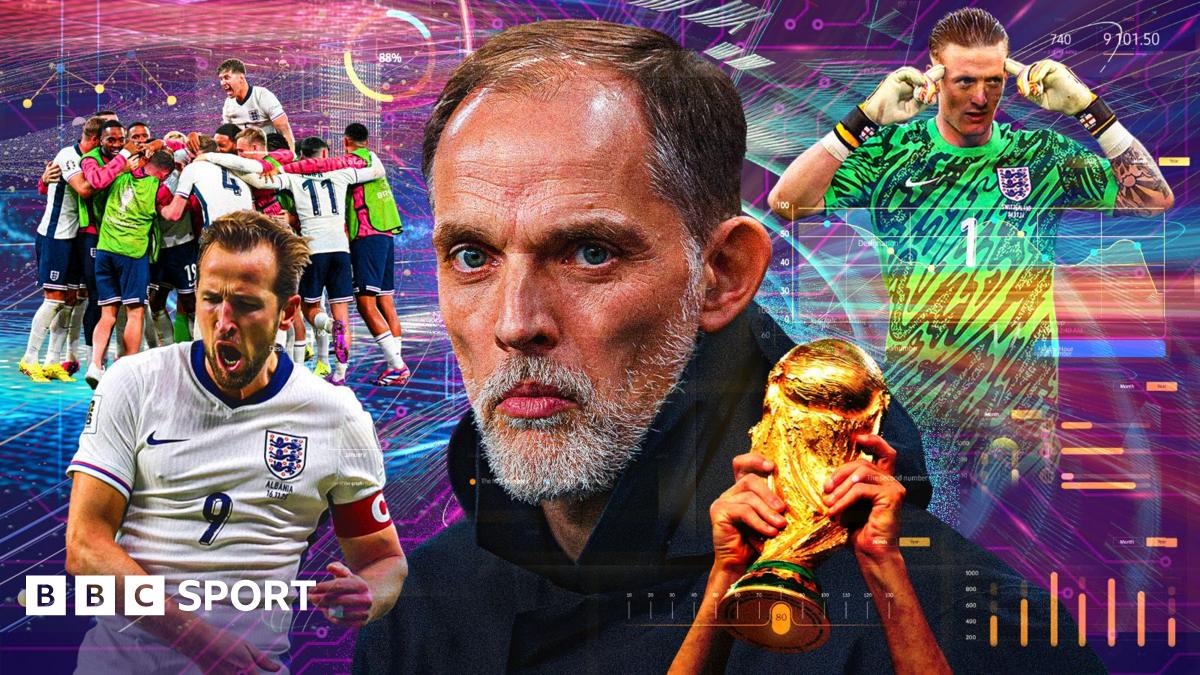
England's AI World Cup masterplan - from perfecting penalties to powering players

England's AI World Cup masterplan - from perfecting penalties to powering playersArtificial intelligence is making a big mark in elite football, and England are at the cutting edge when it comes to using it in the men's international game.From penalty taking and powering players' wellbeing to targeting their rivals' tactical weaknesses, AI is underpinning the Three Lions' plans for next summer's World Cup.Could a technology which is beginning to change the world around us really help England to glory in North America?Could AI power England to World Cup glory?Watch the full film on BBC iPlayer nowAs well as the coaches and physios who sit alongside head coach Thomas Tuchel on the bench, England's staff includes groups of analysts, data scientists and in-house software development teams.They use different AI tools - some purchased from external tech firms, some built inside the FA - to analyse data, find interesting information, and create presentations which are used in meetings to make complex information understandable for coaches and players.The idea is that England's players are then able to make better decisions on the pitch, including their approach to penalties."AI can show certain tendencies for where opposition players put their penalties that we probably weren't thinking of," explains Rhys Long, who since 2016 has been the FA's head of performance insights and analysis."When we get to a World Cup, we have 47 teams' worth of information to profile - where has every player in every squad put every penalty since they were 16?"It used to take us five days to collect one team's worth of penalty-taking information. Using AI, that can now be brought down to about five hours. Then that becomes a five-minute conversation with our goalkeeper, for five seconds of them hopefully saving a penalty."In theory, then, the penalty information stuck on goalkeeper Jordan Pickford's water bottle is more accurate and detailed then ever before.And the results so far are strong.Since Long arrived, England's penalty record has improved significantly, and analysts' use of AI is also used to reduce the mental pressure for England players choosing where to place penalties."The penalty stuff really opened my eyes," explains Conor Coady, a member of the England squads at Euro 2020 and the 2022 World Cup."We had a big meeting before the Euros - there was a diagram up on the board of where you're more likely to score, then they would give you individualised information on where they think is best for you to go."The visuals are based on both opposition goalkeeper tendencies, like if they dive more often to one side, and analysis of how each England player prefers to strike the ball."Them telling you where to go took the pressure off, because it was them saying - 'it's on us'," Coady says. "It was something we needed."Crucial to the success of analysis like that is players' willingness to engage with data and understand the information given to them."Players are getting far more attuned to interpreting their own data," Long says."The amount of information we're trying to make sense of has exploded. You've got to filter all of that information down to have a good conversation with a coach and then a player.England have scored 23 out of 27 in-match penalties taken so far in the 2020s, with nine players stepping upIn the past few years, AI football software has advanced to the extent that it can now track tens of thousands of on-field movements and events every second, is able to tag tactical patterns during live play so that analysts can immediately find them on video for in-game adjustments and half-time feedback, and can create graphics instantly.While Spain, France and Argentina have been more successful in the most recent international tournaments - and will be among the favourites next year - it is England, Germany and the USA who are widely believed to be at the forefront of using AI to try to gain an advantage."England have a big resource and have heavily invested in this," says Allistair McRobert, professor of performance analysis at Liverpool John Moores University. "They have data engineers, data analysts and performance specialists behind the scenes across all their teams from juniors up to senior."We did a piece of work with one of the analysts who works at England about building tactical knowledge."When we went from data to the big Subbuteo-style table to demonstrate it, the players got really involved with the tactical aspects - because they knew of assets that their goalkeeper had - and it changed the way they played against the opposition."At St George's Park, England have built an interactive meeting room with touch screens and 3D tactics boards, where players get involved with new ideas for playing as a team after listening to data presentationsAI is not just harnessed by England for on-field matters - they also use it to monitor players' wellbeing."What AI is doing is surfacing things up - it can look at what is having an effect physically, tactically or technically on a player," Long says. "It might spot something in wellness data that we collect from the players that is then having some kind of impact on their training."It's then for a doctor, physio, coach, or specialist analyst to have a conversation with the player and make sure we're getting the best out of them."To try and do all of that really quickly used to take days. It's now taking hours. It might take minutes in the future."Coady explains the process: "You wake up every morning and as you're going down to breakfast there is a wellness area where you fill out a form on an iPad."'How did you sleep? How did you feel this morning? Are you fatigued?' And then you leave comments on it - maybe 'my hamstrings are sore from training yesterday'. And then the staff cater for you during the day, in terms of what you need in training, your food, how they set up a session."The detail that goes into you individually, but more importantly the team, is out of this world."AI helps dictate England's plans for things like nutrition and training schedulesNew AI tech firms are being created every day, and one piece of software can cost national federations hundreds of thousands of pounds."It's not about going after every shiny new AI toy and using them for the sake of it," Long says. "What you've got to do is ask if it is really going to help performance."Because of the costs involved, there is a risk some of the less wealthy nations are left behind."I think AI will widen the gap," says Tom Goodall, who works in analysis for Iceland. "England, for example, have basically unlimited resources, money, and staff. We are the polar opposite of that."I'm the only full-time analyst here and money is tight. It's very difficult for us to take a gamble on an expensive piece of technology."There are also widespread concerns about AI's impact on jobs in the future."What we've got to remember is it's not a silver bullet," Long says. "AI will make everything far more efficient, but it's about having people in sport who can really understand how to use this new technology very well."We're not going to replace humans - it's about augmenting their decision making. AI won't be picking the team and it won't be playing the game."But if you can get your coaches to use it effectively, and in turn it helps our players, then that is a good competitive advantage which will hopefully help us get over the line."
Read full story →
BBC Sport Dec 1, 07:53

'Raise hell' - the fastest bowler you might not have heard of

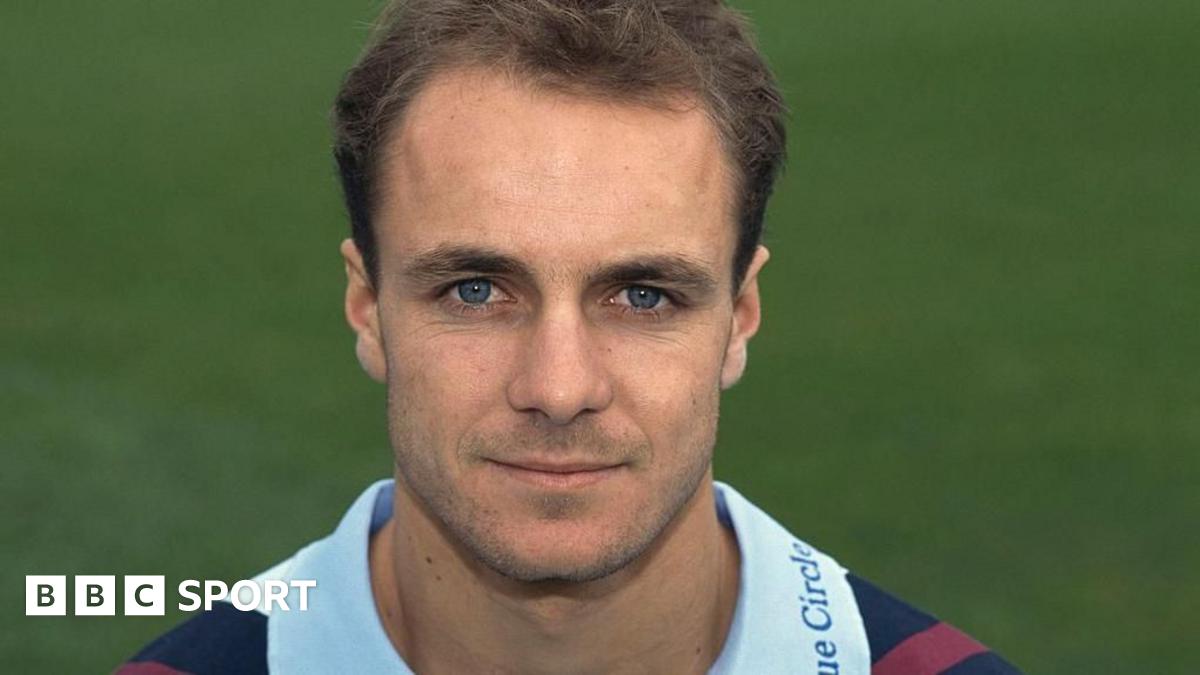
'Raise hell' - the fastest bowler you might not have heard ofEveryone who encountered Duncan Spencer has a tale to tell.In the early 1990s, a golden age of fast bowling, Spencer might have been the quickest of all.Born in Lancashire and raised in Perth, Spencer could have played for either England or Australia if his body had not let him down. The fastest bowler the Ashes rivals never had.The great Viv Richards said Spencer was up there with the quickest he faced. Ricky Ponting said the same - Spencer and Ponting almost came to blows on the pitch.Ryan Campbell, Durham coach and contemporary of Spencer at Western Australia, said he was "ridiculously and frighteningly fast". Tom Moody, the former Australia international and another West Australian, said Spencer would "terrorise" batters.Just before the first Ashes Test, when England recorded their fastest collective day of pace bowling on record, BBC Sport met Spencer at his home in the south-west suburbs of Perth.This is a story of injuries, comebacks and drugs. Most of all, it is a story about the visceral thrill of bowling fast.——————————————Like most kids born in the north of England, the young Duncan Spencer kicked a football around. The trouble was, his family moved to Perth when he was five and soccer (his word) had not taken hold in Australia in the early 1980s.Spencer was a batter in junior cricket. He was not usually allowed to bowl because he "bowled the thing everywhere". It was only in one end-of-season game, when the regular bowlers were missing, that the 14-year-old Spencer got his chance."It all just clicked," he says. Spencer's pace had been discovered, wickets tumbled and he was on his way through the Western Australian system."I had the 'joy' of playing all of my junior career against Duncan," says Campbell. "You saw this kid, the run-up, it just looked like it was going to be fast - and he always was. He was faster than everyone else."There are only four people in my lifetime I have said are ridiculously fast. That is Shoaib Akhtar, Brett Lee, Shaun Tait and Duncan Spencer."Spencer is not a tall man. Even now, at the age of 53, he has hulking shoulders, but a height of 5ft 8in is not ideal for a fast bowler. He had his first back operation aged 17."I draw a comparison with Mark Wood," says Moody. "It's like having a V8 engine in a Mini Minor."As Spencer was progressing, Daryl Foster was head coach of Western Australia and Kent. When Foster learned of Spencer's British passport, he signed him to a two-year deal at Canterbury.Spencer was raw. Just before he went to the UK for the 1993 summer, he bowled 42 no-balls playing for Western Australia against an England A team including Jack Russell, Graham Thorpe, Dominic Cork and Andy Caddick - Spencer got Thorpe out.On his first return to England since leaving as a child, the 21-year-old Spencer was shocked by the cold and by the county grind."I'd say to the other guys 'Are you sore?'" says Spencer. "They'd say 'No, I'm alright'. I could hardly walk."Spencer played one game in the County Championship that summer. He did, however, produce a spell of bowling that is mentioned by anyone who hears his name.Root questions need for pink-ball Ashes Test but Head in favourWhy is a pink ball used in the Ashes?In September, Kent and Glamorgan met in the final match of the Sunday League season. They were the top two and the title was on the line. It was also the last List A match in the career of West Indies legend Richards, aged 41.The match was televised live by the BBC - Jonathan Agnew and Vic Marks were on commentary. The footage is easily found online.As Kent attempted to defend a modest total of 200, Spencer was the fifth bowler used. Whippy action, retro sky-blue Kent kit - Spencer's first ball whistled past the ear of Adrian Dale.Spencer mainly bowled two lengths: very full and very short. There were gasps from the crowd as the ball either thudded into a Glamorgan batter or the gloves of Kent keeper Steve Marsh.After Spencer pinned Matthew Maynard - an England international - leg before wicket, Richards swaggered to the crease to a standing ovation. Naturally, the Master Blaster did not wear a helmet."He's used to many a young pup tearing in and trying to let him have it," was Agnew's description of Richards defending his first ball on the back foot. Next ball, Spencer rattled him in the chest."He spat his chewing gum out to cover," says Spencer. "He didn't show any pain but was clearly hurt after the one in the ribs."Richards took another one on the top hand. When he tried a swipe, the ball looped up to be caught on the leg side, only for the umpire to signal no-ball. Richards eventually passed Spencer at the non-striker's end, giving him a high five and a pat on the head.Glamorgan won the match and the title. Richards ended 46 not out. Spencer got a signed bat he still owns today."I walked into the changing rooms and he said 'Man, that was serious pace, boy'," says Spencer. "He said 'That's a slow wicket and it was seriously quick'."Sir Viv Richards (left) celebrates winning the Sunday League titleTwo months later, Spencer was back playing for Western Australia duelling with another legend - albeit future Australia captain Ponting was still finding his way in the game.Playing for Tasmania in a Sheffield Shield game in Hobart, Ponting was a few days shy of his 20th birthday and nearing a century."This day against Ricky, it was on," says Spencer."Geoff Marsh, the captain, came over to me and said 'mate, I don't care what you do, just raise hell'."We were into each other. I gave him four bouncers in a row and I think it should only have been one per batter, per over."He had a whinge to the umpire. I turned around to mid-off and said 'don't walk in. I've got to pitch this one up and he'll smash it'."He pushed it towards cover and I was in my follow-through. I kept going and grabbed the ball. He made out he was going to run, so I turned and threw it. As he turned, it went past his head and just missed the stumps."He turned around and said 'you do that again I'll wrap this bat around your neck'."I said 'don't let fear hold you back'."Then we've gone into each other. I was about to crack him. I'd lost it by then. We got into it on the pitch until the players and umpires pulled us apart."As fate would have it, Spencer and Ponting would end up in the same bar that evening, and they settled their difference over a beer.For Spencer, who admits to having a fiery temperament on the field, it was not just opponents on the wrong end of his aggression."Justin Langer was trying to fire me up in the changing rooms, tapping me in the face," says Spencer."I didn't need firing up. I was always pretty calm until I got past the white line. Justin thought he'd switch me on before we went out."I just went 'smack', leave me alone, a little left hook in the chest. I could have hit him with a right and got him. He didn't go down and he said 'if that was anyone else it would have put a hole through them'."Spencer was flying. When he returned to Kent for the 1994 season, there was talk of an international call-up. Coach Foster told him not to do interviews, so as not to declare an allegiance to England or Australia.Then, in a flash, Spencer's career came to a halt. He broke down in a one-day game against Middlesex in June."I collapsed on the ground bowling to Mark Ramprakash," says Spencer. "I could hardly walk."Spencer returned to Australia, slowly coming to terms with the idea his days as a professional cricketer might be done. Now with a young family, everyday tasks like mowing the lawn were accompanied by excruciating pain.In order to live a normal life, Spencer took prescription steroids. The pain receded and the desire to play cricket returned. He went back to the Perth club circuit."Tom Moody was the Western Australia captain and found out I was playing again," says Spencer."He said 'you're going to play a one-day game on 2 January'. I laughed, didn't think much of it."It came around and I was picked. I ended up playing and I was in for the one-day season. I was just happy to be back playing."Spencer was back playing professional cricket, almost seven years after his last appearance, and he remained with Western Australia on their run to the 2000-01 domestic one-day cup final.In the final, his WA side included Mike Hussey and Simon Katich but they were beaten by a New South Wales team of Michael Clarke, Brad Haddin and Michael Bevan.After the match, Spencer went through a drug test. With the steroids still in his system, he was banned for 18 months, the first cricketer in Australia to be punished under anti-doping laws. He was front-page news."It was six months after taking the drugs before I even attempted a bowl," he says. "By the time I played it was a year later. Apparently it hangs around in your body for much longer. If I knew that, I wouldn't have played."I was talking with Kent and Hampshire, but then I got banned. I got absolutely hammered as a punishment, but I was expecting worse."Spencer bowling for Western Australia in 2001Spencer was out of the game once more, but was still not done.Five years later, through his work as a fitness coach, Spencer found himself bowling to a young Ravi Bopara in the nets at Rockingham-Mandurah Cricket Club."Ravi said 'why are you not still playing?'" says Spencer. "Knowing how good Ravi was - and is - if he thought I could do it, maybe I should play."After the drugs ban, Spencer felt his time playing for Western Australia was done, so he asked former Zimbabwe and Sussex batter Murray Goodwin if any counties were looking for a bowler.Remarkably, at the age of 34, Spencer found himself back in county cricket on trial at Sussex in the summer of 2006."I thought I was still pretty passionate about the game, but I realised I probably wasn't," says Spencer."I was sharp, but not as quick as I was as a young fella. I was fit enough to do it, but my work ethic had gone. I probably went over for the wrong reasons."Spencer played two first-class matches for Sussex, against Warwickshire and the touring Sri Lanka team. His last wicket in professional cricket was Kumar Sangakkara.All in all, he took 36 wickets in 16 first-class matches and 23 scalps in 20 List A games.Nearly 20 years on, Spencer is settled in Perth. He works in the mines in the northern part of Western Australia.Moody says there is "no question" Spencer could have played international cricket. Spencer says he would have happily played for England or Australia, but the accent is 100% Aussie.Spencer has no idea how fast he bowled. He thinks he was told he was clocked at 158kph - just over 98mph - but that was "off a short run"."I was in the wrong era," he says, considering the way modern fast bowlers are managed, or how he could have made a fortune as a T20 gun-for-hire."It is one of the great shames that we didn't see enough of Duncan Spencer," says Campbell. "When he got it right - oh my goodness."Spencer did not collect the wickets, the international caps or the rewards he might have, but he experienced what most can only dream of."When I didn't have rhythm, I was as bad as anyone," he says."When it all clicked, it was a great feeling. It's effortless. When you get the rhythm it feels like it's coming out medium pace.Second Test - The Gabba, BrisbaneBall-by-ball radio commentary on BBC Radio 5 Sports Extra, BBC Sounds and the BBC Sport website and app. Live text updates and in-play video highlights on the website and app, plus analysis and reaction. The Daily Debrief and extended highlights on BBC iPlayer after every day's play.Get cricket news sent straight to your phone
Read full story →
BBC Sport Nov 25, 00:00

What next for friendly foes who see each other 'more than family'?

It is a rivalry that has swiftly come to be defined by its breathtaking quality on the court and, away from it, a close friendship founded on mutual admiration.At the conclusion of the 2025 season, Carlos Alcaraz and Jannik Sinner stand clear from the rest at the top of men's tennis.As they continue to inspire each other to greater heights, there is no suggestion that the new duopoly in men's tennis will be broken up any time soon.For a second successive year, Spaniard Alcaraz and Italy's Sinner split all four Grand Slam titles between them, taking their total major wins to six and four respectively.Remarkably, in 2025 there was not a single tournament in which both Alcaraz, 22, and Sinner, 24, played that was not eventually won by one of them.The generational talents have met in the past three major finals, having contested an unforgettable first at the French Open in May.Their ever-tightening grip on the men's tour was further emphasised when they met in a final for the sixth time this year to decide the season-ending ATP Finals.Yet, despite all that was at stake - the trophy, the world number one ranking, and a $5m jackpot - the pre-tournament favourites practised together before beginning their title bids in Turin, and later shared a selfie which has received more than half a million likes on Instagram.Beyond the silverware and prize money, both are fully aware of the importance of the other in unlocking their full potential, with the story of their respective careers now inevitably intertwined.24-time Grand Slam champion Novak DjokovicA dizzying five-and-a-half hours of extraordinary drama answered, unequivocally, the question that lingered over men's tennis.During the 'Big Three' era of men's tennis, Novak Djokovic, Rafael Nadal and Roger Federer captured 66 of a possible 81 Grand Slam titles over two decades of dominance.The Roland Garros final heralded the undisputed succession of that rivalry as the much-hyped first showdown between Sinner and Alcaraz for a major title exceeded all expectations. It was a match that truly transcended the sport.In truth, Alcaraz and Sinner had already long begun writing their own chapter.They hinted at the epics to follow with a five-hour, five-set thriller in their US Open quarter-final in 2022 which ended at a record late finishing time of 2.50am in New York.Another five-setter, extending beyond four hours, at Roland Garros in 2024 had further built anticipation of what might lie ahead.Alcaraz had triumphed in the previous four meetings before his first Grand Slam final showdown with Sinner in Paris. He will begin the next encounter having won seven of the past nine.It is a surprising imbalance between the game's heavyweights, and the statistics indicate Sinner's underperformance in their meetings has been the defining reason.Sinner leads the ATP Tour for 'conversion score' - put simply, he is the most clinical finisher when presented with the opportunity to end a point.When Sinner meets Alcaraz, he tends to waste chances he would normally seize - his conversion score plummets by 13% - while his serve quality also drops.Conversely, Alcaraz leads the tour for 'steal score' - a measure demonstrating his unparalleled ability to absorb pressure and turn defence into attack.Alcaraz thrives in their showdowns and raises the quality of his returns, forehands and backhands against Sinner.Reassuringly for Sinner, in meetings in which he is able to be as clinical as against the rest of the tour, he can expect to edge their duels.Nadal and Federer had Wimbledon 2008Djokovic and Nadal had the 2012 Australian OpenDjokovic and Federer had Wimbledon 2019This was the first battle between Alcaraz and Sinner for one of the sport's major titles.But something exceptional will be required to replace the 2025 French Open as the enduring zenith of their rivalry.The significance of the events in Paris was evident in the frenzied grandstands of Court Philippe Chatrier, the outpouring of praise from players, legends and fans on television and social media, the sight of Spain's footballers gathered on the pitch around a phone to follow their compatriots' fightback before their Nations League final.Its status as an all-time classic could not have been foreseen as Sinner set up three championship points on Alcaraz's serve.But that label was undeniable when the longest ever French Open final concluded, the crowd rising to their feet as an exhausted Alcaraz dropped to the clay after completing an astonishing comeback.Alcaraz's eventual triumph, clinched with a stunning on-the-run forehand down the line to conclude the match tie-break required to separate them, was ultimately made possible by his bravery on the big points and his willingness to play aggressively in the key moments.He is celebrated as a showman, competing with child-like joy and freedom. His propensity to favour the spectacular rather than safe option may have frustrated his team and supporters at times during his development - and he remains much more prone to in-game momentum swings than Sinner.However, here it delivered a stunning climax.He hit 17 more winners than Sinner in the French Open final. But, crucially, he produced 12 more than his opponent in the decisive games at the end of sets - and specifically those later in the match - to pull off a miracle.Sinner had won 193 points to Alcaraz's 192.Winners in last four games of a setAlcaraz became only the third player in the Open era to win a men's singles Grand Slam final after saving match points, following Djokovic (Wimbledon 2019) and Gaston Gaudio (Roland Garros 2004).But neither player, in their contrasting emotional states, was left in any doubt that they had been part of something greater.Their admiration and respect for one another was clear - and both knew they would need to return with new tricks for their future battles.Alcaraz to a devastated SinnerFor the first time since 2002 - when Sinner was less than a year old and Alcaraz not yet born - the Wimbledon men's singles final did not feature one of Federer, Nadal, Djokovic or Andy Murray.For Sinner, the rematch on the grass of Centre Court was as much a test of his mental resolve as anything else - not least when he fell a set behind.Sinner served a three-month doping suspension after retaining his Australian Open title in January as part of a challenging start to the year for the Italian.Then came the devastation of Paris. But, just 35 days later, Sinner was able to exact revenge on Alcaraz in a ruthless display.Having taken time to be at home with family before embracing an intense period of training, Sinner delivered a serving masterclass while dominating from the baseline.Your browser does not support this videoSo much so that it even caused Alcaraz to make an uncharacteristic show of frustration.Your browser does not support this videoAlcaraz to his team during the Wimbledon finalSinner had, at last, been able to unleash the devastating combination of power and precision by which he dominates all others.Your browser does not support this videoDictating with brutal, flat ball-striking against the tour's escape artist, Sinner once again earned three championship points. This time, he would not be denied.He crouched to the ground and took a moment for himself, having rebounded from heartbreak to secure his first Wimbledon title.The significance of the victory, beyond the tangible, was not lost on his team.Sinner’s coach Darren CahillIn south-west London, Sinner, so often stifled by Alcaraz, asserted his game and performed at a level more comparable to his tour average.Not only did improved serving in the Wimbledon final allow Sinner to play more shots in attack - meaning those points where he received a low-quality shot, was positioned up the court, or was able to hit from a comfortable contact point - but he was able to capitalise on the opportunities that provided.As he sought to close out victory, Sinner won 92% of points when positioned in attack as he comprehensively lay his demons to rest.The fourth Grand Slam title of Sinner's career was, significantly, his first major title not on a hard court. It also ended a run of five consecutive losses to his main rival.Two months later, Alcaraz and Sinner became the first players in the Open era to meet in three consecutive major finals in the same season.This time, it was Alcaraz who powered to a four-set win to edge their blockbuster trilogy in New York - and dethrone Sinner as world number one for the first time in 65 weeks.Alcaraz and coach Juan Carlos Ferrero claimed to have quickly identified what they needed to correct after the loss to Sinner at Wimbledon.While they chose to keep the details to themselves, a subtle change in the Spaniard's serve appeared to provide the foundation for success.Former British player Tim HenmanHaving highlighted the importance of improving his serve at the start of the year, Alcaraz ended the US Open having won a remarkable 97% of his service games.In the final, the Spaniard increased the use of wide serves, to both sides, and added pace, in a bid to manoeuvre Sinner - and did so while maintaining a high first and second-serve win percentage.That tweak created the attacking opportunities he needed to dominate, and which he had been starved of at Wimbledon.In a near-faultless display, Alcaraz hit 10 aces - including one to clinch his third championship point - won 83% (45/54) of his first-serve points and fired in 41 winners.Former Wimbledon champion Marion BartoliHaving been comprehensively beaten, Sinner reflected on the challenge posed by being confronted by Alcaraz's variety in finals once he has blasted his way through the rest of the draw.It was once again the Italian's turn to problem solve.Sinner after losing the US Open finalAlcaraz to Sinner after the ATP FinalsThe big question, at the end of a season in which their rivalry entered the stratosphere, is where it might go from here.The answer is likely to lie in Sinner's admission that he needs to adapt. Specifically, to be less one-dimensional - and more like Alcaraz.Alcaraz is, at present, the only player with the weaponry and unpredictability to truly unsettle Sinner, armed with his mastery of drop shots and slices, and willingness to come to the net.By contrast, Sinner leads the ATP Tour in the use of core shots (88%) - those which travel through the opponent's baseline - meaning he plays with the least amount of variation of any player.Quite often, he does not need to. Until he meets Alcaraz.There have already been signs of a shift in Sinner's approach since the US Open.While only a snapshot, Sinner's use of variation shots was an Alcaraz-like 25.9% in his opening match at the Vienna Open in October.Their dominance does not look set to end any time soon.Beyond their stranglehold on the majors, Djokovic is the only player other than Alcaraz and Sinner to claim more than 20 ATP Tour-level titles since the start of 2020. All three have won 24.But at 38 years old, Djokovic remains without the outright record 25th major singles title he has been chasing since he equalled Margaret Court's all-time total at the 2023 US Open.Few would bet against anyone denying Alcaraz and Sinner another sweep of major final showdowns next year, but fans will be keen to watch for signs that point to a third challenger in the new season.After losing to 19-year-old Joao Fonseca in the final of the Swiss Indoors last month, Alejandro Davidovich Fokina identified the Brazilian as the only player who can rival Alcaraz and Sinner.Fellow top-20 players Ben Shelton, Jack Draper, Casper Ruud and Jakub Mensik will each hope to kick on after winning ATP Masters 1000 titles this year.But for now, Alcaraz and Sinner continue only to measure themselves against the other.Should their dominance continue in 2026, both players could complete the career Grand Slam by June.For that to happen, Alcaraz would need to win his first Australian Open, before Sinner triumphs at the French Open.It is a feat achieved by only eight men in history.Alcaraz will begin the year as world number one, having regained the title at the ATP Finals - although Sinner went on to lift the trophy in Turin.He leads by just 550 points - less than the 700-point gap between a Grand Slam winner and a runner-up.  And, wherever their rivalry resumes, it will do so with both players having won exactly 1,651 points of the 3,302 points they have contested across their 16 official matches to date.Despite all they have already achieved, there remains the sense that they are only getting started.Written by Harry PooleEdited by Amy LofthouseSub-edited by Sonia OxleyDesign by Scott McCallImages by Getty ImagesAnalysis by TennisViz, powered by TDI Data
Read full story →
BBC Sport Nov 18, 06:47

'It felt like God's hand on my brain' - the day England were humbled by teenager

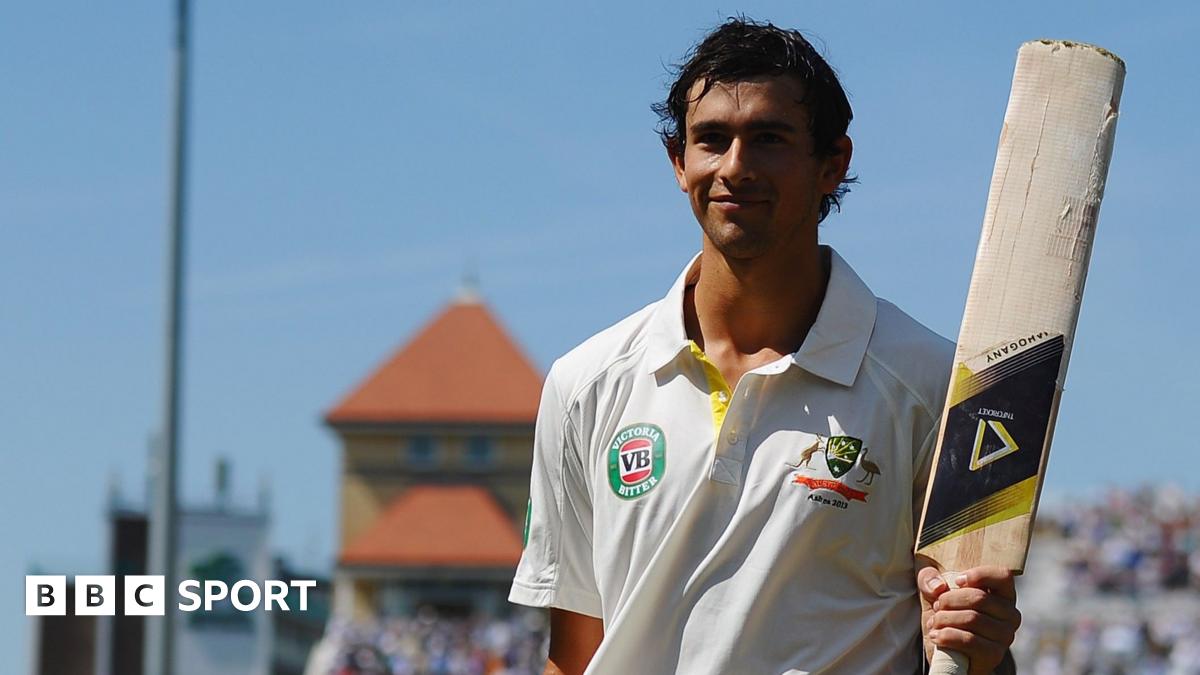
'It felt like God's hand on my brain' - the day England were humbled by teenagerFrom the Ashes is a series of features and podcasts which dig deeper into stories from cricket's fiercest and most legendary Test series. Full interviews can be found on BBC Sounds, building up to ball-by-ball coverage of the first Test between Australia and England in Perth on Friday.Like a lot of good stories, this one starts in a pub.The pub was in Worcester, but that part isn't important."I was sitting with Michael Clarke and Brad Haddin," Ashton Agar tells BBC Sport. "That was pretty cool in itself."Clarke said: 'Are you ready to go, youngster?' I thought he meant move on to the next place."He said: 'No, for next week.' I knew exactly what he meant. I said 'yes', with conviction, and there were no other thoughts in my mind."Agar was an almost unknown 19-year-old spinner who had just been told by Australia captain Clarke he was in line for a debut in the first Ashes Test of 2013 at Trent Bridge.When the news broke and Agar was presented with his baggy green cap by Glenn McGrath, Cricket Australia's own website called it "one of the biggest Ashes bombshells in history".There was so much more to come. The 98 Agar swaggered his way to on the second day in Nottingham remains the highest score by a number 11 in Test cricket.Even the late Queen Elizabeth spoke to Agar about it. Agar only played two Ashes Tests, yet has his own place in the story of cricket's greatest rivalry.Listen to From The Ashes: Ashton AgarFor Agar to be in that pub in Worcester was the result of a chaotic time in Australian cricket history.He made his debut for Western Australia earlier in 2013. After two games in the Sheffield Shield, Agar came within a whisker of making his Australia bow on an awful tour of India.The Australians lost 4-0, coach Mickey Arthur fell out with some senior players over their refusal to do 'homework', and things were unravelling before the Ashes.It got worse in England. Australia lost all three of their matches in the Champions Trophy, David Warner punched Joe Root in a Birmingham bar and Arthur was sacked. In came Darren Lehmann. So did Agar.The initial plan was for Agar to play some club cricket for Henley in the Home Counties League, then join the Australia A tour. Both happened. The unplanned part was being added to an Ashes squad that included one specialist spinner in Nathan Lyon."The main training session was two days before the first Test," says Agar."I was walking off the training track in the middle, back to the dressing rooms, and Rod Marsh, the selector, walked up to me and said: 'Ash, go and call your parents, you're in.'"I called mum and dad back in Melbourne. That was an amazing phone call. Mum was in tears, my two brothers were yelling and dad could hardly speak."They got on a flight from Melbourne that night. They got straight into a taxi and made it to the ground with a minute to go before my cap presentation."Ashton Agar won five Test caps in total, the last of them coming against South Africa in 2023Agar was 19 years and 269 days when he pulled on his baggy green. Only two Australian men have done so at a younger age this century - Pat Cummins and Sam Konstas."It was huge because it was so unexpected," Agar says. "We kept it extremely quiet. The whole point was for it to be a surprise factor, because England wouldn't have really known anything about me."Beyond the "bombshell", Agar had a quiet first day. He bowled seven uneventful overs as England were bowled out for 215 - Peter Siddle took five wickets."It was everything I'd seen on TV," says Agar. "A packed house. Jerusalem was a spine-tingling moment. When they play that, you feel pretty small."I knew exactly where my family was sitting for the whole five days and I kept thinking of them. If I felt like I needed to feel some support, I looked for them. That was really nice."Things started to go awry later in the day. Australia were reduced to 75-4 at the close by Steven Finn and James Anderson. Anderson bowled Clarke with one of the most memorable deliveries of his illustrious career, a bail-trimming out-swinger."It felt like Anderson was swinging the ball three different ways," says Agar."The chant ringing in everyone's head was the Jimmy Anderson chant. Michael Clarke got out to that ball, he got in the dressing rooms and he was singing it because it was so stuck in his head."Inside an hour on the second morning, Australia found themselves 117-9, 98 behind. Agar, the teenager who was not supposed to be on the tour, walked out to bat."It felt like the ground was moving from side to side because of the chants," he says."It was so loud. In a stadium, when everyone is chanting, it always feels like one side of the ground is slightly out of sync with the other one - like seaweed swaying in a current under the ocean."I just wanted to get through my first ball. I didn't want to get a golden duck."I blocked Graeme Swann, then got a single. It massively put me at ease. Then everything happened from there."'Sea legs meant I couldn't bowl' - when England travelled to Australia by boat'Without 2002-03 there was no chance of 2005'The ultimate Ashes competitor - Broad on walking, Warner and that final wicket'Ball of the century? That was my job' - Ashes 'rhino' HarrisAgar could have been stumped on six off Swann, but got the benefit of a hairline decision."It felt pretty out and I was lucky I got my foot down just in time," he says. "It could have gone either way."What followed was some of the most astonishing, elegant and clean ball-striking you could see from any Test batter, let alone a 19-year-old number 11 on debut."At the start Phil Hughes was taking more of the strike, then Boof [Lehmann] ran out a message for him to back me," recalls Agar."Every single ball I was on strike he would come down and say 'next ball, next ball, next ball'. He was even stronger on that the more runs I hit. It was a real lesson in how to stay present."Kevin Pietersen gave me a mouthful. I can't remember what he said, but I laughed at him. I was 19 and he was an experienced player trying to intimidate me. It didn't matter. I was out there batting 11, just trying to have a crack."Anderson and Stuart Broad had a word, there were chirps from Matthew Prior behind the stumps. They were into me, but never abusive. It was meant to make it uncomfortable, which is exactly what you should do to a 19-year-old out there for the first time."Anderson was driven back down the ground for four. Finn dropped short and was pulled through the leg side. Swann was lofted over long-off for six by a languid swish of Agar's blade.Runs flowed and England became ragged. Agar's score caught up with that of Hughes, Australia's number six. Agar's half-century came up in only 50 balls. "Well done, young man," said television commentator Ian Botham."These are not the shots of a number 11," added Botham, as if he was being pranked by the whole of Australia as payback for his own Ashes exploits."It's hard to describe the feeling," says Agar. "The occasion faded away. The only reference point I had was my family. I looked at them every ball."Ayrton Senna said it once about driving. He said it's like having God's hand on your brain."You don't know how it's happening, but it just happens. All of your knowledge and skill just comes out at one time, and that's what it felt like. It felt like God's hand on my brain, that all of my subconscious was being unlocked at once."The last-wicket pair wiped out the deficit. Agar took lunch on 69."They had these little rice pudding things in plastic cups," says Agar. "I had way too many on that tour. They were delicious."I tucked into a nice lunch, then it was time to go out there again. Phil Hughes had a steely look in his eyes. That's the thing I remember about him that day."The records were ticked off: what was then the highest 10th-wicket partnership in Test cricket. When Agar went past 95, he beat Tino Best's record for the highest score by a number 11, set against England at Edgbaston a year earlier.By this point, even the home fans were on Agar's side. Cameras captured the worried look on the face of England captain Alastair Cook. His plans were in tatters, fielders scattered to all corners of Nottingham.Agar, on 98, was within one hit of a fairytale century. Broad dug in a short one, Agar swung for the leg side and Swann swooped for the catch."I absolutely smashed it," says Agar. "I should have hit it up, but I tried to hit it down. I just wanted to get there and I was going to do it in the way I got all of my other runs."It went a bit quiet for a moment. You'd think the crowd would be elated, but they were really disappointed."I just shrugged my shoulders and had a side-smile on my face. Swann sprinted up to me. He was the first one to congratulate me. All of the English players did. I got a massive standing ovation from the crowd. Pointing my bat to my parents was cool."Agar struck 12 fours and two sixes in his innings, which lasted 101 ballsIn two and a quarter hours at the crease, Agar had become a superstar. Australia prime minister Kevin Rudd tweeted congratulations. Agar's parents were live on Test Match Special at tea.Despite the attention, Agar was focused on the job he had been picked to do. He wanted a wicket. Two came the following day - Cook and Jonny Bairstow - but it was the wicket Agar did not take that has a place in Ashes folklore.Agar was the bowler when Broad refused to walk after his edge nestled in the hands of Clarke at slip, via a deflection from the gloves of wicketkeeper Haddin."I just walked down the wicket to celebrate," says Agar. "Michael Clarke had his finger up. I was so confused as to what was happening. I couldn't understand how the one bloke with the best view, Aleem Dar the umpire, didn't think it was out."I was fielding at short cover and said to Broad 'you smashed that, didn't you?' He said he did. It was friendly. Everyone gets into Broady for not walking, but I wouldn't have walked. Cricket is hard and you need luck. That luck potentially changed the Test."Aleem Dar apologised to me the next morning. He shook my hand and said: 'I'm sorry, young man, that was a bad decision.' I respect him for that."Broad's runs were a huge factor in England winning a classic by only 14 runs. Agar did not take another Ashes wicket, struggling with his action and a cut finger in the second Test at Lord's."My finger was ripped to pieces and I was in a lot of pain trying to bowl," he says. "I knew my action was falling apart."It was so hard to deal with mentally. You have to be pretty resilient as a 19-year-old trying to bowl in a Test knowing you're nowhere near your best."It was so difficult being out there at Lord's wishing I wasn't bowling. It was a pretty lonely place."Ashton Agar walks off with Phillip Hughes, who finished 81 not outStill, that second Test created another special moment."The best part was meeting the Queen," says Agar. "Michael Clarke introduced her to everyone and we had to address her as 'your majesty'."She came to me, shook my hand and said: 'This is your first time here, isn't it?' I said: 'It is.'"She said: 'Good luck, have a good time.' I could not believe it. The Queen knew it was me."Agar was "relieved" to be dropped after the second Test. The third, at Old Trafford, was the beginning of Lyon's 100 consecutive Tests. Agar, now 32, played three more Tests, none of them in the Ashes.Hughes, Agar's batting partner on that day in Nottingham, was killed on the field little more than a year later, struck by a fatal blow to the neck batting in a Sheffield Shield match."I feel very lucky to have shared that with him," says Agar. "I had a photo of Phil up on my bedroom wall, playing one of his signature cut shots. Me and my brothers loved Phil."I was batting with someone I looked up to. Getting to share one of the biggest moments of my life so far, and learning about resilience, staying present and what that does in terms of performance is a huge lesson."He showed me that in real time. It was a special time we spent together. He was a beautiful man."Two days after Hughes passed away in November 2014, Agar was playing in Perth for his club side University."It was spooky, actually," says Agar. "There was a big 408, his cap number, painted on the ground and there was a minute of silence. It was tough."I remember feeling quite focused. I was thinking about our innings, what he was telling me at that time. On 98 I nicked a ball to second slip. It was nice it happened that way."98. The number for which Agar's Ashes career will forever be remembered."I've never thought about the two runs I didn't get," says Agar."The feeling for me has never changed. It has never been regret or disappointment."I'm just really happy for what happened that day."The Ashes: Australia v England21 November 2025 - 7 January 2026In-play clips and highlights on iPlayer, BBC Sport website and app. Ball-by-ball commentary on BBC Sounds, BBC Radio 5 Sports Extra and the BBC Sport website and app, which will also have live text commentary and daily features and analysisThe ultimate Ashes competitor - Broad on walking, Warner and that final wicket'Sea legs meant I couldn't bowl' - when England travelled to Australia by boat
Read full story →
BBC Sport Nov 13, 06:13

The great number nine decline - where have England's strikers gone?

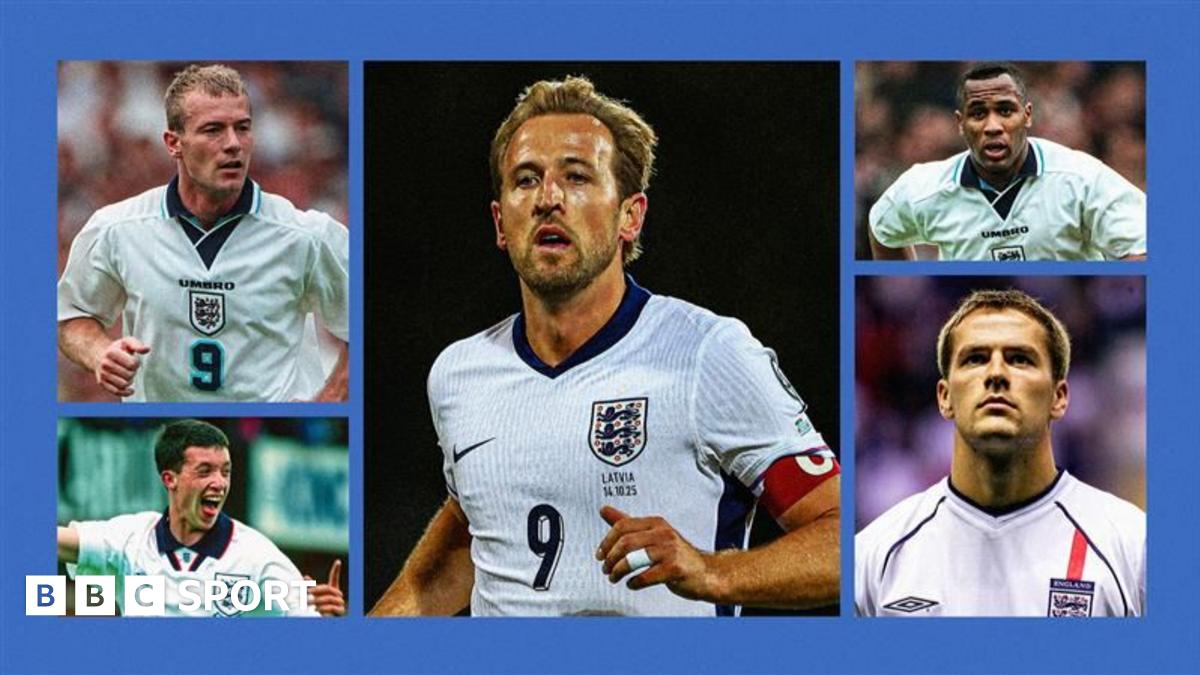
The great number nine decline - where have England's strikers gone?Thomas Tuchel's latest squad has laid bare the current dearth of English centre-forwards, with Harry Kane the only out-and-out striker in the 25-man group.Admittedly that is partly down to injury, with Tuchel explaining Ollie Watkins has been rested to manage an ongoing issue, while Dominic Solanke has been sidelined since August and Liam Delap is only just back in action for Chelsea after two months out.We should not forget that some more versatile forwards have been selected, too. Marcus Rashford, Jarrod Bowen, Phil Foden and Anthony Gordon may not be traditional number nines but they could be asked to play through the middle against Serbia and Albania this week.But still, seeing Kane as the only true striker's name is a stark reminder of how heavily England rely on the 32-year-old as the fulcrum of their attack, with the shortage of other options to lead their line a real worry before next summer's World Cup and, especially, beyond.Kane is England's all-time record goalscorer, with 76 goals in 110 senior appearancesKane has been prolific in the Bundesliga with Bayern Munich this season - but just eight English strikers have appeared in the Premier League in the current campaign and 22-year-old Delap is the only one under the age of 26.Behind Delap, there does not appear to be a new generation waiting for its chance, either.England Under-21s went to last summer's European Championship without a recognised striker and their latest squad includes only one, Manchester City's Divin Mubama, 21, who is yet to score in the Premier League and is currently on loan at Championship side Stoke.So, where have all the English number nines gone, and why is the country not producing traditional strikers anymore?There are some English strikers out there, but when you look at their stats, they are not exactly encouraging.Danny Welbeck, who turns 35 at the end of the month, and 33-year-old Callum Wilson are the only ones who have scored more than one goal in the Premier League this season.Of those under consideration by Tuchel who play further afield, Ivan Toney is the most prolific in the current campaign with 11 goals in 15 games for Saudi Pro League side Al-Ahli, whom he joined in 2024.Tuchel picked the 29-year-old for the games against Andorra and Senegal in June, but Toney only featured as an 88th-minute substitute in the Senegal friendly, and has not made it into another squad since.This shortage of number nines is not down to a sudden drop-off in numbers. Instead it's a trend that has been going on for a while.Last season, just three English strikers - Watkins (16), Delap (12) and Welbeck (10) scored 10 or more Premier League goals, the fewest ever.It's a far cry from the first season of the Premier League era in 1992-93, when 20 English strikers passed the 10-goal mark.In recent years, however, what was already a steep decline has fallen off a cliff. Last season, only 67 goals were scored by English strikers, less than half the number in 2020-21.Kane's departure from Tottenham for Germany has played a part, of course, but he left for Bayern in 2023 and English strikers still scored 96 goals in 2023-24.If anything, this campaign is shaping up to be even worse.So far, English strikers have scored only 11 goals between them - and they are on course for a meagre total of 38 collectively, if they continue at their present rate.That's only four more than Andy Cole and Alan Shearer each scored as they topped the Premier League scoring charts 30 years ago.Cole bagged 34 goals for Newcastle in 1993-94 and Shearer netted the same number for Blackburn the following season - still the record haul for English strikers in the Premier League era, albeit in 42-game seasons.The decline of English strikers is down to several factors according to BBC pundit Chris Sutton, who passed the 10-goal mark himself in four separate Premier League campaigns, including a 25-goal haul with Norwich in 1993-94, and an 18-goal season with Blackburn that saw him take a share of the Golden Boot in 1997-98.One reason is a lack of appearances. From the table above, only Welbeck, Watkins and Calvert-Lewin have started more than three league games this season, while Nketiah, Solanke and Barnes have not started any."If you look back at the 1990s, players like Jurgen Klinsmann and Dennis Bergkamp started arriving from abroad but the overall number of foreign strikers was much lower," Sutton explained."The number one striker of my era was Shearer but if you went through the teams, then there were so many brilliant English centre-forwards like Ian Wright, Les Ferdinand, Andy Cole, Teddy Sheringham, Robbie Fowler and David Hirst - you could add Stan Collymore and Dion Dublin to that list too."There was an unbelievable number of them, even before Michael Owen came through ahead of the 1998 World Cup, and all different types of striker too."One of the differences is that they were all playing every week, because how many English centre-forwards start for their clubs in the Premier League now? That's down to the quality which the clubs can attract from elsewhere."Another change we've seen is in the way teams are set up. I am not saying everyone was a rigid 4-4-2 back in my day, because that's nonsense, but far fewer sides play with two strikers now."In other ways, things have gone full circle, because if you look at teams like Manchester City, Arsenal and Manchester United, then the big number nine is back in fashion. There are plenty of strikers in the Premier League, just not many who are English."Shearer, who formed the devastating 'SAS' partnership with Sutton to help Blackburn win the Premier League title in 1995, feels the tactical shifts we have seen over the past 10 to 15 years are the biggest reason for the current shortage of strikers."Because of the way kids have been training and the coaching they have had, no-one wants to play at centre-forward because you very rarely get a touch," the former England captain told The Rest is Football podcast."Instead, coaches want a pass from the keeper, a pass to the side, then a pass into midfield... and then it goes back. As a centre-forward you are thinking 'I am not getting involved'."I am convinced that is why there is a lack of number nines, particularly in our country."The SAS - Shearer And Sutton - partnership that fired Blackburn Rovers to the 1994-95 title scored 49 Premier League goals between them that season, although Shearer did get 34 of themSutton agrees with his old strike partner and, although modern-day wide forwards like Rashford and Bukayo Saka are scoring more goals than old-school wingers ever did, he sees the current situation as "a massive problem"."Alan makes a good point about how everyone wants to mess around on the ball these days," Sutton explained. "Everyone wants to be a creative player off the wide areas, or be a left-footer cutting in off the right wing. Those players can score goals too, but it is very different to having someone who can lead the line."Owen, who shared the Premier League Golden Boot with Sutton as an 18-year-old in 1997-98 and won the award outright the following year, feels he would not be considered as a striker if he emerged now."In today's game, I think I would have been one of the wide players," he told the Rio Ferdinand Presents podcast. "I don't think I had the stature to occupy two defenders, so I guess I would have played on the left."The worry I have for strikers is that I spent my life learning my trade, playing off people. Now, how are we going to reinvent those pairings. I have been waiting and waiting for teams to go back to having two, but will it ever happen?"Owen (number 10) struck up a seemingly telepathic partnership up front with his Liverpool and Three Lions team-mate Emile Heskey (number nine) for club and country. They both scored in England's famous 5-1 win over Germany in 2001, with Owen netting a hat-trickPlaying with two strikers is not an option for Tuchel this week, at least not in the way Owen means."Just on numbers alone, the situation is incomparable to the 1990s," Sutton added. "But when you actually list the players we had then, there was unbelievable depth of quality too and a lot of them didn't really get a look in for England."Ferdinand only won 17 caps but he was phenomenal. Fowler, who only got a few more, was probably the most natural finisher you could ever see. But they were both behind Shearer because he was like a machine with the way he finished."Sutton only won one full cap, coming on as a substitute against Cameroon in November 1997, before falling out with then England boss Glenn Hoddle when he turned down a call-up to the England B team in February 1998."I can joke about how I messed things up with Hoddle but nowadays you would be rubbing your hands if you are a half-decent striker with a World Cup coming up," he added. "We have got Kane, but then what?"If you're an English centre-forward now and you can kick a ball straight, you've got a good chance of going to the World Cup. I feel like dusting my boots off myself."Harry Kane has been England's number nine since 2015, but who will be next to wear the famous shirt?
Read full story →
BBC Sport Oct 10, 12:03

Captain, player, manager, Mister, number one - Davids at Barnet

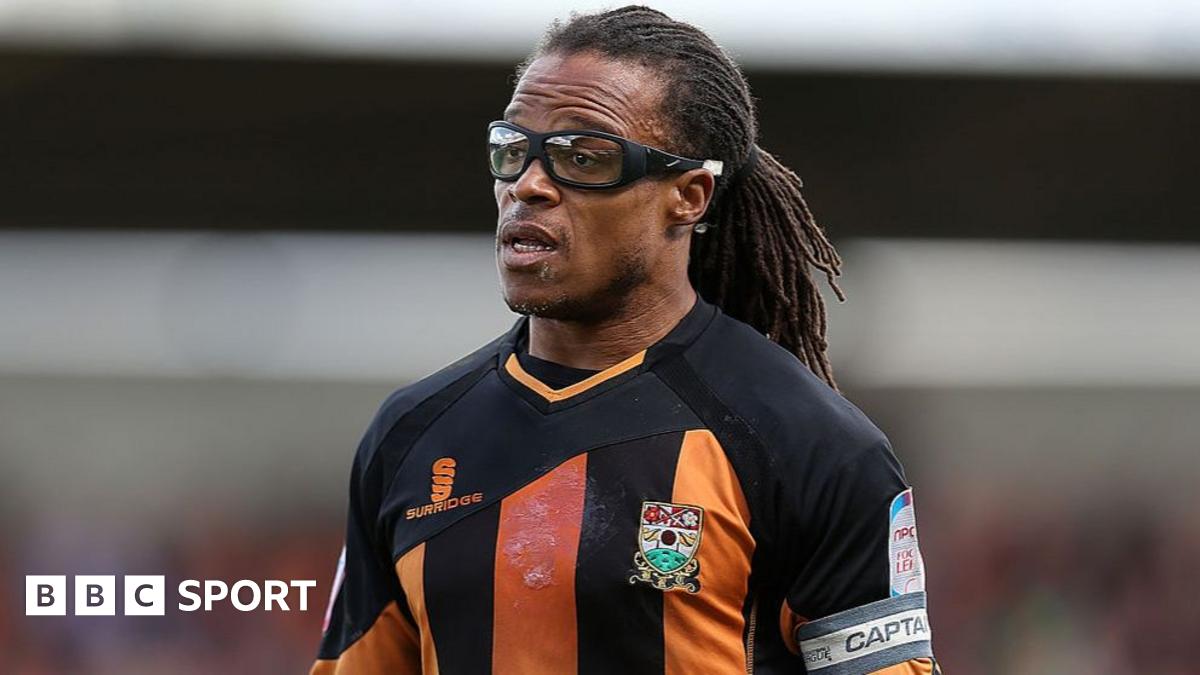
Captain, player, manager, Mister, number one - Davids at BarnetA team bottom of the Football League, without a victory, who already have a manager. Not the obvious place for one of football's most iconic players to start his managerial career.But that is exactly what happened in 2012.This is the story of how Netherlands legend Edgar Davids arrived at Barnet as player-head coach, almost kept them in the Football League and then oversaw a bizarre few months in the Conference.He remains fondly remembered by Bees fans more than a decade later.Told by those who worked with him at Barnet, it is a tale of contrasts - with Davids skipping some away games and wearing the number one shirt, but not earning a penny during 15 months in charge.Edgar Davids installed himself as captainFirst, the obvious question - why did one of the most famous midfield players of his generation join Barnet?This was a man who had 74 caps for the Netherlands, won multiple trophies with Ajax, Juventus and Inter Milan, and also played for AC Milan, Barcelona and Tottenham before briefly coming out of retirement with Crystal Palace in 2010.Two years later he was still living in London, close to Barnet, and playing Sunday League.Chairman Anthony Kleanthous told BBC Sport: "He was trying to obtain his coaching badges to become a Uefa pro coach and part of that involves coaching with a mainstream club."So we thought there's an opportunity here that can help him and helps us."We got along great. He didn't ask for anything [money] and the rest is history."Striker Jake Hyde called it "completely surreal"."There was a rumour of it on the morning and everyone was like 'no obviously not', I said 'no way he's coming to manage, he's just visiting'."But on 12 October, Davids, then 39, was confirmed as Barnet joint head coach in his first managerial position.However, he wanted to play too."I don't know how much he wanted to be a manager," said Hyde, who was the top scorer under Davids with 20 goals."If he did, he would have started higher and waited for the right opportunity. I think he just loved playing."Mark Robson (l) never managed again - he is currently a coach at West HamDavids came in as joint boss with Mark Robson, who was four months into his first (and only) managerial job having failed to win in his opening 13 games, with the Bees five points adrift at the bottom of League Two.Davids brought childhood friend Ulrich Landvreugd as his assistant manager.Their first game together was a 4-1 home defeat by Plymouth but days later they beat Northampton 4-0, with Davids captaining the team in a man-of-the-match performance."It was just like rolling the clock back 10 years to the original highlights of his career, it was an outstanding individual performance," said then director of football Paul Fairclough.Results picked up - but Davids and Robson as a duo was not working."You ask any football manager if they want someone on his shoulder ready to take his job and it was obvious where this one was going," said Fairclough."Edgar came in and Mark took a backseat. You could see that he wasn't happy because Edgar was a big character."Assistant boss Landvreugd told BBC Sport: "There were two bosses. Two captains on one ship. That's difficult."Around Christmas we had an away game and something happened on the trip. For Edgar, it was enough."He went back and spoke to Kleanthous and said it's Mark or us. Kleanthous chose Edgar and that was the end of Mark Robson."Kleanthous added: "I hoped that they'd be able to work together, but within no time it was made clear to me that wasn't going to quite happen."On 28 December, Davids became the sole head coach.From the start, Davids tried to stamp his authority - telling the players to call him 'Sir' or 'Mister', a respectful equivalent of 'gaffer' common in Italian football.Players were told they would be fined if they called him 'Edgar', 'Davids' or 'gaffer'."A few of us laughed like we were at school. He was being deadly serious," said Hyde."On the training ground that first day, calling for the ball [when Davids had it] was impossible. Nobody wants to be the first one to call him Mister or Sir."As it settles in you realise he's serious and that's who he is - he just became Mister to us."That went into matches, too, and opposition players used to laugh when Barnet players called for the ball saying 'Mister'.Edgar Davids often used to play in training gamesTraining with Davids was an interesting experience for the Barnet players.Hyde said: "It was so entertaining every day. He's won the Champions League and he celebrated every training goal as if it was a massive thing."Mentality wise he the best I've ever seen. He was still in the best shape in the whole team. You could see why he was at the top - he didn't want to get beaten in anything."He didn't want anyone to be better than him at something. He'd make games go on for longer [if he was losing]."Hyde remembers one story when Davids was not in training and they did not know where he was."We turn around and see this Bentley crawl down a grass bank, drive across three pitches and park behind one of the goals. He was sitting there watching training from his car with the heating," said Hyde.A represenative of Davids told the BBC: "Edgar never ran a training session from his car. There was one occasion when he was very sick and chose to stay at a distance so he wouldn't infect the team, that's how committed he was."The Barnet squad Robson had initially assembled was full of players released from Premier League academies with little experience of senior football - some of them struggled with Davids' intensity, as he struggled with their lack of.His assistant Landvreugd said: "For Edgar, when he's training he wants to do it 110%. He wanted to bring the culture to Barnet."The players who gave 100% or 200% really liked him but the players who didn't really saw him from a different side."Hyde, now a player-coach at Woking, said: "Speaking as an older player, one of his best character traits as a manager was – I hope this is what he wanted – the whole changing room came together and unified."It was all about the Davids show and we were like 'we'll show him he can't do that to one of us'. We all go to war together. He created that, through him being out of order to one or two of the lads."As a player, I improved dramatically that [first] season. I had a real fire in my belly. It propelled me in my career. For that, I'll be thankful."Jake Hyde was once asked to play like Dennis Bergkamp, Marco van Basten and Robin van Persie in the same game by Edgar DavidsWhen Davids arrived, Barnet were on three points from 12 games."We were cut adrift. No chance of staying up," said Kleanthous. "And he said to me, 'what do we have to do to stay up?'"I said, well, no-one's ever gone down with 50 points. We've got to get at least 50 points."Landvreugd added: "I was looking to Edgar thinking 'no, we can't manage it' and he said 'don't worry, we'll manage it. We're going to fix it. We will get those points'."We got those points. I think we did one hell of a job."Davids' Barnet remain to this day the only team to ever get 51 points in League Two and be relegated.Their form after Davids' arrival would have had them competing for the play-offs.Edgar Davids was sent off a total of five times for BarnetDavids' second season was more problematic in the Conference."I think if we'd have stayed up, we'd have gone on to have two or three good years in the league," said Kleanthous. "We'd have got promoted, maybe. He'd made a bunch of, well, below average players, above average."But we got relegated and that's when the real problem hit, because he ended up in such an unprofessional division."Davids only agreed to stay on in a part-time role, his camp say, with Landvreugd and a new appointment in head of coaching Dick Schreuder taking on greater responsibility.He made headlines when he took the number one shirt himself."He was captain of the club, manager of the club, wore squad number one and took every set-piece. If you didn't give him the ball he'd go mental. But that was the package we signed," said Hyde.Fairclough added wearing number one "was like waving a red rag to a bull at that level of football".Davids was sent off three times, taking his Barnet total to five, including in the final two matches of his career.Landvreugd said: "People were provoking him. When he had a yellow card, coaches from the opposition team said stand on his feet, give him an elbow in his face and you'll get a reaction."People tried to embarrass him and got him where they wanted him. It's unfortunate that for a legend like him they did that."Kleanthous said opposition players "brutalised him"."He was targeted, singled out every game. Edgar, unfortunately, didn't make life easier for himself because he would hit out," said Kleanthous, who has run Barnet since 1994.Davids used to miss some away games that involved more travel - a deal which had been agreed with Kleanthous.There were rumours he would attend parties or go shopping instead - but Landvreugd said that was not true."He was in Amsterdam with people working for his clothing company," said Landvreugd, who currently manages Den Bosch."It took a lot of time off him. He flew over one day or two days mostly doing that and nothing else."Landvreugd and Schreuder, both popular figures around the club, would take charge of games Davids missed.Fairclough explained: "The players didn't know what was going on. They didn't know who was manager and who was the coach, who was going to take the next training session."Hyde tells a story of Davids sitting on the coach ready for an away game, before discovering it was going to take five hours."He shut his laptop, picked it up and walked off the coach," he said.Davids' camp say this was before the Chester game on 18 January 2014."There was another situation that happened just before the team was about to leave on the coach, which was actually the final straw," a representative said.The fans loved Davids but grew frustrated with him missing games - and Kleanthous asked him if he could commit fully to going to every game.His exit was announced hours after Barnet lost 2-1 at Chester leaving them 10th in the table.Kleanthous accepts Davids had "started to lose interest" at this stage."He'd become less committed in my opinion and at that point it was time to shake hands and call it a day," said Kleanthous.Hyde added: "It's funny if it happens once, but two or three times and you get beaten, and it's your livelihoods, then it's not funny anymore."We've got a manager who doesn't turn up. In professional football, I don't think that's ever happened."Davids left Barnet with 25 wins in 68 games as a manager, plus one goal and five red cards in 39 games as a player.Kleanthous concluded: "I look back on those as great times and I have nothing but respect for what he did."He came in, asked for nothing, worked his hardest, did his best and was a little bit unlucky in the end."Landvreugd and Schreuder were named joint-managers after Davids' exit, but just two months later were replaced by Martin Allen.Davids' only managerial job since was six months in charge of Portuguese third-tier side Olhanense in 2021. He was the Netherlands assistant manager at the 2022 World Cup."He still wishes Barnet all the best, continues to follow them, and keeps in touch with Tony [Kleanthous]," said his representative.
Read full story →