Crime News

Europol Jun 1, 10:00

Takedown of SMS-based FluBot spyware infecting Android phones

This technical achievement follows a complex investigation involving law enforcement authorities of Australia, Belgium, Finland, Hungary, Ireland, Spain, Sweden, Switzerland, the Netherlands and the United States, with the coordination of international activity carried out by Europol’s European Cybercrime Centre (EC3).  The investigation is ongoing to identify the individuals behind this global malware campaign.  Here is how FluBot worked  First spotted in December 2020, FluBot has gained traction in 2021 and compromised a huge number of devices worldwide, including significant incidents in Spain and Finland.  The malware was installed via text messages which asked Android users to click a link and install an application to track to a package delivery or listen to a fake voice mail message. Once installed, the malicious application, which actually was FluBot, would ask for accessibility permissions. The hackers would then use this access to steal banking app credentials or cryptocurrency account details and disable built-in security mechanisms.  This strain of malware was able to spread like wildfire due to its ability to access an infected smartphone’s contacts. Messages containing links to the FluBot malware were then sent to these numbers, helping spread the malware ever further.  This FluBot infrastructure is now under the control of law enforcement, putting a stop to the destructive spiral.  International police cooperation With cases spreading across Europe and Australia, international police cooperation was central in taking down the FluBot criminal infrastructure.  Europol’s European Cybercrime Centre brought together the national investigators in the affected countries to establish a joint strategy, provided digital forensic support and facilitated the exchange of operational information needed to prepare for the final phase of the action. The J-CAT, hosted at Europol, also supported the investigation. A virtual command post was also set up by Europol on the day of the takedown to ensure seamless coordination between all the authorities involved. My device has been infected – what do I do  FluBot malware is disguised as an application, so it can be difficult to spot. There are two ways to tell whether an app may be malware: If you tap an app, and it doesn’t open If you try to uninstall an app, and are instead shown an error message If you think an app may be malware, reset the phone to factory settings.  Find out more on how to protect yourself from mobile malware. The following authorities took part in the investigation: Australia: Australian Federal Police Belgium: Federal Police (Federale Politie / Police Fédérale) Finland: National Bureau of Investigation (Poliisi) Hungary : National Bureau of Investigation (Nemzeti Nyomozó Iroda) Ireland: An Garda Síochána Romania: Romanian Police (Poliția Română) Sweden: Swedish Police Authority (Polisen) Switzerland: Federal Office of Police (fedpol) Spain: National Police (Policia Nacional)  Netherlands: National Police (Politie) United States: United States Secret Service   
Read full story →
Europol May 30, 14:03

Five arrests in Hungary for money laundering across three continents

The action day on 9 May led to: 24 house searches in Budapest, in Pest County and in Szabolcs-Szatmár Bereg County 16 suspects apprehended and interrogated 5 arrests (pre-trial custody)   Seizures of funds in 32 countries across Europe, Australia and South America Seizures including: one high-end vehicle, large quantities of electronic equipment, mobile phones and sim cards, data storage devices, payment cards, weapons and ammunitions, jewellery, pledge ticket for a value of about EUR 740 and the equivalent of more than EUR 120 000 cash in different currencies About EUR 5 million identified as linked to criminal activities  The investigation uncovered that the members of the criminal network established a number of companies with no meaningful economic activities, and purchased others with the use of strawmen. The suspects opened bank accounts in the name of these companies to be used in a chain within a money laundering scheme. The bank accounts received transfers from other accounts based in different countries; these assets usually originated from invoice fraud or cryptocurrency-related swindling. The sums would then be transferred forward to other accounts to conceal the identity of the owners of these funds.  Estimated to be active since September 2020, the criminal network is suspected of laundering million euros of criminal proceeds. More than EUR 44 million has been received on accounts linked to the criminal group, while the criminal origin of a further EUR 5 million has already been identified.  The investigation uncovered 44 individuals involved in these criminal activities, 10 of which organised the activity, while 34 were acting as strawmen. The strawmen, generally coming from a more vulnerable socio-economic environment, provided their personal information in exchange for minimal compensation. In some cases, they also collaborated with the members of the criminal network while withdrawing and transporting assets for their account. Only connected with the scheme via recruiters, the strawmen were mainly involved with the money laundering process as opposed to the frauds committed outside of Hungary.  Europol's support Europol supported the case since 2020 by facilitating the exchange of information. Europol’s financial investigation team also provided specialised analytical support, including financial and cryptocurrency analysis and expertise. On the action day, Europol deployed three experts to Hungary to cross-check operational information against Europol’s databases in real-time and provide leads to investigators in the field.  In 2020, Europol created the European Financial and Economic Crime Centre (EFECC) to increase synergies between economic and financial investigations and to strengthen its ability to support law enforcement authorities in effectively combating this major criminal threat.
Read full story →
Europol May 27, 09:30

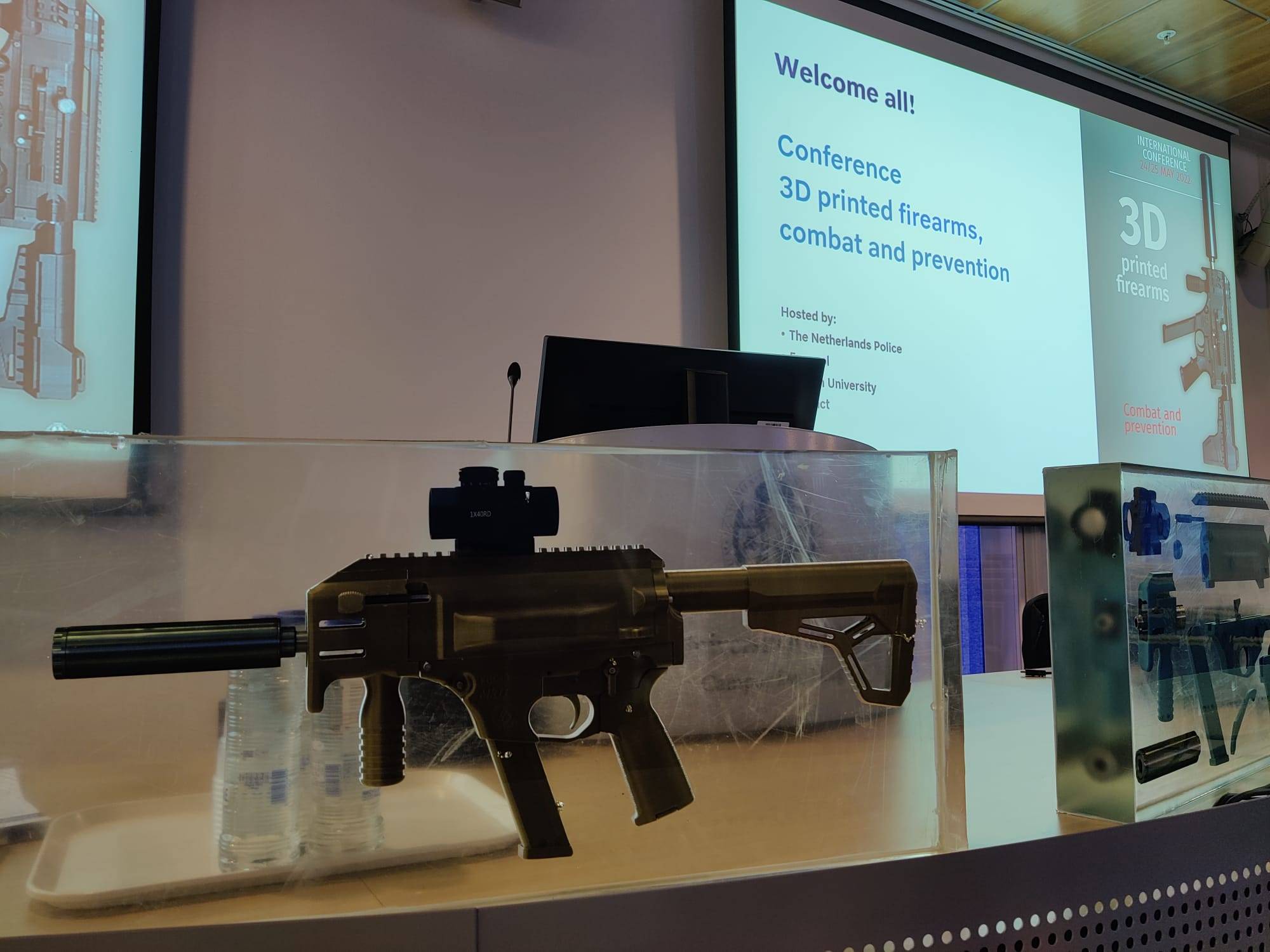
Printing insecurity: Tackling the threat of 3D printed guns in Europe

The International Conference on 3D Printed Firearms, organised by Europol and the Dutch National Police (Politie) in the framework of EMPACT Firearms and hosted at the University of Leiden, saw some 120 participants from 20 countries address the latest challenges facing law enforcement in their efforts to tackle this threat.  Over the course of two days (24-25 May 2022), the participants explored the fundamental processes required for developing joint intervention strategies in this field, including tactical and forensic research, software, scientific developments and legislation.  Opening the conference, Chief Constable Gerda van Leeuwen at the Dutch National Police (Politie), said: The development of 3D printing of firearms is a current and future threat. International cooperation therefore is crucial to be able to counter. This conference will focus not only on current state of play, but also on building a strong network of specialists on this topic, creating intervention techniques and sharing best practices. The team leader of Europol’s Analysis Project Weapons and Explosives, Martin van der Meij, added: The threat posed by 3D printed weapons is very much on the radar of Europol, amid the growing number of such firearms being seized in investigations across Europe in recent years. Such a challenge can only be addressed by combining the expertise, resources and insights of law enforcement, the private sector and academia to get such guns off the streets. 3D printed weapons are no longer a matter of fiction Back in 2019, two people were shot dead in Halle, Germany, by a perpetrator using a homemade weapon, based on a blueprint downloaded from the internet to partly manufacture the weapon with a 3D printer. In April 2021, the Spanish National Police (Policía Nacional) raided and dismantled an illegal workshop in the Canary Islands which was producing 3D printed weapons. Two 3D printers were seized, alongside gun parts, a replica assault rifle and several manuals on urban guerrilla warfare and white supremacist literature. The owner of the workshop was arrested and charged with illegal possession of weapons. A month later, two men and one woman were arrested in the town of Keighley in the United Kingdom as part of an investigation into right-wing terrorism. All three were charged with possessing components of 3D printed weapons.  Conclusions of the conference  •    Connection and cooperation between law enforcement and the industry/private sector is needed to identify and monitor the developments around 3D printed firearms; •    An international network of experts on 3D printed firearms will be created, tasked with keeping law enforcement agencies abreast of developments in 3D printed firearms; •    The main policy recommendations of participants and other developments around 3D printed firearms will be put into a factsheet, which will be distributed to partners and policymakers worldwide.  
Read full story →
Europol May 25, 10:47

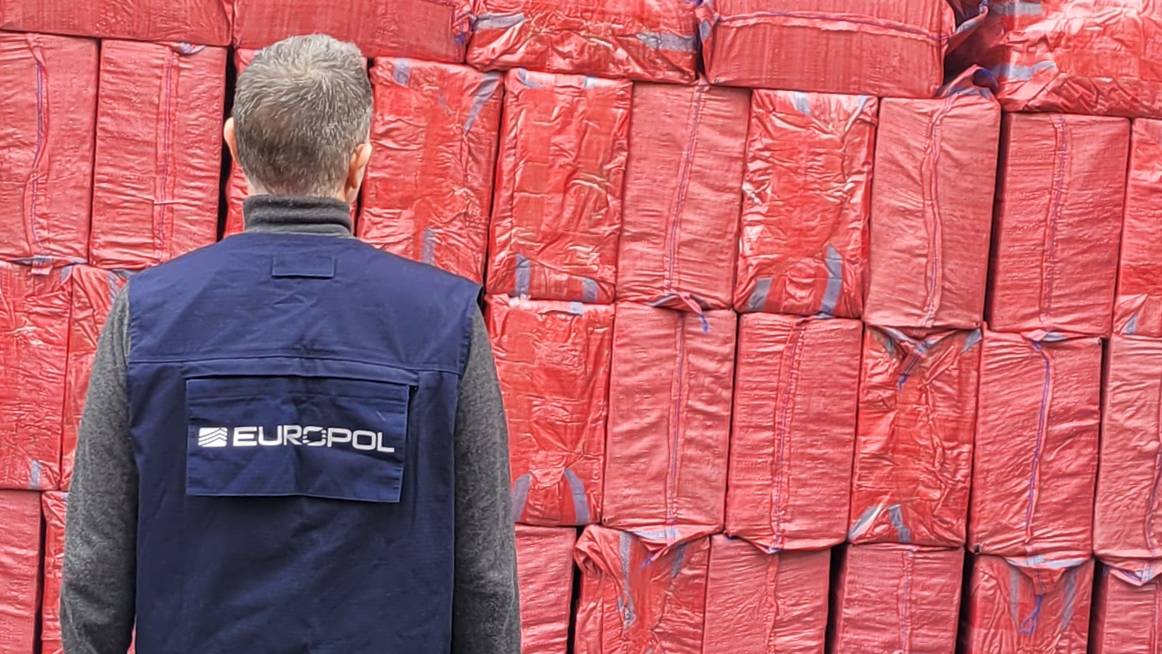
Nearly 40 tonnes of counterfeit cigarettes seized in France

French Customs (Direction générale des douanes et droits indirects), supported by Europol, arrested two suspected members of a criminal gang smuggling cigarettes from Asia to Europe. The suspects were indicted and currently remain in custody. The investigation, involving several customs services and the assistance of the French network of customs attachés (especially in Dubai), led to the seizure of 40 tonnes of counterfeit cigarettes in the Marseille and Paris regions in March 2022. The criminal activities were conducted by an international criminal organisation operating from Asia. The organisation shipped counterfeit cigarettes by container from the Caribbean, the Middle East and Africa, by impersonating the names of importers.  The commercialisation of these cigarettes in France would have represented a tax loss of around EUR 15 million. The volume of cigarettes confiscated during this operation represents the equivalent of approximately 10 % of the total seizures made by French Customs in 2021. Europol facilitated the information exchange and provided specialised analytical support. On the action day, Europol deployed an expert to France to cross-check operational information against Europol’s databases in real-time and to provide leads to investigators in the field.  In 2020, Europol created the European Financial and Economic Crime Centre (EFECC) to increase synergies between economic and financial investigations and to strengthen its ability to support law enforcement authorities in effectively combating this major criminal threat. Headquartered in The Hague, the Netherlands, Europol supports the 27 EU Member States in their fight against terrorism, cybercrime, and other serious and organised crime forms. Europol also works with many non-EU partner states and international organisations. From its various threat assessments to its intelligence-gathering and operational activities, Europol has the tools and resources it needs to do its part in making Europe safer.  
Read full story →
Europol May 24, 08:01

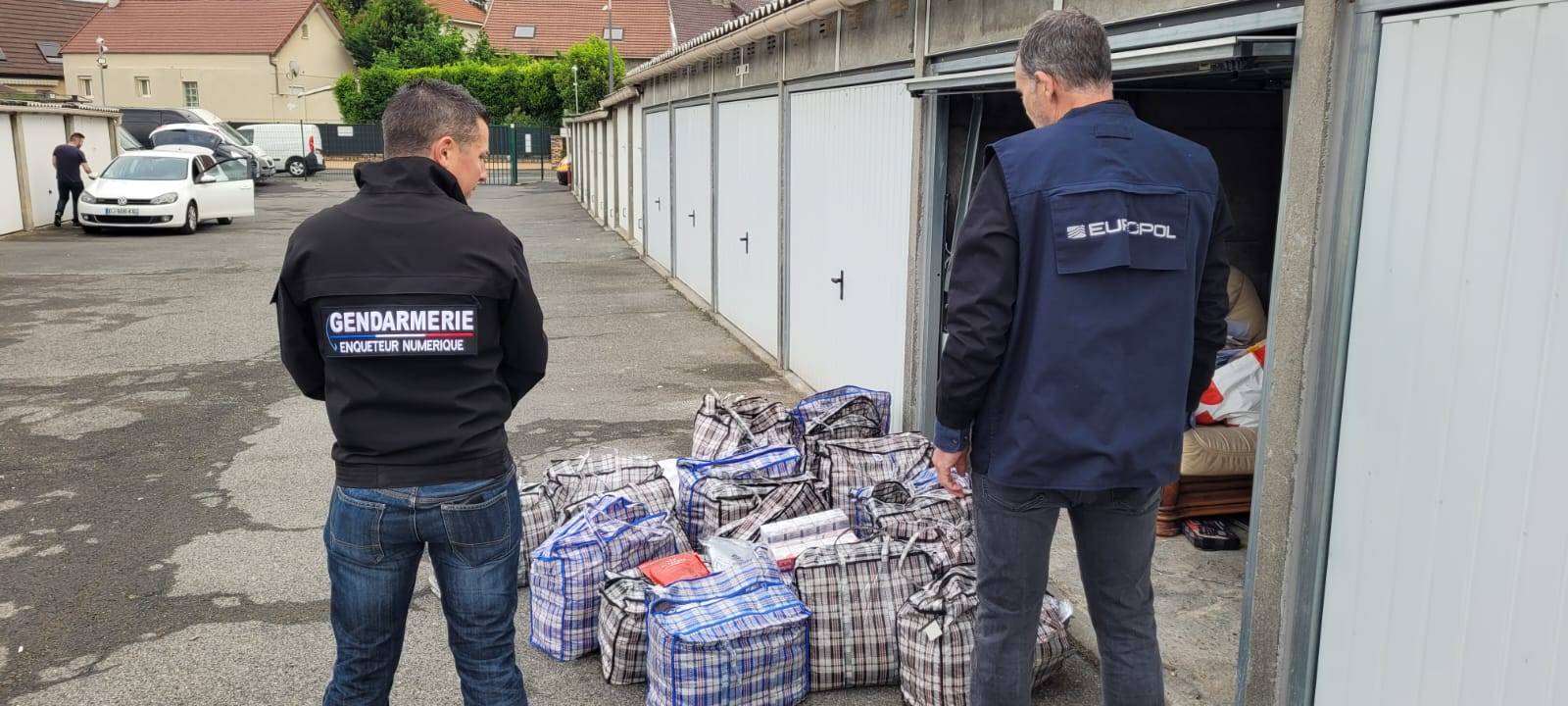
Moldovan 'Thief in Law' and his associates arrested in European crackdown

What connects counterfeit cigarette factories in Romania, blackmail and extortion cases in Moldova and a string of high-profile burglaries in France? The answer is one of the most powerful criminal groups in Moldova, known as ‘Patron’ after its ringleader, which has been dismantled last week as a result of an Operational Taskforce set up by Europol between the French, Romanian and Moldovan authorities.  A total of 50 searches were carried out in France, Romania and Moldova, as a result of which 14 Moldovan nationals were arrested (12 in France, 1 in Romania and 1 in Moldova).  The ringleader features among those arrested in Romania. He was accorded the rank of ‘thief in law’ within the Russian-speaking mafia rank structure, and is wanted in a number of high-profile cases in Europe.  During the searches, 1 700 cartons of cigarettes, 520 kg of tobacco and over EUR 200 000 in cash were seized This organised crime group was hierarchically structured and was headed by the thief in law, who named ‘supervisors’ in charge of coordinating the criminal activities of the various branches of this gang operating in different countries.  The criminals arrested are believed to be linked to a long list of illicit activities across Europe, such as organised theft and fencing, extortion, money laundering and tobacco smuggling.  European coordination  International police cooperation coordinated by Europol was central in bringing to justice the different members of this gang who were located in different European countries. Under the umbrella of an Operational Taskforce, Europol brought together the French, Romanian and Moldovan investigators who have been working together since April 2021 to establish a joint strategy and to prepare for the final phase of the investigation.   Europol and INTERPOL also deployed their specialists to France on the action day to assist the national authorities with the tactical work on the ground.  This operation was carried out within the framework of the European Multidisciplinary Platform Against Criminal Threats (EMPACT) which provided financial support.  The following law enforcement authorities took part in this investigation: France: National Gendarmerie (Gendarmerie Nationale) Romania: National Police (Poliția Română) Moldova: General Police Inspectorate (Inspectoratului General de Politie) Europol: European Serious Organised Crime Centre, European Financial and Economic Crime Centre    Headquartered in The Hague, the Netherlands, Europol supports the 27 EU Member States in their fight against terrorism, cybercrime, and other serious and organised crime forms. Europol also works with many non-EU partner states and international organisations. From its various threat assessments to its intelligence-gathering and operational activities, Europol has the tools and resources it needs to do its part in making Europe safer.  
Read full story →
Europol May 20, 09:10

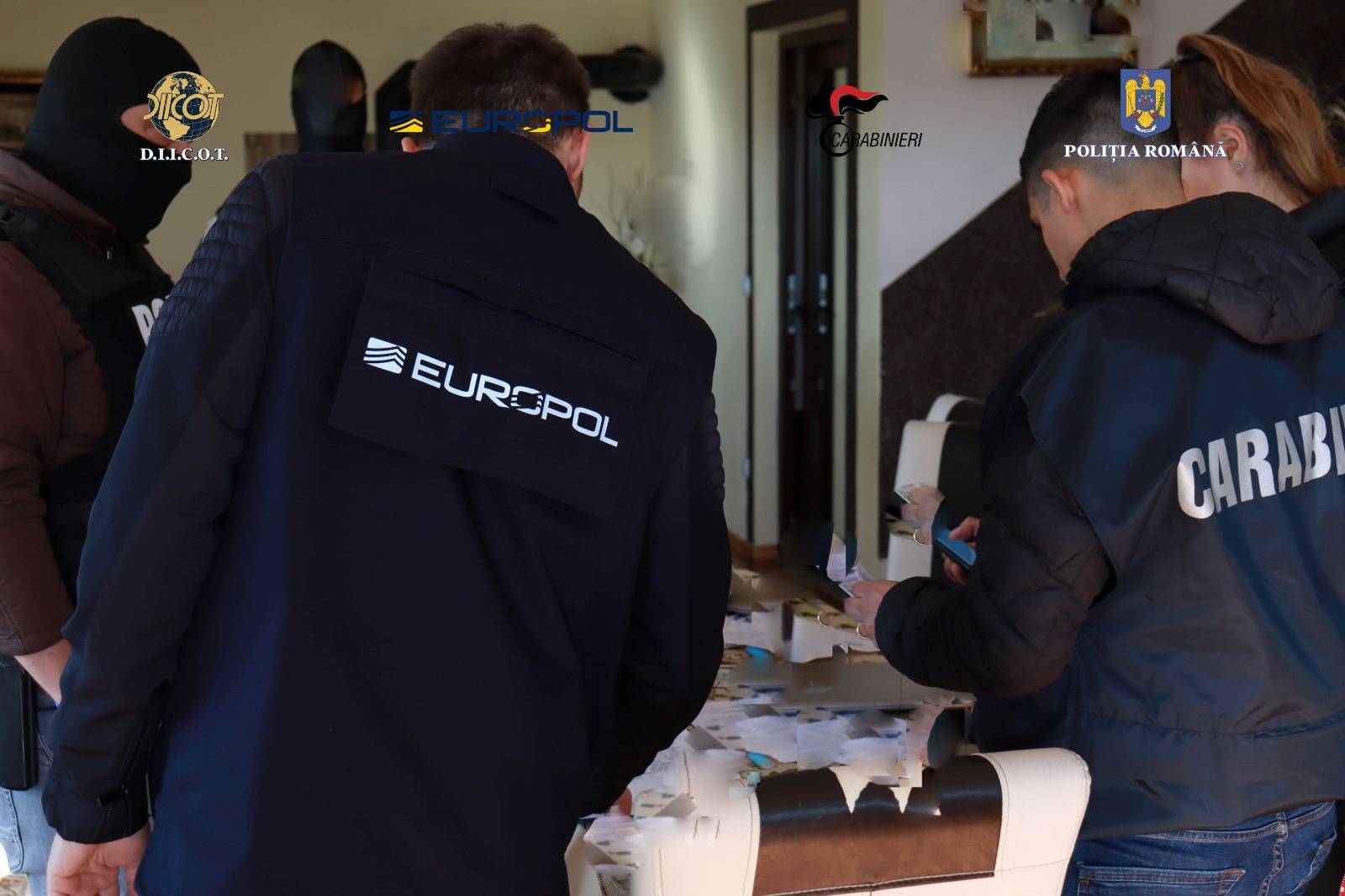
13 arrested for tricking elderly with love in Italy

Love trickery targets lonely men aged between 70 and 90  The family-based criminal gang, composed predominantly of Romanian nationals, targeted elderly victims based in the South Italian region of Calabria. The criminal network used young women employed as domestic workers to defraud the elderly. These young women would be tasked with convincing their elderly male customers to lend them large sums. Often, they engaged in a physical relationship with the elderly man while using a different pretext for asking financial help, such as personal health problems or sickness of a family member.  The criminal gang had a specific target in mind, targeting males aged between 70 and 90 years and often living isolated from other members of their family. In some cases, victims would be extorted if they declined paying the requested amounts. In one case, a victim suffered two heart attacks after one young woman secretly administered him with Valium to facilitate the robbery of his house. The victims would transfer large sums to the women; just one of the victims lost almost EUR 20 000 because of this trickery. Other members of the criminal group would collect the money and then wire it to Romania via different money transfer services. The criminal assets were then laundered in Romania through investments in real estate, vehicles and gold. The investigation estimates that the criminal gang managed to gain more than EUR one million though this criminal activity. During the investigation, law enforcement identified 56 members of the criminal gang, with 16 of them being key actors in the scheme. Investigators localised a number of these suspects in Romania, Germany and links to the Netherlands.  The action day on 19 May led to: 23 house searches (13 in Italy, 2 in Germany and 8 in Romania) 13 arrests (4 in Italy, 2 in Germany and 7 in Romania) The seizures so far include electronic equipment and documents Europol supported the case since 2020 by facilitating the exchange of information. Europol’s financial investigation team also provided specialised analytical support, including the analysis of financial flows wired through money transfer services. On the action day, Europol deployed two experts in Italy and Romania to cross-check operational information against Europol’s databases in real-time and provide leads to investigators in the field. 
Read full story →
Europol May 19, 06:00

Three arrested in the Netherlands for ATM explosion spree in Germany

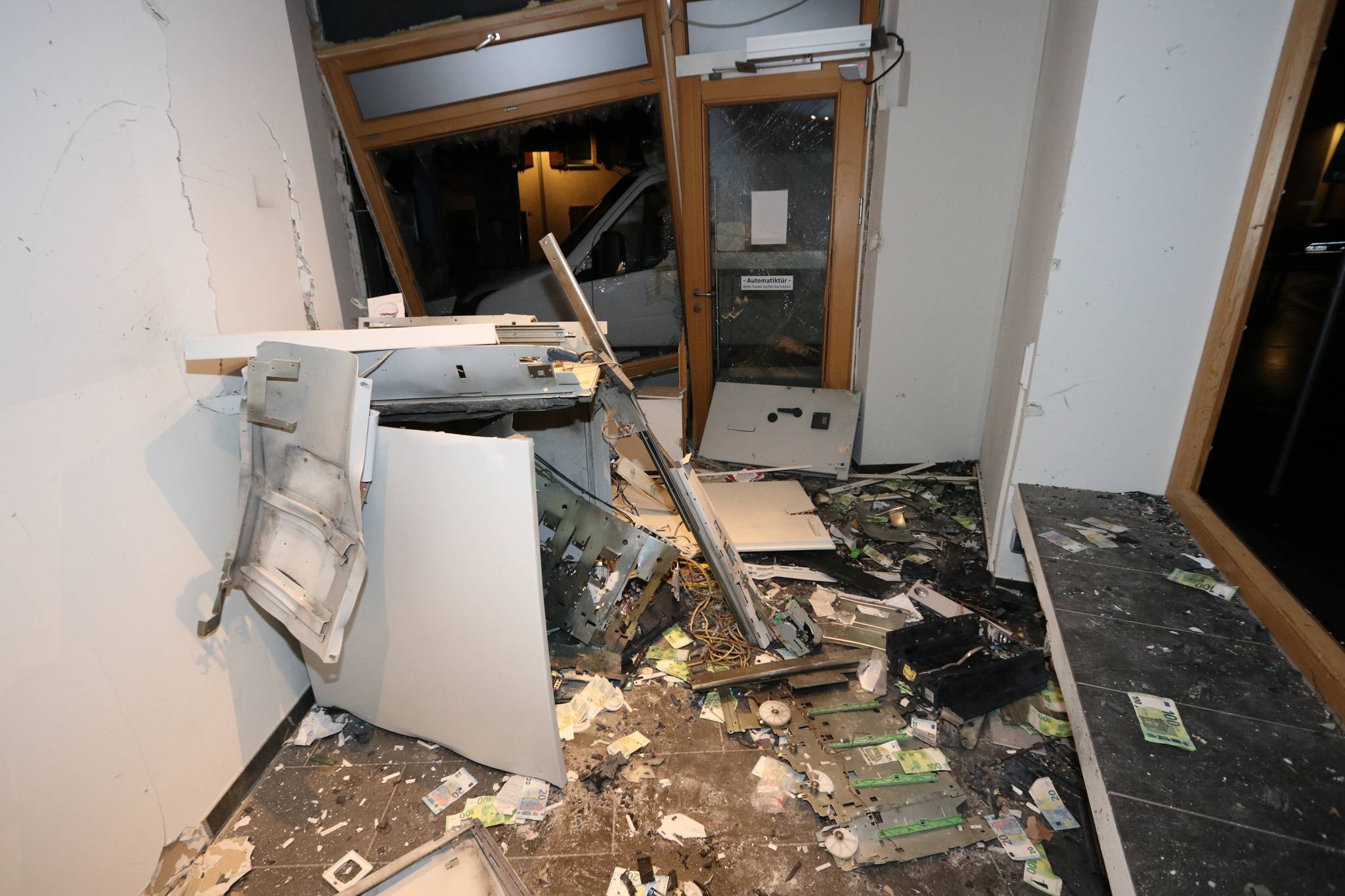
The arrests took place on in the early hours of 17 May in Haarlem and Vianen in the Netherlands. This investigation was carried out under the direction of the German Prosecutor General’s Office Frankfurt am Main (Generalstaatsanwaltschaft Frankfurt am Main). These arrests follow those of 3 other members of the same criminal group on 30 March 2022 in Hessen.The gang is believed to have targeted a total of eight cash machines in Hessen, Baden-Württemberg, Lower Saxony and Rhineland Palatinate in Germany between October and November 2021, stealing over EUR 958 000 in cash. The group would attend at the scene often in stolen vehicles in the early hours of the morning, and used explosives to break into the ATMs so that they could then steal the cash from inside them. They caused close to EUR 1 million worth of damage to the premises they attacked, demonstrating no insight into the risk of harm, or even possibility of death, to those who lived nearby or who were near the machines at the time.Cross border cooperationOperation Pfeil/Pentagon, coordinated by Europol, was the culmination of many months of meticulous planning between the German and Dutch authorities involved. Europol brought together the national investigators who have been working closely together with Europol’s Serious Organised Crime Centre to establish a joint strategy to dismantle this criminal gang. A Europol mobile office was deployed to Haarlem in the Netherlands on the action day to facilitate the extensive exchange of information and evidence and support with the analysis of the seized electronic devices.Police appeal In addition to the 6 members arrested so far, law enforcement is seeking to identify a seventh member of this gang. The German Prosecutor General’s Office Frankfurt am Main are urging members of the public with information to come forward. Anyone who has any knowledge of these fugitives’ whereabouts should get in touch with any information that can help to track down the fugitives.The action day was supported financially by the Internal Security Fund SWORD.Click here for more information on the police appeal. 
Read full story →
Europol May 10, 13:12

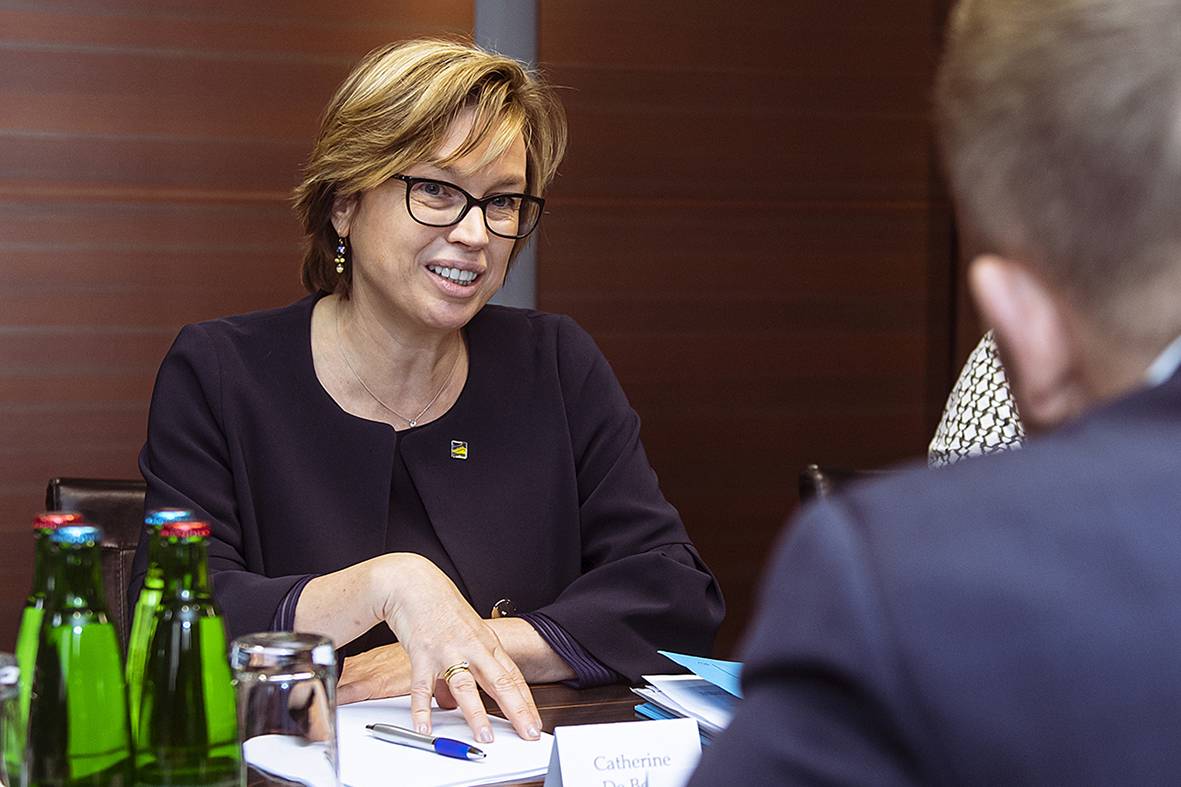
Catherine De Bolle appointed to a second term as Executive Director of Europol

The extension is based on a procedure following the decision of the Management Board of Europol as of 1 May 2017, which sets out for the extension of the term of office of the Executive Director of Europol. According to this procedure, Europol’s Management Board had informed the European Parliament that it would propose to the Council of the European Union that Ms. De Bolle’s term of office be extended. Ms. De Bolle was first appointed Executive Director of Europol by a Council Decision of 8 March 2018 and the first term of office of her expired on 1 May 2022. The Executive Director of Europol is appointed for a four-year period, extendable once in accordance with Article 54(4) of Regulation (EU) 2016/794. Ms. De Bolle previously served as Commissioner General of the Belgian Federal Police from 2012 until 2018. Europol is the European Union’s law enforcement agency. Headquartered in The Hague, the Netherlands, Europol supports the 27 EU Member States in their fight against terrorism, cybercrime and other serious and organised forms of crime. 
Read full story →
Europol May 6, 08:30

2022 EU drug markets analyses from Europol and the EMCDDA

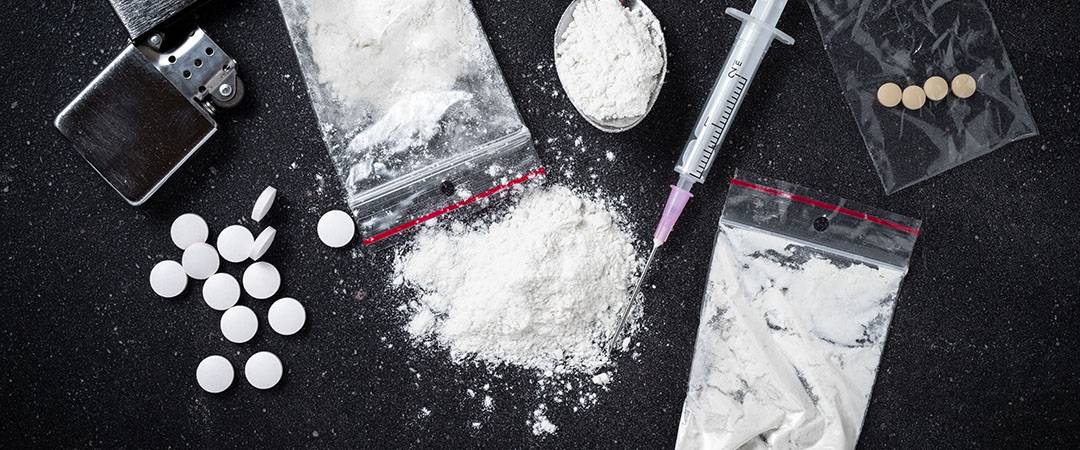
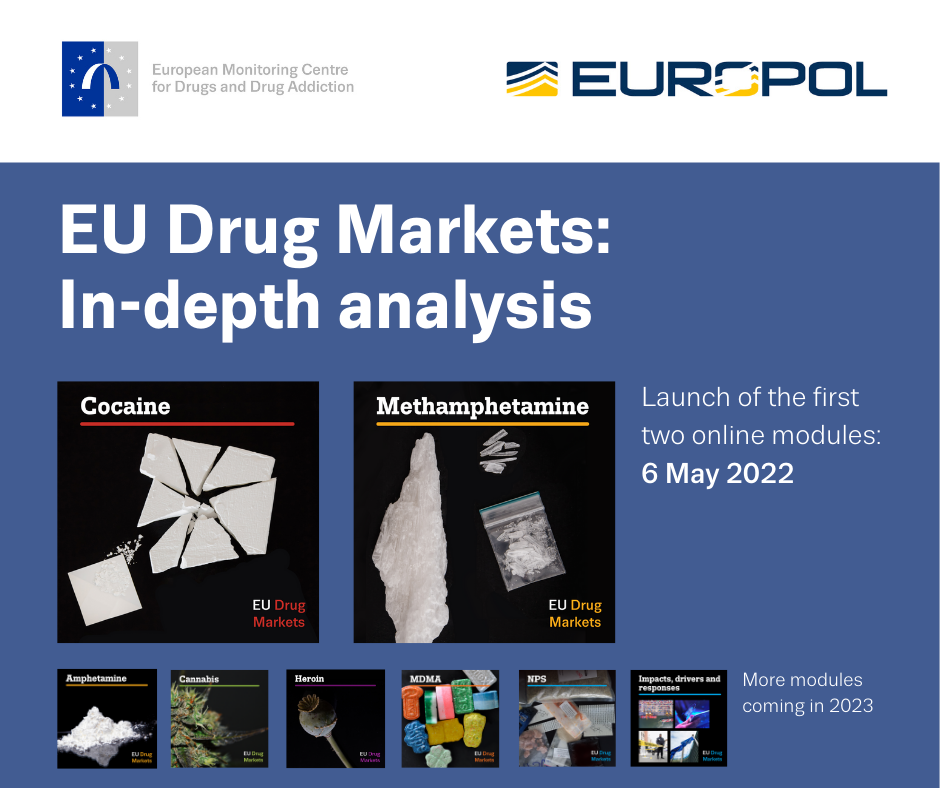
Europe’s role in international drug production and trade is changing, according to new analyses released today  by Europol and the EU drugs agency (EMCDDA). In an in-depth look at the cocaine and methamphetamine markets, the agencies point to increased production activities in Europe and how collaboration between criminal groups worldwide is creating new security threats and expanding the market.  The new analyses cover trends along the supply chain from production and trafficking to distribution and use. They describe a large and expanding cocaine market and a currently small, but steadily growing, methamphetamine market in the EU. They also warn of the heightened threat posed by innovation in production processes and chemical precursors, and a growing range of products that may be hazardous to consumers.   Europol’s Executive Director Catherine De Bolle stresses: "The trade in illegal drugs continues to dominate serious and organised crime in the EU, and nearly 40 % of the criminal networks operating at the international level reported to Europol are active in drug trafficking. Fighting this illegal trade is a key priority for Europol and the EU. Today's analysis supports us in understanding the market dynamics and is crucial for formulating effective law enforcement responses". EMCDDA Director Alexis Goosdeel says: "Our new analyses show that we are now facing a growing threat from a more diverse and dynamic drug market, that is driven by closer collaboration between European and international criminal organisations. This has resulted in record levels of drug availability, rising violence and corruption, and greater health problems. In response, we need to be even more sensitive to signals coming from the market and invest in greater coordinated action, not only in Europe, but also with our international partners in producer and transit countries".  Europe is a major synthetic drug producing region, both for domestic and external markets. Increasingly, it is also a key trans-shipment point for drugs originating elsewhere and destined for other world regions. For both cocaine and methamphetamine, there is evidence that Latin American and European criminal groups are partnering in production, trafficking and distribution. Today’s findings draw on data and information from the EMCDDA’s drug monitoring system and on Europol’s operational intelligence on organised crime. Taking a threat assessment approach, the agencies present key areas for action at EU and Member State level. These include: rapidly identifying emerging health and security threats, investing in forensic and toxicological capacity to keep pace with innovation, targeting the illicit drug supply chain and reducing vulnerabilities at external borders.  Cocaine — record seizures and increasing production in Europe  Today’s analysis shows that the European cocaine market is expanding, driven by unprecedented levels of trafficking leading to historically high availability. High levels of cocaine production in South America have resulted in record quantities seized in Europe. Europe is also a destination and transit zone for cocaine bound for the Middle East and Asia. More production is also now taking place inside Europe, indicating changes in the region’s role in the international cocaine trade. A large variety of individuals and criminal networks shape the complex supply of cocaine to, and within, the EU. The potential for new smokable cocaine products to emerge on the market raises concerns about future health risks. Cocaine is the second most commonly consumed illicit drug in the EU after cannabis, with a market retail value in 2020 estimated at EUR 10.5 billion (range EUR 7.7 billion to 12.8 billion). Around 3.5 million Europeans (15–64 years) report having used the drug in the past year, 14 million in their lifetime. While cocaine use remains concentrated in the south and west of Europe, the market appears to be spreading eastward.  For the fourth consecutive year, record amounts of cocaine (214.6 tonnes) were seized in Europe in 2020, a 6 % increase from 2019, suggesting high availability of the drug. Three countries — Belgium (70 t), the Netherlands (49 t) and Spain (37 t) — accounted for around three-quarters of the European total, but large quantities were also seized by Italy (13.4 t), France (13.1 t), Germany (11 t) and Portugal (10 t). Most cocaine seized in Europe arrives in maritime shipping containers. Entry points of cocaine shipments are diversifying, with greater amounts seized in ports in Eastern Europe and Turkey.  Most cocaine manufacturing still takes place in Colombia, Bolivia and Peru. The new analysis describes, however, how cocaine processing is now taking place inside Europe (mainly in Belgium, Spain and the Netherlands). Large quantities of chemical precursors used in cocaine production have been seized from illicit production laboratories and at European borders. Recent data also suggest that large amounts of cocaine powder have been processed in Europe from intermediary products, such as coca paste and cocaine base. Some of these are smuggled from South America in carrier materials (e.g. charcoal, plastics) and then extracted in specialised facilities. Availability in Europe of large amounts of cocaine base and coca paste creates a risk of new smokable cocaine products (e.g. ‘crack’) emerging on European consumer markets, posing considerable health and social risks.  Methamphetamine — a small, but steadily growing, market  Methamphetamine — the most widely consumed synthetic stimulant drug in the world — still plays a relatively small role in Europe’s drug market. Nevertheless, the latest analysis shows the growing threat posed by this drug in the region, as availability increases and use spreads to new areas. Methamphetamine is produced inside the EU to supply both domestic and external markets. Europe is also a destination and transit zone for this drug from other production hubs (e.g. Iran, Nigeria, Mexico) bound for Asia and Oceania. The emerging methamphetamine industry in Afghanistan poses a threat to the EU, given competitive prices and long-established drug trafficking routes to Europe. Today’s analysis shows that long-term trends point to a steady market expansion. Between 2010 and 2020, the number of methamphetamine seizures in the EU 27 more than doubled (from 3 000 to 6 200), while the quantities seized increased by 477 % to 2.2 tonnes in 2020 (EU 27).  In 2020, nine EU Member States reported the dismantling of 215 methamphetamine laboratories.  Historically production in Europe typically occurred in small, but widespread, ‘kitchen’ laboratories in  Czechia and its neighbouring countries. While these still exist, there is now growing concern about production facilities located in Belgium and the Netherlands, where methamphetamine can be produced on a considerably larger scale.  Methamphetamine facilities detected in Belgium and the Netherlands have increased in size, sophistication and output since 2019. Recognising the profitability of methamphetamine, European synthetic drug producers are now seen to be working with Mexican criminal groups to develop production processes and exploit existing infrastructure in Europe. In addition to methamphetamine produced in Europe, multi-tonne quantities of the drug originating in Mexico have been seized in the EU since 2019, also implying collaboration between European and Mexican criminal networks.  An additional development is the production of methamphetamine in Afghanistan, although currently the country does not appear to be a major source of supply to the EU. Nevertheless, given the relatively low wholesale price of Afghan methamphetamine, criminal networks may consider it economically attractive to traffic the drug into the EU along established heroin trafficking routes.  Methamphetamine use in Europe has historically been concentrated in Czechia and Slovakia, but use appears to be spreading elsewhere. Latest wastewater data reveal that the drug is also present in Belgium, Cyprus, the east of Germany, Spain, Turkey and several northern European countries (e.g. Denmark, Latvia, Lithuania, Finland, Norway). Of the 58 cities with data on methamphetamine residues in municipal wastewater for 2020 and 2021, around a half (27) reported an increase. With greater amounts of methamphetamine present on the European market, there is concern around increased demand for the drug, particularly in its smokable form (‘crystal meth’). This could have long-term implications, including a greater burden on health systems and a threat to public safety.  Cross-cutting themes Logistics — an emerging parallel business: While established criminal networks often manage their own activities, others now outsource a range of services along the supply chain. Today’s analyses show how logistical support has become a parallel business, with some criminal groups specialised in providing the chemicals, equipment and expertise needed to set up and operate production facilities. Analysis of encrypted criminal communications, through recent high-profile operations, have shown that trade is often reliant on a web of facilitators and brokers who connect producers, transporters and distributors. European criminal networks are boosting production efficiency drawing on the know-how of their counterparts in Latin American drug-producing regions. Rising violence and corruption: Violence and corruption, long seen in traditional drug-producing countries, are increasingly seen within the EU. The analyses highlight that, in some EU Member States (Belgium, Spain, France, Netherlands), competition between drug suppliers has intensified, resulting in an increase in violent clashes. The expanding EU cocaine market has brought with it a rise in homicides, kidnappings and intimidation, with violence spilling over to those outside the drug market (e.g. lawyers, government officials, journalists). Meanwhile, the growth of large-scale production of methamphetamine in Europe has the potential to ‘drive more corruption along the supply chain, creating a parallel economy’. Corruption has been identified as a key threat in the EU, with almost 60 % of criminal networks estimated to use corruption as a facilitator.  Environmental damage, risks and costs: A prominent cross-cutting theme in today’s findings is the environmental impact of drug production. This includes the dumping of chemical waste, which can result in ecological damage, public safety risks and high clean-up costs. Fatalities have been recorded in synthetic drug production laboratories in Belgium and the Netherlands in recent years, due to fires, explosions or suffocation from carbon monoxide or other toxic fumes.  COVID-19 impact on markets: Despite the unprecedented disruption caused by the COVID-19 pandemic, cocaine and methamphetamine markets in the EU have continued to evolve. Analyses show that COVID-19 restrictions were felt more at retail than wholesale level, where cocaine trafficking via maritime routes continued at pre-pandemic levels. Retail drug markets were disrupted during the early lockdowns, although dealers quickly adapted using new methods (encrypted messaging services, social media apps, online sources and home deliveries). In 2020, methamphetamine was one of the drugs most often seized in postal consignments.   
Read full story →

Europol May 6, 07:00

Gun smugglers behind mail order service arrested in Poland and the Netherlands

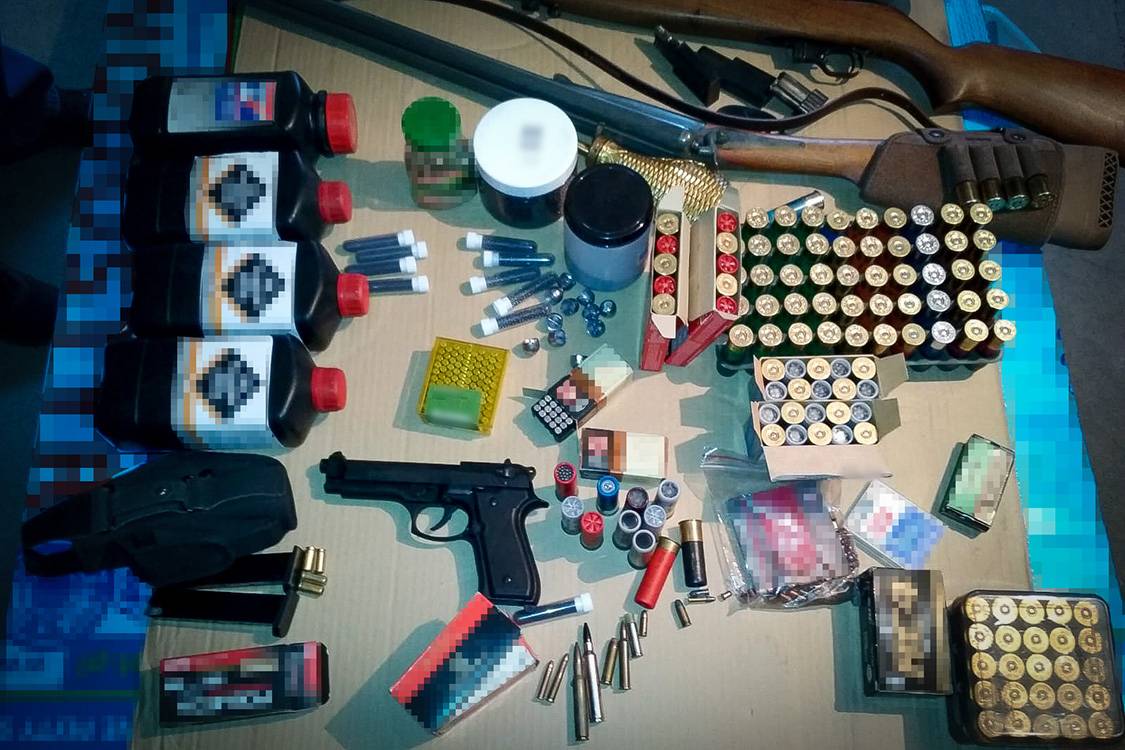
On 25 April, Europol supported a series of actions carried out simultaneously in the Netherlands and in Poland, as a result of which 82 individuals were arrested (81 in Poland, one in the Netherlands) and 250 firearms seized. Some 300 locations were searched across Poland, alongside two in the Netherlands in Beverwijk and Heemskerk.  Mail order gun service  The members of the gang arrested, all Polish nationals, mostly belonged to one same family. They have been under investigation since August 2020.  The family members residing in the Netherlands, which included the gang’s ringleader, were in charge of acquiring firearms of various types – both legal and illegal - across Europe. These firearms were then stored in the Netherlands, and when needed sent to the family members in Poland for them to convert the deactivated weapons into live-firing ones in illegal workshops.  The firearms were advertised for sale on Polish online marketplaces as ‘antique’ or ‘deactivated’ ones for which the sale is authorised. The illegal, live-firing weapons would then be offered for sale to trusted clients. Once sold, these weapons were sent via parcel delivery companies to strawmen for further distribution in Poland or directly to the clients who purchased the firearms. The organised crime group also supplied ammunition alongside the weapons.  Up to the action day, this gang of gunrunners is suspected to have distributed several hundred illegal firearms using this modus operandi.  European coordination  International police cooperation coordinated by Europol was central in bringing to justice the perpetrators who were located in different European countries. Europol brought together the Dutch and Polish investigators who have since been working closely together with specialists from Europol’s European Serious Organised Crime Centre to uncover the magnitude of the criminal activity and establish a joint strategy.  A Europol mobile office was deployed to Poland on the action to facilitate the extensive exchange of information and evidence and support with the analysis of the seized electronic devices.  The following law enforcement authorities took part in this investigation: Netherlands: National Police (Politie) Poland: Central Criminal Bureau of Investigation (Centralne Biuro Śledecze Policji), regional police forces  Europol: European Serious Organised Crime Centre   
Read full story →
Europol May 5, 08:00

Three German fugitives arrested in Spain for providing shadow banking system to criminals

Three individuals have been arrested as the result of an action day in Malaga, Spain, on 30 March, the details of which can only be released now due to operational reasons. All three suspects have been on the run from the German authorities since 2021. The criminal organisation’s ringleader – a German national of Russian origin – features among those arrested. The suspects are believed to have run a shadow banking system which processed hundreds of millions of euros of criminal transactions isolated from any oversight mechanisms governing the legal financial system.  The criminals moved around large amounts of cash through this parallel system, helping criminals launder their illegal proceeds and fund their activities mainly linked to drug trafficking. The ringleader of this criminal network would negotiate commissions of up to 5 % for every million euros managed, with profits estimated at more than EUR 250 000 per day.  Europol’s EFECC supported the investigation by providing its secure communication platform and facilitating international cooperation between Spain and Germany, running cross-checks and providing analytical support and operational expertise. A Europol mobile office was also deployed to Malaga to assist the Spanish authorities with the action day.  
Read full story →
Europol Apr 29, 11:00

Violent labour exploitation gang busted in Romania and the UK

The Romanian Police (Poliția Română) and the United Kingdom Northamptonshire Police, supported by Europol and Eurojust, have dismantled a criminal network involved in human trafficking, labour exploitation and money laundering. The action day on 27 April led to: 25 house searches (13 in Romania and 12 in Corby, the UK); 5 arrests (2 in Romania and 3 in the UK); Seizures included digital equipment and mobile phones, two high-end cars, luxury goods, weapons, and the equivalent of over EUR 230 000 in cash in different currencies. Victims worked for little or no payment Active since early 2018, the criminal network lured vulnerable people in unstable financial situations by offering them jobs in the UK. The suspects recruited victims directly from the Romanian county of Iasi, but also through intermediaries. So far the investigators have identified 27 victims, both male and female, of Romanian origin. The criminal network transported the victims to the UK where they took their ID documents and phones and forced them to work for little or no wages at all. The victims were forced to work 16 hours a day and seven days a week. The suspects established a wide network for the recruitment, transportation, accommodation and exploitation of victims.  In collaboration with managers from a number of companies in the UK, the members of the criminal gang supplied businesses, such as factories and car wash companies, with low-wage workers. As the suspects were in possession of the victims’ ID documents, they could take out different loans using the victims’ names. The criminal networks also controlled the bankcards of the victims, withdrawing all salary payments made to them by their employers. The gang threatened the victims and their families back home with physical violence. With no means of communication and under strict control by the criminal gang, the victims worked without receiving any payment, and without sufficient food supplies or basic health care. The suspects laundered the criminal proceeds through investments in real estate in Romania and through the purchase of luxury goods. Cross-border coordination Law enforcement authorities initiated investigations into this criminal network in 2020. Europol coordinated the operational activities, facilitated the exchange of information and provided analytical support. Europol deployed an expert to the UK to cross-check operational information in real time and support the investigators on the ground.     In November 2021, Eurojust set up a joint investigation team (JIT) between Romania and the UK to facilitate the judicial cooperation.   
Read full story →
Europol Apr 29, 09:00

New Europol and EMCDDA Analyses of the European Drug Market

To be presented in Brussels on 6 May, the analyses combine data from Europol’s operational intelligence on organised crime with the EMCDDA’s drug monitoring system. These are the first in a series of online modules exploring the EU drug market. Further modules will be published in 2023 to complete the strategic analysis. These will cover amphetamine, cannabis, heroin, MDMA and new psychoactive substances, as well as impacts, drivers and responses. A press release, with the main highlights on cocaine and methamphetamine, will be available on 6 May. Press conference Date: 6 May 2022 Time: 10.30 Central European Time (CEST/Brussels), 09.30 (WEST/Lisbon). Venue: Résidence Palace, 155 Rue de la Loi, B-1040 Brussels (Polak room). Registration: press@europol.europa.eu or press@emcdda.europa.eu Press contacts Europol press office: press@europol.europa.eu — Tel. (31) 703 02 50 01 EMCDDA press office: press@emcdda.europa.eu — Tel. (351) 211 21 02 00 | (351) 935 994 027  The EMCDDA–Europol EU drug markets analysis is released every three years. The last report was published in 2019.
Read full story →
Europol Apr 28, 12:00

Europol report finds deepfake technology could become staple tool for organised crime

Recommendations for tackling criminal uses of deepfakes Much of the deepfake content created today is identifiable through manual methods that rely on human analysts identifying telltale signs in deepfake images and videos. However, this is a labour intensive task that is not actionable at scale. Accordingly, the report argues that law enforcement agencies will need to enhance the skills and technologies at officers’ disposal if they are to keep pace with criminal use of deepfakes. Examples of such new capacities range from the deployment of technical and organisational safeguards against video tampering to the creation of deepfake detection software that uses artificial intelligence.  Click here to access the report. About the Europol Innovation Lab Europol's Innovation Lab aims to identify, promote and develop concrete innovative solutions in support of the EU Member States’ operational work. These will help investigators and analysts to make the most of the opportunities offered by new technologies to avoid duplication of work, create synergies and pool resources. The activities of the Innovation Lab are directly linked to the strategic priorities as laid out in Europol Strategy 2020+, which states that Europol shall be at the forefront of law enforcement innovation and research.
Read full story →
Europol Apr 27, 07:30

Spain arrests two for supplying conflict zones with weapons

The two suspects were arrested at their homes in Barcelona and El Masnou on 20 April. Seven other members of the same criminal organisation had already been arrested in November 2020. The analysis of the evidence gathered then during the house searches led to the identification of the suspects arrested in the province of Barcelona this week. Fuelling conflict zones  The criminal syndicate, operating mostly from Spain, was under investigation since 2018. They illegally transported weapons and explosives across the Mediterranean to conflict zones subject to international embargoes in North Africa and the Middle East. Their illegal cargo included heavy armaments, such as tanks, and explosive precursors used by terrorists to manufacture improvised explosive devices. The criminal proceeds were then injected into the legal economy through different money laundering schemes, before being sent to Spain where the criminals invested in real estate and enjoyed a lavish lifestyle.  The following authorities in Spain were involved in the investigation: National Police (Policía Nacional) Regional Catalan Police (Mossos d’Esquadra) Tax Authority (Agencia Tributaria) Europol’s support  The case was conducted in close cooperation with Europol’s European Serious Organised Crime Centre, which provided continuous intelligence development and analysis to support the Spanish investigators. A Europol Mobile Office was also deployed to Barcelona. The evidence seized during the action day in Barcelona is now being analysed to identify further investigative leads across Europe.
Read full story →
Europol Apr 26, 14:00

Europol and UEFA hold first international conference on match-fixing in football

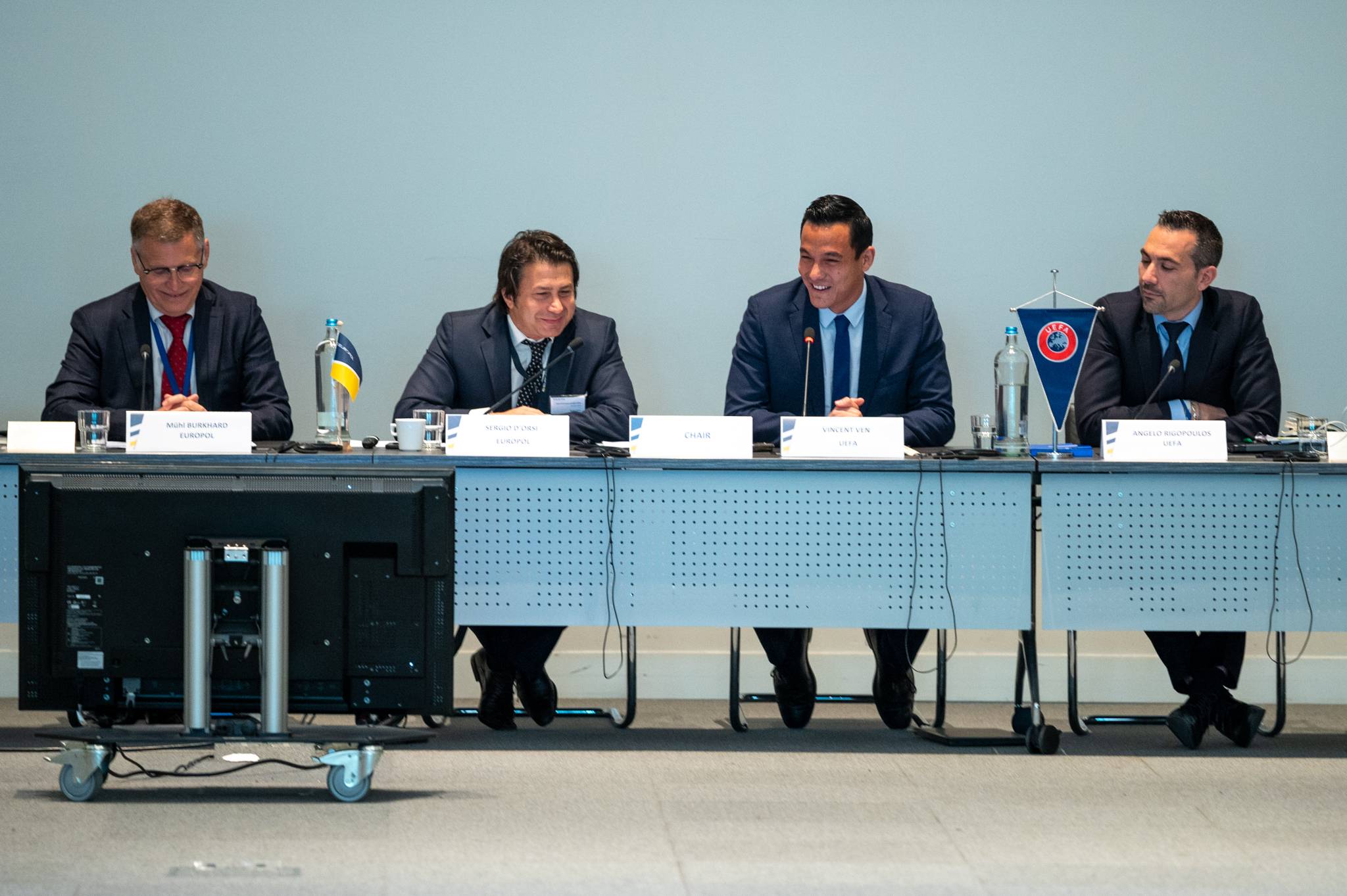
On 26 April, a total of 109 senior officials from law enforcement, judicial authorities and national football associations from 49 countries attended the joint Europol-UEFA conference at Europol’s headquarters in The Hague, the Netherlands. Over the course of the day, expert panels analysed the most pressing current and future threats to protecting the integrity of football and fighting organised crime groups. They discussed topics such as operational collaboration between law enforcement bodies and football Integrity officers, and the early detection of suspicious betting patterns.   Prevention was also high on the agenda, with discussions focusing on new recently adopted legal frameworks and existing tools designed to prevent match-fixing and facilitate information sharing.  Burkhard Mühl, Head of Europol’s European Financial and Economic Crime Centre (EFECC), commented: Organised crime quickly understood that a lot of football clubs were suffering financially as a consequence of COVID-19. And where there is less money, players, coaches, officials and even club executives are increasingly vulnerable to being corrupted by fixers. What with the huge profits associated with ‘making the unpredictable predictable’, we are seeing more and more cases of match-fixing and suspicious results. Cooperation between law enforcement and sports organisations is vital to not only detect and investigate suspected corruption in football, but also to stop such fraudulent activities before they can even begin Meanwhile UEFA’s Managing Director of Integrity and Regulatory, Angelo Rigopoulos, remarked: This first joint Europol-UEFA international conference is an important step forward in the fight against match-fixing, and sends out a strong signal that both organisations are here to pool their forces and do their utmost to minimise this phenomenon. Vincent Ven, UEFA’s Head of Anti-Match-Fixing, added: Nowadays, more than ever before, European football and the law enforcement sector need to remain united and offer their mutual support in seeking to protect our popular sport from this scourge, by cooperating in joint activities, implementing common projects and exchanging information in the area of match-fixing. Experts at Europol’s European Financial and Economic Crime Centre work with law enforcement authorities across the European Union to identify links between suspicious matches and suspects, and to uncover the organised crime groups who orchestrate these multi-million Euro frauds against sport.  UEFA’s team of anti-match-fixing experts work on education, intelligence, investigation and cooperation with its network of 55 Integrity Officers as well as key stakeholders and partners, with particular emphasis given to preventing any issues related to match-fixing and betting irregularities.  
Read full story →
Europol Apr 21, 12:59

Cocaine lords targeted in Belgium, Germany and the Netherlands

This operation targeted the European and South American drugs and money-laundering infrastructure of a large scale trafficking network, which had already taken a massive hit in February 2022. Europol facilitated the exchange of information and produced large amounts of intelligence based on criminal analysis, enabling Europol to unveil a detailed picture of the networks’ operations across countries and continents. The action day on 20 April 2022 led to:Over 35 locations searched 17 arrests (5 in Belgium, 11 in Germany and 3 in The Netherlands)Seizures in Belgium, Germany and Netherlands including electronic equipment, documents, four vehicles, luxury watches, and real estate including four apartments, as well as bank accounts and cash with a total value of EUR 5.5 millionThe missing puzzle piece - European High Value Targets indictedThese operational activities are the culmination of parallel investigation of the Belgian, Dutch and German law enforcement authorities into a criminal network trafficking multi-tonne shipments of cocaine from source countries to Europe. The operation was initiated in February 2021 when law enforcement authorities in the ports of Hamburg and Antwerp seized a total of 34 tonnes of cocaine in 3 shipments linked to this criminal network. During the investigation, the cooperating authorities uncovered that this criminal group had the capacity to ship multiple multi-tonne cocaine consignments towards Europe in just a few months. The traffickers’ command and control centre, and the European High Value Targets behind it, were based in Dubai. From there, they managed the trafficking of cocaine sourced via their own production infrastructure in Bolivia. Logistical and supply lines were also identified in Paraguay. The leaders of the criminal network used encrypted communication to arrange their large shipments. The coordination of this multi-tonne cocaine trafficking was intercepted as a result of the 2021 takedown of the SKY ECC encrypted communications platform. This also revealed a large network of legitimate companies set up to enable the import of drugs from South America and the laundering of the related proceeds. As an example, to enter the EU, the cocaine was concealed in shipments of bananas, coffee and plaster. 
Read full story →
Europol Apr 12, 10:00

Kinahan organised crime group sanctioned by US Department of the Treasury

Today Ireland’s national police force, An Garda Síochána, launched the criminal justice initiative ‘cooperating at an international level in protecting communities from organised and serious crime’ at a press conference at City Hall in Dublin, Ireland. At the press conference, the US Department of the Treasury’s Office of Foreign Assets Control (OFAC) announced sanctions against the Irish organised crime group known as the Kinahan gang. This action results from close collaboration between OFAC, the Drug Enforcement Administration, Ireland’s An Garda Síochána and the United Kingdom’s National Crime Agency, with the support of Europol, the European Union Agency for Law Enforcement Cooperation. Europol provided operational support and coordination, as part of its mandate to investigate large-scale operations involving several countries. Jari Liukku, Head of Europol's European Serious and Organised Crime Centre said: Serious and organised crime affects and undermines all levels of society, from the daily lives of our citizens to the economy, state institutions and the rule of law. The criminal structures we are facing are fluid and flexible. Europol, as the nerve centre of the European Union internal security architecture, offers a genuine platform for operational cooperation and a hub for the sharing of criminal intelligence to tackle the most serious crime gangs. As a result of today’s action, all property and interests in property of the designated individuals or entities that are in the United States, or in the possession or control of US persons, must be blocked and reported to OFAC.  Europol’s Serious and Organised Crime Threat Assessment (SOCTA) The initiative ‘cooperating at an international level in protecting communities from organised and serious crime’ demonstrates the strength of the international law enforcement community. As part of this, authorities from Ireland, the UK, the US and Europol work hand in glove to break the criminal networks involved in drug trafficking and corruption, money laundering and violence. According to Europol’s 2021 Serious and Organised Crime Threat Assessment (SOCTA), serious and organised crime remains a key threat to the EU’s internal security. Criminal structures are more fluid and flexible than previously thought and their operations are far-reaching, international, and very ambitious. 40 % of the criminal groups active in the EU are involved in drug trafficking, and much of the violence associated with serious and organised crime is related to the drug trade. Corruption is a feature of all criminal activities. Almost 60 % of the criminal groups reported to Europol engage in corruption. More than 80 % of the criminal networks are active in the use of legal business structures for their illegal activities. Serious and organised crime in the EU fundamentally relies on the ability to launder vast amounts of criminal profits. For this purpose, professional money launderers have established a parallel underground financial system to process transactions and payments isolated from any oversight mechanisms governing the legal economic system.  
Read full story →
Europol Apr 11, 15:45

EU-wide operation targeting criminal assets in relation to the Russian invasion of Ukraine

In the framework of Operation Oscar, initiated by Europol’s European Financial and Economic Crime Centre, Europol will facilitate partners’ exchange of information and intelligence and provide operational support in a number of financial investigations targeting criminal assets and circumvention of the EU economic sanctions related to the Russia’s military aggression towards Ukraine. Europol will centralise and analyse all information contributed under this operation to identify international links, criminal groups and suspects, as well as new criminal trends and patterns. Europol will further provide tailor-made analytical support to investigations, as well as operational coordination, forensics and technical expertise, and financial support to the relevant national authorities.  Eurojust will be actively involved with the operation through the exchange of strategic and operational information. Eurojust will furthermore provide legal assistance and support and strengthen cooperation between national investigating and judicial authorities. Frontex will contribute to the operation by enhancing the scrutiny of the persons who are crossing EU’s external borders and fall under the scope of the sanctions. Taking advantage of the large spectrum of the operational activities of Frontex, the task will be implemented in the all their domains – land, sea and air.
Read full story →
Europol Apr 11, 10:23

Human trafficking gang exploiting South American victims busted in France and Spain

French Border Police initiated the investigation in January 2021, although investigators suspect that the network was already active for some time before that. The members of the criminal network, predominantly of Spanish nationality, exploited mainly Colombian nationals in Spain and in the area around the French city of Nantes. The suspects recruited clients via websites and controlled the accounts advertising the victims. The network transported the illegal profits from France to Spain themselves or by using money mules. The criminals laundered their proceeds through investments in real estate and cash-intensive businesses such as bars and clubs in Spain.  Europol coordinated the operational activities, facilitated the exchange of information and provided analytical support. Europol deployed two experts to France and one expert to Spain to cross-check operational information in real time and support investigators on the ground with technical and asset-recovery expertise.  
Read full story →
Europol Apr 8, 09:00

Tackling hate crime across Europe: second joint action day targets over 170 individuals

On the action day, 7 April 2022, law enforcement authorities raided multiple locations across Europe and targeted 176 individuals in relation to offences such as dissemination of racist and xenophobic hate speech, calls to violence, and incitement to commit offences. For example in Austria, authorities carried out 12 house searches, interrogated 8 individuals and seized electronic devices, mobile phones, weapons and propaganda material. Meanwhile, Spanish authorities targeted five individuals and arrested four of them for disseminating hate speech online. The action also included a coordinated referral activity targeting the online hate speech component of the investigated cases in Luxembourg, Portugal and Spain. This resulted in 58 pieces of content on three platforms being assessed for referral to online service providers for their voluntary review against their terms and conditions. The coordinated action targeted communities and individuals using different types of content such as posts, comments, and memes to spread hate and propaganda via the internet while seizing computer devices and other evidence materials. The operation, targeting no specific organisations or groups, aimed at preventing hate crime, racism and xenophobia from proliferating online and offline. Law enforcement also worked together to increase awareness of individuals and groups that the internet is not a legal vacuum. Supposed anonymity does not hinder law enforcement from taking measures against unlawful acts; this second joint action day on hate crime sends a clear signal to individuals spreading violent hatred on the internet that their actions will be detected and attributed.The ECTC supported this initiative of French Gendarmerie / OCLCH from the start, providing operational coordination and facilitating the exchange of information between the participating authorities. The ECTC monitored all contributions, provided analytical support, and gave a continuous overview on the operational activities through direct contact with the involved law enforcement authorities. 
Read full story →
Europol Apr 8, 08:30

Europol awarded top European standard for its environmental performance

We are therefore proud that our commitment to sustainability has been recognised through the EU Eco-Management and Audit Scheme (EMAS) registration, which was obtained in February of this year. EMAS is recognised across Europe as the highest and most robust level of certification for environmental management.  Europol’s EMAS registration follows the award of an ISO 14001 certification in November 2021 for the Environmental Management System in place and in recognition of our commitment for reducing our impact on the local and wider environment.  Europol employs over 1 400 people at two sites in The Hague, the Netherlands. Europol is the first Justice and Home Affairs EU Agency to receive both the ISO 14001 certification and EMAS registration, paving the way to sustainability for other EU Agencies. Europol’s Executive Director Catherine de Bolle said: We are proud to be awarded the EMAS seal of approval. This achievement is attributable to Europol-wide efforts and acknowledges our ongoing commitment to mitigating the environmental impact of work in making Europe safer. What is EMAS?  The European Eco-Management and Audit Scheme (EMAS) is a management instrument developed by the European Commission that provides environmentally conscious organisations with the tools they need to manage the challenges of climate change and environmental protection. Europol has taken an environmentally responsible approach to operating for many years. Since 2018, we have successfully implemented an Environmental Management System in accordance with the EMAS Regulation. EMAS and its four key principles - Plan, Do, Check and Act - help us to get an overview of what each part of our organisation is doing to become more sustainable. Green milestones In 2020: Europol’s carbon footprint was reduced by 82.3% compared to the 2018 baseline year which was partly due to the COVID-19 pandemic; Total water consumption fell by 45% compared to 2018 as a result of improvement action and less people being in the building; Total paper consumption fell by 21.8% compared to 2018 as a result of eco-friendly printer settings and teleworking; Total waste production was reduced by 17% compared to 2018. Environmental Statement  We are continuously measuring, managing and improving our environmental impact (energy, waste, water use etc.) and actions to reduce them. Our first Environmental Statement is publicly available and presents our environmental performance for 2020 in the areas of:  electricity use; energy for heating; water consumption; paper consumption; waste generation; CO2 emissions from business travel. Read Europol’s Environmental Statement 2021.
Read full story →
Europol Apr 7, 14:05

A common response to serious and organised crime linked to the war in Ukraine

Today, Europol hosted an EMPACT meeting to focus on intelligence and operational actions linked to threats of serious and organised crime, which have emerged as a result of the war in Ukraine. This meeting follows the mobilisation of the EMPACT framework by the French Presidency of the Council of the European Union and the European Commission to address these threats. EU Ministers of the Interior endorsed this initiative at the extraordinary Justice and Home Affairs Council on 28 March 2022, as set out in the 10-Point Plan for stronger European coordination on welcoming people fleeing the war against Ukraine. Immediately afterwards, Europol, together with the French Presidency, started organising today’s meeting at Europol’s headquarters in The Hague to discuss coordinated operational actions. During the EMPACT meeting at Europol, representatives of the EU Member States, including the drivers of the operational action plans for 15 crime areas, discussed concrete steps to address the development of serious and organised crime threats linked to the war in Ukraine. This includes the gathering of more intelligence, the implementation of emergency operational actions based on EMPACT flexibility and adaptation culture, the possibility of setting up ad hoc joint action days and the potential allocation of additional grants to fund operational activities targeting these crimes. Initial intelligence analysis of these criminal threats identified crime patterns in a number of areas including human trafficking, online fraud, cybercrime and firearms trafficking. The evolution of the situation in Ukraine may potentially lead to an increase of criminal activities in all 10 EMPACT priority crime areas. Therefore, it is necessary to mobilise resources and increase the preparedness of the EMPACT community in order to respond in a swift and coordinated manner to these evolving threats.  EU Member States and operational partners are actively sharing all available information and criminal intelligence with Europol, which cross-checks and analyses the information and turns it into actionable operational intelligence notifications, such as early warning notifications and threat assessments, which is shared with all partners.  The operational cooperation approach of the EMPACT framework gathers different national authorities together, including police, gendarmerie, customs and border guards, as well as judicial authorities. Non-EU countries, international organisations, and other public and private partners may also be associated. This multidisciplinary approach, which includes both intelligence analysis and operational actions, plays a central role in the joint EU response to the prevention, detection and tackling of serious and organised crime affecting the European Union and its citizens.     The European Multidisciplinary Platform Against Criminal Threats (EMPACT) tackles the most important threats posed by organised and serious international crime affecting the EU. EMPACT strengthens intelligence, strategic and operational cooperation between national authorities, EU institutions and bodies, and international partners. EMPACT runs in four-year cycles focusing on common EU crime priorities.   
Read full story →
Europol Apr 7, 13:23

Four arrested for forcing vulnerable victims to beg

An investigation by the Upper Austrian Regional Criminal Office (Landeskriminalamt Oberösterreich), the Austrian Federal Police (Bundeskriminalamt), the German Bavarian State Police (Polizei Bayern), the Hungarian National Police (Magyar Rendorseg) and the Romanian Police (Poliția Română), supported by Europol and Eurojust, led officers to dismantle an organised crime group involved in human trafficking for forced begging. The criminal network was particularly violent and it was abusing extremely vulnerable individuals. Results from 6 April 2022 7 locations searched (1 in Austria, 2 in Germany, 1 in Hungary and 3 in Romania) 4 arrests (1 in Germany, 1 in Hungary, 1 in Austria and 1 in Romania) Seizures included: phones and other electronic devices, more than EUR 90 000 and RON 9 400 in cash, 1 kg of gold. Two victims died during this time Since 2017, national authorities of the four countries concerned have investigated this family-based organised crime group. This has included investigating group members of Romanian and Hungarian origin who were trafficking and exploiting victims in Austria and Germany. The victims of Hungarian and Romanian origin were particularly vulnerable as a result of alcohol addiction and homelessness. They were forced to beg in specific locations in a number of cities including the German cities of Ingolstadt, Nurnberg and Berlin and the Austrian cities of Feldkirch, Linz, Bad Hall and Stayer. They were completely dependent on the criminal network and their documents were taken from them on arrival in foreign countries in which they did not speak the language. The criminal network provided them with a sandwich or just enough alcohol to survive the day, while simultaneously earning over EUR 200 000 from the activities of the 11 victims. The victims were subjected to inhumane treatment and living environments and endured violent behaviour at the hands of the suspects. Two of the victims died because of health-related issues while being exploited in extremely degrading conditions. The criminal gang also forced a similarly vulnerable person to work at their house and treated him as domestic slave. Europol facilitated the exchange of information and provided analytical support in this investigation. On the action day, Europol deployed a virtual command post to enable the real-time exchange of information between investigators, Europol and Eurojust.  Eurojust set up a Joint Investigation Team between Germany, Hungary, Romania and Europol in 2021. Participating Authorities: Austria: Regional Criminal Office of Upper Austria (Landeskriminalamt Oberösterreich) and Criminal Intelligence Service Vienna, Trafficking in Human Beings Unit (Bundeskriminalamt, Zentralstelle zur Bekämpfung des Menschenhandels). Germany: CID Ingolstadt (Kriminalpolizeiinspektion Ingolstadt) ), the German Bavarian State Police (Polizei Bayern). Hungary: Rapid Response and Special Police Services, National Bureau of Investigation, Trafficking in Human Beings Unit (Készenléti Rendőrség Nemzeti Nyomozo Iroda, Emberkereskedelem Elleni Osztály). Romania: Directorate for Investigating Organised Crime and Terrorism within the Romanian Police (Poliția Română, Serviciul de Combatere a Criminalității Covasna).  
Read full story →
Europol Apr 1, 11:53

NextGenerationEU - Law Enforcement Forum

The forum targets organised crime threats against the NextGenerationEU recovery fund. Representatives from EU Member States, the European Commission, the European Public Prosecutor's Office (EPPO), Eurojust, the European Anti-Fraud Office (OLAF), the European Union Agency for Law Enforcement Training (CEPOL), and the Recovery and Resilience Task Force attended the forum. The forum had an operational approach, focusing on prevention and enforcement while maintaining and stepping up cooperation among the EU Member States and relevant EU bodies and agencies. Special attention was paid to the 'green transition' and the 'digital transformation' elements of the recovery plan, given the scope of NextGenerationEU funds distributed in these two key areas. Europol also presented its operational work that has taken place since September 2021 under Operation Sentinel. NextGenerationEU NextGenerationEU is the European Union's EUR 806.9 billion temporary recovery instrument to help repair the immediate economic and social damage brought about by the COVID-19 pandemic. Currently, the NextGenerationEU funds are progressively allocated to the European Union Member States.   Operation Sentinel In October 2021, Europol launched Operation Sentinel to draw an overall risk map of the relevant emerging threats to the NextGenerationEU Recovery and Resilience Facility allocation. The 12-month operation aims to map vulnerabilities inherent to the national allocation systems and identify the fraud schemes used to target the NextGenerationEU fund.  First NextGenerationEU - Law Enforcement Forum The first meeting of the NextGenerationEU - Law Enforcement Forum was held in Rome in September 2021. Attending justice and law enforcement institutions agreed that any threat to the European Recovery Funds equates to hindering the financial well-being of the European Union.  
Read full story →
Europol Apr 1, 08:17

War in Ukraine: Europol deploys operational teams to all frontline partner countries

Coming at the request of these countries, Europol now has operational teams in Lithuania, Poland, Romania, Slovakia and Moldova, with an upcoming deployment planned to Hungary.  These teams, comprised of Europol specialists and guest officers, support the national authorities with secondary security checks and investigations at the European external borders to identify criminals and terrorists trying to enter the EU in the refugee flow and exploit the situation. These operational teams are also gathering information in the field, which is used to develop criminal threat assessments at the European level and to support investigations.  These secondary security checks are an important tool to manage the large incoming influx of refugees fleeing Ukraine. Europol has already carried out such a service at the request of EU Member States in the migration hotspots in the Mediterranean as of 2016.  This complements Europol’s active engagement with Ukrainian law enforcement through the Ukrainian liaison officer present at Europol’s headquarters in the Netherlands.  All this intelligence gathering activity is allowing Europol to anticipate developments and coordinate operational activities with EU Member States to respond to the activities of criminal groups seeking to take advantage the war in Ukraine.   
Read full story →
Europol Mar 30, 15:00

Love me not: human traffickers earned up to EUR 1 800 per day per victim

The Romanian Police (Poliția Română) and the United Kingdom Intelligence Directorate, supported by Europol and Eurojust, dismantled a criminal network involved in human trafficking for sexual exploitation and money laundering. The suspects were also involved in other criminal activities including aggravated property crime and drug trafficking.  The action day on 29 March led to: 18 house searches (11 in Romania and 7 in the UK); 14 suspects (4 in Romania and 10 in the UK) were subject to judicial measures; Four victims, most of whom were Romanian nationals, identified in the UK; Seizures included several mobile phones, drugs, weapons, bullets of different calibres, over EUR 60 000 in cash and 20 credit cards. Criminals earned up to EUR 1 800 per victim per day Active since 2020, the criminal network lured vulnerable Romanian females into prostitution in the UK. The members of the network promised victims employment or relationships, and targeted individuals from poor backgrounds seeking a way to earn money to send back home to support their families. Young and impressionable, many of the victims met the Romanian males via social media platforms and believed they had a romantic relationship with them. Once tricked, the female victims were forced into prostitution. The members of the criminal network controlled their behaviour by taking their documents and money and threatening to harm or kill their family members and children back in Romania. It is believed that the criminal network was earning up to EUR 1 800 per day per victim. The large amount of criminal proceeds generated was transferred back to Romania via cash couriers. The investigation suggests that more than 100 females have become victims of the criminal network since 2020. The lover boy trick  The lover boy technique is widely used by criminals to recruit victims confronted with economic and social hardship. The suspects target their victims’ vulnerabilities and seduce them with expensive gifts and promises of a better life abroad. This is the reason many women leave their families in search of love and new opportunities in other countries. However, once they find themselves in their new home, they are forced into prostitution to earn money for their handler. The victims are lured with affection, violence and threats against them and their families back home.  Europol coordinated the operational activities, facilitated the exchange of information and provided analytical support. On the action day, Europol deployed an expert to Luton, United Kingdom to cross-check operational information in real time and support the investigators on the ground.     Eurojust set up a joint investigation team (JIT) between the United Kingdom and Romania in 2021 to coordinate the judicial cooperation.  
Read full story →
Europol Mar 30, 10:00

Armenian criminal gang dismantled in France over counterfeit cigarettes

On 15 March, over 40 judicial customs investigators, with the support of special intervention teams of the French National Police (RAID) and two Europol experts deployed on the ground, simultaneously searched 13 sites, including industrial premises as well as private residences, in and around the city of Lyon. In addition to the arrests, over 2.5 tonnes of counterfeit cigarettes were seized, worth about EUR 1 250 000 in France, alongside EUR 100 000 in cash and EUR 150 000 in winning lottery tickets bought by the criminals to launder the profits. Four guns and many types of ammunition were seized. The French investigators have since then been able to uncover that the counterfeit cigarettes were imported from different European countries, before being stored in warehouses located in industrial areas and then sold on the black market in several French cities.  Coordination by Europol Europol’s EFECC supported the investigation by providing its secure communication platform and facilitating international cooperation between France and a number of other European countries, running cross-checks and providing analytical support and operational expertise. Two of its experts were deployed to Lyon to support the French Customs on the action day.  Excise fraud is currently an EU law enforcement priority. Strategic and operational plans have been developed under the European Multidisciplinary Platform Against Crime Threats (EMPACT) Excise Fraud Project. Under this umbrella, a total of 24 countries led by Belgium are working together on countering the illicit production of cigarettes in the European Union.    
Read full story →
Europol Mar 29, 07:00

Latvia and Lithuania detain 108 over multi-million euro call centre scam

On 24 and 25 March hundreds of officers, including special intervention teams, raided a total of three call centres belonging to the same organised crime group. Its members are accused of defrauding victims across the world. Under their orders, an army of up to 200 fake ‘traders’, speaking English, Russian, Polish and Hindi, would call unsuspecting victims to persuade them to part with their savings, promising lucrative investment opportunities. However, the investments in bitcoin, commodities and foreign currencies were all fake.  According to preliminary calculations, the suspects arrested are believed to have turned an illegal profit of over EUR 3 million per month with this scam.  The coordinated strike against them resulted in: 80 people detained in Latvia and 28 detained in Lithuania; Seizure of cash, bank accounts and luxury vehicles; EUR 95 000 in cryptocurrencies seized.  Europol’s European Financial and Economic Crime Centre supported the investigation from the onset by bringing together the national investigators from Latvia and Lithuania to establish a joint strategy and to organise the intensive exchange of evidence needed to prepare for final phase of the investigation. Europol experts from both its European Financial and Economic Crime Centre and European Cybercrime Centre were deployed to Latvia and Lithuania to assist the national authorities with the action days.  Eurojust supported by setting up a joint investigation team (JIT) into the case within one week and organising a rapid coordination meeting. Further assistance was given with the execution of a European Investigation Order during the action day. 
Read full story →
Europol Mar 24, 13:00

More than 5 million potentially dangerous toys seized in 21 countries

Between October 2021 and 31 January 2022, Europol coordinated operation Ludus II targeting trafficking of counterfeit toys and other goods. Ludus II, led by the Spanish Civil Guard (Guardia Civil), Spanish National Police (Policia Nacional) and the Spanish Customs authorities (DAVA) and co-led by the Romanian Police, involved law enforcement authorities from 21 countries in total. The EU Anti-Fraud Office (OLAF) and the European Union Intellectual Property Office (EUIPO) also supported the operation, while the World Customs Organisation (WCO) took part as an observer and provided secure communication with its members to support the operational activities. The seizures made during the operation include counterfeit and illegal puzzle games, video games and related characters, board and card games, dolls and puppets from famous TV series, bricks for children and clothing and accessories from famous brands. The seized goods contain risks such as chemical exposure, strangulation, choking, electric shock, damage to hearing and fire hazards. This was the outcome of an analysis of the EUIPO on these alerts, which led to the setting up of the first operation Ludus in 2020. Read Europol’s analysis report on this first edition. During the operational phase of Ludus II, law enforcement authorities performed checks and inspections to detect illegal shipments and storage. A number of raids followed online investigations initiated on e-commerce platforms. The majority of fake toys were imported from East Asia to the EU, UK and the US. Authorities detected intellectual property rights violations, lack of CE markings and EU Declarations of Conformity and the presence of undesirable dangerous substances.  Operation Ludus II in a nutshell Seizures worth nearly EUR 18 million  More than 5 million counterfeit toys 2 600+ administrative/health prevention cases opened 99 individuals reported to judicial authorities 1 459 individuals reported to administrative/health authorities 72 online markets checked 30 websites shut down Operational highlights In the Lazio and Campania regions, the Italian Financial Corps (Guardia di Finanza) intercepted and seized a large amount of illegal puzzle games coming from an Asian country. The toys were stored in two warehouses. The French Customs authorities (Direction Générale des Douanes et Droits Indirects) disrupted a regular supply of counterfeit toys, which were sold via a famous e-commerce platform. The investigation, named Pokezone, allowed authorities to detect a large amount of products, which were being sold on the internal markets of France and six other countries.  International front against fake toys Europol coordinated the operational activities, facilitated the communication exchange and provided operational analysis. Europol also supported the activities with technical expertise.  Europol’s IPC3 (Intellectual Property Crime Coordinated Coalition), which supported the investigation, is a project to combat intellectual property crime co-funded by the EUIPO (European Union Intellectual Property Office). Participating EU Member States: Belgium, Bulgaria, Croatia, Czechia, Estonia, France, Germany, Greece, Hungary, Italy, Latvia, the Netherlands, Portugal, Romania, Slovakia, Slovenia, Spain. Third-party countries: Cote d’Ivoire, North Macedonia, United Kingdom and United States.
Read full story →
Europol Mar 23, 12:00

Crackdown on human traffickers in France and Romania

The French National Police (Police Nationale), the Romanian Police (Poliția Română) and the Spanish National Police (Policía Nacional), supported by Europol and Eurojust, dismantled a criminal network involved in human trafficking for sexual exploitation. For the purposes of this investigation, Europol established an operational task force which led to the identification of the leader of the criminal gang. He was also recognised as a high-value target for this investigation.  The action day on 22 March led to: 16 house searches (10 in France and 6 in Romania); 7 arrests (2 in France and 5 in Romania,  including the high-value target identified by the law enforcement authorities involved); 32 victims identified, most of whom were Romanian nationals (13 in France and 19 in Romania); Seizures included digital equipment and mobile phones, cannabis from an indoor lab, luxury vehicles and over EUR 23 000 in cash.   The evidence collected during the investigation suggests that the criminal network had been active since 2014. The members of the criminal gang manipulated their victims into prostitution for the financial benefit of the criminal network. They targeted vulnerable victims from financially and emotionally unstable situations using the so-called lover boy method. The criminal network forced victims to continue working by using threats and acts of violence against them or their family members. The investigators have already identified 28 victims exploited by the gang in France. Based in France, Spain and Romania, the members of the criminal network operated out of rented locations in France and Romania. Evidence suggests that the criminal network channelled around EUR 1.3 million in illegal proceeds to Romania via money transfer companies, and transferred more assets via cash couriers. This money originated from 250 localities in 25 different states. 80 % of the money transfers were made from internet cafes in Barcelona and addressed to the leaders of the organisation in Romania. They laundered the criminal proceeds in Romania through investments in real estate and luxury goods. They also used part of the illegal profits to finance different criminal activities.  The lover boy trick  The lover boy technique is widely used by criminals to recruit victims confronted with economic and social hardship. The suspects target their victims’ vulnerabilities and seduce them with expensive gifts and promises of a better life abroad. This is the reason many women leave their families in search of love and new opportunities in other countries. However, once they find themselves in their new home, they are forced into prostitution to earn money for their handler. The victims are lured with affection, violence and threats against them and their families back home. In this particular case, the victims were captured in Ploiesti (Romania) using the lover boy trick and transferred by plane to Barcelona (Spain), where they were housed in flats for several days which had been arranged by the organisation. This gave the organisers enough time to buy suggestive clothes for the victims. They were then transferred to accommodations rented by the organisation in different locations, including the south of France (Marseille, Nice) and Spain (Costa Brava and Ibiza). The victims were then ‘advertised’ on internet platforms specialising in sexual services. Cross-border coordination In 2020, together with France, Spain and Romania, Europol established an operational task force to jointly target this criminal network. The specific set-up of this task force enabled the investigators to easily identify the modus operandi of the criminal group and use the intelligence gathered to identify the leaders and their associates. Europol coordinated the operational activities, facilitated the exchange of information and provided analytical support. Europol deployed an expert to Romania to cross-check operational information in real time and support the investigators on the ground.     Eurojust set up a joint investigation team (JIT) between France and Romania. Five suspects were arrested as a result of five European arrest warrants.   
Read full story →
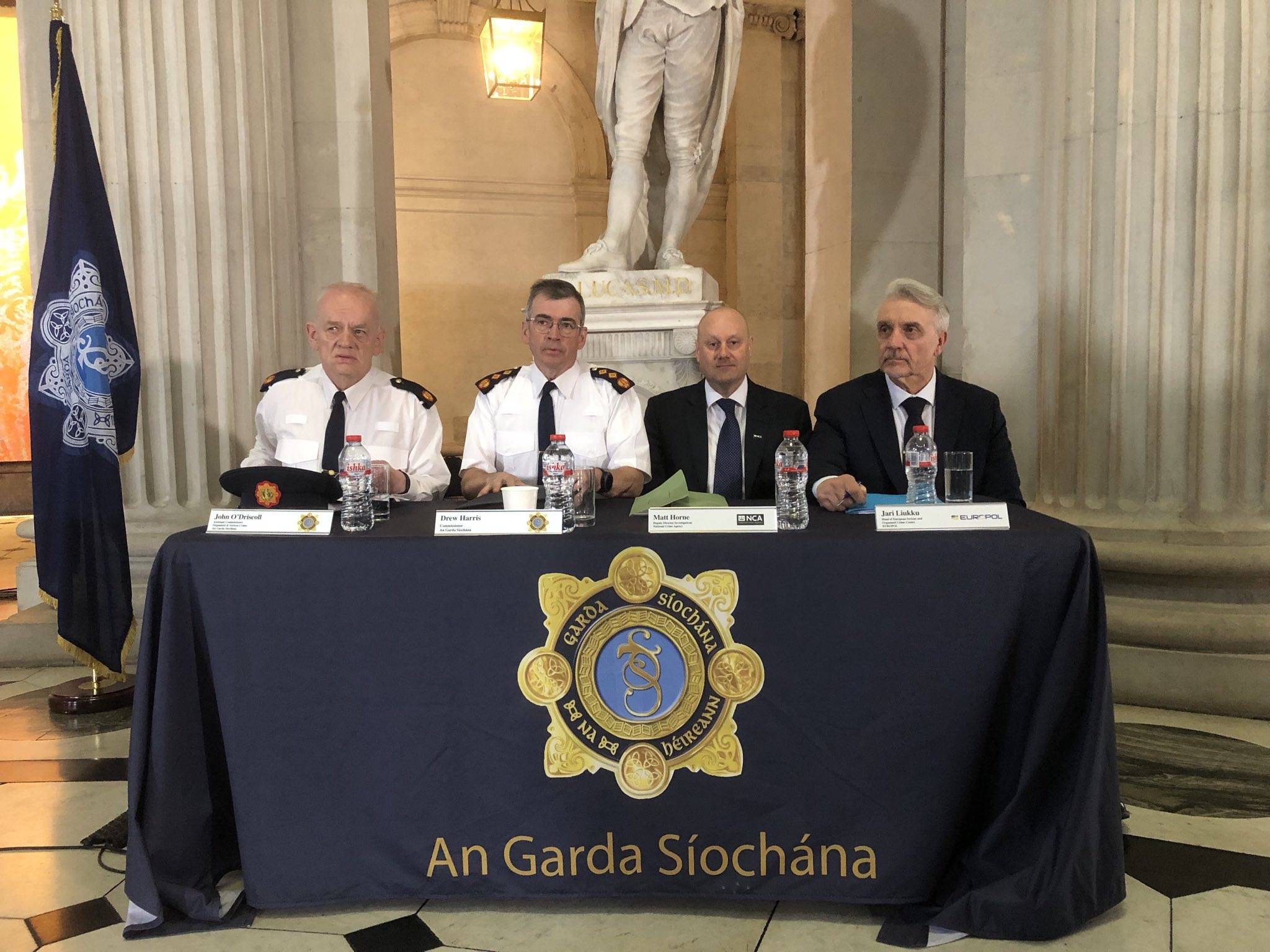
Europol Mar 17, 11:00

Europol supports Belgian authorities in shutting down an illegal cigarette factory

Fourteen workers mainly from Eastern Europe were arrested, and the Belgian authorities seized the complete cigarette manufacturing machinery. Some four tonnes of tobacco and two million counterfeit cigarettes were also seized at the premises in Arlon. An additional 40 million counterfeit cigarettes presumably manufactured at the illegal factory in Arlon were seized in trailers in an industrial area in Duffel, Belgium. These cigarettes were most likely destined for the black market in France and the United Kingdom. The tax loss in Belgium alone is estimated at EUR 20 million. The action on 15 March was the result of intensive international cooperation via Europol. French Customs (Douane) were also involved in the investigation and seized over 25 tonnes of counterfeit cigarettes and 16 tonnes of tobacco belonging to the same organised crime group in the city of La Longueville.  The organised crime group under investigation is involved in the large-scale production and distribution of counterfeit cigarettes. A number of investigations are ongoing against them in several European countries.  European coordination Europol’s EFECC supported the investigation by providing its secure communication platform and facilitating international cooperation between Belgium and France ,running cross-checks and providing analytical support and operational expertise. One of its experts was deployed to Arlon to assist the Belgian authorities with the action day.  Excise fraud is currently an EU law enforcement priority. Strategic and operational plans have been developed under the European Multidisciplinary Platform Against Crime Threats (EMPACT) Excise Fraud Project. Under this umbrella, a total of 24 countries led by Belgium are working together on countering the illicit production of cigarettes in the European Union.    
Read full story →
Europol Mar 11, 11:14

14 arrests for euro counterfeiting in Spain

The criminal network, led by a mother and son of Lithuanian origin, was composed of members mainly of Spanish, Lithuanian and Moroccan origin. The gang counterfeited EUR 20 and EUR 50 banknotes in Spain using three different printing machines, having purchased the paper and guillotine on a well known e-commerce platform. The counterfeiters were disseminating the fake notes by selling them on the dark web. The suspects used the illegal profits from the currency counterfeiting to invest in the production and trafficking of marijuana. Members of the network were also involved in different scams and identity theft. In one such scheme, they published false job offers for drivers and used the driving licence of the job applicants to rent high-end vehicles, which they never returned. Europol facilitated the information exchange, operational coordination and provided analytical support. During the action day, Europol supported with technical expertise and cross-checked operational information against Europol’s databases and the systems of the European Central Bank.  Headquartered in The Hague, the Netherlands, Europol supports the 27 EU Member States in their fight against terrorism, cybercrime, and other serious and organised crime forms. Europol also works with many non-EU partner states and international organisations. From its various threat assessments to its intelligence-gathering and operational activities, Europol has the tools and resources it needs to do its part in making Europe safer.  
Read full story →
Europol Mar 11, 09:38

Europol continues to support EU Member States affected by the conflict in Ukraine

In light of the worsening situation in Ukraine and the hundreds of thousands of people fleeing to the neighbouring countries for safety, Europol is continuing to work at all levels to support the EU Member States geographically close to the conflict.  On the same occasion, Europol’s Director also met with the Executive Director of the European Border and Coast Guard Agency (Frontex), Fabrice Leggeri, to discuss on operational cooperation between the two agencies, in particular in the fight against migrant smuggling and the trafficking of human beings.  Conflict creates opportunities for organised crime to flourish and amplifies the threat that criminal groups may pose to internal security. At the heart of the European’s security architecture, Europol is uniquely placed to support EU Member States at the frontline. Europol provides:  Support with secondary security checks at European external borders to identify criminals and terrorists trying to enter the EU; Support in collecting and assessing information to detect criminal offences and threats, in particular in the areas of migrant smuggling and trafficking in human beings; A full intelligence picture and consolidated data analysis; A secure platform for the exchange of information with Europol, operational actors in the field and with other Member States and partner agencies.   Europol is in permanent dialogue with the neighbouring countries most affected by the conflict in Ukraine.   
Read full story →
Europol Mar 10, 13:32

New Accountability Framework to use artificial intelligence in a transparent and accountable manner

Catherine De Bolle, Executive Director of Europol: I am confident that the AP4AI Project will offer invaluable practical support to law enforcement, criminal justice and other security practitioners seeking to develop innovative AI solutions, while respecting fundamental rights and being fully accountable to citizens. This report is an important step in this direction, providing a valuable contribution in a rapidly evolving field of research, legislation and policy. Professor Babak Akhgar, Director of CENTRIC: The AP4AI project will draw upon a huge range of expertise and research to develop world-first accountability principles for AI. Police and security agencies across the globe will be able to adopt a robust AI Accountability Framework, so that they can maintain a balanced, proportionate and accountable approach. About the EU Innovation Hub for Internal Security The EU Innovation Hub for Internal Security is a collaborative network of innovation labs that works to provide the latest innovation updates and effective solutions to support the work of internal security actors in the EU and its Member States, including justice, border security, immigration, asylum and law enforcement practitioners.  Click here to download the AP4AI Framework Roadmap report.  Learn more about AP4AI at www.ap4ai.eu and on Twitter @AP4AI_Project.  
Read full story →
Europol Mar 7, 13:01

EU Justice and Home Affairs Agencies' joint statement on Ukraine

EU Justice and Home Affairs Agencies support the work of EU institutions and Member States as they help Ukraine and its people now that war once again touches Europe.   By working together and utilising each agency’s particular expertise, we engage as a matter of urgency to assist EU Member States in terms of humanitarian support, respect for fundamental rights, management of EU external borders, visa measures, anticipation of hybrid threats, and reception of people fleeing war. This includes establishing a temporary protection mechanism for the displaced persons from Ukraine. Such support is in line with the measures agreed at the Justice and Home Affairs Council meeting on 3-4 March, as well as with the outcomes of the extraordinary Justice and Home Affairs Council meeting on 27 February in response to Russia’s military aggression over Ukraine.   We also encourage all staff of EU Agencies to help people in need and appreciate the support some colleagues already provide. The EU's Agency for Law Enforcement Cooperation (Europol) issues this statement as part of the network of nine EU agencies working on freedom, security and justice in the EU.   The nine Agencies are: the European Institute for Gender Equality (EIGE), the European Monitoring Centre for Drugs and Drug Addiction (EMCDDA), the European Union Agency for Asylum (EUAA), the EU Agency for the Operational Management of Large-Scale IT Systems in the Area of Freedom, Security and Justice (eu-LISA), the EU Agency for Criminal Justice Cooperation (Eurojust), the EU’s Law Enforcement Agency (Europol), the EU Agency for Fundamental Rights (FRA), the European Border and Coast Guard Agency (Frontex) and the European Agency for Law Enforcement Training (CEPOL). 
Read full story →
Europol Mar 7, 08:00

Counterfeit and pirated goods get boost from pandemic, new report confirms

The latest Intellectual Property Crime Threat Assessment, produced jointly between Europol and the European Union Intellectual Property Office (EUIPO), reveals that the distribution of counterfeit goods has been thriving during the COVID-19 pandemic. The health crisis has presented new opportunities for trade in counterfeit and pirated products, and criminals have adjusted their business models to the meet the new global demand. The report, based on EU-wide data and Europol’s operational information, confirms that counterfeiting and piracy continue to pose a serious threat to the health and safety of consumers, as well as to the European economy. Imports of counterfeit and pirated goods reached EUR 119 billion in 2019, representing 5.8 % of all goods entering the EU, according to the latest data from OECD and EUIPO.  In addition to the categories of counterfeited clothes and luxury products seized, there is a growing trade in fake products which have the potential to damage human health, such as counterfeit medicines, food and beverages, cosmetics and toys. Counterfeit pharmaceutical products, ranging from a variety of medicines to personal protective equipment or face masks, have been increasingly identified in  recent years. Distribution has shifted almost entirely from physical to online markets, raising public health concerns. These illicit products largely continue to originate from outside the EU, but they may also be produced in illegal laboratories within the EU, which are difficult to detect and can be set up with relatively few resources. The production of illicit food products, and especially drinks, has become more professional and sophisticated, with some counterfeiters covering the whole supply and distribution chain. Violations of protected geographical indications continue to be widely reported too. The report also shows some key trends in various product sectors primarily targeted by counterfeiters. Clothes, accessories and luxury goods remain among the most popular product categories for counterfeit goods, sold both online and in physical marketplaces. They are one of the top categories of the approximatively 66 million counterfeit items seized by authorities in the EU in 2020. How criminal networks operate The threat assessment highlights that the distribution of counterfeit products mostly relies on digital platforms, a trend which has been reinforced by the pandemic and widespread online consumption. Counterfeit goods are offered on online marketplaces, via live-streaming, videos and advertising on social media platforms, and instant messaging services, usually targeting customers with misleading discounts or low-price branded products. Counterfeiting is a highly lucrative activity for the criminal networks involved, which reap large profits while running relatively few risks.  IP crime has been included as one of the EU’s priorities in the fight against serious and organised crime from 2022 to 2025 as part of the European Multidisciplinary Platform Against Criminal Threats (EMPACT). The assessment underlines that, although the majority of counterfeits in the EU market are produced outside Europe, mainly in China and other parts in Asia, domestic manufacturing within the EU is an increasing trend. The increasing importation of counterfeit packaging materials and semi-finished products into the EU clearly points to the presence of illegal manufacturing facilities in the EU. Criminal networks based in Europe involved in IP crime carry out the distribution of imported counterfeits and, in some cases, operate modern production facilities that assemble semi-finished products. Europol’s Executive Director, Catherine De Bolle, said: The COVID-19 pandemic has presented new business opportunities for criminals to distribute counterfeit and substandard goods. At best, these products will not perform as well as authentic ones. At worst, they can fail catastrophically. Law enforcement seizures indicate that the production of these goods is increasingly taking place within the EU, while the COVID-19 pandemic has further entrenched the criminals’ reliance on the digital domain to source and distribute their illegal goods. This report shines a light on the extent of this criminal phenomenon and calls for concerted, cross-border action in response as we enter the post-COVID economic recovery. The unscrupulous counterfeiters should be the only ones paying a steep price. The Executive Director of the EUIPO, Christian Archambeau, said: This new threat assessment report casts new light on the scope, magnitude and trends of counterfeiting and piracy in the EU, and the damage it can cause to consumers’ health and to legitimate businesses, particularly during these challenging times of the COVID-19 pandemic. Through our close collaboration with Europol, we will continue to support the efforts of law enforcement authorities in the fight against IP crime. Other fake goods in the market Mobile phones, their accessories and components are also among the top categories of fake goods seized, and are sold in great numbers during sales events such as Black Friday and Cyber Monday. Counterfeiters have recently been exploiting the global supply shortage in semiconductor chips.  In the case of perfumes and cosmetics, the illicit production relates to everyday goods, such as shampoo, toothpaste, or detergents.  The trade in illicit pesticides remains a low-risk, high-profit activity, sustained by a high demand and low sanctions for the offenders. The COVID-19 pandemic also led to an increased offer of illicit digital content, which is often linked to other cybercriminal activities. Piracy is now mostly a digital crime, and websites illegally distributing audio-visual content are hosted on servers across Europe, Asia and the Middle East. Note to Editors The Intellectual Property Crime Threat Assessment  has been drawn up in partnership between Europol and the EUIPO and is intended to update policymakers, law enforcement authorities, businesses and the public in general about the latest trends of IP crime within the EU and, particularly, in the context of the COVID-19 pandemic. It provides information on the threat posed by counterfeiting and piracy in several product sectors, as well as the modus operandi of criminal networks, the enabling factors, the geographical and financial dimensions of IP rights infringements, and the emerging threats. The report builds on the findings of a previously developed Threat Assessment, published in 2019. About Europol Headquartered in The Hague, the Netherlands, Europol supports the 27 EU Member States in their fight against terrorism, cybercrime and other serious and organised forms of crime. We also work with many non-EU partner countries and international organisations. From its various threat assessments to its intelligence-gathering and operational activities, Europol has the tools and resources it needs to do its part in making Europe safer.  About the EUIPO The EUIPO is a decentralised agency of the EU, based in Alicante, Spain. It manages the registration of the European Union trade mark (EUTM) and the registered Community design (RCD), both of which provide intellectual property protection in all EU Member States. The EUIPO also carries out cooperation activities with national and regional intellectual property offices of the EU, as well as research and activities to combat IP rights infringement through the European Observatory on Infringements of Intellectual Property Rights. The EUIPO ranked most innovative IP office in the world in the World Trademark Review's IP Office Innovation Ranking 2021. Media contact Europol Corporate Communications Unit Tel. : +31 70 302 5001  press@europol.europa.eu  EUIPO Communication Service Tel.: +34 653 674 113 press@euipo.europa.eu  
Read full story →
Europol Mar 2, 09:00

146 children worldwide saved in an operation targeting child abuse online

Europol supported an international investigation into tens of thousands of accounts possessing and sharing child sexual abuse material online. The operation, led by the Te Tari Taiwhenua Department of Internal Affairs, has so far involved law enforcement authorities from Australia, Austria, Canada, Croatia, Czechia, Greece, Hungary, Slovenia, Spain, the UK and the US. The international coordination of the investigative activities facilitated the identification of a large number of individuals tied to these accounts.  The investigation was initiated in 2019, following a report from an online service provider, which indicated that a large number of offenders used the platform to exchange particularly disturbing child abuse images, including imagery depicting sadistic acts of sexual abuse of infants and children. The review of the information led to the discovery of 32 GB of files, the equivalent memory necessary to stream approximately 90 minutes of video. To date, the international investigation has led to the opening of 836 cases internationally, the arrests of 46 individuals across New Zealand, the identification of more than 100 suspects across the EU and the safeguarding of 146 children across the globe. The operational activities led to the identification of users worldwide and this information was shared with the relevant national authorities for further action. In two of the cases in Austria and Hungary, the suspects were offenders abusing their own children, who were six and eight years old respectively. Both children were subsequently safeguarded. Another investigation in Spain uncovered that the suspect possessed and disseminated child sexual exploitation material, while also filming naked and sexual images of adults without their consent. A large number of investigations are still ongoing across the EU. Europol facilitated the exchange of information and coordinated the partner agencies. The agency also provided analytical support by cross-checking the data and providing greater detail for the investigative intelligence packages, which were then disseminated to the national law enforcement authorities participating in this operation. Participating authorities  International and EU organisations: Europol and Interpol EU Members States Austrian Criminal Police Office Croatian National Police Czech National Police Hellenic Police Hungarian National Bureau of Investigation  Slovenian Police  Slovakian National Police Spanish National Police  Third party countries New Zealand Department of Internal Affairs (lead agency) New Zealand Police New Zealand Customs Service Australian Federal Police Royal Canadian Mounted Police  Toronto Police Service/Canada Vancouver Police Service/Canada UK National Crime Agency US Federal Bureau of Investigation Headquartered in The Hague, the Netherlands, we support the 27 EU Member States in their fight against terrorism, cybercrime and other serious and organised forms of crime. We also work with many non-EU partner states and international organisations. From its various threat assessments to its intelligence-gathering and operational activities, Europol has the tools and resources it needs to do its part in making Europe safer.  
Read full story →
Europol Feb 28, 14:30

Criminal network distributing fake dark web documents busted

An investigation by the French Border Police (Police aux Frontières/Police Judiciaire which forms part of the National Police) and the Spanish National Police (Policía Nacional), supported by Europol, led officers to the dismantling of an organised crime group involved in the procurement and distribution of forged ID documents and travel documents in France, Germany, Italy and Spain. Georgian authorities also supported the investigation through information exchange.    Results from the action days in France and Spain (between 31 January and 16 February 2022) 6 houses searched (3 in France and 3 in Spain); 17 arrests (3 main suspects in France and 14 suspects in Spain); Seizures include electronic equipment (computers, smartphones and storage devices), counterfeit and genuine ID documents and photocopies of ID documents, labour certificates, administrative documents, payment cards and cash. The criminal network was distributing forged ID and travel documents in France, Germany, Italy and Spain. The documents were used by other criminals involved in the smuggling of migrants to the US, the UK and Ireland and other criminal activities (such as property crimes, trafficking in human beings, drug trafficking). The criminal network was directly involved in migrant smuggling activities and logistical arrangements in return for payments starting at EUR 8 000 per person.  The members of the criminal network, mainly originating from Eastern European countries, were operating in several countries including France, Germany, Georgia, Italy, Lithuania, and Spain. The criminal network largely distributed the counterfeit documents on the dark web, but also on instant messaging applications and postal services. They counterfeited mainly French, Romanian, Georgian, Lithuanian and Polish IDs. They also counterfeited residence permits, driver’s licenses, vehicle registration documents and travel documents. The suspects used messaging applications to communicate and to exchange pictures of documents, vehicles and money transfer slips. Analysts at Europol were able to use the information from this case to reveal many links with other ongoing investigations, based on information they already had. Europol prioritised the case at an early stage and assigned a dedicated analyst and a specialist to support the national investigations. Europol facilitated the secure exchange of information and the organisation of operational meetings between the investigators, also providing the law enforcement partners with regular intelligence analysis packages. On the action day, Europol deployed an expert to Spain to assist with the cross-checking of operational information against Europol’s databases, and to provide technical support with data extraction and analysis of digital evidence.  Headquartered in The Hague, the Netherlands, we support the 27 EU Member States in their fight against terrorism, cybercrime and other serious and organised forms of crime. We also work with many non-EU partner states and international organisations. From its various threat assessments to its intelligence-gathering and operational activities, Europol has the tools and resources it needs to do its part in making Europe safer.  
Read full story →
Europol Feb 23, 15:30

Arrest in Germany of 3 suspects involved in theft of EUR 1.5 million worth of vehicles

A total of 4 properties were searched in Dortmund. As a result, 3 suspects were arrested in and around Dortmund (Germany).  This criminal network comprised Bosnian nationals who were residing illegally in Germany and committing crimes in the federal states of Lower Saxony, North-Rhine Westphalia and Hesse.   They are suspected of breaking into residential buildings at night in order to steal the keys of expensive vehicles before driving off with them. The total value of the stolen vehicles exceeds EUR 1.5 million.  This investigation was carried out in the framework of the European Multidisciplinary Platform Against Criminal Threats (EMPACT), together with the support of the EU funded project ‘Countering Serious Crime in the Western Balkans – IPA 2019’ implemented by the Italian, German and Dutch authorities which provided financial support for the organisation of operational meetings and the deployment of German investigators to Austria on the action day.  Europol coordination  Europol brought together the national investigators who have since been working closely together to establish a joint strategy to bring down this network. Since then, Europol has provided continuous intelligence development and analysis to support the field investigators. During the action day, Europol’s European Serious Organised Crime Centre deployed a mobile office to the operational centre in Dortmund, enabling a direct connection between investigators in all three countries involved.
Read full story →
Europol Feb 23, 12:55

Migrant smugglers and human traffickers: more digital and highly adaptable

The increased digitalisation brought about by the pandemic has significantly influenced the functioning of every aspect of our society. Since the beginning of the COVID-19 pandemic, criminals have adapted to the new rules and restrictions and exploited those most vulnerable as a result. Migrant smugglers and human traffickers in particular have continued to thrive in spite of these changes, and they have adapted the way they recruit, transport and exploit victims. Europol’s Executive Director Catherine De Bolle said:  “Migrant smuggling and human trafficking networks are highly dynamic and use any crisis as an opportunity to increase their illegal profits. More digitalised than ever, they abuse social media platforms, mobile applications and encrypted communication tools to offer their illegal services, organise their logistics and secure their profits. Swift information exchange, cross-border cooperation and online referrals, facilitated by Europol, have proven instrumental in tackling these smugglers and traffickers. The information shared by Member States with Europol has been the backbone of the analytical support we have provided to more than 800 priority investigations over the past six years. Europol will further strengthen its partnership with the authorities of Member States and other EU bodies and will forge new alliances in Europe and beyond to curb these crimes, both in the digital and the physical space.” The Head of the European Migrant Smuggling Centre Robert Crepinko added: “There are numerous reasons to believe that the law enforcement community has never been better connected, better trained, or better equipped to counter the criminal activities of migrant smugglers and human traffickers. Yet there is still a lot to be done. Rapid technological developments in particular are forcing Europol’s EMSC to join forces in order to shape new investigative techniques. Europol remains the perfect platform for fostering law enforcement innovations.” 2021 has seen an increase of the role that digital technologies play in migrant smuggling and the trafficking of human beings. Migrant smugglers have expanded their use of social media platforms and mobile applications in order to offer their illegal services. Human traffickers have abused the anonymity of the internet environment to target vulnerable individuals and then exploit them via both escort websites and even dating platforms. To respond to this new threat, Europol has coordinated the first referral action day targeting the facilitation of illegal immigration services offered online, amongst other responses.   Highlights of the European Migrant Smuggling Centre’s activities in 2021  6 139 new cases of migrant smuggling and trafficking in human beings supported by Europol in 2021; 55 on-the-spot action days with Europol experts; 1 246 operational reports produced; 26 high-value targets identified. New developments Increase of border crossings into the EU and in secondary movements within the EU; Enhanced use of digital technologies in both facilitation of illegal immigration and trafficking in human beings; Increased number of arrivals has placed Cyprus ahead of Greece as the prominent landing area on the Eastern Mediterranean; The migratory pressure on the eastern borders route via Belarus has influenced the increase of the presence of criminal networks facilitating secondary movement along that route; Smuggling activities on the passage by sea to Italy almost doubled, while the fee for this journey jumped from EUR 6 000 to EUR 12 000; Increased poly-criminality of migrant smuggling networks active along the Western Mediterranean and Western African routes; The process of human trafficking, including recruitment and logistical arrangements, is becoming increasingly digitalised while the locations of physical abuse remain the same.   The new report by the European Migrant Smuggling Centre (EMSC) at Europol looks back at the operations supported by the centre in 2021 and the intelligence gathered. This report provides a clear outlook into the evolution of these crime areas and anticipates possible developments. It offers recommendations for enhanced preparedness in the fight against these criminal activities threatening which directly threaten the lives and dignity the lives of the victims. Headquartered in The Hague, the Netherlands, we support the 27 EU Member States in their fight against terrorism, cybercrime and other serious and organised forms of crime. We also work with many non-EU partner states and international organisations. From its various threat assessments to its intelligence-gathering and operational activities, Europol has the tools and resources it needs to do its part in making Europe safer.
Read full story →
Europol Feb 21, 09:00

Tobacco smuggling ring brought down in Spain and Portugal

On 16 February, over a hundred officers simultaneously raided addresses on either side of the border, resulting in: Eight suspects detained 2 tonnes of cut tobacco and tobacco strips seized Over 10 000 counterfeit cigarettes seized, alongside equipment for tobacco cutting and drying  EUR 37 800 in cash recovered Property searches were carried out in the province of Sevilla (Spain) and in the cities of Coimbra, Lisbon, Leiria and Aveiro (Portugal).  The criminals are suspected of having illegally imported from Spain to Portugal large quantities of tobacco leafs and strips, destined to produce counterfeit cigarettes. This criminal network had tobacco storage and production facilities scattered across both countries.  It is believed that these criminals have smuggled over 7 tonnes of tobacco products from Spain to Portugal in 2021 alone.  The revenue loss generated by this illegal activity is estimated at over EUR 163 000 in Portugal.  Europol support Europol’s support was instrumental in the success of the case: Europol brought together the national investigators on both sides who have since been working closely together to establish a joint strategy to bring down this network. Since then, Europol has provided continuous intelligence development and analysis to support the field investigators. During the action day, Europol’s European Financial and Economic Crime Centre deployed a mobile office to Sevilla and provided financial support for the deployment of two Portuguese officers in the operational centre in Spain. This operation was carried out in the framework of the European Multidisciplinary Platform Against Criminal Threats (EMPACT).   
Read full story →
Europol Feb 18, 08:15

International hit against Brazilian narcos shipping Bolivian cocaine to the EU

An extensive investigation involving the Brazilian Federal Police (Polícia Federal), Spanish Civil Guard (Guardia Civil), the US Drugs Enforcement Administration and the Paraguayan SENAD, coordinated by Europol, has led to the dismantling of a major criminal organisation involved in large-scale cocaine trafficking and money laundering. The criminal network was shipping cocaine in maritime shipping containers. Since September 2020, authorities from Belgium, Brazil, Italy, Netherlands and Spain have seized about 10 tonnes of cocaine and BRL 11 million (about EUR 1.85 million). The action day on 15 February 2022 led to:Around 40 locations searched in Brazil, Paraguay, and SpainAround 30 arrests (in Rio De Janeiro, São Paulo, Santos e Volta Redonda, Brazil and 7 in Barcelona, Spain)Seizures included: drugs, vehicles, firearms, cash and several bank accounts in Brazil, Paraguay and SpainMulti-tonne cocaine trafficking to the EUThe investigative activities revealed that the criminal organisation could ship several multi-tonne cocaine consignments to Europe every few months. Authorities discovered a production infrastructure based in Bolivia with logistical and supply lines in Brazil, Paraguay and Uruguay. The investigation also uncovered the command and control centres of the organisation in Dubai. The members of the network used encrypted communications to coordinate their criminal activities. This included SKY ECC, a platform which was taken down in 2021. The suspects used these encrypted communications platforms to supply drugs to Europe and launder the criminal assets. The criminal organisation set up a network of companies to enable the import of drugs from South America and the laundering of the related proceeds. Front men in the payroll of the organisation controlled this network of companies.The exchange and proactive collection of criminal intelligence, supported by Europol, led to the discovery of a distribution network based in Valencia and Barcelona which was responsible for receiving the cocaine shipments and circulating them on the European market. Brazilian and Spanish authorities then intercepted a number of these shipments and identified some of the companies involved in the criminal scheme.Europol facilitated the exchange of information and provided continuous analytical support. The intelligence developments provided by Europol allowed the investigators in the field to create a detailed picture of the networks operating across countries and continents. On the Action Day, Europol deployed officers to Brazil and to Spain to support intelligence developments during the field activities.   Headquartered in The Hague, the Netherlands, we support the 27 EU Member States in their fight against terrorism, cybercrime and other serious and organised forms of crime. We also work with many non-EU partner states and international organisations. From its various threat assessments to its intelligence-gathering and operational activities, Europol has the tools and resources it needs to do its part in making Europe safer. 
Read full story →
Europol Feb 16, 16:22

President of Colombia visits Europol

Colombia and Europol have a close partnership built and developed over the last two decades. The Agreement signed between the two parties is the most comprehensive one to date that Europol has concluded with a Latin American country and is considered a model for international law enforcement cooperation.  Colombia deploys to Europol’s headquarters liaison officers from the National Police of Colombia to work side by side with counterparts from over 40 countries. In discussions with Europol’s Executive Director, the President was briefed on how Europol’s global security architecture assists the Colombian authorities. Identifying areas for increased cooperation and additional operational support to tackle cross-border crimes, particularly drugs trafficking, was a key topic in the discussions.  Catherine De Bolle said: “Colombia is a key regional player for Europol in Latin America and we work closely with the Colombian National Police in a number of key areas, including the fight against drug trafficking, the identification of high-value targets and cybercrime. Against the backdrop of international crime becoming more interconnected, the need to reinforce this cooperation is paramount. Europol will continue working closely with its trusted Latin American partner to address transnational crime from all corners of the world.” On the occasion of this visit, medals were presented to Europol and its Executive Director by the Colombian President in recognition of Europol’s support to the National Police of Colombia in the fight against serious organised crime. Recent examples of cooperation with Colombia include: September 2021: Over 60 charged in crackdown on Balkan cartel behind cocaine pipeline to Europe  March 2021: Spanish Police seize first ever narco-submarine made in Europe November 2019: International crackdown on RAT spyware which takes control of victims’ PCs  
Read full story →
Europol Feb 15, 13:03

45 arrests in crackdown on Albanian-speaking criminals flooding Europe with cocaine

The suspects allegedly imported cocaine from Latin America to various European ports, organising the transport via planes, vessels, cars and lorries and running the wholesale trade. Spain and other EU Member States were used, to launder the proceedings of their trade.   During the Action Day, over 600 law enforcement officers in close cooperation with prosecutors and investigative officers carried out raids against the members of this network in Spain and Belgium. A number of parallel actions also took place in Croatia, Germany, Italy and the Netherlands.   Eurojust set up a coordination centre to enable rapid cooperation between the judicial authorities involved. Europol organised the intensive exchange of information and evidence needed to prepare for the final phase of the investigation. Two experts were deployed to facilitate the transnational police operations, using mobile offices on the spot. Today’s operation, coordinated at the international level by Europol and Eurojust, was the culmination of many months of meticulous planning between law enforcement and judicial authorities in preparation for the action. A joint investigation team (JIT) was set up between Belgium and Spain last year, with active assistance of Eurojust and Europol. Investigations in Spain started in 2018, with the arrest of a high-ranking member of the organised crime group, who is currently in pre-trial detention. In addition, an Operation Taskforce (OTF) was set up at Europol to pool investigative resources and expertise and develop the investigation internationally. In Belgium, investigations commenced following the seizure in September 2020 of drugs and large quantities  of chemicals, used to transform and preserve cocaine for trading purposes. Large quantities of cocaine seized during various searches all over Europe over the last years are to be linked to the suspects. This high-level criminal network had set up a string of enterprises in various countries to launder the profits, including Croatia and Spain, often using strawmen. Its members travelled regularly to Dubai, Mexico and Colombia to arrange their illegal business and used encrypted communication tools to coordinate activities. The following authorities took part in this investigation: Belgium: Federal Prosecutor’s Office (Parquet Fédéral, Federaal Parket), Investigative Judge of Brussels (Juge d’Instruction Bruxelles, Onderzoeksrechter Brussel), Federal Judicial Police (Federale Gerechtelijke Politie, Police Judiciaire Fédérale) Croatia: County State Attorney’s Office  Zagreb, Police Office for the Suppression of Organised Crime and Corruption (Policijski nacionalni ured za suzbijanje korupcije i organiziranog kriminala) Germany: Federal Criminal Police Office (Bundeskriminalamt), State Criminal Police Office of Hamburg (Landeskriminalamt Hamburg) Italy: District Anti-mafia Directorate  of Florence (Direzione Distrettuale Antimafia di Firenze), Anti-mafia Investigation Department (Direzione Investigativa Antimafia), Carabinieri (Arma dei Carabinieri) Spain: Investigative Court no. 2 (Jugado de Instrucción no. 2) of Palma de Mallorca; Public Prosecutor’s Office of Balearic Islands (Fiscalía de Islas Baleares), Public Prosecutor Office against Corruption and Organised Crime (Fiscalía Especial contra la Corrupción y la Criminalidad Organizada), Civil Guard (Guardia Civil), National Police (Policía Nacional)  The Netherlands: National Prosecutor’s Office (Landelijk Parket), National Police (Politie) United States: Federal Bureau of Investigation (FBI) United Kingdom: National Crime Agency The investigations and the action day itself have been supported by the @ON network with the use of funding granted by the ISF project nr. 101052683 ISF4@ON.
Read full story →
Europol Feb 14, 15:00

5 arrested in Spain for Islamist militant links

These arrests have taken place in the framework of two separate anti-terrorist investigations looking into the activities of Islamist militant cells operating on Spanish soil.  The first investigation, known as Operation KITAL, resulted in the arrest of three individuals in the cities of Barcelona, Girona and Valencia for terrorist financing. The main suspect has allegedly used a complex network of companies with international presence to divert funds to a terrorist militant group based in Libya with links to the Islamic State. He is believed to be himself related to the leadership of this militant group. The second investigation, known as Operation FARCOL, resulted in the arrest of two individuals for allegedly recruiting young fighters for the Islamic State in the Spanish city of Melilla. The Spanish National Police began the investigation two years ago after discovering indoctrination videos for the Islamic State believed to have been created and distributed by the two suspects.  The five suspects have been presented to a judge.   Europol’s support  These two investigations were supported by Europol’s Counter Terrorism Centre which provided continuous intelligence development and analysis to support the Spanish investigators. Europol experts were also deployed to Spain on the occasion of the two action days to assist the investigators with the cross-checking of operational information gathered during the raids.   
Read full story →
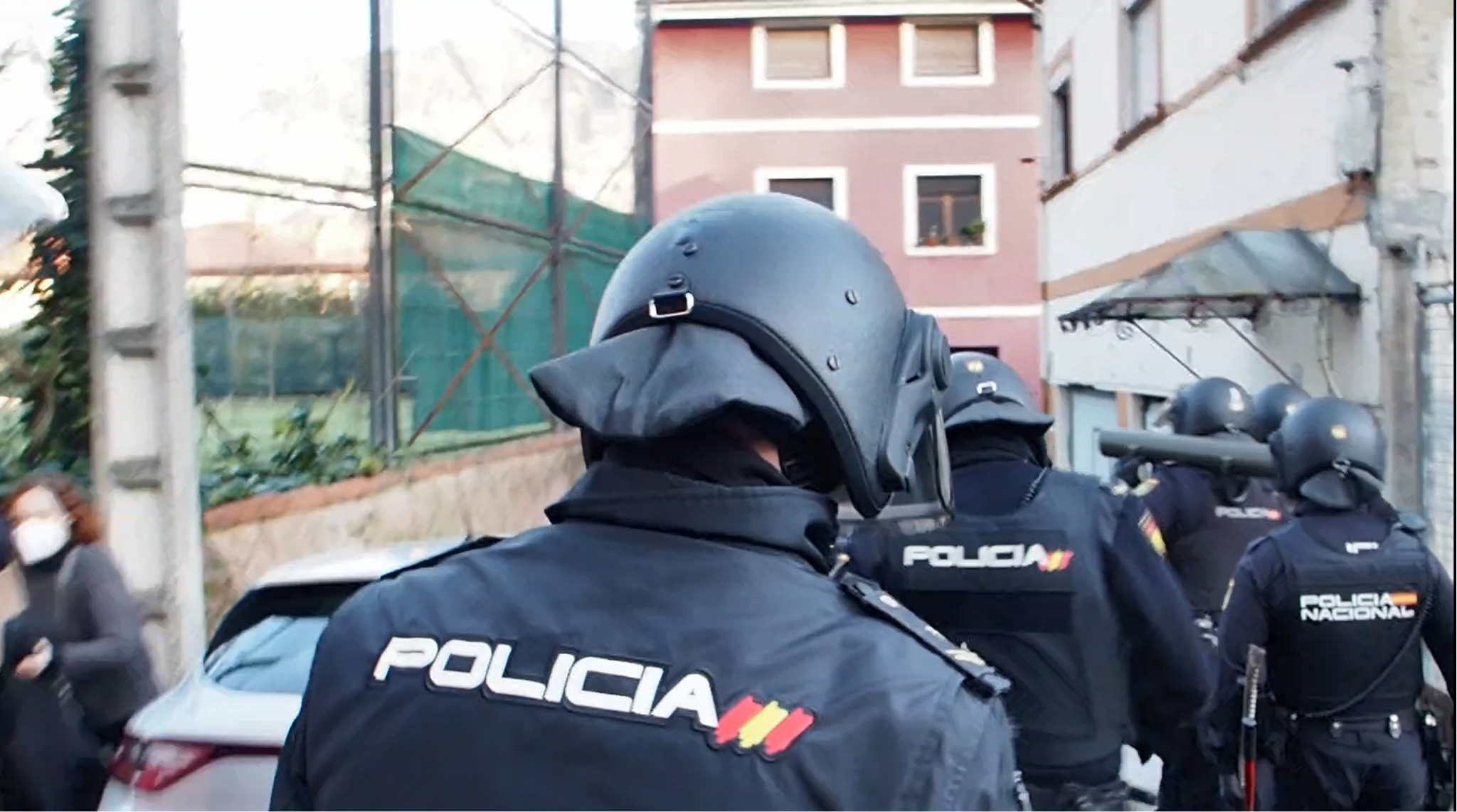
Europol Feb 3, 11:02

A hit against criminal network smuggling migrants from Greece to Germany

The criminal network, which has been active since 2020, predominantly consists of Syrian nationals. The suspects smuggled migrants mainly via flights from Athens to destinations in Germany. When the COVID-19 pandemic resulted in the limitation of flights, the criminals shifted their smuggling routes, opting for transportation via boat across the Mediterranean. The suspects used lookalike documents, taken from people they knew, to migrants mainly from Syrian origin. The network charged between EUR 3 500 and EUR 4 500 for each person they smuggled from Greece to their final destination in Western Europe.  Europol facilitated the exchange of information and provided analytical support. On the action day, Europol coordinated the police activities and crosschecked operational information against Europol’s databases in real time to provide leads to investigators in the field.  Headquartered in The Hague, the Netherlands, we support the 27 EU Member States in their fight against terrorism, cybercrime and other serious and organised forms of crime. We also work with many non-EU partner states and international organisations. From its various threat assessments to its intelligence-gathering and operational activities, Europol has the tools and resources it needs to do its part in making Europe safer.
Read full story →
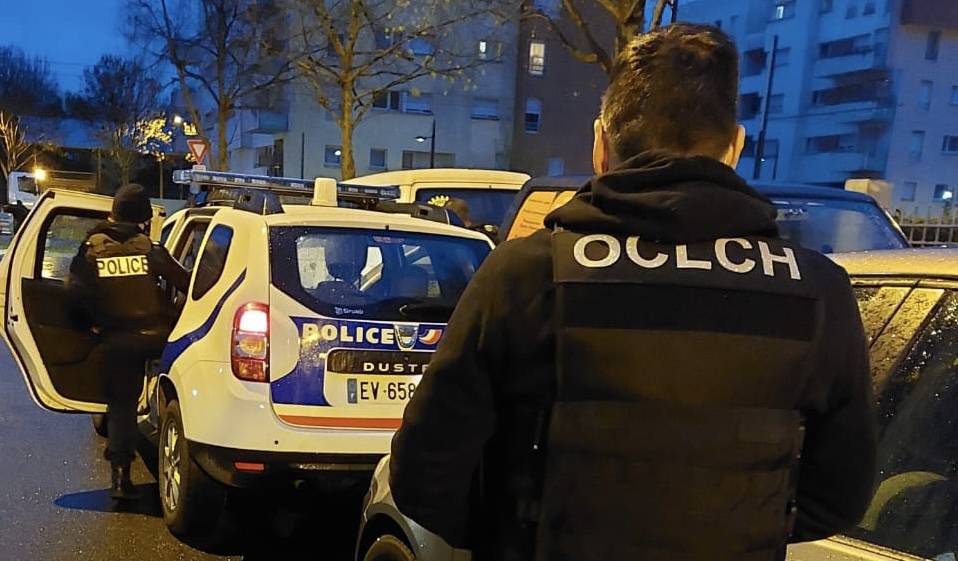
Europol Feb 3, 09:00

Europol coordinates action against bomb manuals available online

The referral activity targeted online content on explosive chemical precursors which was being shared among terrorist supporting networks, including jihadist, right-wing and left-wing terrorist networks.  The action day resulted in 563 pieces of content on 106 websites and platforms being assessed for referral to online service providers for their voluntary consideration against their terms and conditions.  The content included manuals and tutorials which gave instructions, among other things, on how to make bombs with the use of precursors and how to prepare and carry out terrorist attacks.  This action was part of a series of similar joint actions which have taken place in the past and will continue to be organised frequently. To know more about the work of the EU IRU, read the dedicated feature story.  
Read full story →
Europol Jan 28, 08:00

Production line of counterfeit cigarettes flooding the French market dismantled in Slovenia

Initiated in October 2020, the investigation focused on an organised crime group involved in the illicit production and distribution of cigarettes. After two successful action days in France in April and May 2021 targeting the criminals involved in the distribution of these counterfeit cigarettes, the Slovenian authorities started a mirror investigation, aimed at arresting the suspects responsible for the production of these illegal products.  Following several coordination meetings between the French and Slovenian judicial and law enforcement authorities under the aegis of Eurojust and Europol, it was agreed to organise an action day in Slovenia.  On 25 January, over a hundred officers from the Slovenian National Police Force (Policija) and Financial Administration (Finančna Uprava) simultaneously raided 11 sites, including industrial premises and private residences. They were assisted in the field by officers from the French Gendarmerie (Gendarmerie Nationale), as well as French magistrates from the Bordeaux Interregional Specialised Court (JIRS) and Europol officers.   This action made it possible to find several production sites established in warehouses located in remote areas of Slovenia. In total, over 26 tonnes of tobacco were seized in Slovenia, as well as 29 million filters, several machines intended for the cigarette manufacture and ten tonnes of printed papers for packaging. The amount of cigarettes which could have been produced with the seized merchandise would have had a value of €13 million on the French market.  Two leaders of the criminal network in charge of the manufacture of cigarettes were arrested on the ground of European arrest warrants, one in Croatia, one in Slovenia. They will be handed over to the judicial authorities of the Bordeaux JIRS. Earlier in the same case, the Slovenian Financial Administration seized in November 2021 some additional 12 tonnes of cut tobacco. Europol’s European Financial and Economic Crime Centre (EFECC) has supported the investigation by providing its secure communication platform and facilitating international cooperation between France, Slovenia and other Member States, running cross-checks and providing analytical support and operational expertise. One of its experts was deployed to Maribor in Slovenia to assist the national authorities with the action day. 
Read full story →
Europol Jan 27, 13:00

Bulgarian authorities take down online investment scam responsible for losses of more than EUR 10 million

Judicial and law enforcement authorities in Bulgaria, supported by Europol and Eurojust, have taken down a network of online investment fraudsters involved in money laundering. On the action day on 26 January, officers from the Bulgarian National Police (ГД Национална Полиция) arrested one suspect for defrauding mainly German and Greek investors of at least EUR 10 million. During the action day, a total of 24 locations were searched, while officers interrogated 66 witnesses in Sofia and Burgas. Furthermore, a variety of electronic equipment, financial information and recordings were seized.   Europol deployed two experts on the ground in Bulgaria to facilitate the information exchange and provide real-time operational analysis and technical expertise. Eurojust coordinated the joint action day and provided cross-border judicial support. The national authorities deployed around one hundred officers and prosecutors during the action day. The scam was exposed after complaints were made by German and Greek investors who had lost all of the deposits they had invested in the online scam. The organised crime group responsible had set up websites and call centres that appeared to be legitimate but were actually fraudulent.   The fraudulent activity was conducted by two call centres. While acting as financial consultants, call operators speaking German, Greek, English and Spanish contacted potential investors with promises of significant profits. As a result, several hundred victims made substantial investments but subsequently lost all of their money.   In 2019, Bulgarian authorities started investigations and Eurojust set up a joint investigation team (JIT) between Bulgaria, Germany, Greece, Serbia and Europol. Following five coordination meetings with Europol and Eurojust, the JIT members were able to identify the two fraudulent call centres in Bulgaria. The Bulgarian police, supported by the Serbian authorities, dismantled both call centres on the action day.  In 2020, a similar modus operandi was used in another case and a coordinated action day led to the dismantling of two other call centres. The following authorities participated in the operation: Law enforcement authorities:  Bulgaria: Economic Crime Department, General Directorate National Police; National State Security Authority and Regional Directorate of the Ministry of Interior - Burgas. Germany: Criminal Investigation Department Bayreuth: Federal Criminal Police Office, Wiesbaden Greece: Cybercrime Division of the Hellenic Police Serbia: Criminal Police Directorate, Service for Combating Organized Crime, Department for Cyber Crime Judicial authorities: Bulgaria: Specialised Prosecution Office of Sofia Germany: Office of the Public Prosecutor General of Bamberg; Bavarian Central Office for Prosecution of Cybercrime Greece:  General Prosecutor's Office of the Supreme Court;  Greece: Special Investigative Judge for Mutual Legal Assistance in criminal matters at the Court of First Instance of Athens, the competent Investigative Judge of the Court of First Instance of Athens, the competent Investigative Judge of the Court of First Instance of Thessaloniki Serbia: Republic Public Prosecution Office and Special Prosecution Office for High-Tech Crime of Serbia  Headquartered in The Hague, the Netherlands, Europol supports the 27 EU Member States in their fight against terrorism, cybercrime, and other serious and organised crime forms. Europol also works with many non-EU partner states and international organisations. From its various threat assessments to its intelligence-gathering and operational activities, Europol has the tools and resources it needs to do its part in making Europe safer.  
Read full story →
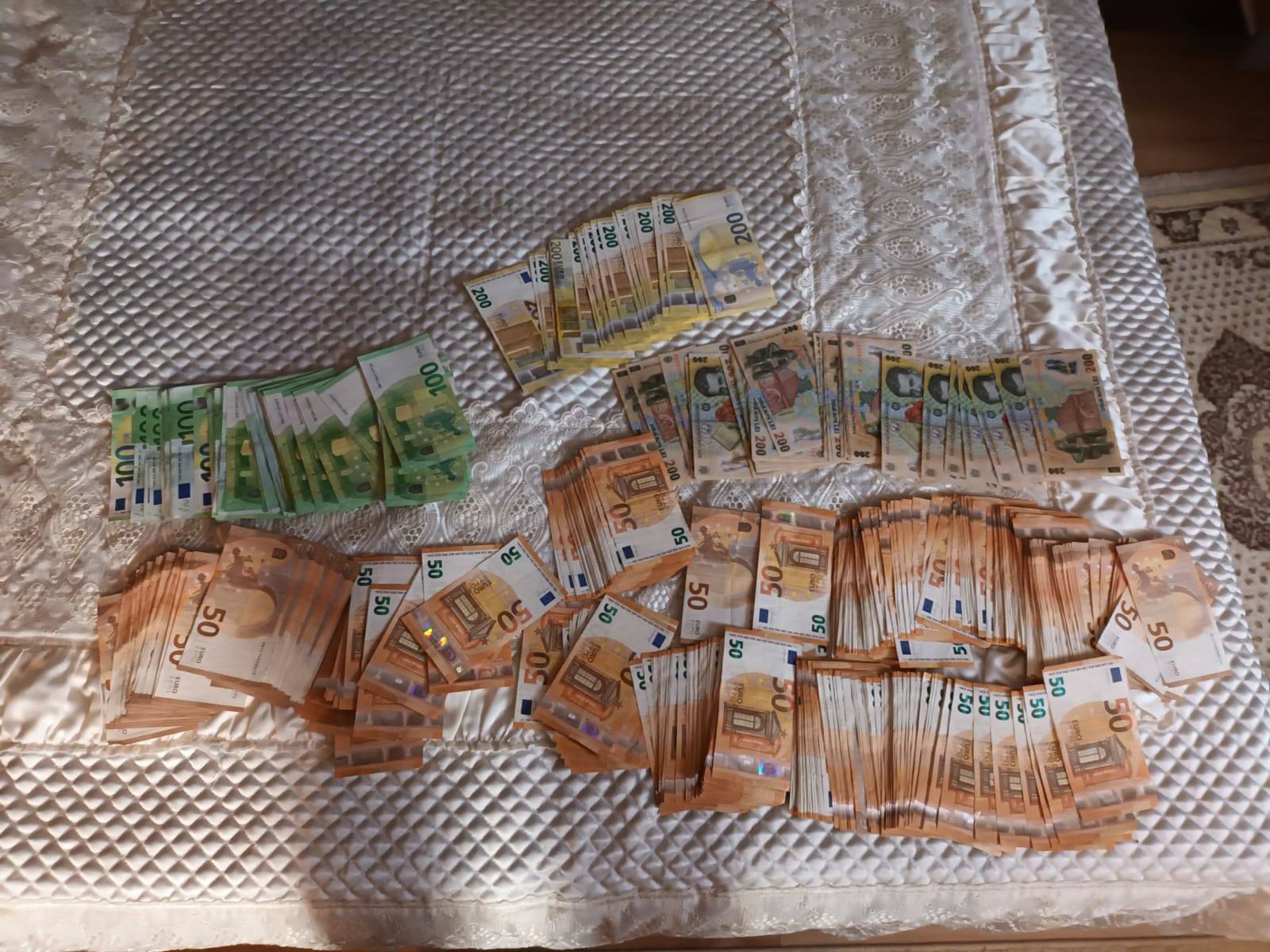
Europol Jan 26, 13:00

The Digital Gold Rush? Debunking common myths on the criminal use of cryptocurrencies

 Myth #1 – Cryptocurrencies have become the payment method of choice for criminals The use of cryptocurrency as part of criminal schemes is increasing, and the uptake of this payment medium accelerating. However, the overall number and value of cryptocurrency transactions related to criminal activities still represent only a limited share of the criminal economy when compared to cash and other forms of transactions. A range of constraints are related to the use of cryptocurrencies, with high volatility a major factor in criminals’ reluctance to use cryptocurrencies for long-term investments.  Myth #2 – The criminal use of cryptocurrency is limited to cybercrime The criminal use of cryptocurrency is no longer primarily confined to cybercrime activities, but now relates to all types of crime that require the transmission of monetary value, including fraud and drug trafficking. However, the scale and share of the illicit use of cryptocurrencies as part of criminal activities is difficult to estimate. Criminal networks involved in serious and organised crime also continue to rely on traditional fiat money and transactions to a large degree, in addition to emerging value transfer opportunities.  Myth #3 – Illicit funds flow straight from wallet to wallet Criminals have become more sophisticated in their use of cryptocurrencies. The illicit funds increasingly travel through a multi-step process involving financial entities, many of which are novel and are not yet part of standardised, regulated financial and payment markets. Obfuscation methods and other countermeasures continue to be developed and used by criminals.  Myth #4 – Cryptocurrencies provide anonymity  Cryptocurrencies are not anonymous. Every single transaction is logged onto the blockchain, which is a ledger of all transactions distributed to all users in the network. Most blockchains are publicly available, making transactions traceable.  This gives law enforcement access to substantially more information than a case involving cash. While privacy coins and a number of services and techniques may hinder law enforcement investigations, it does by no means stop law enforcement from finding out who is hiding behind the crime.  Recent Europol examples are testimony to this: October 2020: 20 arrests in QQAAZZ multi-million money laundering case May 2021: Trading scheme resulting in €30 million in losses uncovered June 2021: Europol helps Belgian and Swiss authorities unravel Vitae Ponzi scheme   Download Cryptocurrencies: tracing the evolution of criminal finances Headquartered in The Hague, the Netherlands, Europol supports the 27 EU Member States in their fight against terrorism, cybercrime and other serious and organised forms of crime. We also work with many non-EU partner countries and international organisations. From its various threat assessments to its intelligence-gathering and operational activities, Europol is doing its part in making Europe safer.   
Read full story →
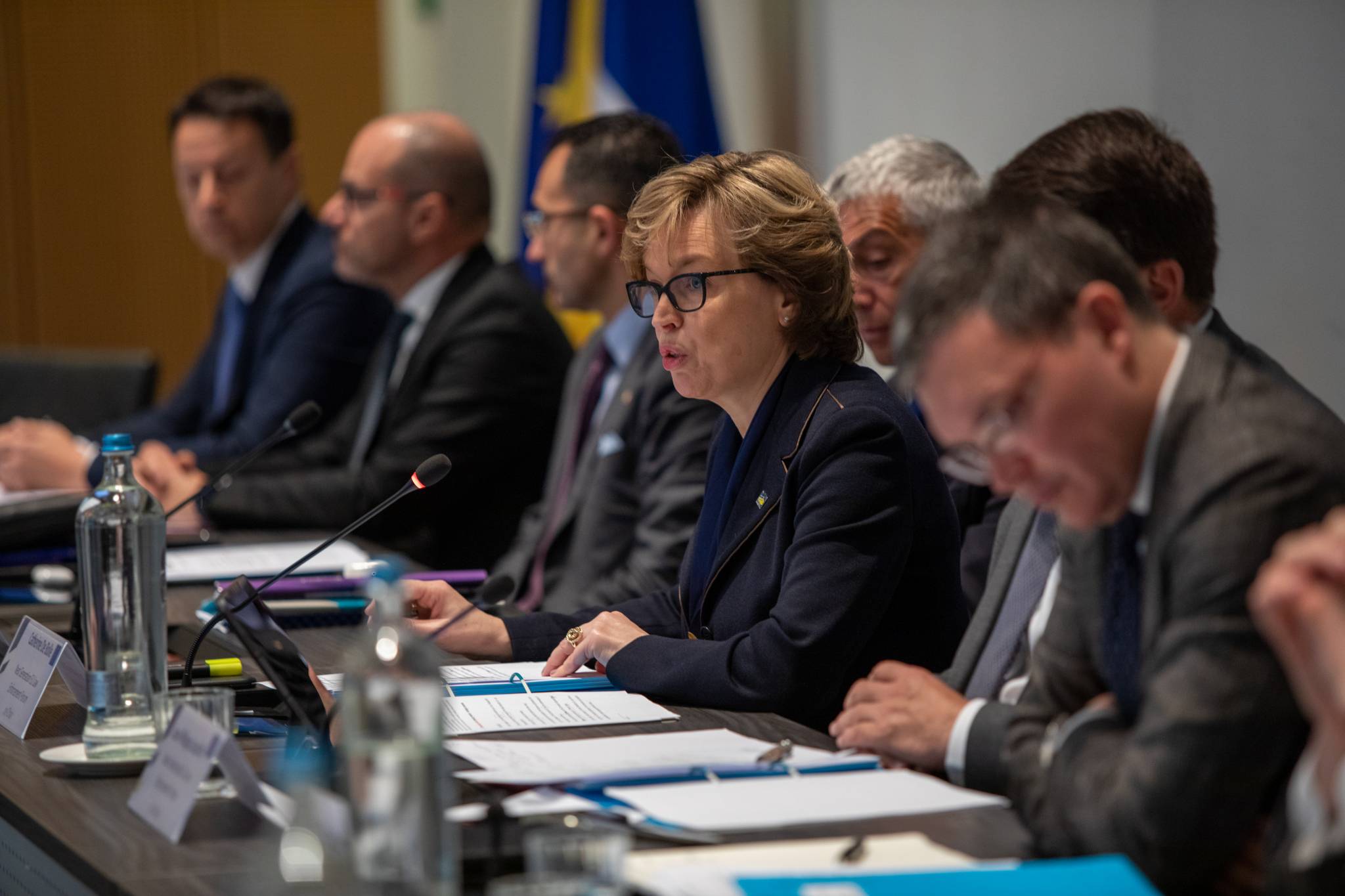
Europol Jan 24, 11:00

A hard pill to swallow for three arrested for trafficking counterfeit pharmaceuticals

The searches in the morning of 18 January led to: Three arrests EUR 124 620 in cashPackaging material (such as plastic containers, paper packaging and stickers)Documents containing orders placed, customer names, and drug pricesNumerous courier delivery slips Offensive weapons including a pistol, a knife, and a knuckle-dusterThree winning gambling tickets worth just under EUR 20 000 Nine mobile phones and one SD cardLaw enforcement believes that the criminal operation began in 2017, offering for-profit storage, marketing, distribution and supply of banned anabolic steroids and counterfeit medicines, such as anti-erectile dysfunction drugs. The criminals, who were based in Greece, sourced their illicit substances mainly via China and Eastern Europe. The criminals also sourced packaging for the illicit substances in these countries, even securing counterfeit authenticity tapes of Greece’s National Medicines Agency. The suspects are alleged to have had an international clientele that included dozens of professional athletes, while deliveries were done using international courier services based on false sender information. Profits were then laundered using bank accounts made with stolen identities, and via gambling tickets. Europol supported the operation with the deployment of a specialist to the headquarters of Greece’s Financial Police Directorate. Europol’s Property Crime Coordinated Coalition (IPC3) is co-funded by EUIPO (European Union Intellectual Property Office) to combat intellectual property crime. 
Read full story →
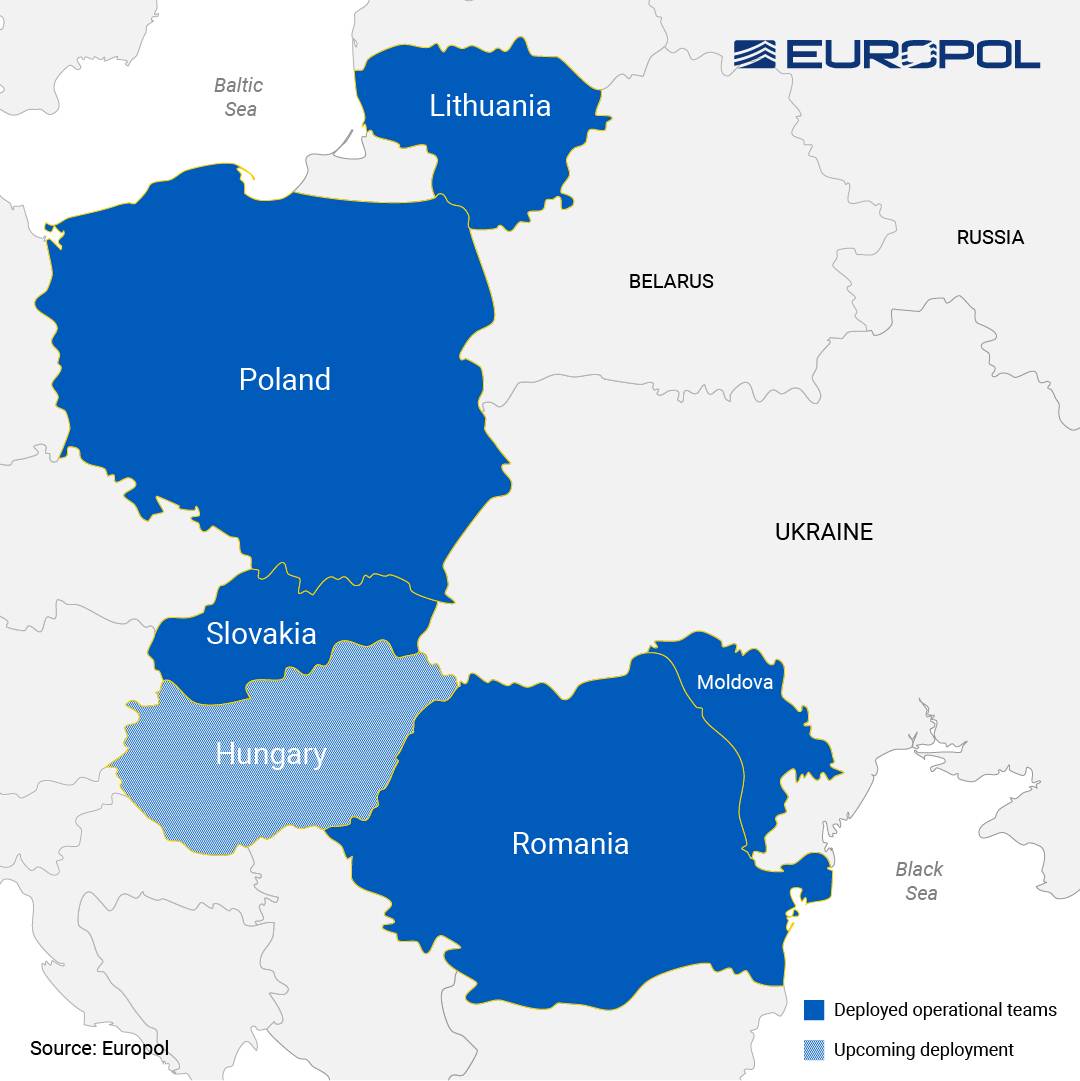
Europol Jan 19, 14:30

29 arrested in Albania, Greece and Italy for smuggling more than 1 100 migrants in yachts

Hundreds of millions of euros for smuggling more than 1 100 migrants into the EU Authorities believe that the suspects, mainly of Iraqi and Syrian origin, are part of a criminal network of about 80 members that is allegedly responsible for at least 30 sea smuggling operations. The criminal group operated migrant smuggling activities from Turkey to the Salento coast of Italy via Albania and Greece, then to other EU countries. The investigation started with the detection of an ongoing smuggling operation, which saw the successful rescue of the transported migrants and the arrest of eight low-level smugglers. The criminal networks primarily used sea routes for the transfer of migrants from Turkey, via the Eastern Mediterranean road, to their final EU destinations. The sea transfers were performed with the use of leisure vessels, mainly yachts, acquired or rented by the criminal network and skippered by novice seamen purposely recruited by the network. The suspects used informal money transfer services such as the hawala system to receive payments from migrants, with their illegal profits estimated at several hundred million euros.   Cross-border cooperation to increase detections Europol supported this investigation for over 18 months, facilitating the secure exchange of information and the organisation of operational meetings between the investigators, also providing the law enforcement partners with regular intelligence analysis packages. On the action day, Europol deployed two experts to Albania, one to Italy and one to Greece to assist with the crosschecking of operational information against Europol’s databases, and to provide technical support with data extraction and analysis of digital evidence. In addition, Europol facilitated the exchange of investigators to ensure effective tactical support to the operation during its last phase and on the action day. Further operational activities are ongoing on internationally, aimed at unearthing the location and identities of additional suspects involved in the criminal network. To facilitate the judicial cooperation, Eurojust set up a Joint Investigation Team (JIT) between Albania, Greece, Italy and Europol in January 2021. Eurojust set up a coordination centre during the action day and provided cross-border judicial support via the Italian and Greek desks at its headquarters, as well as the Liaison Prosecutor for Albania at the Eurojust. Eurojust facilitated and supported the exchanged of information among the JIT partners and Europol, and promoted five coordination meetings. Participating law enforcement authorities:  -    Albanian Criminal Police  -    Hellenic Police - Aliens Division of Attica -    Italian Financial Corps (Guardia di Finanza) - Organized Crime Investigation Group (GICO) of Lecce and the Central Organised Crime Investigation Service (SCICO)  Participating judicial authorities:  -    District Anti-Mafia Directorate of the Public Prosecutor's Office of Lecce in Italy -    General Prosecutor's Office of the Court of Appeal of Athens -   Special Anti-Corruption and Organised Crime Prosecutor's Office of Tirana (SPAK)    
Read full story →
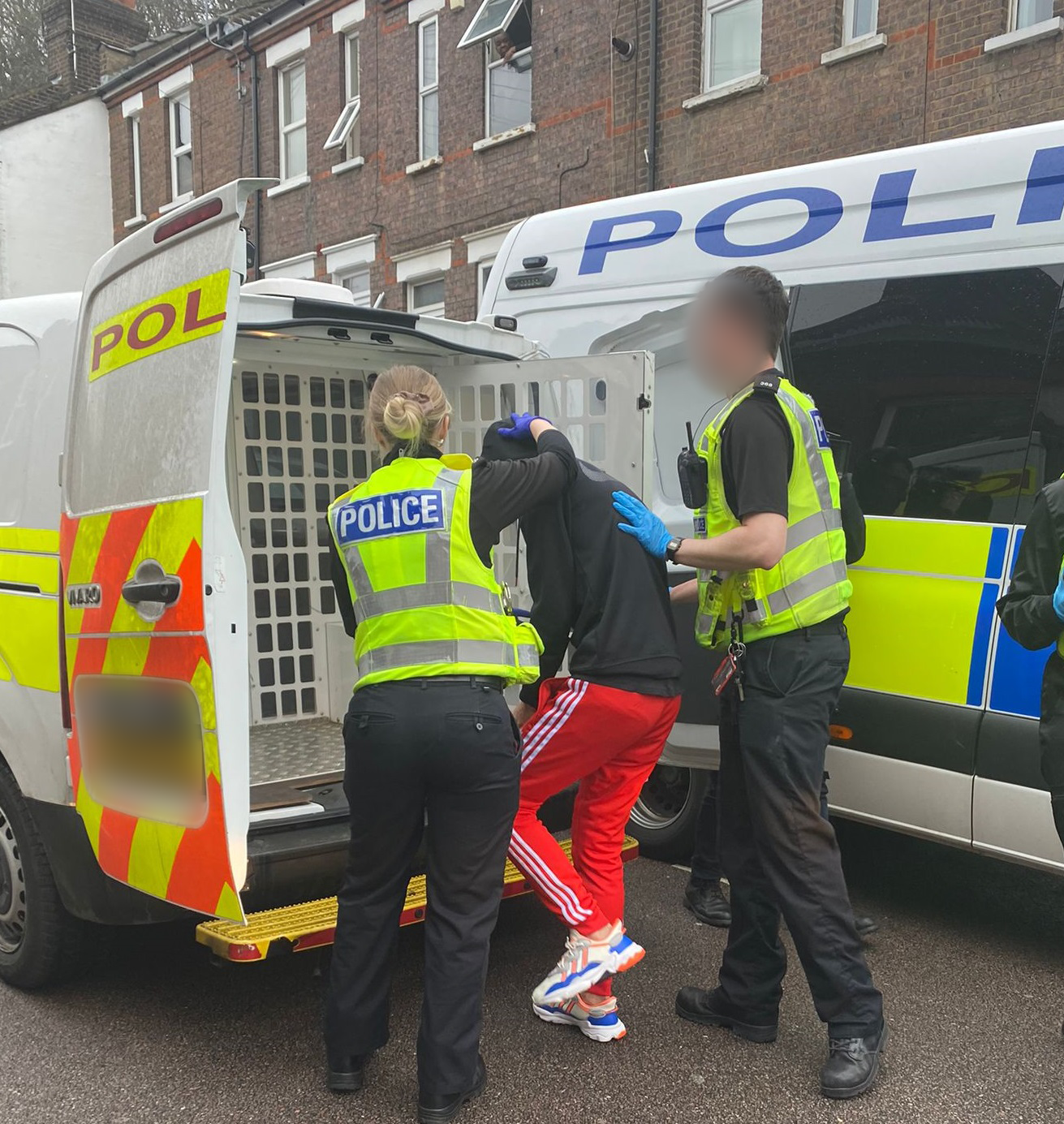
Europol Jan 18, 10:00

Unhappy New Year for cybercriminals as VPNLab.net goes offline

A provider of choice for cybercriminals VPNLab.net was established in 2008, offering services based on OpenVPN technology and 2048-bit encryption to provide online anonymity for as little as USD 60 per year. The service also provided double VPN, with servers located in many different countries. This made VPNLab.net a popular choice for cybercriminals, who could use its services to carry on committing their crimes without fear of detection by authorities. Law enforcement took interest in the provider after multiple investigations uncovered criminals using the VPNLab.net service to facilitate illicit activities such as malware distribution. Other cases showed the service’s use in the setting up of infrastructure and communications behind ransomware campaigns, as well as the actual deployment of ransomware. At the same time, investigators found the service advertised on the dark web itself. As a result of the investigation, more than one hundred businesses have been identified as at risk of cyberattacks. Law enforcement is working directly with these potential victims to mitigate their exposure.  Closing in on VPN service used for criminal purposes Commenting on the VPNLab.net takedown, the Head of Europol’s European Cybercrime Centre, Edvardas Šileris, remarked: The actions carried out under this investigation make clear that criminals are running out of ways to hide their tracks online. Each investigation we undertake informs the next, and the information gained on potential victims means we may have pre-empted several serious cyberattacks and data breaches. Chief of Hanover Police Department Volker Kluwe stated: One important aspect of this action is also to show that, if service providers support illegal action and do not provide any information on legal requests from law enforcement authorities, that these services are not bulletproof. This Operation shows the result of an effective cooperation of international law enforcement agencies, which makes it possible to shut down a global network and destroy such brands. Europol’s European Cybercrime Centre (EC3) provided support for the action day through its Analysis Project ‘CYBORG’, which organised more than 60 coordination meetings and 3 in-person workshops, as well as providing analytical and forensic support. The information exchange was facilitated in the framework of the Joint Cybercrime Action Taskforce (J-CAT) hosted at Europol’s headquarters in The Hague. Eurojust organised a coordination meeting to prepare for the operational actions and provided support to enable cross-border judicial cooperation between all Member States concerned. The following authorities took part in this operation:  Germany: Hanover Police Department (Polizeidirektion Hannover) - Central Criminal Office and Verden Public Prosecutor's Office Netherlands: The Dutch National Hi-Tech Crime Unit Canada: Royal Canadian Mounted Police, Federal Policing Czech Republic: Cyber Crime Section – NOCA (National Organized Crime Agency) France: Sous-Direction de la Lutte Contre la Cybercriminalité à la Direction Centrale de la Police Judiciaire (SDLC-DCPJ) Hungary: RSSPS National Bureau of Investigation Cybercrime Department Latvia: State Police of Latvia (Valsts Policija) - Central Criminal Police Department  Ukraine: National Police of Ukraine (Національна поліція України) - Cyberpolice Department  United Kingdom: The National Crime Agency United States: Federal Bureau of Investigation Eurojust Europol: European Cybercrime Centre (EC3)  
Read full story →
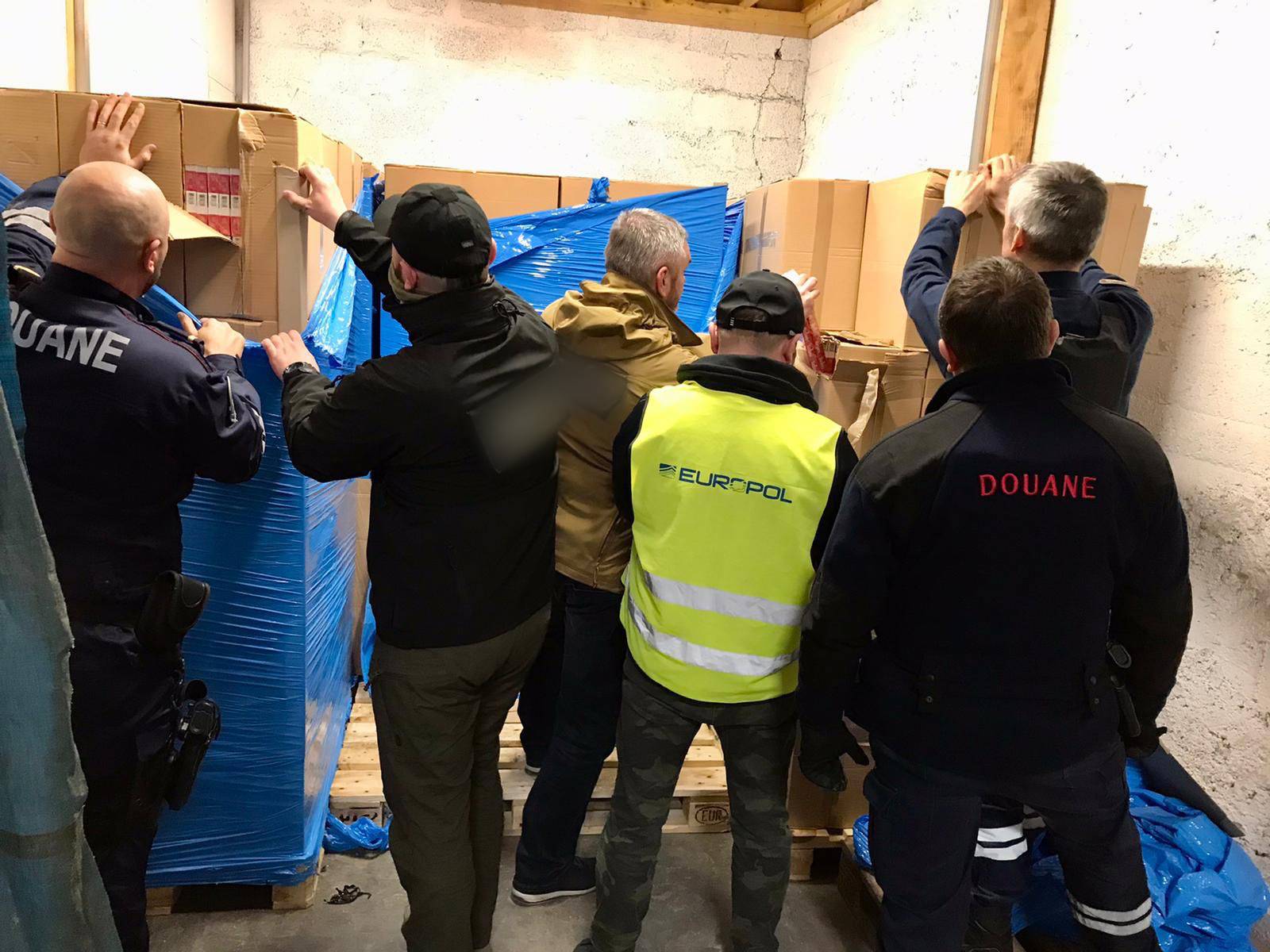
Europol Jan 14, 09:00

Over 1 530 firearms taken off the streets in Europol-coordinated operation

This operation, known as Conversus, was led by the Romanian National Police (Poliția Română) in the framework of the European Multidisciplinary Platform Against Criminal Threats (EMPACT). It focused around an action week coordinated by Europol between 13-17 December 2021 and involved law enforcement from 24 countries, alongside Eurojust and the European Commission. Results House searches conducted: over 260 Gas/alarm pistols seized: 1 534 Ammunition seized: 17 464 pieces  Pyrotechnics seized: 6 550 kg Intelligence-led action  Until recently, most of the blank firing weapons seized in Europe were imported into the EU from Turkey. The Turkish authorities have since changed their legislation to address this threat. Once in the EU, these weapons are typically purchased for a low price from legal markets, before being illegally trafficked to other countries where a permit is required to acquire, import and possess such a firearm.  The action week was preceded by operational upstream work earlier in the year to identify the buyers and dealers involved in this illegal trade. The Romanian National Police, together with its Bulgarian and North Macedonian counterparts, collected data on the sellers which was then analysed by Europol to pin down buyers and suspicious transactions.   The following countries took part in this coordinated action: Romania, Bulgaria, Belgium, Cyprus, Czechia, Germany, Denmark, Estonia, Greece, Spain, France, Finland, Croatia, Hungary, Lithuania, Luxembourg, Latvia, Netherlands, Poland, Portugal, Sweden, Albania, Bosnia and Herzegovina, Switzerland, Norway, Montenegro, North Macedonia, Serbia, Ukraine and Kosovo*  * This designation is without prejudice to positions on status, and is in line with UNSCR 1244/99 and the ICJ Opinion on the Kosovo declaration of independence. Eurojust stands ready to support national authorities with the cross-border judicial cooperation, at their request.  
Read full story →
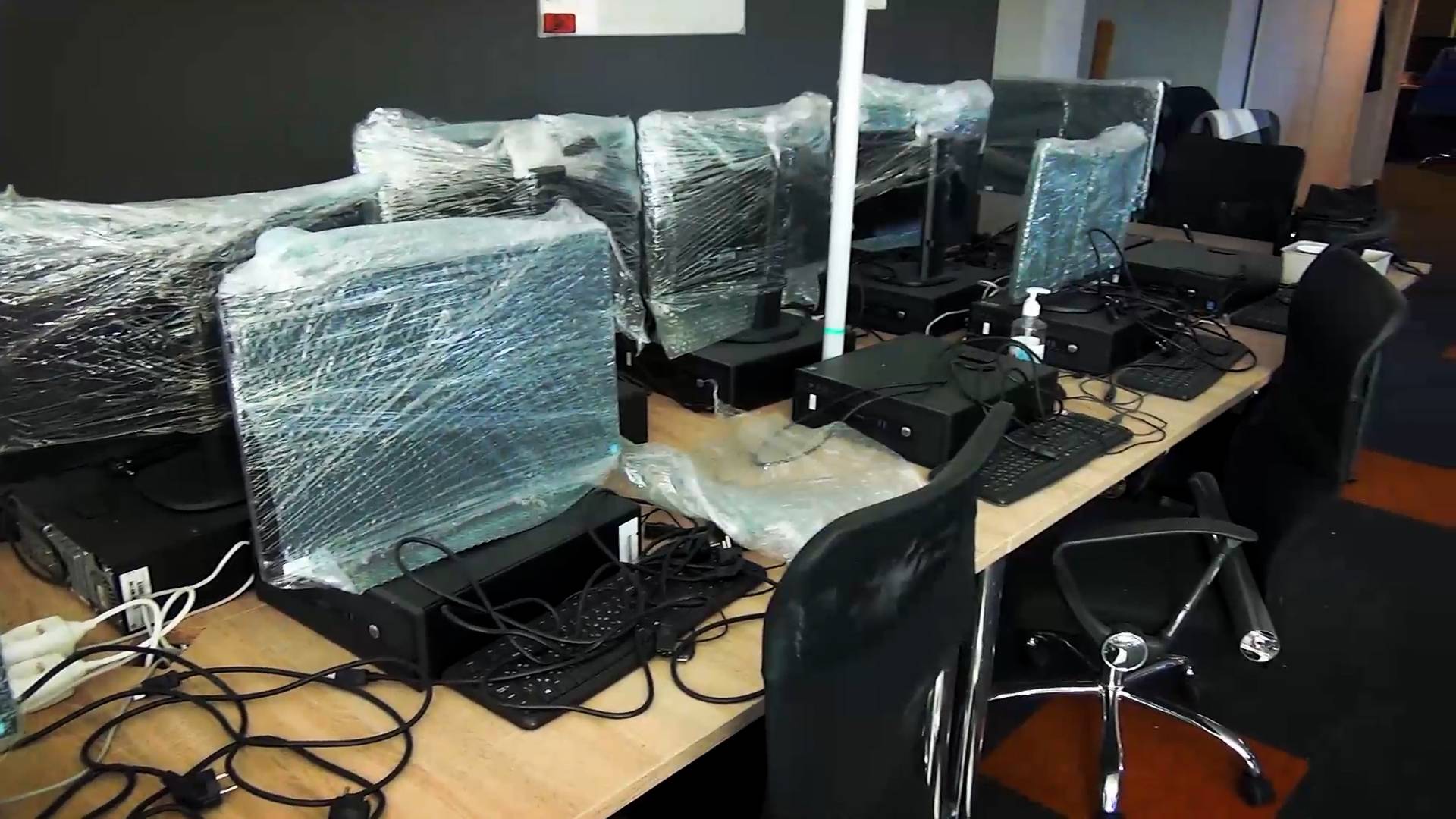
Europol Jan 11, 13:30

11 arrested in Spain and France for flying cannabis into Europe

Overall results of the operational activities 7 house searches 11 arrests (2 in France and 9 in Spain) Seizures include Drugs: 2 400 kg hashish, 112 kg marijuana Vehicles and petrol:  6 cars, 4 motorbikes, 2 trucks, 2 trailers, 4 helicopters modified to transport cannabis, 4 000 litres of petrol Armaments: 1 submachine gun, 2 guns, 1 shotgun, 2 bulletproof vests Electronics: 2 money counting machines, 1 frequency inhibitor, 1 frequency detector, 30 phones €2 355 in cash Smuggling cannabis on helicopters across the Mediterranean  The criminal network was involved in the trafficking of hashish and marijuana from Morocco to the South of Spain before smuggling the drugs to France. The investigators detected that the suspects used up to five false identities per person. The suspects transported the drugs from Morocco with the use of modified helicopters. The network then smuggled the drugs to France with the ‘go fast’ method (using vehicles with false number plates) or by concealing the cannabis in legal cargos transported by heavy trucks. A car chase in Spain led to the discovery of 329 kg of hashish hidden in a private vehicle. The driver reached speeds of up to 180 km/h while trying to escape the Spanish guard. Finally, he was arrested together with three other individuals. The Spanish officers discovered 266 kg of hashish at the address where the car was registered.  The criminal organisation used the profits from the drug trafficking to enhance this technical set-up and expand their trafficking capabilities. Shell companies were used to launder the money and disguise all details related to the origin and ownership of the funds.  Since joining this investigation in 2020, Europol has supported operational activities, facilitated the exchange of information and provided analytical support and operational coordination. Europol also supported the action days, with real-time cross-checking of operational information against Europol’s databases to provide leads to investigators in the field.  In 2020, Europol created the European Financial and Economic Crime Centre (EFECC) to increase synergies between economic and financial investigations and to strengthen its ability to support law enforcement authorities in effectively combating this major criminal threat. Headquartered in The Hague, the Netherlands, Europol supports the 27 EU Member States in their fight against terrorism, cybercrime, and other serious and organised crime forms. Europol also works with many non-EU partner states and international organisations. From its various threat assessments to its intelligence-gathering and operational activities, Europol has the tools and resources it needs to do its part in making Europe safer.   Watch video
Read full story →
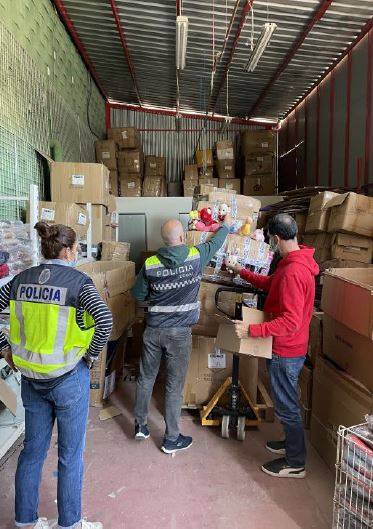
Europol Jan 10, 16:51

24 arrested for smuggling migrants, drugs and stolen goods across the Mediterranean

Officers from the Spanish National Police (Policía Nacional), supported by Europol, dismantled an organised crime group involved in property crime, facilitation of illegal immigration and drug trafficking. Results from the action day on 14 December 2021: 9 house searches, 24 arrests in Spain, Seizures include: 4 vehicles, 3.5 kg of ecstasy pills (around 6 500 pills) valued at about €152 600, 56 grams of phencyclidine, 710 boxes of smuggled tobacco, stolen goods (61 mobile devices, competition bikes, electric scooters), electronic equipment, documents and about €40 000 in cash. Smuggling and trafficking goods and people to both Europe and the Middle East The investigation uncovered that the criminal network was smuggling migrants from Algeria to Spain, but also fugitives from Europe to the Middle East, taking advantage of the boats on their way back to Algeria. The network was involved in other criminal activities including trafficking of synthetic drugs, property crime, tobacco smuggling and trafficking of documents. On the first action day, investigators found a warehouse that was being used by the suspects. Inside the warehouse, they discovered a large number of stolen items that were being prepared to be smuggled to Algeria. The warehouse was sealed off as a result of the action. The investigators proved that the criminal network facilitated the smuggling of 250 irregular migrants into Spain in 54 separate incidents in the last few months. The criminal group was very well structured, with some members solely involved in management tasks, and others in accommodation, transportation. Hawaladars connected to the network sponsored the illegal trips of migrants but charge high rates of interest. The officers from the Spanish Police also discovered that the leader of the gang and his wife used their nine-year-old son as a drug courier. Migrants were charged €5 000 for the crossing from Algeria to Almería, Spain and between €700 and €1 000 from Spain to France. The suspects used forerunner cars to cross the border with France. Europol facilitated the exchange of information and provided analytical support. On the action day, Europol deployed an expert to Spain to assist with the cross-checking of operational information against Europol’s databases and to provide technical support with data extraction and analysis of digital evidence. Headquartered in The Hague, the Netherlands, Europol supports the 27 EU Member States in their fight against terrorism, cybercrime, and other serious and organised crime forms. Europol also works with many non-EU partner states and international organisations. From its various threat assessments to its intelligence-gathering and operational activities, Europol has the tools and resources it needs to do its part in making Europe safer.
Read full story →
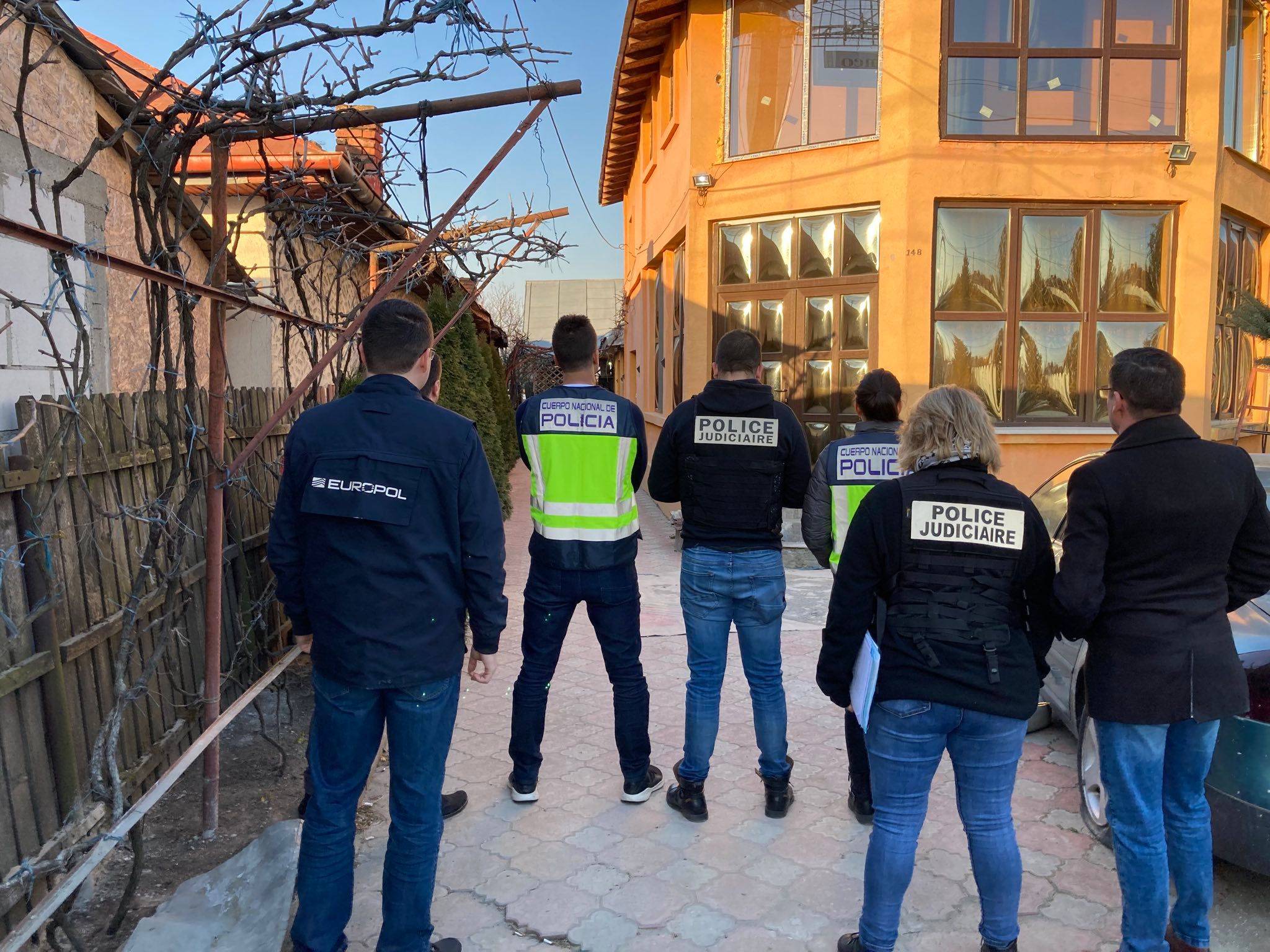
Europol Dec 22, 11:25

Update on the local staff pension fund

Published as a follow-up of the communication published on 08/09/2020 Further to the information previously provided therein, Europol would like to inform you that – due to lack of available resources combined with other developments on this matter - the invitation to tender related to the pension entitlements of the (last) four former Local Staff members for the period 2015-2017 has not been launched yet.  It is expected that the tender will be launched before the end of 2021, with a final result in Q2 2022. The outcome of the tender is determinant for calculating the exact balance of the ‘Local Staff Pension Fund’. Consequently, at this stage it is unknown if the balance has a deficit or a surplus.  Europol wishes to inform you that – in view of the delay in the tender procedure and the expected time for its finalisation – a more conclusive outcome is expected to be provided by Q3 2022.  A further update on this topic is expected to be published on Europol’s website as soon as the tender process is finalised and more concrete details can be shared. In case you are still in contact with former Local Staff, please feel free to share this update.
Read full story →
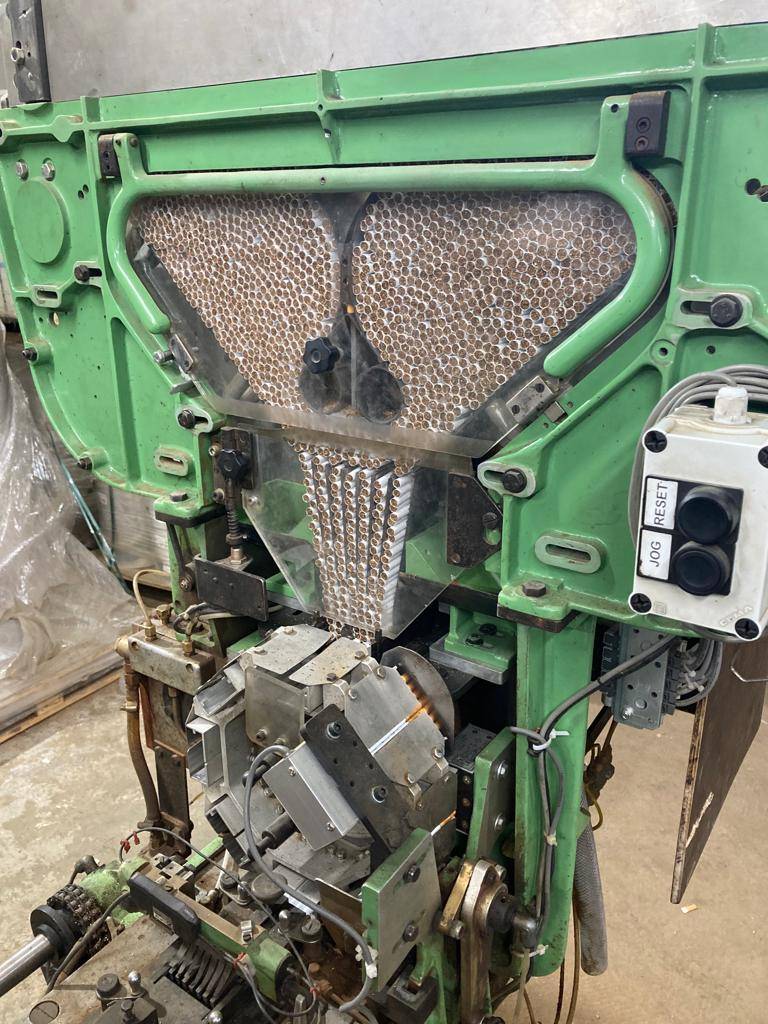
Europol Dec 22, 08:00

Republic of Korea and Europol sign arrangement to combat cross-border serious organised crime

The Working Arrangement introduces a secure system for the exchange of information between the parties, linking the Republic of Korea with law enforcement authorities of the Member States of the European Union, as well as with third countries and organisations associated with Europol.  The cooperation may, additional to the exchange of information, include the exchange of specialist knowledge, general situation reports, results of strategic analysis, the participation in training activities as well as providing advice and support in individual criminal investigations.  Based on this Working Arrangement, the Republic of Korea can deploy a liaison officer to Europol’s headquarters in the Netherlands to join its unique community of liaison bureaux of law enforcement authorities from more than 40 countries across the world. The Korean National Police Agency's Commissioner General Kim Chang-yong said: “Transnational organised crime has been fortified with the development of technology and globalisation. Now, one country's effort is not enough in the fight against crime. Law enforcement agencies should stand together. On behalf of the Korean Government, I sincerely welcome this working arrangement, which will allow the law enforcement agencies in both the Republic of Korea and the European Union to strengthen their collaborative efforts and realise practical solutions to curb crime.” Europol’s Executive Director Catherine De Bolle said: “Against the backdrop of international crime becoming more violent and interconnected, the need and potential for cooperation between Europol and the Republic of Korea on global security is important. I welcome this working arrangement, which will connect law enforcement authorities from the Republic of Korea with all of Europol’s Member States and associated partners. Leveraging these relationships represents an invaluable opportunity to enhance regional efforts to combat the threats posed by transnational crime.” After entry into force of the Arrangement, this new level of cooperation will be important for tackling priority crime areas affecting both the European Union and the Republic of Korea.  
Read full story →
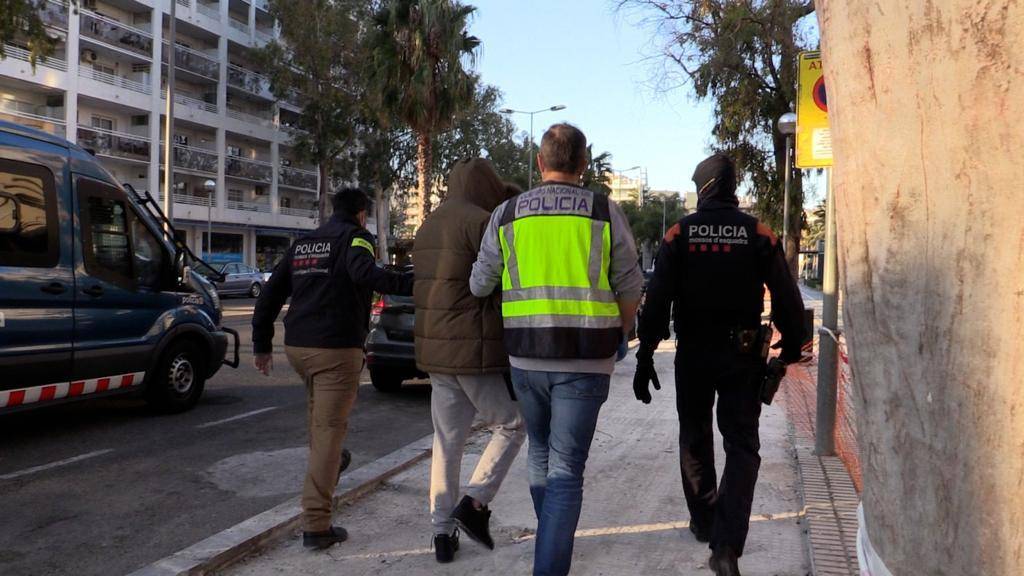
Europol Dec 20, 11:00

Europol coordinates referral action targeting migrant smuggling from Belarus

Europol’s European Migrant Smuggling Centre (EMSC), together with the European Union Internet Referral Unit (EU IRU) within Europol’s European Counter Terrorism Centre (ECTC) coordinated the referral activity which involved law enforcement authorities from Lithuania, Latvia, Estonia, Finland, Poland and Germany.  The referral action focused on the collection of online content promoting illegal immigration services from Belarus to Europe, such as social media accounts advertising the sale of counterfeit ID documents, passports, visas or illegal transportation services. These accounts have been referred to the Online Service Providers with the request to review them against the terms of service. The new Belarusian migratory route is heavily advertised to migrants on social media and instant messaging applications, which represents a significant pull factor. The misuse of these online platforms by facilitators led to a large increase of departures and irregular border crossings.  The organisation of this referral action has taken place in the context of the wider support that Europol is providing to EU Member States in countering migrant smuggling from Belarus to the EU.     
Read full story →