Top Stories

BBC Sport Dec 7, 19:23

Nancy suffers nightmare debut as his Celtic challenge laid bare

Celtic's new manager suffered a damaging defeat in his opening outing against HeartsSportscene: Celtic v Hearts highlightsAn opportunity for instant impact or an immediate set back.High stakes that backfired as Hearts left Glasgow with a three-point lead at the top of the table after their stunning 2-1 victory.The timing of Wilfried Nancy's appointment as Celtic's new manager midweek had raised some questions, particularly given the run of results interim-manager Martin O'Neill enjoyed.Level on points ahead of this top-of-the-table meeting with a game in hand. Some thought it prudent for O'Neill to see out this crucial week against Hearts, Roma and the Premier Sports cup final against St Mirren.The argument was that change may disrupt momentum. It seemingly has.Others put forward the idea that Nancy needed to get in, assess this squad ahead of the January window and implement his vision. He may have learned a lot in one game.This was always going to be a big test of Celtic's recent progress and for the new man in charge in a baptism week full of big tests.Little time to implement change but the chance to go clear in the league was there for the taking with a game in hand.It was opportunity missed despite an opening that suggested Celtic had been reinvented immediately. In truth, aside from a bright start, few could argue at the outcome."The big talking point will be the change of formation," said former Celtic goalkeeper Pat Bonner."The first 20 minutes was maybe what he wanted, the speed, the counter-press, but you need to maintain that."When it comes to breaking down opponents in a compact area, they have been lacking for quite a while now."A switch to a back three with Hyunjun Yang and Sebastian Tounekti deployed wide but well advanced. Benjamin Nygren and Reo Hatate slightly more central dropping into space.It was a big ask for everything to click straight away. However, in the opening quarter, they looked rampant. The home crowd were loving the energy and intensity of their team and new manager.He camped on the touchline throughout the first half. Time and again he urged them to go forward on the ball. No passing sideways, progress quickly either short or long.Very promising and Hearts looked on the ropes. When Daizen Maeda got in he seemed certain to score. He didn't and, gradually, everything turned.The first part is down to Hearts. They were wonderfully strong and gradually adapted. They got a grip of this and took control, even when in defensive mode. They deserve an incredible amount of praise and have firmly reminded everyone what a good side they are.Maeda's miss was crucial. Derek McInnes said pre-match that he knew they would have to absorb pressure. They did and then punished their hosts.For all Celtic's early swashbuckling, it absolutely evaporated. They lost the intensity. The bravery was gone.Increasingly, they looked a little lost on such a big, big occasion, despite Kieran Tierney's injury time strike."This is not about the system," Nancy told BBC Scotland post match when quizzed on its impact."We started one way in the first half. And the second half, we kept going. Towards the end, it was not the same system."This is more about to check if we play with personality, to check what we can do better to unbalance the low block, what can we do better to avoid these two goals that we conceded."Celtic's starting XI average positionIt took until the final minutes for the home side to genuinely look like scoring. When they did, the game was lost, despite striking the crossbar shortly before their goal.It would be unfair to level much criticism on Nancy this early. He did suggest he would look at nuanced changes in the short term. Perhaps he got a little too ambitious too early."They definitely need a striker and a winger on the right. After today the heads are down," added Bonner."You've got to break down opposition, you've got to move opposition. In that final third, Celtic were absolutely void of ideas."When they went two goals behind, it was gone. I just couldn't see them getting back into the game."Now Wilfried Nancy knows exactly some of the deficiencies that he has to work on. He's got to replace some players, he's got to get players in in the January window."They have a real fight on their hands to win this championship now."After his first outing at Celtic Park, Nancy had experienced both sides of the crowd.The early embers of his reign had fans off their seats. They were absolutely loving what they were seeing. It just lacked a goal.Then almost everything was lacking as Hearts seized on their opportunity and the home support grew increasingly exasperated."I have many, many good things that I can show them [the players]," Nancy insisted."We need, obviously, to adjust on certain things but I was pleased with the mentality."I think that with more connection, with more relation, we're going to be able to do it like we did in the first half.""We want to give emotion to the fans and they have the right to challenge us and to support us. I'm fine with that."Nancy after debut defeat as Celtic boss
Read full story →
BBC Sport Dec 7, 15:12

Backed by his family, propelled by his talent - the rise of Norris

Norris, aged 14, celebrating success in the 2014 Ginetta Junior Championship, where he made his car racing debutLando Norris has become Britain's 11th Formula 1 world champion, and delivered on a destiny that seemed set since he was a young boy.The 26-year-old, whose father Adam is a multimillionaire who made his fortune as a pensions trader, started racing karts at the age of eight, and was on pole position for his first national event.Norris, who has dual Belgian nationality through his mother Cisca, was born in Bristol and grew up in Glastonbury. Educated at Millfield in Somerset, as his career blossomed, it became increasingly hard to find time to attend school, and there was a fair bit of home tutoring involved.His junior career marked him out as a potential future F1 world champion. His family's resources ensured he was provided with everything he needed to allow his talent to flourish. And when he made it to F1, he immediately proved he had what it took.Aged 11, competing in the MSA British Cadet Kart Championship at Whilton Mill in September 2011Norris has won the title in his seventh season, and spent his entire F1 career with McLaren, with whom he has kept faith as they have grown from also-rans to F1's leading team.His boss there is American Zak Brown, McLaren Racing's chief executive officer, who has been involved with Norris since before either were at the team.Norris' career was funded by his father until he reached F1, and he was guided through his karting years by his manager Mark Berryman.But when Norris took his first steps in car racing, they did not have the necessary contacts. They turned to Brown - then the boss of a sports marketing agency called JMI, and well known in F1 as a deal maker and sponsor finder.Initially, Brown felt "this is not what I do". But Norris' team were persistent. Brown says: "I thought: 'All right, everyone tells me he is the greatest thing since sliced bread, maybe I can help.'"When Brown started paying attention, he realised Norris was the real deal "pretty much right away".He was not the only one. Stephanie Carlin started working with Norris as he made his first steps in the junior categories aged 15, continued to do so until he made it to F1 four years later, and is now McLaren's F1 business operations director."He was just phenomenally quick," she says, "and he was able to execute it really well. There's been an underlying talent and speed and pace that's existed from the first time he got in a car."Shortly after his 14th birthday, Norris receives a trophy from three-time world champion Sir Jackie Stewart at the 2013 Autosport AwardsNorris was almost certainly too good not to make it to F1, but his path was eased considerably when Brown joined McLaren in 2016, a couple of years after he started working with Norris.In January 2018, Brown paired 18-year-old Norris with then McLaren driver Fernando Alonso, an F1 legend, in the Daytona 24 Hours sportscar race in his United Autosports team.Norris gave himself the target of setting a faster lap than Alonso - and achieved it. He stunned people with his pace in the wet at night before the car eventually retired."Fernando Alonso, one of the best racing drivers in the world, Lando was his match," Brown says. "Cold tyres, middle of the night Daytona, if you asked Richard Dean, who ran them, who was better, he wouldn't know."When Alonso announced he was quitting F1 at the end of 2018, Norris was the obvious replacement, and McLaren started giving him experience in practice sessions.Having proved faster than one McLaren race driver, Stoffel Vandoorne, in his first outing, his next was at Monza, with Alonso in the other car.Brown recalls: "They're swapping times. Fernando has just set his time, so he's done, and obviously paying attention to what times Lando is doing. He's asking."We come on the radio and we go: 'Fernando, Lando's on a lap, get out of his way.'"First sector, same 10th. Second sector, Lando is half a 10th up. Third sector, on the radio, Fernando: 'Sorry, I didn't see him.' Lando: 'Fernando just blocked me!' And we all just giggled on the pit wall, like, 'Welcome to Formula 1.'"So when you see those things, you just think: 'This guy's mega.'"Don't try this at home: Stirring a cup of tea he has made for Fernando Alonso with a power tool at the 2018 United States Grand Prix in AustinA few races later, Norris jokingly served Alonso a cup of tea during a wet practice session at the US Grand Prix in Austin. Soon, he was the apprentice no longer.In his debut season in 2019, Norris was immediately a match for his team-mate Carlos Sainz, who had four years' experience, and he destroyed then seven-time race-winner Daniel Ricciardo when the Australian joined the team in 2021.By then, Alonso had returned to F1 after two years in other categories. He and Norris swapped helmets. The Spaniard wrote on the one he gave to Norris: "You are a star - a rock star."Norris quickly became a fan favourite, with his diffident-but-jokey personality, and willingness to show his true self on social media. His public profile built through the pandemic as he live-streamed himself playing video games, and he used that to build his own gaming and lifestyle brand.Brown says: "He used to be very shy and he still kind of is a quiet, shy guy in his own way. Even though he kind of comes off as extroverted, he's actually not. But as he's become more mature, I have seen him become more comfortable in his skin."He has never lacked confidence. He was a young kid when I first met him, he was 14. So what I've seen outside of becoming a better racing driver, (is) a better team leader, more prescriptive in what he wants. And his on-track performance has grown with it."Left to right: George Russell, Lando Norris and Charles Leclerc in 2017, before all three made their F1 debutsNorris based himself in Woking, the location of the McLaren factory, when he first graduated to F1, the better to integrate with the team, but after three years he took the traditional F1 driver's life decision and moved to Monaco for financial reasons.By then, it had long been obvious Norris' talent marked him out as one of the leading lights of the new generation of drivers, along with his compatriot George Russell and Ferrari's Charles Leclerc.But it has taken time for Norris to establish himself as a front-runner in F1.In their first few years together, the McLaren car was not competitive, although Norris came close to a win with a superb performance in Russia in 2021, only to misjudge the incoming weather and not pit for wet tyres in a late downpour.Norris kept the faith, signing two contract extensions, despite interest from Red Bull. That, Brown says, was down to "relationships, transparency, visibility to what we were doing. He's comfortable here. This has been his family since day one."Norris' career trajectory turned midway through 2023, a year that started with a restructuring of McLaren's engineering group by Andrea Stella, who had accepted Brown's offer to become team principal the previous December.A young Norris shares ambition to be world championCarlin joined McLaren at the beginning of 2024. It had been more than five years since she had worked with Norris in F2."I sat in engineering and heard him giving feedback," she says, "and I was blown away. I just could not believe the development of this teenager I'd known, a very successful F2 driver and champion in F3 and F4. It was incredible."Those first five years in F1 had turned a boy into a man, and a promising driver full of potential into one of the best in the world. But there was still learning to be done.After a slow start to 2024, a development to the McLaren car at the Miami Grand Prix in May made the team absolutely competitive. Norris took his maiden win that weekend, and later three further victories as it began to look as if he could challenge for the title.In the end, the head start Red Bull's Max Verstappen had established in the first five races of the year was too much. A few small Norris errors along the way did not help.Lando Norris' maiden F1 victory in Miami in 2024 came in his 110th grand prixA year on, Norris' development has continued apace."Lando has always been really open about what he feels his weaknesses are as much as what he feels his strengths are," Carlin says."That's one of the things that's attracted the most negative publicity around him because he's been so open about that. And because he's open about it, people see it as a weakness. But actually what it's turning out to be is his absolute strength."He's used it as a development tool. He's used it throughout his career and then he's really used it this year because at the start of the season he was struggling to adapt to the characteristics of the car and he looked like he was, to the rest of the world, questioning himself."What he was actually doing was developing himself. And that's really been demonstrated this season."Norris started this year with a win in Australia, but after that the first part of the season was a struggle. His team-mate Oscar Piastri had progressed significantly through some assiduous work with the team over the winter, and Norris was not feeling the car in the way he needed to be quick.Developments over the winter had made the new car faster, but introduced what the drivers called a "numbness" to the front axle, which was preventing Norris' ability to exploit the car.A tweak to the front suspension was developed to improve Norris' feel, and introduced in Canada in June. It was not an overnight fix, and was relatively minor in nature, but undoubtedly after that the trend line of Norris' trajectory was a positive one.Despite falling 34 points behind Piastri at the end of August, Norris has clinched the title just nine races later.Norris attributes his resilience to the "good group of people around me, to support me, to direct me, help me, whether it's been a good weekend or a bad weekend, people who always have my best interest at heart and are there to give me the right mentality when I'm down."Two reasons I've done well are: one, I've done a better job, so I'm performing better more often; and two, I'm not always more positive, but I'm more positive and less negative about when I have bad days and bad sessions. And I believe in myself a bit more that I can turn it around."A lot of work away from the track with different people. A lot of work at the track. But it all starts with my team around me."Stella has a phrase for this. He calls it "acknowledging the gap to perfection" - a description he has used for Alonso's approach to his career. It means that however good a driver is, they look to their weaknesses, and work on mitigating them. It is a constantly evolving process.F1 drivers generally don't talk about this stuff, and if they do it tends to be in an allusive manner that tries to hide any weaknesses.Carlin says: "He doesn't see that as a weakness because he's such an authentic, genuine person. It's not even in his nature to hide that process."To some extent, you've got to be in the environment to challenge you. And although Lando's had a few seasons in F1 now, he's not had multiple seasons in condition to be a championship contender."So he's continued to develop through his F1 career, but to some extent the rate of your development is constrained by the extent of your potential. And if your potential is limited by various factors, such as your car and relative pace to other teams, then that has an impact on how far you can develop at what pace."But when he's been delivered with a car capable of challenging for the championship, his own development has accelerated to match that."So it's with those great opportunities and those greatest challenges that his development rate has actually sped up, to kind of mirror-image that."Which should mean there is more to come.This is an updated version of an article first published in March 2025How Norris achieved his lifetime's ambition by 'winning it my way'Briton Norris wins his first F1 title in Abu DhabiQuiz: How well do you know F1 champion Norris?Lando Norris: The Making of a World Champion
Read full story →
Sky News Dec 7, 15:12

British documentary photographer Martin Parr dies

Martin Parr CBE, the famed British documentary photographer hailed as "a giant" of his craft, has died aged 73.The Martin Parr Foundation announced his death in a statement on their website on Sunday saying: "It is with great sadness that we announce that Martin Parr (1952-2025) died yesterday at home in Bristol.
Read full story →
BBC Sport Dec 7, 12:23

'England in battle to avoid worst Ashes tour in modern times'

England soundly beaten by Australia in second Test drubbingAngry? Depressed? A sense of deja vu?What about hoodwinked for believing England had a chance of competing in Australia?Overall, it is probably a feeling of profound sadness.Realistically, albeit not mathematically, this Ashes series is over in six days of cricket.England have never come from 2-0 down to beat Australia, who have the added security of holding the urn. Australia have not lost three consecutive home Tests to anyone in 38 years.There will be no defining series win for the Ben Stokes-Brendon McCullum era.Instead, this team is battling to avoid the worst England performance on an Ashes tour this century.There have been some belters either side of a 2010-11 victory that is increasingly starting to feel like a fever dream of sprinkler dances, a Swann keeping a diary and a knight of the realm wearing a chef's hat.In 2002-03 England lost 4-1 but took hope from the runs of Michael Vaughan. In 2006-07, England's Ashes winners of 2005 were ravaged by injury and felt the wrath of one of the greatest teams of all time.There has been revisionism about 2013-14. England arrived as favourites, though any team would have been destroyed by Mitchell Johnson. Four years later was the birth of Australia's 'big four' attack. Last time - the Covid tour of 2021-22 - England had no chance.This? This was England's big opportunity. The most anticipated Ashes series in a generation.This is why James Anderson was pensioned off, why performances in domestic cricket were largely ignored and why parts of the County Championship were turned into an experiment with the Kookaburra ball.Australia were supposed to be ageing and in decline - "the worst team in 15 years". Instead, the home side have rissoled England with their reserve bowling attack and opening batter Usman Khawaja out with a bad back.Steve Smith has been able to spend time revising Monty Panesar's answers on Mastermind, and Pat Cummins felt comfortable enough to go through a charade over whether or not he would play at the Gabba.All that talk about Test cricket being so different from county cricket? Michael Neser has taken wickets bowling medium-fast with the keeper up to the stumps. Where's Darren Stevens when you need him?The biggest insult was the Brisbane crowd voting Australia's Bluey as the superior children's cartoon to the UK's Peppa Pig. This England team owe Peppa an apology. She would probably do a better job in the top order.The most hostile pace attack England have sent to Australia since 1970 have bowled well for one session. Shoaib Bashir, a spinner backed specifically for this tour, is still to play on it.England 2-0 down in Ashes after Gabba hammeringAshes player ratings: Who may be wilting under the pressure?McCullum says England 'trained too much' as Stokes questions mentalityArcher 'in despair' as Head's outside edge dropped behind by SmithWicketkeeper Jamie Smith looks overwhelmed by the occasion. Being pictured not wearing a helmet on his e-scooter must feel like a golden age for Smith, considering the week he has had at the Gabba.It is England's batting that will cause the biggest recrimination. If the definition of insanity is doing the same thing over and over, and expecting different results, England have collectively lost their marbles and their wickets.Drive after drive. Edge after edge. Catch after catch. Bargain basement batting from a group playing like millionaires. Sachin Tendulkar once made 241 in Sydney by deliberately resisting the cover drive. This lot must think they are better than the Little Master.Actions speak louder than words, but the words are pretty damning, too."They always play their shots. If we put as many balls in the right areas they're going to give you some chances," said Scott Boland, who faced more deliveries in the second Test than all of Ben Duckett, Ollie Pope and Harry Brook.Asked before the second Test to describe the "Australian way of playing Test cricket", Smith said: "Adapting to conditions and what's in front of us, playing the game in real time. [It is] not get back in the shed and say 'we should have played this way, we should have done this'."Playing what's in front of us and doing it for long periods. If you do that in Test cricket it holds you in pretty good stead."Contrast that to assistant coach Marcus Trescothick's explanation for England's approach on the third evening in Brisbane."We are trying to play the way we want to play," said Trescothick. "You have to have a style of play you stick to, don't you?"And therein lies the problem. England have become slaves to their style, stubbornly believing a one-size-fits-all method will bring results in Test cricket.It was thrilling at first, a much-needed kiss of life to a team that won only one of its previous 17 matches. It produced some superb performances and magic moments.'It's a shocker!' - Pope and Crawley both caught and bowledIn the cold light of day, it can be argued England beat the teams they should have beaten anyway.The Gabba is an eighth defeat in England's past 15 Tests. Away from home they have lost 10 in 14. There has been no win in a five-Test series against Australia or India. If it feels harsh to use a 4-1 defeat in India at the beginning of last year as part of the judgement, India have recently lost 3-0 at home to New Zealand and 2-0 to South Africa.The Bazball empire is now at risk of capitulation. Pre-series, it felt like defeat in Australia would not necessarily necessitate change, depending on the manner of performance.Losing 3-2 after a decider in Sydney is vastly different to losing 3-2 after being 3-0 down. England could still win (yes, I know). They could also lose 5-0.Stokes and McCullum both have contracts until the end of the next home Ashes in 2027. Rob Key manages them both. England and Wales Cricket Board chief executive Richard Gould and chairman Richard Thompson will take the temperature of public reaction - currently boiling hot.Beyond the management, there are careers and reputations of players on the line. One wonders what they are saying in the dressing room.Is there enough honesty and maturity to hold one another to account? Is there space in the Bazball groupthink to suggest there might be another way of doing things?In the aftermath of the Gabba defeat, the comments of Stokes and McCullum were as strong as they have been in their three-plus years in charge. The two alphas publicly questioning the mentality of the England team is something that could come back to haunt them later in the tour."A dressing room that I am captain of is not a place for weak men," said Stokes.Bar dragging in rookies from the England Lions - who are getting hammered by Australia A - England will have to rely on this group of players to salvage something from the tour.England have not brought a specialist back-up keeper, so Smith is likely to remain in the firing line. There is no reserve specialist opener. The back-up batter, Jacob Bethell, has pretty much been on a gap year, but at least made 71 for the Lions on Sunday.When a spinner is needed for the third Test in Adelaide, Australia can call on Nathan Lyon's 562 Test wickets. England will have to gamble on Bashir, chosen off the back of a clip on social media and currently without a county contract. His figures for the Lions were 0-115.There is more than a week until that third Test, time when England will have to justify their holiday on the Sunshine Coast.When they return from their jollies, they will have the task of keeping the Ashes alive past Christmas.Fail, and it would be hard to argue this is not England's worst Ashes tour of modern times.Get cricket news sent straight to your phone
Read full story →
CNBC Business Dec 7, 03:49

David Ellison's hunt for WBD made David Zaslav richer — and it may not be over

LivestreamMenuMake ItselectUSAINTLLivestreamSearch quotes, news & videosLivestreamWatchlistSIGN INCreate free accountMarketsBusinessInvestingTechPoliticsVideoWatchlistInvesting ClubPROLivestreamMenuThis isn't exactly what David Ellison had planned in September. Just a few months ago, the Paramount Skydance CEO sent a letter to the Warner Bros. Discovery board of directors arguing a combination of the two media and entertainment companies made sense. That letter was the first of several that offered increasingly higher prices to acquire the company along with arguments of why the assets were better together.Paramount's interest spurred a formal sale process — bringing Comcast and Netflix into the mix — which ultimately doubled the value of Warner Bros. Discovery shares and culminated, at least for the moment, in Paramount losing out in the bidding war it started. On Friday, Netflix announced a deal to acquire HBO Max and the famed Warner Bros. film studio for $27.75 per share, or an equity value of $72 billion. WBD will move forward with a plan to separate out its pay-TV networks, such as CNN and TNT Sports, before the deal closes. Instead of supercharging Paramount, just months after gaining control of the company through a merger with Skydance, Ellison effectively handed a prized jewel of the media and entertainment industry to its most dominant player, strengthening Netflix's reach and stripping Paramount and Comcast's NBCUniversal of an obvious merger target. "It wasn't for sale before, and they certainly hadn't cleaned up the assets or separated the assets in the way they have right now," said Netflix co-CEO Ted Sarandos in a conference call Friday morning after announcing the deal. "I think that kind of goes to the 'why now.'"Ellison jump-started a process that has made a lot of money for Warner Bros. Discovery CEO David Zaslav, WBD's executive team and its shareholders. Zaslav currently owns more than 4.2 million shares of Warner Bros. Discovery, with another 6.2 million shares that would be delivered to him in the future via previously granted stock awards, according to Equilar. Zaslav also has a grant of almost 20.9 million options with an exercise price of $10.16, Equilar found.Based on the Netflix-WBD transaction price of $27.75 per share, all of that adds up to more than $554 million for the WBD CEO. Factoring in another 4 million shares that Zaslav is set to receive in January, according to a person close to the situation who declined to be named speaking about the executive's holdings, the true total is closer to $660 million.For shareholders, the sale process has brought a similar windfall. Warner Bros. Discovery stock closed at $12.54 on Sept. 10, the day before The Wall Street Journal reported Paramount was preparing a bid for the company. On Friday morning, Warner Bros. Discovery shares were up almost 3% to more than $25 apiece. That's more than double Warner Bros. Discovery's unaffected sale process price and a return to 2022 levels when WarnerMedia and Discovery first merged. That's vindication for Zaslav, who has spent nearly four years coming under fire from Hollywood and investors for failing to deliver for shareholders. With Friday's announcement, he's effectively pulled victory from the jaws of defeat. And still, Paramount is likely not done with its pursuit of buying all of Warner Bros. Discovery.Ellison has wasted no time at the helm of Paramount Skydance, transforming the company through deals and acquisitions.Since the merger closed in August, Paramount has brought on C-suite executives and high-profile Hollywood talent such as the Duffer Brothers. It secured the rights to develop a live-action feature film based on Activision's Call of Duty video game franchise and struck a $7.7 billion deal for UFC rights. Ellison's hunt for Warner Bros. Discovery was his biggest endeavor since taking control of the company.Paramount's lawyers sent a letter to Warner Bros. Discovery this week, first reported by CNBC, claiming the sale process had been rigged in Netflix's direction. Paramount has accused Warner Bros. Discovery of failing to properly consider its offer of $30, all-cash, and instead selling to Netflix as a predetermined outcome. Netflix made an initial bid for WBD's studio and streaming assets of $27 a share, according to a person familiar with the matter. That trumped Paramount's offer at the time and turned the trajectory of the sales talks in Netflix's direction, said the person, who asked not to be named because the discussions were private.Paramount was the only bidder interested in acquiring all of WBD's assets — the film studio, streaming service and TV networks. It has maintained that its offer is superior. Paramount's executives and advisors valued the Discovery Global networks portfolio at close to $2 a share, based on its predicted trading multiple and estimated leverage ratio, according to people familiar with the matter, who asked not to be named because the discussions were private. Discovery Global would include the CNN, TNT Sports and Discovery channels.Warner Bros. Discovery believes Discovery Global could have a value of $3 per share or more if it trades well in the public markets, according to other people with direct knowledge of the matter.Paramount has also argued there are tax efficiencies for shareholders in acquiring the whole company rather than buying only a portion of it, and that Netflix's bid comes with steeper regulatory risk. The Trump administration's view of the proposed combination is one of "heavy skepticism," CNBC reported Friday.Paramount offered a break-up fee of $5 billion if the proposed deal didn't get regulatory approval, according to the people familiar. Netflix's bid included a $5.8 billion break-up fee in case the deal doesn't get regulatory approval, according to a Securities and Exchange Commission filing Friday. Paramount is now weighing its options about whether to go straight to shareholders with one more improved bid — perhaps even higher than the $30-per-share, all-cash offer it submitted to WBD this week. If it does, Netflix would have a chance to match that bid. The end result would mean even more money for WBD shareholders — and more money for Zaslav.— CNBC's Nick Wells contributed to this report. Disclosure: Comcast is the parent company of NBCUniversal, which owns CNBC. Versant would become the new parent company of CNBC upon Comcast’s planned spinoff of Versant.Got a confidential news tip? We want to hear from you.Sign up for free newsletters and get more CNBC delivered to your inboxGet this delivered to your inbox, and more info about our products and services. Data is a real-time snapshot *Data is delayed at least 15 minutes. Global Business and Financial News, Stock Quotes, and Market Data and Analysis. Data also provided by
Read full story →
CNBC Business Dec 7, 03:47

The regulatory path ahead for a Netflix and Warner Bros. deal could get dicey

LivestreamMenuMake ItselectUSAINTLLivestreamSearch quotes, news & videosLivestreamWatchlistSIGN INCreate free accountMarketsBusinessInvestingTechPoliticsVideoWatchlistInvesting ClubPROLivestreamMenuThe Netflix and Warner Bros. Discovery deal came together quickly — but its path to regulatory approval may not be so speedy. Netflix stunned the media industry on Friday when it announced its proposed $72 billion deal to acquire the iconic Warner Bros. film studio and streaming service HBO Max. The combination brings together two of the most popular streaming platforms in the business. Netflix reported 300 million global subscribers as of late 2024, the last time it reported the metric. HBO Max had 128 million customers as of Sept. 30. Netflix currently claims 46% of mobile app monthly active users in global streaming, according to data from market intelligence firm Sensor Tower. Combined with HBO Max, that share would rise to 56%, it found. "This deal cements Netflix's position as the premier streaming service for original content," according to a research note from analysts at William Blair on Friday.The size of the deal makes it ripe for scrutiny, from both industry insiders and U.S. lawmakers. The Trump administration is viewing the merger with "heavy skepticism," CNBC reported Friday, and Sen. Elizabeth Warren has already called for an antitrust review. "This deal looks like an anti-monopoly nightmare. A Netflix-Warner Bros. would create one massive media giant with control of close to half of the streaming market — threatening to force Americans into higher subscription prices and fewer choices over what and how they watch, while putting American workers at risk," Warren, a Democrat from Massachusetts, said in a statement. The merger would also give Netflix control over the famed Warner Bros. film studio, further consolidating the cinematic space and raising concerns that the number or typical windowing of popular releases could shrink. It's typical in the days and weeks following a deal announcement of this scale for interest groups, politicians and corporate competitors to call foul on antitrust grounds. The Department of Justice is most likely to review the deal, as it has other media mergers in the past, and it could take some time. DOJ reviews can take anywhere from months to more than a year. Netflix said Friday it expects the transaction to close in 12 to 18 months, after Warner Bros. Discovery spins out its portfolio of cable networks into Discovery Global. Netflix executives on Friday said they were "highly confident" the deal would win regulatory approval."You know, this deal is pro-consumer, pro-innovation, pro-worker, it's pro-creator, it's pro-growth," Netflix co-CEO Ted Sarandos said during an investor call following the acquisition announcement. "Our plans here are to work really closely with all the appropriate governments and regulators, but [we're] really confident that we're going to get all the necessary approvals that we need," Sarandos added. As part of the deal, Netflix has agreed to pay a $5.8 billion breakup fee to Warner Bros. Discovery if the deal were to get blocked by the government. Netflix's bid won out over competing offers from Paramount Skydance and Comcast. Analysts at Deutsche Bank and William Blair were at least minimally convinced Friday of the potential for the deal to go through. "A merger of Warner Bros. Discovery and any of the three bidders would probably succeed, even if the DOJ were to sue to block a proposed combination," Deutsche Bank analysts wrote in a note on Friday, citing insights from a Department of Justice veteran who the analysts said "does not see any significant antitrust problems with any of the three scenarios." "However ... we don't know all of the detailed facts that will be collected and analyzed by the DOJ, nor do we know who the judge hearing the case will be, and both of these factors can have an impact on the outcome," the Deutsche Bank analysts noted. Paramount, for its part, has been fanning the flames. Paramount's lawyers sent a letter to Warner Bros. Discovery this week, first reported by CNBC, in which it argued the sale process had been rigged in Netflix's direction. The Wall Street Journal reported that in a separate letter, Paramount said a Netflix transaction would likely "never close" because of regulatory headwinds. Paramount was the only bidder looking to buy WBD's massive portfolio of pay-TV networks — and it's unlikely to walk away from the process quietly. Wall Street expected President Donald Trump's second term to usher in a windfall of dealmaking. However, economic uncertainty has slowed the process for some companies, and regulatory holdups have played a bigger role than anticipated. "Under Donald Trump, the antitrust review process has also become a cesspool of political favoritism and corruption," Warren said in Friday's statement. "The Justice Department must enforce our nation's anti-monopoly laws fairly and transparently — not use the Warner Bros. deal review to invite influence-peddling and bribery." Paramount's merger with Skydance was left in limbo for more than a year before it finally won federal approval in July. The Federal Communications Commission (which is unlikely to review the Netflix-WBD tie-up since it doesn't involve a broadcaster) signed off on the $8 billion merger shortly after Paramount agreed to pay $16 million to Trump to settle a lawsuit over the editing of a "60 Minutes" interview with former Vice President Kamala Harris. Paramount had also ended its diversity, equity and inclusion policies earlier in the year after the FCC said it would investigate the company over its DEI programs. In September, the newly combined Paramount Skydance, run by David Ellison, set its sights on Warner Bros. Discovery. The company is now considering whether to take a hostile bid straight to WBD shareholders and try to unseat Netflix as the would-be buyer, CNBC reported Friday. Ellison's billionaire father, Oracle co-founder Larry Ellison, is known to be close with Trump. The argument for whether to clear Netflix's proposed takeover of Warner Bros. would likely come down to questions around streaming — first, on pricing for consumers, and second, on how to define Netflix's audience. The pricing of streaming subscriptions has risen across the board in recent years. In 2022 Netflix instituted a cheaper, ad-supported model after years of resistance in an effort to beckon more customers. The following year, Disney followed with its own more-affordable plan. Netflix is used to upending the legacy media industry. The company ended its DVD rentals business in 2023 and went all in on streaming. It's since found massive scale and has taken over the zeitgeist with original series like "Squid Game," "Wednesday," "Stranger Things," and "Bridgerton." Its maverick approach to media and its broadening foothold in the industry may be its saving grace in the eyes of regulators. "My expectation on the regulatory side is Netflix is going to advocate and argue with their advisors for a very expansive definition of what their market is ... so that would include broadcast, cable, subscription and ad-supported streaming," said said Jeff Goldstein, a partner and managing director at AlixPartners, and co-lead of the U.S. Media group. "And really, really, really importantly, that would include YouTube," he said.YouTube has come to dominate the industry when it comes to viewership. Nielsen once again reported in October than YouTube had the largest share of TV usage, with Netflix in sixth place and Warner Bros. Discovery in seventh place. Traditional media companies with linear networks — Disney, NBCUniversal, Fox and Paramount — filled the spots in between. Critics of the deal will define Netflix's reach more narrowly to try to demonstrate outsized dominance, said Goldstein. "I believe that streaming is not a category. Television viewership is a category ... you know, eyeballs might be a category," media industry titan John Malone told CNBC in November when asked about antitrust questions surrounding the WBD sale process. "But if you're going to broaden the category to that, you got to take in YouTube and Facebook and the social networks, TikTok," he said. "I mean, that's really the question, is streaming a category? ... Are studios a category ... and is that going to get looked at hard? These regulatory things are a little bit difficult to predict." — CNBC's Julia Boorstin contributed to this report. Disclosure: Comcast is the parent company of NBCUniversal, which owns CNBC. Versant would become the new parent company of CNBC upon Comcast's planned spinoff of Versant.Got a confidential news tip? We want to hear from you.Sign up for free newsletters and get more CNBC delivered to your inboxGet this delivered to your inbox, and more info about our products and services. Data is a real-time snapshot *Data is delayed at least 15 minutes. Global Business and Financial News, Stock Quotes, and Market Data and Analysis. Data also provided by
Read full story →
BBC World Dec 7, 00:17

How the solar storms that cause the Northern Lights can wreak havoc on Earth

Image source, BBC Weather Watchers / MoxleyByChris Fawkes Lead Weather PresenterPublishedWitnessing a dazzling display of the Northern Lights with vivid sheets of colour dancing across the night sky is a real treat for those lucky enough to be in the right place at just the right time. But the charged particles hurled into space by our tempestuous Sun - the particles that create the aurora borealis - can also unleash very rare but extremely disruptive events here on Earth. Electricity supplies, satellites and air travel can all be affected by the most violent solar storms.Recently 6,000 planes were grounded by Airbus, requiring a software update after one of their planes experienced a "sudden drop in altitude" in October thought to be caused by interference from intense solar radiation.This kind of disruption is something that scientists and governments are actively researching and planning for.The UK government publishes The National Risk Register, external - a list of serious hazards that could affect the country at some point in the future. It catalogues the sorts of nightmare scenarios that give politicians sleepless nights.Alongside risks such as nuclear incidents, terrorist attacks and outbreaks of disease sits the threat of severe space weather.Image source, Nasa/Goddard/SDO/PA WireImage caption, A photo of a solar flare on the left side of the Sun hurling charged particles into spaceMuch of the planning for a severe space weather is based on the Carrington Event of 1859, the most intense geomagnetic storm in recorded history. This created rapid variations in the Earth's magnetic field that caused electricity to be generated in long wires. Telegraph operators suffered electric shocks, pylons were seen to spark and some conversations between operators could carry on while batteries were disconnected. All this happened a long time ago, but with today's advanced technologies the effects of a similar event would be far more disruptive.Satellites can be badly affected. Strong solar storms can cause the Earth's atmosphere to expand out into space, which creates more drag for satellites. This can cause them to slow down enough for some to deorbit and fall back to Earth. This is not just a theoretical risk - in February 2022 a solar storm led to the loss of 38 satellites, external.Orbital changes of satellites also increase the risk of collision and space weather can also play havoc with sensitive electronics on board, causing malfunctions.Radio communications can be badly impacted with GPS systems lost or disrupted for many days - so your car sat-nav could stop working, creating gridlock in cities. Image caption, A major solar storm could cause chaos for drivers relying on sat-nav to get aroundWithout GPS a plane's ability to operate safely would be compromised – meaning air travel would be big casualty too.Space weather has already been blamed for affecting aviation electronics. On 30 October 2025 a JetBlue Airlines Airbus A320 plane flying between Cancun (Mexico) and Newark (USA) suddenly and unexpectedly lost altitude, resulting in injuries to some passengers. The plane diverted to Florida with 15 passengers taken to hospital for treatment. Airbus investigated this incident and found that space weather had corrupted data in an elevator aileron computer which sends commands to the plane's flaps. In this case it caused the plane to unexpectedly pitch down. An Emergency Airworthiness Directive, external (EAD) was issued, grounding more than 6,000 planes until a software update was installed or computers upgraded. Bad as this incident was, it could have been catastrophic.The EAD states that "in the worst-case scenario an uncommanded elevator movement may result in exceeding the aircraft's structural capability".Image source, Bill Clarke/Getty ImagesImage caption, A JetBlue Airlines Airbus A320 landing in Washington DC.Electricity grids can also fail, causing power cuts. In March 1989 the Canadian province of Quebec was hit by a power cut caused by space weather with millions left without power and heat for nine hours. In July 2012 a Carrington-class event narrowly missed hitting the planet. The sun rotates once every 25 days and by good luck the active area of the sun was not pointing straight at earth - so this dangerous space weather was flung harmlessly beyond Earth and out into space.And it is even possible that we could see something bigger.Researchers have discovered evidence in tree ring data from fossilised wood that suggests we could get events perhaps ten times larger than the Carrington event.Miyake events, named after the scientist who discovered them, could pose a threat to modern society on a scale that is hard to comprehend. With the last one identified around a thousand years ago, you could argue it's just a matter of time.More on this storyWhat are the Northern Lights?PublishedWhy the aurora dazzled in 2024 and what 2025 has in storePublishedSpace weather: The Aurora Borealis and much more. Video, 00:01:52Space weather: The Aurora Borealis and much morePublished1:52
Read full story →
BBC Sport Dec 6, 22:49

'A wonderful miracle' - how Messi & Beckham made Miami shine

When Sir David Beckham chose Miami as the location for the Major League Soccer team he intended to set up in 2013, no-one could have predicted what was to follow.After purchasing the US franchise for a discounted £15.6m from MLS - part of a financial package he negotiated when he joined LA Galaxy in 2007 as a player - the former England skipper officially launched the club in 2018, before they made their MLS debut in March 2020.Now, having signed arguably the world's greatest player Lionel Messi in 2023, Inter Miami have celebrated winning the league's greatest prize after beating Thomas Muller's Vancouver Whitecaps in the MLS Cup final on Saturday."All the emotion came out in the final few moments of the game," Beckham said."There was a lot of sleepless nights but I always believed in Miami."I found the right partners and knew anything was possible. It says Freedom to Dream on our shirts and we promised our fans we would deliver."Next year is a new year but tonight we celebrate."Success caps an exponential rise for 'Project Beckham' both on and off the field as Miami have provided a huge surge of interest in football across America.Chief business officer Xavi Asensi described the role of co-owner Beckham as "amazing"."Without David Beckham none of us would be sitting here. Everything ended up being possible," he said. "There aren't names as global as David Beckham and Leo Messi - they are combined here."Lionel Messi joined Inter Miami from Paris St-Germain in 2023Now 43, Asensi joined Inter Miami in April 2021 following 10 years with Barcelona where he served as chief commercial officer as well as being a member of the club's executive board."When we arrived here in 2020-21 with owners Jorge Mas, [his brother] Jose Mas and David Beckham in charge, the main goal was to win on the pitch," he said."I would say Lionel Messi is the greatest of all time, subjectively and objectively. So obviously having the best player possible in your roster is a no-brainer."This is what we've been trying to do from the very beginning. Not just bring in big-name players, but bring in the best players possible so the team on the pitch is something we can be proud of - and one that wins."Ex-England midfielder David Beckham is a co-owner at Inter MiamiOn 7 June 2023, after weeks of speculation about his next move, Inter Miami announced the signing of Messi, completing a five-year courtship.The Rosario-born Argentina star chose the challenge of Miami and MLS after two seasons at Paris St-Germain, where he won two Ligue 1 titles and a Super Cup.Beckham was in Japan when the deal was done, waking at 5am to a flood of notifications - wife Victoria told him to turn his phone off, but he checked it, saw the news and burst into tears."Overnight we went from being an MLS club to a club that I would say everybody knew," Asensi recalls."Every outlet in the world, everyone talked about it. Crazy. From Fiji to Anchorage, Patagonia to Mongolia, it put Inter Miami into the big time."In Miami, Messi reunited on the pitch with old Barca team-mates Jordi Alba, Sergio Busquets and later Luis Suarez, and coach Gerardo Martino who had managed him at Barcelona and with Argentina.He later extended his deal to stay at Inter Miami until December 2028. Reports suggest he earns between £37m and £45m from the club, with Adidas boosting his income through shirt sales and Apple providing a share of MLS Season Pass subscription revenue.Asensi explains: "We're talking about the number one sport in the world, and the US economically is the number one country in the world."It's the biggest market, and the king of sports entertainment. So it's a bit strange that its professional league in the world's biggest sport isn't at that level, or that the national team isn't competing."Supporters have come in droves to watch Messi play in the MLSMLS suddenly became part of the global football conversation, with almost every Inter Miami game sold out immediately.Presence on their social media went from about two million to the 50 million it is today.Average MLS crowds went up by about 20% after Messi's debut and global streaming doubled during his first 10 matches.Just as importantly the league ceased to be a minor curiosity and became an essential part of daily sports bulletins. Americans were finally taking their football seriously.In a system of dynamic pricing, tickets soared. Prices pre-Messi were about £40, while today they are between £150 and £200 to see Miami in action.Sides hosting Inter Miami and Messi would change their home venue in order to keep up with demand.On 19 April, Columbus Crew moved their home fixture against Inter Miami from their Lower.com Field Stadium in Columbus (capacity 20,371) to the Huntington Bank Field in Cleveland (capacity 60,614), home of the Cleveland Browns NFL side 150 miles north of Columbus.It was a sellout, a single-game record for a Crew home match and the largest non-NFL event in the stadium's history.Annual club revenue grew from £41m in 2022 to £160m in 2024.The 'Messi effect' propelled the league to a record attendance of more than 11.4 million fans in 2023-24.His debut helped generate 300,000 new MLS Season Pass subscribers on Apple TV, doubling its base. Messi's number 10 jersey was the league's top seller, and merchandise sales grew by 41%.The impact was also felt by other clubs, who generated an additional £63m in ticket sales by hosting Inter Miami. Furthermore, the average ticket price increased by 1,700%, with gate receipts reaching £198m.Asensi explains: "Leo is going to be irreplaceable. There will be nobody that will be able to fill those shoes. We are trying to build that legacy to be a magnet for other good players to come."Other initiatives to attract and develop emerging players are also in place, such as the Dreams Cup - a platform for young talent alongside the Inter Miami foundation to support youth football.Kim Kardashian attended an Inter Miami game in July 2023A steady flow of sporting icons, pop celebrities and global influencers has helped establish Inter Miami as both a cultural and sporting brand, turning the club into a meeting point for the great and the good from beyond football.Will Smith might be seen alongside Floyd Mayweather, Tom Brady or Aryna Sabalenka; Lionel Richie - whom Messi was named after - could be chatting with LeBron James, Kim Kardashian or Eva Longoria, while Ronaldinho and Roberto Carlos might be reminiscing about old glories with Serena Williams.Beckham quickly realised how deeply the colour pink runs through Miami's visual identity, from Art Deco buildings and neon signs to flamingos and pastel coastlines.Despite strong resistance at first, he believed pink should be Inter Miami's defining colour - and ultimately won the argument.Beckham helped create a brand that feels 'Miami'. The fully pink identity makes the club instantly recognisable.Up until a week ago Inter Miami had won two titles - the 2023 Leagues Cup and the 2024 Supporters' Shield, going from last place to champions in just one year.Prior to Saturday's MLS Cup triumph, their biggest success to date was thrashing New York City 5-1 in the Eastern Conference play-off final last weekend, setting up this MLS Cup final against the Whitecaps.Miami's new stadium, Miami Freedom Park, is still under constructionWith their new stadium nearing completion, Inter Miami will play most of the 2026 MLS campaign at Miami Freedom Park.Since joining MLS in 2020, the club have played at the 21,500-seat Chase Stadium in Fort Lauderdale. They will start next season with five away games to allow construction to be finished.With the new stadium, the rise of the club could reach stratospheric figures: Asensi says that from having a budget of £160m ($215m) this season, "we are hoping to go above a quarter of a billion dollars" in income in the next few years."All in all, I would say that it's a miracle," says Asensi. "It's a wonderful miracle - it is daring and a dream. From ownership to everyone that is here in the club, we are really blessed to be part of it."We are five years old, we are creating history, we are living history as we are speaking. So having Lionel playing and being our captain changed us completely."Follow your club with BBC SportListen to the latest Football Daily podcastGet football news sent straight to your phone
Read full story →
BBC World Dec 6, 15:08

Bethlehem Christmas tree lights up for first time since start of Gaza war

Bethlehem Christmas tree lights up for first time since start of Gaza war3 days agoShareSaveYolande KnellMiddle East correspondent, BethlehemShareSaveWatch: Bethlehem Christmas tree lights up for first time since Gaza warFor two years during the Gaza war, all public celebrations for Christmas were cancelled in Bethlehem in the occupied West Bank – where Christians believe Jesus was born.But after the recent ceasefire, the holy city decided that this year the festivities would return as symbolised by the lighting of its traditional, giant Christmas tree in front of the historic Nativity Church."It's been a bad two years of silence; no Christmas, no jobs, no work," says Bethlehem Mayor Maher Canawati. "We're all living here from tourism and tourism was down to zero."The mayor accepts that the idea of resuming celebrations was not without controversy, as suffering continues in Gaza – including for those in its tiny Christian community, many of whom have relatives in Bethlehem."Some may say it's not appropriate and others say it's appropriate," Mr Canawati tells me. "But deep inside my heart, I felt that this was the right thing to do because Christmas should never be stopped or cancelled. This is the light of hope for us."Locals – both Christians and Muslims - pose for selfies in front of the tree hung with red and gold baubles in Manger Square. They are joined by a handful of foreign tourists.Brightly coloured lights now decorate the streets and there are signs advertising Christmas bazaars and children's parties.Mayor Maher Canawati was keen to resume Christmas celebrations in Bethlehem"We're very happy to have the tree, first thing, and to see foreigners in Bethlehem and to be able to celebrate Christmas in its true spirit," says local jewellery designer Nadya Hazboun."This is where it all started, so this is where we can send the message to the world of what really Christmas should be about. And this year, if Christmas is peaceful, then I hope it will bring a nice message for the whole world."The neighbouring towns of Beit Jala and Beit Sahour are also planning to light Christmas trees in the coming days. Hotels – which have stood largely empty for the past two years – have an influx of bookings from Palestinian citizens of Israel as well as some foreign visitors.Nadya Hazboun is very happy that the tree is back and tourists are returning to BethlehemOne tourist from Russia, Angelica, is on her second pilgrimage to the Holy Land. "I think everyone needs to come at least once in their life," she tells me."I hope a lot of people will soon come back because it's sad without many tourists. The only thing that's good is that you don't have long lines – you can come and see more things. When I came before you had to wait in line for a few hours minimum."For now, the souvenir stores dotted around Bethlehem have little business, and outside the cream-coloured walls of the Nativity Church, which date back to the Fourth Century, tour guides largely stand idle. Prior to the Gaza war, it was often crammed with people.One guide, Hamza, is worried that ongoing news coverage makes people feel the situation is still dangerous. He insists it is safe."This is a tourist city; without tourism there is no life," Hamza laments. "We hope to have people coming back like before: from Europe, the Middle East, America, Latin America and everywhere. We start with the Christmas tree lighting, and we'll wait."In the past two years, unemployment has skyrocketed in Bethlehem. Since the deadly Hamas-led attacks on southern Israel in October 2023 which triggered the war, tens of thousands of Palestinian labourers from the West Bank have been blocked from entering Israel and its settlements for work.Meanwhile, public servants have received only partial salaries by the Palestinian Authority (PA) – which governs parts of the West Bank. The PA relies on tax revenues collected by Israel which it is withholding – to the tune of $1.76 billion, according to the UN's trade and development agency.Israel says it is holding the funds because the PA makes payments to Palestinian prisoners that incentivise attacks on Israelis. The authority – which has been under international pressure to make reforms – says it has recently changed its welfare systemAlaa Salameh, owner of family-run Afteem restaurantThe grim economic outlook means that for many Palestinian Christians, even though there are now public events as well as religious services, it will be an austere Christmas.At the edge of Manger Square, a few customers are waiting to buy sizzling balls of falafel from a row of shops."We're preparing for Christmas after one of our hardest periods as Palestinians and as Christians," says Alaa Salameh, an owner of Afteem, a decades-old family restaurant which has seen its income plummet. He says that recently many families could not even afford falafel – a cheap, traditional snack."Christians will try to celebrate but according to their situation," Mr Salameh anticipates. "Someone who wants to take his kids to a festival or the theatre or whatever, he doesn't have the money to spend for this celebration."In the cave-like grotto at the base of the Nativity Church, a local woman follows a small Indian tour group, stooping down by a silver star which marks the spot where it is said that Jesus was born and lighting a candle nearby.With tensions still high across the region, people in Bethlehem say they are praying for peace – and hoping for tourists to come back to the place where it is believed Christmas began.ChristmasWest Bank
Read full story →
CNBC Business Dec 6, 13:00

From the California gold rush to Sydney Sweeney: How denim became the most enduring garment in American fashion

LivestreamMenuMake ItselectUSAINTLLivestreamSearch quotes, news & videosLivestreamWatchlistSIGN INCreate free accountMarketsBusinessInvestingTechPoliticsVideoWatchlistInvesting ClubPROLivestreamMenuIn the dwindling days of the California gold rush, the wife of a local miner faced a problem. Her husband's denim work pants kept ripping, so her tailor, Jacob Davis, had the idea to add copper rivets to key points of strain, like the pocket corners and the base of the button fly, to keep them from tearing. Davis' "riveted pants" soon became a roaring success and, unbeknownst to him at the time, marked the official birth of the blue jean, a garment that would transform fashion and come to represent the United States around the globe. "It really has democratized American fashion and it also is the greatest export that we have sent to the world, because people identify jeans specifically with American Western culture," said Shawn Grain Carter, a fashion professor at the Fashion Institute of Technology in New York. "It doesn't matter your economic or social class. It doesn't matter what your views are in terms of the political spectrum. Everybody wears denim." These days, denim is a major sales driver for retailers big and small, as the global denim market reached $101 billion this year, up 28% from 2020, according to data from market research company Euromonitor International. Major apparel companies from American Eagle to Levi Strauss are in a race to corner that market, leaning on A-list celebrities like Sydney Sweeney and Beyonce to win over shoppers and drive sales in an unsteady economy.But if it weren't for Levi Strauss, founder of the eponymous blue jeans company, Davis' invention may not have gone far beyond the railroad town where it was created in the early 1870s. Soon after Davis created his riveted pants, called "waist overalls" or "overalls" at the time, they began selling like "hot cakes" and he needed a business partner to secure a patent, said Tracey Panek, Levi's in-house historian. So he wrote to Strauss, a Bavarian-born immigrant who was running a successful wholesale business in San Francisco and had supplied Davis the denim he used to create his riveted pants. "The secret of them Pents is the Rivits that I put in those Pockets and I found the demand so large that I cannot make them up fast enough," Davis wrote Strauss in a letter, according to PBS. Strauss, an "astute" businessman, recognized the opportunity and agreed to partner with Davis, said Panek. "This would have been the first time that Levi was actually" manufacturing his own products, said Panek. "He was no longer just importing and selling other people's goods. He was manufacturing himself and selling to retailers."On May 20, 1873, the two men secured a patent for the riveted pants and eventually opened a factory on Fremont Street, close to the modern-day Salesforce tower in San Francisco's financial district. They promised to offer workers the most durable jeans on the market and soon, business was booming. Through Strauss' connections as a wholesaler, the company's riveted overalls soon spread across the U.S., becoming the garment of choice for working men everywhere: miners, cowboys, farmers – any role that required durable clothing. Jeans were exclusively reserved for work settings at the time, but as emerging denim manufacturers vied for a similar customer base, they looked to expand their assortment to drive sales. "Slowly and steadily into the 20th century, you start to see some of these manufacturers making variations," said Sonya Abrego, a New York City-based fashion historian. "There was this one design called spring bottom pants that was kind of a more form fitted, a more dressed up, a slightly flared, maybe what the factory foreman would be wearing, right? As opposed to just the guy on the shop floor."In 1934, Levi created the first ever line of jeans for women. Around that time, denim started to become more popular in settings outside of work, primarily for activities like dude ranch vacations, camping and horseback riding. "So they were kind of taking on a cowboy's garment or a worker's garment but wearing it in a … resort setting," said Abrego. Courtesy: Levi Strauss & Co. Dude ranch vacations had become popular because there were finally highways connecting different parts of the country, and few were willing to venture to Europe during a war. Companies like Levi began releasing advertisements highlighting their denim as "dude ranch duds" and "authentic western riding wear" to capture shoppers looking for jeans to bring with them on vacation, according to archival advertisements from the time. These cultural moments helped to expand denim beyond workers, but jeans didn't become widespread casual attire until after World War II, when American fashion overall started to shift. By the time World War II ended, the mighty American consumer was beginning to emerge. For years, Americans had been forced to ration common goods like rubber, sugar and meat while simultaneously being encouraged to save their money by buying war bonds and socking away spare cash.When the country shifted from wartime to peacetime, Americans were ready to splurge and soon began spending big on new cars, appliances and clothes. "With a little bit more money to spend, you start seeing a bigger push for leisure clothes and fun clothes and play clothes, clothes to wear to backyard barbecues," said Abrego. "Clothes that we would consider today as just like casual style." Slowly and surely, it became more and more acceptable for both men and women to wear jeans outside of work settings. Then, denim manufacturers made a push to allow jeans in schools. "They wanted to sell to as many people as they possibly could," said Abrego. "The idea that jeans are good for school means that they're good for every day."By the time the 1960s hit, denim manufacturers had expanded their products and were selling a wide variety of colors, fits and styles. It became a symbol of the hippie movement and a mainstay on Hollywood sets. Soon, denim was everywhere, and the 1970s brought the iconic bell bottom pants and the first iteration of the "designer jean" — denim pants being produced by labels and brands whose designs had nothing to do with work wear or western wear, like Calvin Klein and Gloria Vanderbilt. Since then, denim has remained a constant in global fashion. While silhouettes, washes and fits have changed over time, jeans never really go out of style, which is what makes them so enduring, said Abrego. "This is a design from 1873 … do we see anything else from 1873 on the street? It's kind of wild if you think about it that way," said Abrego. "We can talk about all the details, all the changes in manufacturing and all the different fits and finishes but it's a recognizable thing, it's still a pair of jeans. For me as a historian, that continuity is so compelling because I can't really name anything else that has stayed the same to this degree." Got a confidential news tip? We want to hear from you.Sign up for free newsletters and get more CNBC delivered to your inboxGet this delivered to your inbox, and more info about our products and services. Data is a real-time snapshot *Data is delayed at least 15 minutes. Global Business and Financial News, Stock Quotes, and Market Data and Analysis. Data also provided by
Read full story →

BBC Sport Dec 6, 08:11

'I have to get it right, and not just for me' - UFC trailblazer Sanko

Laura Sanko has worked as a reporter, analyst and commentatorLaura Sanko does not need to think for long when she is asked which fight has been her favourite to commentate on.At UFC 293 in 2023, she became the first woman in the modern era to cover one of the promotion's pay-per-view broadcasts.Former kickboxing champion Kathy Long was the last to do so at UFC 1 in 1993.Just under 30 years later, Sanko guided fans through American Sean Strickland's stunning win over Nigeria-born New Zealander Israel Adesanya to win the middleweight title."It wasn't because I was rooting for anyone in particular, but being able to be part of that moment, and the first woman to call a PPV in 30 years, it was and is a big deal," Sanko tells BBC Sport.For as long as she can remember, the American has been breaking down barriers for women.Before her broadcasting career, Sanko started training in MMA in 2006, where she faced barriers in convincing men she belonged in the gym.How his mother's murder steeled Duncan for UFC's toughest fightsUFC announce London show in MarchWith no women being signed to the UFC until 2012 when Ronda Rousey debuted, many did not see MMA as a viable career path.For seven years, Sanko says she was usually the only woman at her gym.The 42-year-old pauses before revealing the challenges that brought as she adds: "Probably the toughest challenge was finding the right way to be accepted on a team and go about it the right way, and not make it about being different to them."It was about not sticking out, and not making it about being a woman. It was about almost doing whatever I could to prove that didn't matter."Yes I was smaller, yes I was female and yes there were certain things that would be different for me because of that, but it was about showing up every day, working super hard, not complaining and not showing them I was weak."Sanko fought seven times before leaving the sport after becoming pregnant.She turned to broadcasting afterwards, but the obstacles as a woman during her fighting career remain.Sanko commentated on Tom Aspinall's heavyweight title bout against Ciryl Gane at UFC 321 last monthSanko has held a number of roles during her UFC broadcasting career, working her way up from a reporter to an analyst and commentator.But she adds: "The challenge was earning the respect of the guys I worked with, not demanding it and not expecting it to happen overnight. I had to prove I belonged there, not because I was a woman."Unlike her male commentator peers, which includes former UFC champions Michael Bisping, Daniel Cormier and Dominick Cruz among others, Sanko carries a bigger weight when she is on air.Citing criticism from fans on social media, she doesn't just represent the UFC and martial arts, but women as a whole."It's a different standard for the fans. I feel like I have to get it right, and not just for me," says Sanko."I have to get it right because if I suck, then all women suck. That's just how it is."Sanko is a trailblazer and beams at recalling stories of inspiring girls to start jiu-jitsu, and fathers telling her she is an example to their daughters of "what can be possible"."On one hand you want to celebrate it and it is special, but on the other I look forward to the day it is not unique, and it's not news," she adds."As much as I love being part of the history of this process, it's also part of my goal that one day it's not a big deal."Despite the challenges, Sanko praises the pioneering equality for women in MMA.Since Rousey's UFC debut in 2013, the promotion has consistently provided a platform for women to compete at the highest level and showcase their commercial viability.Women will sometimes headline fight cards above their male peers, with fighters such as Amanda Nunes being paid more than her male counterparts, external."As much as it really truly is a male-dominated sport, somehow at the same time it is the sport that has the most equality, which is crazy to say both things are true at the same time," says Sanko."To me it comes down to the training room and the respect that's earned in the training room."When Dustin Poirier is on the mat with Amanda Nunes and he sees what she's doing, you better believe there's not one bit of him that doesn't think of her as every bit of a fighter as the guys on the mat. And that's true of every gym."Chicago-born Sanko never expected to be thought of as an inspiration to young girls, but would give two keys bits of advice."First of all, even though you're young and it's hard to do when you're young, try and think about long-term success and goals," she adds."The second one is just to do the work. It's not glamorous for a long time, and that's OK."Watch every Born to Brawl episodeNotifications, social media and more with BBC Sport
Read full story →
Sky News Dec 6, 07:27

Piers Morgan's Uncensored nears £100m valuation after stake sale

Piers Morgan, the broadcaster and journalist, is raising tens of millions of dollars of funding from heavyweight investors as he seeks to turn Uncensored, his YouTube-based venture, into a broad-based global media business.Sky News can exclusively reveal that Mr Morgan is in the process of finalising a roughly $30m (£22.5m) fundraising for Uncensored that will give it a pre-money valuation of about $130m (£97m).
Read full story →
BBC Sport Dec 6, 06:09

I want to come back to Premier League and win it this time - Pochettino

The Football Interview is a new series in which the biggest names in sport and entertainment join host Kelly Somers for bold and in-depth conversations about the nation's favourite sport.We'll explore mindset and motivation, and talk about defining moments, career highs and personal reflections. The Football Interview brings you the person behind the player.Interviews will drop on Saturdays across BBC iPlayer, BBC Sounds and the BBC Sport website. This week it will be shown on BBC One at 23:45 GMT (and after Sportscene in Scotland).———————————————————When Mauricio Pochettino first came to the Premier League as Southampton manager in 2013, he was not widely known.But now, after spells with Tottenham, Paris St-Germain and Chelsea, he is one of the most recognisable names in the game.Pochettino, 53, is preparing to coach at the World Cup for the first time, as manager of 2026 co-hosts United States.The former Argentina defender sat down with Kelly Somers to talk about growing up on a farm, hosting barbecues for his players, and his desire to return to English football.Mauricio Pochettino led Spurs to the 2019 Champions League final, which they lost 2-0 to LiverpoolKelly Somers: Why did you want to be involved in football?Mauricio Pochettino: When I was a child, it was a thing which began to grow in my body, my brain, my blood. Maybe because my dad, my family, always felt passion for football. But when I try to remember, I go back to my grandad's farm when I was very little. I would have a ball in my hand and I would play.Kelly: So you used to play football on a farm?Mauricio: Yes, on my grandad's farm. I started to play with my brother, my dad. That's when I started to feel a passion for the game.Kelly: Can you remember the first team you played for?Mauricio: In my hometown of Murphy. I played there. But because my dad was a Racing Club fan, I grew up supporting them. Then I moved to Newell's Young Boys, and grew my career there in the academy and first team.Kelly: Can you remember a time in your young career that you thought, 'I've got a chance of making it here... it could be my life'?Mauricio: It was never in my head that I was going to make a living playing football. When I was 13, 14, when Newell's Old Boys signed me, that's when I realised, 'I am not only playing, this might be a way to build my career and be a professional'. That's when I realised I was not only playing for fun, but to survive in life and earn money.Pochettino became US manager - his first job in international football - in 2024Kelly: Can you remember a time when you thought, 'I want to be a manager'?Mauricio: It started to grow little by little in my mind, when I was 27, 28. I moved from Espanyol to Paris St-Germain. I started to notice how the coaches dealt with situations. I started to challenge my coaches, to notice why they dealt with things. Then it is up to you - your character, your capacity to understand and make decisions. If you get asked to make a decision, and you say, 'wait'... like people say now, 'I'll ask ChatGPT' ... no, you need to make decisions very quickly, store knowledge from different people, and believe in yourself.Kelly: If you could relive one match from your career, what would it be?Mauricio: Player or coach? Changing the result or reliving the experience?Kelly: Whichever way you want to go with it.Mauricio: One game I want to go back to and relive, as a coach, is the Champions League semi-final with Ajax [as Tottenham manager in 2019]. That was one of the best moments in my career, my life. The feeling was amazing. The emotion... it was one of the greatest moments. And the final in Madrid [which Spurs lost 2-0 to Liverpool], I will try to play again this game, for sure. I have no regrets, but if you gave me the opportunity, I would not like it to finish the same way.Kelly: Describe to me a young Mauricio Pochettino. What were you like growing up?Mauricio: I don't know if you can be more happy than when you were a child. My first memories are very happy.Kelly: Describe to me the home set-up... what it was like being in your household.Mauricio: My parents, my brothers on the farm... I grew up on a farm until I was six years old. It was amazing, with my dogs, horses, but it was a place of work. My dad was a farmer. He had only one pair of shoes - for Sundays. What I learned as I evolved as a man was to respect life, respect people. That's because if you grow in a place with animals, they don't judge you. They show love and you share all these things in life. It is a massive lesson and a nice environment for a child to grow in. I love the city, but when you are a child growing up in a natural environment, you can learn a lot.Pochettino was part of the Argentina team that exited in the group stage of the 2002 World CupKelly: We will all be watching the World Cup next summer. What can we expect out there?Mauricio: It is going to be amazing. The USA is an amazing country, with amazing people and fans. I invite people to go and visit America, and share the excitement. It is a massive opportunity for the USA to show how football, soccer...Kelly: Still football? Or are you trying to call it soccer?Mauricio: No, it's soccer! They push me to say soccer!Kelly: It must be exciting to be spearheading that, and be part of that - coming from a football culture and instilling what you have learned in your career to them?Mauricio: The motivation is massive. Sometimes you feel people don't understand the culture of football... soccer. Sometimes you need to live with people who can help you. There are coaches out there who say you need to understand the culture of American players. I say, 'no, the most important thing is the culture of soccer'. They need to know, and we need to translate that to the American players. After one year, we are making great progress, and building with people who are starting to realise the language of soccer is only one - it doesn't matter if you are American, Brazilian, English... there is only one language of football. We are excited to build a team which is competitive to win in our own country, to try and get the result.Kelly: Is there a part of you which misses the Premier League? Do you still watch it a lot?Mauricio: Yeah, I watch a lot. The Premier League is the best in the world. Of course I miss it. I am so happy in the USA, but I am always thinking about returning one day. It is the most competitive league, and of course I would love to come back again.Kelly: Tell me one thing about you, Mauricio, which would surprise me.Mauricio: I am a very good chef, particularly barbecues.Kelly: Then why do you live in England!Mauricio: It is possible to do with umbrellas when it is raining! I barbecue steak, veggies, fish, chicken. I am very good, very confident. When I was a player, I did it with my team-mates, and as a coach.Kelly: You've done barbecues for your players?Mauricio: At Tottenham, every 10 days or two weeks, we prepared a barbecue. We had chefs and I would help.Kelly: [Former chairman] Daniel Levy has left Tottenham now. You had a relationship with him when you were at the club. What did you make of the news of him leaving and the legacy he's left?Mauricio: I was very surprised. We still keep in touch. Our relationship was always good. His legacy is there. It's amazing what he did for the club. We're in contact and one day I'd like to share a coffee with him. He made it a possibility for me to manage a club like Tottenham - one of the best clubs in the world with an amazing fanbase. I'm very grateful to him and proud to be part of the family of Tottenham.Kelly: If you could achieve only one more thing in your career, what would it be?Mauricio: Talking about the Premier League, and we are in London... to win the Premier League and the Champions League. We were so close in Tottenham. I want to achieve this. I am still young, I have the energy, experience and motivation to try in the future. Outside, to make my family feel proud - my sons, my wife, my dog, my horses, my mum and dad, my granddaughter...Kelly: You have a granddaughter?Mauricio: Yeah, eight months now. The most important thing is the people who are around you, and want to be with you. That is the most important thing you can achieve.Notifications, social media and more with BBC Sport
Read full story →
BBC World Dec 6, 00:57

Lured by lucrative job offers and sent to fight for Russia - Kenyans want their sons back

Lured by lucrative job offers and sent to fight for Russia - Kenyans want their sons back4 days agoShareSaveDavid WafulaBBC Newsday, NairobiShareSaveKuloba familyDavid Kuloba, seen here with a Russian fighter, thought he had secured a well-paying job as a security guardDavid Kuloba's mother warned him about going to Russia after he accepted a job as a security guard advertised by a recruitment agency in Kenya.At first the family, who live in the Kenyan capital's crowded informal settlement of Kibera had been excited when he said he had found work abroad - it sounded like a rare break.The 22-year-old had been doing casual labour in Nairobi - from selling groundnuts to construction jobs - and had long hoped to secure work in the Gulf.But when his mother asked which country he was heading to, his reply shocked her."He showed me his phone and said: 'Look, it's Russia,'" Susan Kuloba told the BBC's Newsday programme. "I told him: 'Don't you see what they show on TV about Russia? It's never good," she recalled.But her son insisted the offer was genuine, telling her he had been promised more than $7,000 (£5,250) on arrival - a life-changing sum for a young man with no stable income.Despite her protests, he travelled to Russia in August without telling her the exact date of his departure. She was shocked when he contacted her later, saying he had arrived and sending a photograph of himself in full combat uniform."He told me: 'Mum, the job we were told we came to do has been changed, but even this one is not bad,'" she said.Kuloba familyThis is David Kuloba's military ID. He told his mother his unit was ambushed within days of arriving in Russian-controlled territory Her son explained that he and some other Kenyan men had been given two weeks of combat training - and he was heading to the battle zone in Ukraine, which Russia invaded in 2022.Within days, he told her that he and others had been ambushed in an area controlled by Russian forces. She pleaded with him to come home."I said: 'David, please leave that place.' He told me: 'How can I leave? I signed a contract. Give me at least one year.'"Then I received the message I feared," Mrs Kuloba said.It was 4 October. David had sent her a voice note saying he was about to go into battle and in case he did not survive, he wanted her to have details of his Russian military ID and contract, which was written in Russian.He urged her to take the documents to the Russian embassy if anything happened to him.That was the last time she heard from him. Confused and terrified, she sought help not long after from her son's friend, who told her that he had heard David was dead."I asked his friend: 'How do you know?' He said: 'Let me give you the number of the agent who received us in Russia.'"Mrs Kuloba messaged the number - the replies came in Russian at first. When she identified herself, the person told her in English that David was missing, feared dead."I'm sorry to tell you this about your son," the agent said.Kuloba familyDavid Kuloba, who sent his family this photo of himself in battle gear, last contacted his mother on 4 OctoberShe asked for a picture of his body, or confirmation that David was in a morgue. None came.The contact told her he was "very far away", and suggested that she travel to Russia herself, or send another relative, something she said the family could not afford to do.Later, the same contact told her she was "entitled to compensation" for her son's death but again, without providing any documentation.Mrs Kuloba says she has been unable to obtain official confirmation from the Russian authorities about David. When she visited the Russian embassy in Nairobi, officials there told her they did not "associate with the army".She has no idea what to do next and is beside herself with grief: "How do we start? Because we don't know anything. He was my first-born. I depended on him."The father of another Kenyan man who went to work in Russia told the BBC he was recruited on the understanding that he was going to be driver - nothing to do with armed combat.The young man ended up being wounded in Ukraine and has been too traumatised to speak since returning home two weeks ago. The BBC has agreed not to identify him to protect his wellbeing.His father only discovered that his son had travelled to Russia after receiving word that he had been injured."He had hinted that people were going, and I discouraged him," the father told the BBC. "I was following the war from the beginning. I was not comfortable."Agents had promised around $1,500 a month, he said - "good money" for a qualified driver in Kenya.His son later told him that, like David Kuloba, he had been trained for only two weeks before being sent to the battlefield."He said he was injured in the bush and for five days he could not find treatment. He was using painkillers," the father said.He was eventually taken towards the border where he received first aid and was later transferred to St Petersburg.He had described seeing "scattered bodies of other fighters" and explained that many like him had signed one-year contracts without fully understanding the terms, the father said.Last month, Kenya's foreign minister said some 200 Kenyans were known to be fighting for Russia and acknowledged that recruitment networks were still active.This followed the news in September that a young Kenyan athlete had been captured in Ukraine, saying he had been tricked into joining the Russian army.The government now says several recruitment agencies are under investigation, and some licences have already been suspended."Some agencies lure young people with promises of large payments. The government is tracking those agencies linked to this fraud," Sylvanus Osoro, Kenya's parliamentary majority chief whip, told the BBC.Out of about 130 registered recruitment agencies in Kenya, around five had been flagged, with three already suspended and two others under investigation, he explained.Parliament's Defence and Foreign Relations Committee had taken up the matter and the agencies it summoned were expected to outline how they had recruited young people, what information they had provided and how contracts were presented, Osoro said.But families with relatives unexpectedly fighting for Russian forces have criticised the government for its slow response, saying they feel helpless.Pressed on what was being done to repatriate those who were lured into combat roles, Osoro said the process must follow diplomatic channels."A contract is signed willingly, even if they were not aware," he said. "It can only be handled diplomatically. Those engagements are happening."He said that all known cases had "been mapped" and that officials were verifying the circumstances under which contracts had been signed. But he declined to confirm how many Kenyans might have died."I wouldn't give such a report. That is not for me," he said. "What I can say is that work is in progress."Osoro said new legislation was being drafted to tighten controls on recruitment agencies, including stricter scrutiny before licences were issued and clearer distinctions between categories of work.The issue extends beyond Kenya. The authorities in several African countries have reported cases of young people being approached with offers of lucrative jobs in Russia that later led to military recruitment.Many families are reluctant to speak publicly, fearing stigma or uncertainty about the legal implications for their relatives abroad.In South Africa, it has become a major scandal after it was alleged that a daughter of former President Jacob Zuma was involved in the recruitment process. She denies any wrongdoing.Ukrainian officials have repeatedly warned that anyone fighting for Russia will be treated as an enemy combatant, and that the only safe route out is to surrender and be treated as a prisoner of war.Mrs Kuloba still has no official confirmation of her son's fate. She would like his body to be repatriated if he has died."I just feel heartbroken," she said. "He wanted to help us. He thought he was going for a better job."Additional reporting by BBC Newsday's Maureen Nyukuri in NairobiYou may also be interested in:'I'm Kenyan, don't shoot' - the athlete who says he was duped into the Russian armyEx-president's daughter resigns over allegations she duped South Africans to fight for Russia'My skin was peeling' - the African women tricked into making Russian dronesGetty Images/BBCGo to BBCAfrica.com for more news from the African continent.Follow us on Twitter @BBCAfrica, on Facebook at BBC Africa or on Instagram at bbcafricaBBC Africa podcastsFocus on AfricaThis Is AfricaWar in UkraineKenyaAfrica
Read full story →
BBC World Dec 6, 00:08

What should you do if you dislike your friend's partner?

What should you do if you dislike your friend's partner?4 days agoShareSaveAnnabel RackhamCulture reporterShareSaveNetflixOn the Netflix show Selling Sunset, Chrishell Stause (right) has fallen out with Emma Hernan (left), which has started a debate about friends' partnersIt's supposed to be a TV series about Los Angeles' biggest and most beautiful homes - but the people selling them often steal the show. And the latest episodes of Netflix reality series Selling Sunset, now in its ninth season, have started a debate about how to deal with a friend's "toxic" partner.Two stars of the programme - real estate agents Chrishell Stause and Emma Hernan - have been feuding on and off-camera over Emma's boyfriend Blake Davis, who Chrishell dislikes.It boiled over during an end-of-season reunion and led to online debates about how, or even whether, you can stay friends with someone whose partner you dislike.We've spoken to a woman with first-hand experience of that dilemma and two relationship experts about what to do in this tricky situation.Friends falling outNetflixStause and Hernan became friends by starring on Selling Sunset togetherIn the show, Stause, 44, says she's never approved of Hernan's relationship with property developer Davis. She claims he "love-bombed" Hernan early in the relationship and that there were "huge red flags". Love bombing often involves someone showering a partner with gifts, attention and various promises.Hernan has told Netflix's online publication she "doesn't fault" Stause for trying to protect her but that she would like Stause to "step back and realise" her level of love and support. She has also said: "I have enjoyed my time with him... Everyone can say what they want - or they can either love him or hate him. But ultimately, it's my choice who I end up with."Some of us will have experienced similar situations first-hand. Hannah, who didn't want to give her last name, told BBC News she fell out with her long-time friend, Georgia - not her real name - over a partner.Hannah says Georgia "had a history of dating not very nice people" and moved away from London with a new partner who "proposed to her fairly quickly, I think within about a year".It felt like Georgia was "under his spell" - and then on a night out before the wedding, Hannah says, Georgia's fiancé made sexual comments about Hannah. "He came over to me and started to tell me all the things he wanted to do to me in a very graphic, explicit way."She says the experience was "very uncomfortable" and "came out of nowhere".When Hannah told Georgia about it a few days later, Georgia "tried to minimise it and was saying things like 'he does that with all his female friends' and I was trying to explain to her that he was saying really inappropriate things", Hannah says.What you can do, according to a relationship expertJames RudlandAnna Williamson says it is important to be careful when dealing with friends whose partners we don't likeRelationship expert and counsellor Anna Williamson, who works as a dating expert on Channel 4's Celebs Go Dating, says trying to support a friend if you're concerned about their partner can be difficult.It's important not to judge or tell them what to do, she says. Judging your friend can lead to them behaving defensively, but finding the line between supporting and judging is a "real challenge"."We need to be really careful to compartmentalise our own emotions and not project onto a friend, as they might not recognise they're in a toxic relationship," she tells the BBC. "They might be carrying feelings of shame and masking it."She advises starting a conversation with a friend by telling them something like: "I care about you so much but I want to check in because I've noticed that you seem really stressed lately."Williamson adds it is important to "stick to facts" and only discuss things with them that you have observed. She recommends avoiding phrases such as "I really don't like them", "I think they're toxic" or "I think they're abusive".If you still want to see your friend but don't want to be around their partner, Williamson says it can be handled delicately. "I'd say something like, 'I really care about you, but I need to take some space from your partner because I'm not comfortable with their behaviour, but I really want to spend time with you.'"It's also important to make sure you have support around you, as looking out for someone else all the time can be draining, she says.Yasmin Shaheen-Zaffar, a relationship and trauma counsellor, says that from watching Selling Sunset, some of the tension comes from cast members talking behind each other's backs and then being confronted about it later on."Avoid gossiping and talking about your friend or about their partner to others who could whip up hysteria," Shaheen-Zaffar tells the BBC. She says it's important to "keep yourself safe" because anything you say "could be taken out of context or used against you".'Try to remain civil'What if you disagree with the views or values of a friend's partner?On Selling Sunset, Stause and Hernan argue over Davis's views on politics. Davis was set to appear on the ninth season of Selling Sunset, but had his scenes cut after another storyline involving Hernan was deemed more relevant. It's not known whether any of the scenes featured disagreements between Davis and Stause, but Hernan has denied that Davis expressed "political views" in front of Stause.Shaheen-Zaffar says that ultimately you "have to respect individual people's decisions" and "try to remain civil" if you still want that friend to be part of your life. "I think we have developed a culture where if someone doesn't agree with what we think we don't like them," she says.This is not the advice she says she would give if someone is being openly "bigoted", but more if they just have views you don't agree with. "It takes a lot of self-development and digging deep to understand and accept other people's views," she adds.Whether you can cope with a friend's partner's conflicting views depends on what "aligns with your values", she says.Sometimes, a partner's actions may be too much for you - and it can break friendships entirely.After what happened with Georgia's partner, Hannah came to the conclusion that she could not see her friend again if she chose to stay with him."I told her 'I love you, the door is always open but I can't have him in my life' - he wasn't a good, healthy presence and I was very uncomfortable and frightened," Hannah adds.She says Georgia and her haven't spoken since and the friendship ending "really hurt". She and Georgia had "been friends for a long time and had a lot of fun together" - although she ultimately wouldn't have done anything differently in hindsight, she says.More weekend picksWomen are hiding their boyfriends online and there's more than one reason whyDoes your relationship have a swag gap, and is that always a bad thing?Team Conrad or Team Jeremiah? The TV love triangle that sparked a fan frenzyTelevisionReality TVNetflix
Read full story →
BBC World Dec 6, 00:07

Single women risk rape and exploitation in search for better life in Europe

Single women risk rape and exploitation in search for better life in Europe4 days agoShareSaveSofia BettizaGlobal Health Reporter in Trieste, ItalyShareSaveBBCEsther fled Lagos in 2016Esther was sleeping on the streets of Lagos when a woman approached her with the promise of a route out of Nigeria to a job and a home in Europe.She had dreamt of a new life, especially in the UK. Thrown out of a violent and abusive foster home, she had little to stay for. But when she left Lagos in 2016, crossing the desert to Libya, she had little idea of her traumatic journey ahead, forced into sex work and years of asylum claims in country after country.The majority of irregular migrants and asylum seekers are men - 70% according to the European Agency for Asylum - but the number of women like Esther, who have come to Europe to seek asylum is on the rise."We are seeing an increase in women travelling alone, both on the Mediterranean and the Balkan routes," says Irini Contogiannis from the International Rescue Committee in Italy.Its 2024 report highlighted a 250% annual rise in the number of single adult women arriving in Italy on the Balkan route, while families grew by 52%.Migrant routes are notoriously treacherous. Last year 3,419 migrant deaths or disappearances in Europe were recorded by the International Organization for Migration (IOM) - the deadliest year on record.But for women, there is the added threat of sexual violence and exploitation, which happened to Esther after she was betrayed by the woman who had promised her a better life."She locked me up in a room and brought in a man. He had sex with me, with force. I was still a virgin," Esther says. "That's what they do… travel to different villages in Nigeria to pick young girls, and bring them to Libya to become sex slaves.""Their experiences are different and often riskier," Ugochi Daniels of the IOM told the BBC. "Even women travelling in groups often lack consistent protection, exposing them to abuse by smugglers, traffickers, or other migrants."Many women are aware of the risks but go anyway, packing condoms, or even getting contraceptive devices fitted in case they are raped on the way."All migrants have to pay a smuggler," says Hermine Gbedo of the anti-trafficking network Stella Polare. "But women are often expected to offer sex as part of the payment."Ms Gbedo supports women migrants in Trieste, a port city in north-east Italy which has long been a crossroads of cultures and serves as a major entry point to the European Union for those crossing from the Balkans. From here, they continue to countries like Germany, France, and the UK.Barbara Zanon/Getty ImageMost migrants who arrive in Trieste via the Balkan route are maleAfter four months of being exploited in Libya, Esther escaped and crossed the Mediterranean in a rubber dinghy from which she was rescued by the Italian coast guard and taken to the island of Lampedusa.She claimed asylum three times before she was granted refugee status.Asylum seekers from countries viewed as safe are often rejected. At the time Italy viewed Nigeria as unsafe, but two years ago it changed that assessment as governments across Europe began tightening their rules in response to the big migrant influx into Europe of 2015-16. Voices calling for further restrictions on asylum claims have only grown louder since."It's impossible to sustain mass migration -- there is no way," says Nicola Procaccini, an MP in Giorgia Meloni's right wing government. "We can guarantee a safe life to those women who are really in danger, but not to all of them.""We have to be hard-headed," warns Rakib Ehsan at the right-leaning think tank Policy Exchange. "We need to prioritise women and girls who are at immediate risk within conflict-affected territories, where rape is being used as a weapon of war."Currently this is not happening consistently, he argues, and while he sympathises with the plight of women facing hazardous routes into Europe "the key is controlled compassion".However, many women arriving from countries considered safe claim that the abuse they suffered on account of being a woman has meant that life in their home countries has become impossible.This was the case for Nina, a 28-year-old from Kosovo."People think everything is well in Kosovo, but that's not true," she says. "Things are terrible for women."Nina says she and her sister were sexually abused by their boyfriends who forced them into sex work.A 2019 report by Europe's OSCE security organisation suggested that 54% of women in Kosovo had experienced psychological, physical or sexual violence from an intimate partner since the age of 15.Women who face persecution on the grounds of gender-based violence are entitled to asylum under the Council of Europe's Istanbul Convention, and that was backed up by a landmark ruling by the EU's top court last year. The Convention details gender-based violence as psychological, physical and sexual - and includes female genital mutilation (FGM).However, its terms are not yet applied consistently, according to charity groups."A lot of asylum officials in the field are men who are insufficiently trained to deal with such a delicate issue [as female genital mutilation] - both medically and psychologically," says Marianne Nguena Kana, Director of End FGM European Network.Many women have their asylum claims denied, she says, on the mistaken assumption that, because they have already undergone FGM, they face no further risk."We've had judges saying: 'You've already been mutilated, so it's not dangerous for you to go back to your country, because it's not like they can do it to you again," Nguena Kana says.International Rescue CommitteeThe International Rescue Committee works with migrants and refugees in ItalyWhen it comes to sexual violence, Carenza Arnold from UK charity Women for Refugee Women says it is often harder to prove, as it does not leave the same scars as physical torture - and the taboos and cultural sensitivities for women make the process even harder."Women are frequently rushed through the process and may not disclose the sexual violence they have suffered to an immigration officer they have just met," Arnold explains.Much of the violence faced by women takes place during their journey, the International Organization for Migration has told the BBC."Women usually escape sexual violence from their partners in their country of origin, and then during the journey, they experience the same again," says Ugochi Daniels.This was the case for Nina and her sister on their journey away from their abusive partners in Kosovo to a new life in Italy. Travelling with other women, they trekked through the forests of Eastern Europe trying to avoid the authorities. There, they said they were attacked by male migrants and smugglers."Even though we were up in the mountains, in the dark, you could hear the screams," Nina recalls. "The men would come up to us with a torch, shine it in our faces, pick who they wanted, and take them further into the forest."At night, I could hear my sister crying, begging for help."Nina and her sister told Italian authorities that if they returned home they would be killed by their ex-boyfriends. They were eventually granted asylum.Esther's fight for refugee status took much longer.She first claimed asylum in Italy in 2016, but after a long wait there she moved to France and then Germany, where her asylum claims were rejected as according to the EU's Dublin regulation an asylum seeker is usually expected to apply for asylum in the first EU country they enter.She was finally awarded refugee status in Italy in 2019.Almost a decade on from leaving Nigeria, she wonders if her current existence in Italy was worth the pain she endured to get there: "I don't even know the reason why I came to this place."Inside the camp at the heart of Europe’s migrant surgeWhy do Channel migrants want to come to the UK? Pope saved my children's future by bringing us to Italy, says Syrian migrantEuropeSexual violenceMigration
Read full story →
BBC World Dec 5, 20:26

From leaning glass tower to golden fish sculpture - Frank Gehry's most iconic work

From leaning glass tower to golden fish sculpture - Frank Gehry's most iconic work4 days agoShareSaveShareSaveFrank Gehry, a provocative and creative force in architecture who has died aged 96, was behind some of the world's most intriguing buildings.Tim Graham/Getty ImagesThe unmistakable curves of the Guggenheim Museum, BilbaoInsights/Universal Images Group via Getty ImagesA leaning glass tower at the Dancing House, PragueTim Graham/Getty ImagesStriking purple tones on the Hotel Marques de Riscal Bodega, SpainTim Graham/Getty ImagesTitanium and glass at the Guggenheim in BilbaoMichael Jacobs/Art in All of Us/Corbis via Getty ImagesThe oversized canopy of the Louis Vuitton Foundation in ParisPetr Svarc/UCG/Universal Images Group via Getty ImagesGehry's El Peix d'Or - or golden fish sculpture - is a must-see for visitors in BarcelonaView Pictures/Universal Images Group via Getty ImagesA golden-hour glow drenches the Walt Disney Concert Hall in CaliforniaJOKER/Walter G. Allgöwer/ullstein bild via Getty ImagesAn air of whimsy at Der Neue Zollhof in DüsseldorfView Pictures/Universal Images Group via Getty ImagesThe Walt Disney Concert Hall holds its own beside the imposing skyscrapers of central LAView Pictures/Universal Images Group via Getty ImagesLight floods into the curved form within Bilbao's GuggenheimNatalie Naccache/Bloomberg via Getty ImagesGehry's Guggenheim in Abu Dhabi while under construction in 2023Jay L. Clendenin / Los Angeles Times via Getty ImagesFrank Gehry, seen in 2022, was known for his unpredictable architectural styleLegendary architect Frank Gehry dies aged 96 CultureArchitectureArtArt and design
Read full story →
BBC World Dec 5, 19:02

Shoppers loved the 'fabric queen'. Then, order by order, her story fell apart

Shoppers loved the 'fabric queen'. Then, order by order, her story fell apart4 days agoShareSaveAlys DaviesShareSaveNerida HansenAt 6ft tall and plus-size, shop-bought clothes had never fitted Maree O'Connor well.Sewing offered her a solution - allowing her to use beautiful fabrics to make garments that fit just right.One day, while on the lookout for colourful prints to make new dresses, she spotted some "amazing" fabrics being sold online.Enticed by a yellow floral pattern and another black-and-white abstract design, she splashed out $600 (£450, A$900) on three orders.Months later, none had arrived.Chris Hopkins/BBCMaree O'Connor wondered if other buyers had also been waiting for their purchasesIt was October 2024, and tired of waiting, the legal studies teacher from Melbourne, Australia, decided to set up a Facebook group to try to find out if anyone else was in the same boat.The group exploded. Within two weeks it had drawn hundreds of members, according to Ms O'Connor.She had unearthed a scandal that would consume the sewing world - from China to Europe, to the US.In the group, other sewing enthusiasts detailed how they too had been waiting months - and in some cases years - for fabrics to arrive, while a supplier alleged it was owed tens of thousands of dollars.Australia's 'formidable' fabric queenAt the centre of the controversy was globally renowned designer, Nerida Hansen.Her company had grown rapidly during the pandemic, when she made a name for herself selling bold, distinctive fashion prints that set her shop apart from other retailers.Popular with sewists - as members of the sewing community call themselves - around the world, her fabrics often appeared in influencers' Instagram posts. Some newspapers had even dubbed her Australia's queen of fabrics."People liked what she was doing and producing," said UK-based artist Gabriela Larios, who has worked with Ms Hansen."My impression of her was that she was doing something different and new in Australia," added Sarah Rowe, another artist who worked with Ms Hansen. "I was impressed by her, she was formidable."The orders that never arrivedMeagan ShuptarBergen Anderson had also placed orders that never arrivedThat's exactly what excited Bergen Anderson, who ordered more than $3,300 (£2,500; A$5,000) of Ms Hansen's fabrics in 2024.She planned to use them to make clothes which she would sell through her US-based children's clothing business.But, as in Ms O'Connor's experience, none of Ms Anderson's goods arrived within the eight-week window that was promised.Instead, she received a number of what she described as "generic" emails, saying her orders were soon to be printed and shipped.She also received a number of emails from Ms Hansen saying suppliers were delayed sending goods because of events like national holidays."It was every excuse under the sun," Ms Anderson said.Frustrated and in search of answers, she too stumbled upon Ms O'Connor's Facebook group.In it, she found customers wondering where their money had gone - and why the company was still accepting orders even though so many people were saying their fabrics hadn't been printed or shipped.Suspicious of Ms Hansen's business practices, Ms O'Connor encouraged customers to request refunds and dispute transactions with their banks.Ms Anderson only managed to get two out of three payments reversed through her bank, meaning she was still $808 (£606; A$1,224) out of pocket.Meanwhile, Ms Hansen had become aware of the Facebook group and contacted Ms O'Connor asking for it to be taken down, claiming that content posted in the group was defamatory - a claim Ms O'Connor rejected.Ms O'Connor said Ms Hansen also offered her an immediate refund if she no longer wished to wait for her goods."I got my refund pretty much straight away, because she wanted to shut me up."But she decided not to shut up - or delete the group."She was just going to continue to do what she was doing, and take money from people because people were siloed right, they didn't know what was going on."In the group people were sounding alarm bells about announcements from Ms Hansen saying she was rebranding, worried about what that would mean for their undelivered orders.Ms Hansen went on to trade under a number of different business names online.'We trusted her too much'By then the group had grown beyond disgruntled customers to also include Nerida Hansen's suppliers.William Shan worked for a supplier in China that sold material to Ms Hansen's company - until, he said, the payments stopped.He was "helpless" when he "accidentally discovered" the Facebook group, he said.Mr Shan alleged Ms Hansen's firm failed to pay for two fabric shipments worth $52,000 (£39,000; A$78,700) in 2022.He said he initially felt sympathy for Ms Hansen, who he thought "may have encountered difficulties".Nerida HansenNerida Hansen made a name for herself selling bold, distinctive fashion printsHe continued supplying her in the hope it would "help her recover as soon as possible and collect her [company's] debts".But he says later orders - worth thousands of dollars - also went unpaid."We [trusted Nerida] too much. From 2020 to the end of 2021, Nerida's credit [had] been consistently good. So we did this stupid thing of continuing to supply her," Mr Shan said.Mr Shan's company said it had hired numerous lawyers to try to recover the money owed by Ms Hansen's companies, but she and her business associates stopped communicating.'A real deception'The BBC also spoke to 11 artists and illustrators who said they had not been paid for their work with Ms Hansen's brand.Clémence Albertus, based in France, said she had been approached by Ms Hansen at an art fair in Paris about collaborating on fabric prints.Given Ms Hansen was "really known for her fabrics", Ms Albertus said she chose to trust her.According to Ms Albertus, Ms Hansen wanted to license one of her designs to be sold in collaboration with a large European fabric retailer called Verhees - an opportunity Ms Albertus didn't want to miss out on.But after sending over her design, a delicate floral print, she heard nothing from Ms Hansen for months."I thought Verhees changed their mind, or that the collaboration Nerida x Verhees failed," Ms Albertus said.That was until one day in August last year, when she discovered her pattern "by chance" for sale on the Verhees website. She said it had been edited in different colourways without her consultation.VerheesMs Albertus says her pattern design was featured in the Nerida Hansen x Verhees collectionMs Albertus contacted Ms Hansen numerous times asking about royalty statements and payment details but is yet to receive any money."It has been a real deception," she said, adding that she estimates she is owed €2,000-€4,000 (£1750-3500; A$3,500-7,000).Verhees told the BBC it was not responsible for royalty payments owed to designers featured in its collection, and that Ms Hansen was solely responsible for paying these.It added it had now suspended the Nerida Hansen x Verhees collaboration.Not all the artists who spoke to the BBC felt Ms Hansen was totally to blame for the lack of payments from her businesses.Bron Alexander, based in New Zealand, said while she was owed payments for previous projects with Ms Hansen, it was her own fault she hadn't been paid for her Verhees collection work as she'd failed to provide invoices when asked by Ms Hansen's team.Ms Alexander added that she believed Ms Hansen was a "visionary" and said she had "much empathy" for her financial situation. "She only ever wanted us [artists] to be successful."Others insisted business simply wasn't Ms Hansen's forte."I truly believe she wanted the best for everybody, I truly believe she wanted to be able to deliver, I truly believe she wanted to be able to pay everybody," said Sarah Rowe, an artist who used to collaborate with Ms Hansen and is not owed any money. "I really believe she had good intentions to do all those things, and I also believe business is not her jam."Ms O'Connor felt differently."I think she's quite intentional in what she's doing," she said. "If she was a disorganised businesswoman she would have quit a while ago."Gabriela LariosGabriela Larios - whose fabric was sold in the Nerida Hansen x Verhees collection - also said she was waiting to be paid for her workAn official warningIn September 2025, nearly a year after Ms O'Connor started the Facebook group, a public warning against Ms Hansen and her businesses was issued by the Victoria state consumer rights agency.It was the result of multiple complaints - Ms O'Connor had advised fellow customers on the group to report their experiences to Australian authorities."I urge consumers to be wary about purchasing goods from Hansen's online platforms or engaging further with Hansen," Consumer Affairs Victoria (CAV) director Nicole Rich said.Chris Hopkins/BBCMs O'Connor advised fellow customers to request refunds and report Ms Hansen's businesses to authoritiesThe warning said that over the course of one year, the agency had been contacted more than 120 times by customers claiming to have lost more than $19,800 (£14,900; A$30,000) in purchases.It also said Ms Hansen had operated online under a range of business names, including Indigo Palm, The Kind Merch Co, Nerida Hansen Fabrics, Rebel Quilts, Australian Surface Art Collective, Fabric and Design and Nerida Hansen Print and Textiles. Ms Hansen said this was untrue, denying she used all of these to trade.After the warning was issued, Ms Hansen announced she would be shutting down her businesses by the end of the month to start a new career.But she continued promoting fabric sales on the website domain names Global De-stash and neridahansen.com into November.Hansen admits she failed customersIn a statement to the BBC, Ms Hansen admitted she had made some "very poor" decisions relating to her businesses, adding her actions had caused her "great shame and embarrassment".She said she had experienced financial difficulties that led to her liquidating her company in late 2022 - before opening a new one in a new name.Following that, she said she fell further behind with orders in 2024, citing supplier issues and business mismanagement, but insisted she was still in control of the situation."Even though I mismanaged orders terribly I was steering my own business wheel," she said.She had intended to have all orders completed by the end of January 2025, she said, but the creation of the Facebook group had led to a wave of refund requests and bank chargebacks being submitted all at the same time.This left the business overwhelmed, Ms Hansen said, and caused her trading account to be frozen.She still intended to fulfil every order and refund owed to her customers, she stated, but did not currently have the means to do so.She alleged the attention brought to her businesses online by Ms O'Connor's Facebook group had amounted to "horrific social media harassment" and defamation.She claimed Ms O'Connor went beyond advocating for justice online. She accused her of encouraging others in the Facebook group to engage in what she describes as amounting to "digital stalking" and "physical stalking", and that Ms O'Connor "publicly made deliberate attempts to sabotage [her] livelihood".Ms O'Connor disputed these allegations saying they were "outrageous"."Customers being persistent and demanding in terms of seeking a refund or product that the vendor had happily taken money for is not harassment," she said.Despite everything that has happened, Ms O'Connor is determined to continue sewing - though she insists she will never wear any of Nerida Hansen's designs again.She will continue to fight until Ms Hansen's businesses are shut down, she says."Some people are still awaiting justice and we hope that can be achieved."More weekend picksWe searched for a true Christmas market - and may have found oneA preacher asked me out. When I turned her down, the stalking beganFarewell regular flat white. 'Functional' coffees are hitting the high streetAustralia
Read full story →
CNBC Business Dec 5, 18:06

Netflix's plan to buy Warner Bros. throws the theater industry into upheaval

LivestreamMenuMake ItselectUSAINTLLivestreamSearch quotes, news & videosLivestreamWatchlistSIGN INCreate free accountMarketsBusinessInvestingTechPoliticsVideoWatchlistInvesting ClubPROLivestreamMenuMovie theater operators woke up Friday to the possibility of a new world order.Netflix and Warner Bros. Discovery announced a deal for the streaming giant to acquire WBD's film studio and streaming service, bringing an end to a months-long bidding process that saw Paramount Skydance and Comcast also vying for the assets.With Netflix as the victor, exhibitors are in a panic. Unlike traditional movie studios, the streamer has not adhered to conventional theatrical distribution, and there are fears that big changes could be coming to an industry that is still struggling post-pandemic."It's no secret that this was probably the least desired outcome for many theater owners," said Shawn Robbins, director of analytics at Fandango and founder of Box Office Theory. "There are no two ways around that. This may be one of the most meaningful days in the history of the business, but it could yet be a constructive one for cinema if Netflix honors early indications that it will maintain the theatrical business model of Warner Bros. properties and lean into those unique strengths which are not replicable on the streaming platform."Cinema United, the world's largest exhibition trade association, came out strong Friday morning against the sale of WBD assets to Netflix."The proposed acquisition of Warner Bros. by Netflix poses an unprecedented threat to the global exhibition business," CEO Michael O'Leary said in a statement. "The negative impact of this acquisition will impact theatres from the biggest circuits to one-screen independents in small towns in the United States and around the world."A half dozen movie theater operators who spoke to CNBC shared concerns that Netflix's acquisition of WBD would lead to a significant decline in the number of films made available to cinemas annually and, therefore, hit annual box office ticket sales."Netflix's stated business model does not support theatrical exhibition. In fact, it is the opposite," O'Leary said. Cinema United said the deal "would risk removing 25% of the annual domestic box office" putting smaller theater chains and independent cinemas, in particular, at risk."We are going to be pulling all of the levers we can because we think that a deal of this magnitude and the potential impact that it will have is something that everyone with regulatory and oversight authority needs to look closely at," O'Leary said on CNBC's "Squawk on the Street" Friday. "So, we've already been talking to people at the federal level, at the state level and internationally because this is a significant, significant threat, we believe, to the long-term viability of the theatrical exhibition."And Cinema United isn't the only group worried about the future of the industry if the Netflix deal is approved.A collective of top industry players sent an open letter to Congress detailing the potential economic and institutional blowback that could play out if the merger goes through.The letter, reported by Variety, stated that Netflix would "effectively hold a noose around the theatrical marketplace" and could alter the footprint of theatrical movies and decrease licensing fees paid in post-theatrical windows.Several exhibitors told CNBC that they fear a deal between WBD and Netflix will result in fewer theatrical releases and even shorter theatrical windows for would-be major releases.Consolidation in the studio space has been a growing issue for the theatrical industry in recent years. When studios merge, they typically decrease the number of films they produce, something the industry saw firsthand when Disney bought 20th Century Fox back in 2019.The theatrical business has struggled in recent years from pandemic related production shutdowns as well as dual labor strikes that halted film shoots and delayed movie releases. The industry still has not returned to pre-pandemic release numbers or box office ticket sales, and there are worries that it never will."If you look historically, when legacy studios are absorbed by other entities, even in the case where those other entities are also legacy studios, the amount of movies produced for theatrical distribution goes down," O'Leary told CNBC Friday. Netflix co-CEO Ted Sarandos said during an investor call Friday morning following the deal announcement that planned Warner Bros. releases "will continue to go to the theaters through Warner Bros."Sarandos doesn't plan to alter WBD's current business practices, a person familiar with the matter told CNBC, speaking on the condition of anonymity to discuss private conversations. Still, he does plan to meet with theater owners in an effort to assuage any concerns and to explain his vision that movies should have shorter exclusive theatrical windows, the person said. For exhibitors, shrinking theatrical windows pose a major threat. Prior to the pandemic, movies typically played in theaters for between 70 and 90 days before entering the home market. Following Covid shutdowns, studios and cinemas renegotiated these terms, and the average window fell to 30 to 45 days.Netflix, however, has never followed these guidelines. The company has long held that its content is meant for its streaming subscribers and therefore should be delivered to them at home, on the service as soon as possible. If Netflix does release a film in cinemas, it's usually only for the minimum requirement to be eligible for awards contention or for weekend stints as one-off events. When Netflix does go to theaters, it doesn't report box office figures publicly. That's left industry analysts wondering if the company will continue WBD's transparency when it comes to ticket sales once the deal is finalized."We've released about 30 films into theaters this year, so it's not like we have this opposition to movies in the theaters," Sarandos said during Friday's investor call. "My pushback has been mostly in the fact of the long exclusive windows, which we don't really think are that consumer friendly.""Netflix movies will take the same strides they have, which is some of them do have a short run in the theater beforehand, but our primary goal is to bring first-run movies to our members, because that's what they're looking for," he said. Of course, that strategy could shift in the coming years. Alicia Reese, an analyst at Wedbush, highlighted in a research note Friday that the theatrical slate has already been negotiated through 2029."So any buyer would have to honor those contracts by showing the slated WBD films in theaters for at least the next four years," Reese wrote.One theater chain operator, speaking on the condition of anonymity to share candid thoughts, told CNBC, "All exhibition can do is take Netflix at their word." "In the deal they have pledged to continue to release legacy WB titles to theatres," the operator said. "Now does that mean with a one-week window, a four-week window or no window? Netflix will have to diametrically alter their corporate philosophy of streaming first. We just have to wait to see. It's not great for exhibition."— CNBC's Alex Sherman and Stephen Desaulniers contributed to this report. Disclosure: Comcast is the parent company of Fandango and NBCUniversal, which owns CNBC. Versant would become the new parent company of Fandango and CNBC upon Comcast’s planned spinoff of Versant.Got a confidential news tip? We want to hear from you.Sign up for free newsletters and get more CNBC delivered to your inboxGet this delivered to your inbox, and more info about our products and services. Data is a real-time snapshot *Data is delayed at least 15 minutes. Global Business and Financial News, Stock Quotes, and Market Data and Analysis. Data also provided by
Read full story →

CNBC Business Dec 5, 18:04

RFK Jr.’s vaccine panel weakens recommendation on hepatitis B shot for babies, scrapping universal guidance

LivestreamMenuMake ItselectUSAINTLLivestreamSearch quotes, news & videosLivestreamWatchlistSIGN INCreate free accountMarketsBusinessInvestingTechPoliticsVideoWatchlistInvesting ClubPROLivestreamMenuHealth and Human Services Secretary Robert F. Kennedy Jr.'s handpicked vaccine committee voted on Friday to do away with the long-standing, universal recommendation that all babies receive a hepatitis B shot at birth, issuing weaker guidance for certain infants. The group, called the Advisory Committee on Immunization Practices, or ACIP, recommended that parents use individual decision-making in consultation with a health-care provider to determine when or if to give the hepatitis B birth dose to a baby whose mother tested negative for the virus. For babies who don't receive the birth dose, the committee recommended that they wait to receive a first vaccine until they are at least 2 months old. The acting director of the Centers for Disease Control and Prevention still has to sign off on that new recommendation. The CDC currently recommends that every baby get vaccinated against hepatitis B within 24 hours of birth, regardless of their mother's testing status. The move overturns that guidance, which has been credited with driving down infections in children by 99% since it was first introduced three decades ago and is widely considered to be a public health success story. Some committee members and public health experts warn that the change could have wide-ranging consequences, such as an increase in infections among kids. The vote only affects the timing of the first dose of the hepatitis B vaccine series. The second would still be given one to two months after birth, with a third dose between 6 and 18 months of age. All pregnant people are supposed to be tested for hepatitis B during pregnancy. During previous meetings, some advisors questioned the need for babies to receive a shot if their mothers test negative. But test results can produce false negatives, some people become infected later in pregnancy after being tested and babies can get infected by other members of their household. The panel's closely watched two-day meeting in Atlanta comes after Kennedy gutted the committee and appointed 12 new members, including some well-known vaccine critics. ACIP sets recommendations on who should receive certain shots and which vaccines insurers must cover at no cost. Eight members voted yes, while three voted no. Some advisors strongly pushed back on the new guidance ahead of the vote. "This has a great potential to cause harm, and I hope that the committee accepts the responsibility when this harm is caused," said Dr. Joseph Hibbeln, psychiatrist and voting member. Dr. Cody Meissner, voting member and professor of pediatrics at the Dartmouth Geisel School of Medicine, said he hopes that pediatricians will continue to administer the birth dose within the first 24 hours of delivery and before discharge from the hospital. "To follow any other course is not in the interest of infants," he said. Meissner added that more children will be injured and will catch hepatitis B infections. Hepatitis B, which can be passed from mother to baby during childbirth, can lead to liver disease and early death. Infants are more vulnerable to developing chronic hepatitis B infections, which have no cure. "We will see hepatitis B come back," he said. "The vaccine is so effective. It does not make sense in my mind to change the immunization schedule."In a statement Friday, the American Medical Association said the vote is "reckless and undermines decades of public confidence in a proven, lifesaving vaccine." The group added that the decision was not based on scientific evidence and "creates confusion for parents about how best to protect their newborns."Meanwhile, Retsef Levi, a voting member and Massachusetts Institute of Technology professor, falsely claimed during meetings that experts have "never tested" the hepatitis B vaccine "appropriately." Some committee members raised concerns about vaccinating during the so-called neonatal period, which is a critical window of development for the brain and immune system. But decades of evidence show that the hepatitis B shot has been safely administered to newborns. Other advisors said there is no evidence supporting the two-month delay to the birth dose."We have to make decisions with the data that we have, and we must use only the credible data to make the decisions, and not speculations and not hypotheses," said Hibbeln. A 2024 CDC study showed that the current vaccination schedule has helped prevent more than 6 million hepatitis B infections and nearly 1 million hepatitis B-related hospitalizations.Merck and GSK manufacture the hepatitis B vaccines used starting at birth. Neither of the shots are significant revenue drivers for the companies, so the new recommendations should not have a material impact on their businesses. Still, Merck said in a statement Friday that it is "deeply concerned" by the vote, which it said risks "reversing this progress and puts infants at unnecessary risk of chronic infection, liver cancer and even death." The company added that "there is no evidence delaying it provides any benefit to children." In a statement, GSK said, "we await additional information and an official adoption of today's recommendations by CDC to fully understand the potential impact."The panel's vote will not affect insurance coverage for the shots, including under Medicaid and the Children's Health Insurance Program, Andrew Johnson, principal policy analyst for the Centers for Medicare and Medicaid, told the members during the meeting. Got a confidential news tip? We want to hear from you.Sign up for free newsletters and get more CNBC delivered to your inboxGet this delivered to your inbox, and more info about our products and services. Data is a real-time snapshot *Data is delayed at least 15 minutes. Global Business and Financial News, Stock Quotes, and Market Data and Analysis. Data also provided by
Read full story →
CNBC Business Dec 5, 17:42

Netflix to buy Warner Bros. film and streaming assets in $72 billion deal

LivestreamMenuMake ItselectUSAINTLLivestreamSearch quotes, news & videosLivestreamWatchlistSIGN INCreate free accountMarketsBusinessInvestingTechPoliticsVideoWatchlistInvesting ClubPROLivestreamMenuNetflix announced Friday it's reached a deal to buy pieces of Warner Bros. Discovery, bringing a swift end to a dramatic bidding process that saw Paramount Skydance and Comcast also vying for the legacy assets. The transaction is comprised of cash and stock and is valued at $27.75 per WBD share, the companies said. That puts the equity value of the deal at $72 billion, with a total enterprise value of approximately $82.7 billion. Netflix will acquire Warner Bros.' film studio and streaming service, HBO Max. Warner Bros. Discovery will move forward with its previously planned spinout of Discovery Global, which includes its massive portfolio of pay TV networks, such as TNT and CNN. The blockbuster deal brings together the streaming giant Netflix, which has upended the media industry in recent years, and the storied Warner Bros. film studio, known for its library including "The Wizard of Oz," the Harry Potter franchise and the DC comics universe. It will also include the content of HBO Max, including "The Sopranos" and "Game of Thrones.""I know some of you're surprised that we're making this acquisition, and I certainly understand why. Over the years, we have been known to be builders, not buyers," Netflix co-CEO Ted Sarandos said on an investor call Friday morning. "We already have incredible shows and movies and a great business model, and it's working for talent, it's working for consumers and it's working for shareholders. This is a rare opportunity," he said. "It's going to help us achieve our mission to entertain the world and to bring people together through great stories."Netflix's initial bid for WBD's studio and streaming assets was for $27 a share, according to a person familiar with the matter. That trumped Paramount's offer at the time and turned the trajectory of the sales talks in Netflix's direction, said the person, who asked not to be named because the discussions were private.The acquisition is expected to close after the TV networks separation takes place, now expected in the third quarter of 2026. The companies estimated the transaction would close in 12 to 18 months. CNBC has reached out to Comcast and Paramount for comment.As part of the deal, every Warner Bros. Discovery shareholder will receive $23.25 in cash and $4.50 in shares of Netflix common stock for each share of WBD common stock outstanding following the close of the deal. Netflix and Warner Bros. Discovery said each of their boards of directors unanimously approved the deal, which is subject to regulatory approval as well as approval of WBD shareholders. Netflix has agreed to pay a $5.8 billion reverse break-up fee if the deal is not approved, according to a Securities and Exchange Commission filing. Warner Bros. Discovery would pay a $2.8 billion breakup fee if it decides to call off the deal to pursue a different merger.The merger could invite regulatory scrutiny given the size of the expansive streaming businesses for each company. Netflix said it surpassed 300 million global streaming subscribers at the end of 2024, the last time it publicly reported its customer count. Warner Bros. Discovery said it had 128 million global subscribers as of Sept. 30. Paramount raised the potential for antitrust concerns earlier this week in a letter to Warner Bros. Discovery management as second-round bids came in, The Wall Street Journal reported. The newly merged Paramount Skydance made its initial run at Warner Bros. Discovery in September, submitting three bids before WBD launched a formal sale process. The David Ellison-run company was the only suitor bidding for the entirety of WBD's portfolio — the film studio, streaming business and TV networks.Paramount's final bid, received Thursday evening, was for $30 per share, all cash, people close to the matter told CNBC, speaking on the condition of anonymity about confidential dealings. Paramount's offer included a $5 billion breakup fee if the transaction didn't win regulatory approval after roughly 10 months, the people said. Earlier this week, Paramount raised questions about the "fairness and adequacy" of the sale process, contending Warner Bros. Discovery favored Netflix."It has become increasingly clear, through media reporting and otherwise, that WBD appears to have abandoned the semblance and reality of a fair transaction process, thereby abdicating its duties to stockholders, and embarked on a myopic process with a predetermined outcome that favors a single bidder," Paramount attorneys said in a letter to Warner Bros. Discovery management.— CNBC's David Faber, Kasey O'Brien and Laya Neelakandan contributed to this report.Disclosure: Comcast is the parent company of NBCUniversal, which owns CNBC. Versant would become the new parent company of CNBC upon Comcast’s planned spinoff of Versant.Got a confidential news tip? We want to hear from you.Sign up for free newsletters and get more CNBC delivered to your inboxGet this delivered to your inbox, and more info about our products and services. Data is a real-time snapshot *Data is delayed at least 15 minutes. Global Business and Financial News, Stock Quotes, and Market Data and Analysis. Data also provided by
Read full story →
CNBC Business Dec 5, 13:58

Southwest Airlines cuts outlook on government shutdown demand hit, higher fuel costs

LivestreamMenuMake ItselectUSAINTLLivestreamSearch quotes, news & videosLivestreamWatchlistSIGN INCreate free accountMarketsBusinessInvestingTechPoliticsVideoWatchlistInvesting ClubPROLivestreamMenuSouthwest Airlines cut its 2025 earnings forecast Friday, citing a demand dip during the federal government shutdown, the longest ever.The carrier said it expects 2025 earnings before interest and taxes of about $500 million, down from a previous forecast of $600 million to $800 million, because of lower revenue in the shutdown and higher fuel prices. "Following the temporary decline in demand related to the shutdown, bookings have returned to previous expectations," Southwest said in a securities filing.Earlier this week, Delta Air Lines said the impasse cost it $200 million but added that demand looks strong going into 2026.The shutdown disrupted travel as air traffic controller shortages worsened around the country. Controllers were among the federal workers required to work despite not receiving regular paychecks during the more than 40-day shutdown.The Trump administration required airlines to trim their schedules and cancel flights, citing increased pressure on air traffic controllers in the closure. However, disruptions on some days surpassed the required cuts.Got a confidential news tip? We want to hear from you.Sign up for free newsletters and get more CNBC delivered to your inboxGet this delivered to your inbox, and more info about our products and services. Data is a real-time snapshot *Data is delayed at least 15 minutes. Global Business and Financial News, Stock Quotes, and Market Data and Analysis. Data also provided by
Read full story →
Europol Dec 5, 13:19

EU Agencies shape future cooperation and mark 25 years of the Fundamental Rights Charter

Europol Deputy Executive Director for Governance, Jurgen Ebner, joined the Heads of EU Justice & Home Affairs Agencies in Vienna to reflect on joint achievements and align their future cooperation with the wider EU priorities.Marking the 25th anniversary of the EU Charter of Fundamental Rights, they adopted a joint statement pledging to intensify efforts to uphold and promote fundamental rights in all their activities.The meeting also covered key topics of interest including the EU Internal Security Strategy 'ProtectEU', the EU Innovation Hub for Internal Security and the AI Act.Engaging with Javier Zarzalejos, Chair of the European Parliament’s LIBE Committee also served to align the Agencies’ work with the Committee’s priorities.The meeting brought together the Heads of the JHA agencies, alongside representatives from the European Parliament, the Danish and Cypriot Presidencies of the Council of the EU, the General Secretariat of the EU, the Danish coordinator of the European Multidisciplinary Platform Against Criminal Threats (EMPACT), European Commission, the European External Action Service, and the EU Agencies Network.Established in 2010, the network enhances cooperation among the nine agencies in the areas of freedom, security, and justice – CEPOL, EIGE, EUAA, EUDA, eu-LISA, Eurojust, Europol, FRA and Frontex. FRA holds the 2025 presidency of the network. EUDA will preside in 2026, followed by EIGE in 2027.
Read full story →
CNBC Business Dec 5, 13:15

$208 million wiped out: Yieldstreet investors rack up more losses as firm rebrands to Willow Wealth

LivestreamMenuMake ItselectUSAINTLLivestreamSearch quotes, news & videosLivestreamWatchlistSIGN INCreate free accountMarketsBusinessInvestingTechPoliticsVideoWatchlistInvesting ClubPROLivestreamMenuAs Yieldstreet tries to distance itself from a rocky past with a new name and ad campaign, its customers are dealing with a present reality that is increasingly dire.The private markets investing startup, freshly rebranded as Willow Wealth, last week informed customers of new defaults on real estate projects in Houston and Nashville, Tennessee, CNBC has learned.The letters, obtained and verified by CNBC, account for about $41 million in new losses. They come on the heels of $89 million in marine loan wipeouts disclosed in September and $78 million in losses revealed by CNBC in an August report.In total, Willow Wealth investors have lost at least $208 million, according to CNBC reporting.Willow Wealth also removed a decade of historical performance data from public view in recent weeks. A chart on the company's website showing annualized returns of negative 2% for real estate investments from 2015 to 2025 — down from 9.4% gains just two years prior — has been taken down."They had to change their name," said Mark Williams, a professor at Boston University's Questrom School of Business. "Their old name had negative value to it, so they're trying to do a 2.0 to restart things. They're also making it harder to uncover their poor performance by removing the stats, which is alarming."The high-stakes rebranding is the latest chapter for a company that sought to empower retail investors, but instead left some of them saddled with deep losses and years of uncertainty.Under its former name, Willow Wealth — backed by prominent venture firms and buoyed by aggressive online marketing — had been the best known of a wave of American startups that promised to broaden access to the alternative investments that are the domain of institutions and rich families.But the still-unfolding collapse of its real estate funds demonstrates the risks the private markets hold for retail investors. By their very nature, private investments don't trade on exchanges and lack standardized disclosures. That leaves investors especially reliant on private fund managers, both for information and to safeguard their interests for years while their money is locked up in deals.Private markets have gained in prominence this year after President Donald Trump signed an executive order to allow the investments in retirement plans.While critics say that opaque, illiquid investments with high management fees aren't appropriate for ordinary investors, asset managers including BlackRock and Apollo Global Management see retail as a vast untapped pool of capital. Retirement giant Empower said in May that it would allow private assets into the 401(k) plans of participating employers with help from firms including Apollo and Goldman Sachs.Against this backdrop, Willow Wealth CEO Mitch Caplan, a former E-Trade chief who took the helm in May, said the company was heading toward a new model. Instead of only offering deals sourced by the startup, it would also sell private market funds from Wall Street giants including Goldman and Carlyle Group.The company no longer provides the historical performance of its offerings because of the pivot to third party-managed funds, according to a person with knowledge of the situation who asked for anonymity to discuss internal strategy."Transparency is paramount to us, and we consistently provide strategy-specific performance information for each manager at the offering level to support informed decision making," said a Willow Wealth spokeswoman.As for CNBC's reporting on the new real estate defaults and rising tally of losses, the Willow Wealth spokeswoman called it a "rehash" of news on "investments from five years ago.""The investments in question represent a very small portion of our overall portfolio and do not reflect the current nature of our offerings or business focus," she said.The firm declined to say how much it manages in assets.The startup — founded in 2015 by Michael Weisz and Milind Mehere, who remain on Willow Wealth's board of directors — told customers that private investments would provide both higher returns and lower volatility than traditional assets.Willow Wealth's pitch hasn't changed much, despite the rebrand.In a new ad campaign, a character called Hampton Dumpty says that he's "learned a thing or two about crashes" and therefore uses Willow Wealth to diversify his portfolio with private market assets including real estate.The mascot, a play on the Humpty-Dumpty nursery rhyme, tells viewers that "portfolios including private markets have outperformed traditional ones for the past 20 years."On its revamped website, the firm has a chart showing a hypothetical portfolio made of private equity, private credit and real estate outperforming traditional stocks and bonds over the decade through 2025.But the chart doesn't include the impact of fees, which are typically far higher for private investments than for stock ETFs and mutual funds. The company also notes in a disclosure that customers can't actually invest in the private market indexes listed.While most stock ETFs carry fees below 0.2%, Willow Wealth typically charges 10 times more than that, or 2% annually on unreturned funds, for its real estate offerings, according to product documents.Willow Wealth also charged an array of one-time fees associated with the creation of the funds, including for structuring the deal and arranging the loans.Fees for Willow Wealth's new products are even higher. The company charges about 1.4% annually for access to portfolios made up of private funds from Goldman Sachs, Carlyle and the StepStone Group, according to its website.Those firms also charge their own fees, leading to all-in annual costs ranging from about 3.3% to 6.7% per fund, according to the providers' documents.That makes Willow Wealth's products among the most expensive in the retail investing universe.For customers still coming to terms with their losses and who remain in limbo on funds that the firm says are on "watchlist" for possible default, Yieldstreet's transformation into Willow Wealth looks like an effort to evade accountability, the customers told CNBC.After last week's disclosures, nine out of the 30 real estate deals reviewed by CNBC since August are now in default. That 30% failure rate is high, even by the standards of the private assets world, said Boston University's Williams.Though the realm of private credit is more opaque, making average default rates difficult to pinpoint, some in the industry estimate typical failure rates of between 2% and 8%.Whether they were apartments in hot downtown areas or established cities, or single-family homes scattered across Southern boomtowns, projects that Willow Wealth put its customers into struggled to hit revenue targets and fell behind on loan payments.Willow Wealth has blamed the failures on the Federal Reserve's interest rate hiking cycle in 2022, which made repaying floating-rate debt harder.Among newly disclosed defaults are a pair of funds tied to a 268-unit luxury apartment building in East Nashville called Stacks on Main.Investors hoping to earn the advertised 16.4% annual return put a combined $18.2 million into the two funds, according to documents reviewed by CNBC. They later added another $2 million in a member loan meant to stabilize the deal."Your equity investment is expected to incur a full loss" after selling Stacks on Main on Nov. 25, Willow Wealth told customers in a letter dated that same day. Investors in the member loan will lose up to 60%, the company said."We understand this is difficult news to receive," Willow Wealth told customers. "We share in your disappointment."Documents for the 2022 transactions listed Nazare Capital, the family office of former WeWork CEO Adam Neumann, as the sponsor for the deal. Real estate sponsors typically source, acquire and manage deals on behalf of investors.In 2022, after his WeWork tenure ended, Neumann founded property startup Flow, which took on some of the real estate deals from his family office.In public comments to news outlets over the past year, representatives from Flow have sought to distance the company from the travails of then-Yieldstreet.But according to the 2022 investment memo, Nazare purchased Stacks on Main in July 2021 for $79 million and then offloaded a majority stake to Yieldstreet members through a joint venture.Crucially, the transaction saddled the joint venture with $62.1 million in debt, a burden which would later prove instrumental in the deal's failure, CNBC found. "This building was majority-owned by YieldStreet and the property was never operated either by Flow or anyone associated with Adam," a spokeswoman for Neumann told CNBC. "In any event, the building has been sold and Flow no longer has a minority interest nor any involvement in this property." Nazare was also listed as sponsor for another Nashville project that went sideways for retail investors, an apartment complex at 2010 West End Ave. That project resulted in $35 million in losses across two funds, wipeouts that were previously reported by CNBC.Besides the deals tied to Nazare, there were other defaults.A project called the Houston Multi-Family Equity fund, made up of apartments across suburban Texas, resulted in a loss of all $21 million of customer funds, the startup told investors in a Nov. 25 letter. "The property was unable to generate sufficient revenue to pay monthly debt service and operating expenses" and went into foreclosure, resulting in a "full loss of the equity," Willow Wealth said.The tally of Willow Wealth's investor losses is likely to rise further.For instance, an $11.6 million loan made by Willow Wealth customers for a Portland, Oregon, multifamily project is "currently in default" after an appraisal found that the borrower owed more than the real estate was worth, the company told investors.Willow Wealth is trying to restructure the borrower's loan to avoid selling the property for a loss, the company said in a letter to investors.The company has also warned investors that a Tucson, Arizona, apartment complex and two projects made up of single-family rental homes across Southern states were likely to result in future losses of unspecified amounts, according to separate letters. Investors put more than $63 million combined into those deals.Williams, the Boston University professor and a former Federal Reserve bank examiner, said he taught a class this fall on how Willow Wealth and other fintech firms failed to protect their customers."They claimed they were going to democratize access to the types of deals only the rich had," Williams said. "In reality, they created a high-risk trap for investors."Got a confidential news tip? We want to hear from you.Sign up for free newsletters and get more CNBC delivered to your inboxGet this delivered to your inbox, and more info about our products and services. Data is a real-time snapshot *Data is delayed at least 15 minutes. Global Business and Financial News, Stock Quotes, and Market Data and Analysis. Data also provided by
Read full story →

Europol Dec 5, 13:01

A rapidly evolving criminal ecosystem: the escalating exploitation of vulnerable individuals

Migrant smugglers and human traffickers are exploiting today’s geopolitical instability and economic pressures with unprecedented agility. Their business models continue to evolve at high speed, allowing criminals to recruit, transport and exploit vulnerable individuals while maximising profits. As a result, the EU faces a constantly shifting and increasingly digital criminal landscape. Both crime areas have undergone significant transformation in recent years, fuelled in particular by the rapid expansion of online tools for recruitment, advertising and exploitation. These and other latest trends are outlined in the 2025 Europol’s European Migrant Smuggling Centre yearly activity overview, published today.Catherine De BolleEuropol Executive DirectorMigrant smugglers and human traffickers evolve constantly, and so must we. To succeed in our fight against these criminals, we must target the entire chain from recruitment, through transit, to exploitation and the financial flows behind it. Europol stands ready as a true operational partner: supporting investigations, facilitating intelligence sharing, and coordinating joint operations.Migrant smuggling remains driven by conflict, persecution, economic hardship and environmental changes, which motivate movements across border. These pressures make migrants highly vulnerable to criminal networks that offer “facilitation packages” including transport, guidance, accommodation in transit hubs and forged or fraudulently obtained travel documents. Human trafficking networks similarly prey on vulnerable individuals, deceiving or coercing victims with false job opportunities or safe-passage promises before subjecting them to exploitation. Victims are forced into sexual services, labour exploitation, forced criminality or other abuses for the sole profit of organised crime networks.Criminals expand online: from recruitment to controlThe digital domain is now deeply embedded across all phases of migrant smuggling and human trafficking. A rather new example is the proliferation of AI-generated advertisements and multilingual recruitment campaigns on social media. Criminal networks use encrypted communication channels for coordination and real-time logistics, while other tools enable digital surveillance to monitor and control trafficking victims. Criminal networks also make use of crypto-enabled payment systems, often integrated with hawala or informal banking structures to manage the financial flows. Criminals also increasingly mimic influencer strategies and “content-creator academies” to teach others how to lure and manipulate victims online.Violence as a business model, life threatening conditions as a realityMigrant smuggling networks increasingly make use of violence including threats, kidnappings, sexual assault and torture aimed at extorting migrants or forcing families to pay a ransom. Violence is also used to protect territorial control against rival networks and in some cases, to intimidate law enforcement. If the increase of violence is a rather new development, a component that has always been part of migrant smuggling operations is the dangerous and life-threatening conditions of transportation. Some routes are particularly dangerous.As an example, Europol supported a recent operation in Spain targeting a criminal network smuggling migrants from Senegal and Gambia to the Canary Islands. Back in October 2025, officers from the Spanish Guardia Civil arrested three suspects for arranging the extremely dangerous sea-crossing of migrants with cayucos. These small wooden boats are designed for coastal fishing and are not adapted for long-distance sea crossings. The journey from the African coasts to the Canary Islands can last up to 15 days and is notoriously perilous. In some instances, cayucos have drifted off course and been found weeks or even months later in the open Atlantic Ocean or as far away as Central America. Identifying the deceased has often proven impossible, with only documents and other papers found on board providing clues about the point of departure. This case is connected to an incident where eight people including a 14-month-old child died as a result of violence from the smugglers. In this event, 224 people were rescued by authorities from the boat that had left seven days before from Senegal.Combating migrant smuggling in 2024266cross-border operations supported.8operational taskforces supported, composed of a group of experts and resources formed to execute planned missions.48action days organised with law enforcement and judicial authorities to tackle high-risk criminal networks.over 14KSIENA messages received by Europol and accepted for further processing.791analytical and intelligence operational reports.Globalised, modular and resilient networksCriminal networks involved in human trafficking increasingly operate through dual-cell structures, with one cell responsible for recruitment and transit and another dedicated to exploitation. Many groups are also shifting towards poly-criminality, combining human trafficking with document fraud, money laundering and related offences. In some cases, the entire trafficking chain is outsourced to separate actors who provide specialised services on demand. At the same time, the spectrum of exploitation is widening, with victims being forced into sexual services, labour exploitation and various forms of street-level crime. Criminal networks are now more agile and interconnected than ever, exploiting both vulnerable individuals and structural weaknesses. Recent operations clearly illustrate how human trafficking in the EU swiftly adapts to changing conditions, responding to instability, shifting migration flows and growing digital connectivity.Combating trafficking in human beings in 2024188cross-border operations supported.3operational taskforces supported, composed of a group of experts and resources formed to execute planned missions.25action days organised with law enforcement and judicial authorities to tackle high-risk criminal networks.over 2.9KSIENA messages received by Europol and accepted for further processing.253analytical and intelligence operational reports.An activity increased by over 40%The activity overview, published today, highlights the main figures of Europol’s support to EU Member States’ investigations into migrant smuggling and human trafficking networks. One of these figures is the number of messages contributed to Europol’s databases – above 17 000, over 40% more than the information provided in 2016 (nearly 12 000 messages reported that year), outlining the increased information exchange through Europol and operational support provided by the Agency.As a response to this evolving threat landscape, the European Commission proposed in November 2023 a new regulation to reinforce Europol’s support to EU Member States’ law enforcement authorities in their fight against migrant smuggling and human trafficking. The proposal foresees strengthening the European Centre Against Migrant Smuggling, enhancing information exchange between Europol and EU Member States, reinforcing Europol’s biometric data processing capabilities and providing additional resources to help meet the growing demand for support in migrant smuggling and human trafficking investigations.Editor's note: this press release has been updated on two occasions to correct errors and reflect new figures:5 December, 16.22 CET: the month of the European Commission proposal was corrected from November 2025 to November 2023.8 December, 16:01 CET: two figures were corrected:The number of SIENA messages on trafficking in human beings was corrected from 29K to 2.9K.The total number of messages contributed to Europol’s databases was corrected from 43K to 17K.
Read full story →
CNBC Business Dec 5, 10:05

Paramount questions Warner Bros. Discovery on 'fairness and adequacy' of sale process: Read the full letter

LivestreamMenuMake ItselectUSAINTLLivestreamSearch quotes, news & videosLivestreamWatchlistSIGN INCreate free accountMarketsBusinessInvestingTechPoliticsVideoWatchlistInvesting ClubPROLivestreamMenuParamount Skydance is calling foul on how Warner Bros. Discovery has conducted its sale process. In a letter reviewed by CNBC, Paramount attorneys told Warner Bros. Discovery CEO David Zaslav that Paramount was questioning the "fairness and adequacy" of the process, which officially launched in October. This week, Paramount, Netflix and Comcast submitted second-round bids to acquire some or all of Warner Bros. Discovery's assets, CNBC previously reported. "It has become increasingly clear, through media reporting and otherwise, that WBD appears to have abandoned the semblance and reality of a fair transaction process, thereby abdicating its duties to stockholders, and embarked on a myopic process with a predetermined outcome that favors a single bidder," reads the letter from attorneys at Quinn Emanuel. "We specifically request and expect this letter will be shared and discussed with the full board of directors of WBD."In particular, Paramount's letter calls out reports that WBD's management appears to favor Netflix's offer. Netflix has made an offer of mostly cash, while Paramount's latest bid was all cash, according to people close to the matter who declined to be named speaking about confidential dealings. All three companies submitted higher bids than their initial offers, the people told CNBC.As of Thursday morning, Netflix was the leading bidder based on how WBD is valuing the offers, people familiar told CNBC. Comcast executives, for their part, continue to be disciplined in the company's offer as to not anger shareholders by taking on additional debt and risking its balance sheet, according to people familiar with that company's thinking. Comcast leadership has previously said that its bar for M&A is generally high.Warner Bros. Discovery told CNBC it confirmed to Paramount that it had received the letter and would share it with members of the WBD board. "Please be assured that the WBD Board attends to its fiduciary obligations with the utmost care, and that they have fully and robustly complied with them and will continue to do so," the company said in its response to Paramount. WBD requested third-round bids from the potential buyers, due Thursday, sources told CNBC. The company expects to announce a winner as early as next week, sources said.While first-round bids arrived in mid-November, Paramount has been vying to acquire the entirety of Warner Bros. Discovery — which includes its streaming service HBO Max, film studio Warner Bros. and a portfolio of cable TV networks like TNT and TBS — since September, CNBC previously reported. Warner Bros. Discovery rebuffed three offers made by Paramount, the last of the those for $23.50 a share, before launching a formal sale process to beckon other buyers, CNBC previously reported. Netflix and Comcast are interested only in WBD's streaming and film studio business, CNBC has reported. Prior to the sale process Warner Bros. Discovery had begun the process of splitting its company into two — Warner Bros., the streaming and studio businesses which would be led by Zaslav, and Discovery Global, the cable TV networks division that would be run by current WBD CFO Gunnar Wiedenfels. Paramount attorneys sent the letter as the company suspects that Zaslav has been biased against a merger with Paramount since the outset, and instead, would rather complete its path toward a separation, some of the people familiar told CNBC. Paramount and its advisors have viewed WBD's contact with them as more obstructionist rather than constructive, two of the people said. Before the sale process, Zaslav had been known to tell colleagues that Amazon's Prime Video or Netflix would likely be interested suitors in Warner Bros. Discovery, or specifically HBO Max and the film studio, the people said. In the letter, Paramount asks the WBD board if reporting that WBD management has "chemistry" with Netflix management is accurate. Paramount is seeking confirmation, according to the letter, of whether Warner Bros. Discovery appointed an independent special committee of disinterested members of its board to steer the sale process and consider offers. "If not, we strongly urge you to empower such a special committee comprised of directors with no potential appearance of bias or beholdenness to others whose interests may differ from those of the stockholders," the letter reads. "This would seem to be an important step at this stage, to ensure the fairness and unimpeachability of the transaction process and to maximize the value of whatever outcome WBD determines to pursue."Dear Mr. Zaslav: We write on behalf of Paramount Skydance Corporation ("Paramount", "we" or "us") to express our serious concerns about the fairness and adequacy of the bidding process for a potential combination with Warner Bros. Discovery ("WBD" or "you"). It has become increasingly clear, through media reporting and otherwise, that WBD appears to have abandoned the semblance and reality of a fair transaction process, thereby abdicating its duties to stockholders, and embarked on a myopic process with a predetermined outcome that favors a single bidder. We specifically request and expect this letter will be shared and discussed with the full board of directors of WBD.We have recently seen reporting in the U.S. and foreign media that gives serious cause for concern. The German newspaper Handelsblatt recently reported on a meeting that reportedly took place in Brussels between Gerhard Zieler, President of WBD's International Business and a direct report to WBD's Chief Executive Officer, who "arrived with a three-person team," with the E.U. Commission Vice President Hena Virkkunen, to discuss the potential merger prospects for WBD. In that conversation, the article reports that "concerns were raised that the Ellison family's planned acquisition of Warner Bros. Discovery could lead to excessive media concentration," and that the E.U. Commission would consider intervening in a potential merger with Paramount for this reason. The article quotes "sources close" to Zeiler as saying "that the talks with the Commission were important because both Warner and the EU wanted to preserve media diversity." The implications of such a meeting, if it occurred, are clear and evince a tacit resistance to, if not active sabotage of, a Paramount offer.While this report is concerning in itself, this is not an isolated report regarding purported WBD resistance to a combination with Paramount. Several U.S. media outlets have reported on the enthusiasm by WBD management for a transaction with Netflix, and on statements by management that a transaction between WBD and Netflix would be a "slam dunk," while also referring to Paramount's bid in a negative light. Additional reporting since the submission of revised bids on December 1 has indicated that WBD's "board has really warmed to" a transaction with Netflix due to the "chemistry between" WBD management and Netflix management. We have come to you first to inquire whether this reporting is accurate, and to engage in a productive discussion with you around any actual or perceived issues that it may reflect.Moreover, these media reports echo similar indications that we have been hearing throughout this process, despite what we viewed as otherwise productive conversations that we have had with WBD leadership. Paramount has a credible basis to believe that the sales process has been tainted by management conflicts, including certain members of management's potential personal interests in post-transaction roles and compensation as a result of the economic incentives embedded in recent amendments to employment arrangements. These concerns are amplified by indications of director bias and beholdenness to others whose interests may not align with the stockholders', and the fact that alternatives involving only certain WBD assets are being prioritized notwithstanding their heightened regulatory risk and potential to deprive stockholders of consideration for the entirety of WBD's enterprise value.Further, as you know, Paramount agreed to certain standstill arrangements in exchange for the opportunity to participate in a truly competitive and unbiased bidding process. Paramount did not bargain for WBD to foster, whether intentionally or unintentionally, a tilted and unfair process. We believe that all parties to this process should have a shared desire for, and will mutually benefit from, an unimpeachable transaction process. As we assume you agree, even discounting the accuracy of any media reports, just the appearance of a flawed process imperils any potential transaction that might result and may undermine the potential value maximization to WBD stockholders from any prospective transaction.In light of our grave concerns regarding the integrity of WBD's process, we seek confirmation as to whether WBD has appointed an independent special committee of disinterested members of its board to consider the potential transaction opportunities and to make a final determination regarding a sale or break-up of all or part of the company. If not, we strongly urge you to empower such a special committee comprised of directors with no potential appearance of bias or beholdenness to others whose interests may differ from those of the stockholders. This would seem to be an important step at this stage, to ensure the fairness and unimpeachability of the transaction process and to maximize the value of whatever outcome WBD determines to pursue. Engaging with WBD throughout this process, we have been encouraged by the enormous potential from a combination of our entities. We remain confident that the Paramount offer would provide the maximum value to WBD stockholders and look forward to the opportunity to continue to engage with you productively in this process. But at this point we must insist on assurances and steps taken to ensure that a truly fair and independent process is being conducted, both for Paramount's benefit and in the interest of WBD's stockholders.Disclosure: Comcast is the parent company of NBCUniversal, which owns CNBC. Versant would become the new parent company of CNBC upon Comcast's planned spinoff of Versant.Got a confidential news tip? We want to hear from you.Sign up for free newsletters and get more CNBC delivered to your inboxGet this delivered to your inbox, and more info about our products and services. Data is a real-time snapshot *Data is delayed at least 15 minutes. Global Business and Financial News, Stock Quotes, and Market Data and Analysis. Data also provided by
Read full story →
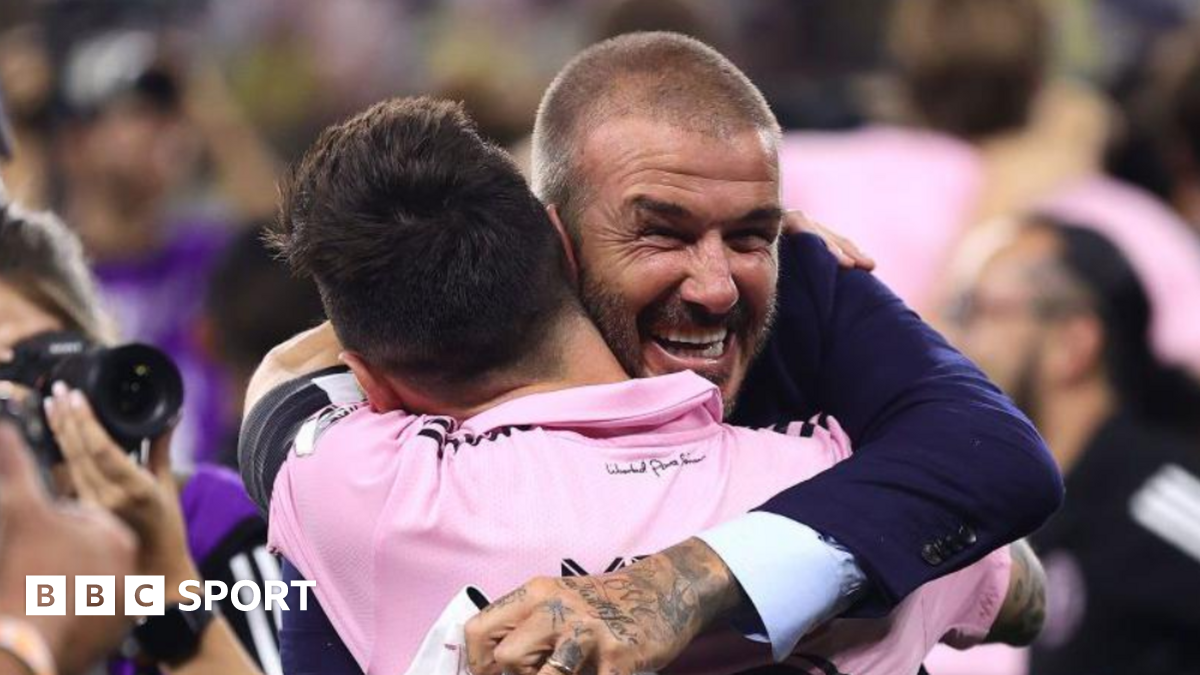
BBC Sport Dec 5, 06:17

England's AI World Cup masterplan - from perfecting penalties to powering players

England's AI World Cup masterplan - from perfecting penalties to powering playersArtificial intelligence is making a big mark in elite football, and England are at the cutting edge when it comes to using it in the men's international game.From penalty taking and powering players' wellbeing to targeting their rivals' tactical weaknesses, AI is underpinning the Three Lions' plans for next summer's World Cup.Could a technology which is beginning to change the world around us really help England to glory in North America?Could AI power England to World Cup glory?Watch the full film on BBC iPlayer nowAs well as the coaches and physios who sit alongside head coach Thomas Tuchel on the bench, England's staff includes groups of analysts, data scientists and in-house software development teams.They use different AI tools - some purchased from external tech firms, some built inside the FA - to analyse data, find interesting information, and create presentations which are used in meetings to make complex information understandable for coaches and players.The idea is that England's players are then able to make better decisions on the pitch, including their approach to penalties."AI can show certain tendencies for where opposition players put their penalties that we probably weren't thinking of," explains Rhys Long, who since 2016 has been the FA's head of performance insights and analysis."When we get to a World Cup, we have 47 teams' worth of information to profile - where has every player in every squad put every penalty since they were 16?"It used to take us five days to collect one team's worth of penalty-taking information. Using AI, that can now be brought down to about five hours. Then that becomes a five-minute conversation with our goalkeeper, for five seconds of them hopefully saving a penalty."In theory, then, the penalty information stuck on goalkeeper Jordan Pickford's water bottle is more accurate and detailed then ever before.And the results so far are strong.Since Long arrived, England's penalty record has improved significantly, and analysts' use of AI is also used to reduce the mental pressure for England players choosing where to place penalties."The penalty stuff really opened my eyes," explains Conor Coady, a member of the England squads at Euro 2020 and the 2022 World Cup."We had a big meeting before the Euros - there was a diagram up on the board of where you're more likely to score, then they would give you individualised information on where they think is best for you to go."The visuals are based on both opposition goalkeeper tendencies, like if they dive more often to one side, and analysis of how each England player prefers to strike the ball."Them telling you where to go took the pressure off, because it was them saying - 'it's on us'," Coady says. "It was something we needed."Crucial to the success of analysis like that is players' willingness to engage with data and understand the information given to them."Players are getting far more attuned to interpreting their own data," Long says."The amount of information we're trying to make sense of has exploded. You've got to filter all of that information down to have a good conversation with a coach and then a player.England have scored 23 out of 27 in-match penalties taken so far in the 2020s, with nine players stepping upIn the past few years, AI football software has advanced to the extent that it can now track tens of thousands of on-field movements and events every second, is able to tag tactical patterns during live play so that analysts can immediately find them on video for in-game adjustments and half-time feedback, and can create graphics instantly.While Spain, France and Argentina have been more successful in the most recent international tournaments - and will be among the favourites next year - it is England, Germany and the USA who are widely believed to be at the forefront of using AI to try to gain an advantage."England have a big resource and have heavily invested in this," says Allistair McRobert, professor of performance analysis at Liverpool John Moores University. "They have data engineers, data analysts and performance specialists behind the scenes across all their teams from juniors up to senior."We did a piece of work with one of the analysts who works at England about building tactical knowledge."When we went from data to the big Subbuteo-style table to demonstrate it, the players got really involved with the tactical aspects - because they knew of assets that their goalkeeper had - and it changed the way they played against the opposition."At St George's Park, England have built an interactive meeting room with touch screens and 3D tactics boards, where players get involved with new ideas for playing as a team after listening to data presentationsAI is not just harnessed by England for on-field matters - they also use it to monitor players' wellbeing."What AI is doing is surfacing things up - it can look at what is having an effect physically, tactically or technically on a player," Long says. "It might spot something in wellness data that we collect from the players that is then having some kind of impact on their training."It's then for a doctor, physio, coach, or specialist analyst to have a conversation with the player and make sure we're getting the best out of them."To try and do all of that really quickly used to take days. It's now taking hours. It might take minutes in the future."Coady explains the process: "You wake up every morning and as you're going down to breakfast there is a wellness area where you fill out a form on an iPad."'How did you sleep? How did you feel this morning? Are you fatigued?' And then you leave comments on it - maybe 'my hamstrings are sore from training yesterday'. And then the staff cater for you during the day, in terms of what you need in training, your food, how they set up a session."The detail that goes into you individually, but more importantly the team, is out of this world."AI helps dictate England's plans for things like nutrition and training schedulesNew AI tech firms are being created every day, and one piece of software can cost national federations hundreds of thousands of pounds."It's not about going after every shiny new AI toy and using them for the sake of it," Long says. "What you've got to do is ask if it is really going to help performance."Because of the costs involved, there is a risk some of the less wealthy nations are left behind."I think AI will widen the gap," says Tom Goodall, who works in analysis for Iceland. "England, for example, have basically unlimited resources, money, and staff. We are the polar opposite of that."I'm the only full-time analyst here and money is tight. It's very difficult for us to take a gamble on an expensive piece of technology."There are also widespread concerns about AI's impact on jobs in the future."What we've got to remember is it's not a silver bullet," Long says. "AI will make everything far more efficient, but it's about having people in sport who can really understand how to use this new technology very well."We're not going to replace humans - it's about augmenting their decision making. AI won't be picking the team and it won't be playing the game."But if you can get your coaches to use it effectively, and in turn it helps our players, then that is a good competitive advantage which will hopefully help us get over the line."
Read full story →
CNBC Business Dec 4, 22:31

Ulta shares pop as beauty retailer hikes sales and earnings outlook for second straight quarter

LivestreamMenuMake ItselectUSAINTLLivestreamSearch quotes, news & videosLivestreamWatchlistSIGN INCreate free accountMarketsBusinessInvestingTechPoliticsVideoWatchlistInvesting ClubPROLivestreamMenuUlta Beauty on Thursday raised its full-year sales outlook after topping Wall Street's fiscal third-quarter expectations and seeing shoppers splurge on perfumes, skincare items and more.The beauty retailer said it now expects net sales for the year to be approximately $12.3 billion, higher than its previous expectations of $12 billion to $12.1 billion. That would would represent an increase from last fiscal year's net sales of $11.3 billion. It expects earnings per share of $25.20 to $25.50, up from its prior expectations of $23.85 to $24.30.It anticipates comparable sales, a metric that includes sales at stores open at least 14 months and e-commerce sales, to rise by 4.4% to 4.7%, up from its prior outlook of 2.5% to 3.5%. Ulta has raised its sales and profit outlook for two consecutive quarters. The company's stock rose more than 6% in extended trading.In a news release, CEO Kecia Steelman said "exciting assortment newness, improved in-store and digital experiences, and bold marketing efforts are resonating with our guests and drove strong sales results."On the company's earnings call, she said that Ulta is "pleased with our Black Friday and Cyber Monday performance" and ready for the shopping season — even one when consumers may be more selective about spending."Our insights suggest beauty consumers' budgets are tight and they are focused on value," she said. "Despite this, beauty enthusiasts tell us that they spend intend to spend on beauty for seasonal needs, affordable splurges and gifts for loved ones. They are focused on replenishing their essentials and strategically making smart purchases around strong value."Here's what the retailer reported for the fiscal third quarter compared with what Wall Street expected, according to LSEG:Ulta has benefitted from shoppers who have kept spending on beauty, even as they trim the budget or seek out lower-priced options in other discretionary categories. Yet the company faces stiffer competition from a wide range of rivals, including big-box retailers like Walmart, online players like Amazon and upstarts like TikTok Shop. Beauty sales have been strong overall this year in the U.S., according to data from market research firm Circana. In the first nine months of 2025, prestige beauty sales in terms of dollars rose 4% and mass beauty sales rose 5% year over year.According to Circana, beauty is poised to be a popular category during the holidays, with the market researcher's surveys indicating that more consumers plan to gift beauty products than a year ago, particularly those in households with higher-incomes and those with children.Revenue rose from $2.53 billion in the year-ago quarter.Comparable sales jumped by 6.3% year over year. Shoppers visited Ulta's stores and websites more and spent more during visits. Average ticket rose 3.8% and transactions increased by 2.4% year over year.In the three-month period that ended Nov. 1, Ulta reported net income of $230.9 million, or $5.14 per share, compared with $242.2 million, or $5.14 per share, in the year-ago quarter.Though consumer confidence is weak, Steelman said on Ulta's earnings call that "beauty engagement remained healthy." She said sales of both mass and prestige beauty items grew by mid single-digits year over year.Fragrance was its strongest category in the quarter, with double-digit sales growth year over year, as shoppers bought luxury scents from Valentino and Dolce & Gabbana and also lower-priced scents like Squishmallows perfumes.Steelman said that in October, Ulta added more shelf space for fragrance in more than 60% of its U.S. stores to try to get ready for higher demand during the holidays and beyond.In skincare, the retailer's second-fastest growing category, sales grew by high single digits year over year, she said. Shoppers bought items they discovered on social media, including Korean or K-beauty brands and purchased merchandise from Rihanna's Fenty Skin Body collection, which launched in the fall.To drive growth, Ulta has also been expanding internationally and launched a third-party marketplace in October. In July, it announced it had acquired Space NK, a British beauty retailer, from Manzanita Capital. The deal allows Ulta to enter a new international market, since Space NK has 83 stores in the United Kingdom and Ireland.During the third quarter, Ulta opened seven stores in Mexico through its joint venture partnership with Grupo Bakso. It opened its first Ulta store in the Middle East in Kuwait last month through a franchise partnership with Al-Shabaab.Through its marketplace, Ulta has added more than 120 brands and over 3,500 unique items to its online assortment, Steelman said. She said the company is "pleased with the initial performance and optimistic about how this new capability can help us strengthen our existing category, attract new guests, and capitalize on incremental growth opportunities in new subcategories," such as wellness. Higher tariffs have influenced some of the prices of items carried by Ulta, too. The company saw more brand-driven price increases in the third quarter than the second quarter, interim Chief Financial Officer Chris Lialios said. Sales in the haircare category grew by mid single-digits, despite a sales decline in personal styling tools that have felt pressure from tariff-related price increases, Steelman said.Ulta announced in October that Christopher DelOrefice, the chief financial officer of medical technology company Becton Dickinson & Company, will become its new CFO. He will start in the role on Dec. 5.As of Thursday's close, Ulta's shares have risen about 23% so far this year. That surpasses the S&P 500's nearly 17% gains during the same period.Got a confidential news tip? We want to hear from you.Sign up for free newsletters and get more CNBC delivered to your inboxGet this delivered to your inbox, and more info about our products and services. Data is a real-time snapshot *Data is delayed at least 15 minutes. Global Business and Financial News, Stock Quotes, and Market Data and Analysis. Data also provided by
Read full story →

CNBC Business Dec 4, 20:48

RFK Jr.'s vaccine panel defers vote on hepatitis B shot for babies until Friday

LivestreamMenuMake ItselectUSAINTLLivestreamSearch quotes, news & videosLivestreamWatchlistSIGN INCreate free accountMarketsBusinessInvestingTechPoliticsVideoWatchlistInvesting ClubPROLivestreamMenuHealth and Human Services Secretary Robert F. Kennedy Jr.'s hand-picked vaccine committee on Thursday deferred crucial votes on hepatitis B vaccines for babies until Friday, saying it will give members more time to review proposed language on the measure. One panel member, Dr. Cody Meissner, a professor of pediatrics at the Dartmouth Geisel School of Medicine, brought a motion to defer the votes following confusion amongst the group about the language. The Centers for Disease Control and Prevention currently recommends that every baby get vaccinated against hepatitis B within 24 hours of birth. It's unclear if the panel, called the Advisory Committee on Immunization Practices, or ACIP, could significantly delay or eliminate a so-called birth dose of the shot for babies whose mothers test negative for the virus. The group tabled a vote on the vaccine in September because some members called for a more robust discussion first.But any change could have wide-ranging consequences: Some public health experts say that having fewer newborns vaccinated against the virus could risk an increase in chronic infections among children. Hepatitis B, which can be passed from mother to baby during childbirth, can lead to liver disease and early death. There is no cure. "We have a vaccine that is highly effective at preventing an incurable disease. We should take full advantage of that," Neil Maniar, a public health professor at Northeastern University, told CNBC. The birth dose recommendation was introduced in 1991 and is credited with driving down infections in kids by 99% since then. Maniar called that a "remarkable success story that we run the risk of reversing" if the committee changes the recommendation. Decisions by the panel are not legally binding, as it is up to states to mandate immunizations. But ACIP's recommendations have significant implications for whether private insurance plans and government assistance programs cover the vaccines at no cost for eligible children. The panel's upcoming two-day meeting in Atlanta comes after Kennedy earlier this year gutted the committee and appointed 12 new members, including some well-known vaccine critics. During the meeting in September, some advisors raised questions about whether the benefits of the shot outweigh potential safety risks. But the jab is "an incredibly safe vaccine with minimal risks," Dr. Sean O'Leary, chair of the American Academy of Pediatrics' Committee on Infectious Diseases, said during a media briefing Tuesday. "I never once saw a fever actually associated with hepatitis B vaccine," said O'Leary, who practiced for eight years as a general pediatrician and worked in a newborn nursery. The AAP, which publishes its own vaccine schedule, still recommends the universal birth dose of the hepatitis B vaccine because "it saves lives," he added. A new review, published Tuesday, of more than 400 studies spanning four decades also found no evidence that delaying the universal hepatitis B vaccine birth dose improves safety or effectiveness. The review also found that the birth dose does not cause any short- or long-term serious adverse events or deaths.A 2024 CDC study showed that the current vaccination schedule has helped prevent more than 6 million hepatitis B infections and nearly 1 million hepatitis B-related hospitalizations.Merck and GSK manufacture the hepatitis B vaccines used starting at birth. Neither of the shots are significant revenue drivers for the companies. But John Grabenstein, a former Merck vaccine executive and military pharmacist, said a change to the recommendation could cause vaccine supply disruptions for the companies. "They have build up their reserves, and they build up their thorough calculations so that they can meet the status quo," Grabenstein, who has no remaining financial ties to Merck, told CNBC. "If you disrupt the status quo without warning, then there would be too much of some things and not enough of other things that could easily create spot shortages." Still, he said his first concern from a public health standpoint is that fewer children will get vaccinated on time, leaving them vulnerable to infection. Merck during the panel's September meeting also pushed back on changing the recommendation. "The reconsideration of the newborn Hepatitis B vaccination on the established schedule poses a grave risk to the health of children and to the public, which could lead to a resurgence of preventable infectious diseases," Dr. Richard Haupt, Merck's head of global medical and scientific affairs for vaccines and infectious diseases, said at the time. Got a confidential news tip? We want to hear from you.Sign up for free newsletters and get more CNBC delivered to your inboxGet this delivered to your inbox, and more info about our products and services. Data is a real-time snapshot *Data is delayed at least 15 minutes. Global Business and Financial News, Stock Quotes, and Market Data and Analysis. Data also provided by
Read full story →
CNBC Business Dec 4, 20:38

Starbucks Workers United holds rally in NYC as strikes continue for a third week

LivestreamMenuMake ItselectUSAINTLLivestreamSearch quotes, news & videosLivestreamWatchlistSIGN INCreate free accountMarketsBusinessInvestingTechPoliticsVideoWatchlistInvesting ClubPROLivestreamMenuNEW YORK — Starbucks Workers United held a rally outside the Empire State Building on Thursday as its open-ended strike entered its third week and no signs of an impending resolution.Adding to the crunch of holiday shoppers and tourists, several hundred picketers gathered outside of the famous landmark, which is also the site of a swanky three-floor Starbucks Reserve location and the company's regional headquarters. Members of other unions, like the AFL-CIO and Service Employees International Union, which is affiliated with Workers United, protested alongside baristas, chanting "No coffee, no contract" and "What's disgusting? Union busting" between speakers."Their fight is a fight really for all of us, to workers across the country, to corporations like Starbucks, across the country that workers are fed up with the status quo, and they're not going to take it anymore," SEIU President April Verrett told CNBC.Twelve demonstrators were arrested for blocking the building's entrance.Baristas launched the strike on Starbucks Red Cup Day last month, seeking new proposals from the company that address its top issues to finalize a contract. Those include improved hours, higher wages and the resolution of hundreds of unfair labor practice charges levied against Starbucks. Out of the 145 locations involved in the strike, 55 remain closed, according to a company spokesperson. The two parties have not been in active negotiations to reach a contract after talks between them fell apart late last year. The strikes have not changed that fact so far.While the strike has injected uncertainty into Starbucks' busy holiday season, the company has said its sales haven't been affected. CEO Brian Niccol told employees that Red Cup Day was its strongest in history. A successful holiday season will be key to the chain's turnaround under Niccol. Starbucks broke a nearly two-year streak of same-store sales declines in its most recently reported quarter. Past strikes have impacted less than 1% of its stores, the company said.The New York City rally comes after the company paid $38.9 million to settle violations of the city's Fair Workweek Law. Other large restaurant employers, like Chipotle, have previously run afoul of the law, which Starbucks said is "notoriously challenging" to navigate.The city's Department of Consumer and Worker Protection found Starbucks committed half a million violations of the law since 2021. The Fair Workweek law requires regular scheduling week to week, mandates schedules be provided 14 days in advance and says hours cannot be reduced by more than 15% without legitimate business reasons. DCWP Commissioner Vilda Vera Mayuga, who spoke at Thursday's rally, said the timing of the record-breaking settlement with the ongoing strike was coincidental."While the NYC laws remain unchanged and complex, our focus hasn't shifted – we're committed to creating the best job in retail and to ensuring our practices follow all laws," Starbucks said in a statement.The city's current Mayor Eric Adams and Mayor-elect Zohran Mamdani have rallied behind striking workers. Mamdani joined Sen. Bernie Sanders, I-Vt., alongside baristas in Brooklyn earlier this week.Both Starbucks and the union have pointed blame at the other for failing to reach a bargaining agreement and maintain they are ready to speak when the other is. The two parties entered into mediation in February, and hundreds of barista delegates voted down the economic package Starbucks proposed in April. The company has said it is investing $500 million to improve the employee experience as part of its "Back to Starbucks" strategy. That investment includes upgrading its scheduling technology and adding more baristas to rosters. "As we've said, 99% of our 17,000 U.S. locations remain open and welcoming customers —including many the union publicly stated would strike but never closed or have since reopened. Regardless of the union's plans, we do not anticipate any meaningful disruption. When the union is ready to return to the bargaining table, we're ready to talk," spokesperson Jaci Anderson said in a statement.Got a confidential news tip? We want to hear from you.Sign up for free newsletters and get more CNBC delivered to your inboxGet this delivered to your inbox, and more info about our products and services. Data is a real-time snapshot *Data is delayed at least 15 minutes. Global Business and Financial News, Stock Quotes, and Market Data and Analysis. Data also provided by
Read full story →
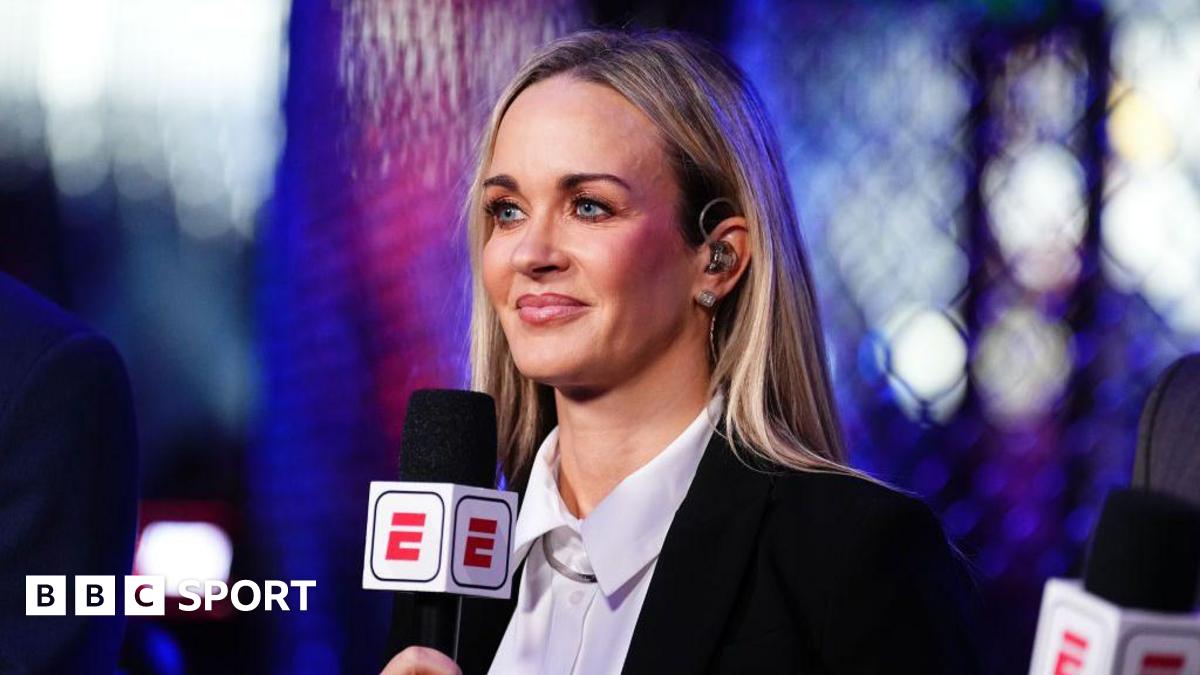
CNBC Business Dec 4, 19:34

GM's new product chief Sterling Anderson eyes technology renaissance for automaker

LivestreamMenuMake ItselectUSAINTLLivestreamSearch quotes, news & videosLivestreamWatchlistSIGN INCreate free accountMarketsBusinessInvestingTechPoliticsVideoWatchlistInvesting ClubPROLivestreamMenuDETROIT — General Motors' newest product and technology executive has said he thinks of the Detroit automaker as a canvas. One that can be curated, retouched or even torn apart. After roughly six months as executive vice president and chief product officer, Sterling Anderson appears to be putting all three ideas to work as he oversees the company's vast product portfolio — from the vehicles themselves to the software powering them.Anderson, who left the self-driving car company Aurora Innovation that he co-founded to join GM in June, has quickly become the most influential product executive in more than 15 years, outside of GM President Mark Reuss.He has consolidated power to oversee "the end-to-end product lifecycle" of GM vehicles, including manufacturing engineering, battery, software and services product management, and engineering teams, according to GM. "My priority is to accelerate the pace of innovation. One of the ways we do that is with this disaggregation of, or this abstraction of, software from hardware," he told CNBC during an Oct. 22 technology event in New York. "That's the point of the role, I think, is it brings together all of these pieces into a unified approach to how we do product going forward."Since then, the company's acclaimed heads of software and artificial intelligence have unexpectedly exited the company after relatively short tenures. Their main responsibilities related to vehicles now fall under Anderson.GM attributed the abrupt departures of Dave Richardson, senior vice president of software and services engineering, and Barak Turovsky, head of AI, to restructuring efforts."We are strategically integrating AI capabilities directly into our business and product organizations, enabling faster innovation and more targeted solutions," a GM spokeswoman said about Turovsky's departure in an emailed statement last week.It's another indication of Anderson's strategy. He previously told CNBC that for GM to succeed, software and product must be thought of as one and the same rather than as separate units, like they have been in recent years. Anderson said he spent the first months of his GM tenure "in a listen mode," immersing himself in the automaker's operations."What that five months of listening has allowed me to do is really fine tune and target how we're going, not just kind of what we're going to innovate on, but how we're going to do it," he said in the October interview.A third executive is also leaving soon, as Baris Cetinok, senior vice president of software and services product management, will depart the company effective Dec. 12, as first reported by CNBC.Unlike Richardson and Turovsky, the company did not attribute his departure to the restructuring. Three sources familiar with the situation who spoke anonymously because the discussion was private told CNBC that Cetinok left to pursue another opportunity.Cetinok, Richardson and Turovsky either declined to comment or did not respond to requests for comment about their departures. Cetinok and Richardson joined GM in 2023, while Turovsky was hired in March.Anderson, a former McKinsey & Co. consultant turned Tesla executive, said before he joined GM, he had thought of the automaker more of a comedic caricature rather than a canvas that he would help turn into a modern masterpiece.Anderson said CEO Mary Barra and Reuss, whom he reports to, helped him break down that "old-world automotive" caricature and concerns about employees of the automaker not supporting his efforts."I was really worried about it, right? I'm the 'Silicon Valley cowboy' that's coming into Detroit and, you know, 'pew pewing' his way through an innovation story with a team that I was concerned wouldn't receive that well. I found it quite different from what I'd expected," Anderson said.His appointment is a refocus for the automaker on software-defined vehicles and autonomy. He said GM's goal is to build an autonomous vehicle, which comes a year after the company disbanded its majority-owned Cruise AV business following years of development and billions of dollars in capital. "Just be clear, we're developing a self-driving product," he told CNBC. "It's a self-driving product that can be safe without any handbacks to the human in safety critical situations."Barra on Wednesday cited Anderson and the automaker's past efforts in autonomous vehicles as reasons why GM is "well positioned" to achieve autonomous highway driving in its vehicles beginning in 2028."As we talk about artificial intelligence, autonomous driving is one of the ultimate applications that I still strongly believe in," Barra said at The New York Times DealBook Summit, reconfirming the automaker's "personal autonomous vehicle" plans rather than Cruise robotaxis. Anderson is considered a leading expert in vehicle autonomy. Before co-founding self-driving firm Aurora, he led Tesla's Model X program and the team that delivered its "Autopilot" advanced driver assistance system. He also developed the Massachusetts Institute of Technology's "Intelligent Co-Pilot," a semi-autonomous vehicle safety system.Anderson, who holds a master's and Ph.D. in robotics from MIT, said it took several conversations for him to leave Aurora, which he thought he "would die with."He isn't alone in his change of heart; however not many have lasted long at the automaker. Several other current and former Silicon Valley executives have voiced similar optimism about GM as well as its longstanding CEO and president — both of whom have spent their entire careers at the automaker as "GM lifers."Richardson previously hailed working for Barra, who he reported to before Anderson, as "an opportunity of a lifetime." Cetinok previously described his position as "a product person's dream" in an interview with CNBC.Jens Peter "JP" Clausen, who led Tesla's manufacturing expansion and worked at Lego and Google, partly credited the "opportunity to work for a leader like" Barra as a reason to join GM as its head of manufacturing before an unexpected departure after only one year.The accolades have gone both ways. When Anderson's appointment with GM was announced in May, Barra and Reuss hailed Anderson as being equipped to "evolve" and "reinvent" the automaker's operations.In addition to Anderson's new product unit, Reuss continues to oversee the automaker's manufacturing, design, marketing and sales, among other operations.The global automotive industry has battled for years to better integrate technology into vehicles — from their production to consumer-facing software and remote, or "over-the-air," updates like Tesla pioneered.GM has taken an aggressive approach to tech by hiring leaders from Tesla and companies such as Apple and Google. However, many times, those executives have had short tenures with the company, such as the three most recent departures."[Traditional U.S. automakers] have very much had a significant struggle with understanding software and electronics technology, and that has caused them to have a parade of experts quote 'coming in to help,'" said Peter Abowd, an engineer turned automotive and technology consultant.Abowd, general manager of engineering excellence at consulting firm Envorso, attributed the executive turnover to "a misapplication of skills and talent," as well as unrealistic expectations and overwhelming responsibilities in a company as large as GM and an industry as complex as the automotive world. "It's just kind of setting the person up for a bit of failure," Abowd said. "In a couple years, you can't culturally shift an organization ... so the best thing to do is to part ways."That kind of turnover has led automakers like GM to regularly pivot in different directions, including in-vehicle technologies, electric vehicle batteries and other areas not traditionally "core" to the automotive industry. Barra, who is GM's longest-serving CEO since the company's founder, has become known for hiring executives at opportunistic times based on the company's top priorities, which now appear to largely land under Anderson.GM "is really good at a lot on things" that aren't necessarily apparent to those outside the company, according to Anderson. He said he believes combining his experience with fast-moving companies such as Tesla and Aurora and GM's "massive machine" and resources will better position the automaker for the future."I view it as a canvas," Anderson said. "This is an extraordinary opportunity for innovation, and I'd be remiss not to see what I can do for it." Got a confidential news tip? We want to hear from you.Sign up for free newsletters and get more CNBC delivered to your inboxGet this delivered to your inbox, and more info about our products and services. Data is a real-time snapshot *Data is delayed at least 15 minutes. Global Business and Financial News, Stock Quotes, and Market Data and Analysis. Data also provided by
Read full story →
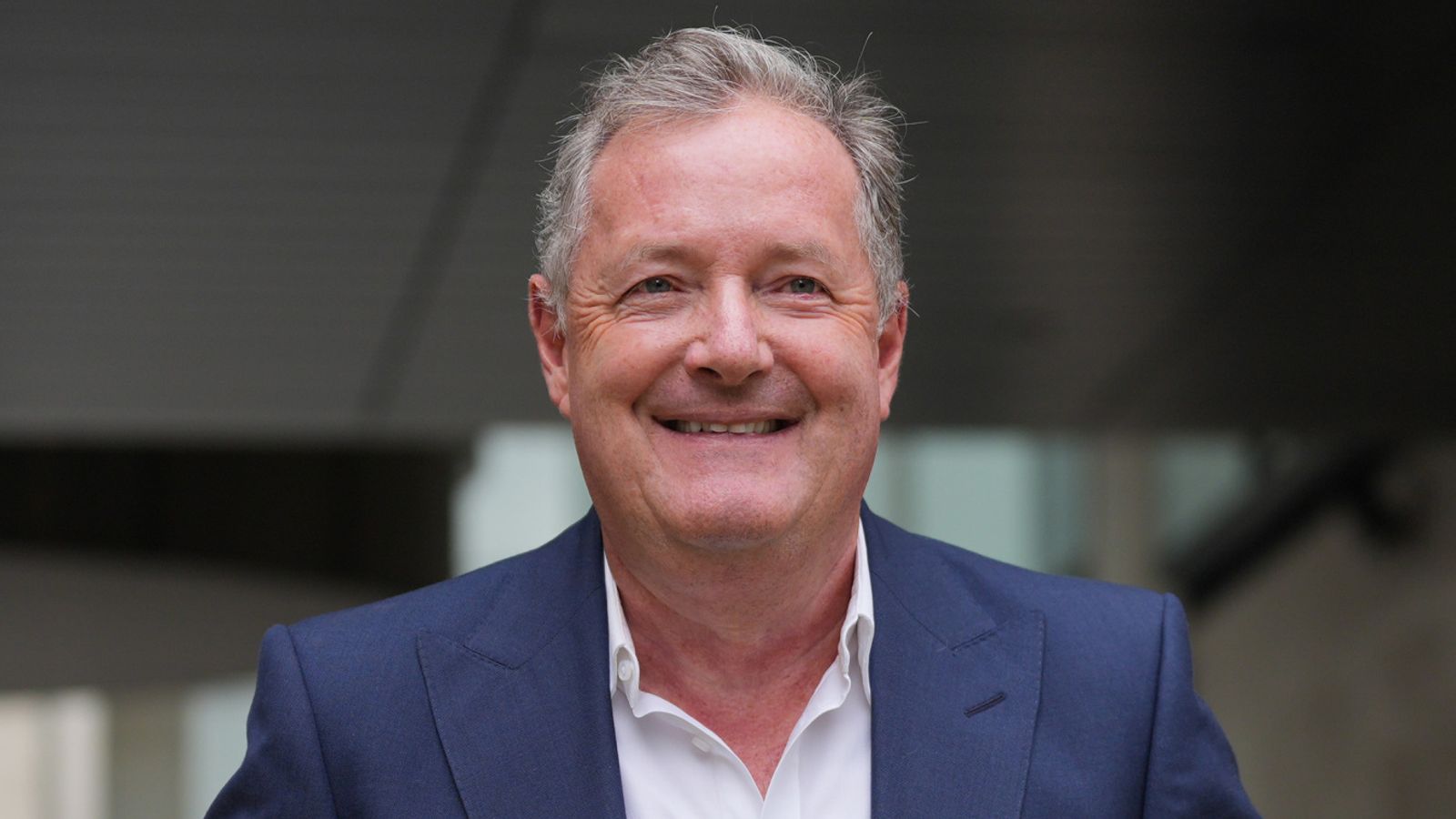
CNBC Business Dec 4, 18:54

Tesla gains in 2026 Consumer Reports' auto brand rankings

LivestreamMenuMake ItselectUSAINTLLivestreamSearch quotes, news & videosLivestreamWatchlistSIGN INCreate free accountMarketsBusinessInvestingTechPoliticsVideoWatchlistInvesting ClubPROLivestreamMenuDETROIT — U.S. electric vehicle sales leader Tesla made notable strides in Consumer Reports' influential annual auto brand rankings, cracking the top 10 overall for the U.S.The EV manufacturer jumped from No. 18 on last year's list of more than 30 automotive brands to 10th on the 2026 Consumer Reports Brand Report Card, which was released Thursday."They definitely have their struggles, but by continuing to refine and not make huge changes in their models, they're able to make more reliable vehicles, and they've moved up our rankings," Jake Fisher, senior director of auto testing for Consumer Reports, told CNBC.The annual auto brand report card is based on Consumer Reports' testing as well as reliability, safety and overall customer satisfaction according to owner surveys.The surveys do not reflect broader consumer sentiment about the models or automakers ranked by CR outside of customer satisfaction. Tesla has faced a consumer backlash against CEO Elon Musk in response to his work with the Trump administration and endorsements of far-right politicians and personalities around the world, including Germany's extreme anti-immigrant party AfD. Fisher said Tesla's gain occurred as its vehicles have become more reliable over time, especially as the company hasn't made significant design changes to many of its vehicles like traditional automakers tend to do. Tesla instead relies on remote, or over-the-air, updates to revise many features on the vehicles. Its powertrain reliability remains a standout among EVs, according to Consumer Reports.The only Tesla model to have a below-average score is the Cybertruck, its newest model that features a host of new technologies such as a 48-volt architecture system and "steer by wire." "They're definitely improving by keeping with things and refining, but if you look at their 5- to 10-year-old models that are out there, when it comes to reliability, they're dead last of all the brands," Fisher said. "They're able to improve the reliability if they don't make major changes."On the other end of report card, Rivian Automotive moved up five spots to No. 26 but remains near the bottom of the rankings. Fisher said Rivian models are the lowest in reliability.Despite Rivian's reliability issues, the brand has the highest owner satisfaction, according to Consumer Reports. Fisher during an Automotive Press Association webinar Thursday said its owners are largely early adopters that are willing to deal with some growing pains likely more than more mainstream consumers would. Brands with good reliability tend to perform well in the overall rankings. Reliability for new 2026 models is predicted based on each model's overall reliability for the past three years, provided that the model hasn't been redesigned during that time.Subaru topped the overall 2026 brand list, followed by BMW, Porsche, Honda and Toyota to round out the top five brands. At the bottom of the rankings were Jeep, Land Rover, GMC, Dodge and Alfa Romeo.Ford Motor's Lincoln, the highest-ranked domestic brand, made the biggest jump in this year's rankings, climbing 17 positions to No. 7 due to its reliability scores. Audi dropped the most from last year, falling back 10 spots to No. 16.Traditional U.S. automakers, specifically Stellantis brands, struggled compared with their Asian competition in Consumer Reports' annual brand reliability rankings.Of note, the Ford brand ranked No. 18 in the report card but saw improvement in reliability. The automaker, which has struggled with quality issues and recalls, had its Ford brand rank No. 11 in reliability — its best position in 15 years.GM's top-ranked brand was Cadillac at No. 17, followed by Buick at No. 20, Chevrolet at No. 24 and GMC at 29th.Consumer Reports said hybrid vehicles, which are growing in popularity, continue to stand out over other "electrified" vehicles, as well as traditional vehicles with internal combustion engines.Of approximately 30 hybrids analyzed by Consumer Reports, only the Hyundai Sonata Hybrid, Lincoln Nautilus Hybrid and Mazda CX-50 Hybrid have below-average predicted reliability scores.— CNBC's Lora Kolodny contributed to this article.Got a confidential news tip? We want to hear from you.Sign up for free newsletters and get more CNBC delivered to your inboxGet this delivered to your inbox, and more info about our products and services. Data is a real-time snapshot *Data is delayed at least 15 minutes. Global Business and Financial News, Stock Quotes, and Market Data and Analysis. Data also provided by
Read full story →

CNBC Business Dec 4, 16:43

Where billionaires' investment firms placed their bets in November

LivestreamMenuMake ItselectUSAINTLLivestreamSearch quotes, news & videosLivestreamWatchlistSIGN INCreate free accountMarketsBusinessInvestingTechPoliticsVideoWatchlistInvesting ClubPROLivestreamMenuRising stocks and IPOs helped create 287 new billionaires this yearRobert FrankWhat the retail boom in alternative assets means for risk, liquidity and portfolio allocationLeslie PickerAsset-backed finance is growing fast and drawing new scrutinyRobert FrankRead MoreSubscribe to CNBC PROSubscribe to Investing ClubLicensing & ReprintsCNBC CouncilsJoin the CNBC PanelDigital ProductsNews ReleasesClosed CaptioningCorrectionsAbout CNBCInternshipsSite MapCareersHelpContactNews TipsGot a confidential news tip? We want to hear from you.Sign up for free newsletters and get more CNBC delivered to your inboxGet this delivered to your inbox, and more info about our products and services. Data is a real-time snapshot *Data is delayed at least 15 minutes. Global Business and Financial News, Stock Quotes, and Market Data and Analysis. Data also provided by
Read full story →
CNBC Business Dec 4, 15:56

Bids for WBD are in. Here's what Paramount, Comcast and Netflix could do with the assets

LivestreamMenuMake ItselectUSAINTLLivestreamSearch quotes, news & videosLivestreamWatchlistSIGN INCreate free accountMarketsBusinessInvestingTechPoliticsVideoWatchlistInvesting ClubPROLivestreamMenuWith more than a century of some of the most popular film and television content, it's no wonder why Paramount Skydance, Comcast and Netflix are bidding for Warner Bros. Discovery's assets.Paramount made an initial offer in September to acquire Warner Bros. Discovery, leading WBD, which months earlier had announced plans to split itself into two companies, to officially explore a sale process.WBD's plans mirrored those of Comcast — separating out its cable networks from its movie properties and streaming service, HBO Max. Its coveted library of content includes franchises like DC's superheroes, Harry Potter, Lord of the Rings, Game of Thrones, Looney Tunes and Scooby-Doo. It is also the distributor of Legendary's Dune franchise and Godzilla and King Kong films. The cable networks include CNN, TNT, TBS and TruTV, among others.Earlier this week the company received second-round bids from potential buyers, according to people familiar with the matter who declined to be named speaking about internal processes. As of Thursday morning, Netflix was the leading bidder based on how WBD is valuing the offers, CNBC reported Thursday. WBD expects to announce a winner as early as next week, sources told CNBC. "All three candidates could potentially be beneficial, which is why Warner Bros. would be such an attractive acquisition," said Shawn Robbins, director of analytics at Fandango and founder of Box Office Theory. "Potential isn't enough, though. Resources, experience, and the proven ability to execute must be weighed."Here's what each suitor could do with WBD assets. Comcast is in the process of spinning out its portfolio of cable networks, which includes CNBC, but will retain broadcast network NBC, streaming service Peacock, the Universal film studio and theme parks. Given its exit from the cable TV business, Comcast isn't interested in Warner Bros. Discovery's massive portfolio of networks. Therefore, Comcast's offer includes a clause that would allow WBD to spin out its cable networks at any point before the proposed acquisition closes, CNBC previously reported. Warner Bros. Discovery intellectual property would serve the most immediate boost to NBCUniversal's Peacock. The streaming service is far behind its peers in terms of subscriber numbers, with just 41 million customers as of Sept. 30. The platform has bulked up heavily on sports programming but has been lacking on original content.Outside of the superhero fare, WBD's television content could strengthen NBCUniversal's streaming service Peacock with programming like "IT: Welcome to Derry," "The Pitt," "The Last of Us" and a pair of shows from the Game of Thrones universe. Adding Warner Bros. Discovery's IP into the fold would allow Universal to bolster its number of popular franchises, pad its streaming service with television content and expand its theme park business."For Comcast, it would simply add to the depth of Universal's current roster which already mixes a healthy balance of IP and more daring, often original, content," Robbins said. "They check a lot of necessary boxes, without question."Universal already has a vast collection of franchise IP including Jurassic Park, Fast & Furious and Despicable Me as well as a suite of popular horror films."Comcast — they've got a pretty good film slate," said Doug Creutz, senior media and entertainment analyst at TD Cowen. "They're trying to sort of create Disney Prime piece by piece, and I guess having a superhero brand would be another step in that direction. I don't know that it's something that they particularly view as a strategic imperative. I think having more IP generally is something that, of course, you always would like."Warner Bros. Discovery's DC Studios, now under the stewardship of James Gunn and Peter Safran, are set for a slew of theatrical releases as well as upcoming TV series. The pair's first film, "Superman," which released in July, tallied more than $600 million at the global box office and received positive reviews from critics. On the slate is a Supergirl film, a Superman sequel, a second Batman film from Matt Reeves and a Clayface feature. On the television front, DC has plans for shows centered on the Green Lantern Corps; the origins of Wonder Woman's island of Amazons; and some lesser known, but fan favorite comic book characters like Booster Gold.Comcast and Warner Bros. Discovery already have some IP in common. The NBCUniversal parent licenses the rights to the Wizarding World for its theme parks. Having the film and television rights to Harry Potter would allow the company more control over production and how that translates into rides, experiences and merchandise."There are synergistic opportunities that you could turn over if you had authority over film and TV production, along with having the theme parks," Creutz said.Disney is the blueprint for this strategy. The company's portfolio of intellectual property has been the bedrock of its theme parks since the first location opened its doors in 1955. Disney controls not only the production of content, but also how it's curated in its themed experiences.The most surprising bidder of the bunch, Netflix, has similarly been looking only at WBD's streaming and studio assets.After all, Netflix co-CEO Ted Sarandos reiterated during the company's third-quarter earnings in October that the company has "no interest in owning legacy media networks."Initially, analysts and industry insiders speculated that Netflix's interest in Warner Bros. Discovery was simply an effort to hike the price for its competitors who were eager to acquire WBD assets. But the streaming giant has made a bid of mostly cash, sources told CNBC, and remains a competitive bidder. And the streaming giant could earnestly benefit from WBD's content library.As a relatively new player in the space — Netflix didn't release original content until 2012 — it took the company time to build out its franchises. Because of that, Netflix didn't even launch a merchandising division until 2019 and didn't have an official online store until 2021.Now, it has a handful of strong intellectual properties like "Stranger Things," "KPop Demon Hunters," "Bridgerton," "Wednesday" and "Squid Games." Like Comcast, having access to beloved franchises that have built-in audiences would be a big boon for Netflix.Yet, industry experts are more interested in how the company would handle WBD assets that have traditionally been released in theaters."With Netflix, it's less a question of how it could benefit them and more a deep concern of how they would handle the Warner Bros. legacy, particularly from a theatrical perspective," said Robbins. "The money would certainly be there, yes, as would the initial exposure. But would their willingness be to behave more like a traditional movie studio than they have shown so far?"Netflix has long opposed releasing films in theaters and only does so to stay in awards contention, to appease high-profile directors or to capitalize on buzzy titles. The streamer has always argued that its content is meant to be delivered to its subscribers through the Netflix platform and has limited how long its theatrical releases run in cinemas.This strategy has allowed Netflix to avoid costly marketing campaigns, which are typically estimated to be about half of whatever is spent on the production budget. However, it also often puts the company at odds with theatrical partners. The company also does not share box-office data, something traditional movie studios provide."Many in the industry feel a Netflix purchase of Warner would be a death knell for some of the movie business's most important aspects, properties, and long-held traditions," Robbins said. "Netflix would need a significant turnabout face to even begin easing that sentiment."Netflix has told Warner Bros. Discovery management that it would honor contractual agreements to release movies in theaters if it secures a deal to acquire its assets, people familiar with the matter told CNBC. Things are moving fast over at Paramount.The company was recently merged with Skydance, and, in short order, its new CEO and chairman, David Ellison, has signed creative and C-suite talent, greenlit new franchises and struck a $7.7 billion deal for live UFC rights.This strategy was laid out in an open letter from Ellison published in early August, in which he told investors that Paramount would invest in "high-quality storytelling and cutting-edge technology" to help "define the next era of entertainment."Ellison is hoping that the next era will include the acquisition of Warner Bros. Discovery — in its entirety."Paramount has struggled in recent years to capture the same kind of consistent, top-tier franchise output as some of their rivals," Robbins said. "There's a strong argument that absorbing Warner Bros.' library would move the needle in a more material way pound for pound."Paramount has a suite of franchises like Star Trek, Transformers, Sonic the Hedgehog, Paw Patrol and SpongeBob SquarePants, but much of its theatrical success has been tied to one actor, in particular."Paramount's by-far-most-important IP is a 63-year-old dude who does his own stunts," Creutz said. "Maybe they are going to make an AI version of Tom Cruise and we'll keep getting Tom Cruise movies for the next 100 years. But, the next thing down the ladder for them — it's Star Trek." Before the Paramount-Skydance merger, the studio released around eight films annually, Ellison told investors in the company's third-quarter earnings report in November. The new goal is to release at least 15 films theatrically in 2026.So far, the slate for next year has about 10 titles, some produced solely by Paramount and some as part of the studio's distribution deals. Most studios update their calendar throughout the year, especially as new independent features come up for sale during film festivals. Acquiring Warner Bros. Discovery and its theatrical slate would easily get Paramount past its goal. However, Creutz noted that typically when studios merge, the number of films tends to decline in the years that follow. "If Warner merges with any of these other companies, you are going to see some similar dynamic on the film side, you're going to see a similar dynamic on the TV production side, and you're probably going to see a similar dynamic in whatever they do with the streaming platform," he said. "Presumably, in all three cases, there's a merger of streaming platforms and that's going to probably result in less content for consumers."Where Paramount diverges from the competing bids is that it wants all of WBD, including its cable networks. Of note, CNN would bolster Paramount's news coverage, which already includes CBS, and the addition of TNT, TBS and TruTV would represent a big addition to the company's sports coverage.Live sports rights are scarce and only become available when previous deals expire. Apple has already emerged as the future home of Formula 1, and Major League Baseball is waiting until its deals expire after the 2028 season to reorganize its media packages. That means that Paramount will have few other top-shelf sports assets to bid on and acquire in the medium term.Meanwhile, Warner Bros. Discovery has the rights to broadcast games from the National Hockey League, Major League Baseball and NCAA March Madness basketball along with the French Open and NASCAR.Disclosure: Comcast is the parent company of NBCUniversal, which owns CNBC. Versant would become the new parent company of CNBC upon Comcast's planned spinoff of Versant.— CNBC's Julia Boorstin, Lillian Rizzo and Alex Sherman contributed to this report. Got a confidential news tip? We want to hear from you.Sign up for free newsletters and get more CNBC delivered to your inboxGet this delivered to your inbox, and more info about our products and services. Data is a real-time snapshot *Data is delayed at least 15 minutes. Global Business and Financial News, Stock Quotes, and Market Data and Analysis. Data also provided by
Read full story →

CNBC Business Dec 4, 13:00

Fanatics lands retail and merchandising deal for 2026 FIFA World Cup

LivestreamMenuMake ItselectUSAINTLLivestreamSearch quotes, news & videosLivestreamWatchlistSIGN INCreate free accountMarketsBusinessInvestingTechPoliticsVideoWatchlistInvesting ClubPROLivestreamMenuSign up today for the new CNBC Sport NewsletterFanatics has struck a deal to run retail and merchandising for the 2026 FIFA World Cup, the company announced Thursday. The global competition will see 104 matches played in 16 stadiums across the U.S., Canada and Mexico this coming summer. "There is no larger sporting event in the entire world than the World Cup … we've been doing a lot of events; this is the biggest one we'll have done yet," said Andrew Low Ah Kee, CEO of Fanatics Commerce, the company's manufacturing and retail arm. Over the last several years, Fanatics has overseen retail operations at international sporting events like MLB's Tokyo Series, the NFL's slate of international games, the NHL's Four Nations tournament and UEFA's Euro 2024 in Germany. Fanatics was also the retail partner of FIFA's Club World Cup tournament across the U.S. last summer.As part of its deal with FIFA for the 2026 tournament, Fanatics will oversee the in-venue retail operations across all 16 locations, which are mostly NFL stadiums with seating capacity of more than 60,000 fans. It will also have retail operations in the parking lot at each stadium, as well as a retail presence at each of FIFA's fan festival locations spread across the host cities. In total, Fanatics is forecasting it will have more than 2,000 point-of-sale locations during the tournament."In terms of the logistical complexity of it, it's very real, but I'm confident in our readiness," said Low Ah Kee, adding that Fanatics has already operated in all the venues where the tournament will be held.While the length of the tournament – 39 days, to accommodate a larger field of 48 nations – could present another layer of complexity compared to one-off events or shorter tournaments, Low Ah Kee said the company is aiming to lean into the momentum that is built during a World Cup, capitalizing on matchups and moments that arise to create quick-strike products and other limited merchandise.Fanatics has expanded its soccer-focused retail operations in recent years, and is a partner of MLS, a quarter of the Premier League clubs, and several of the biggest club teams across the world like PSG, Inter Milan and Juventus. It's also a partner to several national teams who will be competing, such as Argentina, England, France, Belgium and Germany.Low Ah Kee said that Fanatics' existing relationships have helped the company better understand soccer fans. That means more fashion-forward products and, specifically, more scarves, Low Ah Kee said.Fanatics is already in discussion with partners, manufacturers, brands and vendors to make sure that the product stays well stocked for what it expects to be an unprecedented sports retail moment."We think this could be a multiple of the biggest events that we've run historically," Low Ah Kee said, declining to share specific figures.Fanatics' execution of the 2026 World Cup will also set the stage for another massive undertaking: The company will oversee retail operations for the 2028 Los Angeles Summer Olympics.Disclosure: CNBC parent NBCUniversal owns NBC Sports and NBC Olympics. NBC Olympics is the U.S. broadcast rights holder to all Summer and Winter Games through 2036. Versant would become the new parent company of CNBC upon Comcast's planned spinoff of Versant.CNBC Sport: U.S. men’s soccer is sick of losing the World Cup — and now it has a planAlex ShermanFanatics launches prediction market in 24 statesLaya NeelakandanMillennials are driving a sports tourism boom — and spending big to do it. Here's whyKaela LingRead MoreSubscribe to CNBC PROSubscribe to Investing ClubLicensing & ReprintsCNBC CouncilsJoin the CNBC PanelDigital ProductsNews ReleasesClosed CaptioningCorrectionsAbout CNBCInternshipsSite MapCareersHelpContactNews TipsGot a confidential news tip? We want to hear from you.Sign up for free newsletters and get more CNBC delivered to your inboxGet this delivered to your inbox, and more info about our products and services. Data is a real-time snapshot *Data is delayed at least 15 minutes. Global Business and Financial News, Stock Quotes, and Market Data and Analysis. Data also provided by
Read full story →
Europol Dec 4, 11:00

International takedown of cryptocurrency fraud network laundering over EUR 700 million

What began as an investigation into a single fraudulent cryptocurrency platform gradually unfolded into a complex, far-reaching operation, revealing a vast network of deceit and money laundering.The criminal network operated numerous fake cryptocurrency investment platforms, luring thousands of victims with sophisticated advertisements promising high returns. The victims were then repeatedly contacted by criminal call centres, where callers used social engineering to pressure victims into making further payments by showing them inflated returns on fake trading platforms.Once victims had transferred their cryptocurrency, the funds were stolen and laundered across various blockchains and cryptocurrency exchanges. As investigators peeled back the layers of the operation, it became clear that the network had grown far beyond a single fraud scheme, involving multiple fraudulent platforms and sophisticated financial infrastructure spanning Europe and beyond.A coordinated disruption across multiple countriesOn 27 October 2025, the first phase of the operation was executed, with coordinated police raids across Cyprus, Germany and Spain at the request of French and Belgian authorities. These initial actions led to the arrest of nine individuals suspected of laundering illicit funds generated by fraudulent cryptocurrency platforms.Authorities seized millions of euros in assets, including:EUR 800 000 in bank accountsEUR 415 000 in cryptocurrenciesEUR 300 000 in cashDigital devicesHigh-value watchesThe operation was carried out in close collaboration with national authorities from France, Belgium, Germany, Spain, Malta, Cyprus and other countries. Europol and Eurojust supported this first phase of the investigation.Second phase targets affiliate marketing infrastructureThe second phase, targeting another key pillar of the investment fraud ecosystem, took place on 25 and 26 November 2025. It focused on the affiliate marketing infrastructure that supports these online scams. Coordinated actions were taken against the companies and suspects behind fraudulent advertising campaigns on social media platforms. In recent years, deceptive advertisements impersonating renowned media outlets, celebrities and politicians – often using deepfake videos - have posed a significant global challenge. The data of potential investors obtained through manipulated advertising, even on reputable platforms, is crucial to the functioning of the crypto-scam industry as a whole.During the action days, law enforcement teams in Belgium, Bulgaria, Germany and Israel carried out searches and additional operational measures with Europol’s support. Targets included companies that had previously offered affiliate marketing services.Significant infrastructure dismantledThe joint measures taken in October and November represent a coordinated strike against the various pillars of the online crypto fraud industry.The scale of this criminal operation is vast. The investigation uncovered more than EUR 700 million laundered through a labyrinth of cryptocurrency exchanges, exploiting digital anonymity to conceal illicit flows. Following these two coordinated actions and multiple arrests and seizures, investigative authorities will continue to track the criminal organisation’s assets in the countries where it operates and resides.Europol’s support in coordinating this investigationEuropol played a central role in facilitating the cross-border coordination of the operation, providing both operational and analytical support to ensure its success.Key contributions from Europol included:Operational meetings involving law enforcement agencies from all participating countries to coordinate operational strategy and intelligence.Logistical support for the action days, assisting with operational arrangements and resources.Deployment of dedicated case specialists and analysts to cross-check data, develop intelligence and ensure key insights were shared among partners.Deployment of a cryptocurrency specialist to support efforts in identifying and seizing illicit cryptocurrency.Operational and crypto-analysis intelligence products, which provided crucial insights into the movement of illicit funds and the structure of the fraud network.Participating authoritiesBelgium: Federal Judicial Police Limburg (Police Judiciaire Fédérale Limburg)Bulgaria: Bulgarian Cybercrime Directorate, General Directorate Combating Organized CrimeCyprus: Cyprus PoliceFrance: National Gendarmerie (Gendarmerie Nationale)Germany: Bavarian Central Office for the Prosecution of Cybercrime, Police Headquarters Chemnitz (Polizeidirektion Chemnitz), Police Headquarters Görlitz (Polizeidirektion Görlitz), Criminal Investigation Department Würzburg, Police Headquarters Düsseldorf (and others)Israel: National Cybercrime Unit, Intelligence DivisionMalta: Malta PoliceSpain: National Police (Policía Nacional), Spanish Regional Police of Catalonia-Mossos d'Esquadra (Mossos d'Esquadra)
Read full story →
CNBC Business Dec 4, 02:22

Trump's South Korea tariff cuts are major boost for Hyundai and GM

LivestreamMenuMake ItselectUSAINTLLivestreamSearch quotes, news & videosLivestreamWatchlistSIGN INCreate free accountMarketsBusinessInvestingTechPoliticsVideoWatchlistInvesting ClubPROLivestreamMenuDETROIT — Hyundai Motor and General Motors are set to be two of the greatest beneficiaries of lower U.S. tariffs on imports, including vehicles, from South Korea.The South Korean-based automaker is the largest U.S. importer of new vehicles from the country, followed by GM. Both automakers have paid billions of dollars in levies so far this year after President Donald Trump placed 25% tariffs on imported vehicles from South Korea and other countries in the spring. The Trump administration this past week confirmed plans to lower tariffs on certain products, including vehicles, to 15% from South Korea. A notice about the implementation of the trade deal was posted Wednesday on the Federal Register. Other countries such as Japan and the United Kingdom also have negotiated lower tariff rates with the Trump administration.Prior to the reduction, Hyundai reported U.S. tariffs costed the company 1.8 trillion won ($1.2 billion) in the third quarter, up from 828 billion won ($565 million) in the previous quarter. GM most recently said its tariff impacts, largely from South Korea and Mexico, were expected to be between $3.5 billion and $4.5 billion in 2025.GM CFO Paul Jacobson said Wednesday that the automaker initially expected tariffs on South Korean imports to cost $2 billion but that the company has been able to offset many of those costs. He said GM expects the levies to cost closer to $1 billion or less in 2026."We do think that is going to be a tailwind next year, just not as much as the whole 50% because the ultimate tariff bill that we're going to pay this year for Korea was going to be a lot lower than the $2 billion from the stuff that we've been working on," Jacobson said during a UBS conference.The U.S. tariff announcement comes after South Korea officially introduced legislation in its parliament aiming to fulfill its promise to invest $350 billion for the U.S. over several years."Korea's commitment to American investment strengthens our economic partnership and domestic jobs and industry. We are also grateful for the deep trust between our two nations," U.S. Commerce Secretary Howard Lutnick said in a statement posted Monday on X.Hyundai North America CEO Randy Parker said the tariffs are still challenging but better than 25% as the automaker aims for a sixth-consecutive year of record U.S. retail sales in 2026. "Fifteen percent is still 15%," he told CNBC during a phone interview Tuesday. "Getting to 15% is a great milestone. It's been quite the journey reaching this agreement, which has been, I would say, quite extensive."Hyundai, including its Kia subsidiary that operates separately in the U.S., has significantly increased its sales and operations in the U.S. in recent years. But the automaker continues to import the majority of its vehicles — estimated to be nearly 1 million units this year — from South Korea.GlobalData estimates more than 1.37 million vehicles, or about 8.6% of the U.S. sales this year, will be vehicles that were imported from South Korea — making the country the largest exporter of American-sold vehicles aside from Mexico.Hyundai is expected to import more than 951,000 vehicles in 2025, according to GlobalData. That includes more than 369,000 for Kia and 582,000 for Hyundai and its luxury Genesis brand.Hyundai aims to have more than 80% of its U.S. vehicle sales be produced locally by 2030, the company said this year. That compares with roughly 40% currently. Despite the tariffs, GM is estimated to import nearly 422,000 vehicles from South Korea this year to the U.S., according to GlobalData. That would be a 3.6% increase compared with record imports of more than 407,000 units last year.GM has increasingly used South Korean plants to produce popular entry-level crossovers for Chevrolet and Buick. Its U.S. sales of South Korean-produced vehicles — largely entry-level models — have risen from 173,000 in 2019 to more than 407,000 last year, according to GlobalData.GM, in an emailed statement, said the company "appreciates that negotiators have finalized an agreement on trade between the US and South Korea.""GM's long-standing Korea operations produce high-quality, affordable crossovers that complement our U.S. vehicles and domestic production, which will soon rise to 2 million units. We will be monitoring and reviewing the details," GM said.GM produces its Buick Encore GX and Buick Envista crossovers, as well as the Chevrolet Trailblazer and Chevrolet Trax crossovers, at plants in South Korea. The company has touted the vehicles as being a pinnacle for the automaker's profitable growth in lower-margin, entry-level vehicles.The new U.S.-South Korea trade deal comes months after a period of tension between the two countries following an immigration raid at a battery plant jointly owned by Hyundai and LG Energy Solution in Georgia.About 475 workers, including more than 300 South Koreans, were arrested in the Sept. 4 raid at the plant in Ellabell, Georgia, according to U.S. immigration officials. Got a confidential news tip? We want to hear from you.Sign up for free newsletters and get more CNBC delivered to your inboxGet this delivered to your inbox, and more info about our products and services. Data is a real-time snapshot *Data is delayed at least 15 minutes. Global Business and Financial News, Stock Quotes, and Market Data and Analysis. Data also provided by
Read full story →
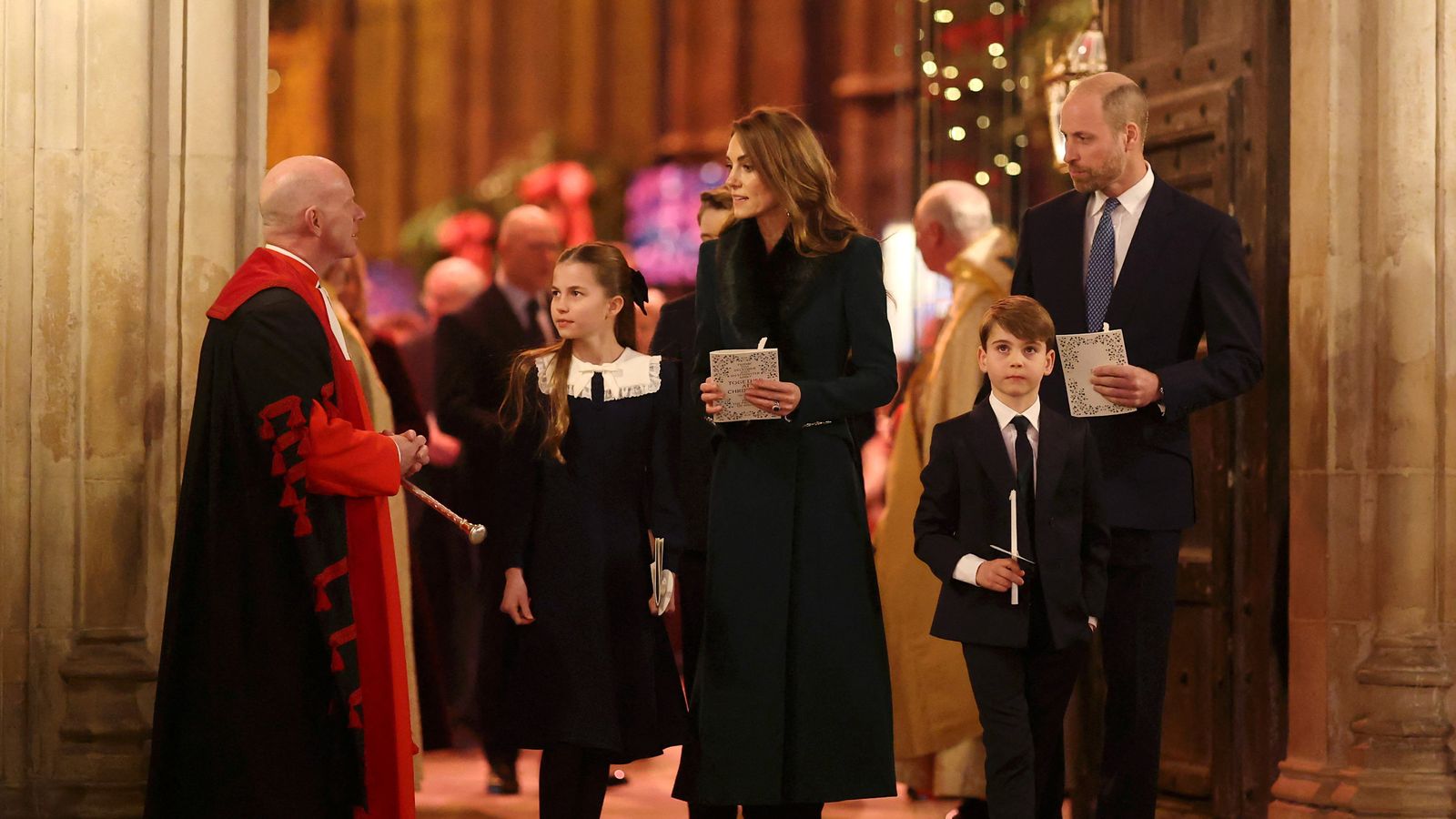
CNBC Business Dec 3, 17:50

Delta says government shutdown cost it $200 million, but forecasts strong travel demand into 2026

LivestreamMenuMake ItselectUSAINTLLivestreamSearch quotes, news & videosLivestreamWatchlistSIGN INCreate free accountMarketsBusinessInvestingTechPoliticsVideoWatchlistInvesting ClubPROLivestreamMenuDelta Air Lines said the government shutdown that ended last month cost it approximately $200 million in pretax profit as bookings softened during the longest such impasse in U.S. history.The airline said the earnings impact would be approximately 25 cents a share for the current quarter. In October, Delta forecast adjusted fourth-quarter earnings of $1.60 to $1.90 a share.Travel demand, however, is still healthy, and bookings are strong going into 2026, Delta reiterated in a securities filing on Wednesday ahead of an industry conference.Air traffic controller shortages worsened during the shutdown, and the Trump administration forced airlines to trim their schedules to relieve pressure on controllers. But even with that move, delays and cancellations ended up being higher than expected in the days before the shutdown ended. Air traffic controllers, already stretched thin before the shutdown, were required to work without their regular paychecks during that period.Delta CEO Ed Bastian and other airline executives have repeatedly pressed lawmakers and officials in Washington to ensure that air traffic controllers, Transportation Security Administration officers and other workers tied to air travel are paid in the event of another shutdown.Got a confidential news tip? We want to hear from you.Sign up for free newsletters and get more CNBC delivered to your inboxGet this delivered to your inbox, and more info about our products and services. Data is a real-time snapshot *Data is delayed at least 15 minutes. Global Business and Financial News, Stock Quotes, and Market Data and Analysis. Data also provided by
Read full story →

CNBC Business Dec 3, 16:44

Beyonce, Sydney Sweeney and a fight for relevance: How American Eagle, Gap and Levi sparked a new 'denim war'

LivestreamMenuMake ItselectUSAINTLLivestreamSearch quotes, news & videosLivestreamWatchlistSIGN INCreate free accountMarketsBusinessInvestingTechPoliticsVideoWatchlistInvesting ClubPROLivestreamMenuLevi Strauss CEO Michelle Gass was out for a run in San Francisco last March when she first heard the song "Levii's Jeans" from Beyonce's latest album, "Cowboy Carter." "Literally, I got chills," Gass recounted to CNBC, adding the name-check represented a "once in a lifetime" marketing opportunity she couldn't afford to squander. "She is one of the most celebrated and influential artists of our time. ... We asked the question, 'Could there be something more?'" Six months later, Levi announced Beyonce would star in a new global marketing campaign. Then, a pattern that's repeated itself since Levi invented blue jeans more than 150 years ago happened again: competitors raced to catch up.Gap and American Eagle launched their own star-studded campaigns the following summer in a bid to sell more jeans. Gap partnered with girl group Katseye in its viral made-for-TikTok "Milkshake" ad, while American Eagle chose actress Sydney Sweeney for its controversial "good jeans" campaign. Just before Thanksgiving, American Eagle launched another celebrity campaign with a different type of star: Martha Stewart. Some smaller brands that can't pay for a name like Beyonce have gotten free marketing just from celebrities wearing their denim. In late August, Kylie Jenner posted a picture of herself in True Religion jeans, leading to a spike in sales, CEO Michael Buckley told CNBC. He called it the "ultimate compliment." Industrywide, brands aired nearly 70% more denim TV spots this year compared with last, as the global jeans market swelled to $101 billion, up 28% since 2020, according to data from TV outcomes company EDO and market research company Euromonitor International. Behind the big campaigns were hints about each retailer's strategies and challenges. American Eagle is trying to win over more men. Levi's wants to court more women. Gap is working to find relevance among a new generation of shoppers. But taken together, the marketing shows the lengths companies are going to dominate a growing denim category that is still up for grabs — even if Levi may have created it. In an economy where many shoppers are thinking twice before shelling out for a new pair of jeans, retailers are scrapping harder than ever to win every dollar they can. "There definitely is a denim war. There's a war for people's attention. There's a war for people's spend," said Neil Saunders, retail analyst and GlobalData managing director. "Who has the most comfortable denim? Who has the softest feel? Who has the best cuts? What fits me well? There's much more consideration in the customer buying process than for some other products, so it does make it much more of a battle between the retailers." Like all things in fashion, denim goes through cycles. It's a stalwart garment in any closet, but sometimes it's in fashion, and sometimes it's not. The last time denim was this big was during the 2000s when brands like True Religion and Joe's Jeans were a favorite among A-listers before athleisure became more popular and transformed casual dressing. "When we came out of Covid, I think to me this is really when it started, when we started to see consumers basically say, 'Look, I want to feel like I am not sitting in my house anymore, I want to feel like I am getting dressed up to go out,'" said Janine Stichter, a retail analyst and managing director at financial services firm BTIG. "That kind of started to bring about the denim cycle that we're in right now." In past denim booms, certain cuts dominated, like skinny jeans in the 2000s and bell bottoms and flares in the 1970s. This time around, any cut goes, and consumers are moving beyond jeans to a wider variety of denim garments, creating a bigger market opportunity. "Now we're seeing everything from wide leg to barrel leg to bootcut. It all kind of has a place," said Stichter. "That's a reason why companies might want to invest behind it, because there's just so many styles that consumers are accepting right now." Denim has been a bright spot for retailers in a sluggish apparel market, but they've had to fight harder for consumer attention as more rivals invest in the space. Younger shoppers are prioritizing value over brand loyalty, cash-strapped consumers are pulling back on new clothes and the category has grown increasingly competitive, analysts said. Major apparel players like Levi, Gap and American Eagle aren't just competing with one another. They're also vying against emerging brands, fast-fashion retailers and thrift stores, where many Gen Z consumers might opt for a vintage pair of jeans instead of buying new. To cut through all of the noise, companies needed to go big with their marketing campaigns, said Saunders. "The whole world and his wife are on denim at the moment. Everyone's pushing and talking about it, so they just needed to do something that was a little bit more edgy," Saunders said. "They didn't want to play it safe, because that's not really going to make noise in the market."For Gap and American Eagle, both legacy mall players with fading relevance, the denim play goes deeper than just driving revenue. In a way, they're reintroducing themselves to a new generation of customers as they work to reclaim their standing in fashion and culture. "Leaning into denim and having these big campaigns around denim is part of a wider push to reinvigorate the brands, and I think that's why they've gone all out on it, because they see denim almost as a halo that can shine light on the rest of the brand and the things that they're doing," said Saunders. "It's the relevance play because … American Eagle had become a little bit stale and was struggling with the results, Gap is in the midst of a reinvention to really try to make the brand much more relevant, especially to younger consumers." In an interview with CNBC, Gap CEO Richard Dickson said the Katseye campaign allowed the company to reach a wide set of consumers in a strategic way. "It has absolutely resonated with Gen Z, who is still in the discovery phase of the Gap brand," he said. "But what it also did is, it reinforced loyalty with our core consumer. So again, we're bridging the generation gap by appealing to multiple audiences."While the market has been flooded with denim advertisements, the content of the ads is having a big impact on engagement, EDO said. The effectiveness of jeans ads, measured by consumer engagement like searches and site visits, improved 9% year over year from January through August, suggesting the creative messaging behind the spots matters more than frequency, EDO said. Levi's denim ads were 304% more effective than the average clothing ad, even after it cut back on airings by nearly a third, said EDO. Retailers don't disclose how much they spend on individual advertising campaigns, but those investments are part of a company's selling, general and administrative costs, which they disclose in filings. In Levi's fiscal year ended Dec. 1, 2024, which covers the debut of its Beyonce campaign, the company's SG&A expenses were nearly $200 million higher than the previous year, more than half of which was spent in the quarter the campaign debuted. The company previously acknowledged the Beyonce ads contributed to the higher costs, and Gass told CNBC it was a bet worth taking."The Beyonce campaign had a great return for us," said Gass. "When we look at our business results, our sales are growing, but our profits are growing as well overall, so we feel good about the investment."Since Gass took over, winning over more female shoppers has been at the core of her strategy, and the company's Beyonce campaign is helping it achieve that goal. Last October, days after the campaign launched, Levi said its women's business represented about 35% of overall revenue. A year later, it's about 38%. "It's driving a lot of our growth. That should be half of our business," said Gass. "Based on the momentum we're seeing, there's no reason why we can't achieve that." True Religion, which is privately held and doesn't disclose its financials, told CNBC denim sales rose 38% between Aug. 20 and Aug. 22, the time period in which social media influencer Alix Earle and Jenner made organic posts about the company's jeans. "When Kylie posted, not only did she put us in a story, but she put us in a carousel as a hard post on her wall. She probably charges $500,000 to a million dollars for that," said Kristen D'Arcy, True Religions' chief marketing officer and head of digital growth. "The results of those posts, especially on women's denim sales, was pretty incredible."Since American Eagle's and Gap's campaigns are newer, it's too early to say how they have affected long-term sales. But they've already made their mark in culture and on Wall Street. When American Eagle announced its campaign with Sweeney, the company became a meme stock sensation, only to see those gains erased after it faced criticism over the ad's tone and messaging. Later, President Donald Trump weighed in and called it the "hottest ad out there," leading the stock to soar once again. "It was billions of impressions. I mean, it was amazing what happened. It struck a new conversation," Jennifer Foyle, president and executive creative director for AE & Aerie, told CNBC in an interview. "When we launched that campaign, we knew it was going to be exciting but it really took off." Some news reports suggested foot traffic at the company's stores fell in the aftermath of the ad. However, the company later said traffic across channels had been "consistently positive throughout August," the month after the campaign launched. Following the Sweeney ad and another campaign with Kansas City Chiefs tight end Travis Kelce, the company said in early September it had seen "meaningful improvement in the business," with growth in comparable sales and the acquisition of 700,000 new customers. "It definitely helped our traffic. We definitely gained new customers," said Foyle. "Keep in mind, those new customers don't always come right back and shop, right? So, definitely there'll be a halo effect for sure as we head into Q4 and future seasons." Following the controversy over the campaign, American Eagle apparently removed one of the ads from most of its social pages – the one where Sweeney discusses genes being passed down from parent to offspring that incited the most blowback and comparisons to eugenics. The spot is now only visible on American Eagle's Facebook page. A company spokesperson denied the retailer took the ad down, saying "once content is released, it's out for the world to see." American Eagle declined further comment on the Sweeney controversy. About a week after the ads came out, it posted a statement on its Instagram page saying the campaign "is and always was about the jeans."When American Eagle issued fiscal third-quarter results on Tuesday, it was the first time investors got to see a full quarter of impact from the Sweeney and Kelce campaigns. While the company said that the campaigns are "attracting more customers" and creating more attention around the brand, the results showed they're not yet a major revenue driver.At American Eagle's namesake banner, where the campaigns were focused, comparable sales grew just 1% in the three months ended Nov. 1, worse than the 2.1% analysts had expected, according to StreetAccount. Meanwhile, SG&A expenses were up by about $35 million year over year, due in large part to its campaigns with Sweeney and Kelce. The increase in costs didn't have a major impact on American Eagle's operating margin, which came in higher than expected.Last month, Gap said comparable sales at its namesake banner surged 7% in the quarter after the Katseye ad came out -- more than double what analysts had expected, according to StreetAccount. "The brand saw growth in [average unit retail], consideration, organic impressions, new customers, so generating significant traffic," Dickson told CNBC. "Double-digit growth in denim, 8 billion impressions, so we're very pleased and excited about the long-term proposition and the continued progress the brand is making."Meanwhile, the campaign has been a viral sensation, racking up 50 million views on YouTube alone in the last three months. That's five times the 10 million views American Eagle's Sweeney ad saw on the platform in four months. Still, both of the ads combined don't come close to the engagement Levi's Beyonce campaign has seen on YouTube. The four "chapters" of the campaign, which were released between last September and August, have garnered a staggering 85 million views combined. "Levi's is definitely winning the war overall. I mean, this is Levi's home turf, you're playing in the home stadium, so they have an inbuilt advantage," said Saunders. "They have been very savvy about creating the culture around denim. They've got arguably the biggest celebrity on their team, and they've widened the lifestyle aesthetic, so they've really led this." Got a confidential news tip? We want to hear from you.Sign up for free newsletters and get more CNBC delivered to your inboxGet this delivered to your inbox, and more info about our products and services. Data is a real-time snapshot *Data is delayed at least 15 minutes. Global Business and Financial News, Stock Quotes, and Market Data and Analysis. Data also provided by
Read full story →

Europol Dec 1, 15:01

Coordinated strike hits violent criminal network behind large-scale illegal gambling and money laundering in Sweden

Action day resultsClose to 150 police officers took part in the action, searching six premises in Stockholm, Sweden and two in Murcia, Spain. Five key suspects were arrested (three in Sweden and two in Spain).Several hundred thousand euros’ worth of valuables were seized, including luxury watches and cash. During the search of a property in Sweden, believed to have been used as an illegal gambling club, authorities also seized drugs prepared for resale and found signs of possible human trafficking.The suspects form the core of a local criminal network known for its use of violence and intimidation, allowing the group to secure revenues, enforce debts and control sections of the illegal gambling market in the Stockholm area.The investigation revealed a criminal business model combining:illegal gambling, with an estimated annual turnover of EUR 20 million;money laundering services for the network and other criminal groups;drug trafficking, reinforcing the group’s influence in local and regional markets.By offering services to other criminals, the group operated as a key facilitator within the wider criminal environment.From international to local: a coordinated multi-agency strategyThese latest actions are part of a wider, multi-agency strategy to systematically dismantle networks that harm local communities while relying on international criminal connections.Europol plays a central role in this approach by linking international intelligence with local enforcement actions. By connecting national authorities across borders, Europol ensures that information collected in one jurisdiction can be turned into operational impact in another – including on the streets of Stockholm.Authorities involved:Spain: Spanish National Police (Policía Nacional)Sweden: Swedish Police Authority (Polisen)
Read full story →
Europol Dec 1, 14:37

Europol and Spanish National Police disrupt activities of far-right terrorist group 'The Base'

Apart from arresting three suspects linked to the international right-wing terrorist organisation 'The Base', the action days also led to the following seizures:a variety of weapons (including bladed weapons and two firearms) as well as ammunition;military tactical equipment used in training activities;accelerationist and supremacist material and documentation as well as ‘The Base’ organisation propaganda, neo-Nazi paraphernalia, and documentation glorifying other terrorist organisations.‘The Base’ on EU Terrorist ListIn July 2024, the Council of the European Union decided to add ‘The Base’ to the EU Terrorist List. This marked the first time the EU listed a far-right entity, indicating a shift in the threat landscape and counter-terrorism priorities. 'The Base' is known for its neo-Nazi militant accelerationist ideology and advocates achieving the goal of white supremacy through terrorism, creating an international network of paramilitary cells that self-train militarily in training camps, with the ultimate aim of carrying out attacks.The organisation operates as a decentralised and clandestine network of small operational cells, whose main ideological tenets are supremacism, militant accelerationism, and preparation for what they refer to as a ‘racial war’.Significant success against right-wing extremismInvestigators uncovered the existence of a cell consisting of three individuals. It is believed that the leader of this Spanish cell was in direct contact with Rinaldo Nazzaro, the founder of ‘The Base’, who recently called for the consolidation of cells expanded across several countries and the commission of selective attacks to collapse Western democratic institutions.The members were highly radicalised, basing their lifestyle on the principles of the terrorist organisation and ready to carry out attacks. They allegedly had already conducted several tactical training sessions using paramilitary techniques and equipment. The suspects allegedly also used social media to recruit new members, glorify violent actions by other terrorist organisations, and share accelerationist content with other users.In recent months, the suspects had hardened their radical discourse, encouraging violent actions, even openly stating that they were willing to carry out selective attacks for the cause. These acts and the observed stockpiling of weapons observed led law enforcement to arrest the three suspects.Europol’s supportEuropol's counter-terrorism experts provided analytical support and expertise throughout the operation, including intelligence packages, cross-match reports, and hit notifications. During the action days, Europol staff was deployed in Madrid and supported from Europol’s headquarters in The Hague.
Read full story →
Europol Dec 1, 09:00

Europol and partners shut down ‘Cryptomixer’

Three servers were seized in Switzerland, along with the cryptomixer.io domain. The operation resulted in the confiscation of over 12 terabytes of data and more than EUR 25 million worth of the cryptocurrency Bitcoin. After the illegal service was taken over and shut down, law enforcement placed a seizure banner on the website.A service to obfuscate the origin of criminal fundsCryptomixer was a hybrid mixing service accessible via both the clear web and the dark web. It facilitated the obfuscation of criminal funds for ransomware groups, underground economy forums and dark web markets. Its software blocked the traceability of funds on the blockchain, making it the platform of choice for cybercriminals seeking to launder illegal proceeds from a variety of criminal activities, such as drug trafficking, weapons trafficking, ransomware attacks, and payment card fraud. Since its creation in the year 2016, over EUR 1.3 billion in Bitcoin were mixed through the service.Deposited funds from various users were pooled for a long and randomised period before being redistributed to destination addresses, again at random times. As many digital currencies provide a public ledger of all transactions, mixing services make it difficult to trace specific coins, thus concealing the origin of cryptocurrency.Mixing services such as Cryptomixer offer their clients anonymity and are often used before criminals redirect their laundered assets to cryptocurrency exchanges. This allows ‘cleaned’ cryptocurrency to be exchanged for other cryptocurrencies or for FIAT currency through cash machines or bank accounts.Europol’s supportEuropol facilitated the exchange of information in the framework of the Joint Cybercrime Action Taskforce (J-CAT), which is hosted at Europol’s headquarters in The Hague, the Netherlands. One of Europol’s priorities is to act as a broker of law enforcement knowledge, providing a hub through which Member States can connect and benefit from one another’s and Europol’s expertise.Throughout the operation, the agency provided crucial support, including coordinating the involved partners and hosting operational meetings. On the action day, Europol’s cybercrime experts provided on-the-spot support and forensic assistance.In March 2023, Europol already supported the takedown of the largest mixing service at that time, ‘Chipmixer’.Participating countries:Germany: Federal Criminal Police Office (Bundeskriminalamt); Prosecutor General’s Office Frankfurt am Main, Cyber Crime Centre (Generalstaatsanwaltschaft Frankfurt am Main, Zentralstelle zur Bekämpfung der Internet- und Computerkriminalität)Switzerland: Zurich City Police (Stadtpolizei Zürich); Zurich Cantonal Police (Kantonspolizei Zürich); Public Prosecutor‘s Office Zurich (Staatsanwaltschaft Zürich)Participating agencies:EuropolEurojust
Read full story →
BBC Sport Dec 1, 07:53

'Raise hell' - the fastest bowler you might not have heard of

'Raise hell' - the fastest bowler you might not have heard ofEveryone who encountered Duncan Spencer has a tale to tell.In the early 1990s, a golden age of fast bowling, Spencer might have been the quickest of all.Born in Lancashire and raised in Perth, Spencer could have played for either England or Australia if his body had not let him down. The fastest bowler the Ashes rivals never had.The great Viv Richards said Spencer was up there with the quickest he faced. Ricky Ponting said the same - Spencer and Ponting almost came to blows on the pitch.Ryan Campbell, Durham coach and contemporary of Spencer at Western Australia, said he was "ridiculously and frighteningly fast". Tom Moody, the former Australia international and another West Australian, said Spencer would "terrorise" batters.Just before the first Ashes Test, when England recorded their fastest collective day of pace bowling on record, BBC Sport met Spencer at his home in the south-west suburbs of Perth.This is a story of injuries, comebacks and drugs. Most of all, it is a story about the visceral thrill of bowling fast.——————————————Like most kids born in the north of England, the young Duncan Spencer kicked a football around. The trouble was, his family moved to Perth when he was five and soccer (his word) had not taken hold in Australia in the early 1980s.Spencer was a batter in junior cricket. He was not usually allowed to bowl because he "bowled the thing everywhere". It was only in one end-of-season game, when the regular bowlers were missing, that the 14-year-old Spencer got his chance."It all just clicked," he says. Spencer's pace had been discovered, wickets tumbled and he was on his way through the Western Australian system."I had the 'joy' of playing all of my junior career against Duncan," says Campbell. "You saw this kid, the run-up, it just looked like it was going to be fast - and he always was. He was faster than everyone else."There are only four people in my lifetime I have said are ridiculously fast. That is Shoaib Akhtar, Brett Lee, Shaun Tait and Duncan Spencer."Spencer is not a tall man. Even now, at the age of 53, he has hulking shoulders, but a height of 5ft 8in is not ideal for a fast bowler. He had his first back operation aged 17."I draw a comparison with Mark Wood," says Moody. "It's like having a V8 engine in a Mini Minor."As Spencer was progressing, Daryl Foster was head coach of Western Australia and Kent. When Foster learned of Spencer's British passport, he signed him to a two-year deal at Canterbury.Spencer was raw. Just before he went to the UK for the 1993 summer, he bowled 42 no-balls playing for Western Australia against an England A team including Jack Russell, Graham Thorpe, Dominic Cork and Andy Caddick - Spencer got Thorpe out.On his first return to England since leaving as a child, the 21-year-old Spencer was shocked by the cold and by the county grind."I'd say to the other guys 'Are you sore?'" says Spencer. "They'd say 'No, I'm alright'. I could hardly walk."Spencer played one game in the County Championship that summer. He did, however, produce a spell of bowling that is mentioned by anyone who hears his name.Root questions need for pink-ball Ashes Test but Head in favourWhy is a pink ball used in the Ashes?In September, Kent and Glamorgan met in the final match of the Sunday League season. They were the top two and the title was on the line. It was also the last List A match in the career of West Indies legend Richards, aged 41.The match was televised live by the BBC - Jonathan Agnew and Vic Marks were on commentary. The footage is easily found online.As Kent attempted to defend a modest total of 200, Spencer was the fifth bowler used. Whippy action, retro sky-blue Kent kit - Spencer's first ball whistled past the ear of Adrian Dale.Spencer mainly bowled two lengths: very full and very short. There were gasps from the crowd as the ball either thudded into a Glamorgan batter or the gloves of Kent keeper Steve Marsh.After Spencer pinned Matthew Maynard - an England international - leg before wicket, Richards swaggered to the crease to a standing ovation. Naturally, the Master Blaster did not wear a helmet."He's used to many a young pup tearing in and trying to let him have it," was Agnew's description of Richards defending his first ball on the back foot. Next ball, Spencer rattled him in the chest."He spat his chewing gum out to cover," says Spencer. "He didn't show any pain but was clearly hurt after the one in the ribs."Richards took another one on the top hand. When he tried a swipe, the ball looped up to be caught on the leg side, only for the umpire to signal no-ball. Richards eventually passed Spencer at the non-striker's end, giving him a high five and a pat on the head.Glamorgan won the match and the title. Richards ended 46 not out. Spencer got a signed bat he still owns today."I walked into the changing rooms and he said 'Man, that was serious pace, boy'," says Spencer. "He said 'That's a slow wicket and it was seriously quick'."Sir Viv Richards (left) celebrates winning the Sunday League titleTwo months later, Spencer was back playing for Western Australia duelling with another legend - albeit future Australia captain Ponting was still finding his way in the game.Playing for Tasmania in a Sheffield Shield game in Hobart, Ponting was a few days shy of his 20th birthday and nearing a century."This day against Ricky, it was on," says Spencer."Geoff Marsh, the captain, came over to me and said 'mate, I don't care what you do, just raise hell'."We were into each other. I gave him four bouncers in a row and I think it should only have been one per batter, per over."He had a whinge to the umpire. I turned around to mid-off and said 'don't walk in. I've got to pitch this one up and he'll smash it'."He pushed it towards cover and I was in my follow-through. I kept going and grabbed the ball. He made out he was going to run, so I turned and threw it. As he turned, it went past his head and just missed the stumps."He turned around and said 'you do that again I'll wrap this bat around your neck'."I said 'don't let fear hold you back'."Then we've gone into each other. I was about to crack him. I'd lost it by then. We got into it on the pitch until the players and umpires pulled us apart."As fate would have it, Spencer and Ponting would end up in the same bar that evening, and they settled their difference over a beer.For Spencer, who admits to having a fiery temperament on the field, it was not just opponents on the wrong end of his aggression."Justin Langer was trying to fire me up in the changing rooms, tapping me in the face," says Spencer."I didn't need firing up. I was always pretty calm until I got past the white line. Justin thought he'd switch me on before we went out."I just went 'smack', leave me alone, a little left hook in the chest. I could have hit him with a right and got him. He didn't go down and he said 'if that was anyone else it would have put a hole through them'."Spencer was flying. When he returned to Kent for the 1994 season, there was talk of an international call-up. Coach Foster told him not to do interviews, so as not to declare an allegiance to England or Australia.Then, in a flash, Spencer's career came to a halt. He broke down in a one-day game against Middlesex in June."I collapsed on the ground bowling to Mark Ramprakash," says Spencer. "I could hardly walk."Spencer returned to Australia, slowly coming to terms with the idea his days as a professional cricketer might be done. Now with a young family, everyday tasks like mowing the lawn were accompanied by excruciating pain.In order to live a normal life, Spencer took prescription steroids. The pain receded and the desire to play cricket returned. He went back to the Perth club circuit."Tom Moody was the Western Australia captain and found out I was playing again," says Spencer."He said 'you're going to play a one-day game on 2 January'. I laughed, didn't think much of it."It came around and I was picked. I ended up playing and I was in for the one-day season. I was just happy to be back playing."Spencer was back playing professional cricket, almost seven years after his last appearance, and he remained with Western Australia on their run to the 2000-01 domestic one-day cup final.In the final, his WA side included Mike Hussey and Simon Katich but they were beaten by a New South Wales team of Michael Clarke, Brad Haddin and Michael Bevan.After the match, Spencer went through a drug test. With the steroids still in his system, he was banned for 18 months, the first cricketer in Australia to be punished under anti-doping laws. He was front-page news."It was six months after taking the drugs before I even attempted a bowl," he says. "By the time I played it was a year later. Apparently it hangs around in your body for much longer. If I knew that, I wouldn't have played."I was talking with Kent and Hampshire, but then I got banned. I got absolutely hammered as a punishment, but I was expecting worse."Spencer bowling for Western Australia in 2001Spencer was out of the game once more, but was still not done.Five years later, through his work as a fitness coach, Spencer found himself bowling to a young Ravi Bopara in the nets at Rockingham-Mandurah Cricket Club."Ravi said 'why are you not still playing?'" says Spencer. "Knowing how good Ravi was - and is - if he thought I could do it, maybe I should play."After the drugs ban, Spencer felt his time playing for Western Australia was done, so he asked former Zimbabwe and Sussex batter Murray Goodwin if any counties were looking for a bowler.Remarkably, at the age of 34, Spencer found himself back in county cricket on trial at Sussex in the summer of 2006."I thought I was still pretty passionate about the game, but I realised I probably wasn't," says Spencer."I was sharp, but not as quick as I was as a young fella. I was fit enough to do it, but my work ethic had gone. I probably went over for the wrong reasons."Spencer played two first-class matches for Sussex, against Warwickshire and the touring Sri Lanka team. His last wicket in professional cricket was Kumar Sangakkara.All in all, he took 36 wickets in 16 first-class matches and 23 scalps in 20 List A games.Nearly 20 years on, Spencer is settled in Perth. He works in the mines in the northern part of Western Australia.Moody says there is "no question" Spencer could have played international cricket. Spencer says he would have happily played for England or Australia, but the accent is 100% Aussie.Spencer has no idea how fast he bowled. He thinks he was told he was clocked at 158kph - just over 98mph - but that was "off a short run"."I was in the wrong era," he says, considering the way modern fast bowlers are managed, or how he could have made a fortune as a T20 gun-for-hire."It is one of the great shames that we didn't see enough of Duncan Spencer," says Campbell. "When he got it right - oh my goodness."Spencer did not collect the wickets, the international caps or the rewards he might have, but he experienced what most can only dream of."When I didn't have rhythm, I was as bad as anyone," he says."When it all clicked, it was a great feeling. It's effortless. When you get the rhythm it feels like it's coming out medium pace.Second Test - The Gabba, BrisbaneBall-by-ball radio commentary on BBC Radio 5 Sports Extra, BBC Sounds and the BBC Sport website and app. Live text updates and in-play video highlights on the website and app, plus analysis and reaction. The Daily Debrief and extended highlights on BBC iPlayer after every day's play.Get cricket news sent straight to your phone
Read full story →

Europol Nov 28, 11:00

29 suspects arrested in two blows against human trafficking networks

France and Spain: disrupting a Chinese human trafficking networkConducted jointly by France and Spain, this operation targeted a Chinese organised crime group involved in trafficking human beings for sexual exploitation. The network, active for several years, coordinated sexual exploitation rings across France and multiple EU Member States. Members of the network rented apartments online for short terms, a modus operandi also known as ‘sex tours’ or ‘carousels’.Action day results (4 November):15 house searches conducted (9 in Spain, 6 in France);37 victims discovered: 34 victims identified and interviewed in France across 23 locations, of whom 8 accepted social support and 5 filed a complaint; 3 victims released in Spain; 10 suspects arrested (2 in Spain, 8 in France), of whom 7 were placed in pre-trial detention;EUR in 47 000 in cash and EUR 160 000 in bank accounts seized;Seizure of 126 mobile phones, including around 50 found at sexual exploitation locations, 1 car, 40 luxury items, 5 computers, and 3 tablets.This organised criminal group used multiple recruitment methods, targeting primarily Chinese women through call centres based in China, Spain, and France. Some victims were recruited in China and aware they would engage in prostitution but were misled about the exploitative conditions awaiting them. Others believed they were travelling to the EU for legitimate work before being coerced into sexual exploitation. Additionally, the criminal network also targeted vulnerable Chinese women who already were in the EU. Many of the hundreds of victims either had legally obtained tourist or labour visas, others were smuggled into the EU. Europol supported the operation by facilitating information exchange, providing analytical support, and coordinating cross-border cooperation.Italy and Romania: disrupting a Romanian human trafficking networkConducted jointly by Italy and Romania, this operation targeted a family clan of Romanian nationals based in Iasi, Romania. The organised crime group, operating for over 20 years, exploited young girls through coercion, violence, and psychological manipulation, and had strong ties to Albanian nationals involved in sexual exploitation in Rome, Italy.Action day results (18 November):25 house searches conducted (20 in Romania, 5 in Italy);EUR 20 000 in cash seized;19 Romanian suspects arrested; two persons put under judicial control;99 bank accounts allegedly used for laundering the criminal proceeds identified;7 swords, 1 axe, and 4 guns seized;10 real estate properties, 8 luxury cars, jewellery, 45 documents, 32 mobile phones, and 3 computers seized in Romania.The criminal network used the "lover boy" technique to recruit and groom victims, often starting at a young age, and forced them into prostitution in Rome. In the investigation timeframe alone, the criminal network is suspected of having generated an estimated profit of EUR 1.7 million.Europol supported this operation by facilitating information exchange, providing analytical support, and coordinating cross-border cooperation. Eurojust coordinated the international investigation by setting up a joint investigation team and organising several meetings at the Eurojust premises in The Hague.This investigation and the action day itself have been supported by the @ON Network funded by the EU Commission, led by the Italian Antimafia Investigation Directorate (DIA), who financially supported the operational meetings and the mutual deployment of investigators.Both operations underscore the persistent threat posed by criminal networks involved in human trafficking and the importance of international cooperation in combating these crimes. Human trafficking is a serious crime that abuses people’s fundamental rights and dignity. It involves the criminal exploitation of vulnerable people for the sole purpose of economic gain. Human trafficking is a modern form of slavery. It is often international in character and its victims are of both genders, all ages, and backgrounds. That is why it is so important to look beyond the stereotypes, enabling us to identify those who may be at risk and recognise the warning signs.Participating countries and agencies:France: Office central pour la répression de la traite des êtres humains (OCRTEH); Judicial Police - Montpellier Territorial Directorate (Direction Territoriale de Police Judiciaire de Montpellier)Spain: National Police - Central Unit for Immigration Networks and Document Fraud (Policía Nacional - Unidad Central de Redes de Inmigración y Falsedades Documentales (UCRIF))Italy: Italian State Police – Mobile Squad of Rome and the Central Operational Service (Polizia di Stato – Squadra Mobile di Roma e Servizio Centrale Operativo); Public Prosecutor’s Office Rome (Procura Distrettuale di Roma)Romania: Romanian Police - Brigade for Combating Organized Crime Ia?i (Poli?iei Român? - Brigada de Combaterea Criminalit??ii Organizate Ia?i)Eurojust
Read full story →
Europol Nov 27, 09:01

16.6 million packages of fake and harmful toys taken off EU markets

In time for the upcoming holiday and gifting season, a newly issued report on the distribution and dangers of counterfeit toys in the EU, titled ‘Cheating the toy world’, shows that criminal networks remain highly active and adept at counterfeiting toys. Intellectual property (IP) crime – and specifically the counterfeiting of toys – generates enormous financial losses for legitimate companies, undermines brand credibility and endangers economic development and the environment. Most concerningly, counterfeit toys expose children and other consumers to serious health and safety risks.Coordinated law enforcement action against fake toysThe annual effort to tackle this criminal phenomenon is codenamed Operation LUDUS – from the Latin word for ‘toy’. As counterfeit sales increase significantly around holidays, these coordinated law enforcement actions typically take place at the end of the year. Operations LUDUS IV and LUDUS V have led to the following results:Operation LUDUS V (2024-2025):8.2 million packages of toys seized, with an assessed value of EUR 8.7 million86 persons reported to judicial authorities194 persons reported to administrative or health authoritiesOperation LUDUS IV (2023-2024):8.4 million packages of toys seized, with an assessed value of 28.1 million125 persons reported to judicial authorities150 persons reported to administrative or health authoritiesThe seized counterfeit toys were mainly imported through regular shipping routes. Investigators determined that the main infringements were intellectual property rights violations, the presence of dangerous substances, and the absence of CE marking or EU conformity certificates.Many of the seized toys indicated various hazards and risks. Completely evading the EU’s strict rules on products intended for children, these fake toys can cause asphyxiation, suffocation, drowning, cuts or burns, and expose children to chemical substances. Some pose choking hazards and could be ingested, while others may damage children’s hearing or sight.Fake toys can pose serious health hazards…Within the European Union, strict regulatory standards govern the design, production and sale of toys and games. Criminal actors involved in counterfeit toys evade such criteria, which are designed to protect the health and safety of consumers, especially children. Poor build quality and the use of low-grade toxic materials can cause severe and even life-threatening injuries to children playing with fake toys.This is especially concerning in counterfeit toys intended for baby mouthing, as infants are directly exposed to these substances. Other dangers come from electronic toys whose sound levels may exceed legal decibel limits, causing irreversible hearing loss. Many toys also rely on electrical components and other combustible materials, such as batteries, which may not conform to the relevant regulations.…and cause major economic losses for the EUAccording to the report issued today, the toy sector has the highest average sales loss from counterfeit goods in the EU. With an estimated 8.7% of total sales, this represents around EUR 1 billion in lost sales and 3 600 fewer people employed in the industry. In addition, the tax evasion linked to this crime area significantly affects the EU’s economy.For all these reasons, customers are warned to beware of fake toys and other products intended for children. Buying from reputable retailers provides accountability, peace of mind and a warranty.A coordinated approach between countries and agenciesOperation LUDUS is a recurring operation that cracks down on the trafficking of counterfeit toys. It involves law enforcement and customs authorities from most EU countries and relies on close collaboration with the private sector.The operation involves a dedicated analytical preparation phase, followed by an operational phase in which all participating countries perform inspections and raids to detect illegal shipments and storage places. In certain operations, raids follow investigations that began on e-commerce platforms and marketplaces. Collaborating with the private sector enables better detection and identification of counterfeit toys, as well as the subsequent seizure of packages that are often distributed among multiple shipments.Apart from organising and coordinating operational activities, Europol also liaised with the private sector. This included obtaining information on specific products on the market and analysing the data collected throughout the operation.EUIPO supported the logistical organisation of the operation and facilitated collaboration between rights holders and enforcement authorities through the Intellectual Property Enforcement Portal (IPEP). This collaboration enabled the private sector to share relevant information with enforcement authorities using IPEP’s ‘alert and interesting cases functionalities’, while authorities could request data from the private sector to address suspicious cases. As a strategic and financial partner, EUIPO strengthened cross-sector collaboration, reflecting its commitment to fostering a robust, inclusive, diverse and sustainable IP ecosystem that works for everyone.OLAF played a key role by coordinating efforts among the customs authorities of participating EU Member States.Participating agencies:European Union Agency for Law Enforcement Cooperation (Europol; organiser and coordinator); European Union Intellectual Property Office (EUIPO; strategic and financial partner); European Anti-Fraud Office (OLAF; coordinating partner)Participating countries*:Albania, Austria, Belgium, Bulgaria, Colombia, Croatia, Cyprus, Czech Republic, France (operational co-leader LUDUS IV), Germany, Greece, Hungary, Ireland, Italy, Latvia, Lithuania, Netherlands, North Macedonia, Poland, Portugal, Romania (operational co-leader LUDUS IV&V), Slovak Republic, Spain (operational co-leader LUDUS IV&V), Sweden, United Kingdom, United States of America*24 countries participated in LUDUS IV; 19 countries participated in LUDUS V
Read full story →
BBC Sport Nov 25, 00:00

What next for friendly foes who see each other 'more than family'?

It is a rivalry that has swiftly come to be defined by its breathtaking quality on the court and, away from it, a close friendship founded on mutual admiration.At the conclusion of the 2025 season, Carlos Alcaraz and Jannik Sinner stand clear from the rest at the top of men's tennis.As they continue to inspire each other to greater heights, there is no suggestion that the new duopoly in men's tennis will be broken up any time soon.For a second successive year, Spaniard Alcaraz and Italy's Sinner split all four Grand Slam titles between them, taking their total major wins to six and four respectively.Remarkably, in 2025 there was not a single tournament in which both Alcaraz, 22, and Sinner, 24, played that was not eventually won by one of them.The generational talents have met in the past three major finals, having contested an unforgettable first at the French Open in May.Their ever-tightening grip on the men's tour was further emphasised when they met in a final for the sixth time this year to decide the season-ending ATP Finals.Yet, despite all that was at stake - the trophy, the world number one ranking, and a $5m jackpot - the pre-tournament favourites practised together before beginning their title bids in Turin, and later shared a selfie which has received more than half a million likes on Instagram.Beyond the silverware and prize money, both are fully aware of the importance of the other in unlocking their full potential, with the story of their respective careers now inevitably intertwined.24-time Grand Slam champion Novak DjokovicA dizzying five-and-a-half hours of extraordinary drama answered, unequivocally, the question that lingered over men's tennis.During the 'Big Three' era of men's tennis, Novak Djokovic, Rafael Nadal and Roger Federer captured 66 of a possible 81 Grand Slam titles over two decades of dominance.The Roland Garros final heralded the undisputed succession of that rivalry as the much-hyped first showdown between Sinner and Alcaraz for a major title exceeded all expectations. It was a match that truly transcended the sport.In truth, Alcaraz and Sinner had already long begun writing their own chapter.They hinted at the epics to follow with a five-hour, five-set thriller in their US Open quarter-final in 2022 which ended at a record late finishing time of 2.50am in New York.Another five-setter, extending beyond four hours, at Roland Garros in 2024 had further built anticipation of what might lie ahead.Alcaraz had triumphed in the previous four meetings before his first Grand Slam final showdown with Sinner in Paris. He will begin the next encounter having won seven of the past nine.It is a surprising imbalance between the game's heavyweights, and the statistics indicate Sinner's underperformance in their meetings has been the defining reason.Sinner leads the ATP Tour for 'conversion score' - put simply, he is the most clinical finisher when presented with the opportunity to end a point.When Sinner meets Alcaraz, he tends to waste chances he would normally seize - his conversion score plummets by 13% - while his serve quality also drops.Conversely, Alcaraz leads the tour for 'steal score' - a measure demonstrating his unparalleled ability to absorb pressure and turn defence into attack.Alcaraz thrives in their showdowns and raises the quality of his returns, forehands and backhands against Sinner.Reassuringly for Sinner, in meetings in which he is able to be as clinical as against the rest of the tour, he can expect to edge their duels.Nadal and Federer had Wimbledon 2008Djokovic and Nadal had the 2012 Australian OpenDjokovic and Federer had Wimbledon 2019This was the first battle between Alcaraz and Sinner for one of the sport's major titles.But something exceptional will be required to replace the 2025 French Open as the enduring zenith of their rivalry.The significance of the events in Paris was evident in the frenzied grandstands of Court Philippe Chatrier, the outpouring of praise from players, legends and fans on television and social media, the sight of Spain's footballers gathered on the pitch around a phone to follow their compatriots' fightback before their Nations League final.Its status as an all-time classic could not have been foreseen as Sinner set up three championship points on Alcaraz's serve.But that label was undeniable when the longest ever French Open final concluded, the crowd rising to their feet as an exhausted Alcaraz dropped to the clay after completing an astonishing comeback.Alcaraz's eventual triumph, clinched with a stunning on-the-run forehand down the line to conclude the match tie-break required to separate them, was ultimately made possible by his bravery on the big points and his willingness to play aggressively in the key moments.He is celebrated as a showman, competing with child-like joy and freedom. His propensity to favour the spectacular rather than safe option may have frustrated his team and supporters at times during his development - and he remains much more prone to in-game momentum swings than Sinner.However, here it delivered a stunning climax.He hit 17 more winners than Sinner in the French Open final. But, crucially, he produced 12 more than his opponent in the decisive games at the end of sets - and specifically those later in the match - to pull off a miracle.Sinner had won 193 points to Alcaraz's 192.Winners in last four games of a setAlcaraz became only the third player in the Open era to win a men's singles Grand Slam final after saving match points, following Djokovic (Wimbledon 2019) and Gaston Gaudio (Roland Garros 2004).But neither player, in their contrasting emotional states, was left in any doubt that they had been part of something greater.Their admiration and respect for one another was clear - and both knew they would need to return with new tricks for their future battles.Alcaraz to a devastated SinnerFor the first time since 2002 - when Sinner was less than a year old and Alcaraz not yet born - the Wimbledon men's singles final did not feature one of Federer, Nadal, Djokovic or Andy Murray.For Sinner, the rematch on the grass of Centre Court was as much a test of his mental resolve as anything else - not least when he fell a set behind.Sinner served a three-month doping suspension after retaining his Australian Open title in January as part of a challenging start to the year for the Italian.Then came the devastation of Paris. But, just 35 days later, Sinner was able to exact revenge on Alcaraz in a ruthless display.Having taken time to be at home with family before embracing an intense period of training, Sinner delivered a serving masterclass while dominating from the baseline.Your browser does not support this videoSo much so that it even caused Alcaraz to make an uncharacteristic show of frustration.Your browser does not support this videoAlcaraz to his team during the Wimbledon finalSinner had, at last, been able to unleash the devastating combination of power and precision by which he dominates all others.Your browser does not support this videoDictating with brutal, flat ball-striking against the tour's escape artist, Sinner once again earned three championship points. This time, he would not be denied.He crouched to the ground and took a moment for himself, having rebounded from heartbreak to secure his first Wimbledon title.The significance of the victory, beyond the tangible, was not lost on his team.Sinner’s coach Darren CahillIn south-west London, Sinner, so often stifled by Alcaraz, asserted his game and performed at a level more comparable to his tour average.Not only did improved serving in the Wimbledon final allow Sinner to play more shots in attack - meaning those points where he received a low-quality shot, was positioned up the court, or was able to hit from a comfortable contact point - but he was able to capitalise on the opportunities that provided.As he sought to close out victory, Sinner won 92% of points when positioned in attack as he comprehensively lay his demons to rest.The fourth Grand Slam title of Sinner's career was, significantly, his first major title not on a hard court. It also ended a run of five consecutive losses to his main rival.Two months later, Alcaraz and Sinner became the first players in the Open era to meet in three consecutive major finals in the same season.This time, it was Alcaraz who powered to a four-set win to edge their blockbuster trilogy in New York - and dethrone Sinner as world number one for the first time in 65 weeks.Alcaraz and coach Juan Carlos Ferrero claimed to have quickly identified what they needed to correct after the loss to Sinner at Wimbledon.While they chose to keep the details to themselves, a subtle change in the Spaniard's serve appeared to provide the foundation for success.Former British player Tim HenmanHaving highlighted the importance of improving his serve at the start of the year, Alcaraz ended the US Open having won a remarkable 97% of his service games.In the final, the Spaniard increased the use of wide serves, to both sides, and added pace, in a bid to manoeuvre Sinner - and did so while maintaining a high first and second-serve win percentage.That tweak created the attacking opportunities he needed to dominate, and which he had been starved of at Wimbledon.In a near-faultless display, Alcaraz hit 10 aces - including one to clinch his third championship point - won 83% (45/54) of his first-serve points and fired in 41 winners.Former Wimbledon champion Marion BartoliHaving been comprehensively beaten, Sinner reflected on the challenge posed by being confronted by Alcaraz's variety in finals once he has blasted his way through the rest of the draw.It was once again the Italian's turn to problem solve.Sinner after losing the US Open finalAlcaraz to Sinner after the ATP FinalsThe big question, at the end of a season in which their rivalry entered the stratosphere, is where it might go from here.The answer is likely to lie in Sinner's admission that he needs to adapt. Specifically, to be less one-dimensional - and more like Alcaraz.Alcaraz is, at present, the only player with the weaponry and unpredictability to truly unsettle Sinner, armed with his mastery of drop shots and slices, and willingness to come to the net.By contrast, Sinner leads the ATP Tour in the use of core shots (88%) - those which travel through the opponent's baseline - meaning he plays with the least amount of variation of any player.Quite often, he does not need to. Until he meets Alcaraz.There have already been signs of a shift in Sinner's approach since the US Open.While only a snapshot, Sinner's use of variation shots was an Alcaraz-like 25.9% in his opening match at the Vienna Open in October.Their dominance does not look set to end any time soon.Beyond their stranglehold on the majors, Djokovic is the only player other than Alcaraz and Sinner to claim more than 20 ATP Tour-level titles since the start of 2020. All three have won 24.But at 38 years old, Djokovic remains without the outright record 25th major singles title he has been chasing since he equalled Margaret Court's all-time total at the 2023 US Open.Few would bet against anyone denying Alcaraz and Sinner another sweep of major final showdowns next year, but fans will be keen to watch for signs that point to a third challenger in the new season.After losing to 19-year-old Joao Fonseca in the final of the Swiss Indoors last month, Alejandro Davidovich Fokina identified the Brazilian as the only player who can rival Alcaraz and Sinner.Fellow top-20 players Ben Shelton, Jack Draper, Casper Ruud and Jakub Mensik will each hope to kick on after winning ATP Masters 1000 titles this year.But for now, Alcaraz and Sinner continue only to measure themselves against the other.Should their dominance continue in 2026, both players could complete the career Grand Slam by June.For that to happen, Alcaraz would need to win his first Australian Open, before Sinner triumphs at the French Open.It is a feat achieved by only eight men in history.Alcaraz will begin the year as world number one, having regained the title at the ATP Finals - although Sinner went on to lift the trophy in Turin.He leads by just 550 points - less than the 700-point gap between a Grand Slam winner and a runner-up.  And, wherever their rivalry resumes, it will do so with both players having won exactly 1,651 points of the 3,302 points they have contested across their 16 official matches to date.Despite all they have already achieved, there remains the sense that they are only getting started.Written by Harry PooleEdited by Amy LofthouseSub-edited by Sonia OxleyDesign by Scott McCallImages by Getty ImagesAnalysis by TennisViz, powered by TDI Data
Read full story →
Europol Nov 20, 11:00

35 arrests in Bulgaria in a large art trafficking investigation

On 19 November 2025, a coordinated effort led by Bulgarian authorities and supported by Europol, resulted in the dismantling of a criminal network involved in large-scale trafficking of cultural goods across Europe and beyond. This operation was conducted under the framework of a Europol operational taskforce. The action day involved law enforcement and judicial authorities from Albania, France, Germany, Greece, Italy, and the United Kingdom. The operational actions during this day were coordinated from coordination centres in Sofia, Bulgaria, and at Eurojust. Investigative activities are still ongoing.The investigation began after a house raid conducted in 2020 in Bulgaria, where authorities seized about 7 000 cultural artifacts with inestimable historical and monetary value. These items, primarily Greco-Roman and Thracian antiquities, are of immense value due to their uniqueness and historical significance. The lack of clear provenance documentation for many of these items, established by the Bulgarian authorities at the time, raised suspicions of illegal acquisition. Since their seizure, the artifacts have been housed in the Bulgarian National History Museum in Sofia pending further investigation.Results from the action day on 19 November 202535 arrests in Bulgaria131 searches including houses, vehicles and bank safes searched (1 in Albania, 120 in Bulgaria, 3 in France, 3 in Germany, 4 in Greece)Seizures include over 3 000 artefacts (antique golden and silver coins and other antiquities) with an estimated value of over EUR 100 million, artworks, weapons, documents, electronic equipment, over EUR 50 000 in cash, and investment goldThe primary High-Value Target (HVT) in this case is suspected of financing illegal excavations across Bulgaria and neighbouring Balkan countries. Local looters, allegedly working for middlemen acting on behalf of the HVT, are believed to have been involved in the illicit operations. The art collection seized in 2020 includes unique items, some of them dating back to 2000 BC, such as masks, military equipment, jewellery, vases, rhytons and cups from Thracian and Greco-Roman civilizations. Most of the artefacts had no provenance documentation, while only a few had questionable ones issued by auction houses and art galleries worldwide, primarily based in France, Germany, the United Kingdom, and the United States.Europol taskforce to connect the dots across bordersSince June 2024, at the initiative of the Bulgarian authorities, Europol established an operational taskforce to facilitate information exchange, coordination, and analytical support. The work of the taskforce led to the identification of links between individuals, based in different countries as well as the location of other artefacts believed to have been trafficked by members of the network. New investigations were also initiated in some of the eight countries taking part in the taskforce. On the action day, Europol deployed two experts to Sofia, Bulgaria, to support the coordination of the activities across borders and to provide analytical support and expertise.Balkan legacy: a breeding ground for art theftThe Balkan region and Italy, steeped in ancient history, are home to invaluable Greek and Roman archaeological treasures that have long attracted criminal networks. These criminal actors, often composed of local cells, engaged in looting, theft, and other cells, laundering stolen artifacts through the art market. The art market's unique vulnerability to criminal activities is exacerbated by high demand from art collectors and those seeking to launder illicit funds.Governments face challenges in combating illegal excavations due to the art market's complexities and the difficulties in verifying the provenance of cultural and art objects. Criminal networks exploit these gaps, bypassing due diligence checks to introduce looted artifacts, including those from conflict zones like Syria and Iraq, into the market. Traffickers have developed methods to sell and launder these illegally acquired artifacts, posing a significant threat to cultural heritage preservation.International cooperation and information exchange among national authorities are vital to detect illegally obtained antiquities, dismantle art trafficking networks, and preserve cultural heritage for future generations.
Read full story →
Europol Nov 20, 08:30

Europe tightens the net on sanctions evasion

Europol’s operational push: Target Group SanctionsEuropol has reinforced its operational support to EU Member States with the establishment of a ‘Target Group Sanctions’, a new team within its European Financial and Economic Crime Centre dedicated to identifying and disrupting criminal networks involved in sanctions evasion.Building on the work of Operation OSCAR launched in 2022, the Target Group Sanctions uses Europol’s intelligence, analytical and financial-tracing capabilities to help investigators uncover illicit trade routes, track financial flows and detect related criminal activities, such as money laundering, customs fraud and document forgery.The new capability has already provided direct support to several investigations into suspected sanctions evasion across the EU.Europol and OLAF launch ‘Project Transporter’To further reinforce the EU’s response to sanctions circumvention, Europol and the European Anti-Fraud Office (OLAF) have launched a joint initiative: Project Transporter. This project focuses on vehicle exports to third countries for possible onward transfer to Russia and Belarus.EU Member States have reported a sharp increase in these shipments, often supported by forged paperwork, complex diversion routes and money laundering indicators pointing to organised, commercially driven attempts to evade EU measures.Project Transporter will bring together specialist investigators from customs, police and financial crime services to strengthen information exchange, share investigative techniques and deepen operational coordination across Europe. The initiative complements Europol’s expanded operational role through Target Group Sanctions.By combining Europol’s analytical capabilities with OLAF’s expertise on customs and EU expenditure fraud, Project Transporter aims to provide stronger, more coordinated support to Member States tackling sanctions evasion. 
Read full story →
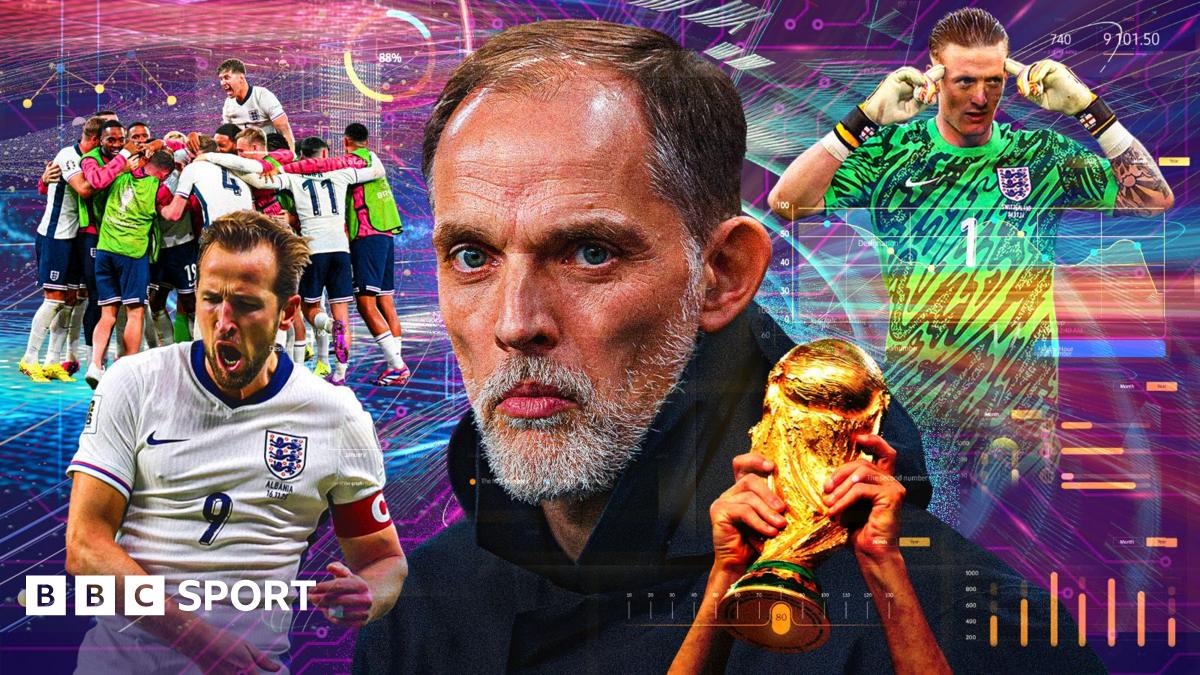
Europol Nov 19, 12:26

Announcing the winners of the 2025 Europol photo competition

Three awards were given out, each decided by a different group of voters:the international law enforcement community represented at Europol’s headquarters,members of the public,and the Heads of Communication of the European law enforcement authorities.The winners of Capture25The Europol Community Vote by the Liaison Bureaux went to Johan Jacob Kleist from Denmark with his photo of a ‘police officer patrolling beneath the northern lights in the freezing winter’. This image was the favourite of the 300 liaison officers from around the world, representing the EU Member States and Third Parties at Europol’s headquarters in The Hague.The Public Vote was awarded to Cláudio Alexandre from Portugal with his image showing ‘maintaining public order during the CIREX 2024 exercise’. His photograph received the most votes in the online ballot advertised on our social media channels, which was open to anyone who wanted to participate.Dmytro Haiduk from Ukraine entered the favourite picture of the Heads of Communication of the European law enforcement authorities, who were asked to cast their vote during the annual “European Law Enforcement Communicators Conference”. His winning image shows ‘patrol officers rescuing people from a fire after shelling by Russian forces’.The three winners win a trip for two to The Hague, including a visit to Europol’s headquarters. Their images also feature in Europol’s 2026 calendar and will be used in other Europol publications.Do you want to take part in next year's photo competition? Sign up via the subscription form on this page to receive an update when the 2026 edition opens!
Read full story →
Europol Nov 19, 11:01

EUR 47 million in crypto traced to disrupt digital piracy services

Between 10 and 14 November, Europol, in collaboration with the European Union Intellectual Property Office (EUIPO) and the Spanish National Police (Policía Nacional), organised an "Intellectual Property Crime Cyber-Patrol Week”. A total of 30 investigators participated in this operation hosted at the EUIPO headquarters in Alicante, Spain, where they used advanced Open-Source Intelligence Techniques (OSINT) and cutting-edge online investigative tools to identify potential intellectual property infringements.Overall, the Cyber-Patrol Week led to:69 sites identified and targeted;25 illicit IPTV services referred to the participating crypto service providers for disruption;Investigations on 44 additional sites.The combined traffic for the 69 targeted sites is estimated at approximately 11 821 006 annual visitors. Investigators traced cryptocurrency valued at around USD 55 million (over EUR 47 million) through various accounts associated with these services. Several of the services remain under continued investigation by both public and private entities.Criminals shift to using cryptocurrency for paymentsThe Cyber-Patrol Week focused on the growing trend of criminals moving away from traditional payment systems and rather relying on cryptocurrency payments - a method they incorrectly believe offers increased anonymity – when offering their illegal services. To counter this, the Cyber-Patrol participants relied on a novel strategy: investigators used cryptocurrencies to purchase services, which allowed them to identify illicit actors. These were then reported to partners, which includes major crypto exchanges and specialised tooling companies.This approach allows to hit ‘pirates’ - as intellectual property infringers are often referred to - where it hurts them the most: their money. By identifying, tracing, and successfully shutting down the crypto accounts of illicit services, the criminal revenue stream is disrupted. This effort is vital for protecting global economies and creators.Innovation and exchange of best practicesThis multidisciplinary and multi-agency enforcement operation aimed to map active targets, develop actionable intelligence packages, and facilitate the exchange of best practices. This initiative not only promotes innovative technological solutions but also reinforces cooperation with the private sector, consequently enhancing enforcers' ability to detect and neutralise emerging threats.More than 15 countries and private sector organisations joined Europol in this collaborative effort, with a particular emphasis this year on tackling illegal streaming services and various types of online intellectual property infringement. Their combined expertise and resources yielded high-value intelligence, supporting the fight against intellectual property crime.This approach exemplifies the European Union's commitment to an integrated, cross-border strategy where international collaboration and technological innovation are key pillars. By working together, intellectual property crime in a global digital landscape can be better anticipated and addressed.Events such as this Cyber-Patrol Week provide a unique platform for EU authorities responsible for combating intellectual property crime to collaborate and strengthen operational cooperation in pursuit of a safer Europe.
Read full story →
Europol Nov 18, 08:00

Help4U: A new digital platform to support young people facing online sexual abuse

Catherine De BolleEuropol Executive DirectorChildren and young people deserve to be safe and supported both online and offline. Help4U gives them - and those who protect them - clear, reliable information and access to help when it is most needed. This platform is a tangible example of how European cooperation can make a real difference for victims.Professor Babak AkhgarDirector of CENTRICWe are proud to work with Europol and our European law enforcement agency partners to build Help4U — a platform that places young people’s safety, privacy, and trust at its core. By combining digital innovation with the voices and experiences of young people themselves, Help4U offers a safe, accessible way for them to find help and be heard. This initiative represents how research, technology, and co-creation can come together to protect children and strengthen Europe’s collective response on harm against children.Built with young people in mindWhat sets Help4U apart is its strong focus on accessibility. The platform lets young people choose how they want to receive support — whether by reading, chatting, or locating a nearby service. All content is written in clear, age-appropriate language so it is easy to understand and use.Finding the right help, however, is not always straightforward, as navigating the range of available services can be challenging. For young people who have been victimised, the search can feel overwhelming, especially when they are distressed, feeling vulnerable, or unsure where to turn. Many may not feel ready to speak to someone directly and will first look for information online. Providing accessible, accurate resources at that moment is crucial: it empowers them to take the next step towards getting the support they need.Help4U also connects young people to professionals who can listen, advise, and guide them towards safety and recovery.A Europe-wide effortHelp4U began as a pilot project between Belgium, Germany, Ireland, the Netherlands and Slovenia, has since expanded to also include Bulgaria, Cyprus, Croatia, Greece, Hungary, Italy, Portugal, Spain and Romania, with more countries expected in 2026 and beyond.Help4U was developed in close collaboration with experts from psychology, education, IT, data protection, law enforcement, and academia. By uniting national efforts under one platform, Help4U strengthens Europe’s response to online sexual abuse and ensures that support reaches those who need it most.Because everyone deserves to be safe - and heardIf someone is making you feel uncomfortable online, sharing your photos without permission, or asking for things that don’t feel right - Help4U is here for you.Help4U is a safe place to start - to find answers, reach out, and take back control.Visit the Help4U website to learn more, get advice, or ask for help.Participating authoritiesBelgium: Federal Judicial Police (Belgische federale gerechtelijke politie / Police judiciaire fédérale belge)Bulgaria: General Directorate for Combating Organized Crime (?????? ???????? „????? ? ?????????????? ???????????“)Croatia: Ministry of the Interior (Ministarstvo unutarnjih poslova)Cyprus: Cyprus Police (????????? ??????)Greece: Hellenic Police (???????? ?????????)Germany: Federal Criminal Police Office (Bundeskriminalamt)Hungary: National Bureau of Investigation (Nemzeti Nyomozó Iroda)Ireland: An Garda SíochánaItaly: Italian National Police (Polizia di Stato)The Netherlands: National Police (Politie)Portugal: Public Security Police (Polícia de Segurança Pública), Judicial Police (Polícia Judiciária)Romania: General Inspectorate of Romanian Police (Inspectoratul General al Poli?iei Române)Slovenia: Police (Policija)Spain: Guardia Civil (Guardia Civil), National Police (Policía Nacional)
Read full story →
BBC Sport Nov 18, 06:47

'It felt like God's hand on my brain' - the day England were humbled by teenager

'It felt like God's hand on my brain' - the day England were humbled by teenagerFrom the Ashes is a series of features and podcasts which dig deeper into stories from cricket's fiercest and most legendary Test series. Full interviews can be found on BBC Sounds, building up to ball-by-ball coverage of the first Test between Australia and England in Perth on Friday.Like a lot of good stories, this one starts in a pub.The pub was in Worcester, but that part isn't important."I was sitting with Michael Clarke and Brad Haddin," Ashton Agar tells BBC Sport. "That was pretty cool in itself."Clarke said: 'Are you ready to go, youngster?' I thought he meant move on to the next place."He said: 'No, for next week.' I knew exactly what he meant. I said 'yes', with conviction, and there were no other thoughts in my mind."Agar was an almost unknown 19-year-old spinner who had just been told by Australia captain Clarke he was in line for a debut in the first Ashes Test of 2013 at Trent Bridge.When the news broke and Agar was presented with his baggy green cap by Glenn McGrath, Cricket Australia's own website called it "one of the biggest Ashes bombshells in history".There was so much more to come. The 98 Agar swaggered his way to on the second day in Nottingham remains the highest score by a number 11 in Test cricket.Even the late Queen Elizabeth spoke to Agar about it. Agar only played two Ashes Tests, yet has his own place in the story of cricket's greatest rivalry.Listen to From The Ashes: Ashton AgarFor Agar to be in that pub in Worcester was the result of a chaotic time in Australian cricket history.He made his debut for Western Australia earlier in 2013. After two games in the Sheffield Shield, Agar came within a whisker of making his Australia bow on an awful tour of India.The Australians lost 4-0, coach Mickey Arthur fell out with some senior players over their refusal to do 'homework', and things were unravelling before the Ashes.It got worse in England. Australia lost all three of their matches in the Champions Trophy, David Warner punched Joe Root in a Birmingham bar and Arthur was sacked. In came Darren Lehmann. So did Agar.The initial plan was for Agar to play some club cricket for Henley in the Home Counties League, then join the Australia A tour. Both happened. The unplanned part was being added to an Ashes squad that included one specialist spinner in Nathan Lyon."The main training session was two days before the first Test," says Agar."I was walking off the training track in the middle, back to the dressing rooms, and Rod Marsh, the selector, walked up to me and said: 'Ash, go and call your parents, you're in.'"I called mum and dad back in Melbourne. That was an amazing phone call. Mum was in tears, my two brothers were yelling and dad could hardly speak."They got on a flight from Melbourne that night. They got straight into a taxi and made it to the ground with a minute to go before my cap presentation."Ashton Agar won five Test caps in total, the last of them coming against South Africa in 2023Agar was 19 years and 269 days when he pulled on his baggy green. Only two Australian men have done so at a younger age this century - Pat Cummins and Sam Konstas."It was huge because it was so unexpected," Agar says. "We kept it extremely quiet. The whole point was for it to be a surprise factor, because England wouldn't have really known anything about me."Beyond the "bombshell", Agar had a quiet first day. He bowled seven uneventful overs as England were bowled out for 215 - Peter Siddle took five wickets."It was everything I'd seen on TV," says Agar. "A packed house. Jerusalem was a spine-tingling moment. When they play that, you feel pretty small."I knew exactly where my family was sitting for the whole five days and I kept thinking of them. If I felt like I needed to feel some support, I looked for them. That was really nice."Things started to go awry later in the day. Australia were reduced to 75-4 at the close by Steven Finn and James Anderson. Anderson bowled Clarke with one of the most memorable deliveries of his illustrious career, a bail-trimming out-swinger."It felt like Anderson was swinging the ball three different ways," says Agar."The chant ringing in everyone's head was the Jimmy Anderson chant. Michael Clarke got out to that ball, he got in the dressing rooms and he was singing it because it was so stuck in his head."Inside an hour on the second morning, Australia found themselves 117-9, 98 behind. Agar, the teenager who was not supposed to be on the tour, walked out to bat."It felt like the ground was moving from side to side because of the chants," he says."It was so loud. In a stadium, when everyone is chanting, it always feels like one side of the ground is slightly out of sync with the other one - like seaweed swaying in a current under the ocean."I just wanted to get through my first ball. I didn't want to get a golden duck."I blocked Graeme Swann, then got a single. It massively put me at ease. Then everything happened from there."'Sea legs meant I couldn't bowl' - when England travelled to Australia by boat'Without 2002-03 there was no chance of 2005'The ultimate Ashes competitor - Broad on walking, Warner and that final wicket'Ball of the century? That was my job' - Ashes 'rhino' HarrisAgar could have been stumped on six off Swann, but got the benefit of a hairline decision."It felt pretty out and I was lucky I got my foot down just in time," he says. "It could have gone either way."What followed was some of the most astonishing, elegant and clean ball-striking you could see from any Test batter, let alone a 19-year-old number 11 on debut."At the start Phil Hughes was taking more of the strike, then Boof [Lehmann] ran out a message for him to back me," recalls Agar."Every single ball I was on strike he would come down and say 'next ball, next ball, next ball'. He was even stronger on that the more runs I hit. It was a real lesson in how to stay present."Kevin Pietersen gave me a mouthful. I can't remember what he said, but I laughed at him. I was 19 and he was an experienced player trying to intimidate me. It didn't matter. I was out there batting 11, just trying to have a crack."Anderson and Stuart Broad had a word, there were chirps from Matthew Prior behind the stumps. They were into me, but never abusive. It was meant to make it uncomfortable, which is exactly what you should do to a 19-year-old out there for the first time."Anderson was driven back down the ground for four. Finn dropped short and was pulled through the leg side. Swann was lofted over long-off for six by a languid swish of Agar's blade.Runs flowed and England became ragged. Agar's score caught up with that of Hughes, Australia's number six. Agar's half-century came up in only 50 balls. "Well done, young man," said television commentator Ian Botham."These are not the shots of a number 11," added Botham, as if he was being pranked by the whole of Australia as payback for his own Ashes exploits."It's hard to describe the feeling," says Agar. "The occasion faded away. The only reference point I had was my family. I looked at them every ball."Ayrton Senna said it once about driving. He said it's like having God's hand on your brain."You don't know how it's happening, but it just happens. All of your knowledge and skill just comes out at one time, and that's what it felt like. It felt like God's hand on my brain, that all of my subconscious was being unlocked at once."The last-wicket pair wiped out the deficit. Agar took lunch on 69."They had these little rice pudding things in plastic cups," says Agar. "I had way too many on that tour. They were delicious."I tucked into a nice lunch, then it was time to go out there again. Phil Hughes had a steely look in his eyes. That's the thing I remember about him that day."The records were ticked off: what was then the highest 10th-wicket partnership in Test cricket. When Agar went past 95, he beat Tino Best's record for the highest score by a number 11, set against England at Edgbaston a year earlier.By this point, even the home fans were on Agar's side. Cameras captured the worried look on the face of England captain Alastair Cook. His plans were in tatters, fielders scattered to all corners of Nottingham.Agar, on 98, was within one hit of a fairytale century. Broad dug in a short one, Agar swung for the leg side and Swann swooped for the catch."I absolutely smashed it," says Agar. "I should have hit it up, but I tried to hit it down. I just wanted to get there and I was going to do it in the way I got all of my other runs."It went a bit quiet for a moment. You'd think the crowd would be elated, but they were really disappointed."I just shrugged my shoulders and had a side-smile on my face. Swann sprinted up to me. He was the first one to congratulate me. All of the English players did. I got a massive standing ovation from the crowd. Pointing my bat to my parents was cool."Agar struck 12 fours and two sixes in his innings, which lasted 101 ballsIn two and a quarter hours at the crease, Agar had become a superstar. Australia prime minister Kevin Rudd tweeted congratulations. Agar's parents were live on Test Match Special at tea.Despite the attention, Agar was focused on the job he had been picked to do. He wanted a wicket. Two came the following day - Cook and Jonny Bairstow - but it was the wicket Agar did not take that has a place in Ashes folklore.Agar was the bowler when Broad refused to walk after his edge nestled in the hands of Clarke at slip, via a deflection from the gloves of wicketkeeper Haddin."I just walked down the wicket to celebrate," says Agar. "Michael Clarke had his finger up. I was so confused as to what was happening. I couldn't understand how the one bloke with the best view, Aleem Dar the umpire, didn't think it was out."I was fielding at short cover and said to Broad 'you smashed that, didn't you?' He said he did. It was friendly. Everyone gets into Broady for not walking, but I wouldn't have walked. Cricket is hard and you need luck. That luck potentially changed the Test."Aleem Dar apologised to me the next morning. He shook my hand and said: 'I'm sorry, young man, that was a bad decision.' I respect him for that."Broad's runs were a huge factor in England winning a classic by only 14 runs. Agar did not take another Ashes wicket, struggling with his action and a cut finger in the second Test at Lord's."My finger was ripped to pieces and I was in a lot of pain trying to bowl," he says. "I knew my action was falling apart."It was so hard to deal with mentally. You have to be pretty resilient as a 19-year-old trying to bowl in a Test knowing you're nowhere near your best."It was so difficult being out there at Lord's wishing I wasn't bowling. It was a pretty lonely place."Ashton Agar walks off with Phillip Hughes, who finished 81 not outStill, that second Test created another special moment."The best part was meeting the Queen," says Agar. "Michael Clarke introduced her to everyone and we had to address her as 'your majesty'."She came to me, shook my hand and said: 'This is your first time here, isn't it?' I said: 'It is.'"She said: 'Good luck, have a good time.' I could not believe it. The Queen knew it was me."Agar was "relieved" to be dropped after the second Test. The third, at Old Trafford, was the beginning of Lyon's 100 consecutive Tests. Agar, now 32, played three more Tests, none of them in the Ashes.Hughes, Agar's batting partner on that day in Nottingham, was killed on the field little more than a year later, struck by a fatal blow to the neck batting in a Sheffield Shield match."I feel very lucky to have shared that with him," says Agar. "I had a photo of Phil up on my bedroom wall, playing one of his signature cut shots. Me and my brothers loved Phil."I was batting with someone I looked up to. Getting to share one of the biggest moments of my life so far, and learning about resilience, staying present and what that does in terms of performance is a huge lesson."He showed me that in real time. It was a special time we spent together. He was a beautiful man."Two days after Hughes passed away in November 2014, Agar was playing in Perth for his club side University."It was spooky, actually," says Agar. "There was a big 408, his cap number, painted on the ground and there was a minute of silence. It was tough."I remember feeling quite focused. I was thinking about our innings, what he was telling me at that time. On 98 I nicked a ball to second slip. It was nice it happened that way."98. The number for which Agar's Ashes career will forever be remembered."I've never thought about the two runs I didn't get," says Agar."The feeling for me has never changed. It has never been regret or disappointment."I'm just really happy for what happened that day."The Ashes: Australia v England21 November 2025 - 7 January 2026In-play clips and highlights on iPlayer, BBC Sport website and app. Ball-by-ball commentary on BBC Sounds, BBC Radio 5 Sports Extra and the BBC Sport website and app, which will also have live text commentary and daily features and analysisThe ultimate Ashes competitor - Broad on walking, Warner and that final wicket'Sea legs meant I couldn't bowl' - when England travelled to Australia by boat
Read full story →
Europol Nov 17, 09:00

Europol and partner countries combat online radicalisation on gaming platforms

Conducted on 13 November 2025, this operational action by the European Union Internet Referral Unit (EU IRU) involved the referral of thousands of URLs leading to dangerous and illicit online material. This includes around 5 408 links to jihadist content, 1 070 links to violent right-wing extremist and terrorist content, and 105 links to racist and xenophobic content.This joint action highlights the complexity of tackling terrorist, racist and xenophobic content online on gaming and gaming-adjacent platforms. Creation and dissemination processes are layered and often affect several platforms. For instance, content may be recorded within an online game (or its chat function), altered with violent extremist jargon, suggestive emojis, chants, or music, and then disseminated on a mainstream social media platform.‘Gamification’ of highly dangerous content across platformsIn the weeks leading up to the action day, participating experts combed through a variety of platforms widely used by youngsters and adults alike. Users of such gaming and streaming platforms can encounter a variety of dangerous and violent content.For example, perpetrators re-enact terrorist attacks, school shootings, or execution scenes in 3D gameplay, edit the video with chants or suggestive emojis, and disseminate it on various commonly used social media platforms for even wider reach. Other gaming-related platforms intended for streaming gameplay are misused to recruit minors into various violent extremist and terrorist groups or to livestream real attacks and even suicides.The content targeted during the Referral Action Day was found across several kinds of platforms. Some allow players to broadcast their gameplay in real-time and interact with their community via live chat, while others host video-on-demand. Illicit content was also identified on community platforms intended to facilitate the exchange of tips, news, and discussions about video games. Lastly, there are hybrid or specialised platforms that combine streaming, community features, and gaming purchase options. Many accounts on these platforms may not immediately be recognisable as being linked to problematic content, while some even feature usernames and profile pictures with references to infamous terrorists.Publication of EU IRU Transparency ReportThe EU Internet Referral Unit (EU IRU) prevention activities are focused on three key areas: monitoring and analysis of terrorist content online, referrals, and public-private partnerships. The forthcoming Transparency Report highlights the activities undertaken in these areas in 2024 and summarises the Unit’s efforts to reduce public access to terrorist content online. Additionally, the report outlines the EU IRU’s activities in support of the implementation of the Regulation on addressing the dissemination of terrorist content online.Several investigations as a starting pointThis Referral Action Day stems from law enforcement authorities across Europe noticing a variety of gaming and gaming-adjacent platforms being misused as venues to radicalise and spread terrorist content online. This abuse is also reflected in several investigations supported by Europol's European Counter Terrorism Centre. Leading up to this action day, Europol’s experts organised several operational meetings, and facilitated the exchange of operational information and best practices among participating countries. 
Read full story →
Europol Nov 14, 10:00

6 arrested for smuggling migrants from Türkiye to France and Germany

The action day led to the following results:6 arrests (2 in Germany and 4 in France)11 property searches (4 in Germany and 7 in France)Seizure of firearms, electronic devices and cashFreezing of bank accounts The network is suspected of facilitating migration on an ongoing basis from Türkiye via Serbia, Austria, Germany and France. Investigators believe that the criminal organisation earned more than EUR 4 million through these illicit activities. Irregular migrants were transported in disregard for their safety, with smugglers using dangerous concealment methods and engaging in reckless driving to ensure escape and avoid detection.Lives at riskThe criminal network had a hierarchical structure, with specific roles assigned to the members, to ensure the success of the illicit activities. Investigators believe that the gang had hired more than 20 drivers to carry out the transfers. It is also a plausible suspicion that these suspects are linked to a smuggling incident that resulted in the death of a migrant on 13 July 2023 in Germany. That day, a driver caused an accident while smuggling people into Europe. When the police ordered him to stop the bus, he tried to escape. One woman, a migrant, died in the accident, and several others were seriously injured. The driver was convicted of murder. The criminal network under investigation is suspected of having taken the woman back to Serbia by car, the country from which she had begun her journey to Germany.The joint operation on 13 November 2025 was the result of months of coordinated intelligence-sharing and investigative work. Europol supported the national authorities by facilitating the coordination among the affected countries and the exchange of operational information, and by delivering operational analysis reports. Additionally, on the day of the operation, a specialist was deployed to Germany with a mobile office to deliver on-the-spot support to investigators.A priority for EuropolEuropol’s contribution to this case serves as an example of how migrant smuggling remains a priority for Europol. The crime is increasingly marked by violence and brutality, leading to significant loss of life and occasionally targeting rival criminals, law enforcement, and the migrants themselves.In addition, migrant smuggling continues to be an attractive and highly profitable criminal activity on a large scale. It does not only involve facilitating the movement of irregular migrants but also assisting them in fraudulently regularising their stay. The following authorities participated in the investigation:Germany: Federal Police Office for Crime Control (Bundespolizeiinspektion Kriminalitätsbekämpfung Halle)France: National Directorate of the Border Police (Direction Nationale de la Police aux Frontières, OLTIM)
Read full story →
Europol Nov 14, 09:05

Strike against synthetics: authorities seize tonnes of chemicals in Central and Eastern Europe

Criminal network busted in Central and Eastern EuropeOn 11 November 2025, law enforcement targeted an international criminal network supplying key precursors used to produce methamphetamine and operating across Europe. Authorities from Bulgaria, Czechia, Hungary, Romania and Moldova, supported by Europol, participated in the investigation. Eurojust set up and funded the joint investigation team between Czech, Romanian and Moldovan authorities allowing them to track the flow of illicit substances and communications and collect evidence for the prosecution of the criminal group. The action day led to:16 arrests (1 in Bulgaria, 11 in Czechia, 2 in Hungary and 2 in Moldova)18 searches (3 in Czechia, 2 in Hungary, 1 in Romania and 12 in Moldova)3 clandestine drugs laboratory dismantled in Hungary and MoldovaSeizure of synthetic drugs and chemical materials to produce methamphetamine, including over 5 kilos of methamphetamine, 40 kg of ephedrine-containing pills, 50 litres of toluene, 0.5 kg of phosphorus, 280 kg of caustic soda, 70 kg of chemical residues from methamphetamine production, and specialized production equipmentSeizure of two vehicles used for transporting drugsSeizure of electronic devices and cashThe suspects were involved in every stage of the drug production chain: they imported chemicals, produced synthetic drugs and smuggled them in luggage on airplanes and in hidden compartments of vehicles to avoid detection by authorities. Drugs found in investigation.   Property of the precursor network.  The following authorities took part in the investigation: Bulgaria: General Directorate Combating Organized Crime (?????? ???????? "????? ? ?????????????? ???????????)Czechia: National Police (Policie ?eské republiky), National Drug HQHungary: National Bureau of Investigation, Drug Enforcement Office (Készenléti Rend?rség Nemzeti Nyomozó Iroda, Kábítószer B?nözés Elleni Hivatal)Romania: National Police (Poli?ia Român?)   Moldova: Directorate of cross-border crime investigation of General Inspectorate of Border Police (Inspectoratul General al Poli?iei de Frontier?), Prosecutor’s Office for Combatting Organized Crime and for Special Cases (Procuratura pentru Combaterea Criminalit??ii Organizate ?i Cauze Speciale)Precursors made in China, distributed across EuropeIn an unprecedented operation in the EU, authorities seized over 40 tonnes of precursors intended for the production of MDMA, amphetamine and methamphetamine in Hungary and Germany. The investigation spanned over two years, with the most recent action taking place on 4 and 5 November 2025, resulting in:4 arrests8 property searchesSynthetic drugs seizedPrecursors and chemicals seizedVehicles, jewellery and electronic devices seizedEUR 67 000 in cash seized Seizure taking place in Hungary. The investigation revealed that the precursors were shipped from China to the ports of Hamburg and Rotterdam. There, they were collected by members of the criminal network and sent to Hungary for further distribution. The perpetrators operated across many European countries and had the capacity to supply large quantities of products and chemicals, enabling drug production on a massive scale. The criminal network targeted in this operation was linked to several shipments of precursor chemicals seized between 2023 and 2025. During this period, authorities intercepted almost 32 tonnes of precursors in Hungary and more than 10 tonnes in Germany.The following authorities took part in the investigation:Hungary: National Police (Rend?rség)Germany: Joint Precursor Monitoring Unit (Customs/Police) at the BKA, Customs (Zoll)Netherlands: Netherlands Police (Politie), FIODSynthetic drugs: a growing threatEuropol played a key role in both operations by providing operational and analytical support to national investigators. Additionally, on 6 and 7 November 2025, a Europol expert was deployed to assist Hungarian authorities in the field, providing real-time analysis of the data as it was gathered.The production and trafficking of synthetic drugs have increased over the past years, as both the demand and supply of synthetic drugs are high. This threat is expected to further escalate. 
Read full story →
Europol Nov 13, 17:54

10 years on: remembering the victims of the 13 November terrorist attack in Paris

Today marks ten years since one of the deadliest terrorist attacks in recent European history was carried out in Paris - at the Stade de France, in the streets and inside the Bataclan concert hall. On 13 November 2015, 132 people lost their lives and many more were injured during what became a night of profound tragedy for France and for Europe as a whole. We honour the victims, their families, and all those whose lives were forever changed. We also acknowledge the efforts and commitment of the law enforcement officers who worked side by side across borders and agencies to identify the perpetrators and ensure they were brought to justice.The months that followed witnessed an unprecedent wave of terrorist attacks across Europe. Today, we also remember all those who lost their lives in these acts of violence: the victims of the attacks in Brussels, Nice and Berlin, as well as those who felt victims to subsequent attacks in Austria, Belgium, France, Germany, Spain and Sweden. From Charlie Hebdo to Brussels, Nice, Berlin, and Stockholm, each attack serves as a stark reminder that terrorism remains a persistent and evolving threat. Terrorism is a threat that no country can confront alone.On the occasion of today’s day of remembrance, Europol’s Executive Director Catherine De Bolle, stated: Ten years later, we have not forgotten anything. The victims, the dignity of the families, the relatives and our bruised communities. Today, our thoughts are with them. We pay tribute to them and to the many acts of solidarity and courage of citizens, and first-responders. The fight continues, and we're more committed than ever to fighting terrorism.In response to the terror wave of 2015 and 2016, Europol and EU Member States strengthened their collective preparedness to prevent, disrupt, and mitigate terrorist plots. Counterterrorism and the prevention of violent extremism are not only about stopping attacks, they are about protecting communities, building resilience and addressing the drivers of radicalisation before they turn into violence.These events marked the beginning of a new phase in Europe’s security landscape. Organised terrorist networks, returning foreign terrorist fighters and online radicalisation demonstrated that the threat had become increasingly transnational and complex. In response, the European Counter Terrorism Centre was established in January 2016 within Europol to reinforce coordination, strengthen investigative links, support operational activities and assess emerging risks. In addition, the EU Internal Referral Unit was also established within Europol to monitor and address terrorist propaganda online.Today, as we commemorate the victims of the Bataclan attack and all other victims of terrorism across Europe, we reaffirm our shared commitment to safeguarding our societies and upholding the values that terrorism and violent extremism seek to undermine. Then, now and always, European authorities remain united in their determination to safeguarding citizens and protecting our societies from those who seek to undermine them. 
Read full story →
Europol Nov 13, 10:00

End of the game for cybercrime infrastructure: 1025 servers taken down

Between 10 and 13 November 2025, the latest phase of Operation Endgame was coordinated from Europol’s headquarters in The Hague. The actions targeted one of the biggest infostealers Rhadamanthys, the Remote Access Trojan VenomRAT, and the botnet Elysium, all of which played a key role in international cybercrime. Authorities took down these three large cybercrime enablers. The main suspect for VenomRAT was also arrested in Greece on 3 November 2025.The infrastructure dismantled during the action days was responsible for infecting hundreds of thousands of victims worldwide with malware. Operation Endgame, coordinated by Europol and Eurojust, is a joint effort between law enforcement and judicial authorities of Australia, Belgium, Canada, Denmark, France, Germany, Greece, Lithuania, the Netherlands, the United Kingdom and the United States to tackle ransomware enablers. More than 30 national and international public and private parties are supporting the actions. Important contributions were made by the following private partners: Cryptolaemus, Shadowserver and RoLR, Spycloud, Cymru, Proofpoint, Crowdstrike, Lumen, Abuse.ch, HaveIBeenPwned, Spamhaus, DIVD, Trellix and Bitdefender.The coordinated actions led to:1 arrest in Greece11 locations searched (1 in Germany, 1 in Greece, and 9 in the Netherlands)Over 1 025 servers taken down or disrupted worldwide20 domains seizedEndgame doesn’t end here – think about (y)our next moveThe dismantled malware infrastructure consisted of hundreds of thousands of infected computers containing several million stolen credentials. Many of the victims were not aware of the infection of their systems. The main suspect behind the infostealer had access to over 100 000 crypto wallets belonging to these victims, potentially worth millions of euros. Check if your computer has been infected and what to do if so at politie.nl/checkyourhack and haveibeenpwned.comThere were actions aimed at criminal services and their criminal users. These users were directly contacted by the police and asked to share relevant information regarding infostealers via the Operation Endgame Telegram channel. In addition, the failing criminal services are exposed via the Operation Endgame website.Command post at Europol to coordinate the operational actionsEuropol facilitated the information exchange and provided analytical, crypto-tracing and forensic support to the investigation. To support the coordination of the operation, Europol organised and coordinated calls with all the countries as well as an operational sprint at its headquarters.Over 100 law enforcement officers from Australia, Canada, Denmark, France, Germany, Greece, the Netherlands and the United States supported the coordination of the operational actions from the command post at Europol. The command post facilitated the exchange of intelligence on seized servers, suspects, and the transfer of seized data. Eurojust also assisted with the execution of a European Arrest Warrant and European Investigation Orders.Participating authoritiesEU Member States:Denmark: Danish Police (Politi)France: National Police (Police Nationale); Public Prosecutor Office JUNALCO (National Jurisdiction against Organised Crime) Cybercrime Unit; Paris Police Prefecture (Préfecture De Police de Paris)Germany: Federal Criminal Police Office (Bundeskriminalamt), Public Prosecutor General's Office Frankfurt am Main – Cybercrime Office;Greece: Hellenic Police (???????? ?????????)Lithuania - Lithuanian Criminal Police Bureau (Lietuvos Policijos Departamentas)Netherlands: National Police (Politie), Public Prosecution Office (Openbaar Ministerie)Non-EU Member States:Australia: Australian Federal PoliceCanada: Royal Canadian Mounted Police; Sûreté du QuébecThe United States: Federal Bureau of Investigation, The Defense Criminal Investigative Service, United States Department of JusticeThe press release was updated following publication to correct the involved partners in the operation.
Read full story →